
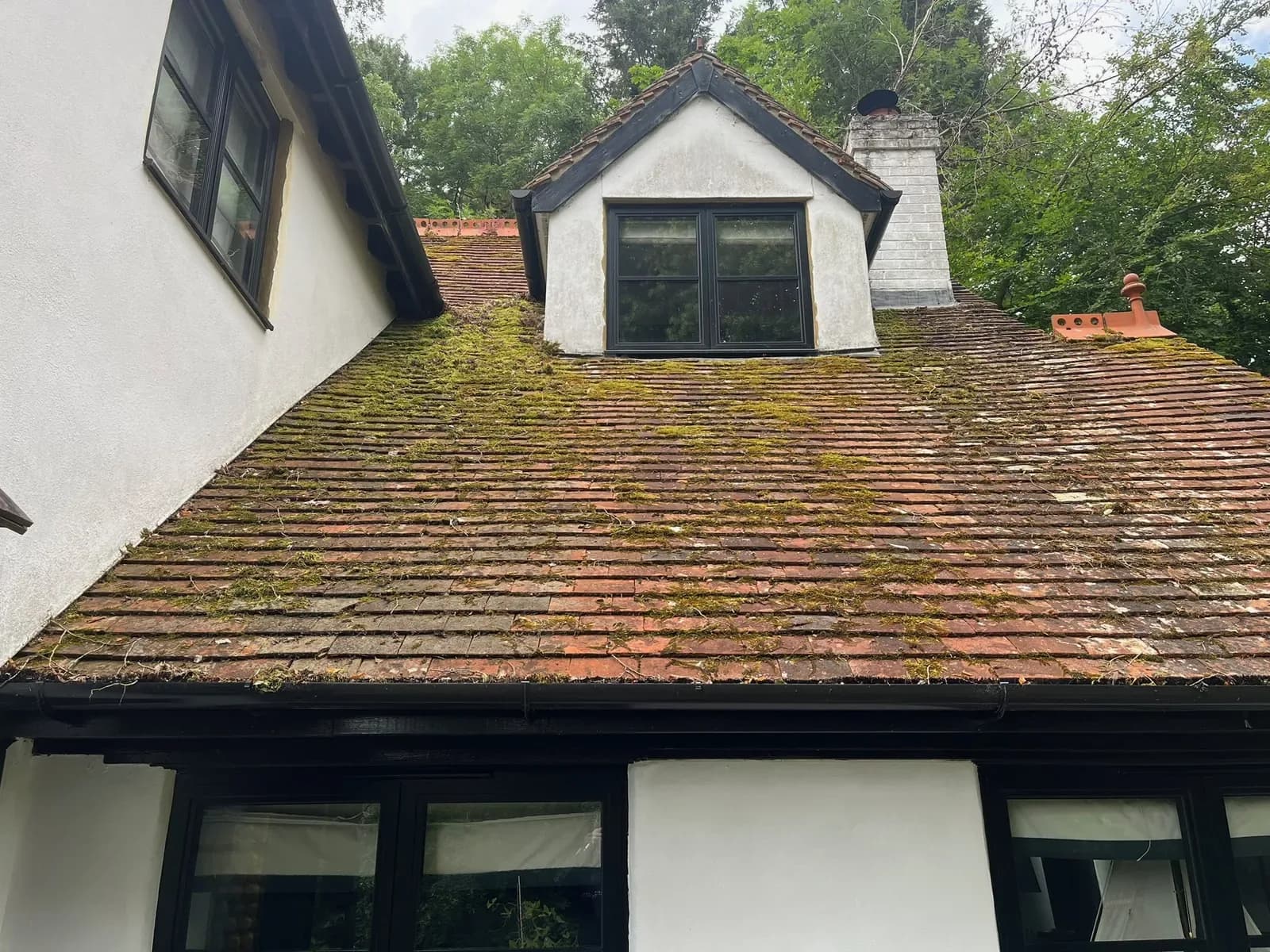
Moss on a roof is more than an eyesore. It traps moisture against the tiles, blocks gutters, and shortens the life of the roof. This guide compares the 2 main removal methods, scraping and soft washing, and explains the safe choice for your tiles.
Why Moss Grows on Roofs
Moss grows wherever a roof stays damp and shaded. In the UK climate, that covers most roofs for much of the year. Airborne spores settle on the tiles, and cool, moist conditions let them spread. North-facing roofs and roofs under trees grow moss fastest because they dry out slowly and receive little direct sun.
Is Moss Actually Bad for a Roof?
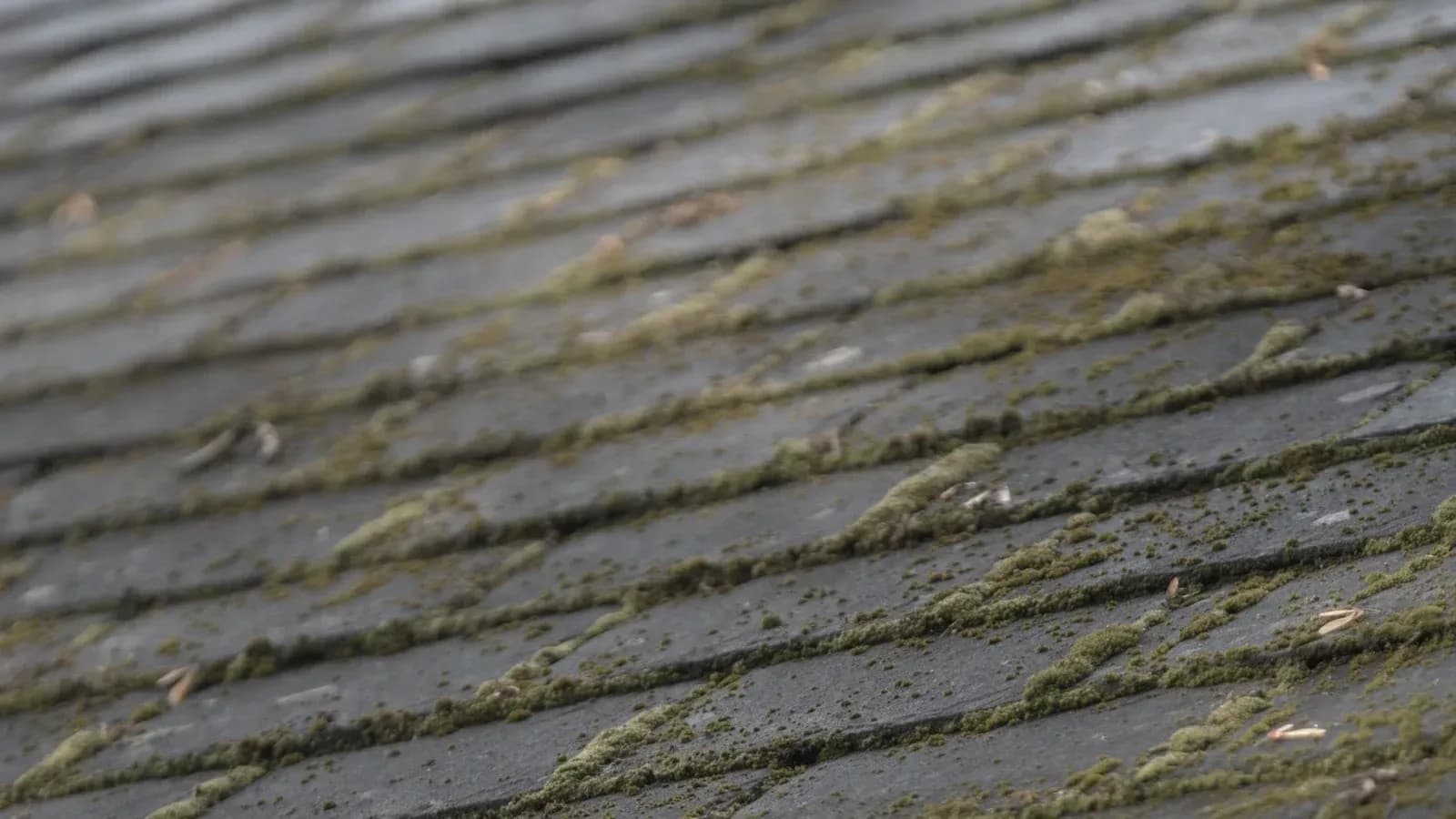
Yes. Moss causes real structural harm when left untreated. It is not only a cosmetic issue. Moss damages a roof in 4 main ways:
- Moisture retention — moss holds water like a sponge and keeps tiles permanently damp.
- Freeze-thaw cracking — trapped water expands when it freezes, which cracks and spalls the tile surface.
- Blocked gutters — moss sheds into gutters and downpipes, causing overflow and damp walls.
- Added weight — saturated moss adds load to the roof structure across a large area.
A neglected roof can fail years earlier than it should. Removing moss keeps a roof looking better and stops debris washing into the gutters.
Moss, Algae and Lichen: What Is the Difference?
A roof often hosts 3 types of growth at once, and each behaves differently. Moss forms thick green clumps and causes the most physical damage. Algae shows as dark streaks and is mainly a cosmetic problem. Lichen bonds tightly to the tile and grows slowly, marking an older surface. Because all 3 appear together, professionals usually treat them with a combined approach rather than a single method.
Roof Scraping Explained
Roof scraping is the manual removal of moss using hand tools. An operator works from the ridge downwards, lifting moss from each tile without cracking it. The method suits heavy, established moss that no spray can shift on its own.
Pros of Scraping
- Removes thick, baked-on moss that treatment alone cannot lift.
- Lets the operator inspect every tile closely for cracks or failing mortar.
- Avoids the heavy chemical load of a spray-only clean.
Cons of Scraping
- Does not kill the spores left behind, so moss regrows without aftercare.
- Labour-intensive and slow on a large roof.
Soft Washing Explained
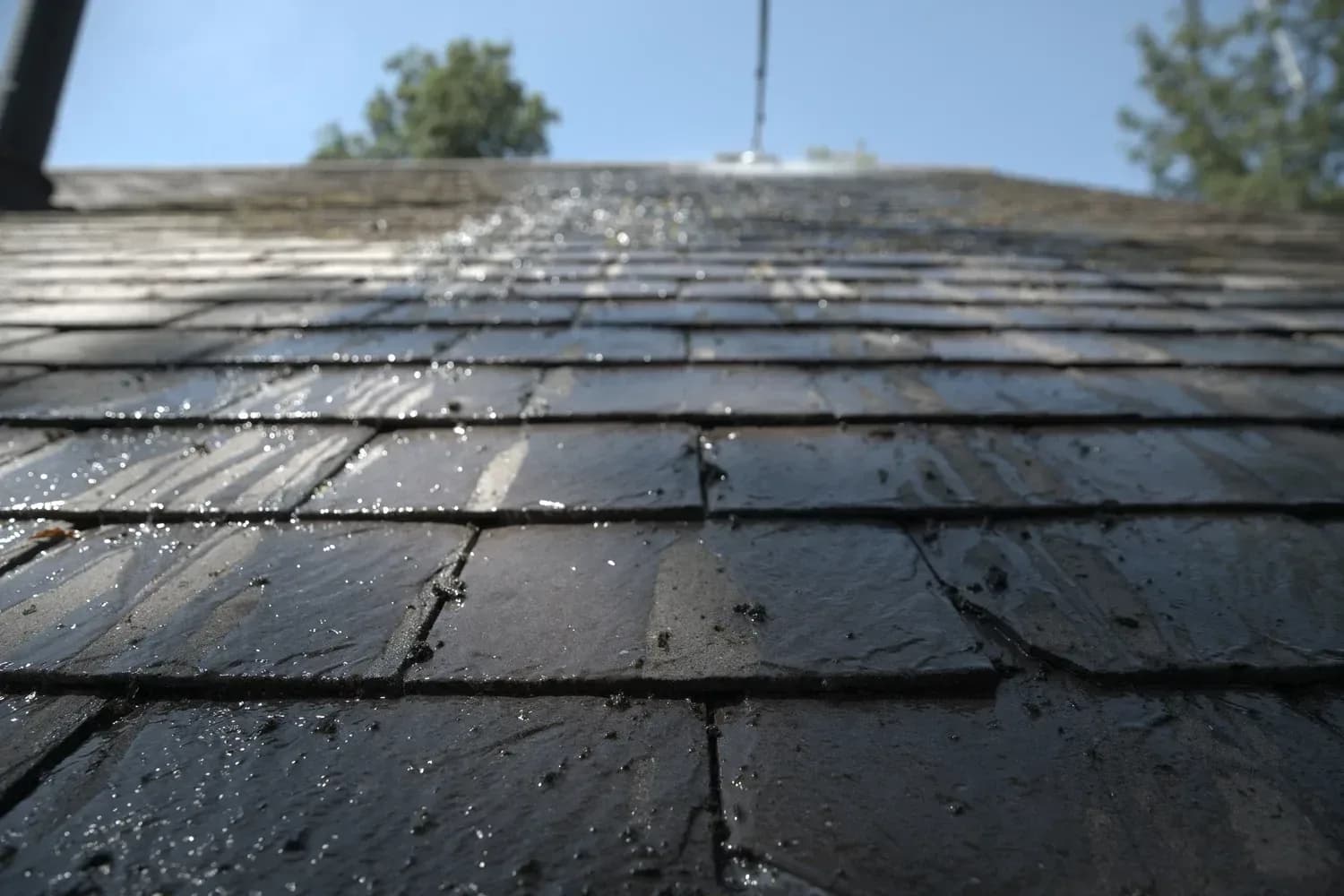
Soft washing uses low-pressure water and a biocide to treat moss and algae. The biocide breaks down organic growth over the following days and weeks. Soft washing treats the cause rather than only the surface, and it suits delicate materials such as clay tiles and slate.
Pros of Soft Washing
- Slows regrowth, so the surface stays cleaner for longer.
- Gentle on tiles, with no high-pressure force to strip the surface.
- Reaches across the whole roof evenly, including hard-to-scrape areas.
Cons of Soft Washing
- Results appear gradually rather than instantly.
- Heavy moss usually needs scraping first before treatment works fully.
Why Pressure Washing Is the Wrong Choice for Roofs
Pressure washing damages most roofs and should be avoided on pitched tiles. A high-pressure jet can force water under the laps, and can drive moisture into the loft. The result is faster wear, possible leaks, and a roof that ages prematurely. The dramatic instant finish hides long-term harm.
Scraping or Soft Washing: Which Should You Choose?
The best method depends on how much moss the roof carries. For most UK roofs, a combined approach gives the strongest result: scrape the heavy moss first, then soft wash to treat the remaining biofilm and spores. Choose your approach by 3 factors:
- Severity of growth — heavy moss needs scraping first; light algae suits soft washing alone.
- Tile material — clay and slate are delicate and need gentle handling throughout.
- Long-term goal — an aftercare treatment helps slow regrowth.
What Affects the Cost of Roof Moss Removal?
Roof moss removal is priced per roof, not from a list, because the work involved varies enormously between properties. The main factors are the roof area and pitch, how much growth has taken hold, the tile type and its condition, and how the roof can be reached safely.
Access is usually the biggest single factor. A roof that can be worked from a ladder or a tower is straightforward; one needing a scaffold, a platform or edge protection carries the cost of that equipment. Steeper pitches take longer for the same reason — more of the time goes on working safely rather than on cleaning.
The level of growth matters too. A light film of moss and algae is a different job from a thick mat that has built up over years, lifted the tile laps and blocked the gutters. Heavier growth means more removal, more clearing up afterwards, and usually a longer visit.
A clear written quote should set out the method, the access equipment, and whether a Chiltern EverGuard™ treatment and a gutter clear are included. We give you that in writing after a free site visit, so the price reflects your roof rather than an average.
How to Stop Moss Coming Back
Moss spores are always in the air, so prevention slows the return rather than stopping it. These 4 steps keep a roof cleaner for longer:
- A protective treatment such as Chiltern EverGuard™ helps slow regrowth; protection typically lasts between 12 and 24 months, depending on the property's location, surrounding environment, surface type and ongoing maintenance.
- Keep gutters clear so water drains and walls stay dry.
- Cut back overhanging branches to reduce shade and falling debris.
- Book a yearly roof inspection to catch regrowth and tile damage early.
Frequently asked questions
Should I remove moss from my roof myself?
No, in most cases. Working at height is the leading risk, and the wrong method damages tiles. A professional service is safer and delivers longer-lasting results.
How often should a roof be cleaned?
Every 1 to 3 years for most homes, depending on shade, tree cover, and how quickly moss returns. A north-facing roof usually needs more frequent attention.
Does soft washing work on slate and clay tiles?
Yes. Soft washing is the recommended method for delicate materials such as slate and clay because it cleans effectively without high-pressure force.