
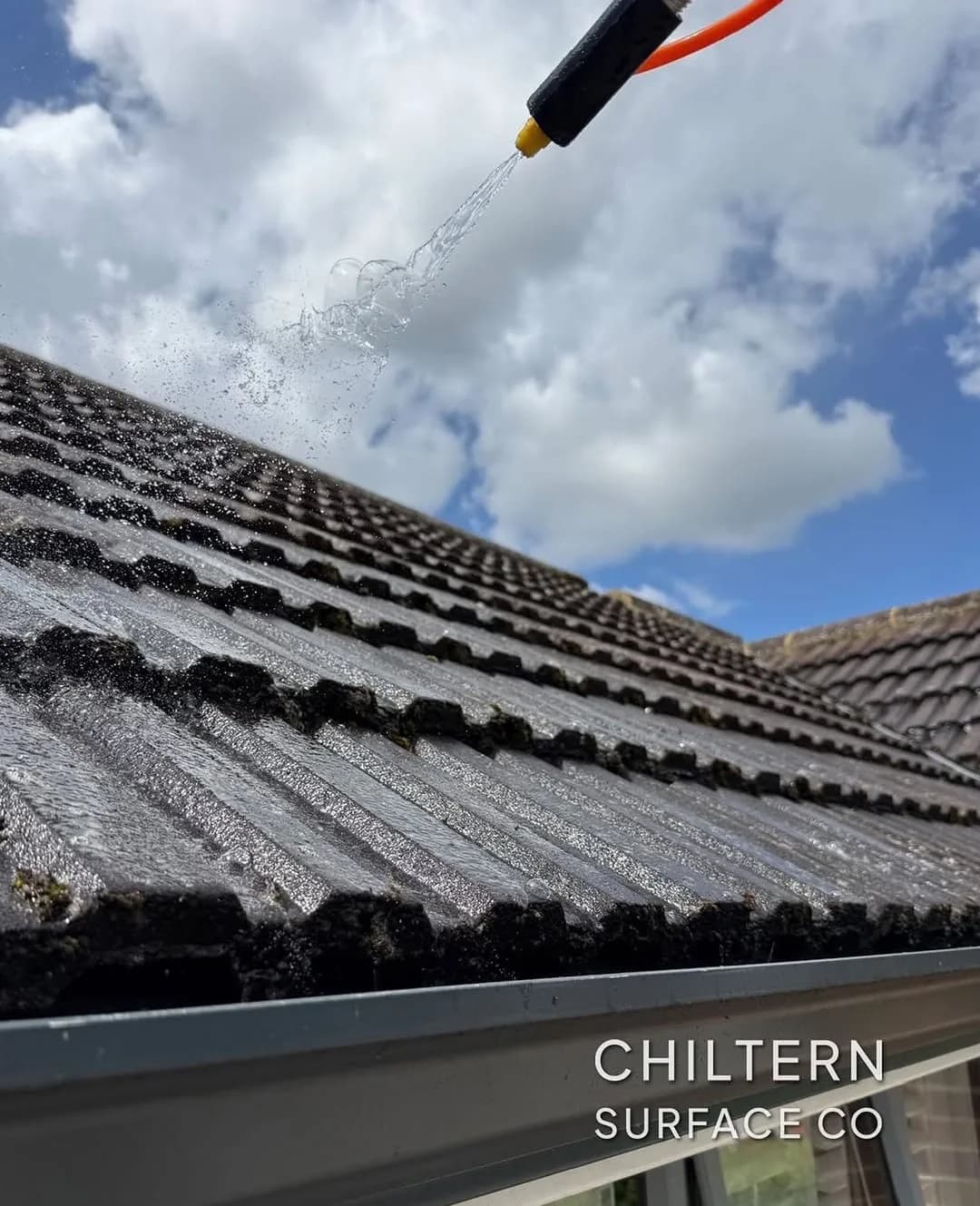
For most UK tiled roofs, aggressive pressure washing is not recommended. A powerful jet may remove moss quickly, but it can also damage the surface of clay or concrete tiles, disturb weathered areas and force water beneath the overlaps if it is used at the wrong angle.
That does not mean water can never be used during professional roof cleaning. Controlled low-pressure cleaning may form part of a specialist process after the roof has been assessed. The difference is important: a carefully selected low-pressure method is not the same as blasting the roof with maximum pressure.
The correct method depends on the roof covering, its age and condition, the amount of moss or algae present, the roof pitch and how safely the surface can be accessed.
Chiltern Surface Co's roof cleaning service starts with a site assessment. Thick moss is removed manually first, followed by controlled low-pressure cleaning where appropriate, Chiltern EverGuard™ Treatment and gutter clearance.
The Short Answer: Do Not Blast a Roof With High Pressure
A domestic roof is not a patio or driveway. Roof coverings are installed as overlapping weatherproof components, and they are designed to shed rainfall down the slope.
A concentrated pressure jet can introduce forces that ordinary rainfall does not. If it is held too close, used at excessive pressure or directed upwards, it can damage the visible face of the tile or push water into the joints between roof coverings.
This is why roof cleaning should begin with the roof itself, not with the pressure washer. The surface determines the method.
Why High-Pressure Roof Washing Can Cause Problems
1. It can damage the tile surface
Clay and concrete roof tiles have finished surfaces that weather over time. Aggressive pressure can remove more than the contamination, particularly on older, porous or already weathered tiles.
Concrete tiles can also lose part of their surface finish or colour when cleaned too aggressively. A visibly cleaner roof is not a good result if the cleaning process has unnecessarily opened or damaged the surface underneath.
2. It can force water beneath the overlaps
Pitched roofs are designed so rain travels down over the tile laps. Pressure washing from below, or directing a jet upwards into the overlaps, works against the way the roof is designed to drain.
That can force water where normal rainfall would not usually travel. For this reason, any controlled water used during professional roof cleaning should be kept moving down the roof rather than into the laps.
3. It can expose weaknesses that were already present
A cracked tile, loose ridge detail, failed mortar joint or poorly repaired section may already be vulnerable before cleaning begins.
High pressure does not create every roof defect, but it can make a weak area worse. An assessment before cleaning helps identify obvious limitations so the method can be adjusted or the cleaning postponed until repairs have been considered.
4. It encourages unnecessary work at height
Roof cleaning is also an access problem. Wet tiles, hoses and unfamiliar equipment create additional hazards.
Homeowners should not treat pressure washing a roof as an ordinary DIY pressure-washing task. Where roof-level work is required, the access and working method should be planned by someone competent to carry it out.
Pressure Washing Is Not the Same as Low-Pressure Roof Cleaning
A lot of confusion comes from using the words 'pressure washing' for every form of water-based cleaning.
There is a major difference between an aggressive jet used to strip moss from a roof and a controlled low-pressure rinse used after the bulk growth has already been removed.
At Chiltern Surface Co, pressure is not used as the main moss-removal tool. The moss comes off manually first. That means the later cleaning stage does not need to do the heavy mechanical work.
The remaining algae, grime and staining can then be treated using a gentler process selected for the roof covering.
How Chiltern Surface Co Cleans a Mossy Roof
The roof-cleaning process is deliberately staged so that no single method is expected to do everything.
1. Site assessment
The roof covering, age, condition, access, drainage and level of growth are checked first. This is also the point where obvious damaged or unusually fragile areas can be identified.
2. Manual moss removal
Thick moss is removed by hand and scraper, working down the roof. This gets the bulk growth off without relying on a high-pressure jet to tear it from the tile face.
3. Controlled low-pressure cleaning
Once the heavy moss has been removed, a low-pressure clean can deal with the film, algae and residual grime that remain on the roof. Water is kept travelling down the slope rather than being driven upwards beneath the coverings.
4. Chiltern EverGuard™ Treatment
Following the cleaning process, the roof receives Chiltern EverGuard™ Treatment, our professional surface protection treatment. It helps inhibit the regrowth of moss, algae and lichen so the roof stays cleaner for longer.
The treatment is not permanent and does not prevent all future biological growth. Its performance depends on the roof, surrounding environment, weather and ongoing maintenance.
5. Gutter clearance
Moss removed from the roof naturally ends up around the eaves and gutters during the process. The gutters and downpipes therefore need to be cleared so the rainwater system is left free-flowing.
You can see the separate gutter cleaning service for more detail on how channels, outlets and downpipes are cleared and checked.
Can You Pressure Wash Concrete Roof Tiles?
High-pressure cleaning is not a sensible default for concrete roof tiles.
Concrete tiles commonly develop moss because their textured surface can retain moisture and provide a good hold for organic growth. That same weathered surface can be vulnerable to unnecessarily aggressive cleaning.
The better approach is to remove heavy growth physically, then use the lowest effective cleaning pressure for the remaining contamination.
If the tile surface is already worn, faded or damaged, the cleaning method may need to be reduced further or changed completely.
Can You Pressure Wash Clay Roof Tiles?
Clay tiles also need a cautious approach, particularly where they are older, handmade or heavily weathered.
The fired face is part of the character and protection of the tile. Trying to make an older clay roof look dramatically 'new' with aggressive water pressure can do more harm than good.
Manual removal and gentle cleaning are generally more appropriate than using the pressure washer as the main cleaning tool.
Can You Pressure Wash a Slate Roof?
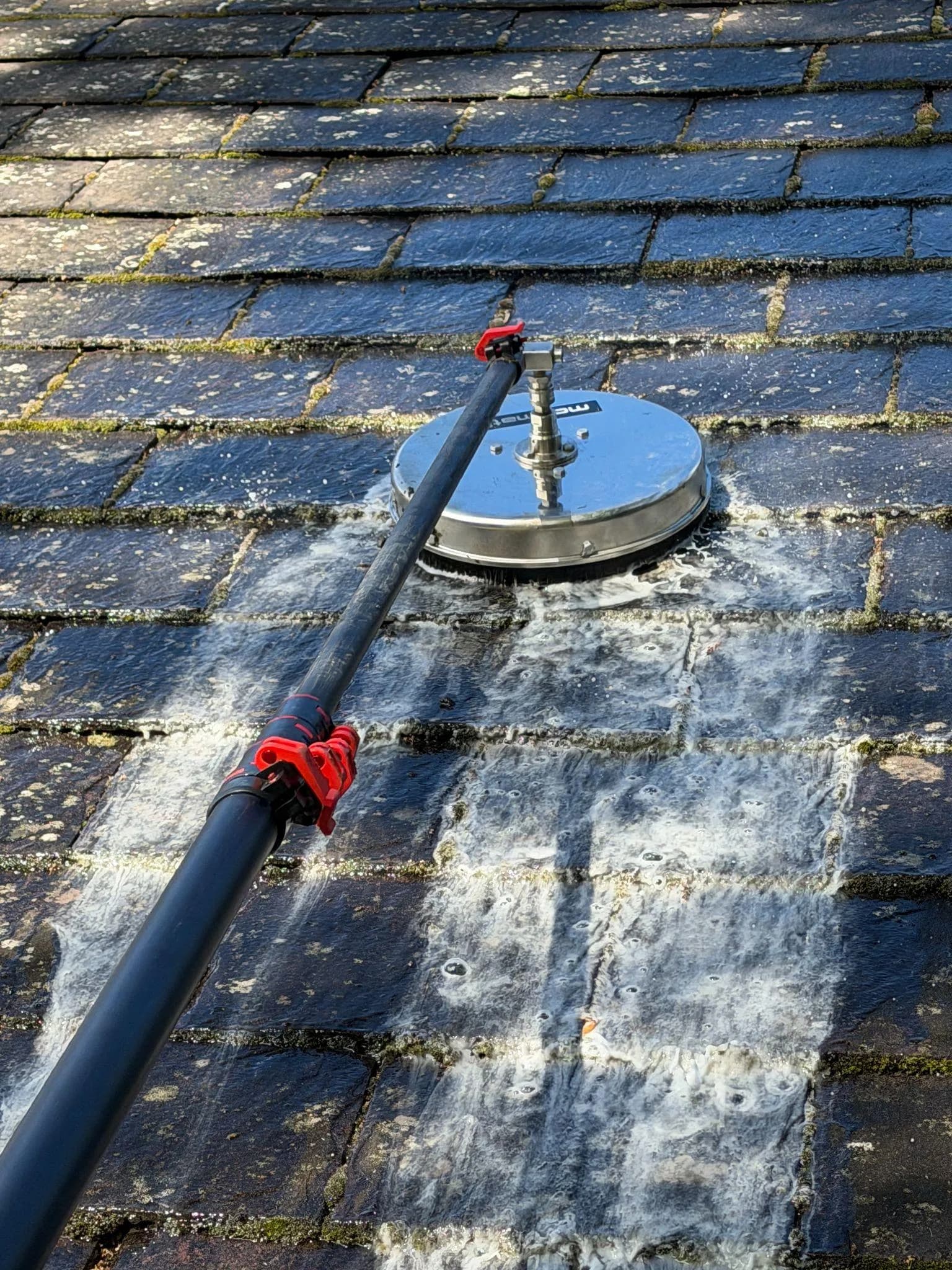
Slate needs its own assessment.
Natural slate is strong in normal service but can be brittle around fixings and edges. The roof also relies on overlapping slates to shed water, so directing pressurised water upwards beneath those overlaps should be avoided.
Where controlled water is appropriate, it should be used with the roof's drainage direction rather than against it. Heavy foot traffic should also be avoided because walking directly on slate can create damage of its own.
What About Fibre-Cement Slate?
Fibre-cement slate has a relatively thin finished surface and should be cleaned gently.
If an older artificial slate cannot be confidently identified, the cleaning method should not be guessed. The material should be confirmed before any process that could disturb the surface is used.
Manual Moss Removal vs Pressure Washing
Method
What it is best for
Main benefit
Main limitation
Aggressive pressure washing
Rapid removal of visible growth
Fast visual change
Can damage tiles or force water beneath overlaps
Manual moss removal
Heavy moss and physical build-up
Removes bulk growth without relying on water force
Slower and requires careful access
Controlled low-pressure cleaning
Residual algae, grime and staining
Gentler, surface-specific cleaning
Still requires correct pressure and direction
Treatment / soft washing
Remaining biological contamination
Targets regrowth with minimal water force
Results and longevity depend on conditions
Does Every Mossy Roof Need Cleaning?
No. Light moss or lichen does not automatically mean a roof needs professional cleaning.
If the growth is limited, the roof is draining properly and the gutters are not being blocked, monitoring may be more sensible than carrying out unnecessary work.
Cleaning becomes more relevant when moss is heavy enough to hold debris, repeatedly fill the gutters, interfere with drainage or create a significant appearance problem.
That distinction matters because Chiltern Surface Co's approach is education before selling. If cleaning is not needed, the correct recommendation is not to manufacture a reason for it.
That principle runs through our exterior cleaning approach: assess the material and condition first, then choose the lowest effective method rather than defaulting to maximum pressure.
Can You Pressure Wash a Roof Yourself?
For most homeowners, roof pressure washing is not a sensible DIY job.
The main reasons are safe access, correct identification of the roof covering, control of water direction and knowing when the surface is too fragile to clean.
A pressure washer also creates a strong temptation to stay in one position and reach further, use more force on stubborn areas or direct the jet upwards from the ground. Those shortcuts can increase both the access risk and the chance of damaging the roof.
If you only want to deal with a small amount of loose debris, ground-level inspection and routine gutter maintenance may be all that is needed. If the roof itself requires cleaning, a site-specific professional assessment is the safer starting point.
Common Roof Cleaning Mistakes
Choosing pressure before identifying the roof material
Clay, concrete, slate and fibre-cement products do not respond in exactly the same way. The roof covering should determine the method.
Trying to remove thick moss with water force alone
If the moss is physically thick, removing it manually first reduces the amount of pressure needed later.
Spraying upwards beneath the tile or slate laps
Roof coverings are designed to shed water down the slope. Cleaning water should follow that direction wherever possible.
Cleaning an already defective roof
A leak, damaged tile or loose detail needs diagnosis. Cleaning does not repair structural or weatherproofing defects.
Promising a 'like-new' roof
Cleaning can significantly improve appearance where the condition of the roof allows, but it cannot reverse wear, colour loss, previous damage or the normal ageing of the material.
Skipping the gutters after moss removal
If moss and debris are removed from the roof but left to block the rainwater system below, the job is incomplete.
What Should You Ask a Roof Cleaning Company?
Before booking, ask:
- What roof covering do I have?
- How will you assess its condition before cleaning?
- Will thick moss be removed manually first?
- Are you using high pressure, low pressure or a treatment-led process?
- How will you stop water being forced beneath the roof laps?
- What happens if damaged tiles or roof defects are found?
- Are gutters cleared after the roof work?
- What treatment or aftercare is included?
- Are you insured and set up for the required access?
A good answer should explain why the chosen method suits the roof. The equipment should support the process rather than become the selling point.
The Bottom Line
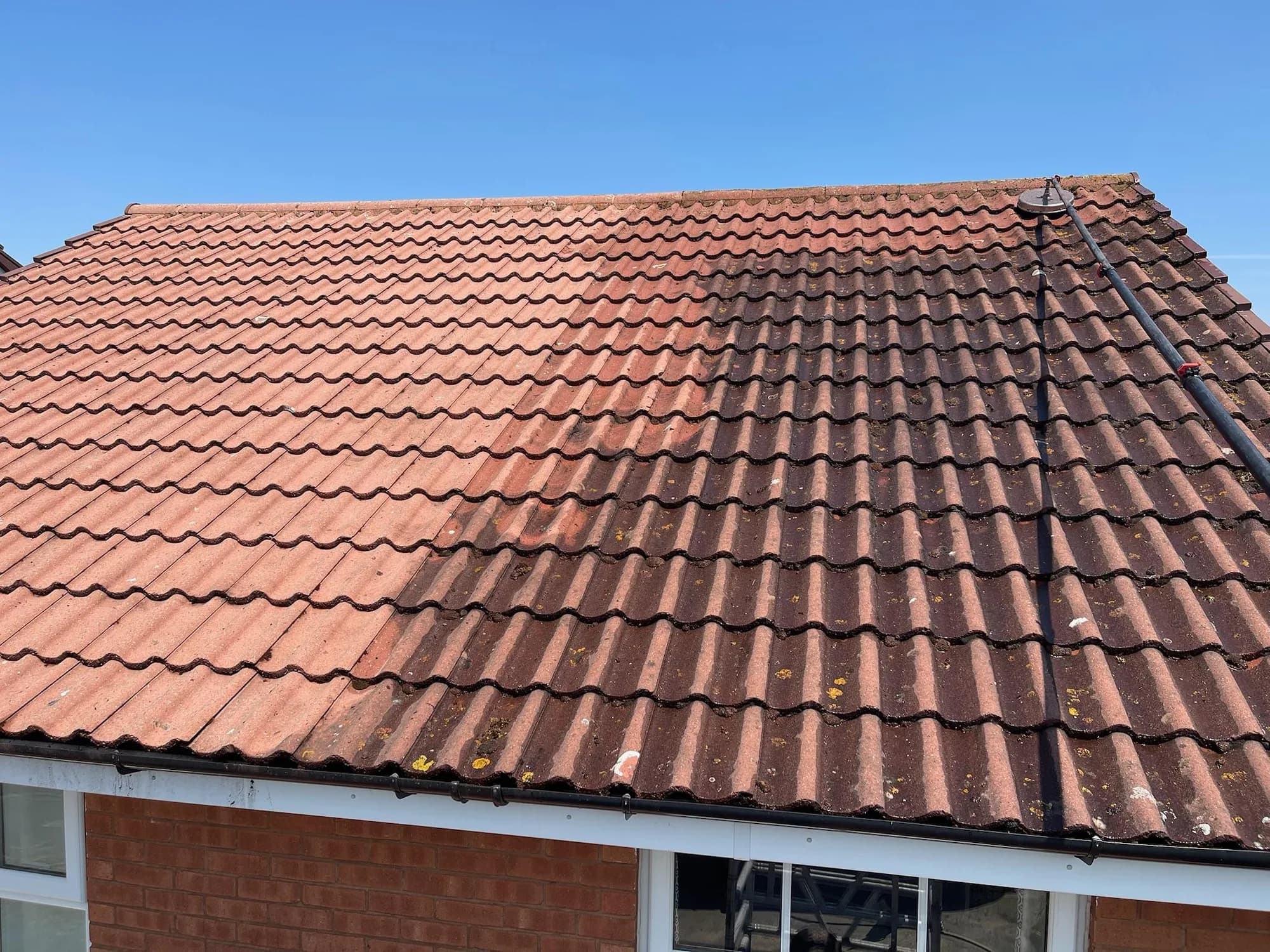
Can you pressure wash a roof? Technically, controlled water pressure can be used in some specialist cleaning situations, but aggressive high-pressure washing is not the right default for a UK tiled roof.
For clay and concrete tiles in particular, the safer approach is normally to assess the covering first, remove thick moss manually and use a controlled low-pressure or treatment-led method for what remains.
Natural slate and fibre-cement products need their own surface-specific assessment, and any water used should respect the way the roof is designed to shed rainfall.
The aim is not to make a roof look dramatically cleaner as quickly as possible. It is to achieve a significant improvement while protecting the roof covering, drainage and surrounding property.
If you are unsure what method your roof needs, Chiltern Surface Co can carry out a free site assessment, explain the options and provide a clear quotation without pressure or obligation.
We provide roof cleaning across Buckinghamshire, Berkshire and Oxfordshire.
Frequently asked questions
Can you pressure wash roof tiles?
Aggressive high-pressure washing is generally not recommended for domestic roof tiles. Controlled low-pressure cleaning may be used by a specialist after the tile type and condition have been assessed.
Can you pressure wash concrete roof tiles?
High pressure can damage or excessively weather the surface of concrete tiles. A staged process using manual moss removal followed by controlled low-pressure cleaning is usually more appropriate.
Can you pressure wash clay roof tiles?
Clay tiles, particularly older or weathered ones, should not be treated with aggressive pressure. The fired surface and condition of the tile need to be considered before cleaning.
Can you pressure wash a slate roof?
Slate needs individual assessment. Any water used should travel down the roof rather than beneath the overlaps, and unnecessary foot traffic should be avoided.
Is soft washing the same as pressure washing?
No. Soft washing uses low-pressure application of an appropriate treatment rather than relying on high water force to remove contamination.
Will pressure washing remove roof moss?
It can remove moss physically, but that does not make it the right method. Manual removal can take off the bulk growth with less reliance on force, allowing the remaining contamination to be treated more gently.
Does every roof with moss need cleaning?
No. Light growth may only need monitoring if the roof is sound and drainage is unaffected. Cleaning is more relevant where moss is heavy, repeatedly blocking gutters or creating a significant maintenance or appearance issue.
Does roof cleaning fix leaks?
No. Cleaning removes contamination; it does not repair cracked tiles, failed flashing, damaged underlay or other roofing defects. A leaking roof should be diagnosed before cleaning is treated as the solution.