
For most homes, cleaning the gutters once or twice a year is a sensible starting point. The right interval, however, depends on the property. A house beneath mature trees may need attention more often, while a property with little surrounding vegetation and a relatively clean roof may need less frequent cleaning.
The important point is not to follow a fixed calendar blindly. Gutters should be cleaned often enough to keep rainwater moving freely through the channels, outlets and downpipes. That means looking at what actually collects in your guttering, how quickly it builds up and whether water is still draining as it should.
At Chiltern Surface Co, we generally advise homeowners to think of gutter maintenance as condition-led rather than one-size-fits-all. A regular inspection is useful, but the cleaning schedule should reflect the property rather than a generic rule.
The Short Answer: Once or Twice a Year for Most Homes
For a typical UK home, one or two gutter cleans a year is usually a practical maintenance routine. Late autumn is often the most useful time because most deciduous leaves have fallen and the gutters can be cleared before the wetter winter period. A second clean or inspection in spring can be worthwhile where winter storms, roof moss, blossom, seeds or other debris have added further build-up.
That does not mean every house needs two professional cleans every year. A low-debris property may only need one clean, while a home surrounded by mature trees or affected by heavy roof moss may need checking more frequently.
A sensible starting point is:
- Low tree cover and little roof debris: inspect annually and clean when build-up justifies it.
- Typical suburban property: once or twice a year, depending on what the gutters collect.
- Property beneath mature trees: usually twice a year, with an extra check after heavy leaf fall if needed.
- Heavy roof moss or recurring blockages: inspect more frequently and adjust the cleaning interval to the rate of build-up.
- Gutter guards fitted: still inspect periodically, because fine silt, moss and decomposed organic material can collect beneath or around guards.
This flexible approach is more useful than simply saying that every gutter must be cleaned on exactly the same schedule.
What Actually Determines Gutter Cleaning Frequency?
The amount of material reaching the gutter is what matters most. Leaves are an obvious cause of blockages, but they are not the only one. Moss from roof tiles, wind-blown debris, seeds, blossom, small twigs and fine silt can all settle in the channels or collect around outlets.
1. Nearby trees and hedges
Properties beneath mature trees usually need more attention because leaf litter can build up quickly, particularly in autumn. Some trees also shed blossom, seeds or small debris in spring, which means a single late-autumn clean may not always be enough.
2. Moss on the roof
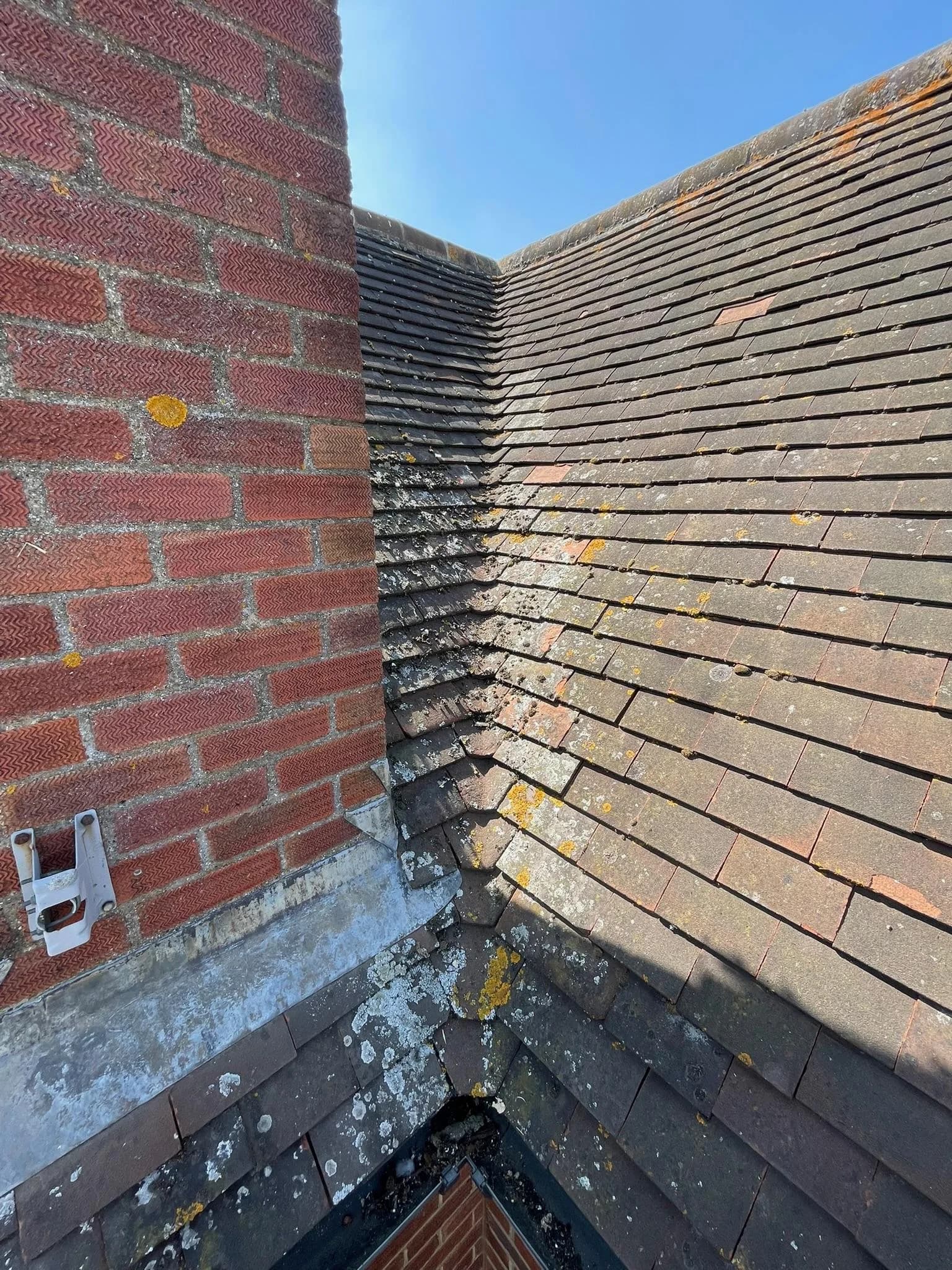
A roof with established moss can continue feeding material into the gutters even when there are few trees nearby. Loose moss breaks away naturally and can collect around outlets and downpipes. If recurring roof moss is contributing to repeated gutter blockages, addressing the roof itself may reduce how quickly debris returns.
3. The shape and condition of the guttering
Shallow falls, poorly aligned runs, narrow outlets and partially blocked downpipes can make a gutter system less tolerant of debris. Two houses on the same street can therefore need different maintenance intervals.
4. Exposure to wind and storms
Strong winds can carry leaves, twigs and general debris onto roofs and into guttering. After a significant storm, a ground-level check is sensible, particularly if you can see debris on the roof or notice water behaving differently during rainfall.
5. Gutter guards
Gutter guards can reduce the amount of large debris entering the channel, but they do not make guttering maintenance-free. Fine material can still pass through, while decomposed leaves and silt may accumulate over time. The correct interval therefore depends on what is happening beneath the guard, not simply on the fact that one is fitted.
What Is the Best Time of Year to Clean Gutters?
For many properties, late autumn is the most useful time for a full clean. Waiting until most leaves have fallen means the gutter can be cleared before winter rain and colder conditions place greater demand on the drainage system.
Spring is the other useful maintenance window. A spring inspection can reveal moss, grit, blossom, seeds or storm debris that has accumulated over winter. For homes beneath trees, this second check is often more useful than relying on autumn alone.
The calendar should still remain secondary to what the property is telling you. If gutters are overflowing in September, waiting until November simply because that is your usual cleaning month makes little sense.
How Do You Know Your Gutters Need Cleaning Sooner?
A blocked gutter often gives warning signs before a serious problem develops. The difficulty is that the inside of the gutter is hard to see from ground level, so homeowners tend to notice the problem only after water begins spilling over.
Look for:
- Water overflowing from the gutter during ordinary rainfall.
- Green staining or dark tide marks on fascias and walls below the gutter line.
- Visible moss, plants or debris sitting above the edge of the gutter.
- A downpipe that appears to discharge slowly or not at all.
- Sagging gutter sections or joints that have started to separate.
- Water tracking down walls instead of disappearing through the outlet.
- Persistent dampness around the roofline after rain.
Watching the guttering during normal rainfall can be surprisingly informative. Water should move into the outlets and downpipes rather than spill over the front or back of the channel.
Do You Need to Clean Gutters Every Year If There Are No Trees?
Not necessarily, but a lack of trees does not mean the gutter will stay completely clean.
This is one of the most common homeowner questions. A property without overhanging trees may collect far fewer leaves, but roof grit, moss, wind-blown debris and silt can still build up. The sensible approach is to inspect the gutters periodically and base the cleaning interval on what you find.
If the channels remain clear, water is flowing freely and very little debris is accumulating, an annual clean may be more than that particular property needs. Equally, if you start seeing blocked outlets or overflow, the interval is clearly too long.
In other words, the right answer is not 'every house must be cleaned twice a year'. It is 'check often enough to understand how quickly your guttering fills, then maintain it before drainage is affected'.
Do Gutter Guards Mean You Can Stop Cleaning Gutters?
No. Gutter guards can reduce large leaf build-up, but they should not be treated as a permanent substitute for inspection and maintenance.
Fine dust, roof grit, moss and broken-down organic material can still collect. In some systems, debris sits on top of the guard; in others, silt slowly accumulates beneath it. That means the maintenance schedule may change, but it does not disappear.
The best approach is to inspect the system periodically and confirm that both the gutter channel and the downpipes remain free-flowing. If the issue is staining on the outside rather than a blockage inside the channel, see our guide to cleaning the exterior of gutters.
Common Gutter Maintenance Mistakes
Waiting for water to overflow
Overflow is a late warning sign. By the time rainwater is pouring over the edge, debris may already be packed around an outlet or downpipe.
Cleaning the channel but ignoring the downpipe
A gutter is only useful if water can leave it. Clearing leaves from the visible channel but leaving a blocked outlet or downpipe does not restore proper drainage.
Pushing debris towards the outlet
Moving debris along the run can simply transfer the blockage into the part of the system that is harder to reach. Material should be removed rather than packed towards the downpipe.
Assuming gutter guards are maintenance-free
Guards reduce some debris but do not prevent every form of contamination. Periodic checks are still needed.
Taking unnecessary risks at height
A simple ground-level inspection is useful, but homeowners should be realistic about access. If the guttering is high, awkward to reach or positioned above conservatories, extensions or mature planting, professional access may be more appropriate than attempting the work from an unstable or poorly positioned ladder.
Can You Clean Gutters Yourself?
For a low, easily accessible gutter where safe access is genuinely available, a homeowner may be able to remove light debris and check the outlet. That can be perfectly reasonable.
The important distinction is between a manageable maintenance task and work that requires unnecessary risk. Two-storey properties, awkward rooflines, conservatories, deep overhangs or restricted ladder positions can make DIY cleaning less sensible.
You should also remember that removing visible leaves is only part of the job. A proper clean should leave the outlets and downpipes flowing freely, not simply make the top of the gutter look empty.
What Should a Professional Gutter Clean Include?

A professional gutter clean should do more than remove whatever can be reached from one ladder position.
At Chiltern Surface Co, the process is based around:
- Inspecting the guttering, downpipes and roofline before cleaning.
- Removing leaves, moss and roof debris rather than pushing it further along the run.
- Clearing outlets and flushing downpipes so water flow can be confirmed.
- Checking for loose brackets, open joints or obvious defects.
- Using ground-based gutter-vac equipment where the property and access make that the most suitable method.
- Providing a straightforward summary of anything found around the roofline that may need attention.
The purpose is to restore proper rainwater drainage and give the homeowner a clearer picture of the condition of a part of the property that is difficult to inspect from the ground.
A Practical Gutter Maintenance Schedule
If you are unsure where to start, use the following as a practical guide rather than a rigid rule.
Property condition
Starting point
What to watch
Few nearby trees, little roof moss
Annual inspection; clean as needed
Silt, roof grit, slow outlets
Typical suburban home
Once or twice a year
Leaves, moss, storm debris
Mature trees close to roof
Twice a year; extra check after heavy leaf fall
Leaf litter, seeds, blocked outlets
Heavy roof moss or recurring blockages
Inspect more frequently
Moss build-up, overflow, slow downpipes
Gutter guards fitted
Inspect periodically; clean based on build-up
Fine silt and debris beneath guards
After one or two maintenance cycles, the property usually tells you what interval is appropriate. If the gutters are still nearly empty at the next inspection, you may be able to extend the interval. If they are already packed with debris, shorten it.
The Bottom Line
For most homes, gutter cleaning once or twice a year is a sensible starting point, with late autumn usually the most important maintenance window. Properties beneath mature trees, affected by roof moss or prone to recurring blockages may need more frequent checks.
The best schedule is the one that keeps the channels, outlets and downpipes clear before water begins overflowing. That means paying attention to the property rather than relying on a generic calendar.
If you are unsure what condition your guttering is in, Chiltern Surface Co can carry out a free site assessment, explain what is actually required and recommend a sensible maintenance interval for your property. There is no benefit in cleaning more often than necessary, but equally, waiting until water is running down the walls is usually waiting too long.
Frequently asked questions
Is cleaning gutters once a year enough?
For some properties, yes. A home with little tree cover, low roof moss and consistently free-flowing drainage may only need an annual clean. Properties that collect more debris may need twice-yearly or more frequent attention.
Should gutters be cleaned in spring or autumn?
Late autumn is usually the most useful time because most leaves have fallen. Spring is a sensible second maintenance window where winter debris, moss, blossom or seeds create further build-up.
How often should gutters be checked?
A quick ground-level check during rainfall and after significant storms can be useful throughout the year. A more deliberate inspection once or twice a year helps establish how quickly your particular property collects debris.
Do gutter guards reduce cleaning frequency?
They can reduce the amount of large debris entering the gutter, but they do not eliminate maintenance. Fine silt, roof grit and broken-down organic material can still accumulate.
What is the clearest sign that gutters need cleaning?
Water overflowing during ordinary rainfall is an obvious sign, but earlier warnings include green staining on fascias, visible debris, plant growth, slow downpipes and damp marks below the gutter line.