If you are wondering how to remove black algae from roof surfaces, the safest approach is to identify the growth, assess the roof material and choose a cleaning method that suits its condition. Soft washing can treat biological growth without aggressive pressure, while professional maintenance can help keep the roof cleaner for longer.
What Causes Black Algae on a Roof?
Black streaks across a roof can make an otherwise well-maintained property look tired. However, these marks are not always ordinary dirt.
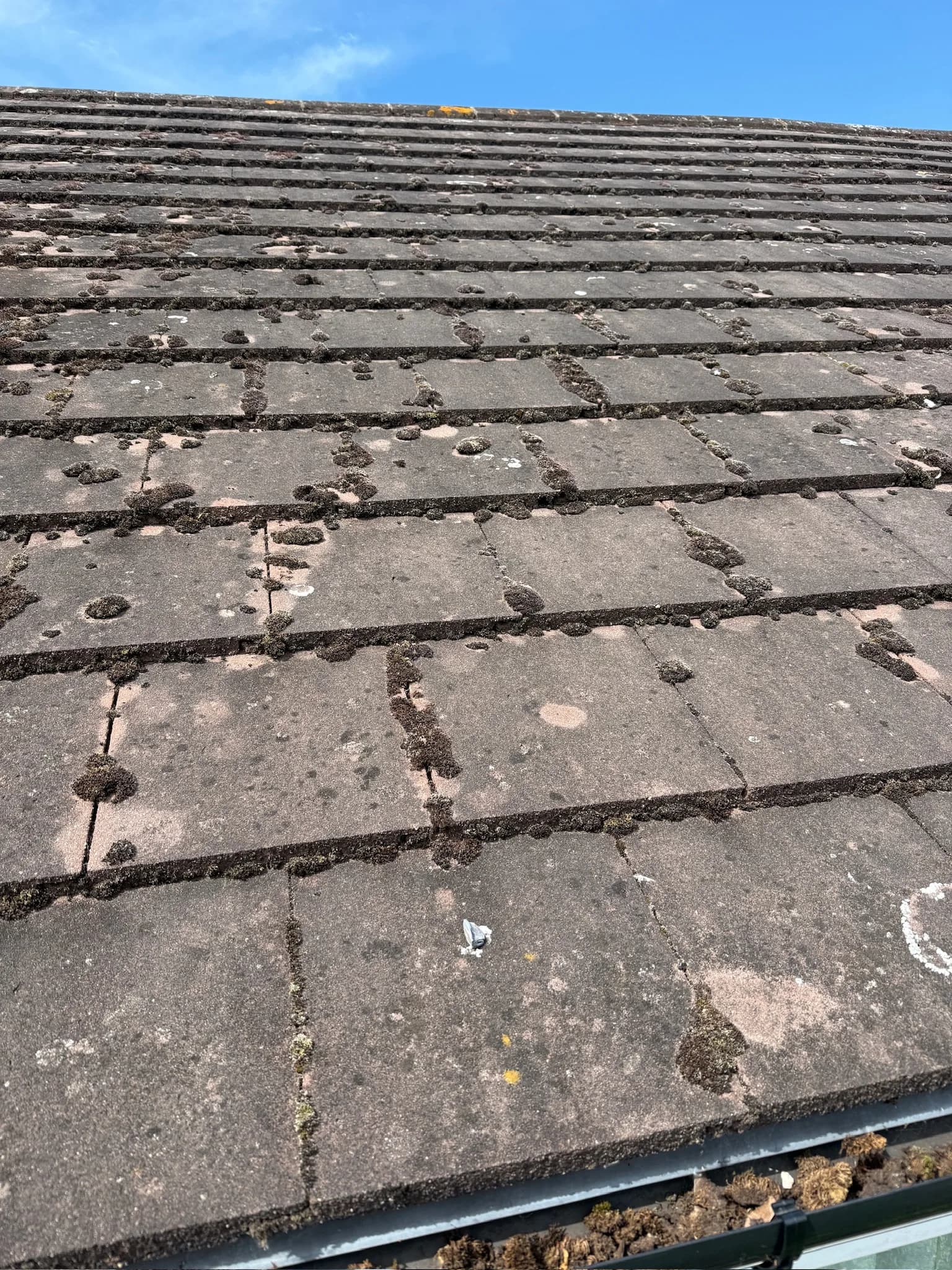
Dark streaking is commonly associated with biological growth, including algae and cyanobacteria. It tends to become more noticeable where the roof remains damp or receives limited sunlight.
The surrounding environment can also play a role. Trees near the property may create shade and contribute organic material to the roof. Moisture, limited airflow and the natural weathering of roofing materials can also create conditions where biological growth becomes established.
You may notice that one side of the roof develops dark streaks while another remains relatively clear. This does not necessarily mean that the roofing material is different. The difference may simply be caused by exposure to sunlight, shade and moisture.
Understanding the cause is important because how to remove black algae from roof surfaces depends on more than the appearance of the staining.
Is Black Algae on a Roof a Problem?
Black algae does not automatically mean that a roof needs replacing.
Dark staining is primarily an appearance issue, although persistent biological growth should not simply be ignored. A roof covered with moss, algae or lichen can become increasingly difficult to maintain, and moss in particular can retain moisture against the surface.
The condition of the roof is also important.
An older or weathered roof needs a more careful approach than a newer roof in good condition. Existing damage, fragile areas and the type of roofing material should all be considered before cleaning begins.
For this reason, professional roof cleaning should not start with a pressure washer or cleaning chemical. It should start with an assessment.
How to Remove Black Algae from Roof Safely
There are many suggestions online for removing black streaks. Some involve scrubbing, strong cleaning products or pressure washing.
The problem is that removing the visible staining is only part of the job.
The cleaning method must also be suitable for the roofing material.
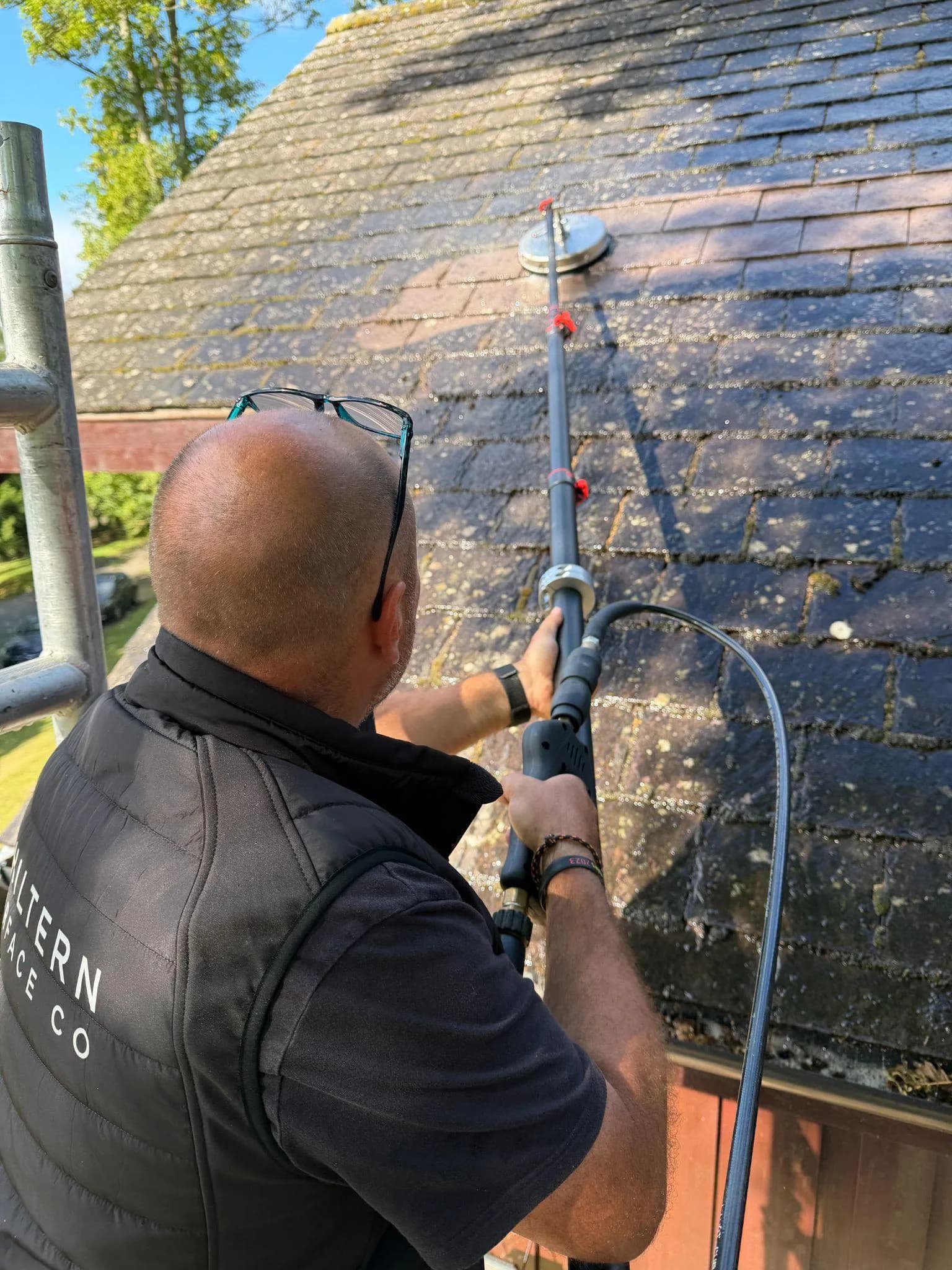
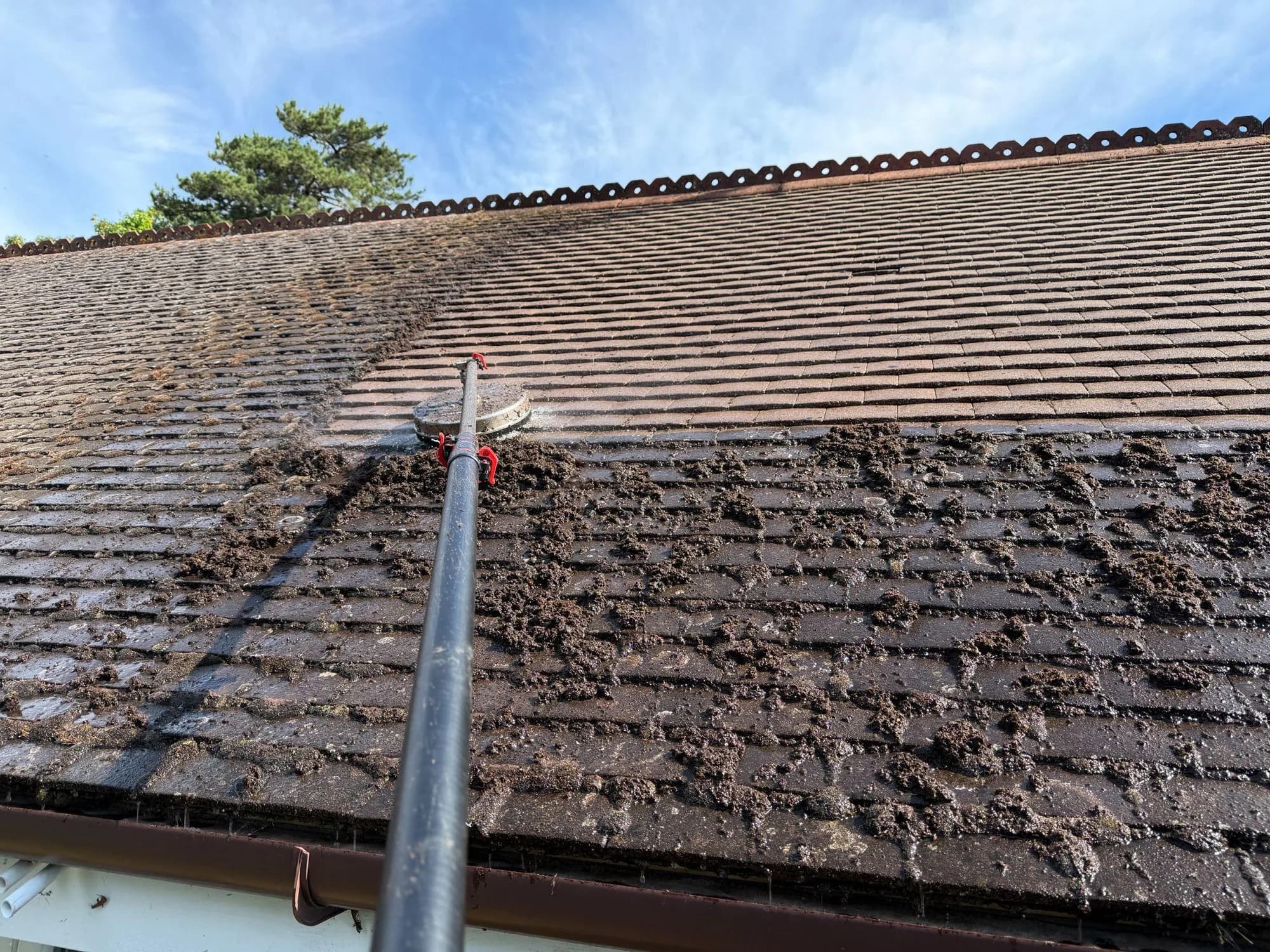
For many suitable roof surfaces, soft washing offers a controlled alternative to aggressive mechanical cleaning. It uses an appropriate cleaning treatment applied at low pressure to treat biological contamination rather than relying on high-pressure water to blast it away.
This approach can be particularly useful where the roof needs careful treatment.
However, soft washing is not a universal solution for every roof. The substrate, condition, type of contamination and surrounding environment should all be considered before selecting the treatment.
That is the difference between simply washing a roof and carrying out professional surface cleaning.
Why Soft Washing Can Be Suitable for Roof Cleaning
Soft washing focuses on treating the contamination rather than relying on force.
A suitable cleaning solution is applied to the affected surface at controlled pressure. The treatment works on biological growth, allowing it to be dealt with without the same mechanical force associated with high-pressure cleaning.
This can reduce unnecessary stress on the roof.
The method is especially useful when dealing with algae, moss and lichen on surfaces where aggressive pressure may be unsuitable.
The exact treatment should always be selected according to the roof.
At Chiltern Surface, the approach is based on the surface, its condition and the contamination present. There is no assumption that one cleaning method is appropriate for every roof.
Why Pressure Washing Is Not Always Suitable for a Roof
Pressure washing can be highly effective on suitable hard exterior surfaces.
A roof, however, needs more consideration.
High pressure can disturb roofing materials, damage vulnerable areas and force water into places where it should not go. Weathered or older surfaces may be particularly sensitive.
There is also a difference between making a roof look clean and cleaning it appropriately.
A pressure washer may remove black staining quickly, but that does not mean it is the best method for the underlying surface.
The Problem With Cleaning by Force
The strongest method is not automatically the most effective method.
When cleaning a roof, the objective should be to remove or treat the biological contamination while protecting the surface beneath it.
That means considering the material first.
A professional should be able to explain why a particular treatment is suitable rather than simply using the same equipment on every property.
How to Remove Black Algae from Roof Without Scrubbing
Scrubbing may seem like a simple DIY solution, but roofs are not ideal surfaces for aggressive manual cleaning.
Wet roofing can become slippery, while repeated brushing can disturb the surface.
Scrubbing also focuses on physically removing the visible growth rather than treating the conditions that allowed it to develop.
A suitable soft washing process can reduce the need for aggressive physical action.
Instead of repeatedly attacking the roof with a brush, the appropriate treatment can be used to address the biological contamination in a more controlled way.
This is particularly useful when dark streaks cover a large section of the roof.
What Is the Best Method for Black Algae on a Roof?
There is no single method that should be used on every roof.
Roofing materials can vary considerably. A property may have concrete tiles, clay tiles, slate or another roofing material, and each can have different characteristics.
Age and condition matter too.
A roof that is already weathered or damaged should not be treated in exactly the same way as a roof in good condition.
The amount and type of biological growth should also be considered.
Black algae may be present alongside moss or lichen. If so, the cleaning approach needs to account for the whole surface rather than focusing only on the black streaks.
This is why a proper assessment is such an important part of professional roof cleaning.
Can Black Algae Return After Roof Cleaning?
Yes.
Cleaning the roof does not permanently change the environment around it.
If the roof remains shaded, damp or surrounded by vegetation, biological growth can develop again.
This does not mean the original cleaning failed.
Outdoor surfaces are constantly exposed to weather and airborne biological material. The conditions that caused the growth in the first place may still exist after cleaning.
A good maintenance plan therefore considers both cleaning and future regrowth.
How Can You Reduce Future Regrowth?
There are several practical things homeowners can consider.
Keeping nearby vegetation appropriately maintained can help reduce excessive shading and organic debris where possible.
Gutters should also be kept clear so rainwater can drain properly.
The roof can then be inspected periodically for early signs of moss, algae or lichen.
Most importantly, future maintenance should be realistic.
No responsible roof cleaning service should promise that algae will never return.
The aim is to help the roof remain cleaner for longer.
How Chiltern EverGuard™ Helps Protect the Surface
After suitable cleaning, a protective treatment can form part of a longer-term roof maintenance plan.
Chiltern Surface offers Chiltern EverGuard™ Treatment, a professional surface protection treatment designed to help inhibit the regrowth of moss, algae and lichen.
It is not described as a permanent solution or a guarantee of a maintenance-free roof.
Its purpose is to help the cleaned surface remain cleaner for longer by reducing conditions favourable to biological regrowth.
How long the protection lasts depends on factors such as the surface, environment, weather and ongoing maintenance.
This is why Chiltern Surface uses practical, evidence-based language rather than making unrealistic promises.
Can You Remove Black Algae from a Roof Yourself?
DIY roof cleaning may seem straightforward when viewed from the ground.
The reality can be very different.
The first concern is safety.
A roof can become slippery when wet, particularly where algae or moss is already present. Working at height also introduces risks that should not be underestimated.
There is then the question of choosing the correct cleaning method.
A product that is suitable for one surface may not be appropriate for another. Similarly, equipment that works well on a driveway may be completely unsuitable for roofing.
If the roof is pitched, high, fragile or difficult to access, professional cleaning is the safer choice.
You should never climb onto a roof simply to remove a few dark streaks.
How Should a Roof Be Assessed Before Cleaning?
Before deciding how to remove black algae from roof surfaces, the condition of the roof should be considered.
Look at the roof from ground level first.
Check where the staining is concentrated and whether it appears alongside moss or lichen.
Consider whether nearby trees are creating shade or dropping organic material onto the roof.
Visible damage should also be noted.
However, a ground-level inspection cannot reveal everything.
A professional assessment can help determine whether cleaning is suitable and which method is appropriate for the surface.
This is particularly important for older roofing.
Black Algae, Moss and Lichen: What's the Difference?
Black algae is often seen as dark streaking or discolouration.
Moss is usually thicker and has a green appearance. It can form larger growths and retain moisture against the roof.
Lichen tends to attach firmly to the surface and can appear crusty or pale.
The three can occur together.
For example, a roof may have dark algae staining across a large area with moss developing in shaded sections.
This matters because the type and extent of contamination can influence the treatment required.
A professional cleaning process should therefore assess what is actually growing on the roof instead of assuming every dark mark is the same.
Does Shade Cause Black Algae on Roofs?
Shade can contribute to the conditions that encourage biological growth.
A roof section that receives less sunlight may stay damp for longer after rainfall.
Trees can increase shade while also introducing leaves and organic debris.
This can create a more suitable environment for algae, moss and lichen.
That is why homeowners often notice more growth on certain roof slopes than others.
If the same area repeatedly develops biological growth, the surrounding conditions should be considered as part of the maintenance plan.
How Often Should a Roof Be Cleaned?
There is no universal cleaning schedule for every roof.
Some properties may remain relatively clean for years, while others can develop biological growth more quickly because of shade, moisture or surrounding vegetation.
Rather than cleaning the roof simply because a fixed period has passed, it is more sensible to monitor its condition.
Early signs of growth can be assessed before contamination becomes widespread.
Following professional cleaning, regular inspection and sensible maintenance can help identify when further attention is actually needed.
Common Mistakes When Removing Black Algae
Using Excessive Pressure
High-pressure cleaning can cause unnecessary stress to roofing materials and may be unsuitable for certain surfaces.
Scrubbing the Roof Aggressively
Hard brushing can disturb the roof surface and is particularly risky when the roof is wet.
Using an Unverified Cleaning Product
Not every cleaning product is designed for roofing. Incorrect application can affect the roof and surrounding surfaces.
Ignoring the Condition of the Roof
An older or damaged roof should be assessed before cleaning. Removing contamination should never come at the expense of the roof itself.
Promising Permanent Results
Biological growth can return because outdoor conditions do not remain fixed. Any professional treatment should be presented realistically.
Why Choose Chiltern Surface for Roof Cleaning?
Chiltern Surface approaches roof cleaning as a specialist surface-care service rather than simply a pressure washing job.
The cleaning method is selected according to the substrate, contamination and condition of the roof.
For suitable surfaces affected by algae, moss or lichen, a controlled soft washing approach can provide effective treatment without relying on aggressive pressure.
The process can also be followed by Chiltern EverGuard™ Treatment where appropriate, helping inhibit future moss, algae and lichen regrowth.
The goal is not to promise a roof that will never need maintenance again.
Instead, the focus is on careful cleaning, appropriate treatment and realistic long-term surface care.
Frequently asked questions
What causes black streaks on a roof?
Black streaks are commonly associated with biological growth such as algae or cyanobacteria. Moisture, shade, limited sunlight and nearby vegetation can create conditions where this growth becomes established.
Can pressure washing remove black algae from a roof?
Pressure washing may remove visible growth, but aggressive pressure can be unsuitable for roofing materials and may cause unnecessary damage. A controlled soft washing approach can be more appropriate for many suitable roofs.
Will black algae come back after cleaning?
It can. Roofs remain exposed to moisture, weather and airborne biological material. A suitable protective treatment can help inhibit regrowth, but no responsible service should guarantee that algae will never return.
Is it safe to remove black algae from a roof yourself?
Roof cleaning can involve significant risks, particularly on pitched or slippery surfaces. There is also a risk of using unsuitable equipment or products. Professional assessment is recommended when the roof is difficult to access or its condition is uncertain.
Does Chiltern EverGuard™ permanently stop roof algae?
No. Chiltern EverGuard™ Treatment is designed to help inhibit the regrowth of moss, algae and lichen. The duration of protection depends on the surface, environment, weather and maintenance, so it should not be presented as a permanent or maintenance-free solution.
Conclusion
Knowing how to remove black algae from roof surfaces is not simply about finding the strongest cleaning product or the most powerful pressure washer. Black streaks are often associated with biological growth that develops where moisture, shade and other environmental conditions allow it to thrive. While the staining can affect the appearance of your property, the cleaning method should also protect the underlying roof. For suitable surfaces, soft washing can provide a controlled way to treat algae, moss and lichen without relying on aggressive pressure. However, the correct approach should always be based on the roof material, condition and contamination. Cleaning is also only part of long-term roof care. Biological growth can return, particularly where the surrounding environment remains favourable. Appropriate maintenance and Chiltern EverGuard™ Treatment, where suitable, can help inhibit future regrowth and keep the surface cleaner for longer. If your roof has developed black streaks, algae, moss or lichen, Chiltern Surface can assess the condition and recommend an appropriate cleaning and maintenance approach. Contact Chiltern Surface today to arrange a Free Site Assessment and find the right solution for your roof.