
If you want to know how to remove moss from roof without pressure washing, the key is to treat the moss without putting unnecessary stress on the roof. Careful removal, suitable treatments and safe access can help restore the surface while protecting the tiles. This guide explains the process, prevention tips and when to call professionals.
Why Does Moss Grow on Roofs?
Moss is a common sight on many UK roofs, especially where the weather is damp and the roof receives limited sunlight.
It often starts as a small patch. Over time, moisture and shade can allow it to spread across more of the roof. Nearby trees can make the problem worse by creating shade and dropping leaves or other organic debris onto the surface.
Some roof sections may therefore have much more moss than others.
A north-facing or shaded roof slope, for example, may remain damp for longer after rainfall. This creates a more suitable environment for moss growth.
Moss can also appear alongside algae and lichen. When several types of biological growth are present, the roof may look heavily stained or weathered.
However, moss on a roof does not automatically mean the roof is damaged or needs replacing. The amount of growth, roof condition and drainage should all be considered before deciding what action is needed.
Is Moss on a Roof a Serious Problem?
A small amount of moss is not always an emergency.
However, thick or widespread growth should not simply be ignored.
As moss becomes established, it can hold moisture against the roof surface. It may also spread around tile edges and drainage areas. Loose moss can eventually find its way into gutters and contribute to blockages.
There is also the appearance factor.
A roof covered in green moss can make an otherwise clean property look older and poorly maintained. Removing unwanted growth can therefore improve the appearance of the entire building.
The most important point is that roof moss removal should be carried out with the condition of the roof in mind.
If the tiles are old, fragile, cracked or already damaged, aggressive cleaning may create additional problems.
How to Remove Moss from Roof
The safest approach depends on the roof material, its condition, the amount of moss and how easily the roof can be accessed.
For suitable roofs, moss can be carefully removed using controlled methods rather than relying on high-pressure water.
The process may involve manual removal of established moss followed by an appropriate treatment for remaining biological growth.
The goal is not simply to make the roof look clean as quickly as possible.
Instead, the aim is to remove unwanted growth while keeping the roof surface in good condition.
Start With a Roof Assessment
Before cleaning begins, inspect the roof from a safe position.
Look for:
- The amount of moss present
- Areas of heavy growth
- Algae or lichen
- Broken or displaced tiles
- Blocked gutters
- Damaged roof edges
- Signs of water ingress
If the roof is steep, high or difficult to access, do not climb onto it just to remove moss.
A professional assessment can determine whether cleaning is suitable and what approach should be used.
Remove Loose Moss Carefully
Where appropriate, loose moss can be removed using controlled manual techniques.
The process should be gentle.
There is no need to aggressively scrape or attack the tiles. The objective is to lift established moss from the surface while avoiding unnecessary disturbance to the roofing material.
Particular care should be taken around tile overlaps, roof edges and other vulnerable areas.
The removed moss should also be collected rather than simply allowing large amounts of debris to enter the gutters.
Treat Remaining Biological Growth
Removing the thickest moss does not always deal with everything left on the roof.
Small traces of biological growth may remain on the surface.
A suitable professional treatment can help address remaining moss, algae and lichen. The treatment selected should be suitable for the roof material and applied responsibly.
This is one reason professional roof cleaning is about more than simply removing visible moss.
Why Avoid Pressure Washing a Roof?
If you are specifically looking for how to remove moss from roof without pressure washing, you may already understand that a roof needs a different approach from a driveway or patio.
Pressure washing relies on powerful water jets to remove contamination.
That can be useful on suitable hard surfaces.
However, roofing materials can be more vulnerable.
High-pressure water can disturb tiles, damage weathered surfaces and potentially force water beneath areas where it should not enter. It can also remove more material than intended.
A Roof Is Not a Driveway
This is an important distinction.
A driveway is designed to withstand regular exposure to vehicles, foot traffic and weather. A roof has a different purpose and construction.
Its job is to keep water out of the building.
Using excessive pressure on a roof can therefore create risks that do not exist when cleaning a hard ground-level surface.
The strongest cleaning method is not automatically the best method.
A professional approach should focus on controlled cleaning rather than maximum pressure.
Pressure Can Cause Unnecessary Damage
Older roofs deserve particular care.
Weathering can make tiles more vulnerable over time. Existing cracks or weakened areas may not be obvious from the ground.
Pressure washing can also disturb the surface around tile overlaps.
For this reason, a careful cleaning method is often preferable where the roof material and condition allow it.
Can You Remove Roof Moss Without Climbing Onto the Roof?
This is a common question for homeowners.
It is understandable to want to remove moss without getting onto the roof.
The problem is that trying to clean a pitched roof from a ladder or from the ground can create serious safety concerns.
You may not be able to see the entire roof.
You may also struggle to reach areas evenly.
Most importantly, wet moss and wet roofing can be extremely slippery.
A household ladder is not a substitute for suitable roof-access equipment.
If the roof is high or steep, professional cleaning is the sensible option.
The money saved by attempting a DIY job may not be worth the risk of a fall or accidental roof damage.
What Is the Best Way to Remove Moss from Roof Tiles?
There is no single method that suits every type of roof tile.
Concrete, clay and slate roofing can all have different characteristics. Age and weathering also affect how a roof should be treated.
For example, an older roof may need much more care than a newer roof with sound, stable tiles.
The amount of moss matters too.
A roof with a few small patches does not require the same approach as a roof where thick moss covers large areas.
This is why Chiltern Surface focuses on the condition of the surface when considering roof cleaning.
The correct method should be chosen for the roof rather than forcing every property through the same process.
How to Protect Roof Tiles During Moss Removal
Removing moss should not become an excuse for damaging the tiles underneath.
Avoid aggressive scraping and unnecessary pressure.
Where manual removal is suitable, tools should be used carefully.
Foot traffic should also be kept to a minimum, especially on older or fragile roofs.
If access requires walking directly across the roof, it should be considered whether another access method would be safer.
A professional cleaner can assess the roof and use appropriate access and cleaning techniques for the property.
How to Remove Moss from Roof Without Damaging It
The biggest difference between careful roof cleaning and aggressive cleaning is the treatment of the surface.
The objective is not simply:
"Remove every piece of moss as quickly as possible."
It is:
"Remove the moss while protecting the roof."
That means considering the following before cleaning:
- Roof material
- Roof age
- Existing damage
- Amount of moss
- Roof pitch
- Access
- Nearby plants
- Gutters and drainage
- Other biological growth
Once these factors are understood, the appropriate cleaning method can be selected.
Can Soft Washing Help With Roof Moss?
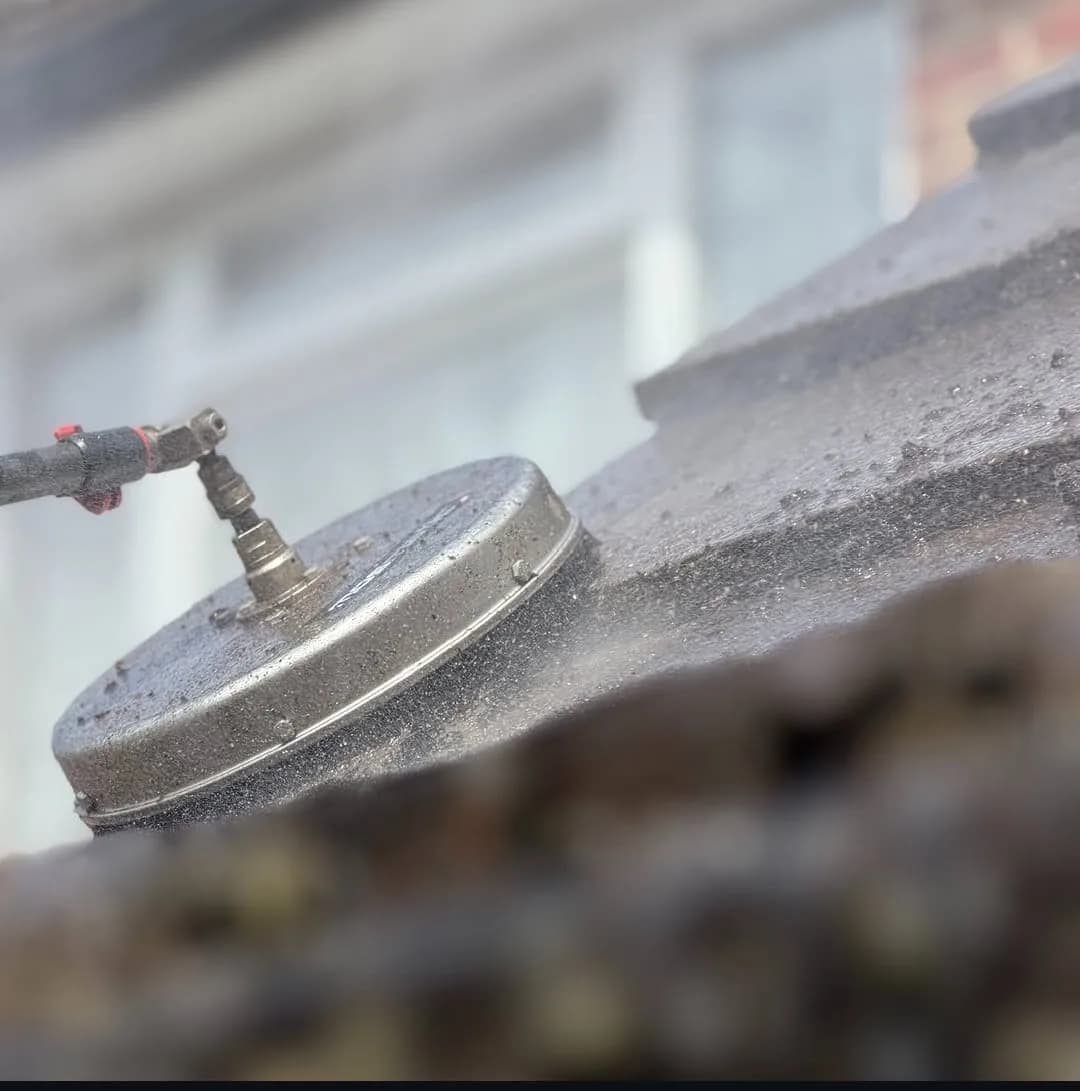
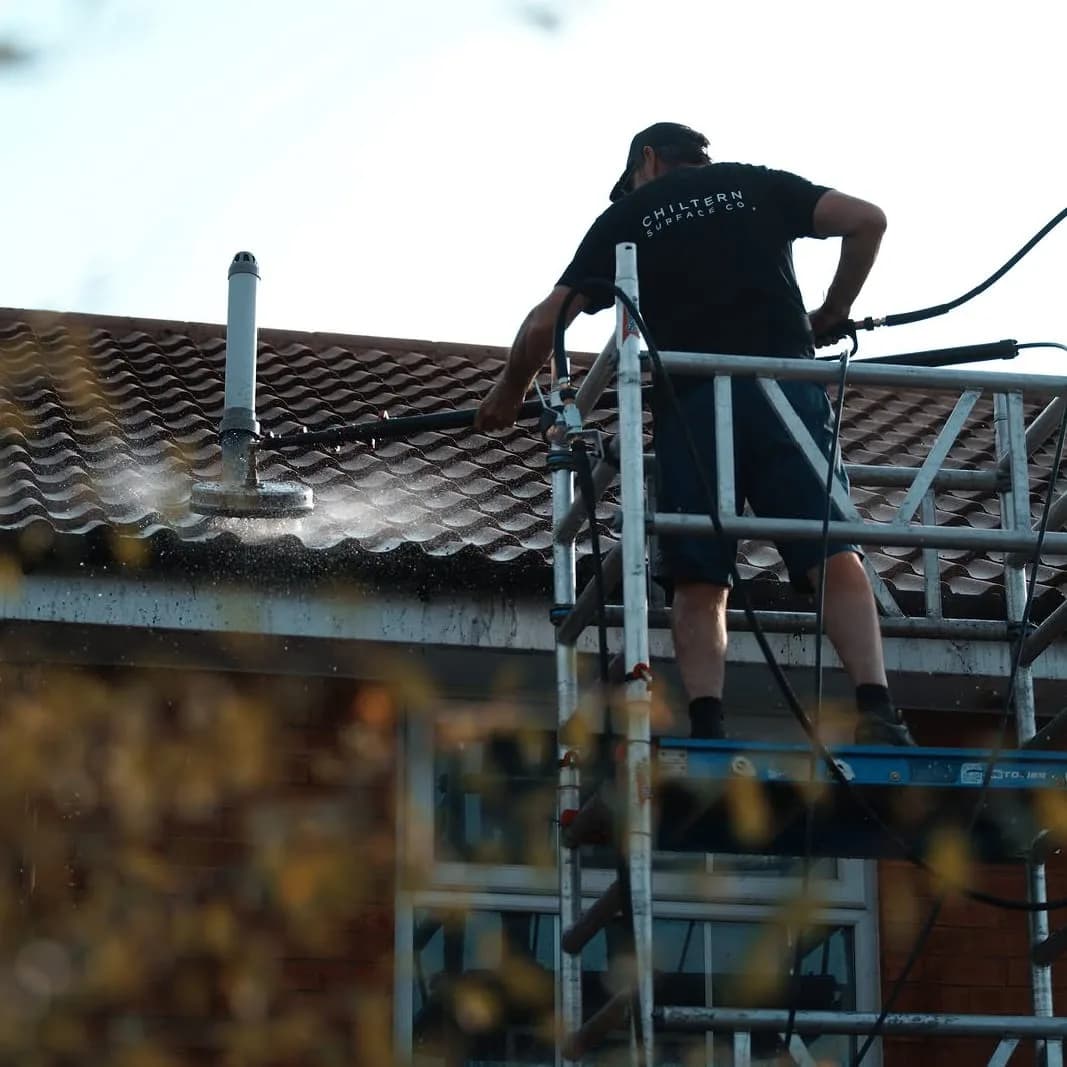
Soft washing is a low-pressure cleaning approach that uses a suitable cleaning treatment rather than relying on aggressive water pressure.
For appropriate roofing surfaces, it can be useful for treating biological growth such as moss, algae and lichen.
The advantage is that the cleaning process does not depend on blasting the surface with high-pressure water.
Instead, the treatment is used to deal with the contamination in a more controlled way.
However, soft washing should not be treated as a universal answer for every roof.
The roof material and condition must still be considered.
A professional should determine whether the approach is suitable before treatment begins.
How to Prevent Moss from Coming Back
Knowing how to remove moss from roof without pressure washing is only part of the solution.
The next question is usually:
"How do I stop it coming back?"
Unfortunately, no outdoor roof can be guaranteed to remain completely free of moss forever.
Rain, moisture, shade, airborne spores and nearby vegetation will continue to affect the surface.
However, there are practical ways to reduce favourable conditions and keep the roof under control.
Manage Excessive Shade
Trees can provide welcome shade around a property, but heavy overhanging vegetation can also keep roof areas damp.
Where appropriate, managing nearby vegetation can improve sunlight and airflow.
This does not mean removing trees simply because moss exists.
Instead, look at whether excessive shade and falling debris are contributing to the problem.
Keep Gutters Clear
Gutters are an important part of roof maintenance.
When moss is removed, loose debris can end up in the guttering.
If gutters are already blocked, additional debris can make the problem worse.
Regular gutter cleaning helps maintain proper rainwater flow and reduces the chance of moss and other debris causing blockages.
Monitor the Roof
You do not necessarily need to clean the roof every year.
Instead, keep an eye on its condition.
If you notice small areas of moss developing, it may be easier to deal with them before they become widespread.
Regular visual checks can also help you identify broken or displaced tiles early.
Does Roof Moss Come Back After Cleaning?
Yes, it can.
Cleaning removes the existing problem, but it does not change every environmental condition around the property.
A roof surrounded by trees may remain damp and shaded.
A roof exposed to frequent rainfall will continue to receive moisture.
Biological material can also return naturally over time.
This is why professional roof cleaning should not be sold as a permanent cure.
The realistic goal is to remove existing growth and help the roof stay cleaner for longer.
Can a Protective Treatment Help?
A suitable post-cleaning treatment can form part of a longer-term maintenance plan.
Chiltern Surface offers Chiltern EverGuard™ Treatment, designed to help inhibit the regrowth of moss, algae and lichen.
The treatment is not a promise that biological growth will never return.
Instead, it is intended to help maintain the cleaned surface and reduce the conditions that support future growth.
The expected effectiveness and duration can vary depending on the roof, environment, weather and ongoing maintenance.
DIY Roof Moss Removal vs Professional Cleaning
DIY roof cleaning may appear simple when you look at the roof from the garden.
The reality is different.
Roof work involves both safety and surface-care concerns.
Professional cleaning is worth considering if the roof is:
- High or steep
- Difficult to access
- Slippery
- Heavily covered in moss
- Old or weathered
- Showing signs of damage
- Close to fragile roof features
The biggest benefit is not simply having someone else remove the moss.
It is having the work assessed and completed using equipment and methods suited to the property.
What About Moss Removal Products?
There are many products marketed for roof moss removal.
However, homeowners should not assume that a product suitable for one surface will be suitable for every roof.
The instructions should always be followed carefully.
The surrounding property also needs consideration.
Cleaning solutions can come into contact with plants, walls, windows, gutters and other surfaces.
Using too much product does not necessarily produce a better result.
Professional application can provide greater control where the roof is difficult to access or the treatment needs careful handling.
When Should You Call a Professional?
If you are asking how to remove moss from roof without pressure washing because you want to avoid damaging your property, it is worth considering whether DIY cleaning is appropriate at all.
A professional should be considered when the roof is difficult to access or the moss is widespread.
You should also seek professional help if you notice:
- Cracked tiles
- Loose tiles
- Damaged roof edges
- Heavy moss growth
- Blocked gutters
- Water stains inside the property
- A steep roof pitch
Do not climb onto a roof simply because the moss looks easy to remove.
Safety should always come first.
Why Choose Chiltern Surface?
Chiltern Surface provides specialist exterior cleaning with a focus on choosing appropriate methods for different surfaces.
Roof cleaning requires more care than simply pointing a pressure washer at the surface.
The condition of the roof, the type of biological growth and the surrounding property all need to be considered.
For homeowners looking for how to remove moss from roof without pressure washing, this controlled approach can provide a more suitable alternative to aggressive cleaning.
Chiltern Surface can assess the roof and determine the most appropriate approach for the property.
Where suitable, roof cleaning can be combined with Chiltern EverGuard™ Treatment to help inhibit future moss, algae and lichen regrowth.
Frequently asked questions
What is the safest way to remove moss from a roof without pressure washing?
For suitable roofs, careful manual moss removal combined with an appropriate treatment can provide an effective alternative to pressure washing. However, the safest method depends on the roof material, condition and access. High or steep roofs should be handled by professionals.
Can I remove roof moss without climbing onto the roof?
Some cleaning methods can be applied using suitable long-reach equipment, but homeowners should not attempt dangerous work from ladders or unstable positions. If you cannot safely access the roof, professional roof cleaning is the better option.
Will moss grow back after it has been removed?
Yes. Moss can return because roofs remain exposed to rain, moisture, shade and airborne biological material. Keeping gutters clear, managing excessive surrounding vegetation and using a suitable protective treatment can help reduce future growth.
Is pressure washing safe for roof tiles?
Pressure washing can be unsuitable for many roofing surfaces because excessive pressure can disturb or damage tiles and force water into vulnerable areas. A controlled cleaning method is often preferable where the roof material and condition require greater care.
How often should moss be removed from a roof?
There is no fixed schedule for every property. The ideal frequency depends on the roof, surrounding environment, amount of shade and speed of moss growth. Regular inspections can help identify when cleaning is actually needed.
Conclusion
Knowing how to remove moss from roof without pressure washing is not about finding the quickest way to make a roof look clean. It is about removing unwanted growth while protecting the roofing material underneath. Careful manual removal and suitable low-pressure treatments can provide a more controlled approach than aggressive pressure washing. However, the correct method depends on the roof's material, condition, access and the amount of moss present. It is also important to think beyond the initial clean. Moss can return when moisture, shade and surrounding vegetation continue to create favourable conditions. Keeping gutters clear, monitoring the roof and managing excessive shade can all support longer-term maintenance. Where appropriate, Chiltern EverGuard™ Treatment can also help inhibit future moss, algae and lichen regrowth. If your roof has become covered in moss and you do not want to risk climbing onto it or using aggressive pressure washing, Chiltern Surface can assess your roof and recommend an appropriate cleaning solution. Contact Chiltern Surface today to arrange a Free Site Assessment and take the first step towards a cleaner, better-maintained roof.