If you are searching for how to solar panel cleaning, you need a method that removes dirt without damaging the panels. Dust, pollen, bird droppings and grime can build up over time. This guide explains the safest cleaning methods, equipment, timing, costs and professional options for UK homeowners.
What Is Solar Panel Cleaning?
Solar panel cleaning is the process of removing dirt and organic debris from the surface of photovoltaic panels.
Solar panels are designed to spend years outside, exposed to rain, wind, dust and changing weather. However, being weather-resistant does not mean they always stay clean.
Over time, the glass surface can collect:
- Dust and fine dirt
- Bird droppings
- Pollen
- Leaves and small organic debris
- General atmospheric grime
- Water marks
- Algae and other organic deposits
Some of this contamination may be removed naturally by rainfall. However, rain cannot always remove dried bird droppings, sticky grime or deposits that have built up over time.
This is why homeowners often start looking for how to solar panel cleaning when they notice their panels looking dull or dirty.
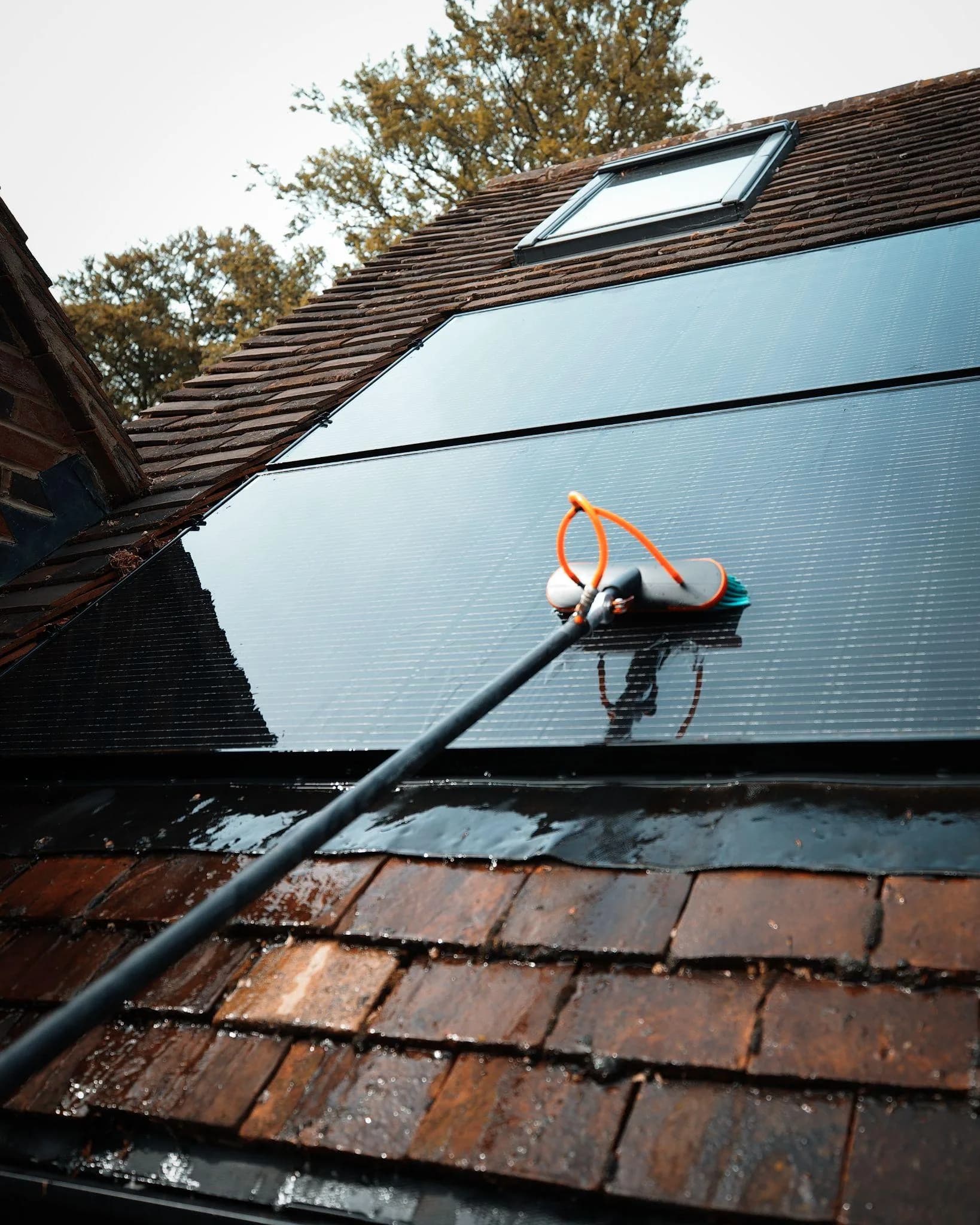
At Chiltern Surface, solar panels are cleaned using a pure-water cleaning system and water-fed pole, helping remove grime and shading from roof-mounted panels without relying on aggressive pressure.
The key principle is simple: solar panels should be cleaned gently, using suitable equipment and a method appropriate for the installation.
Why Do Solar Panels Get Dirty?
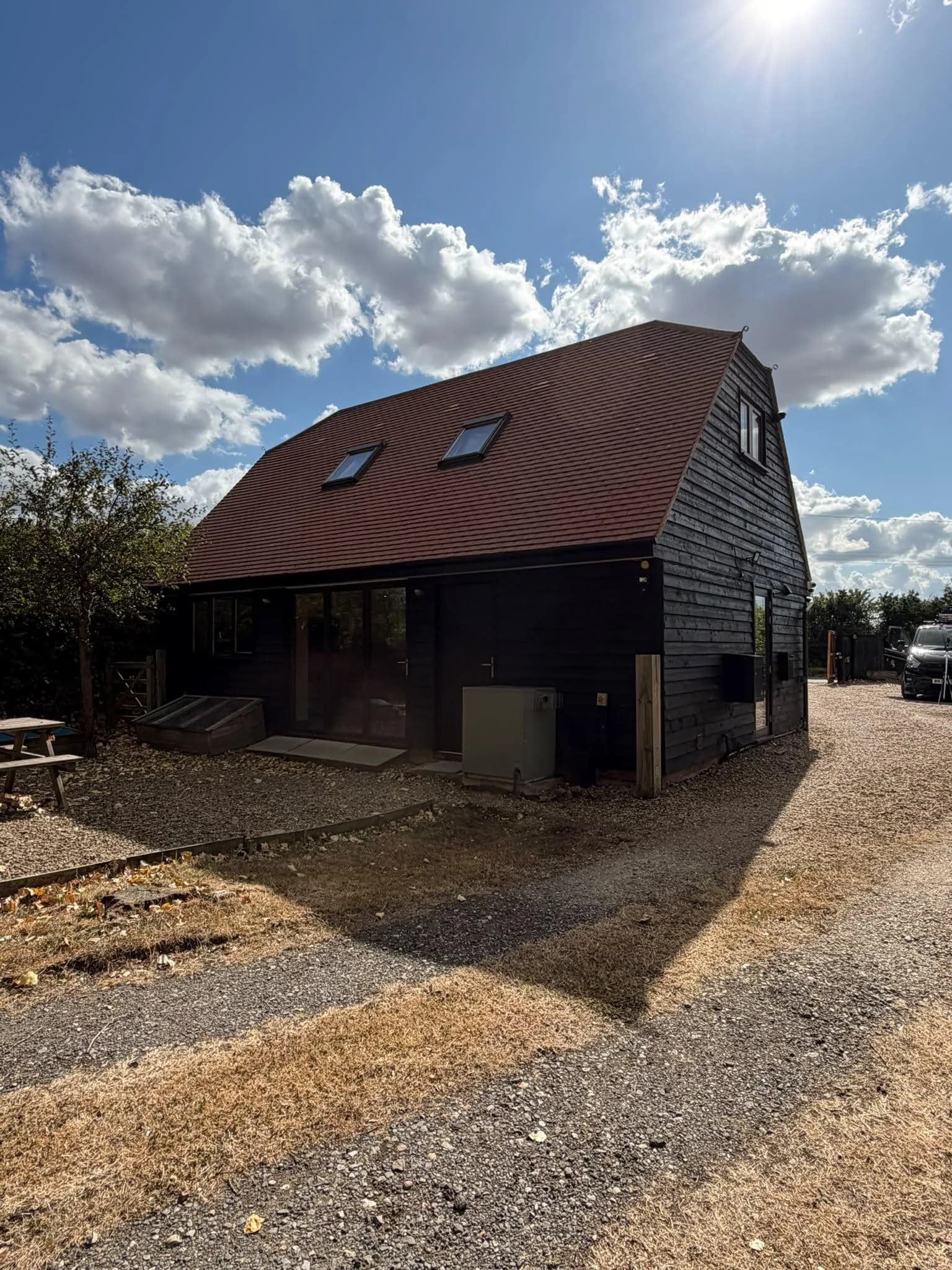
Solar panels are exposed to everything happening around your property.
If you live near mature trees, panels can collect pollen, leaves and organic debris. Properties in areas with more dust may experience faster surface build-up.
Birds can also be a major source of contamination.
A single bird dropping may not seem significant. However, repeated deposits can create visible marks across the panels.
Rain does help. Yet, when water evaporates, it can leave behind minerals and loosened dirt.
This can create a cycle where the panels appear cleaner after rain but still have visible spots and contamination.
The local environment therefore matters.
A roof surrounded by trees may need more attention than one with an open aspect.
Similarly, panels installed at a lower angle may not shed rainwater and loose debris as easily as panels on a steeper roof.
Does Dirt Affect Solar Panel Performance?
Solar panels need sunlight to reach their photovoltaic cells.
When dirt covers part of the glass, it can reduce the amount of sunlight reaching the surface.
However, the effect depends on the type and amount of contamination.
A light layer of dust may have a relatively small effect.
Heavy dirt, bird droppings or other deposits covering larger areas can have a greater effect.
This means you should not assume that every dirty panel will suddenly produce much more electricity after cleaning.
Instead, look at the actual condition of your panels.
If they are visibly covered in grime, cleaning may be worthwhile.
If they already look clean and your system is performing normally, there may be little benefit in cleaning them unnecessarily.
How to Solar Panel Cleaning Safely
If you want to understand how to solar panel cleaning, start with one important rule:
Do not treat solar panels like ordinary windows or paving.
They require a gentle approach.
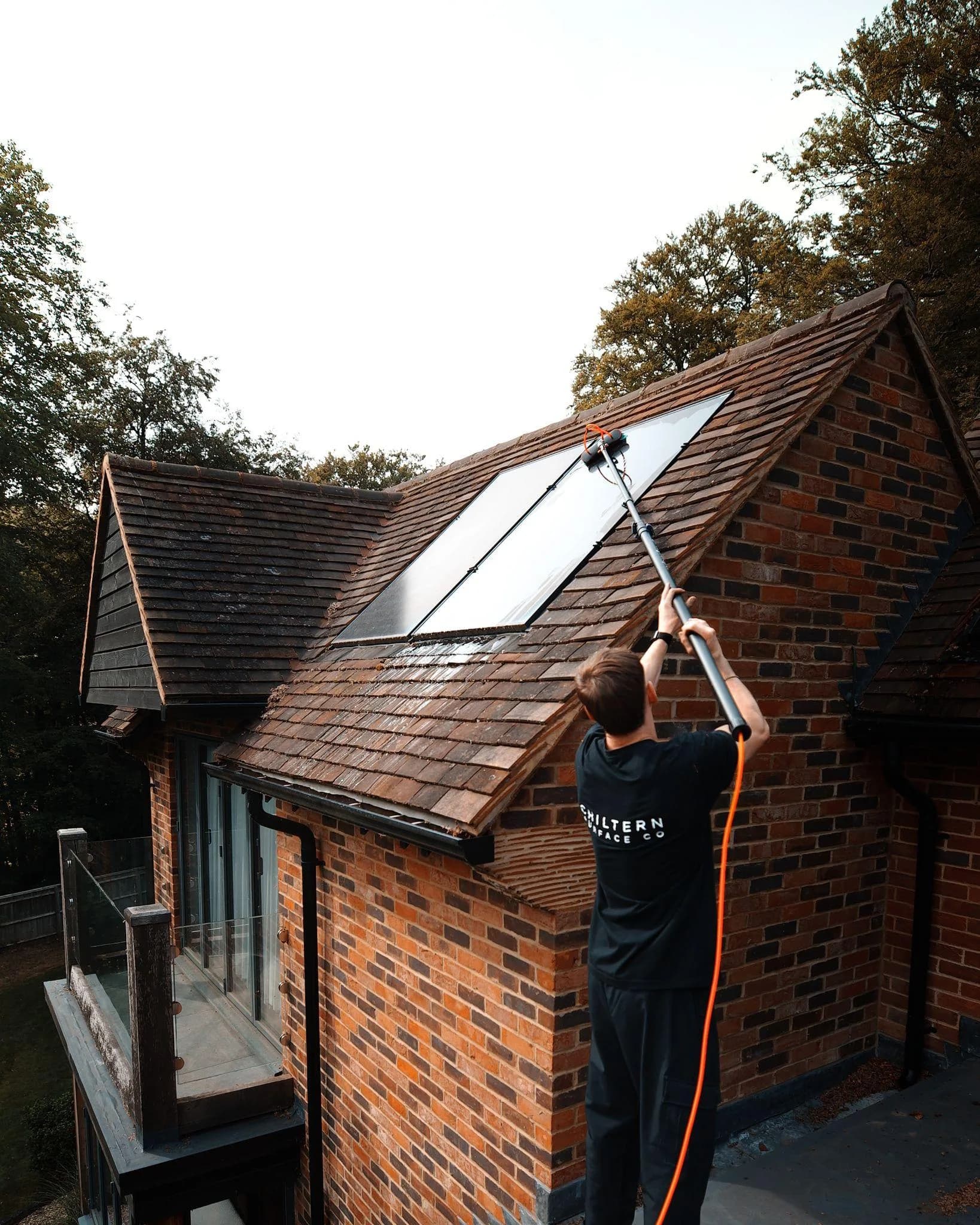
For many roof-mounted systems, professional cleaning can involve a water-fed pole and purified water.
The pole allows the cleaner to reach panels from a suitable position without walking directly across the solar array.
The brush should be soft and appropriate for solar-panel surfaces.
Pure water is useful because it contains fewer dissolved minerals than ordinary tap water. This helps reduce the risk of water spots when the panels dry.
The general process is straightforward:
- Inspect the panels and access conditions.
- Identify visible contamination.
- Use suitable pure water.
- Gently agitate stubborn dirt where necessary.
- Rinse the panels thoroughly.
- Allow the purified water to dry naturally.
- Check the surface for remaining contamination.
The exact approach can change depending on the roof, panel arrangement and type of dirt.
Quick Reference Table
Task
Typical Timing
Method
Difficulty
Light dust removal
30–60 minutes
Pure-water rinse
Low–Medium
General panel cleaning
1–2 hours
Water-fed pole + pure water
Medium
Bird dropping removal
Varies
Gentle brush + pure water
Medium
Heavy grime removal
1–3 hours
Pure-water cleaning
Medium
Roof-mounted panels
Varies
Long-reach water-fed pole
High
Difficult roof access
Varies
Professional cleaning system
High
Larger solar array
Varies
Professional pure-water system
High
These are general estimates rather than fixed cleaning times. The number of panels, roof height, access, contamination and weather can all affect the job.
What Is the Best Way to Clean Solar Panels?
For many domestic solar installations, pure-water cleaning with a suitable water-fed pole is an effective professional method.
Pure water has been filtered to remove many of the dissolved minerals found in normal tap water.
Why does that matter?
When ordinary water dries, minerals can remain on the glass.
You may then see:
- White spots
- Water marks
- Mineral deposits
- Cloudy patches
Pure water is much less likely to leave this type of residue when used correctly.
A suitable soft brush can then help loosen dirt without aggressive scrubbing.
This is particularly useful when cleaning roof-mounted panels from ground level or another safe working position.
Can You Clean Solar Panels With Tap Water?
Technically, water can be used to rinse solar panels.
However, ordinary tap water is not always the best option.
The main issue is mineral content.
Hard water contains dissolved minerals. When the water evaporates, these minerals can remain on the glass.
This may leave visible marks.
For homeowners who only want to rinse away light dust, this may not seem important.
For a professional clean, however, the goal is usually to leave the surface as clean and spot-free as possible.
That is why purified or deionised water is commonly preferred for professional solar panel cleaning.
Is Pure Water Better for Solar Panel Cleaning?
Pure water is particularly useful because of its low mineral content.
It allows a cleaner to rinse the panels without deliberately adding detergents or leaving the mineral residue associated with hard tap water.
The cleaning process can therefore remain simple:
Water → gentle agitation → rinse → clean surface
This can be preferable to using household cleaning products.
Pure-water cleaning also fits well with water-fed pole systems.
The cleaner can work from a safer position while the pole delivers purified water to the panel surface.
Can You Use a Pressure Washer on Solar Panels?
This is one of the most important questions when learning how to solar panel cleaning.
A pressure washer can remove dirt very quickly from many outdoor surfaces.
Solar panels are different.
Using unnecessarily high pressure can create risks around the panel surface, seals, frames and other components.
The objective of solar panel cleaning is not to use as much force as possible.
It is to remove contamination while keeping the cleaning process controlled.
For routine solar-panel cleaning, a gentle water-fed approach is therefore much more appropriate than aggressive pressure washing.
Why High Pressure Is Unnecessary
Most everyday solar-panel contamination does not require extreme force.
Dust can be rinsed away.
Pollen can be loosened.
Bird droppings can be softened and carefully removed.
General grime can be treated with suitable cleaning equipment.
There is little reason to use the same force you might use to clean a concrete driveway.
Solar panels require a different cleaning philosophy.
Can You Use a Hosepipe?
A hosepipe can rinse loose dirt from a panel.
However, it may not be enough for more stubborn contamination.
Bird droppings can dry hard.
Pollen can stick to the surface.
Dust can mix with moisture and create a layer of grime.
A hosepipe also uses ordinary water, which may leave mineral marks.
If you are cleaning a ground-level solar array that is easy to access, a gentle hose rinse may be useful for light contamination.
For roof-mounted systems, however, access is usually the bigger concern.
There is no point choosing a simple cleaning method if getting to the panels puts you at risk.
Can You Use Washing-Up Liquid on Solar Panels?
It may be tempting to add washing-up liquid to a bucket of water.
However, household detergent is not automatically suitable for solar panels.
It can leave a residue that requires additional rinsing.
Some cleaning products may also be unsuitable for particular panel surfaces or surrounding components.
Unless the panel manufacturer specifically recommends a product, it is better not to assume that ordinary household cleaning chemicals are appropriate.
For professional cleaning, pure-water systems provide a simple alternative.
Can You Use a Sponge to Clean Solar Panels?
A sponge may seem harmless.
The problem is what the sponge can pick up.
Small particles of grit or dirt can become trapped in the material.
If you then press the sponge against the panel and drag it across the surface, those particles can potentially scratch the glass.
This is why specialist soft brushes and plenty of water are preferable.
The cleaner should aim to loosen contamination rather than grind it into the glass.
How Do You Remove Bird Droppings From Solar Panels?
Bird droppings are one of the most common reasons homeowners need solar panel cleaning.
They can dry onto the glass and become difficult to remove.
The worst approach is to attack them with a hard scraper.
A better approach is to wet the deposit first.
Once it has softened, a suitable soft brush and plenty of water can help remove it.
If the panels are roof-mounted, professional cleaning is often the safer option because you do not need to climb onto the roof.
Bird droppings can also be more important than a small layer of dust because they can cover concentrated areas of the panel.
Does Rain Clean Solar Panels?
Rain helps, but it is not a perfect cleaning service.
Rain can wash away loose dust and some surface dirt.
However, it may not remove:
- Dried bird droppings
- Sticky grime
- Pollen
- Mineral deposits
- Heavier organic contamination
Rain can also leave marks as water evaporates.
So, should you clean panels after every rainfall?
No.
Instead, inspect them.
If the panels look clean, there may be no reason to do anything.
If they have visible deposits or contamination, cleaning may be useful.
This approach avoids unnecessary maintenance while still keeping the panels in good condition.
When Is the Best Time to Clean Solar Panels?
The best time depends on the weather and the condition of the panels.
It is generally easier to work with cooler panels than extremely hot glass.
Early morning or later in the day can be more suitable than the hottest part of a sunny afternoon.
You should also consider wind and rain.
Strong wind can make cleaning roof-mounted panels more difficult.
Heavy rain may make the job less practical.
A professional cleaner can choose a suitable day based on the conditions.
Does Cleaning Solar Panels Make Them Last Longer?
Cleaning is mainly about keeping the surface free from contamination.
It should not be presented as a guarantee of a longer panel lifespan.
Solar panels are exposed to weather throughout their working life.
Proper maintenance, appropriate inspection and following the manufacturer's recommendations are more important than simply cleaning them as often as possible.
Cleaning can form part of good solar-panel care, but it is not a substitute for qualified electrical inspection or repair.
Is DIY Solar Panel Cleaning Safe?
The answer depends on where your panels are installed.
Ground-mounted panels are generally much easier to reach.
Roof-mounted panels are a different matter.
You may be dealing with:
- A sloping roof
- Wet surfaces
- Fragile roof coverings
- Roof edges
- Electrical equipment
- Difficult access
The biggest risk may therefore have nothing to do with the cleaning method.
It may be falling from the roof.
This is why professional cleaning can make sense even when the cleaning itself appears simple.
What Should You Never Do When Cleaning Solar Panels?
If you are researching how to solar panel cleaning, knowing what not to do is just as important.
Avoid:
- Using high-pressure water
- Scraping deposits with hard tools
- Using abrasive brushes
- Scrubbing dry dust
- Using unsuitable household chemicals
- Walking directly across panels
- Climbing onto a roof without suitable safety measures
- Ignoring the manufacturer's cleaning guidance
- Attempting electrical repairs while cleaning
A simple rule is useful:
Clean gently and prioritise safe access.
What Does Professional Solar Panel Cleaning Include?
Professional service should begin with an assessment rather than immediately putting equipment on the panels. As part of wider exterior cleaning services, different outdoor surfaces may require different cleaning methods and equipment.
The cleaner should consider the panel layout, roof access and visible contamination.
At Chiltern Surface, the approach is surface-specific. The company assesses the property before recommending the appropriate cleaning method and provides a clear quotation rather than using a one-size-fits-all process.
For solar panels, the service uses pure-water cleaning to remove grime and shading from roof-mounted panels.
The process can include the following stages.
1. Assess the Solar Panels
The cleaner considers the number of panels, roof position, access and visible condition.
2. Prepare the Equipment
A suitable water-fed pole and pure-water system are used.
3. Loosen Surface Dirt
A suitable soft brush can help remove stubborn contamination.
4. Rinse With Pure Water
The panels are rinsed thoroughly to remove loosened dirt.
5. Allow the Surface to Dry
Pure water can dry without the same mineral spotting associated with ordinary hard water.
6. Final Visual Check
The panels are checked to ensure obvious contamination has been removed.
How Much Does Solar Panel Cleaning Cost?
The cost of solar panel cleaning varies from property to property.
A small array with easy access will generally require less work than a large system on a difficult roof.
Pricing can be affected by:
- Number of solar panels
- Roof height
- Roof pitch
- Ease of access
- Amount of dirt
- Bird contamination
- Cleaning method
- Equipment required
It is therefore better to request a property-specific quotation than rely on a generic national price.
When comparing companies, look beyond the headline price.
Check whether the quotation includes:
- Pure-water cleaning
- Professional equipment
- Access considerations
- Removal of bird droppings
- Final rinsing
- Any additional preparation
A cheaper service is not necessarily better if it uses unsuitable equipment or leaves important work out of the quote.
Frequently asked questions
How often should solar panels be cleaned?
There is no single schedule for every property. The ideal frequency depends on dust, pollen, bird activity, nearby trees, weather and panel angle. Inspect the panels periodically and arrange cleaning when visible contamination becomes significant.
Is rain enough to clean solar panels?
Rain can remove some loose dirt, but it does not always remove bird droppings, pollen, sticky grime or mineral deposits. If the panels are visibly dirty, a proper clean can provide a more thorough result.
Can I pressure wash my solar panels?
High-pressure cleaning is not recommended as a routine approach for solar panels. It can create unnecessary risks around the panels and associated components. Gentle pure-water cleaning is a more suitable professional method for many roof-mounted systems.
What is the best water for cleaning solar panels?
Pure or deionised water is commonly preferred for professional solar panel cleaning because it contains fewer dissolved minerals. This helps reduce water spots and mineral residue as the panels dry.
Does cleaning solar panels improve their performance?
Cleaning can help when significant dirt is blocking sunlight from reaching the panels. However, the improvement varies depending on the amount and type of contamination. There is no fixed performance increase that applies to every solar installation.
Conclusion
Understanding how to solar panel cleaning does not mean reaching for the strongest equipment or scrubbing the glass as hard as possible. The best approach is controlled, gentle and suited to the panels. For many roof-mounted systems, pure-water cleaning with a water-fed pole offers a practical way to remove dust, grime, pollen and bird droppings while reducing the risk of mineral spotting. Rain can help keep panels cleaner, but it is not guaranteed to remove every type of contamination. Regular visual checks are therefore more useful than following a rigid cleaning timetable. Safety is also essential. If your panels are installed on a steep or difficult roof, climbing up to clean them yourself can introduce unnecessary risks. Professional equipment can make the job safer and more efficient. At Chiltern Surface, the focus is on using the right method for each surface. Solar panels are cleaned with pure water, while other exterior surfaces are assessed separately before the appropriate cleaning system is selected. If your solar panels are covered in dust, bird droppings, pollen or stubborn grime, Contact Chiltern Surface for a professional, no-obligation quotation and keep your solar panels looking clean and well maintained.