
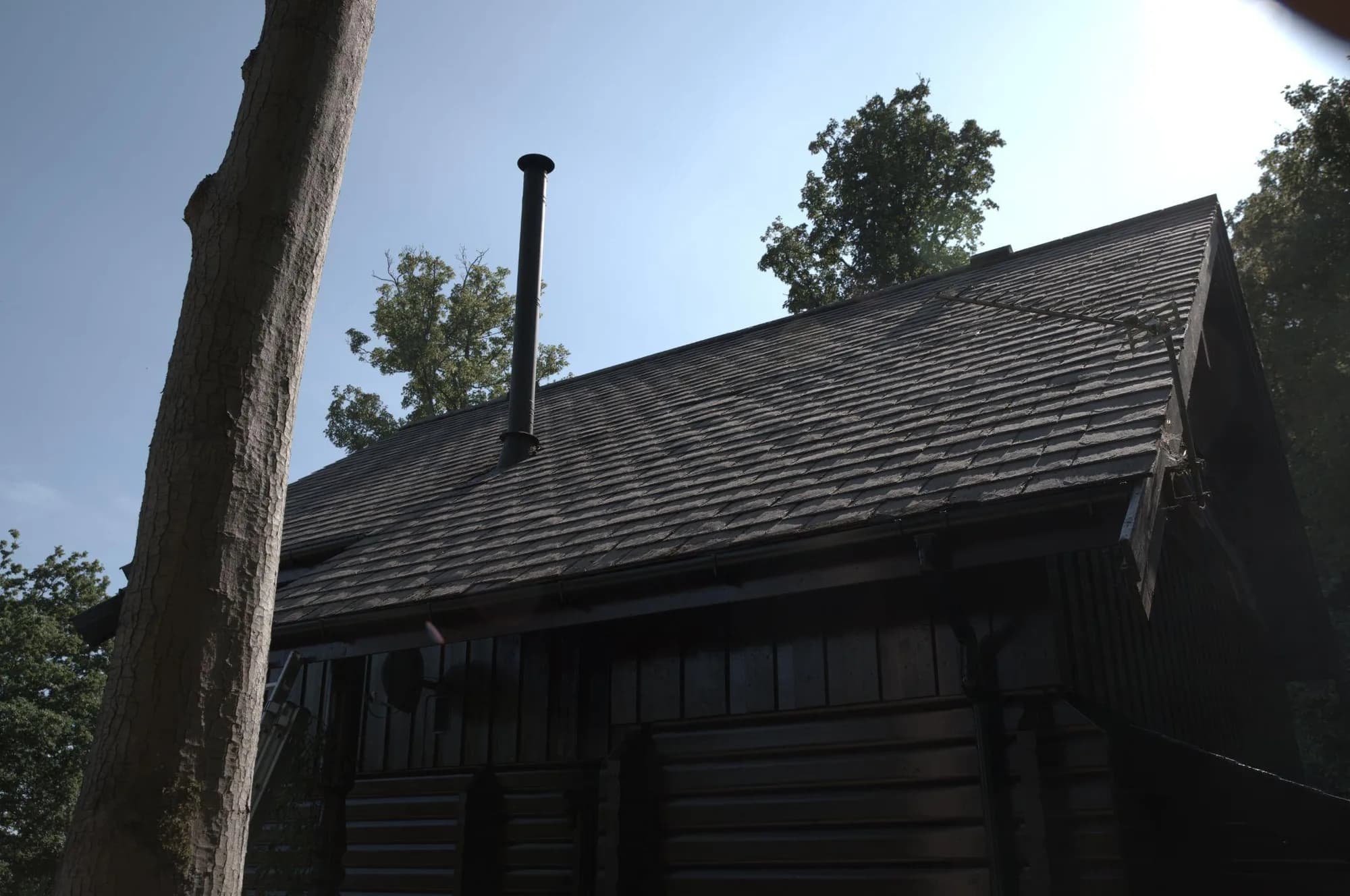
A blocked downpipe can prevent rainwater from leaving your guttering properly. If you are looking for how to unblock a downpipe, the first step is to identify where the restriction is. It may be at the gutter outlet, inside the pipe, around a bend or further along the rainwater drainage system.
Why Do Downpipes Become Blocked?
Downpipes have a simple but important job. They carry rainwater from the guttering towards the property's drainage system. As water travels from the roof into the gutter, it can also carry small amounts of material with it.
Leaves are one of the most common causes, especially where trees are close to a property. Moss, lichen, twigs, silt and general organic debris can also collect in gutters and eventually find their way towards the downpipe.
The problem often begins at the gutter outlet. This is where a relatively wide gutter narrows into the downpipe. Debris can collect around this transition and gradually restrict the flow of water.
However, not every blockage is visible from above.
Material can also become lodged further down the pipe or around a bend. If the downpipe disappears into the ground, the restriction may even be beyond the section that can be seen.
That is why the right answer to how to unblock a downpipe is not always to reach for the strongest tool available. The appropriate approach depends on the location of the restriction and the condition of the system.
What Are the Signs of a Blocked Downpipe?
A downpipe blockage can show itself in several ways.
The most noticeable sign is often an overflowing gutter during rainfall. Water may spill over the front edge instead of entering the downpipe and being carried away.
You may also notice water sitting in the gutter after the rain has stopped. Another clue is water escaping from a downpipe joint. If water is building up inside the pipe because it cannot travel further, it may find its way through a connection.
At ground level, you might see water collecting around the base of the downpipe rather than draining away normally.
These signs are useful, but they do not prove that the visible downpipe itself is blocked.
An overflowing gutter could have a restricted outlet. Water backing up at the bottom of a downpipe could point to a problem further along the drainage route.
How to Find the Blockage Before Trying to Clear It
Before deciding how to unblock a downpipe, take a moment to understand how water should move through the system.
Think of the route as a complete sequence:
- Roof
- Gutter
- Gutter outlet
- Downpipe
- Lower connection
- Rainwater drainage
A restriction anywhere along this route can affect the way water behaves.
Start at the gutter outlet
If the gutter contains leaves, moss or other loose debris, inspect the area where the downpipe begins.
A build-up around the outlet can restrict the amount of water entering the pipe. If this area is safely accessible, removing loose debris may be enough to restore normal flow.
There is little value in trying to clear the lower pipe if the water cannot enter it properly in the first place.
Check the visible downpipe
Next, consider what happens after water enters the pipe.
If water flows through normally, the downpipe may not be the source of the problem. If it backs up, however, there may be a restriction further down.
The visible section should be considered together with the lower connection rather than treated as a separate component.
Look at the bottom connection
The bottom of a downpipe can provide an important clue.
If water reaches this point but cannot leave, the restriction may be around the connection or beyond it.
This becomes particularly important where the downpipe disappears into the ground.
How to Unblock a Downpipe
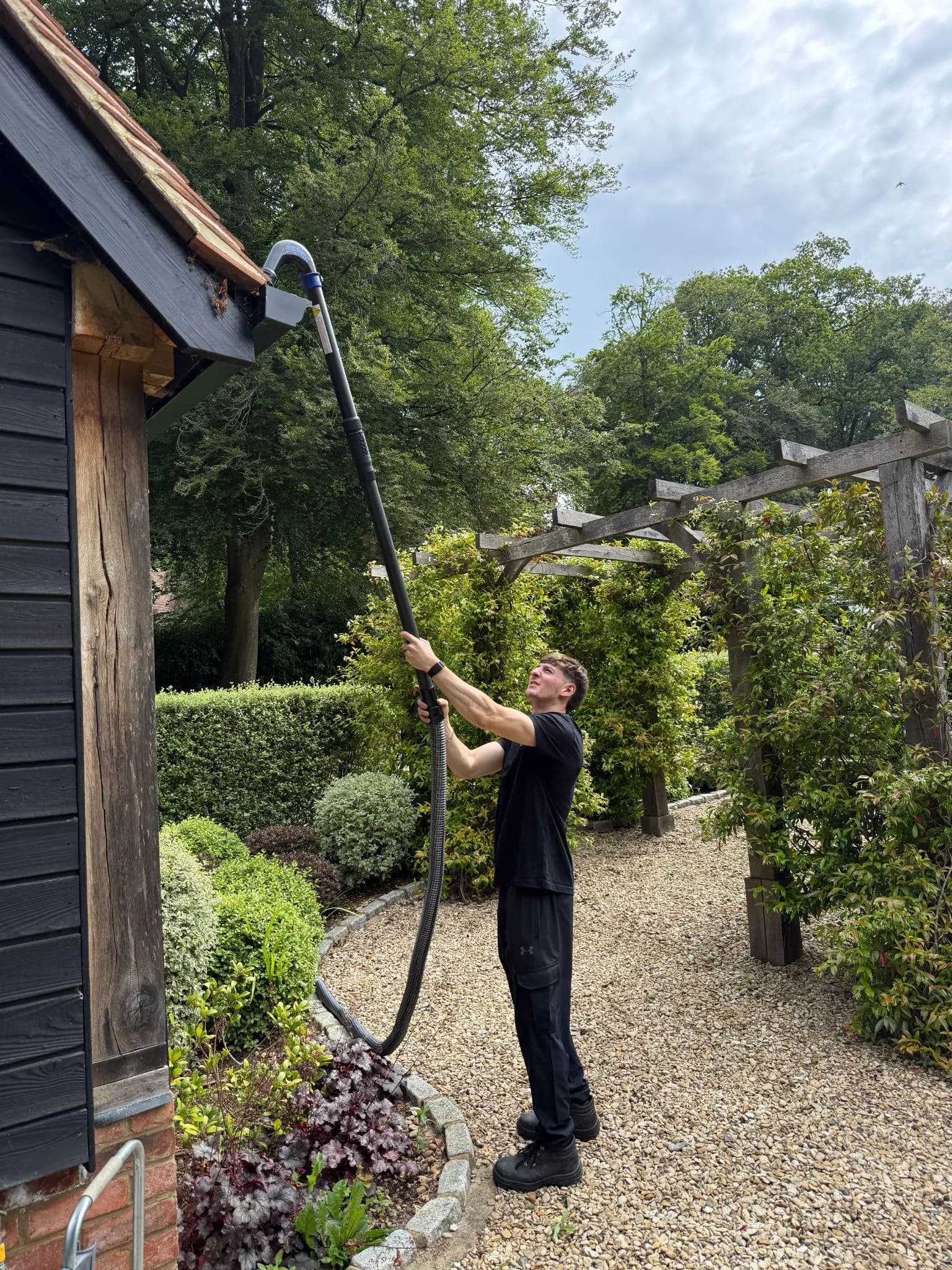
For a straightforward and accessible blockage, you may be able to clear the restriction without specialist intervention.
The key is to use an appropriate method rather than applying unnecessary force.
Clear loose debris from the outlet
If the blockage is clearly visible around the gutter outlet, carefully removing loose leaves, moss and other debris may restore the flow.
This is often the most straightforward place to begin.
However, safe access matters. If the gutter or upper section of the downpipe cannot be reached without an unsuitable ladder setup or unnecessary risk, the sensible choice is to have the work assessed professionally.
Check the accessible lower section
If the lower section can be safely reached, inspect it for obvious signs of blockage.
Do not push tools blindly into the pipe. You may encounter a bend, connection or restriction that cannot be seen from the opening.
Forcing something through can turn a blockage into a damaged pipe or disturbed connection.
Flush with water where appropriate
Water can help with some loose blockages and can also show whether the system is flowing correctly.
Introduce water in a controlled way and observe what happens.
If it passes through and exits normally, the restriction may have been cleared.
If water backs up quickly, adding more water is unlikely to solve the problem. It simply adds more water to a system that is already struggling to discharge it.
At that point, stop and reconsider where the restriction may be located.
Use suitable clearing equipment when necessary
More established blockages may require suitable drain-clearing equipment.
The correct method depends on the pipework, the position of the blockage and the available access. Equipment should support the clearing process rather than become the focus of it.
A specialist approach starts with assessment and then selects the appropriate method.
This is important because there is no single process that is right for every drainage problem.
What If the Downpipe Disappears Into the Ground?
This is where many homeowners become unsure about how to unblock a downpipe.
You can see the pipe running down the property, but at ground level it disappears into the surface. You cannot see where the rainwater goes, so you also cannot immediately see where a blockage might be.
The underground section may form part of the property's wider rainwater drainage arrangement.
The exact configuration can vary between properties. Therefore, it is better not to assume that every downpipe connects to the same type of drainage system.
If water reaches the bottom of the visible pipe but does not drain away, the restriction may be at the connection or further along the underground route.
This is an important distinction.
Trying repeatedly to clear the visible pipe will not necessarily solve a problem that sits beyond it.
How Do You Unblock a Downpipe That Is Blocked Underground?
An underground restriction is different from a small amount of debris sitting in an accessible gutter outlet.
If water backs up at the bottom of the pipe, first consider what the surrounding signs are telling you.
Is the water escaping from a joint?
Does it remain around the base?
Does the problem occur only during heavy rainfall?
Has the same blockage returned after it was previously cleared?
These details can help establish whether the visible pipe is actually the source of the problem.
Where the underground route cannot be accessed or its condition is unclear, professional assessment is usually more appropriate than repeatedly forcing tools into the visible pipe.
The objective should be to identify the restriction and select an appropriate method rather than simply move the blockage further along.
What If Several Downpipes Are Blocked?
One blocked downpipe may be a local problem.
Several affected downpipes deserve a broader look.
This does not automatically mean that every pipe is connected to one underground blockage. However, if several areas are showing similar symptoms, it is sensible to consider whether there is a wider issue with the property's rainwater drainage.
For example, if the visible downpipes appear clear but water repeatedly backs up, the problem may not be isolated to individual pipes.
This is where diagnosis becomes more valuable than simply repeating the same cleaning process.
A specialist assessment considers how the different parts of the system interact and where the restriction is most likely to be occurring.
Why Does a Downpipe Keep Blocking After It Has Been Cleared?
A blockage that returns is worth investigating.
If the same downpipe becomes restricted repeatedly, there may be an ongoing source of debris entering the system. Alternatively, the original restriction may not have been fully cleared.
The important point is not to assume that the next blockage is simply another isolated build-up.
Look at the surrounding conditions.
Are there trees close to the roof?
Is there a noticeable amount of moss or organic material in the gutter?
Does the problem appear after particular weather conditions?
Does water drain normally immediately after clearing but slow down again later?
Understanding these patterns can provide more useful information than repeatedly treating the visible symptom.
Long-term maintenance should focus on reducing the conditions that contribute to recurring problems where possible.
Common Mistakes When Trying to Unblock a Downpipe
A common mistake is to assume that more force means a better result.
It does not.
A downpipe can contain bends, joints and connections that are not visible from the outside. Aggressive attempts to force an obstruction through these areas can cause unnecessary damage.
Another mistake is focusing entirely on the gutter.
Although the gutter outlet is an important place to check, the problem may be further down the system.
The opposite mistake is also possible. A homeowner may immediately assume that a buried pipe is blocked when the actual restriction is at the gutter outlet.
There is also a tendency to keep trying the same method when a blockage returns.
If a problem continues to come back, the better question is not "How do I unblock it again?"
It is:
"Why does this keep happening?"
That change in approach can prevent repeated work that does not address the underlying issue.
Should You Unblock a Downpipe Yourself?
For a simple blockage that is visible, accessible and safe to reach, careful DIY maintenance may be appropriate.
Removing loose debris from an accessible gutter outlet is very different from attempting to clear an underground restriction where the route is unknown.
The decision should depend on the circumstances.
If you can clearly see the obstruction and safely access it, a straightforward clearance may be reasonable.
If you cannot identify the blockage, the pipe disappears underground, several downpipes are affected or the problem repeatedly returns, professional assessment becomes more appropriate.
There is no benefit in taking unnecessary risks simply to avoid asking for specialist advice.
Good maintenance is about achieving the right outcome, not about using the most aggressive method possible.
When Should a Professional Assess the Problem?
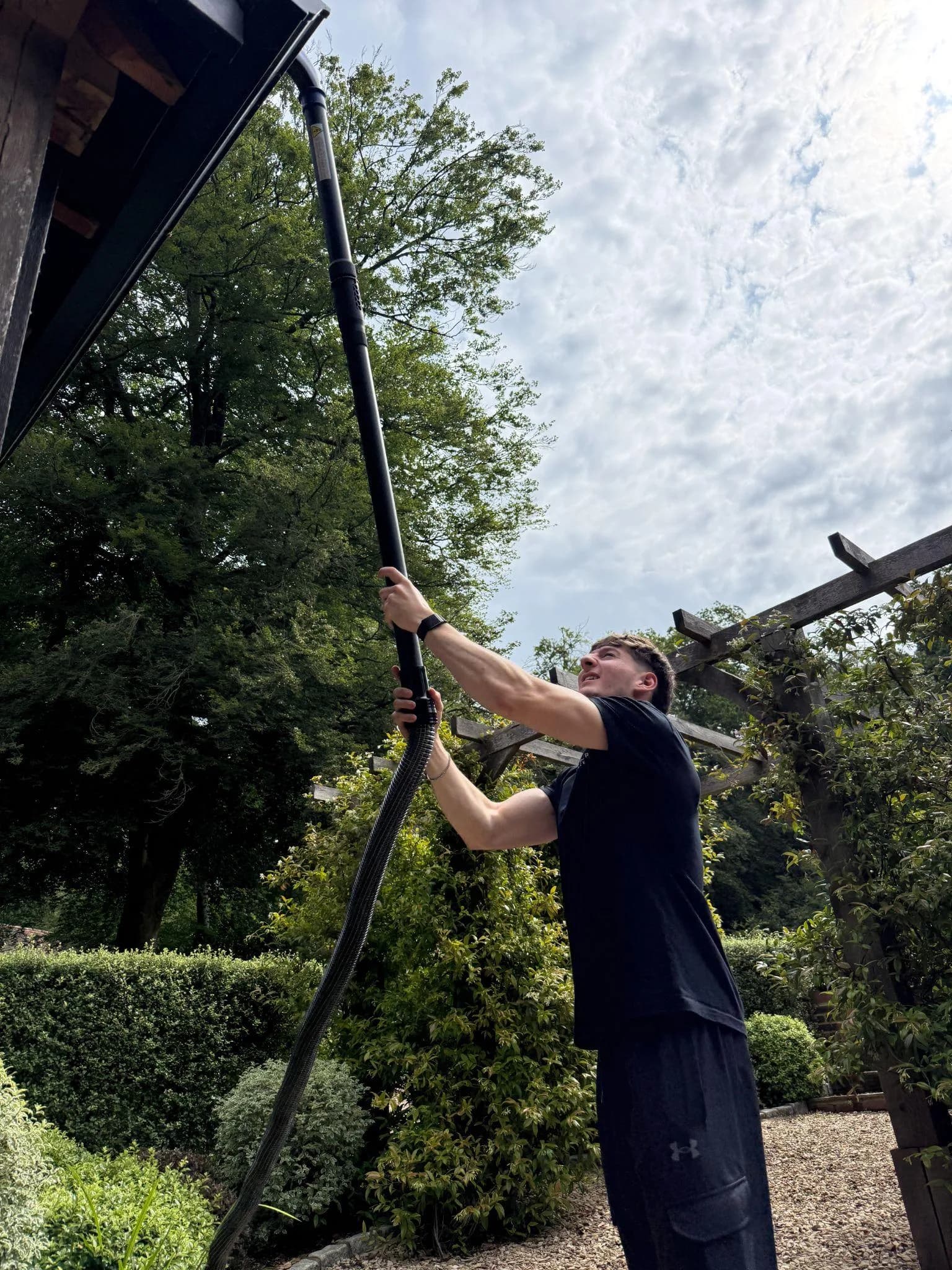
Some blockages are simple.
Others are symptoms of a wider problem.
Professional assessment is particularly useful when the visible section of the downpipe appears clear but water continues to back up.
It is also worth seeking advice where access is difficult, the pipe disappears underground or the same problem repeatedly occurs.
Multiple affected downpipes are another reason to look beyond the individual pipe.
At Chiltern Surface, the principle is straightforward: different problems require appropriate methods. Recommendations should follow an assessment of the situation rather than assuming that one process will suit every property.
The focus is on understanding the condition, selecting an appropriate method and carrying out work carefully. This reflects Chiltern Surface’s wider approach to exterior maintenance: technical judgement comes before the cleaning process itself.
What Should You Check After Unblocking a Downpipe?
Clearing the blockage is not necessarily the end of the job.
Once the flow has been restored, check how the system behaves.
Water should be able to enter the downpipe and travel through it without immediately backing up. Accessible joints should be checked for signs of leakage, while the area around the bottom of the pipe should be observed for unusual pooling.
It is also useful to monitor the system during the next period of significant rainfall.
A system that appears clear during a small water test may behave differently when it has to handle a larger volume of rainwater.
If the problem returns, avoid simply repeating the same process. The recurring issue may need further assessment.
How to Help Prevent Future Downpipe Blockages
Downpipe maintenance starts with the gutter.
Keeping excessive leaves, moss and other debris from accumulating in the gutter reduces the amount of material that can enter the downpipe.
Properties surrounded by trees may require closer attention, particularly during periods of heavy leaf fall. Roofs with significant moss growth can also introduce more organic material into the rainwater system.
Regular checks can help identify changes before they become larger problems.
Look for water remaining in the gutter, changes in the way the downpipe drains and signs of water escaping from joints.
Prevention is not about promising that a downpipe will never block again. No exterior drainage system can be completely isolated from weather and environmental conditions.
It is about identifying problems early and maintaining the system appropriately.
Frequently asked questions
How do I unblock a downpipe quickly?
Start by identifying where the water flow is being restricted. Check the gutter outlet and any safely accessible sections of the downpipe. If the blockage is not visible or water continues to back up, avoid applying unnecessary force and consider professional assessment.
Can I use a garden hose to unblock a downpipe?
A controlled flow of water can help with some loose blockages and can show whether the pipe is flowing. If the water backs up, however, continuing to add water is unlikely to resolve the restriction.
How do I unblock a downpipe from the bottom?
If the bottom of the pipe is safely accessible, inspect the opening and connection for obvious debris. If the visible section is clear but water still cannot leave, the restriction may be higher in the pipe or further along the drainage route.
Why is my gutter overflowing if the downpipe looks clear?
The gutter outlet may be restricted, or the problem may be further down the rainwater drainage system. A clear-looking section of downpipe does not confirm that the complete route is clear.
What if my downpipe is blocked at the bottom?
Check the accessible lower connection and observe what happens to the water. If it backs up or collects around the base, the restriction may extend beyond the visible section and may require further assessment.
Conclusion
Knowing how to unblock a downpipe is useful, but the most effective approach starts with understanding the problem. Check the gutter outlet, observe how water enters the downpipe and consider what happens at the lower connection. If the visible pipe is clear but water still backs up, the restriction may be further along the rainwater drainage route. Avoid unnecessary force and do not repeatedly clear the same blockage without considering why it has returned. A careful assessment can help identify the appropriate solution and avoid unnecessary work. At Chiltern Surface, the focus is on assessment, specialist methods, careful workmanship and long-term performance. If you are unsure about the condition of your guttering or downpipes, a Free Site Assessment can help establish what is happening and what approach is appropriate for your property.