
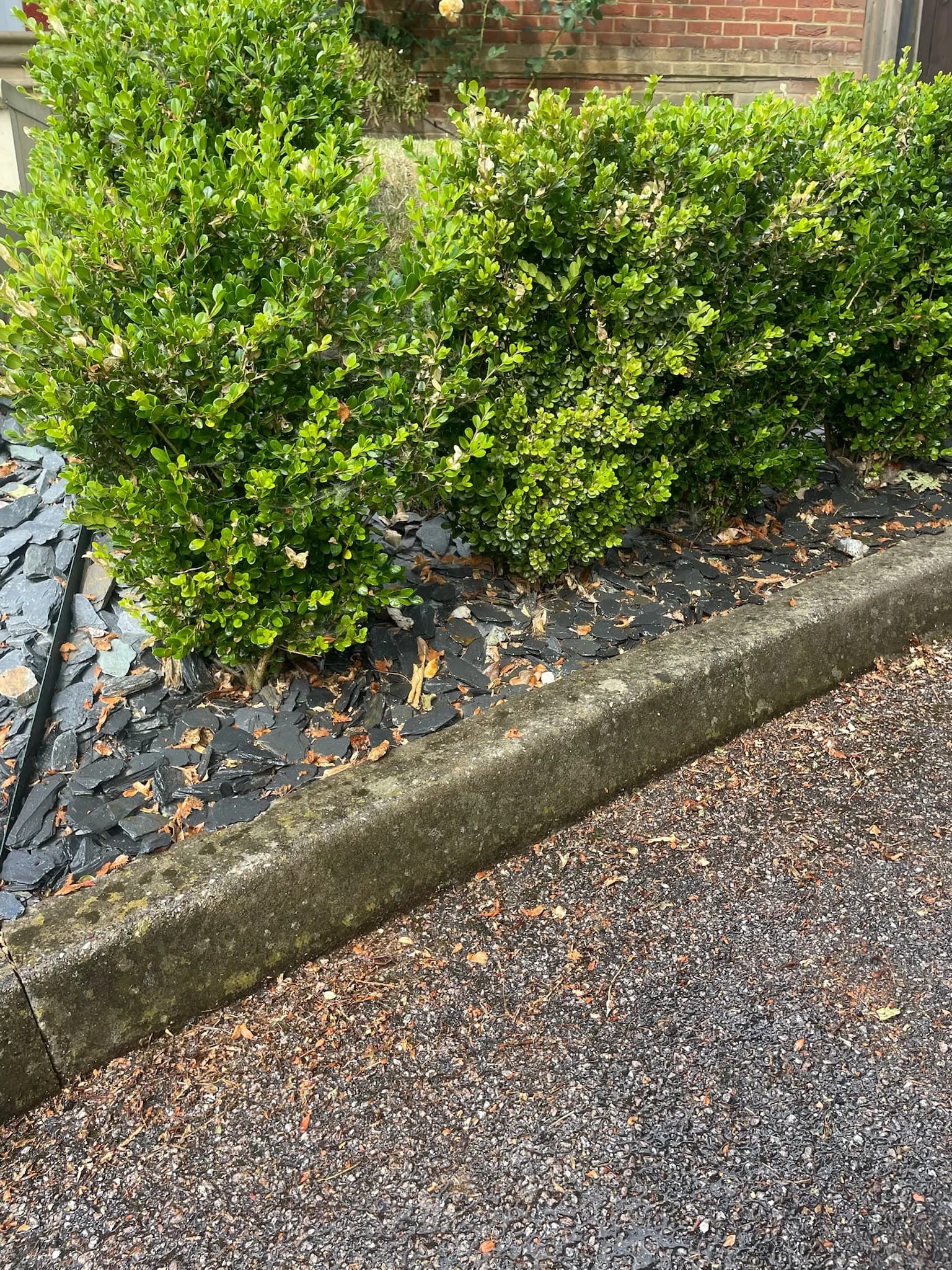
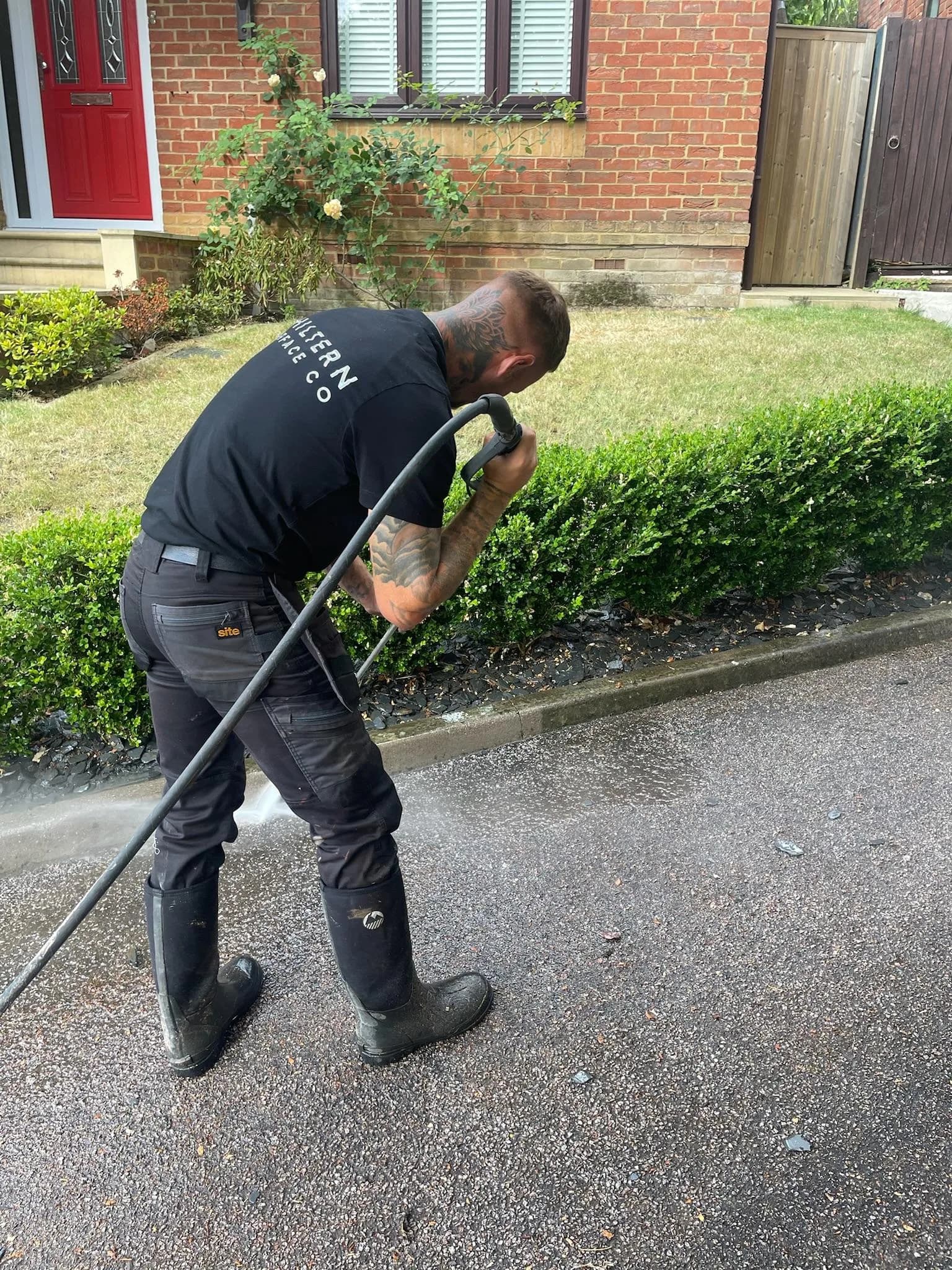
If you are asking is soft washing safe for plants, you are right to consider your garden before booking an exterior cleaning service. Soft washing uses low pressure and a cleaning solution to remove organic growth, but careful application is essential around flowers, shrubs, grass and other sensitive areas.
Is Soft Washing Safe Around Gardens?
Yes, soft washing can be safe when it is carried out correctly.
The important point is that soft washing is not simply low-pressure water. It normally involves a cleaning solution designed to break down dirt, algae, moss and other organic growth. Because of this, the solution needs to be carefully controlled around gardens and other sensitive areas.
When a property is surrounded by plants, the cleaning process should take the whole area into account.
A professional cleaner should consider:
- The type of plants near the cleaning area
- The distance between the plants and the surface
- Wind conditions
- Where water and runoff will travel
- Whether delicate plants need additional protection
- The type of surface being cleaned
This is particularly important when cleaning roofs, walls and rendered surfaces because gardens may sit directly below or beside them.
The aim is simple: clean the surface effectively while reducing unnecessary exposure to surrounding vegetation.
Why Can Soft Washing Affect Plants?
The main concern is usually the cleaning solution rather than the low-pressure water itself.
Soft washing is designed to deal with organic contamination. The treatment can help break down growth that has built up on a surface over time. However, a solution that is effective against algae or moss should not simply be allowed to land on plants.
Problems can occur when cleaning solution reaches foliage, flowers or soil in an uncontrolled way.
For example, a property may have a rendered wall surrounded by flower beds. If spray drifts from the wall onto the flowers, or runoff collects in the soil, plants may be exposed to the cleaning treatment.
This is why soft washing plant safety depends heavily on preparation and application.
The safest approach is not to assume that plants will be unaffected. Instead, they should be considered before cleaning starts.
What Happens During Soft Washing?
Understanding the process makes it easier to see why plant protection matters.
Soft washing generally combines low-pressure water with an appropriate cleaning treatment. Rather than relying on high pressure to blast contamination away, the treatment helps break down organic growth.
This can be useful for surfaces that should not be subjected to aggressive pressure.
For example, roof tiles, render and other exterior materials may require a gentler approach. High-pressure cleaning can sometimes create unnecessary risks for delicate or weathered surfaces.
Soft washing offers a different approach.
However, the cleaning solution must still be applied carefully.
A good cleaning process therefore involves more than spraying a dirty surface. It requires an understanding of the material, the contamination, the surrounding environment and the conditions on the day.
How Do Professionals Protect Plants During Soft Washing?
Plant protection should begin before the cleaning solution is applied.
The exact precautions depend on the property. A small wall with no nearby vegetation is very different from a roof surrounded by mature shrubs and flower beds.
Several practical steps can help reduce the risk.
Pre-Wetting Nearby Plants
Nearby vegetation may be wet with clean water before cleaning begins.
This can help reduce the concentration of accidental contact with foliage. It is only one part of plant protection, though, and should be combined with controlled application.
The purpose is to prepare the surrounding area rather than rely on rinsing after a problem occurs.
Protecting Sensitive Vegetation
Some plants may need extra attention.
Delicate flowers, young plants and valuable shrubs can be particularly important to protect. Where practical, movable pots can be taken away from the cleaning area.
Other vegetation may require suitable temporary protection.
The right approach depends on the plant and the cleaning task. Covering plants for too long is not always appropriate, so protection should be planned rather than applied without thought.
Controlling Spray
Spray control is another important part of the process.
Wind can carry fine droplets away from the intended surface. Therefore, weather conditions should be considered before work starts.
If conditions make controlled application difficult, postponing the job may be the sensible choice.
Professional exterior cleaning is not simply about completing a job as quickly as possible. It is about achieving the required result while managing the property around it.
Is Soft Washing Safe for Grass?
Grass should not be forgotten when considering is soft washing safe for plants.
Homeowners often think about flowers and shrubs first, but lawns can also be exposed to spray or runoff.
This may be relevant when:
- A roof sits above a lawn
- A wall borders grass
- A patio is next to turf
- A driveway drains towards a lawn
- A garden wall is surrounded by grass
The direction of runoff matters.
Water leaving a cleaned surface can travel across paving, soil or grass. If it collects in one location, the level of exposure may be higher.
Good planning should therefore consider where water is likely to go once cleaning begins.
Is Soft Washing Safe for Flowers and Shrubs?
Flowers and shrubs should be treated as sensitive areas during exterior cleaning.
A mature hedge may be positioned several metres away from a wall, while a flower bed could be directly underneath the surface being treated.
These situations require different levels of care.
Before cleaning begins, homeowners should point out any plants they are particularly concerned about. This gives the cleaning team a better understanding of the property and helps them plan the work.
If you have a delicate flower bed directly beneath a roof edge, for example, make this clear before the job starts.
The more information available before cleaning, the easier it is to plan around the garden.
What About Vegetable Gardens?
Vegetable beds require extra care because the plants are grown for consumption.
If a vegetable patch is located close to a roof, wall, patio or other surface that needs cleaning, tell the cleaning professional before the work begins.
The priority should be to prevent cleaning solution from reaching the plants.
Depending on the property, this may involve additional protection, controlled application or another suitable approach.
You should never assume that a cleaning solution designed for exterior surfaces is suitable for direct contact with edible plants.
Careful planning is particularly important around vegetable gardens.
Is Soft Washing Safe Around Ponds?
Ponds and water features should always be mentioned before exterior cleaning.
A pond can be affected if cleaning runoff reaches the water.
This is especially important during roof cleaning because water may travel through gutters, downpipes and surrounding drainage areas.
A professional should consider the likely route of runoff before work begins.
If your pond is close to the house, make sure it is clearly identified during the site assessment.
The same applies to other water features, such as ornamental ponds and similar garden installations.
Does Soft Washing Use Chemicals?
Soft washing normally involves a cleaning treatment rather than relying only on water pressure.
However, there is no single solution that should be assumed to apply to every cleaning job.
The treatment should be selected according to the surface and the type of contamination.
For example, algae, moss, lichen and general dirt may require different considerations.
This is one reason professional assessment matters.
Using too much cleaning solution does not automatically produce a better result. The goal should be to use an appropriate treatment in a controlled way.
Is Soft Washing Safer Than Pressure Washing for Plants?
There is no universal answer.
Soft washing and pressure washing work in different ways, so each has different considerations.
Pressure washing relies on water force. Soft washing relies more heavily on a cleaning treatment combined with lower pressure.
With pressure washing, the main concern can include the physical force of the water and spray.
With soft washing, the cleaning treatment and runoff need careful management.
For many exterior surfaces, using lower pressure can reduce the risk of physical damage. However, that does not mean the cleaning solution can be allowed to contact plants without consideration.
The right method depends on the surface, its condition and the surroundings.
Why "Soft" Does Not Mean Completely Risk-Free
The word "soft" can sometimes make homeowners think that soft washing has no potential risks.
That is not quite right.
Soft washing is a gentler cleaning method in terms of water pressure, but it still needs to be performed responsibly.
There are several factors to manage:
Cleaning solution: It should be suitable for the intended cleaning task.
Application: The solution should be directed towards the surface being treated.
Weather: Wind can increase the chance of overspray.
Vegetation: Plants close to the work area need consideration.
Runoff: Water should be managed so it does not unnecessarily enter sensitive areas.
When these factors are considered together, soft washing can be a practical way to clean many exterior surfaces while taking care around gardens.
Common Mistakes That Can Harm Plants
Plant damage is often linked to poor preparation rather than the idea of soft washing itself.
Ignoring Nearby Vegetation
A cleaning team may focus entirely on the roof, wall or patio and overlook what is directly underneath it.
Plants should form part of the initial assessment.
Working in Unsuitable Weather
Strong winds can make spray control more difficult.
If conditions are poor, waiting for a better day can be the safer option.
Applying Too Much Solution
More cleaning solution does not always mean a cleaner surface.
The treatment should be used appropriately for the task.
Forgetting About Runoff
Runoff can travel away from the surface being cleaned.
A wall may be several feet away from a flower bed, but water running from it can still reach the plants.
Treating Every Property the Same
Every property has different surfaces, gardens and drainage arrangements.
A cleaning method should be adapted to the individual property rather than applied as a standard routine.
What Should You Tell Your Cleaning Company?
Before your soft washing appointment, mention any sensitive areas around the property.
This can include:
- Delicate flowers
- Young shrubs
- Vegetable gardens
- Trees
- Ponds
- Water features
- Potted plants
- Water butts
- Artificial grass
- Plants growing against walls
You should also mention any plants that are especially valuable or important to you.
This does not mean that soft washing cannot be performed around gardens. It simply gives the cleaning team more information to work with.
How Does Chiltern Surface Approach Exterior Cleaning?
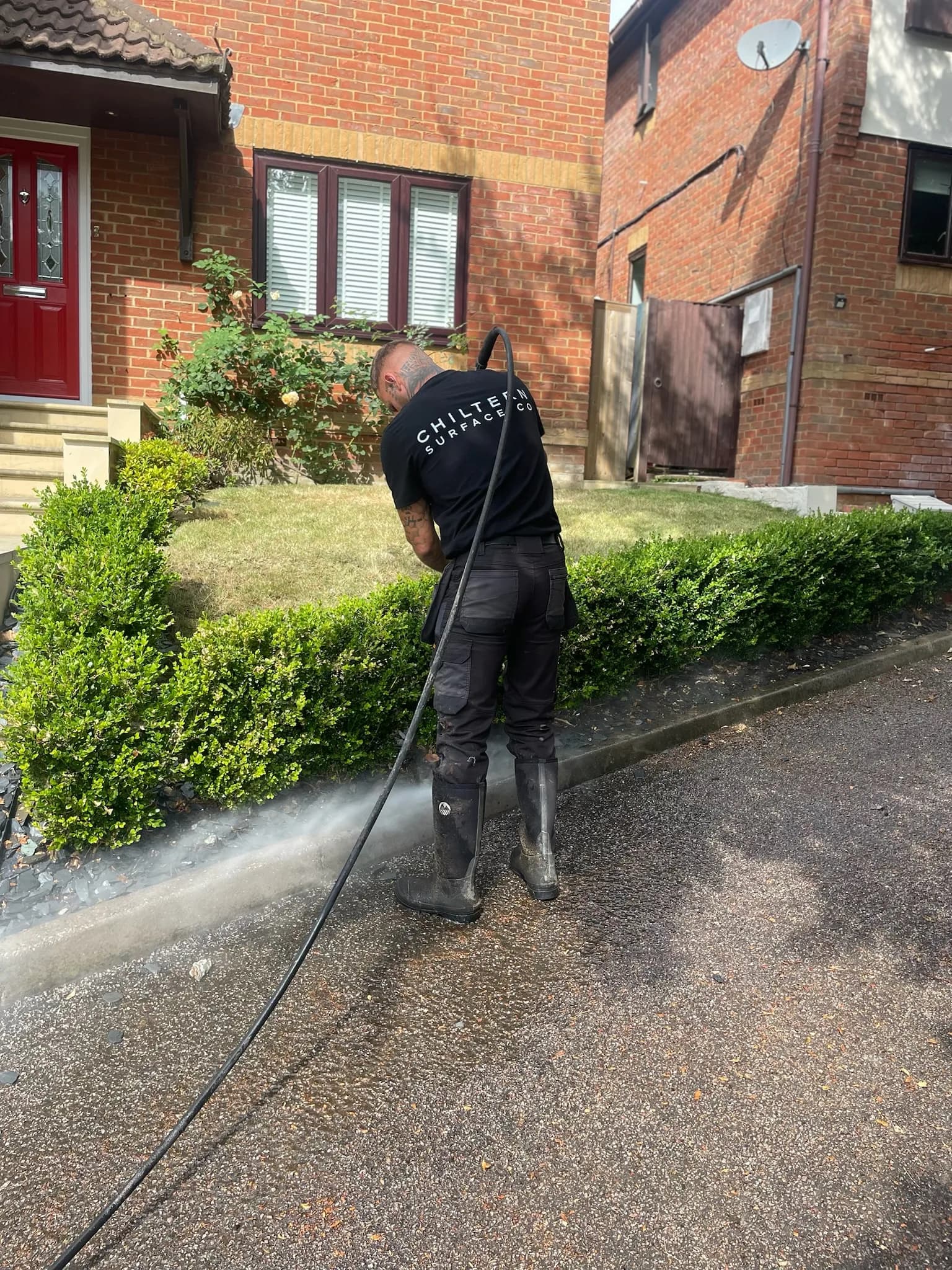
At Chiltern Surface, the cleaning process should begin with understanding the property.
The surface, its condition and the surrounding environment all matter.
This is particularly important when cleaning areas close to gardens.
A suitable approach should take into account the type of surface being cleaned, the contamination present and any surrounding features that need protection.
Rather than treating every property in exactly the same way, the cleaning method should be matched to the job.
That approach helps achieve a cleaner finish while keeping the wider property in mind.
Frequently asked questions
Is soft washing safe for plants?
Yes, soft washing can be safe for plants when it is properly planned and carried out. The cleaning solution, weather, spray direction and runoff all need to be considered. Sensitive plants should be identified before work begins.
Can soft washing kill flowers?
Direct contact with an unsuitable or concentrated cleaning solution can harm vegetation. However, careful application and appropriate plant protection can significantly reduce unnecessary exposure.
Is soft washing safe for grass?
Soft washing can be carried out around lawns with suitable precautions. The main considerations are overspray and runoff. Cleaning water should not be allowed to collect unnecessarily on sensitive areas.
Can I soft wash near a vegetable garden?
Extra care is needed around edible plants. Tell the cleaning professional about the vegetable garden before work starts so the cleaning process can be planned to minimise exposure.
Is soft washing safe around ponds?
Soft washing near a pond requires careful runoff management. Cleaning solution and contaminated water should be prevented from entering the pond wherever possible.
Conclusion
So, is soft washing safe for plants? Yes, it can be, when the cleaning process is properly planned and controlled. Soft washing uses lower pressure than traditional pressure washing, making it useful for many exterior cleaning applications. However, the cleaning treatment still needs to be managed carefully around flowers, shrubs, grass, trees, vegetable gardens and water features. The key is preparation. A professional should consider the surface being cleaned, the type of contamination, nearby vegetation, weather conditions and runoff before starting work. With the right approach, homeowners can have their exterior surfaces cleaned while taking sensible steps to protect the garden. If you are concerned about your plants but need your roof, render or other exterior surfaces cleaned, Chiltern Surface can assess your property first. Get in touch with Chiltern Surface to arrange a Free Site Assessment and find out which cleaning approach is suitable for your property.