
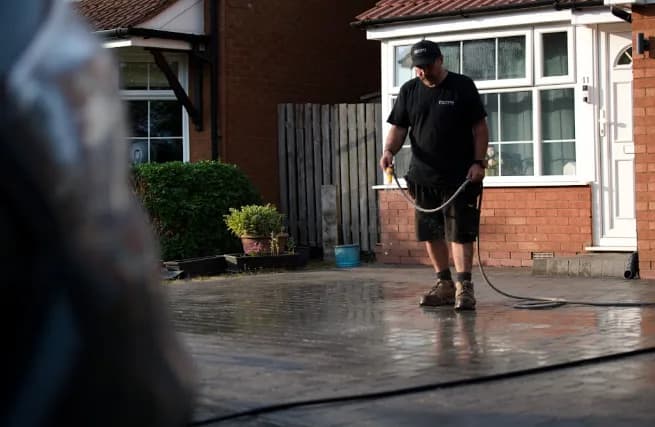
If you are comparing soft washing vs pressure washing, the best option depends on the surface, the type of dirt and the condition of the property. Soft washing uses a suitable cleaning treatment with low pressure, while pressure washing relies on the force of water. Understanding the difference helps you choose a safer, more effective cleaning method.
Soft Washing vs Pressure Washing: What Is the Difference?
When homeowners compare soft washing vs pressure washing, they often assume that the only difference is the amount of water pressure used.
There is more to it than that.
Pressure washing mainly uses mechanical water pressure to loosen and remove dirt, grime, mud, algae and other surface contamination. It can be highly effective on strong, durable surfaces where pressure cleaning is suitable.
Soft washing uses a suitable cleaning solution applied at low pressure. The treatment helps break down organic contamination such as algae, moss, mould, mildew and lichen. The surface can then be rinsed or treated further using controlled pressure.
The main difference is therefore how the cleaning work is achieved.
Pressure washing relies more on mechanical force.
Soft washing relies more on the cleaning treatment.
This distinction is important because not every exterior surface can handle the same level of pressure. A concrete driveway is very different from a rendered wall. A roof is different from block paving. A painted surface is different from masonry.
That is why the best cleaning method should be chosen based on the surface rather than the equipment alone.
Quick Reference Table
Task
Typical Timing
Method
Difficulty
Remove heavy dirt from suitable concrete
1–3 hours
Pressure washing
Medium
Clean algae from suitable render
1–3 hours
Soft washing
Medium
Treat moss on a suitable roof
Several hours
Soft wash/treatment
High
Remove grime from suitable paving
1–4 hours
Pressure washing
Medium
Treat mould on suitable exterior walls
1–3 hours
Soft washing
Medium
Clean organic growth from cladding
1–3 hours
Soft washing
Medium
Remove stubborn lichen from a roof
Several hours or more
Specialist treatment
High
Clean a mixed-surface property
Varies
Combination of methods
High
These timings are general guides. Property size, access, contamination and surface condition can make a job shorter or considerably longer.
How Does Soft Washing Work?
Soft washing is a low-pressure exterior cleaning technique that uses a suitable cleaning solution to treat organic contamination.
Outdoor surfaces are constantly exposed to moisture, rain, shade, falling leaves and changing temperatures. Over time, these conditions can encourage algae, moss, lichen, mould and mildew to grow.
A soft wash process is designed to tackle this growth without relying mainly on high-pressure water.
The process normally starts with an assessment of the surface. The cleaner needs to understand what material is being treated and what type of contamination is present.
The surrounding area also needs to be considered. Windows, doors, plants, garden areas, painted surfaces and other sensitive materials may need protection.
Once the area has been prepared, an appropriate cleaning solution can be applied at controlled, low pressure.
The treatment is then given suitable dwell time. This allows it to work on the contamination rather than being immediately washed away.
The surface can then be rinsed or treated further according to the material and cleaning system.
This is why professional soft washing involves more than simply spraying a chemical onto a wall.
The product, application, concentration, dwell time and rinsing method all matter.
What Can Soft Washing Remove?
Soft washing is particularly useful for organic contamination, including:
- Algae
- Moss
- Lichen
- Mould
- Mildew
- Organic staining
- Certain surface dirt associated with biological growth
It is not suitable for every type of stain, though.
Rust, oil, paint and mineral deposits can require different cleaning methods.
Heavy moss can also require physical removal as part of the overall process.
How Does Pressure Washing Work?
Pressure washing uses pressurised water to provide mechanical cleaning action.
The water is directed at the surface through suitable equipment, helping loosen and remove dirt and other deposits.
This makes pressure washing useful for many durable exterior surfaces.
For example, a suitable concrete driveway may collect years of mud, grime, dirt and weather-related deposits. Controlled pressure can provide the mechanical force needed to remove this build-up.
The same approach may work well on suitable paving and other hard surfaces.
However, pressure washing is not about using the highest possible pressure.
Too much pressure can cause unnecessary damage to some materials. It can affect surface finishes, remove coatings, disturb joints or force water into vulnerable areas.
The correct pressure depends on the surface, its condition, the equipment and the cleaning objective.
A good rule is simple:
Use enough pressure to clean the surface effectively, but not more than the surface can safely handle.
Which Is Better for a House?
There is no universal winner when it comes to soft washing vs pressure washing for houses.
A house contains many different surfaces.
The render may need one method.
The roof may need another.
The driveway may respond better to pressure washing.
A patio may require a combination of cleaning techniques.
Trying to clean the entire property using one method can therefore be a mistake.
Render
Render can become affected by algae, mould, mildew and general weather staining.
Some render systems may not be suitable for aggressive pressure.
Where organic growth is the main issue and the render is suitable, a soft wash approach can provide a controlled alternative.
However, the type, age and condition of the render should be assessed before cleaning.
Roofs
Roofs are another area where choosing between soft washing vs pressure washing matters.
Moss, algae and lichen can develop on roof coverings, especially in damp and shaded locations.
Using aggressive pressure on a roof is not always appropriate.
A suitable soft wash or specialist treatment can help deal with organic growth while reducing the need for high-pressure water.
However, roof cleaning should never be approached as a one-size-fits-all job.
The roof covering, age, condition, existing damage and access should all be considered.
Cladding
Cladding can become stained by algae, dirt and general weather exposure.
Some cladding materials and finishes may require gentle cleaning.
Where organic contamination is the main problem, soft washing can be considered for suitable materials.
Painted Surfaces
Painted exterior surfaces need particular care.
Aggressive pressure can potentially affect the paint or underlying material.
A lower-pressure treatment may therefore be more appropriate for some painted surfaces.
Again, the surface should be assessed first.
Which Method Is Better for Driveways and Patios?
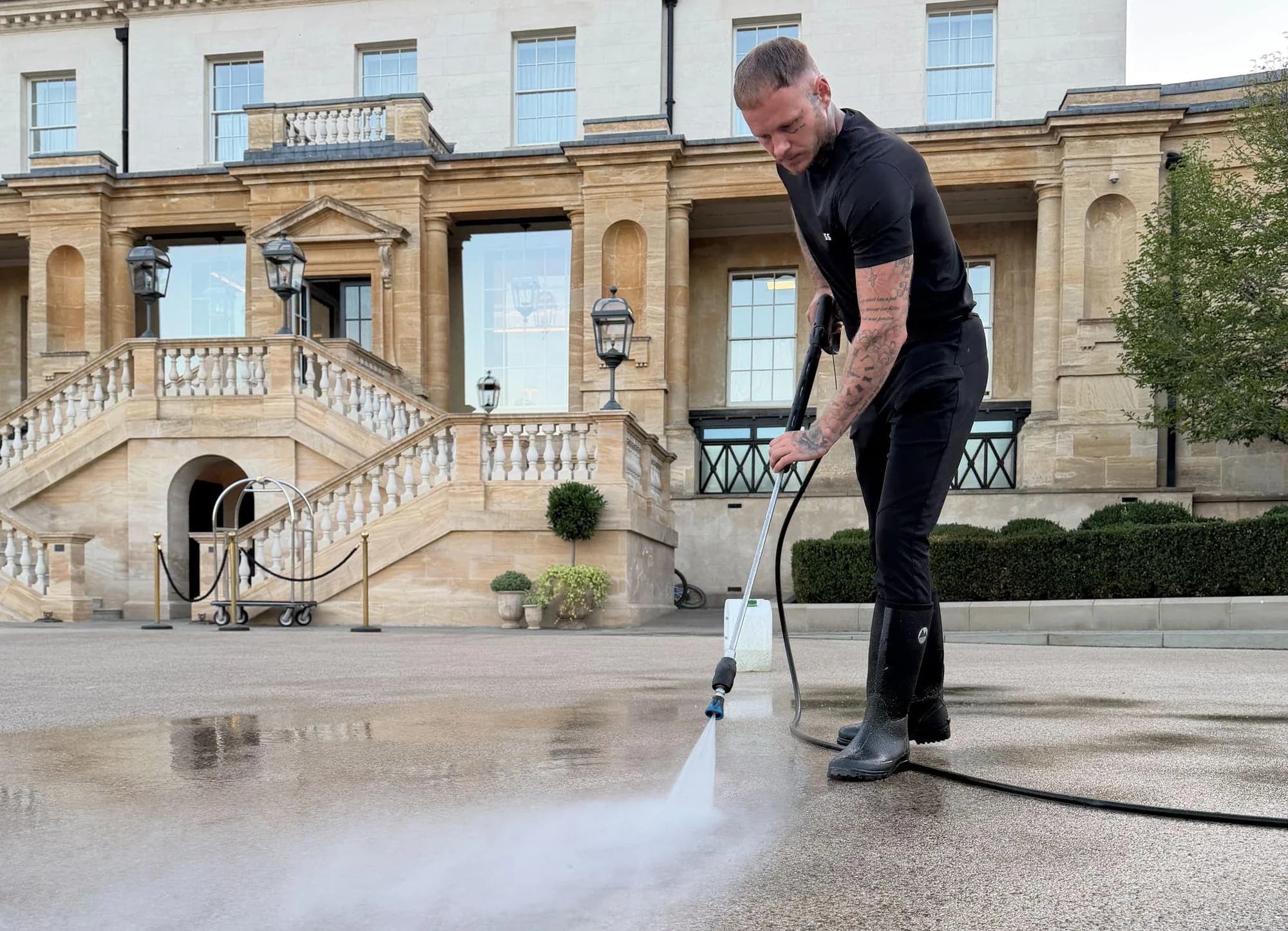
For many suitable hard surfaces, pressure washing can be highly effective.
Driveways and patios can accumulate:
- Mud
- Dirt
- Grime
- Algae
- Moss
- Weeds
- General weather staining
Where the surface is strong enough, controlled pressure can remove stubborn deposits quickly.
However, not every driveway or patio should automatically be pressure washed.
Older paving, loose joints, damaged surfaces and certain decorative finishes may require a more careful approach.
This is where professional assessment becomes useful.
The question should not simply be, “Can this be pressure washed?”
It should be:
“What cleaning method will give the best result without unnecessarily affecting the surface?”
For some properties, a combination of treatment and controlled pressure cleaning may provide the best result.
Soft Washing vs Pressure Washing for Moss, Algae and Lichen
Organic growth is one of the biggest areas where soft washing vs pressure washing becomes an important comparison.
Pressure washing can physically remove visible growth.
Soft washing takes a treatment-based approach to suitable biological contamination.
Moss
Moss commonly appears on roofs and other damp areas.
Light growth may respond well to treatment. Heavy or established moss may require careful physical removal as well.
It is important to understand that a thick layer of moss may not simply disappear after one application.
The surface needs to be assessed so that the appropriate combination of removal and treatment can be used.
Algae
Algae can produce green, dark or discoloured marks.
It often develops where moisture and shade are present.
A suitable soft wash treatment can help target the organic growth while reducing reliance on aggressive pressure.
Lichen
Lichen can be particularly stubborn.
It may attach firmly to roof coverings and other surfaces.
Trying to blast stubborn lichen away using excessive pressure is not necessarily the best solution.
A suitable treatment and controlled cleaning process may be more appropriate.
Can You Soft Wash With a Pressure Washer?
This is one of the most common points of confusion.
A pressure washer can sometimes be used as part of a soft-washing system.
However, soft washing is not defined simply by owning a pressure washer.
The cleaning process, pressure level, treatment and application method are what matter.
Some systems can apply cleaning solutions through specialist equipment. Others use dedicated low-pressure equipment.
The final rinse may also involve controlled water pressure.
Therefore, saying “a pressure washer was used” does not automatically mean that the property was pressure washed in the traditional sense.
The purpose of soft washing is to reduce reliance on mechanical force and allow the appropriate cleaning treatment to do much of the work.
Is Soft Washing Safer Than Pressure Washing?
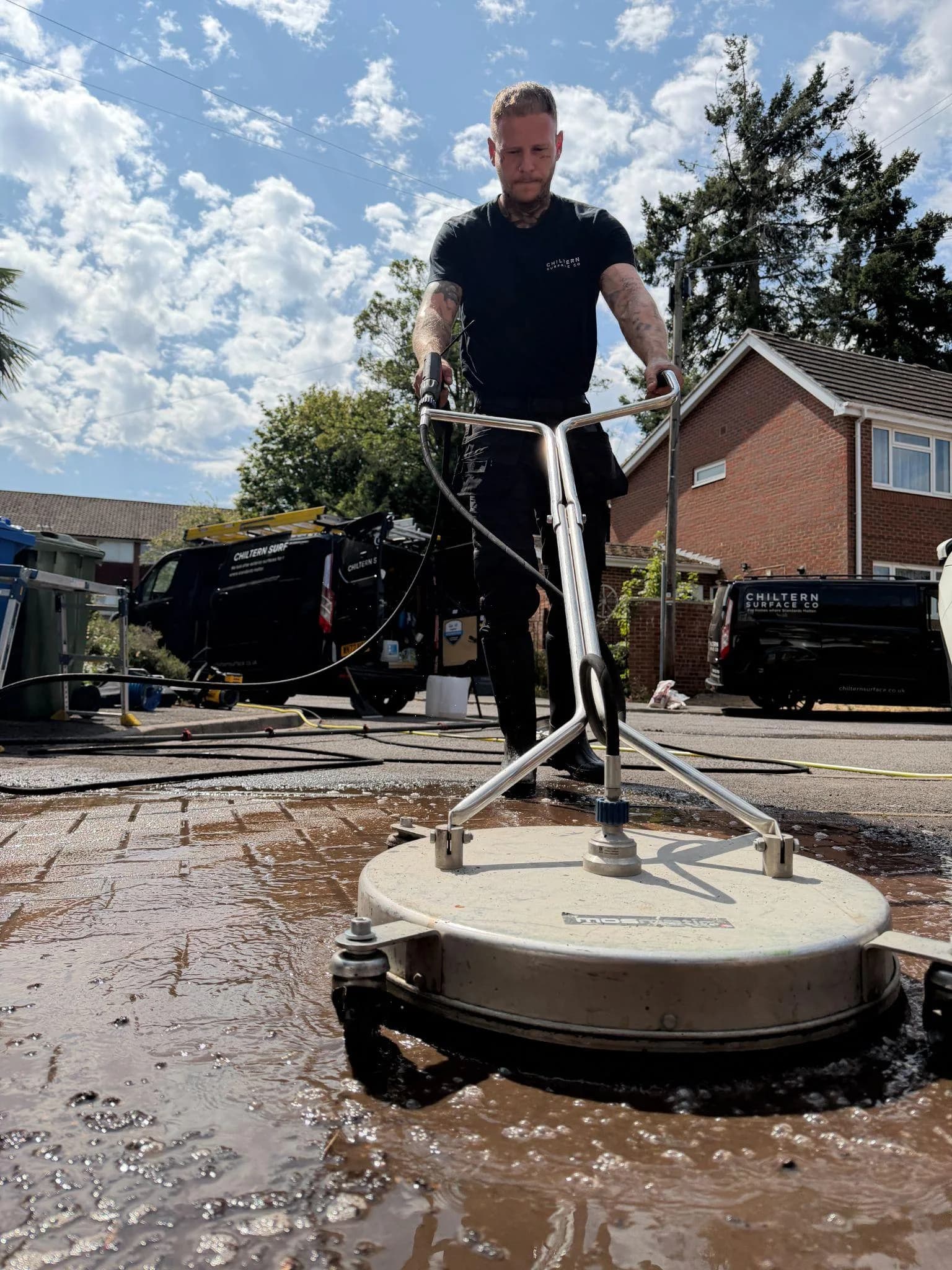
This depends on the property.
Soft washing can reduce mechanical force, which makes it useful for certain roofs, render, walls and other suitable surfaces.
However, it does not mean that soft washing is completely risk-free.
Cleaning solutions must be selected and used correctly.
Nearby plants and sensitive surfaces may need protection.
Run-off must also be managed carefully.
Pressure washing has different risks.
Excessive pressure can affect vulnerable surfaces, coatings, joints and finishes.
Therefore, neither method should automatically be described as “safe”.
The safer method is the one that is appropriate for the material and correctly carried out.
What Happens If You Use the Wrong Method?
Choosing the wrong cleaning method can create more problems than it solves.
With pressure washing, excessive force can potentially:
- Damage fragile surfaces
- Affect coatings
- Remove surface finishes
- Disturb paving joints
- Force water into vulnerable areas
With soft washing, incorrect products or application can also create problems.
An unsuitable cleaning solution, incorrect concentration or poor handling can affect surfaces or surrounding areas.
This is why professional exterior cleaning should begin with an assessment.
The cleaner should understand the material, identify the contamination and select a method accordingly.
Which Method Gives Better Results?
The answer depends on the type of contamination.
If the main problem is heavy dirt on a suitable hard surface, pressure washing may provide an excellent result.
If the main issue is organic growth such as algae, moss or mould, soft washing may be more suitable.
In some cases, both methods can be useful.
For example, a property might have:
- A roof requiring soft wash treatment
- Render requiring low-pressure cleaning
- A concrete driveway requiring pressure washing
- A patio requiring controlled mechanical cleaning
There is no reason to use the same method everywhere.
A professional exterior cleaner should be able to select the right approach for each surface.
Does Soft Washing Last Longer Than Pressure Washing?
Homeowners often want to know whether one method provides longer-lasting results.
There is no fixed answer.
Pressure washing can create an immediate visual improvement by physically removing dirt and surface growth.
However, organic contamination can return.
Soft washing is designed to treat suitable biological growth, which can make it particularly useful when algae, moss, lichen or mould are the main problem.
How long the results last also depends on the property.
A shaded wall surrounded by trees may develop algae more quickly than a sunny, exposed wall.
Moisture, rainfall, nearby vegetation and surface condition can all affect future growth.
Regular inspection and maintenance can therefore help keep exterior surfaces looking cleaner for longer.
How Much Does Soft Washing or Pressure Washing Cost?
The price of exterior cleaning depends on the property rather than simply the method.
For soft washing, factors can include:
- Surface size
- Type of contamination
- Cleaning requirements
- Property height
- Access
- Preparation
- Surrounding plants
- Equipment
- Level of growth
Pressure washing costs can also vary depending on surface size, dirt levels, access, equipment and the condition of the area.
A small patio and a large roof clearly require very different amounts of time and preparation.
When comparing quotations, do not look only at the lowest price.
Ask what the service includes.
A professional quotation should explain the areas being cleaned and any additional work that may be required.
A cheap cleaning service can become expensive if the wrong method damages the surface or fails to deal with the actual cause of the staining.
Should You Do It Yourself?
DIY pressure washing and soft washing may appear straightforward.
There are plenty of machines and cleaning products available, but exterior cleaning still requires knowledge and care.
The first challenge is identifying the surface.
The second is choosing the correct cleaning method.
The third is using the equipment correctly.
Roof cleaning adds another concern: working at height.
A wet roof can be extremely slippery, and accessing difficult areas can create serious safety risks.
There is also the question of cleaning products. Incorrect products or concentrations can affect surfaces and surrounding areas.
For small, accessible jobs, some homeowners may feel comfortable carrying out basic cleaning themselves.
For roofs, high-level surfaces, difficult access and specialist treatments, professional cleaning is often the more sensible choice.
How to Choose the Right Cleaning Company
When looking for a company to carry out exterior cleaning, do not choose based on price alone.
Ask questions about the cleaning method.
A good company should be able to explain why a particular approach is suitable for your property.
You can also ask:
- What type of contamination will be treated?
- What cleaning method will be used?
- Is the surface suitable for pressure washing?
- Would soft washing be more appropriate?
- What preparation is included?
- How will nearby plants and surfaces be protected?
- Is rinsing included?
- Will the surface be inspected before cleaning?
A professional should be willing to explain the process.
They should also be prepared to recommend a different method if the original option is not suitable.
That is a better sign than a company that automatically pressure washes every surface.
Why Choose Chiltern Surface?
At Chiltern Surface, the focus is on selecting the right cleaning approach for the surface.
Exterior cleaning is not simply about using powerful equipment. Different materials respond differently to pressure, treatment and water.
For suitable roofs, render, walls and other exterior surfaces affected by organic growth, soft washing can provide a controlled treatment-based solution.
For suitable driveways, patios and hard surfaces, pressure washing may be more appropriate when mechanical cleaning is required.
The important thing is matching the method to the job.
Chiltern Surface provides professional exterior cleaning services for properties in Buckinghamshire and surrounding areas, helping homeowners maintain the appearance and condition of their outdoor surfaces.
If you are unsure whether you need a soft wash, pressure wash or combination of methods, an assessment can help determine the most suitable option.
Frequently asked questions
Is soft washing better than pressure washing?
Neither method is best for every situation. Soft washing is often suitable for organic growth and certain surfaces where aggressive pressure may be inappropriate. Pressure washing can work extremely well on suitable durable surfaces affected by heavy dirt and grime.
Can I pressure wash my house?
Some areas of a house can be pressure washed, but the correct pressure depends on the surface. Render, painted surfaces, cladding and some roof coverings may require a gentler method. Always consider the material and its condition before using pressure.
Can you soft wash with a pressure washer?
A pressure washer can form part of some soft-washing systems, but using a pressure washer does not automatically mean you are soft washing. Soft washing involves controlled low-pressure application and an appropriate cleaning treatment.
Is soft washing safer for roofs?
For suitable roof coverings, soft washing can reduce the mechanical force applied to the surface compared with aggressive pressure washing. However, every roof should be assessed before cleaning because age, material, condition and existing damage can affect the correct method.
Does pressure washing permanently remove moss?
Pressure washing can remove visible moss, but it cannot guarantee that moss will never return. Moisture, shade, nearby vegetation and weather conditions can encourage new growth. A suitable treatment may be considered where organic growth is the main problem.
Conclusion
When comparing soft washing vs pressure washing, there is no one-size-fits-all answer. Soft washing uses an appropriate cleaning treatment and low-pressure application to tackle organic contamination such as algae, moss, lichen and mould. This makes it a useful option for many suitable roofs, rendered walls, cladding and other exterior surfaces. Pressure washing uses mechanical water force and can be highly effective for suitable durable surfaces such as concrete, paving and other hard areas. The key is not to choose the most powerful method.It is to choose the right method for the right surface.Using excessive pressure where a gentler treatment is appropriate can cause unnecessary problems. Likewise, using soft washing where mechanical cleaning is actually needed may not deliver the result you expect. At Chiltern Surface, the focus is on assessing the surface, understanding the contamination and selecting an appropriate cleaning approach. If you are unsure whether soft washing or pressure washing is right for your property, Contact Chiltern Surface today for professional advice and find the right exterior cleaning solution for your home.