If you are wondering solar panel cleaning how often is needed, there is no fixed schedule for every UK home. Rain removes some loose dirt, but pollen, bird droppings, dust and grime can remain. The right cleaning frequency depends on your roof, surroundings, weather, panel angle and how much contamination has built up.
Solar Panel Cleaning How Often Is Necessary?
For most homeowners, there is no need to clean solar panels every few months simply because a calendar says so.
A better approach is to inspect the panels regularly and clean them when there is noticeable contamination.
For many UK properties, an annual inspection is a sensible starting point. Some homes may benefit from professional cleaning around once a year, while others may only need it every couple of years.
The surrounding environment makes a major difference.
For example, panels beneath mature trees can collect pollen and organic debris. Properties with frequent bird activity can develop stubborn droppings. Panels in dusty surroundings may also become dirty more quickly.
On the other hand, a roof with good exposure to rainfall and little surrounding vegetation may stay relatively clean for longer.
So, when deciding how often to clean solar panels, think about the condition of the panels rather than following a strict timetable.
A Simple Cleaning Schedule
Use this as a general guide rather than a rule:
Property condition
Inspection
Likely cleaning need
Difficulty
Clean, open surroundings
Once a year
Only when dirty
Low
Typical suburban home
Once a year
Every 1–2 years if needed
Moderate
Near mature trees
Every 6–12 months
Potentially more often
Moderate
Heavy bird activity
Every few months
When deposits build up
Moderate
Dust-prone surroundings
Every 6–12 months
As contamination appears
Moderate
Difficult roof access
Professional inspection
As recommended
High
The important point is that these timeframes are not guarantees. Your panels may need cleaning sooner or later depending on local conditions.
What Determines How Often Solar Panels Need Cleaning?
Several factors influence solar panel cleaning frequency. Understanding them makes it much easier to decide when professional cleaning is worthwhile.
Trees and Pollen
Trees can create additional maintenance around solar panels.
Leaves are easy to spot, but pollen is often less obvious. Fine particles can settle over the glass and mix with moisture and dust.
Nearby trees can also increase bird activity around the roof.
If your solar panels are surrounded by mature trees, inspect them more often, particularly during periods of heavy pollen or leaf fall.
Bird Droppings
Bird droppings are one of the more noticeable forms of solar panel contamination.
A small amount of dust may spread across the glass, but a large deposit can cover a concentrated area of the panel.
Rain may soften or remove some deposits, but dried droppings can remain attached.
If birds regularly sit on your roof, check the panels more frequently.
Dust and General Grime
Dust can accumulate during dry weather.
Rain helps rinse loose particles away, but light rainfall does not always remove everything. Dust can combine with moisture and leave a thin film on the glass.
Homes close to busy roads or areas where airborne dust is common may therefore require more frequent inspections.
Panel Angle and Roof Position
The angle of your solar panels also matters.
A steeper panel can allow rainwater and loose dirt to run off more easily. A shallow angle may allow contamination to remain on the surface for longer.
This does not mean every low-angle installation needs frequent cleaning. It simply means the panel position should be considered when deciding on maintenance.
Does Rain Clean Solar Panels?
Rain provides a useful natural rinse, which is one reason many UK homeowners do not need frequent solar panel cleaning.
However, rain is not the same as professional cleaning.
Rain can remove loose dust and some surface dirt, but it may leave behind:
- Dried bird droppings
- Pollen
- Sticky grime
- Organic deposits
- Mineral marks
- Stubborn dirt
A short shower may simply wet the surface. Once the water evaporates, some of the original contamination can remain.
Therefore, do not assume that repeated rainfall means your panels are completely clean.
Instead, look at the glass.
If it still appears clear after rainfall, you may not need to do anything. If it remains visibly dirty, cleaning may be worthwhile.
How Can You Tell When Solar Panels Need Cleaning?
You do not always need specialist equipment to decide whether your panels need attention.
If the installation is visible from the ground, carry out a simple visual inspection.
Look for a noticeable:
- Layer of dust
- Build-up of pollen
- Bird droppings
- Water marks
- General grime
- Organic debris
- Leaf accumulation
The appearance of the panels can tell you a lot.
Clear glass generally means there is little reason for immediate cleaning. Heavy contamination suggests that the surface deserves closer attention.
Monitor Your Solar Output Too
Your solar system's electricity generation can also provide useful information.
However, lower output does not automatically mean dirty panels.
Generation can change because of:
- Cloud cover
- Seasonal daylight
- Shading
- Temperature
- System performance
- Inverter issues
- Panel contamination
For this reason, use energy production as a supporting indicator rather than the only reason to clean.
Does Dirty Solar Panel Glass Reduce Performance?
It can.
Solar panels need sunlight to reach their photovoltaic cells. Dirt and other deposits on the glass can reduce the amount of light reaching the surface.
The effect depends on the type and amount of contamination.
A light layer of dust is very different from heavy grime covering a large part of the panel. Likewise, a large bird dropping can create concentrated shading.
This means there is no single percentage of performance loss that applies to every dirty solar panel.
Instead, consider the condition of your own system.
If the panels have substantial build-up, cleaning may be worthwhile. If they have only a small amount of dust, the benefit may be less noticeable.
Does Cleaning Increase Solar Generation?
It can when contamination is significant.
A heavily soiled panel has more potential to benefit from cleaning than one that is already clear.
However, cleaning does not solve every reason for reduced solar generation.
If your system is producing less electricity, consider the entire installation rather than assuming dirt is responsible.
When Is the Best Time to Clean Solar Panels?
There is no single month that every homeowner needs to follow.
The best time depends on the condition of your panels and the environment around your property.
Spring
Spring is useful for checking solar panels after winter.
Pollen levels can increase, particularly around trees and vegetation.
If you notice a visible layer of pollen or grime, this can be a good time to arrange cleaning.
Summer
Summer provides longer daylight hours, but very hot panels can cause cleaning water to evaporate quickly.
Professional cleaners can choose suitable conditions rather than working during the hottest part of the day.
Autumn
Autumn can bring leaves and organic debris.
Homes surrounded by trees should be checked after heavy leaf fall.
Winter
Winter conditions can make roof access more difficult.
Wet, cold and slippery surfaces create additional risks, so homeowners should avoid climbing onto roofs to clean panels.
Can You Clean Solar Panels Yourself?
If panels are safely accessible without climbing onto the roof, basic cleaning may seem straightforward.
However, roof-mounted solar panels are a different matter.
The biggest concern is often not the dirt.
It is safe access.
Wet roofs can be slippery, and solar panels can make movement around the roof more difficult. A fall can cause far more damage than a dirty panel.
For this reason, homeowners should never put themselves at unnecessary risk.
What Should You Avoid?
Avoid using:
- Abrasive brushes
- Harsh scrubbing tools
- Excessive pressure
- Hard scraping tools
- Unsuitable cleaning chemicals
Solar panels should not be treated like concrete or block paving.
A gentler, controlled cleaning method is more appropriate.
How Are Solar Panels Professionally Cleaned?
Professional solar panel cleaning focuses on removing contamination while protecting the panel surface.
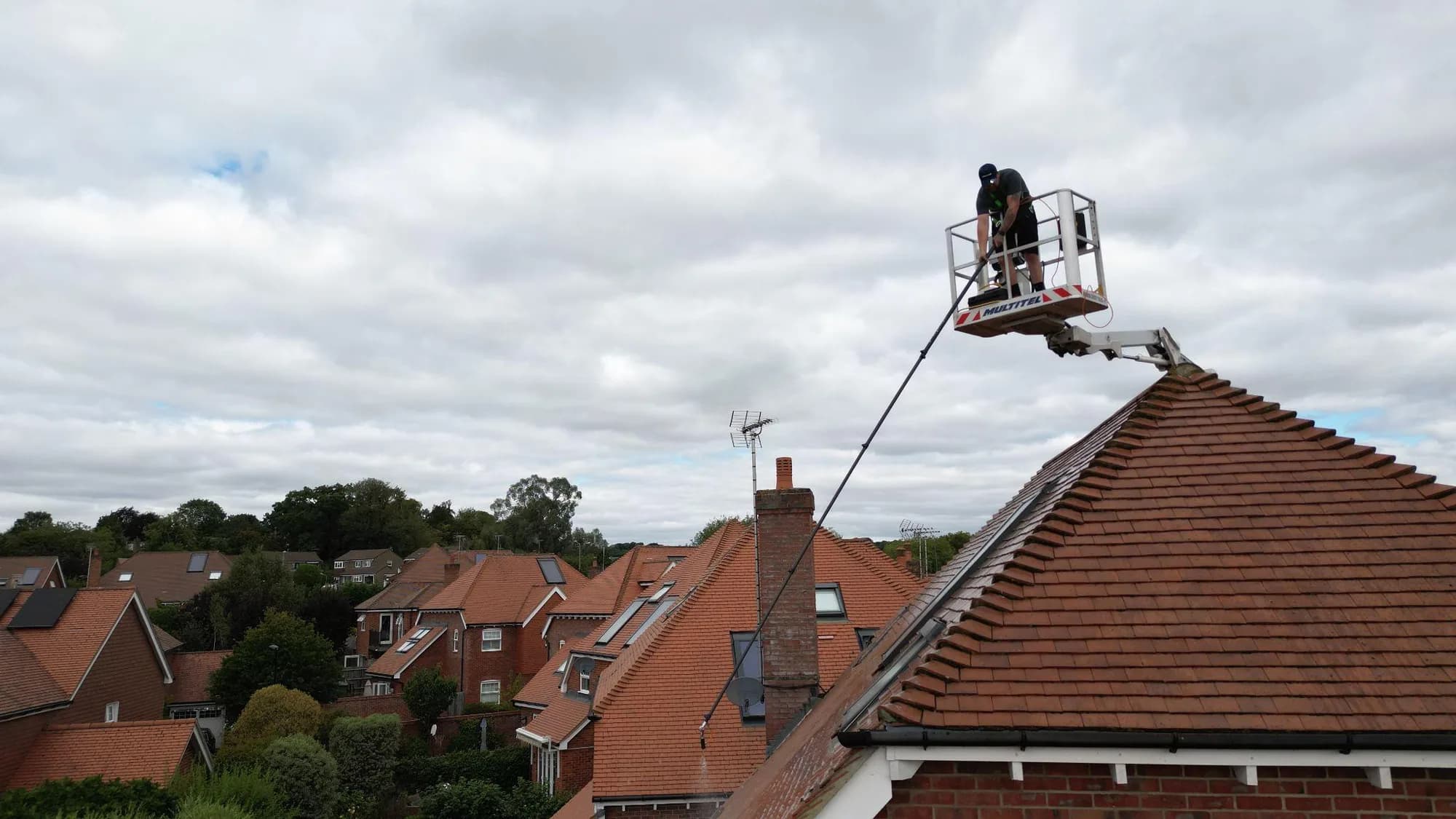
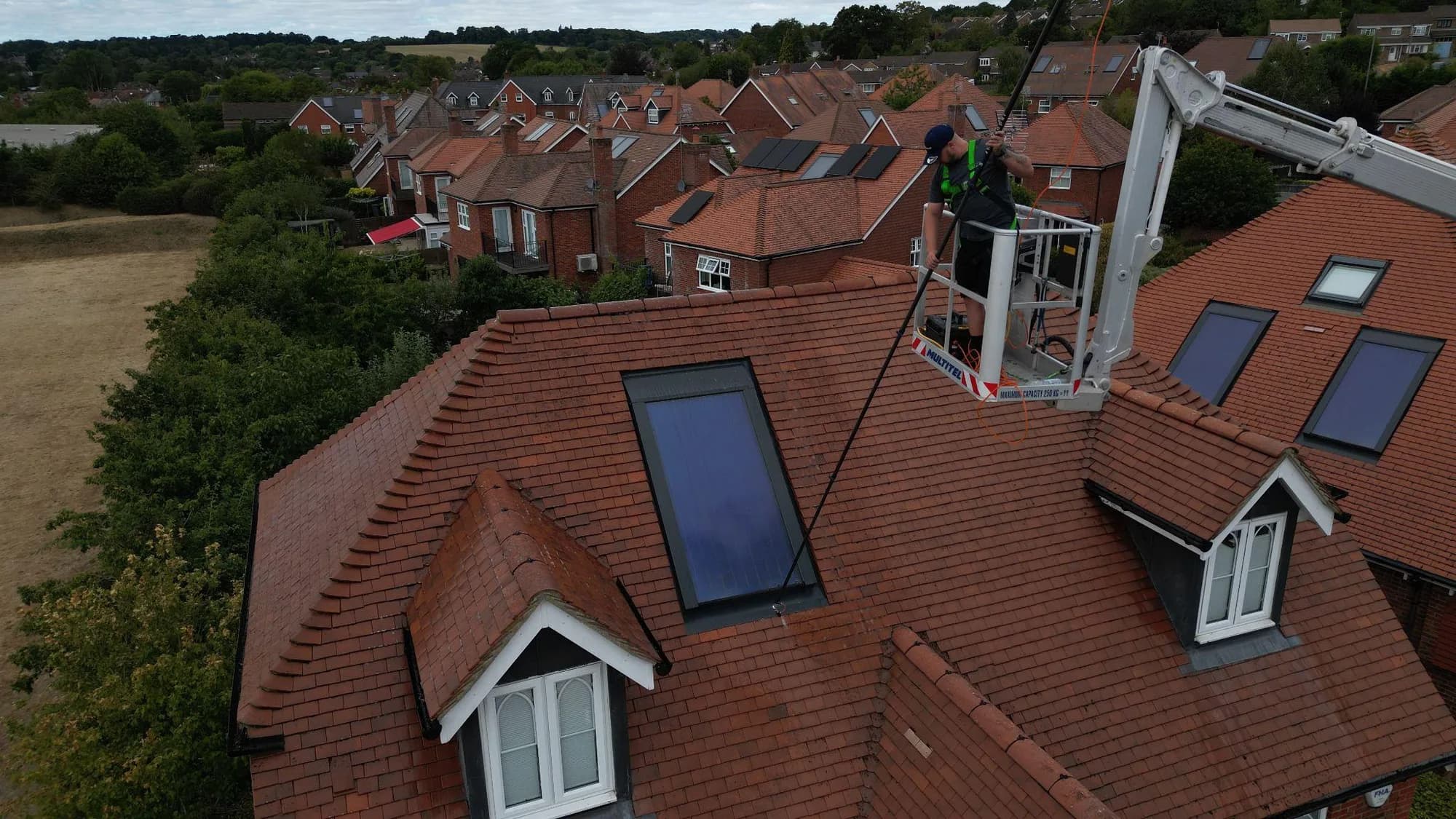
Chiltern Surface uses pure-water cleaning and water-fed pole equipment for roof-mounted solar panels.
The process is designed to clean the glass without relying on aggressive pressure.
Pure water also helps reduce mineral spotting that can occur when ordinary tap water dries on glass.
The exact approach depends on the installation, roof access and condition of the panels.
Why Pure Water Is Useful
Ordinary tap water contains dissolved minerals.
When water evaporates from glass, these minerals can sometimes remain behind as spots or marks.
Pure water has been treated to remove many of these dissolved substances.
This makes it well suited to glass surfaces such as solar panels.
The result is a cleaner finish without unnecessary chemical use or aggressive pressure.
Can You Pressure Wash Solar Panels?
Pressure washing is not the preferred method for routine solar panel cleaning.
A driveway, patio or block-paved surface can tolerate cleaning methods that would be unsuitable for solar panels.
Solar panels are part of an electrical generation system, and excessive pressure can create unnecessary risks around the surface, seals and components.
For this reason, a controlled water-fed cleaning method is generally more appropriate.
The goal is not to use the strongest method.
The goal is to use the right method for the surface.
How Much Does Solar Panel Cleaning Cost?
The price of professional solar panel cleaning varies between properties.
Factors can include:
- Number of panels
- Roof height
- Roof pitch
- Ease of access
- Amount of contamination
- Bird droppings
- Equipment required
- Location
A small, easily accessible installation is very different from a large array on a high or steep roof.
That is why a property-specific quotation is more useful than relying on a generic online price.
How Can You Reduce Solar Panel Dirt?
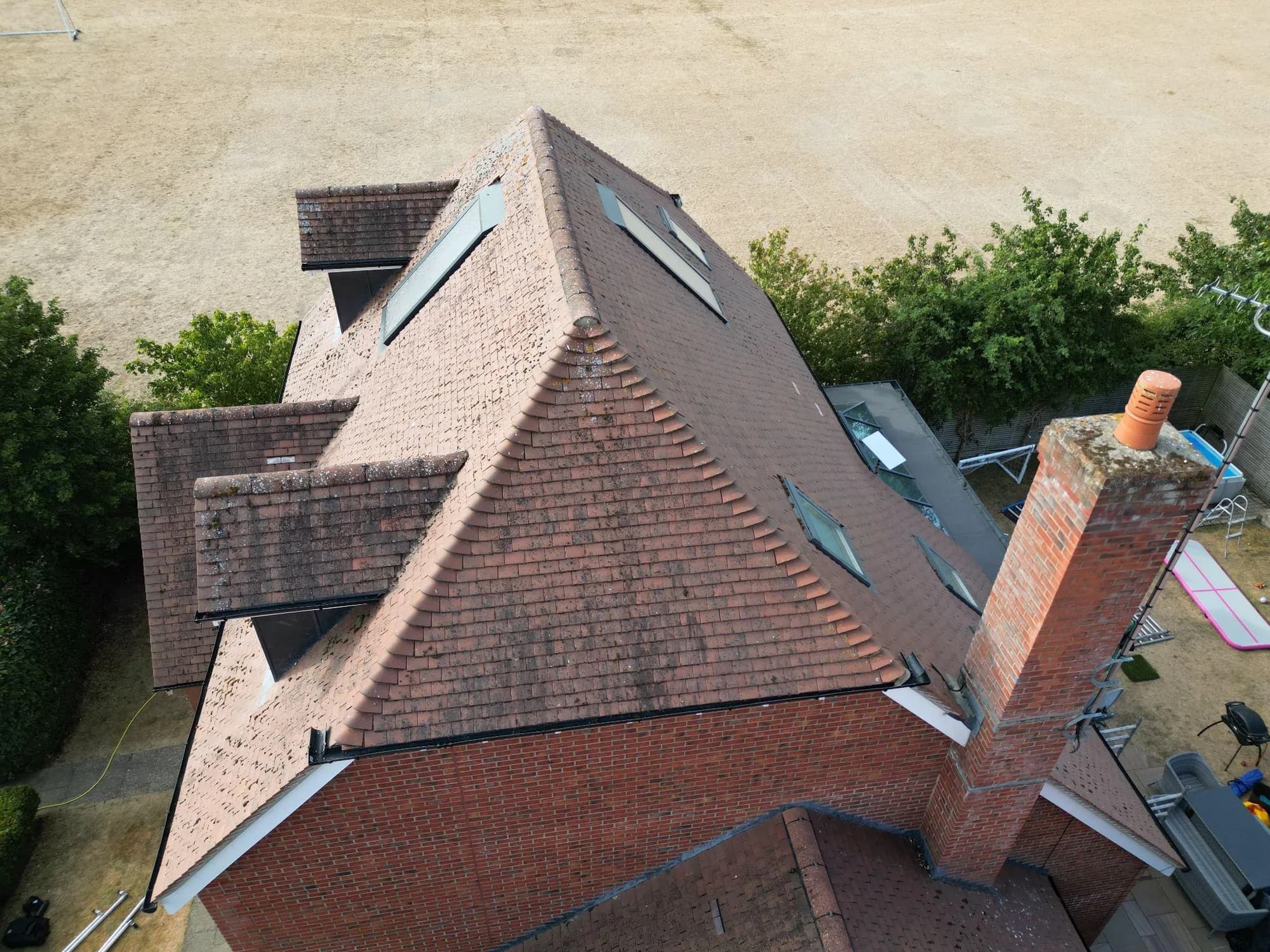
You cannot control rainfall, pollen or bird activity, but you can reduce some surrounding sources of contamination.
Keep nearby gutters maintained and avoid allowing leaves and organic debris to build up around the roof.
If trees are heavily overhanging the property, appropriate maintenance can also reduce the amount of leaves and pollen reaching the roof.
Where birds regularly gather around the panels, professional advice about suitable deterrent measures may be useful.
However, never interfere with the solar installation without considering the manufacturer's requirements and warranty.
Why Choose Chiltern Surface?
Chiltern Surface provides professional exterior cleaning for properties across Buckinghamshire, Berkshire and Oxfordshire.
Its services include:
- Solar panel cleaning
- Roof cleaning
- Gutter cleaning
- Driveway cleaning
- Patio cleaning
- Soft washing
The company takes a surface-specific approach rather than treating every exterior material in the same way.
For solar panels, pure-water cleaning and water-fed pole equipment provide a controlled method for removing dirt, pollen and other surface contamination.
This is particularly useful for roof-mounted panels where safe access is important.
Chiltern Surface also provides clear quotations and no-pressure advice, allowing homeowners to decide whether cleaning is actually needed.
Frequently asked questions
How often should solar panels be cleaned in the UK?
Many UK properties can go one or two years between professional cleans, but there is no universal schedule. Homes near trees, areas with heavy bird activity or properties exposed to significant dust may require more frequent cleaning. Annual inspection is a sensible starting point.
Is rain enough to clean solar panels?
Rain can remove loose dust and some dirt, but it may not remove dried bird droppings, pollen, grime or mineral deposits. If your panels still look dirty after rainfall, professional cleaning may be worthwhile.
Do dirty solar panels produce less electricity?
They can. Dirt and deposits can reduce the amount of sunlight reaching the photovoltaic cells. The effect depends on how heavily contaminated the panels are.
Is it safe to clean roof-mounted solar panels yourself?
DIY cleaning can be risky when panels are installed on a roof. Wet surfaces can become slippery, and accessing the panels may expose you to a fall. If safe access is not possible from the ground, professional cleaning is the safer choice.
Is professional solar panel cleaning worth it?
It can be worthwhile when panels have visible contamination or are difficult to access. Professional equipment can provide a controlled clean while reducing the need for homeowners to work on the roof. If your panels are already clean, frequent professional cleaning may not be necessary.
Conclusion
So, solar panel cleaning how often should you actually arrange it? For many UK homes, an annual inspection is a good starting point. You may need professional cleaning every year, every couple of years or only when significant contamination appears. The right answer depends on your property. Trees, pollen, birds, dust, panel angle and rainfall can all change how quickly dirt builds up. Rain can help, but it does not guarantee perfectly clean panels. Most importantly, do not clean solar panels simply because a calendar tells you to. Check their condition first.If the glass is clear, there may be no need for immediate cleaning. If you can see heavy dust, bird droppings, pollen or stubborn grime, professional cleaning may help restore a cleaner surface. And if your panels are installed on a difficult or steep roof, do not risk climbing up to clean them yourself. Chiltern Surface can assess your solar panels and recommend an appropriate cleaning method based on your property and the condition of the installation. If your solar panels are looking dirty, contact Chiltern Surface Co today to book a free, no-obligation site visit and find out whether professional cleaning is right for your home.