
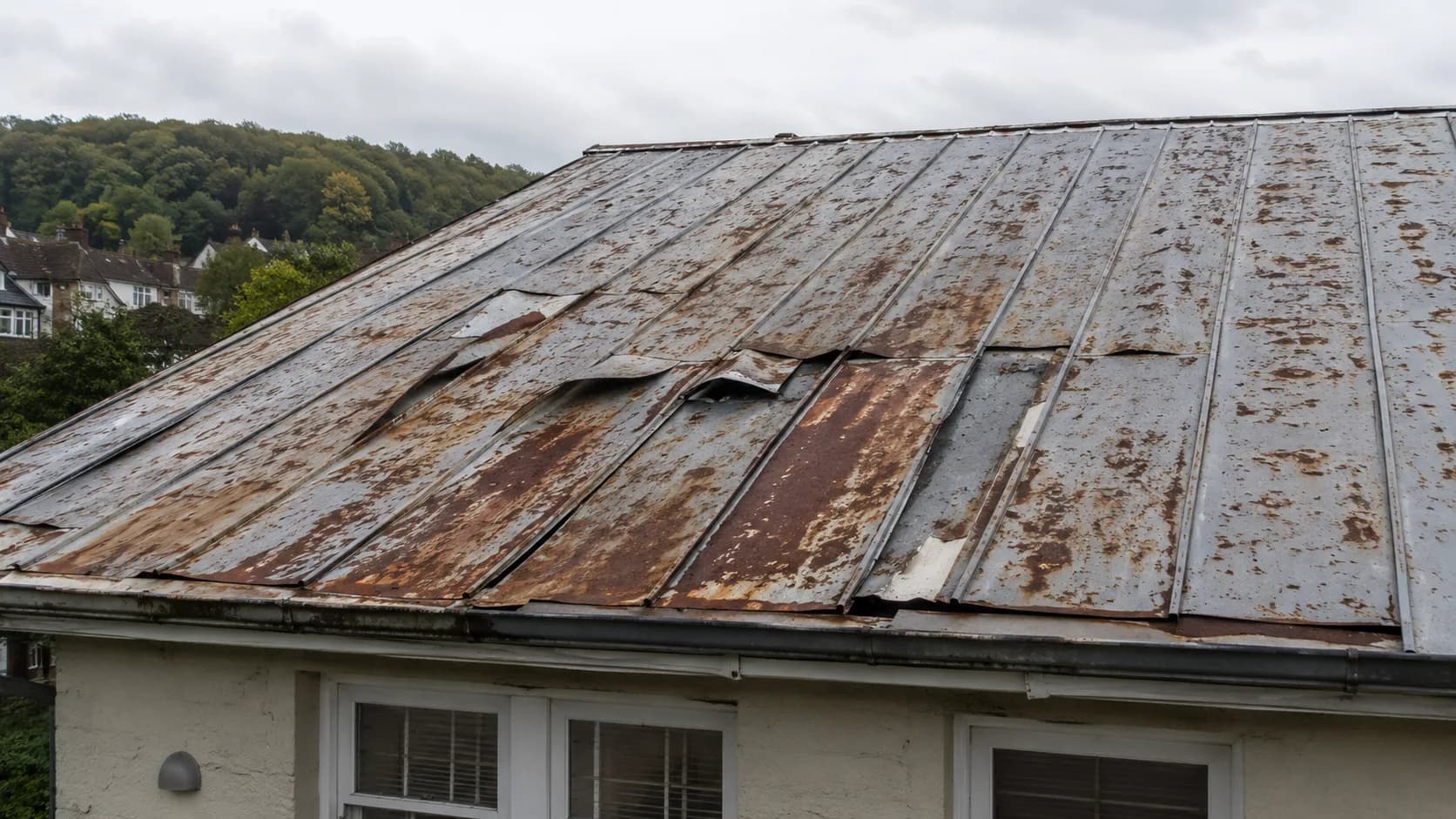
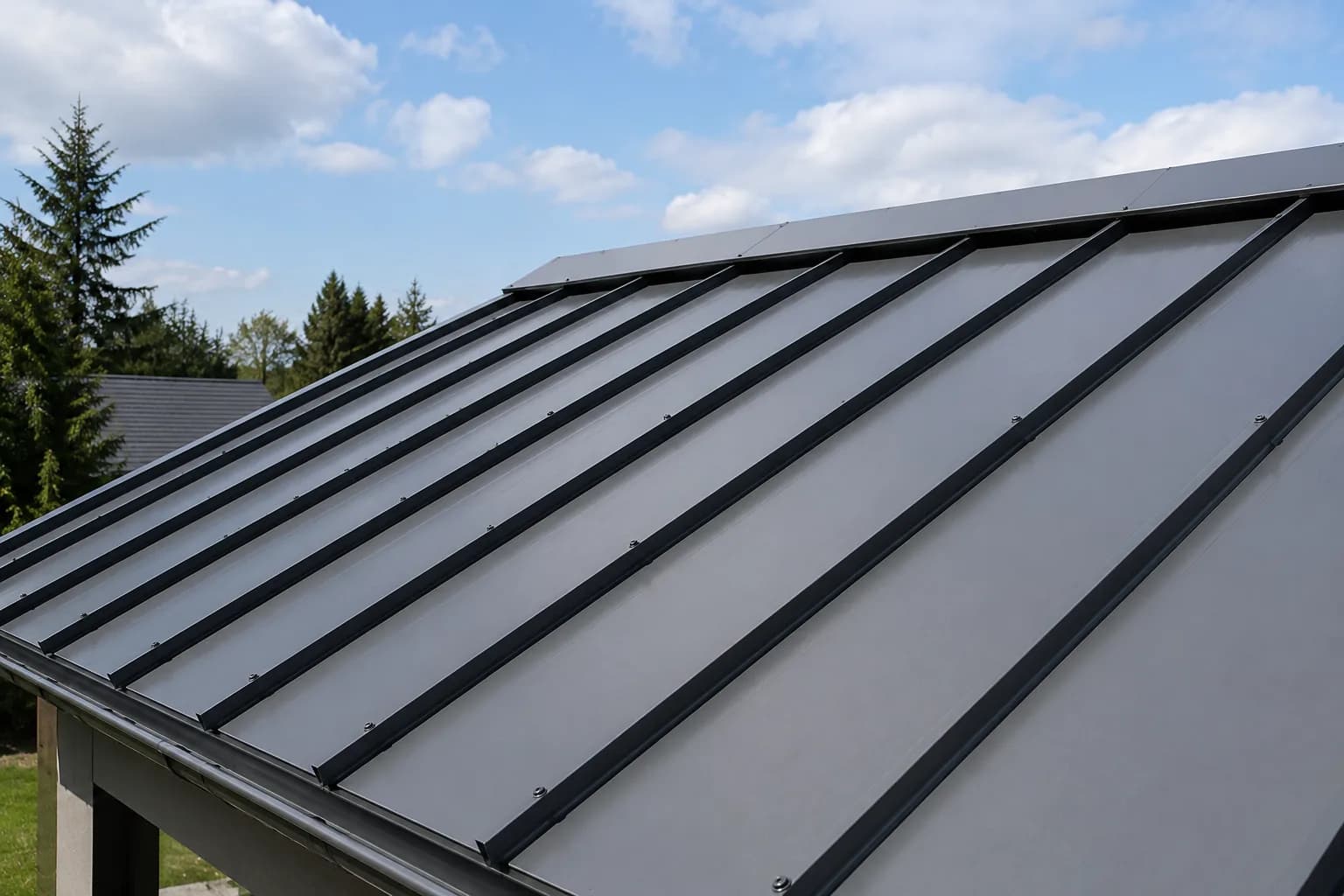
Restore the roof when the panels and supporting structure remain sound. Limit restoration to coatings, seams, fasteners or local corrosion. Replace the roof when widespread perforation, failed panels, repeated leaks or structural damage prevent reliable repair.
A professional condition survey gives the safest answer to when to restore vs replace a metal roof. The survey should separate cosmetic weathering from failures that threaten weatherproofing or structural performance.
When to Restore vs Replace a Metal Roof: The Quick Answer
Choose restoration for a serviceable roof with repairable defects. Choose replacement for a roof with widespread metal loss, unsafe sheets or failed supporting components.
The decision about when to restore vs replace a metal roof depends on 3 questions. Is the metal sound? Can contractors stop water ingress? Will repairs deliver worthwhile service life?
Restore a structurally sound roof
Restore the roof when most panels retain strength and shape. Local rust, faded coatings, loose fasteners and isolated leaks often support restoration.
A restoration programme can include cleaning, corrosion treatment, fastener replacement, seam repair, flashing work, priming and a compatible protective coating.
Replace a structurally failing roof
Replace the roof when corrosion has created holes across multiple panels. Replace panels when distortion or fatigue prevents secure fastening and weatherproof seams.
Full replacement also becomes necessary when water has damaged the deck, insulation, purlins or internal finishes across a broad area.
Inspect before choosing either option
Do not choose from roof age alone. Steel, aluminium, zinc and copper age differently, while installation quality strongly affects performance.
A contractor should inspect panels, laps, seams, fasteners, washers, flashings, penetrations, gutters, coatings and the supporting structure before recommending work.
These checks show when to restore vs replace a metal roof without relying on age alone.
What Does Metal Roof Restoration Include?
Metal roof restoration repairs serviceable components and renews surface protection without replacing the complete roof covering. The exact process depends on metal type and roof design.
Cleaning and surface preparation
Contractors first remove dirt, chalking, loose coating, biological growth and corrosion debris. Clean metal allows primers, sealants and coatings to bond correctly.
The cleaning method must suit the coating and substrate. Excessive pressure can force water through laps, damage finishes or disturb weak fasteners.
Chiltern Surface Co follows a surface-specific cleaning approach. The assessment considers material, condition, drainage, nearby surfaces and treatment suitability.
Repairs to seams, fasteners and flashings
A roofing contractor replaces failed washers, corrects loose fasteners and repairs open seams. The contractor also checks flashings around vents, chimneys and edges.
Restoration should correct water-entry points before coating. A coating cannot compensate for moving panels, failed details or loose substrate connections.
Compatible primers and protective coatings
A contractor selects primer and coating chemistry for the existing metal and finish. Acrylic, silicone and polyurethane systems serve different roof conditions.
The contractor must follow manufacturer preparation, thickness and curing requirements. An incompatible coating can peel, trap moisture or accelerate corrosion.
Preparation quality changes when to restore vs replace a metal roof because weak adhesion shortens restoration life.
Which Signs Favour Metal Roof Restoration?
Restoration suits damage that remains local, accessible and technically repairable. The roof must still provide a stable base for repairs and coatings.
Localised surface rust
Surface rust affects the coating before corrosion removes significant metal. Contractors can clean affected areas, treat corrosion and restore protective layers.
Rust around isolated scratches, cut edges or fastener heads often supports restoration. Broad perforation or flaking panel edges support replacement instead.
Limited leaks around details
Leaks around flashings, penetrations, ridge details and exposed fasteners often respond to targeted repair. The surrounding panels must remain firm and correctly aligned.
A contractor should trace every leak. Water can travel beneath sheets, so an internal stain does not always identify the entry point.
Sound panels and supporting structure
Restoration works best when panels resist foot pressure, seams hold alignment and the deck or purlins remain dry and stable.
A sound structure gives repairs a reliable base. Restoration cannot safely preserve weakened supports or sheets that no longer carry design loads.
Panel strength often decides when to restore vs replace a metal roof after contractors confirm the supporting structure.
Which Signs Mean a Metal Roof Needs Replacement?
Replacement becomes the safer choice when damage affects the roof system rather than isolated details. Repeated patching then creates cost without dependable performance.
Perforation and major metal loss
Replace extensively perforated sheets. Holes, crumbling edges and deep corrosion reduce strength and leave too little sound metal for durable repairs.
A contractor can replace one damaged panel within an otherwise sound roof. Multiple failing panels usually make broader replacement more economical.
Widespread seam or fastener failure
Thermal movement repeatedly stresses seams and fasteners. Widespread split seams, enlarged fixing holes and loose clips signal system-level failure.
Replacement becomes likely when repairs cannot restore movement capacity. Fixed patches can fail again as panels expand and contract.
Damaged deck, purlins or insulation
Water ingress can rot timber decks, corrode steel purlins and saturate insulation. Surface restoration cannot correct hidden structural or thermal damage.
A contractor must expose affected areas and assess the supporting system. Significant hidden damage often makes roof replacement necessary.
Hidden damage changes when to restore vs replace a metal roof because surface repairs cannot strengthen failed supports.
How to Decide When to Restore vs Replace a Metal Roof
Use a 3-stage decision process: identify the system, document the damage and obtain a specialist survey. This process reduces guesswork and conflicting quotes.
The same process answers when to restore vs replace a metal roof. The process suits homes, garages, extensions and outbuildings.
Identify the roof system
Confirm the metal, panel profile and fastening method. Common systems include standing seam steel, corrugated steel, aluminium sheets, zinc sheets and copper panels.
Check previous coatings and repairs. Existing silicone, acrylic, bitumen or paint can affect preparation and compatible treatment choices.
Check visible and internal evidence
Photograph rust, open seams, dents, loose fasteners and coating failure from a safe position. Check the loft for stains, condensation and wet insulation.
Inspect after rainfall when safe. Fresh water marks often reveal active leaks more clearly than dry-weather inspections.
Commission a professional condition survey
Ask a qualified metal roofing contractor to inspect external and internal components. Request photographs, defect locations and recommended repair priorities.
The survey should state why restoration remains viable or why replacement offers better value. Avoid quotes based only on roof age.
Quick Reference: Restoration or Replacement
Use the table for initial planning only. A site survey must confirm when to restore vs replace a metal roof for your property.
Task
Typical Timing
Method
Difficulty
Initial homeowner check
15-30 minutes
Ground-level photographs and loft inspection
Easy
Professional condition survey
60-120 minutes
Inspect panels, seams, fasteners, flashings and structure
Specialist
Targeted metal roof restoration
2-7 days
Clean, repair, prepare, prime and coat
Specialist
Full metal roof replacement
3-14 days
Remove covering, repair substrate and install new system
Specialist
Roof size, access, weather and hidden damage change every timeframe. Contractors should confirm programme length after inspection.
The table helps frame when to restore vs replace a metal roof before you compare quotations.
How Does Metal Roof Type Change the Decision?
The roof system changes the repair method and replacement threshold. A coating suitable for steel can damage or discolour another metal.
Standing seam metal roofs
Standing seam roofs use folded seams and concealed clips. Contractors must preserve panel movement while repairing clips, seams, flashings and penetrations.
Restoration suits sound standing seam panels with local detail failures. Replacement suits widespread seam fatigue, panel distortion or clip failure.
Corrugated and exposed-fastener roofs
Corrugated roofs often use exposed screws and sealing washers. Age, ultraviolet exposure and movement can harden washers and enlarge fixing holes.
Restoration can replace fasteners, repair laps and renew coatings. Replacement becomes stronger value when many sheets show corrosion around fixings.
Zinc, aluminium and copper roofs
Zinc and copper form protective patinas. Harsh chemicals, abrasive cleaning and incompatible metals can damage those natural protective surfaces.
Aluminium resists red rust but can pit or suffer galvanic corrosion. Specialist advice protects each metal and prevents incompatible repairs.
Metal type changes when to restore vs replace a metal roof because each surface needs compatible repair materials.
What Costs Affect When to Restore vs Replace a Metal Roof?
Condition, access and hidden damage control cost more than roof age alone. Restoration normally costs less upfront, but short-lived repairs can waste money.
A cost comparison should cover 3 figures: immediate cost, expected service life and likely maintenance. Those figures clarify when to restore vs replace a metal roof.
Roof size, pitch and access
Larger roofs need more labour, coating and safety equipment. Steep pitches, fragile sheets and restricted access increase scaffolding or access-platform costs.
Repair scope and coating specification
Costs rise with fastener replacement, seam reinforcement, flashing repairs, corrosion treatment and multiple coating layers. Manufacturer warranty terms also affect specification.
Hidden deck and insulation damage
Wet insulation, corroded purlins and damaged decks can change a restoration quote quickly. Contractors should price investigation and replacement allowances clearly.
Compare quotes with matching scopes. A low quote can exclude preparation, detailing, dry-film thickness, access or disposal.
Can Cleaning Delay Metal Roof Replacement?
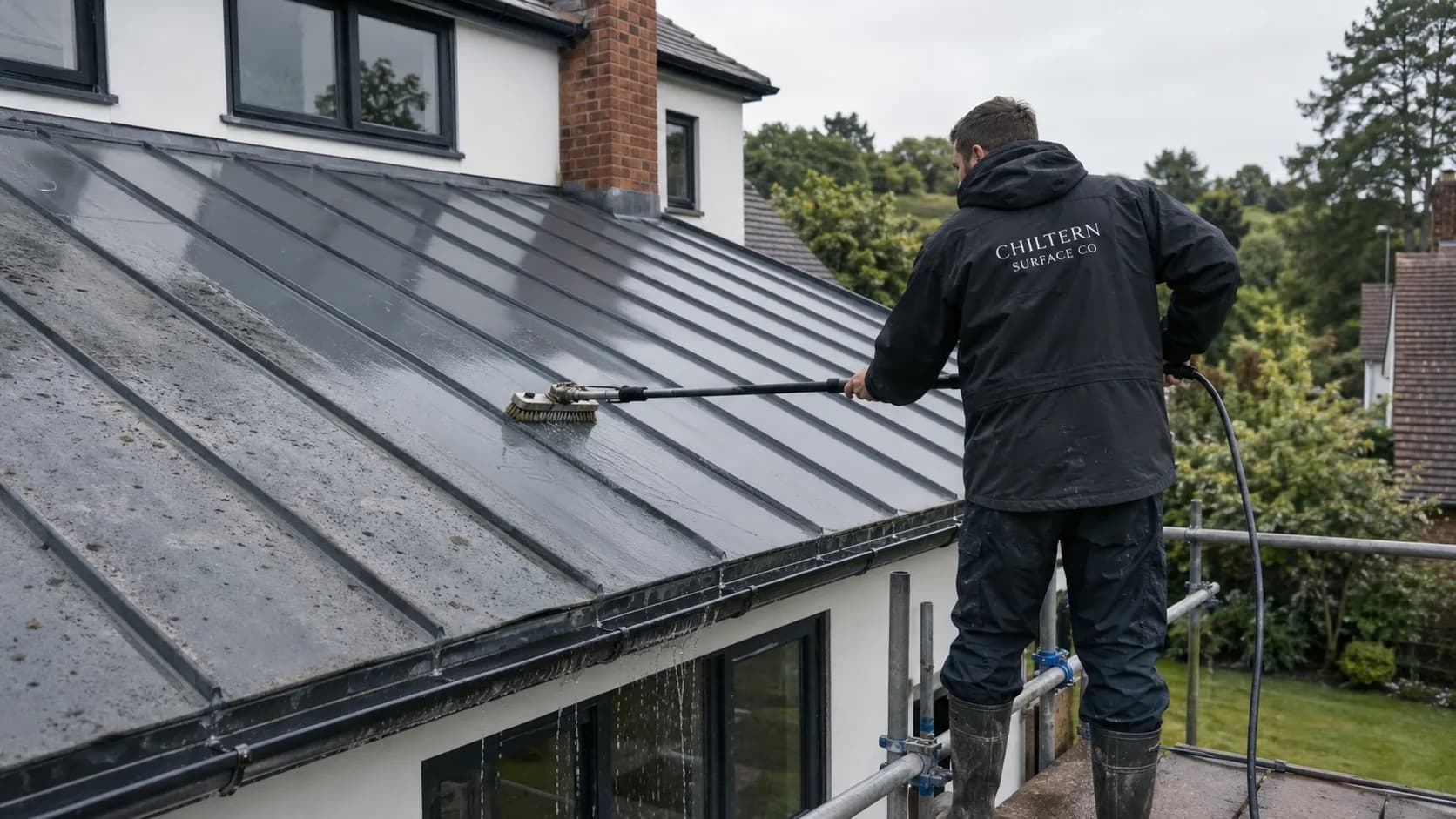
Cleaning can support maintenance and assessment, but cleaning cannot reverse structural corrosion or failed panels. Proper cleaning removes contamination before repair or coating.
Cleaning removes contamination
Dirt, algae, bird mess and organic deposits hold moisture and hide coating defects. Suitable cleaning improves visibility and prepares sound surfaces.
Read Chiltern Surface Co answers to common cleaning questions before arranging exterior work. The guidance explains assessments, pressure risks and realistic results.
Cleaning reveals defects
A clean surface exposes rust, split sealant, open laps and coating loss. Contractors can then define repairs more accurately.
Cleaning cannot repair structural failure
Cleaning cannot close perforations, secure failed clips, replace wet insulation or strengthen corroded purlins. A roofing contractor must handle those defects.
Chiltern Surface Co provides exterior cleaning and surface assessment. A qualified metal roofing contractor must complete structural restoration or replacement.
Cleaning evidence can clarify when to restore vs replace a metal roof but cleaning cannot replace a structural survey.
What Safety and UK Property Rules Matter?
Never walk onto a metal roof without a planned safe-access system and competent supervision. Wet and coated metal creates a severe slip risk.
Roof access and fragile sheets
Treat sheeted roofs as fragile until a competent person confirms otherwise. Contractors should plan access, edge protection and fall controls before work.
Homeowners should inspect from the ground and loft. Avoid ladders, rooflights and unsupported sheet areas during personal checks.
Building regulations and insulation
Major replacement work can trigger building-regulation requirements. Ask the contractor or local authority about insulation, ventilation and structural compliance.
The contractor should also confirm planning needs for major appearance changes, especially on prominent roofs or altered roof forms.
Listed buildings and conservation areas
Historic zinc, copper, lead-coated or terne roofs need conservation-led assessment. Replacement profiles, seams and finishes can affect architectural character.
Contact the local planning authority before changing significant historic roof materials. Specialist metalworkers should guide repair details and compatible metals.
Safe access must guide when to restore vs replace a metal roof because roof work carries serious fall risks.
How Maintenance Affects When to Restore vs Replace a Metal Roof
Regular inspection and prompt repair preserve more restoration options. Neglect allows small coating defects and loose details to become system-wide failures.
Schedule condition checks
Arrange a professional inspection every 12 months and after severe weather. Record rust, leaks, fastener movement and coating changes.
Inspection history supports when to restore vs replace a metal roof because contractors can compare deterioration rates across multiple visits.
Keep drainage routes clear
Clear gutters, valleys and outlets so rainwater leaves the roof quickly. Standing debris holds moisture against coatings and panel edges.
Drainage condition influences when to restore vs replace a metal roof because repeated wetting accelerates corrosion around laps and details.
Record repairs and coatings
Keep invoices, product names, warranties and coating dates. Contractors need those records before applying sealants, primers or new coatings.
Accurate records improve when to restore vs replace a metal roof because previous materials control compatibility and warranty options.
How to Compare Metal Roof Quotes
Compare scope, evidence and expected life rather than price alone. Every contractor should describe existing defects and proposed remedies clearly.
Request the same inspection scope
Ask each contractor to assess panels, seams, fasteners, flashings, penetrations, gutters, coating, deck, insulation and supporting members.
Matching survey scopes make restoration and replacement quotes easier to compare. Missing items can create costly variations later.
Compare warranties and exclusions
Check workmanship warranty, coating warranty and panel warranty separately. Read exclusions covering ponding water, corrosion, movement and previous coatings.
Compare expected service life
Ask how many service years each option should provide under the stated maintenance plan. Request inspection intervals and future coating requirements.
The best answer to when to restore vs replace a metal roof balances condition, risk, disruption and long-term cost. The cheapest immediate option does not always deliver value.
Frequently asked questions
Can you restore a rusty metal roof?
Yes, when rust remains local and the panels retain enough sound metal. Contractors must remove loose corrosion and apply compatible treatments.
Does every leaking metal roof need replacement?
No. Local leaks around seams, fasteners and flashings often support repair. Widespread leaks or hidden structural damage support replacement.
Can a coating replace damaged metal panels?
No. A coating protects a suitable substrate. A coating cannot restore missing metal, failed clips, major distortion or unsafe sheets.
How long does metal roof restoration last?
A restoration lifespan depends on preparation, repairs, coating system, exposure and maintenance. Ask the contractor for a written service-life estimate and warranty.
Should I clean a metal roof before inspection?
No, not before an initial professional assessment. Cleaning can alter evidence and create access risks. Let the specialist choose the preparation method.
Choose the Right Next Step for Your Metal Roof
Restore a sound roof with repairable surface and detail defects. Replace a roof with widespread perforation, repeated system failure or damaged supports. A qualified survey should settle when to restore vs replace a metal roof before you commit to major spending. Chiltern Surface Co can assess exterior cleaning needs and explain suitable surface care. That assessment supports when to restore vs replace a metal roof. Book a free site visit through the professional roof cleaning page. A specialist roofer should handle structural repair, coating design or replacement.