
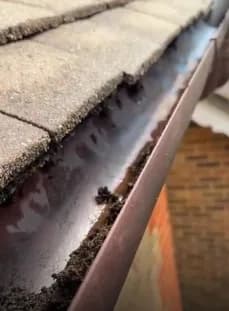
Why Are My Gutters Overflowing?
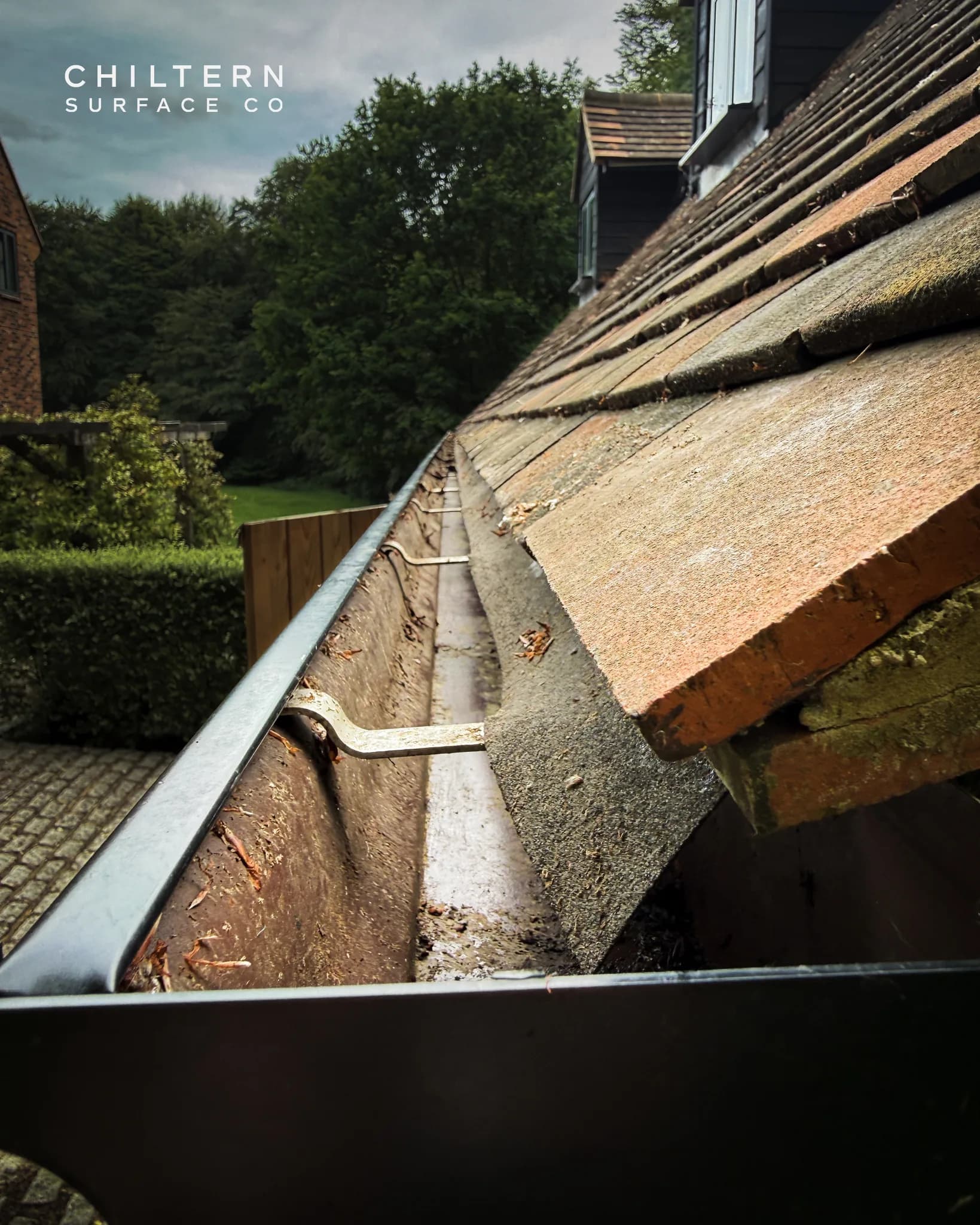
Gutter overflow happens when rainwater cannot move through the drainage system quickly enough.
That sounds simple, but several different problems can create the same symptom.
The first thing to understand is that your gutter is only one part of the system. Rainwater travels from the roof into the gutter, along the gutter towards an outlet, through the downpipe and, in some properties, into a further drainage connection.
If something restricts that route, water needs somewhere else to go. Often, that means spilling over the front or back of the gutter.
So, before assuming that you need another gutter clean, look at how and where the water is overflowing.
Is it happening along the whole gutter? Is it only in one section? Does it happen during every rainfall or only during heavy downpours? Does the gutter look clean?
These details can provide useful clues.
Why Do Gutters Overflow Even When They Look Clean?
One of the most frustrating situations is having a gutter that looks clean but still overflows.
If there are no obvious leaves or debris, the problem may be somewhere else.
A blocked downpipe is one possibility. Water may enter the gutter normally but struggle to leave through the outlet.
Another possibility is poor gutter fall. Gutters need to direct water towards their outlets. If a section has developed a low point, water can collect there instead of continuing along the gutter.
Sagging can create a similar problem.
Heavy rainfall can also expose a drainage limitation that is not obvious during normal weather. A gutter may handle ordinary rainfall but struggle when a large amount of water reaches it in a short period.
Roof design matters too. Valleys and larger roof sections can concentrate runoff into particular parts of the guttering.
Therefore, why are my gutters overflowing is not always answered by “they need cleaning.”
The visible gutter is only the starting point of the investigation.
Could a Blocked Downpipe Be Causing the Overflow?
Yes. A restriction in the downpipe can cause water to back up into the gutter.
This is why cleaning the gutter does not always resolve an overflow.
Imagine rainwater entering a gutter and moving towards the outlet. If the downpipe cannot accept or carry that water away efficiently, the water level in the gutter can rise.
Eventually, it reaches the edge and spills over.
The restriction may be near the gutter outlet, within the visible downpipe or further along the drainage route.
This is especially worth considering when the gutter looks clean but continues to overflow during rainfall.
Look at what happens around the outlet. If water appears to collect in that area rather than moving away, the outlet or downpipe may need further attention.
However, avoid assuming that every overflow is a downpipe blockage. The position and timing of the overflow still matter.
Can Poor Gutter Fall Cause Overflowing Gutters?
Yes.
A gutter needs an appropriate fall so that rainwater moves towards the outlet.
If the gutter is correctly positioned, water should not remain trapped in the middle of the run.
Over time, brackets can move, fixings can loosen and gutter sections can become distorted. This can create a low spot.
Once a low section develops, water can collect there.
During light rain, the problem may not be obvious. During heavier rainfall, however, the volume of water increases and the low point can fill more quickly.
This is why a gutter slope problem can sometimes look like a blockage.
If the same part of the gutter overflows repeatedly, especially when the gutter appears clear, its alignment and fall should be considered.
Cleaning will not correct a structural or positioning problem.
Could Sagging Gutters Be the Problem?
A sagging gutter can interfere with normal drainage.
When you look at the gutter from the ground, you may notice that one section appears lower than the rest. This can indicate that the gutter has lost its intended alignment.
The reason can vary.
Brackets may have become loose or damaged. The gutter may have shifted. In some cases, the gutter itself may have become distorted.
The important point is that water follows the available path.
If a low section forms, water can collect there instead of continuing towards the downpipe.
This can result in repeated overflow from the same location.
If you notice that one part of the gutter consistently holds water after rainfall, it is worth investigating rather than simply cleaning it again.
Why Do My Gutters Overflow Only During Heavy Rain?
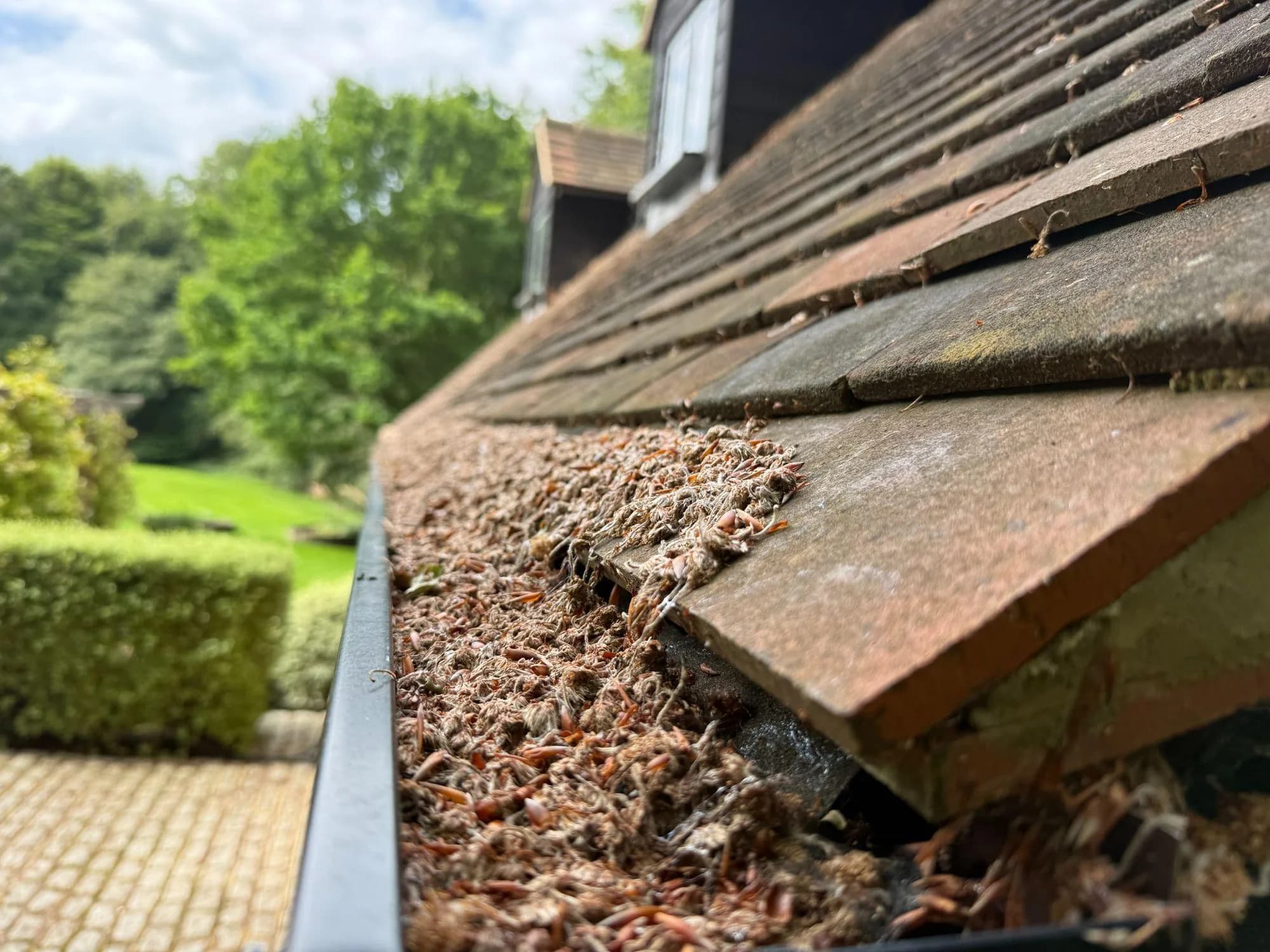
This is a useful clue.
If your gutters work normally during light rainfall but overflow during a heavy downpour, the issue may not be a simple blockage.
Heavy rain puts greater demand on the entire gutter drainage system.
A large volume of water can arrive from the roof in a short period. If that water is concentrated into one section, the gutter and downpipe need to handle it quickly.
Roof valleys can be particularly important because they can direct runoff from more than one roof plane into a specific area.
The same applies to larger roof sections.
A system that performs adequately under ordinary conditions may show a weakness when rainfall becomes intense.
This does not automatically mean that your gutters are incorrectly sized. It means the system should be assessed in context.
Could Your Roof Be Sending Too Much Water Into One Section?
Sometimes the gutter is not the original source of the problem.
The roof determines how rainwater reaches the gutter.
Large roof areas, steep sections and roof valleys can direct considerable runoff towards particular points.
If one section receives much more water than another, that area may be more likely to overflow.
This can explain why a gutter appears perfectly normal along most of its length but spills over in one location.
The position of the overflow is therefore important.
Rather than looking only at the gutter, look upwards.
Consider which part of the roof drains towards the affected section. Is there a valley above it? Does another roof section meet there? Is water being concentrated at one point?
Understanding the path of the water can reveal problems that are not visible from the gutter itself.
Are Your Gutters or Downpipes Too Small?
Capacity can also play a role.
A gutter and downpipe need to cope with the amount of rainwater being directed into them.
If a system repeatedly struggles during heavy rainfall despite being clean, correctly aligned and free from obvious restrictions, its capacity may need to be considered.
However, this does not mean you should immediately replace the guttering with a larger system.
There are several things to establish first.
The roof area, rainfall intensity, gutter layout, number and position of outlets, downpipe arrangement and existing condition all matter.
A professional assessment can determine whether the problem is actually one of capacity or whether a simpler issue is restricting the existing system.
This is important because replacing perfectly serviceable guttering without understanding the cause may not solve the overflow.
Could Water Be Overshooting the Gutter?
Not all apparent gutter overflow comes from water filling the gutter.
Sometimes water may be travelling over the gutter rather than entering it properly.
This can happen where water reaches the edge of the roof at speed or where a large volume of runoff is concentrated into a small area.
The distinction is useful.
If water is spilling out from a full gutter, the problem is likely within the drainage system.
If water is travelling beyond the gutter before it enters, the issue may involve the relationship between the roof and gutter.
This can be especially noticeable during intense rainfall.
Again, the location of the water provides an important clue.
What Does the Location of the Overflow Tell You?
Where the water appears can help narrow down the cause.
Overflow near the downpipe
If the gutter is overflowing close to its outlet, a restriction around the outlet or downpipe blockage should be considered.
Water may be reaching the correct point but failing to leave quickly enough.
Overflow in the middle of the gutter
If the same middle section repeatedly overflows, check for a low point or sagging.
Poor fall can prevent water from reaching the outlet effectively.
Overflow during heavy rainfall
If the problem only appears during intense rain, consider the amount of runoff reaching the gutter and whether the drainage system can handle it.
Roof valleys and large roof areas can concentrate water into particular sections.
Water running behind the gutter
This is different from water simply spilling over the front edge.
It may indicate a positioning, roofline or guttering issue that requires closer inspection.
The key is not to treat every form of overflow as the same problem.
Why Are My Gutters Still Overflowing After Cleaning?
If you have recently had your gutters cleaned and they are already overflowing again, it is understandable to wonder what has gone wrong.
However, another clean may not be the answer.
Start by asking whether the gutter was actually blocked in the first place.
If the gutter is clear but water continues to overflow, look at the rest of the drainage route.
The downpipe could be restricted. The gutter may have poor fall. A bracket may have moved. A roof valley may be directing a large amount of water into one section.
The system may also be struggling only during particularly heavy rainfall.
This is why gutters overflowing when clean are often a sign that the problem needs to be diagnosed rather than repeatedly treated as a cleaning issue.
A good assessment should consider the cause, not just the symptom.
Could Gutter Guards Be Contributing to Overflow?
Gutter guards can reduce the amount of debris entering a gutter, but they still need to be considered when investigating drainage.
A guard covered with leaves or organic material may restrict the way water enters the gutter.
However, it is important not to blame the guard automatically.
The system should be checked as a whole.
If water is collecting on the guard rather than entering the gutter, its condition and suitability may need to be considered.
If water is entering the gutter but then backing up, the issue may instead be the gutter, outlet or downpipe.
The difference matters because the correct solution depends on where the restriction occurs.
What Should You Check Before Calling a Professional?
Start with simple observations.
Look at whether the gutter contains visible debris. Then consider where the overflow occurs and whether it happens during light rain, heavy rain or both.
Check whether the same section repeatedly causes problems.
From a safe position, look for obvious sagging or changes in the gutter's alignment.
You can also consider what sits above the affected section. If there is a roof valley or large roof area directing water into it, that may explain why one location receives more runoff.
Do not climb onto a roof or use unsafe access simply to investigate.
The purpose of these checks is to provide useful information, not to turn a homeowner into a drainage specialist.
When Should You Get Professional Help?
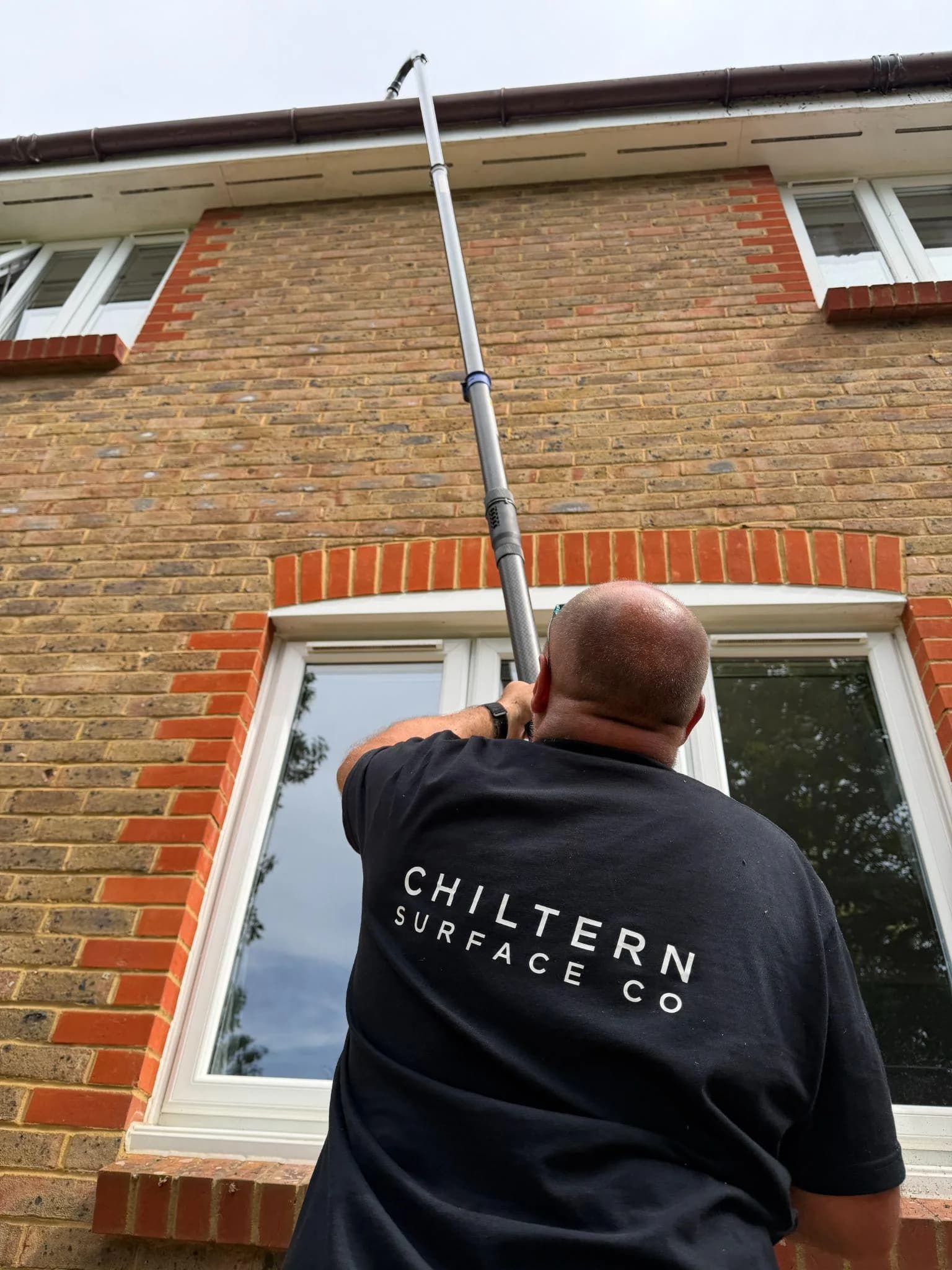
If your gutters continue to overflow despite cleaning, it is worth having the system assessed.
Professional help is particularly appropriate when the cause is unclear or the problem involves height, difficult access or suspected drainage restrictions.
It is also sensible when you notice persistent overflow from the same section, water running behind the gutter or signs of sagging.
A professional should not simply recommend replacement without first understanding the problem.
At Chiltern Surface , the focus is on assessment and appropriate methods. The right approach depends on the condition of the property and the cause of the problem.
That may mean cleaning in one situation, while another property may require attention to the guttering or drainage arrangement.
The important thing is to identify what is actually happening before deciding what work is required.
How Can You Help Prevent Future Gutter Overflow?
Good gutter maintenance is about more than cleaning leaves once a year.
Regular visual checks can help identify changes before they become larger problems.
Pay particular attention after heavy leaf fall and periods of severe weather.
If a gutter has recently been repaired or adjusted, check that it continues to drain correctly.
It is also useful to notice patterns.
If one section always overflows during heavy rain, that repeated behaviour is valuable information. It may point towards a specific issue with the gutter's fall, roof runoff or drainage capacity.
Likewise, if the entire system starts overflowing after a period of heavy debris, cleaning and inspection may be the first step.
The aim is not to prevent every possible problem. It is to identify changes early and deal with the actual cause.
Frequently asked questions
Why are my gutters overflowing when they are clean?
A clean gutter can still overflow because of a blocked downpipe, poor gutter fall, sagging, concentrated roof runoff, restricted outlets or limited drainage capacity. If cleaning has not solved the problem, the wider rainwater system should be assessed.
Can a blocked downpipe cause gutter overflow?
Yes. If water cannot leave the gutter through the downpipe efficiently, it can back up and spill over the gutter edge. A restriction near the outlet or further down the drainage route may need investigation.
Why does my gutter overflow in one spot but not elsewhere?
The location can provide an important clue. A low or sagging section may collect water, while a roof valley can send a large amount of runoff into one area. An obstruction near an outlet can also cause localised overflow.
Why do my gutters overflow only during heavy rain?
Heavy rainfall sends a much larger volume of water through the drainage system in a short period. If the system has a restriction, poor fall, concentrated roof runoff or limited capacity, the problem may only become obvious during intense rainfall.
Who should I call if my gutters keep overflowing?
If cleaning has not solved the issue or you cannot identify the cause, a professional assessment is a sensible starting point. The gutter, outlet, downpipe, alignment and roof runoff should be considered together before deciding what work is needed.
Conclusion
If you are still asking why are my gutters overflowing, the answer may be more complicated than a simple blockage. Leaves and debris are common causes, but they are not the only possibilities. A blocked downpipe, poor gutter fall, sagging section, concentrated roof runoff, water overshooting the gutter or drainage capacity can all contribute to overflow. The pattern of the problem matters. If the entire gutter overflows after heavy rainfall, the volume of water may be important. If one section repeatedly overflows, look more closely at its alignment and the amount of water reaching that point. If the gutter is clean but water still backs up, investigate the outlet and downpipe rather than simply cleaning it again. Most importantly, do not assume that replacement is automatically required. A proper assessment can establish whether the problem is caused by contamination, drainage, positioning or another issue. Chiltern Surface takes an assessment-first approach, with recommendations based on the condition of the property rather than a one-size-fits-all solution. The aim is to give homeowners clear information, realistic expectations and the most appropriate advice for their situation. If your gutters are overflowing and you cannot identify why, arrange a Free Site Assessment with Chiltern Surface. A proper assessment can help establish what is causing the problem and what, if anything, needs to be done next.