
Gutter cleaning is important because gutters are part of your home's rainwater drainage system. Their job is simple: collect water from the roof and direct it through outlets and downpipes so it can drain away in a controlled way. When leaves, moss, silt or other debris restrict that route, the water does not stop arriving. It simply starts going somewhere else.
That is why the value of gutter cleaning is less about making the gutter itself look tidy and more about keeping the system free-flowing. A clear gutter helps keep roof runoff off external walls, reduces prolonged wetting around fascias and soffits, and makes it easier to spot small roofline issues before they turn into larger maintenance jobs.
For homeowners who would rather have the system checked and cleared professionally, our gutter cleaning and clearing service includes the channels, outlets and downpipes rather than treating the visible part of the gutter as the whole job.
What Do Gutters Actually Do?
A roof collects a surprisingly large area of rainfall and concentrates that water towards its edges. Gutters receive the runoff and guide it into downpipes and drainage. When the system is clear, the process is controlled and largely unnoticed.
When the system is restricted, water may spill over the front or back of the gutter, sit in the channel for longer, or struggle to pass through an outlet or downpipe. That changes where moisture is being delivered around the building.
This is the practical reason gutters matter. They are not decorative trim. They are a simple water-management system, and cleaning is the maintenance that allows that system to keep working as intended.
Why Is Gutter Cleaning Important?
1. It keeps rainwater moving through the drainage system
The first benefit is the most basic one: clear gutters allow rainwater to move along the run, through the outlet and down the downpipe. Leaves, moss and compacted debris reduce that capacity. In heavier rain, even a partial blockage can become obvious because water arrives faster than the restricted outlet can carry it away.
A proper clean should therefore deal with the full route, not only the leaves that are easy to see from a ladder or upstairs window.
2. It helps keep overflow off external walls
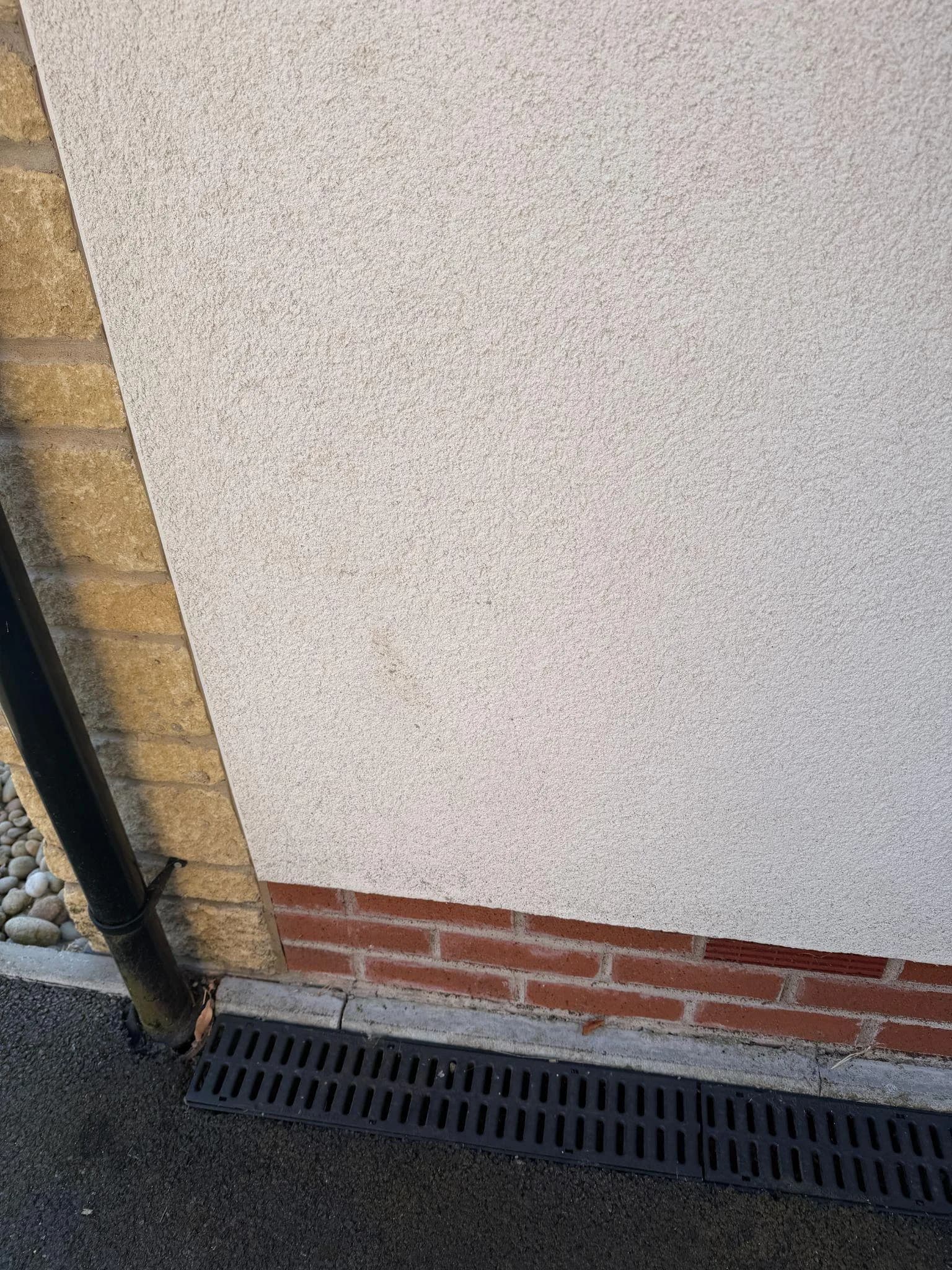
When a gutter overflows, water that should be inside the drainage system can run down masonry, render, windows and other exterior surfaces. Repeated wetting may leave staining and can keep parts of the wall wetter for longer than they otherwise would be.
This does not mean every overflowing gutter will automatically create an internal damp problem. Building construction, exposure and the location of the overflow all matter. The sensible point is simpler: if rainwater is meant to be carried away through a gutter and downpipe, allowing it to run down the wall instead is a condition worth correcting.
3. It reduces prolonged wetting around fascias and soffits
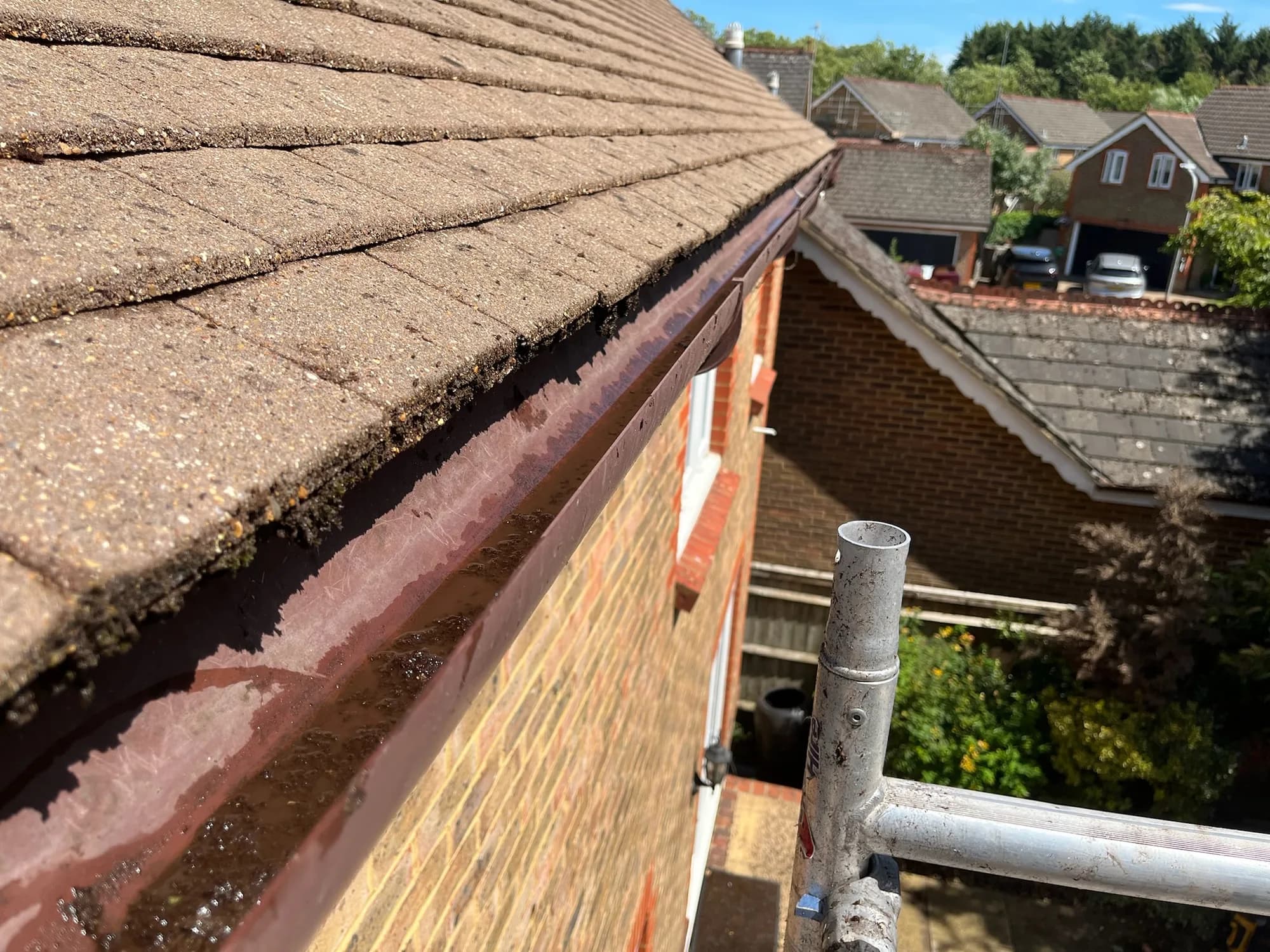
Blocked gutters often hold wet organic material and standing water against the roofline. Where timber fascias or other vulnerable components are present, repeated wetting is not helpful. Debris also adds weight to the gutter and can place extra strain on brackets, joints and corners.
Keeping the channel clear does not repair damaged guttering, but it removes one avoidable source of stress from the system.
4. It helps keep outlets and downpipes clear
The most important blockage is often not the obvious pile of leaves. It is the compacted material around the outlet or inside the top of the downpipe.
That is why simply scooping debris from the middle of the run can create a false sense of completion. The water still needs an unobstructed route out. A useful maintenance check is not just 'Is the gutter empty?' but 'Does the water actually leave the gutter properly?'
5. It gives you an opportunity to inspect the roofline
Most homeowners rarely see their gutters from above. Cleaning creates an opportunity to notice loose brackets, open joints, sagging sections, cracked fittings or areas where water is not moving as expected.
Finding a small maintenance issue is not the same as diagnosing a structural problem, and a responsible contractor should not turn every observation into a sales opportunity. A short, factual condition report is often enough to help the homeowner decide whether anything needs further attention.
6. It prevents debris from becoming a larger blockage
A few dry leaves are easy to dismiss. Over time, leaves can combine with roof moss, grit and fine silt to form a dense layer that holds water. Once that material compacts around outlets, a light maintenance task becomes a much more thorough clearance.
This is one reason regular, condition-led maintenance tends to be easier than waiting until the gutter is packed solid.
Why Do Gutters Block Even When There Are No Nearby Trees?
Trees are a major source of gutter debris, but they are not the only source. Roofs themselves shed material. Moss can break away from tiles, grit and fine particles wash down with rain, and wind can carry seeds, dust and small organic debris into the channel.
If a roof has heavy moss growth, it is worth looking at the roof condition as well as repeatedly clearing the gutter. Our roof cleaning service is assessment-led because clay, concrete and slate roofs do not all need the same treatment.
A property with little surrounding vegetation may therefore need less frequent gutter maintenance, but 'no trees' does not automatically mean 'nothing can block the gutters'. The actual rate of build-up is what matters.
What Happens If Gutters Are Not Cleaned?
The first consequence is usually reduced drainage rather than dramatic property damage. Water slows down, sits in the channel, or spills over during heavier rainfall.
From there, several things can follow:
- Overflow can leave visible staining on walls, render, fascias and soffits.
- Wet debris adds weight and can contribute to sagging runs or stressed brackets.
- Water may continue sitting around joints and corners rather than moving away promptly.
- Blocked outlets can leave an apparently clean gutter unable to drain properly.
- Moss, seedlings and other organic material may establish in long-neglected gutters.
- Existing roofline defects can be harder to notice while the gutter is full of debris.
The point is not that every dirty gutter will cause all of these problems. Chiltern Surface Co's brand standard is deliberately against exaggerated outcomes. The practical reason to clean gutters is that keeping the drainage route clear removes a preventable cause of overflow and makes the condition of the system easier to assess.
Do Gutters Need Cleaning If They Are Not Overflowing?
Not necessarily at that exact moment, but visible overflow is a late indicator rather than the only indicator.
A gutter can contain a surprising amount of material while still coping with light rain. The problem only becomes obvious when a heavier downpour tests the reduced capacity. That is why periodic inspection is more useful than waiting for a dramatic waterfall over the edge.
If the channels are genuinely clear, the outlets are open and the downpipes are flowing properly, there is no benefit in paying for unnecessary work. This is where an assessment-led approach matters: maintain the system according to its condition rather than cleaning it simply because a calendar says so.
Common Gutter Maintenance Mistakes
Waiting until the gutter overflows
Overflow is useful evidence that the system needs attention, but it means the drainage route is already struggling. Earlier signs such as visible moss, green staining, sagging sections or debris above the gutter line are worth noticing.
Clearing the channel but ignoring the downpipe
A gutter is only free-flowing if the water can leave it. A clean-looking channel with a blocked outlet or downpipe is still a drainage problem.
Pushing debris along instead of removing it
Moving debris towards the outlet can pack the material into the narrowest part of the system. The better approach is to remove the debris, then confirm that the outlet and downpipe are clear.
Assuming rain will wash the gutter clean
Rainwater can move loose material, but it also carries roof grit and moss into the gutter. Once debris settles or compacts, ordinary rainfall is more likely to flow around or over it than remove it completely.
Assuming gutter guards remove all maintenance
Guards can reduce large leaf build-up, but fine debris, roof grit and decomposed organic material may still accumulate. The maintenance interval may change; the need to inspect the system does not disappear.
Confusing exterior cleaning with gutter clearance
Cleaning green staining and black marks from the visible uPVC is a different job from clearing the inside of the gutter. If appearance is the issue, see our guide on how to clean the exterior of gutters. A gutter can look clean on the outside and still be blocked internally, or be perfectly clear inside while the exterior remains stained.
How Often Should Gutters Be Cleaned?
For most homes, once or twice a year is a sensible starting point, but there is no single interval that suits every property.
Homes beneath mature trees, properties with heavy roof moss, or gutter systems that have a history of blocked outlets may need more frequent attention. Properties with little surrounding vegetation and very low debris levels may need less.
A useful routine is to inspect the gutters after the main autumn leaf fall and again after winter where the property is exposed to trees, storms or roof debris. Then adjust the interval according to what you actually find.
Can You Clean Gutters Yourself?
Sometimes. If the gutter is low, easily accessible and you can work safely without stretching or improvising, removing light debris can be a reasonable homeowner maintenance task.
The difficulty is usually access rather than the debris itself. Two-storey homes, conservatories, extensions, deep overhangs and awkward ground conditions can make ladder work less sensible. If safe access is uncertain, there is no reason to turn routine maintenance into a risk.
Whichever route you choose, the job is not complete until the channels, outlets and downpipes are free-flowing.
What Should a Professional Gutter Clean Include?
A professional gutter clean should be a drainage and roofline maintenance service, not simply a quick removal of visible leaves.
At Chiltern Surface Co, the process includes:
- Inspection of the guttering, downpipes and roofline before cleaning.
- Safe removal of leaves, moss and roof debris, using ground-based gutter-vac equipment where the property allows.
- Clearing and flushing channels, outlets and downpipes so water flow is confirmed.
- Re-seating minor loose brackets or joints where appropriate and flagging anything that needs a separate repair.
- Cleaning fascias and soffits where included in the service.
- A short, plain summary of the roofline condition, including anything the homeowner cannot easily see from ground level.
The principle is consistent with our exterior cleaning approach: assess first, use the method appropriate to the property, explain what was found and avoid unnecessary work.
Practical Signs Your Gutters Need Attention
Check for:
- Water spilling over the gutter during ordinary or heavy rainfall.
- Dark tide marks or green staining below the gutter line.
- Visible leaves, moss, plants or debris above the edge of the channel.
- Sagging sections or joints that appear to have opened.
- A downpipe that seems unusually quiet or slow during rain.
- Persistent wetting around fascias, soffits or the wall directly below an overflow point.
A ground-level observation during rainfall can tell you a great deal. You do not need to climb a ladder simply to confirm whether the system appears to be moving water properly.
The Bottom Line
Gutter cleaning is important because it keeps the rainwater route from roof to drain working as intended. Clear gutters help reduce overflow, prolonged wetting around the roofline and avoidable strain on joints and brackets. Just as importantly, cleaning gives you a chance to see parts of the property that are normally out of sight.
There is no need to turn gutter maintenance into a scare story. The sensible approach is to inspect, clear debris before it restricts drainage, make sure the outlets and downpipes are flowing, and deal with any genuine defects on their own merits.
If you are unsure whether your gutters need attention, Chiltern Surface Co can carry out a free site assessment and explain what is actually required. If the system is clear, we will say so. If it needs cleaning, you will know why.
Frequently asked questions
Why is gutter cleaning important if my gutters look fine?
Because most of the working surface is difficult to see from the ground. Leaves, moss and silt can build up around outlets while the front edge still looks normal. Periodic inspection helps confirm that the system is genuinely free-flowing.
Can blocked gutters cause damp?
Overflowing gutters can keep external walls wetter and may contribute to moisture problems depending on the building, the location of the overflow and the wall construction. It is better to correct the drainage fault than assume every damp patch has the same cause.
Can blocked gutters damage fascias and soffits?
Wet debris and repeated overflow can keep roofline components damp and add weight to the gutter system. Timber fascias in particular benefit from being kept as dry as practical.
Do I need gutter cleaning if I have no trees nearby?
Possibly, but you may need it less often. Roof moss, grit, wind-blown debris and fine silt can still collect even when there are no overhanging trees. The cleaning interval should reflect the actual build-up.
Do gutter guards mean gutters never need cleaning?
No. Guards can reduce large debris but fine material can still collect above or below them. Periodic inspection remains sensible.
Is exterior gutter cleaning the same as clearing gutters?
No. Exterior cleaning removes staining from the visible face of the gutters, fascias and soffits. Gutter clearance removes internal debris and confirms that water can pass through the outlets and downpipes.
How do I know if a downpipe is blocked?
Overflow around the outlet, very slow drainage, or little visible discharge during rain can suggest a restriction. A professional clean should confirm flow rather than assume the downpipe is clear.