
Solar panel cleaning is important when dirt and biological debris remain on the glass long enough to block some of the sunlight reaching the photovoltaic cells underneath. The more persistent the contamination, the more reason there is to remove it.
That does not mean every solar array in the UK needs frequent cleaning. Rain removes a great deal of loose dust from well-pitched panels, and some systems may remain clean enough for long periods with little intervention. The practical question is not simply 'Are solar panels meant to be cleaned?' but 'Is contamination on this particular array beginning to interfere with the clear glass surface or create a maintenance problem?'
Bird droppings, pollen film, tree sap, moss around the lower frame and heavier grime are different from a light layer of loose dust. They can persist after rainfall, create localised shading and leave the array visibly soiled. Cleaning removes that contamination and restores unobstructed exposure to light where the condition of the panels allows.
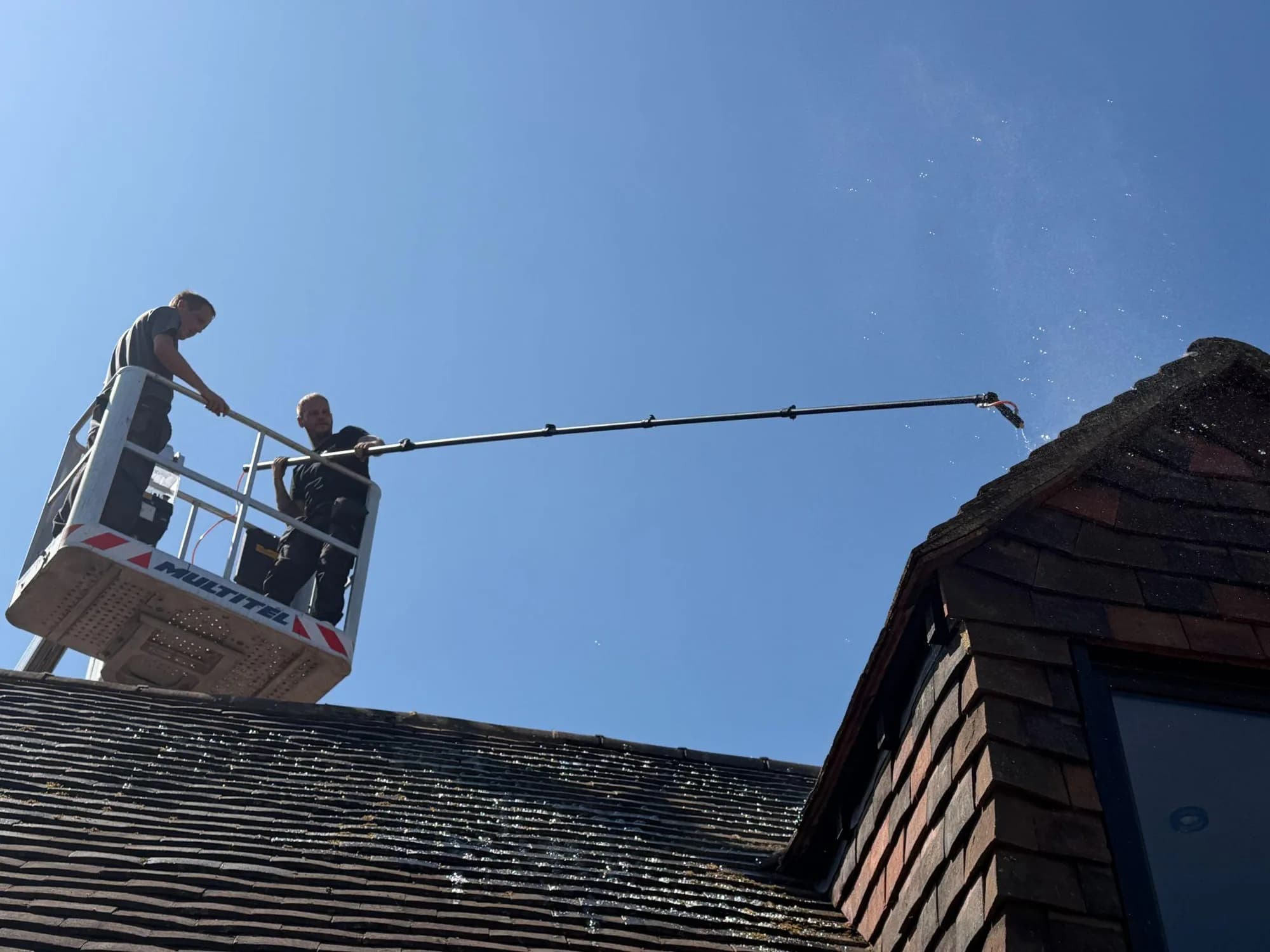
Chiltern Surface Co's professional solar panel cleaning service uses de-ionised water and soft brushes on a water-fed pole, worked from the ground where access allows. No detergents, no chemicals and no high pressure are used on the glass, frames or seals.
The Short Answer: Cleaning Matters When Soiling Is Actually Present
Solar panels generate electricity by converting light into electrical energy. Anything opaque or semi-opaque sitting on the front glass can reduce the amount of light reaching the cells beneath it.
Research organisations describe this build-up as 'soiling'. It can include dust, pollution particles, pollen and biological material. The effect varies enormously by location, rainfall, panel angle, surrounding trees, agriculture, birds and the type of contamination.
That variation is why responsible advice should avoid promising a fixed percentage improvement after every clean. A lightly dusty pitched roof that receives regular rain may show little measurable change. A low-angle or visibly contaminated array may benefit much more.
The Energy Saving Trust's current UK guidance says dirt can reduce the sunlight reaching panels and recommends adjusting cleaning frequency to local conditions such as dust, trees and bird droppings. It also notes that rain does much of the routine cleaning on many pitched roofs.
1. Cleaning Removes Material That Blocks Light
The most direct reason to clean a solar panel is optical: the front surface needs to remain clear enough for sunlight to pass through the glass.
Loose dust may be washed away by rain. More persistent contamination can remain attached to the panel. Bird droppings are an obvious example because they are opaque and can sit directly over part of the active area. Pollen and fine organic films can be less visually dramatic but still create a layer across the glass.
The National Renewable Energy Laboratory has documented how dust, pollen and other particulates can reduce PV output, while also showing that soiling is highly dependent on local conditions. Its research into pollen has found examples where rainfall did not fully restore performance, which is useful evidence against assuming that every type of contamination will simply wash off.
For the research background, see NREL's work on pollen and solar-panel soiling.
2. Cleaning Helps When Rain Leaves Persistent Contamination Behind
Solar panels are often described as 'self-cleaning', but that phrase needs context.
A tilted, smooth glass surface exposed to UK rainfall can shed a lot of loose dirt naturally. Energy Saving Trust guidance says rain can keep many tilted panels clean, particularly where the installation has a reasonable pitch.
What rain does less reliably is remove contamination that is sticky, oily, biological or concentrated in one area.
Examples include:
- Bird droppings that have dried onto the glass.
- Pollen film during heavy spring and early-summer seasons.
- Tree sap and fine organic deposits near mature planting.
- Moss and debris collecting where the lower frame meets the glass.
- Agricultural or road dust that has combined with moisture and dried again.
- Grime on low-angle or ground-mounted panels where water does not run off as effectively.
This is where professional cleaning has a clearer purpose: it removes what ordinary rainfall has left behind.
3. Cleaning Can Support Energy Yield - But the Gain Is Site-Specific
Cleaning can improve output when soiling is reducing the amount of usable light reaching the panel. The size of that improvement is not universal.
Large international studies often quote percentage losses from soiling, but those figures cover climates ranging from wet northern regions to dry, dusty solar farms. They should not be presented as a promise for a domestic roof in Buckinghamshire, Berkshire or Oxfordshire.
The IEA Photovoltaic Power Systems Programme identifies soiling as a major cause of PV underperformance globally, but it also emphasises that soiling is highly heterogeneous. The economic case for cleaning therefore depends on local deposition and the cost of cleaning.
For a homeowner, the useful evidence is usually closer to home: visible contamination, a change in monitored generation that cannot be explained by weather or shading, and the history of how quickly the array becomes dirty.
This is also why Chiltern Surface Co does not advertise a guaranteed percentage improvement. If the array is only lightly dusty, the change may be small. If it is visibly coated or locally shaded by persistent debris, the benefit can be more noticeable.
4. Bird Droppings Matter More Than Ordinary Dust
Homeowners often focus on general dust because it makes the panels look dull. In practice, bird droppings are one of the clearest reasons to clean.
They are opaque, they can dry hard onto the glass, and they may remain after several rainfall events. Because they create concentrated local shading rather than a uniform light haze, the effect depends on exactly where they sit and how the module is electrically configured.
There is no need to turn this into a claim that one dropping will 'damage the whole system'. The more accurate point is that an opaque deposit is doing nothing useful on a surface designed to receive light, and it is reasonable to remove it using a panel-safe method.
5. Pollen Can Be More Persistent Than It Looks
Pollen is a good example of why visual appearance alone is not always enough.
A fine yellow or green film may look less serious than a large bird dropping, but pollen can combine with moisture and other organic material to create persistent soiling. NREL's research at rainy sites found that rainfall removed some pollen but did not always return PV performance to its previous clean level.
That does not mean every UK homeowner needs a spring clean. It means that properties close to heavy tree cover, farmland or other pollen sources should judge the panels by condition rather than assuming rain has removed everything.
6. Cleaning the Frames and Edges Helps Keep the Array Tidy and Inspectable
The glass is the main optical surface, but contamination often collects around the edges as well.
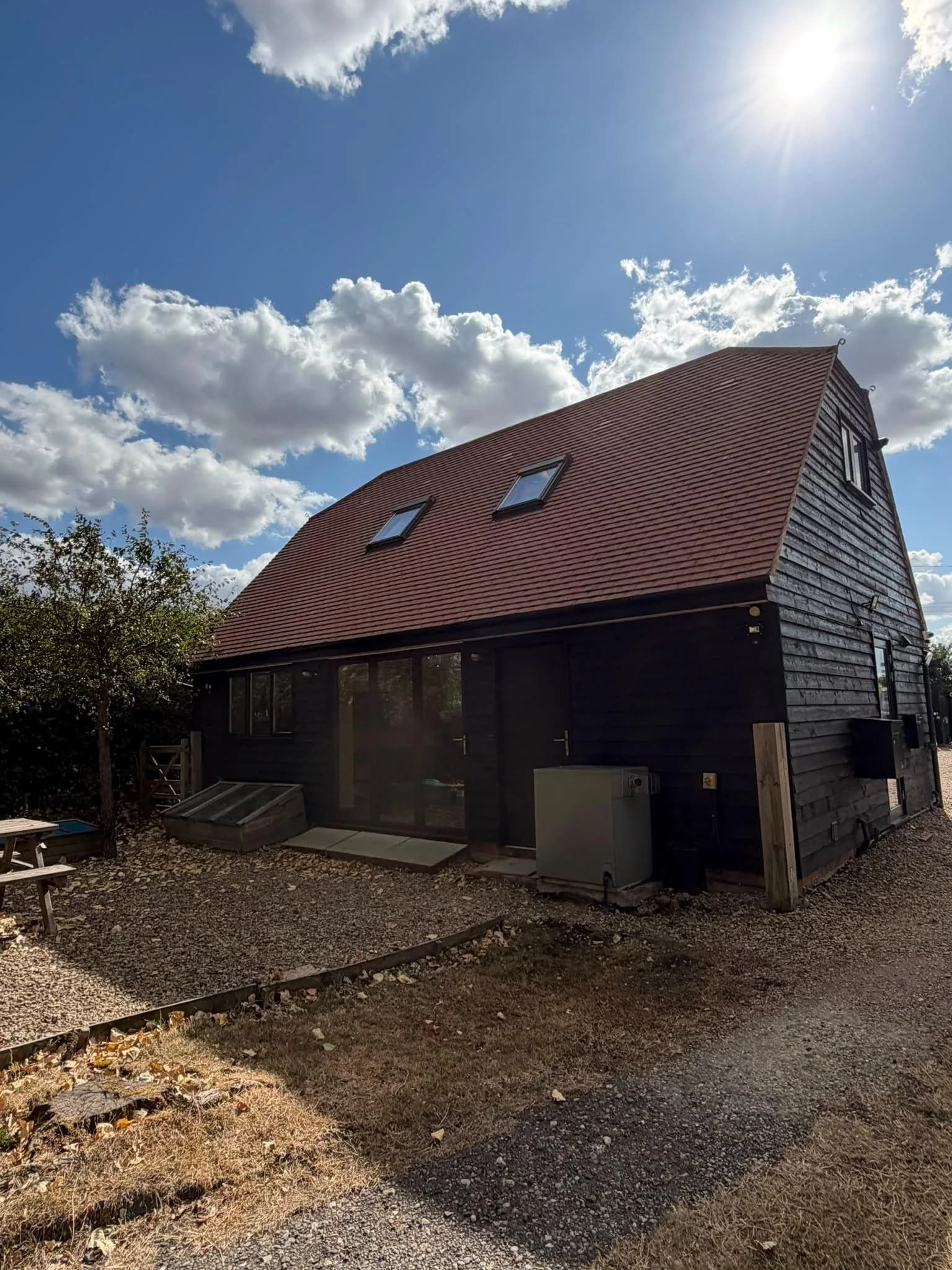
On roof-mounted panels, moss and debris can gather along the lower frame where water slows down before leaving the panel. A careful clean should remove this loose build-up without forcing tools into seals or using aggressive pressure.
Clearing the frames and edges also gives the cleaner an opportunity to look across the visible condition of the array. That is not the same as an electrical service or formal PV inspection, but obvious issues such as damaged glass, loose-looking fixings or visible seal concerns can be flagged for the homeowner to raise with a qualified solar professional.
7. Professional Cleaning Can Reduce the Need for Risky Roof Access
For many domestic systems, the biggest problem with DIY cleaning is not the cleaning chemistry. It is access.
Energy Saving Trust guidance recommends cleaning from the ground where possible and using a professional where the panels are high or difficult to reach. It also advises against standing on solar panels and against high-pressure washing.
A water-fed pole allows many roof-mounted arrays to be cleaned from ground level. This avoids walking on the panels and reduces unnecessary work at height.
That fits Chiltern Surface Co's assessment-first approach: look at the array, pitch, access and condition first, then choose the safest effective method rather than forcing one process onto every property.
What Does Not Make Solar Panel Cleaning Important?
Good advice also means being clear about situations where cleaning may add little value.
Cleaning is less compelling when:
- The panels are well-pitched and visually clear after normal rainfall.
- There are no persistent bird droppings, pollen films, tree sap or edge build-ups.
- System monitoring shows generation broadly in line with expected seasonal behaviour.
- The proposed clean would require disproportionate access risk for a very lightly soiled array.
- The real issue is electrical, inverter-related or installation-related rather than dirt on the glass.
A cleaner should not present every drop in generation as a cleaning problem. Weather, shading from vegetation, inverter faults, module faults and other electrical issues can also affect output.
If a system is underperforming without visible soiling, an MCS-certified or otherwise appropriately qualified solar professional may be a better first call than a cleaning company.
How Important Is Solar Panel Cleaning in the UK?
In the UK, the answer is usually 'important when needed, but not something to overdo'.
Regular rainfall gives many pitched domestic arrays a useful natural rinse. Energy Saving Trust's general solar guidance notes that panels tilted at 15 degrees or more are often cleaned effectively by rain, while its dedicated 2026 maintenance guide recommends a roughly 12-18 month cleaning interval as a broad starting point and more frequent attention where dust, trees or bird droppings increase contamination.
Those two points are not contradictory. They support a condition-led approach: inspect the array, consider the local environment and clean when persistent build-up justifies it.
Which UK Solar Panels Benefit Most From Cleaning?
Situation
Why cleaning may matter more
Practical approach
Panels beneath regular bird activity
Persistent opaque droppings can remain after rain
Clean when visible deposits remain
Homes near trees
Pollen, sap, leaves and organic film
Inspect after heavy pollen / leaf periods
Properties near farmland
Dust and pollen can build seasonally
Condition-led cleaning
Low-angle panels
Water and dirt shed less readily
Inspect more often than steep arrays
Ground-mounted arrays
Closer to dust, splash and vegetation
More frequent visual checks
Normal pitched roof with no persistent deposits
Rain may remove most loose dirt
Avoid unnecessary cleaning
Does Cleaning Solar Panels Make Them Last Longer?
It is better not to promise a longer panel lifespan simply because the glass has been cleaned.
Solar modules are engineered for long outdoor service, and lifespan depends on the quality of the installation, module construction, electrical components, weather exposure and other factors. Cleaning is one part of maintenance, not a life-extension guarantee.
What cleaning can do is keep the front surface free from persistent contamination, avoid unnecessary abrasive build-up and create an opportunity for visible condition checks. That is a more defensible benefit than claiming that every clean adds years to the system.
Why the Cleaning Method Matters
A solar panel is not simply another piece of exterior glass. It has seals, coatings, frames and electrical components that need to be respected.
A careful method should avoid:
- High-pressure washing close to seals, frames or electrical components.
- Abrasive pads or stiff brushes that can scratch the glass or coatings.
- Standing or walking on the panels.
- Harsh detergents or products that leave a film behind.
- Working at height without suitable access and competence.
- Cleaning very hot panels with methods that create unnecessary thermal or surface stress.
Energy Saving Trust advises soft, non-abrasive equipment, avoiding pressure washers and cleaning from the ground where possible.
Why Chiltern Surface Co Uses De-Ionised Water
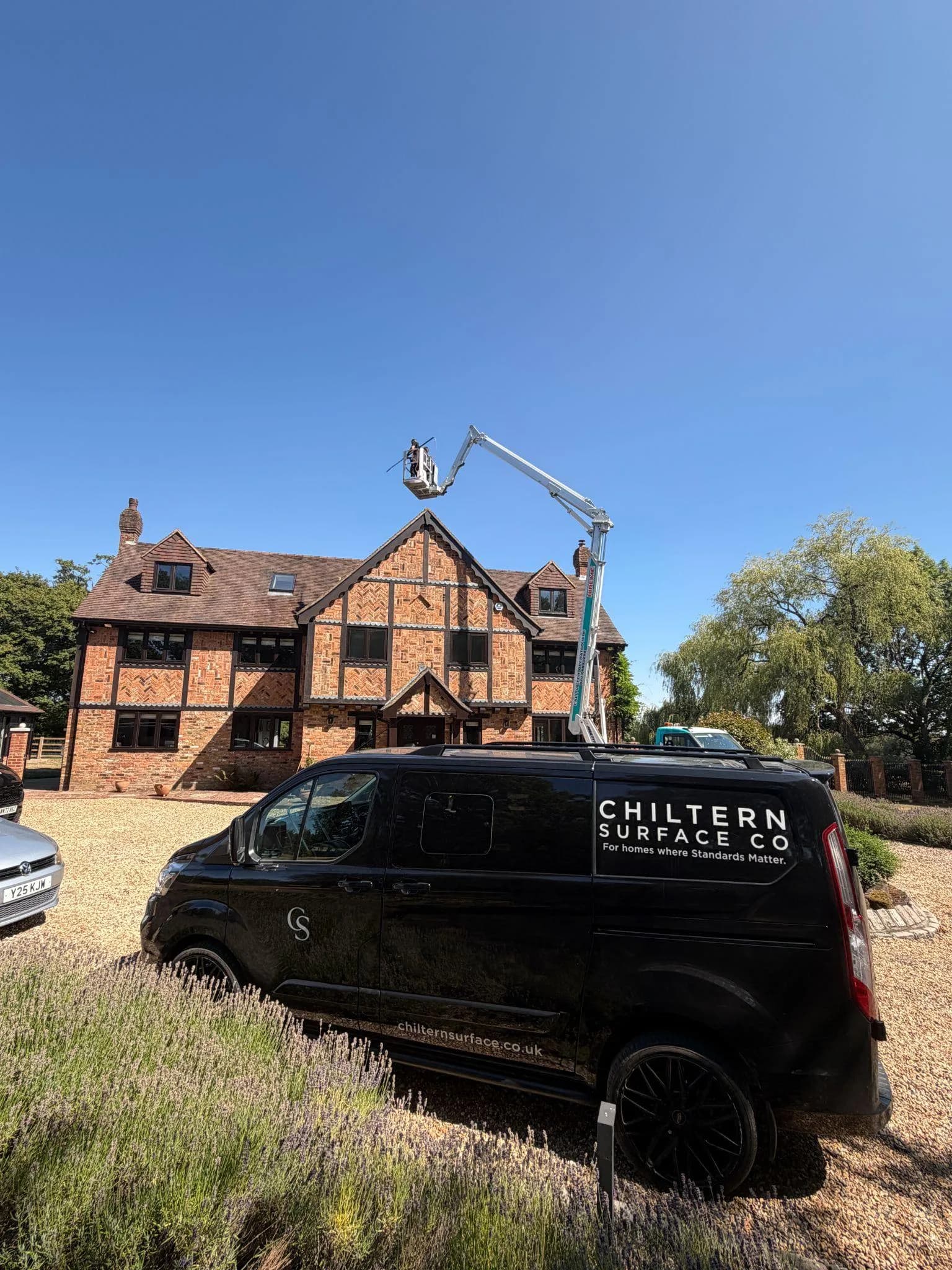
Chiltern Surface Co cleans panels with de-ionised water and a soft-bristle brush on a water-fed pole.
De-ionised water is used because it contains very little dissolved mineral content, so the panels can be rinsed and left to dry without adding detergent residue. The method also keeps unnecessary chemicals away from the roof, garden and panel seals.
The aim is straightforward: lift bird mess, pollen film, tree sap, moss and grime from the glass using a gentle mechanical action and clean water, then rinse the array clear.
No cleaning method can guarantee a specific output increase without knowing how soiled the array was in the first place. The purpose is to remove the obstruction and leave the panel surface clear.
Can You Tell If Cleaning Was Worth It?
If your inverter or monitoring app records generation, you may be able to compare performance before and after cleaning. The difficulty is that solar output changes with cloud cover, sun angle, module temperature and season, so a simple 'yesterday versus today' comparison can be misleading.
A more useful approach is to look for a sustained pattern under broadly comparable conditions, or to treat cleaning as justified by visible persistent contamination rather than trying to calculate an exact payback from one day's generation.
This point came through strongly in the Reddit discussions supplied with this keyword. Some owners report noticeable gains after cleaning heavily soiled panels, while others see little change on arrays that receive regular rain. That disagreement is not evidence that one side is wrong; it reflects how site-specific soiling is.
How Often Should Solar Panels Be Cleaned?
There is no universal frequency that suits every UK property.
Energy Saving Trust currently suggests around every 12-18 months as a broad maintenance starting point, with more frequent cleaning where dust, trees or bird droppings increase contamination. Chiltern Surface Co's service guidance uses a similar condition-led approach: typically around once a year, or twice where trees, farmland or a low panel angle cause heavier build-up.
If the panels remain visibly clear and generation is normal, there is no benefit in cleaning for the sake of a calendar. If persistent deposits are visible, it makes sense to deal with them sooner.
Solar Panel Cleaning Is Not the Same as Solar Servicing
This distinction is important.
A cleaner removes contamination from the panel surface and may flag visible issues. A solar service or electrical inspection checks the operation and safety of the PV system, including components a cleaner is not qualified to diagnose.
If you have inverter errors, damaged cabling, unexplained shutdowns or a major generation problem without visible soiling, contact the installer or a suitably qualified solar specialist.
A good cleaning company should be comfortable saying when the problem is outside the cleaning scope.
The Bottom Line
Solar panel cleaning is important because persistent dirt can reduce the amount of light reaching the photovoltaic cells. The most worthwhile cleaning removes contamination that rain has not shifted: bird droppings, pollen film, tree sap, moss around the frame and heavier grime.
In the UK, regular rainfall means many well-pitched domestic arrays do not need aggressive or frequent maintenance. The correct approach is to judge the actual condition of the panels, the local environment, the panel angle and the system's performance rather than promising that every clean will produce the same percentage gain.
If your panels are visibly soiled or you are unsure whether a clean is worthwhile, Chiltern Surface Co can carry out a free site assessment across Buckinghamshire, Berkshire and Oxfordshire. We will assess the access and condition first and recommend cleaning only where it makes sense.
You can also check our current service area before arranging a visit.
Frequently asked questions
Why is solar panel cleaning important?
Cleaning removes persistent contamination that can block light from reaching the photovoltaic cells. The benefit depends on how dirty the panels are, their pitch, local rainfall and the type of soiling.
Does cleaning solar panels improve efficiency?
It can improve output where dirt, pollen, bird droppings or other contamination is shading the glass. A lightly soiled array may show only a small change, so no responsible cleaner should guarantee one percentage for every system.
Does rain clean solar panels in the UK?
Rain removes a great deal of loose dust from well-pitched panels, but it may not remove bird droppings, sticky pollen, tree sap or moss around the frame. Condition matters more than the assumption that rain cleans everything.
How often should solar panels be professionally cleaned?
A broad UK starting point is around every 12-18 months, with more frequent attention where trees, farmland, birds or low panel angles create heavier build-up. If the panels remain clear, unnecessary cleaning is not beneficial.
Can bird droppings reduce solar panel output?
Yes. Bird droppings are opaque and can create localised shading over the cells beneath them. The overall effect depends on the size and location of the deposit and the design of the array.
Should I pressure wash solar panels?
No. High-pressure washing can interfere with seals and other components. Use a gentle, panel-safe method and follow the manufacturer or installer's maintenance guidance.
Why use de-ionised water for solar panel cleaning?
De-ionised water contains very little dissolved mineral content and allows the panels to be rinsed without leaving detergent residue. Chiltern Surface Co pairs it with a soft-bristle water-fed brush.
Is solar panel cleaning the same as a system service?
No. Cleaning removes contamination from the panel surface. Electrical faults, inverter errors, damaged wiring and system diagnostics should be handled by the installer or a suitably qualified solar professional.