
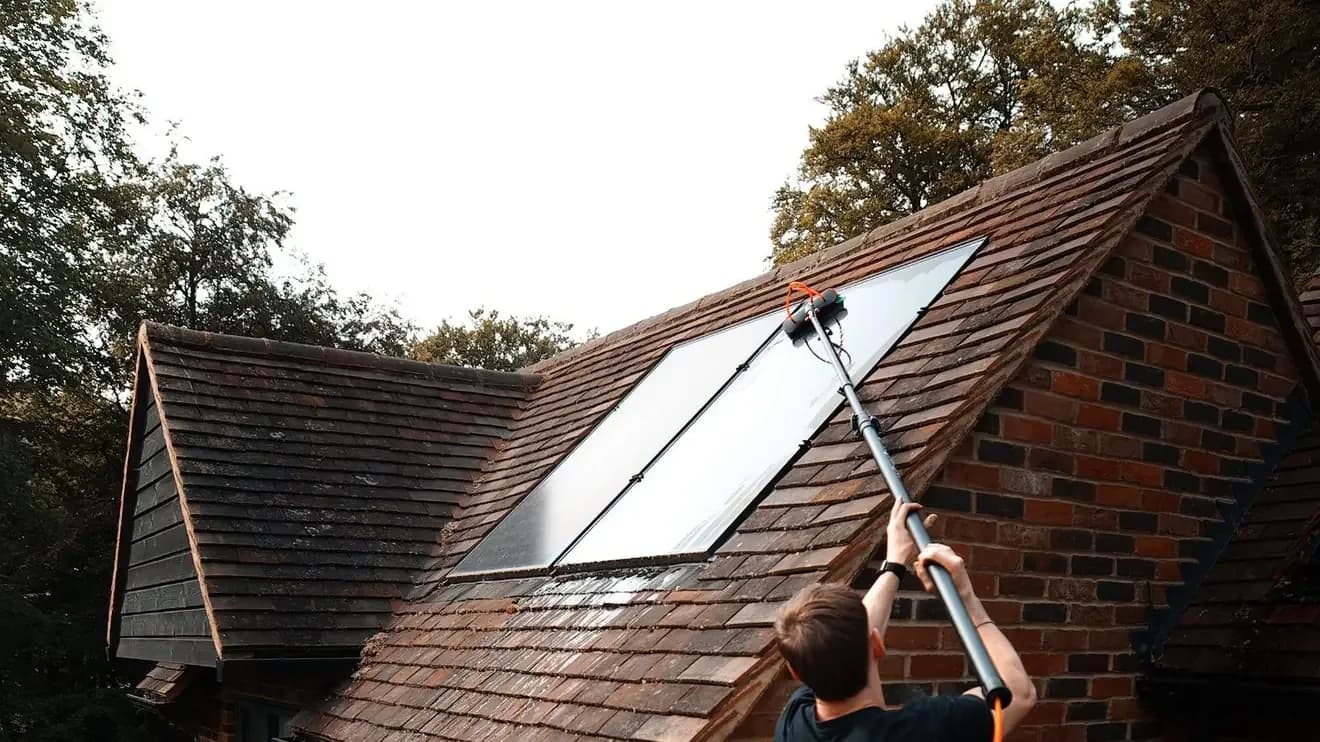
Yes. Dirty solar panels can reduce energy output because anything sitting on the glass can block some of the sunlight reaching the photovoltaic cells underneath. The important part is that the effect is not the same on every property.
A light layer of loose dust on a well-pitched UK roof may make very little practical difference, particularly if regular rainfall removes most of it. Persistent bird droppings, pollen film, tree sap, moss along the lower frame or heavier grime are different because they can remain on the panel after rain and create more concentrated shading.
That is why Chiltern Surface Co does not attach one percentage figure to solar panel cleaning. The value of cleaning depends on how soiled the array is, what the contamination is, the panel angle, surrounding environment and how the system is performing.
The Short Answer: Soiling Can Reduce Solar Output
Solar panels produce electricity by converting light into electrical energy. If part of the front glass is covered, less light reaches the cells below that area.
The build-up of dust, pollution particles and biological debris on solar panels is often described as soiling. As that layer becomes heavier or more persistent, it can reduce the amount of usable light reaching the cells. The effect depends on the type of dirt, rainfall, panel angle and conditions around the property.
For a UK homeowner, that means the condition of the individual array matters more than a headline percentage. A lightly dusty roof in a rainy, open location can behave very differently from panels beneath trees, near farmland or in an area with frequent bird activity.
How Dirt Reduces Solar Panel Efficiency
Less light reaches the active cells
The clearest effect is optical. Dust, pollen and grime create a layer between the sun and the photovoltaic cells. The denser or more opaque that layer becomes, the more light it can intercept.
Localised deposits can create uneven shading
Bird droppings are more significant than ordinary light dust because they are opaque and concentrated in one area. Instead of creating a thin, even film across the glass, they can shade a small group of cells much more heavily.
The electrical effect depends on the module design and where the deposit sits, so it is not accurate to say that one dropping will always reduce the entire system by a fixed amount. The practical point is simpler: an opaque deposit serves no useful purpose on a surface designed to receive light.
Build-up can become harder to remove over time
Fine particles can combine with moisture, pollen or organic material and dry into a film. Moss and debris can also gather along the lower frame, especially where the panel angle is shallow or the roof sits in shade.
Once contamination has become sticky or biological, ordinary rainfall may no longer be enough to remove it.
Not All Solar Panel Dirt Is the Same
| Contamination | Typical behaviour | Does rain often help? | Cleaning relevance |
|---|---|---|---|
| Loose dust | Light film across the glass | Often, especially on well-pitched arrays | Usually lower priority unless build-up is persistent |
| Bird droppings | Opaque, localised and often firmly dried | Not reliably | Strong reason to clean when deposits remain |
| Pollen | Fine film that can become sticky | Partly | More relevant near trees, farmland and heavy seasonal pollen |
| Tree sap | Sticky spots or film | Often remains | May need gentle mechanical cleaning |
| Moss / debris at frame | Collects at lower edges and corners | Often remains | Worth clearing where it persists |
| Road / farm grime | Fine mixed contamination | Varies | Condition-led rather than calendar-led |
How Much Efficiency Can Dirty Solar Panels Lose?
There is no single percentage that applies to every domestic UK array.
A light, even film of dust may have only a small practical effect, especially where rainfall regularly rinses the panels. Heavier or more persistent contamination can have a greater impact because it blocks more light and may remain in place for longer.
The difference between one property and another can be substantial. Bird fouling, sticky pollen, tree sap and concentrated grime are more likely to justify cleaning than a light layer of loose dust. Panel pitch, shade and surrounding vegetation also affect how quickly contamination builds up and how easily rain removes it.
The practical point is simple: cleaning removes material that is obstructing the glass, but the performance benefit depends on how dirty the panels were before the clean. That is why Chiltern Surface Co does not promise one fixed efficiency gain for every system.
Why Before-and-After Percentages Can Be Misleading
Solar production changes throughout the day and from one day to the next. If you wash a panel and immediately look at the inverter, the number may move even if cleaning was not the only reason.
Panel temperature changes output
Solar modules generally produce differently as their temperature changes. Rinsing a hot panel can cool it, so an immediate increase after washing may partly reflect temperature rather than the removal of dirt.
Cloud and irradiance change constantly
Even thin cloud, haze or a change in solar angle can affect output. Comparing one reading before cleaning with another reading a few minutes later is not a controlled test.
Season and shading matter
Shorter days, a lower sun angle and seasonal shade from trees can all reduce production. A falling output curve does not automatically mean the panels are dirty.
If you want to judge whether cleaning helped, compare production over several broadly similar clear days or use monitoring that lets you compare one cleaned section with an uncleaned section. The goal is to separate the effect of cleaning from ordinary environmental variation.
Does Rain Keep Solar Panels Clean?
Rain does a useful amount of routine cleaning in the UK, particularly where panels are installed at a good pitch.
Loose dust is often washed away naturally. This is why a lightly dusty array does not automatically need professional cleaning every time it looks less glossy.
What rain is less reliable at removing is the material that sticks: bird mess, tree sap, pollen film and moss or debris around the lower frame.
Chiltern Surface Co's solar panel cleaning service is built around that distinction. Rain is allowed to do the easy work; professional cleaning focuses on the contamination that remains.
How Can You Tell if Dirt Is Affecting Your Panels?
You do not need specialist measuring equipment to decide whether a domestic array deserves a closer look.
Useful signs include:
- Persistent bird droppings remaining after normal rainfall.
- A visible pollen or grime film across several panels.
- Moss and debris gathering along the lower frame.
- Panels at a shallow angle that hold dirt rather than shedding it.
- A property beside mature trees, farmland or a source of repeated dust.
- A sustained performance change that cannot be explained by weather, season or shading.
Visible contamination plus an unexplained performance change is more persuasive than either factor alone.
When Cleaning Is Likely to Be Worthwhile
Cleaning makes the strongest case when contamination is clearly present and rain has not removed it.
A roof-mounted array covered only by a light haze after a dry week may not need intervention. An array with repeated bird fouling, sticky pollen, tree sap or edge moss has a clearer reason for cleaning because the material is physically blocking the glass.
Access matters too. If panels can only be reached by climbing onto a steep roof, the potential output gain has to be weighed against the access risk. A ground-based water-fed system changes that calculation because the panels can often be cleaned without anybody standing on the roof or array.
How Solar Panels Should Be Cleaned
The cleaning method should be gentle because the objective is to remove contamination without introducing a new problem.
Use soft, non-abrasive contact
A soft-bristle brush is appropriate for loosening bird mess, pollen and grime. Stiff brushes, abrasive pads and improvised scraping tools should be avoided.
Avoid high pressure
Solar panels do not need pressure-washer force. High pressure adds unnecessary risk around seals, frames and electrical components.
Use clean water and control residue
Tap water can leave mineral spotting as it dries, particularly in harder-water areas. De-ionised water is useful because it contains very little dissolved mineral content and can dry without leaving detergent film.
Work from the ground where possible
The safest clean is often the one that avoids roof access altogether. A sufficiently long water-fed pole can reach many domestic arrays from stable ground.
This follows Chiltern Surface Co's assessment-first approach: assess the surface, access and condition first, then use the least aggressive effective method.
Why Chiltern Surface Co Does Not Promise a Fixed Output Increase
A fixed percentage sounds attractive in marketing, but it is not technically honest.
A lightly dusty array may show little measurable change. A heavily fouled array may respond much more noticeably. The result also depends on weather, panel pitch, surrounding trees, bird activity and how long the contamination has been present.
Chiltern Surface Co therefore focuses on what can be controlled: removing bird droppings, pollen film, tree sap, grime and moss from the glass using de-ionised water and soft brushes.
The company does not promise that every customer will see the same percentage improvement because the starting condition of every array is different.
How Often Should You Check or Clean Solar Panels?
A condition-led approach is better than an inflexible calendar.
Current UK guidance commonly uses around 12 to 18 months as a broad cleaning interval, while recommending more frequent attention where dust, trees, birds or low panel angles create heavier contamination.
Chiltern Surface Co uses a similar practical rule: typically around once a year, or more often where the site makes persistent build-up likely.
If the panels remain visibly clear and the system is performing normally, there is little value in unnecessary cleaning. If bird mess, pollen film or edge moss is clearly accumulating, it makes sense to deal with it before the layer becomes harder to remove.
Common Mistakes When Judging Solar Panel Efficiency
Assuming every output drop is dirt
Inverter faults, electrical issues, seasonal changes and shading can all affect production. Cleaning should not be used as a substitute for electrical diagnosis.
Assuming every dirty-looking panel needs cleaning immediately
A thin layer of loose dust may look worse than the practical energy loss it causes, especially where rain is expected to remove it.
Using one dramatic percentage as a prediction
A cleaning result from a dry, dusty climate does not predict the result on a wet UK roof. Local conditions matter.
Comparing output immediately after washing
Cooling, cloud changes and sun angle can distort the comparison. Use several comparable days or better monitoring if you want a meaningful before-and-after view.
Using aggressive cleaning because output matters
The desire to recover performance does not justify pressure washing, abrasive scrubbing or standing on the panels.
The Bottom Line
Dirty solar panels can reduce efficiency, but the size of the effect depends on what is on the glass and where the array is installed.
Loose dust on a well-pitched UK roof may be largely managed by rain. Bird droppings, pollen film, tree sap and moss around panel edges are more persistent and provide a clearer reason to clean.
The most useful approach is to combine visible condition with system monitoring rather than relying on one universal percentage or a single before-and-after reading.
Frequently asked questions
Can dirty solar panels reduce efficiency?
Yes. Dirt and biological debris can block some of the sunlight reaching the photovoltaic cells. The size of the loss depends on the amount and type of contamination, rainfall, panel angle and site conditions.
How much efficiency do dirty solar panels lose?
There is no single percentage that applies to every domestic array. Light dust may have a small effect, while persistent bird mess, pollen film or heavier grime can cause a more noticeable loss. The condition of the individual system matters more than a universal figure.
Does rain clean solar panels?
Rain removes a great deal of loose dust from tilted panels, but it is less reliable against bird droppings, sticky pollen, tree sap and moss around the lower frame.
Does cleaning solar panels always increase output?
Not always by an amount that is easy to measure. If the panels were only lightly soiled, the change may be small. Heavier persistent contamination gives cleaning a stronger chance of producing a noticeable improvement.
Why did my output rise immediately after washing?
Some of the change may be due to cleaner glass, but rinsing can also cool the panels and weather can change from minute to minute. A longer comparison under similar conditions is more meaningful.
Can bird droppings affect solar panel performance?
Yes. Bird droppings are opaque and create localised shading. The overall effect depends on their size, position and the module design, but persistent deposits are worth removing.
Should I pressure wash dirty solar panels?
No. High pressure is unnecessary and can create avoidable risk around seals, frames and electrical components. A soft brush with controlled water flow is more appropriate.
How does Chiltern Surface Co clean solar panels?
With de-ionised water and a soft-bristle brush on a water-fed pole, worked from the ground wherever access allows. No detergents, chemicals or high pressure are used on the array. If your solar panels are visibly soiled, difficult to reach, or you are unsure whether cleaning would make a worthwhile difference, arrange a Free Site Assessment with Chiltern Surface Co. We can assess the array, explain whether cleaning is genuinely worthwhile and provide a clear Free Quotation before any work begins. We serve homes across Buckinghamshire, Berkshire and Oxfordshire, with no pressure to book work that your panels do not need.