
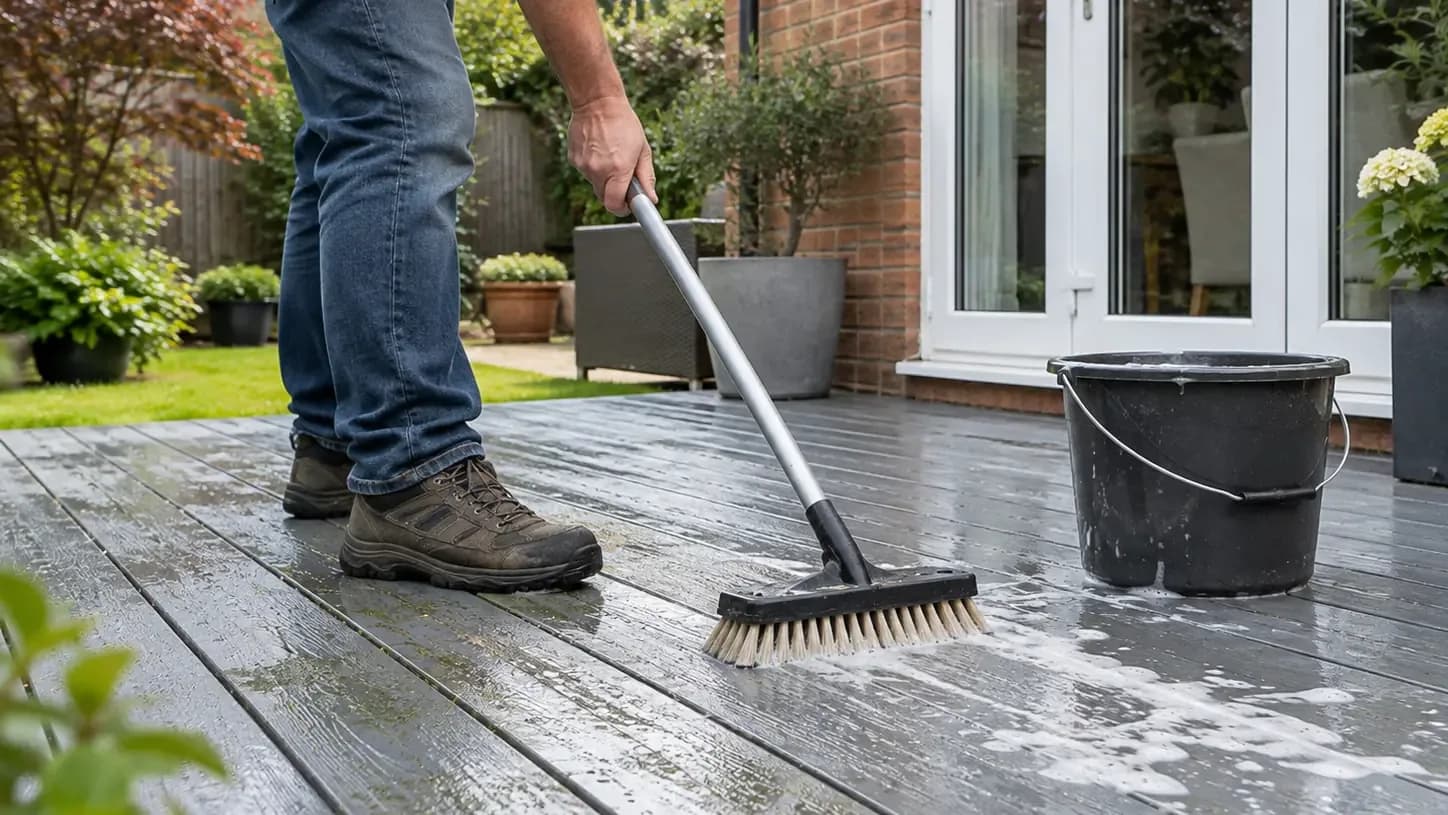
To learn how to clean a painted deck, first check that the paint remains firmly bonded. Sweep the boards, wash them with a mild compatible cleaner, scrub gently, rinse thoroughly and allow the surface to dry.
That simple method suits sound paint with ordinary dirt. Peeling, blistering or powdery paint needs repair rather than increasingly forceful cleaning.
Paint protects timber by forming a surface film. The wrong chemical, abrasive brush or concentrated water jet can weaken that film. A careful clean aims to remove contamination while preserving every sound area of coating.
What Is the Safest Way to Clean a Painted Deck?
The safest starting method uses warm water, mild detergent and a soft nylon brush. You should test both cleaner and technique on a hidden section first.
Choose a dry, mild day without strong sunlight or frost. Strong sun can dry detergent before rinsing. Cold conditions delay drying and leave moisture beneath furniture.
Work on sections measuring about 4 feet by 4 feet (1.2m by 1.2m). Small sections give you time to wash each area before the solution dries.
Use the least aggressive method that removes the dirt. More scrubbing does not improve failed paint. Greater pressure usually removes more coating alongside the contamination.
Quick-Reference Cleaning Plan
| Task | Timing | Method | Difficulty |
|---|---|---|---|
| Inspect the coating | 10-15 minutes | Check adhesion, cracks, softness and loose boards | Easy |
| Remove loose debris | 15-25 minutes | Sweep with a soft outdoor broom | Easy |
| Test the cleaner | Labelled dwell time | Treat a 6-inch (15cm) hidden patch | Easy |
| Wash the boards | 20-45 minutes | Use mild cleaner and a soft nylon brush | Moderate |
| Rinse and dry | 24-48 hours | Rinse gently and keep furniture off | Easy |
Is the Paint Dirty or Already Failing?
Sound paint stays attached during gentle washing; failed paint lifts, blisters, cracks or turns powdery. You must identify the difference before choosing a cleaner.
Dirt sits on top of a stable coating. Common deposits include soil, pollen, bird mess, food residue and traffic marks. Gentle washing usually changes the appearance without exposing bare timber.
Coating failure starts within or beneath the paint film. Moisture, poor preparation, incompatible layers and normal wear can break adhesion. Cleaning reveals that weakness but does not create every underlying problem.
How to Test Paint Adhesion Before Cleaning
To test paint adhesion before cleaning, inspect a hidden area measuring about 6 inches (15cm) square. Press painter's masking tape firmly onto clean, dry paint, then remove the tape slowly.
Stop routine washing if large paint flakes transfer to the tape. The coating needs closer assessment and surface preparation before another finish goes on.
Next, dampen a separate hidden area and rub lightly with a white cloth. Heavy colour transfer, softening or sticky paint signals poor water resistance or incomplete curing.
Do not use the test to prove that every board remains sound. Check high-wear areas separately, including steps, doorways and routes between seating and the house.
How to Recognise Peeling, Blistering and Chalkiness
To recognise peeling paint, look for lifted edges and exposed timber. Peeling often follows the grain or starts around cracks, fixings and board ends.
Blisters form rounded bubbles beneath the coating. Trapped moisture, heat or poor adhesion often contributes to blistering. Do not burst blisters and wash underneath them.
Chalking leaves fine pigment on your fingers or a cloth. Light chalking can accompany weathering. Heavy chalking needs preparation before repainting because new paint requires a stable surface.
Probe discoloured timber gently with a blunt screwdriver. Sound wood resists light pressure. Soft, crumbling or deeply split boards need repair assessment before cleaning.
What Do You Need to Clean Painted Decking?
You need 6 basic items: a soft broom, nylon brush, bucket, mild cleaner, garden hose and protective gloves. Add eye protection when the product label requires it.
Choose a brush with flexible synthetic bristles. Metal brushes, abrasive pads and rigid scrapers can score paint and expose timber at edges.
Select a cleaner that expressly allows use on painted exterior wood. A general deck stripper, brightener or bare-wood restorer can weaken or remove the finish.
Read the label before opening the container. Check the permitted surfaces, dilution, dwell time, temperature range, plant protection and rinsing instructions.
Ronseal deck-cleaner guidance warns that some cleaners can remove partially deteriorated coatings. That warning makes the hidden-area test essential.
Chiltern Surface Co follows a surface-specific cleaning approach because the coating condition matters as much as the timber beneath it.
How to Clean a Painted Deck by Hand
To clean a painted deck by hand, remove debris, test a mild cleaner, wash along the boards and rinse gently. Hand cleaning gives you direct control around weak edges.
Move furniture, pots and outdoor rugs at least 5 feet (1.5m) away. Protect nearby planting where the cleaner label requires a cover or pre-wetting.
Close doors and windows beside the deck. Keep children and pets away until the surface has been rinsed and dried.
How to Clear Loose Dirt Without Scratching Paint
To clear loose dirt without scratching paint, sweep when the deck remains dry and safe underfoot. Start beside the house and move towards the open edge.
Lift leaves rather than grinding them across the coating. Remove packed debris from board gaps with a narrow plastic tool. Keep the tool away from painted board edges.
Use a plastic card for dried mud or bird mess after dampening the deposit. Hold the card nearly flat and stop when paint starts lifting.
Vacuuming can help around sheltered corners when the nozzle lacks exposed metal edges. Avoid dragging a vacuum body across painted boards.
How to Wash Painted Boards With Mild Cleaner
To wash painted boards, mix the cleaner exactly as the manufacturer directs. Apply enough solution to wet the surface without flooding gaps or the substructure.
Let the cleaner work for the labelled contact time. Keep rinse-required products from drying on the paint. Add a little solution if an area starts drying early.
Brush along the board direction with light, even strokes. Concentrate on visible dirt instead of scrubbing every painted section with equal force.
Clean railings before deck boards, where safe access allows. Dirty rinse water from railings will otherwise mark freshly washed flooring.
Change dirty water rather than spreading suspended soil. Pale paint shows grey wash marks quickly when a heavily soiled bucket remains in use.
How to Rinse and Dry the Deck
To rinse the deck, use clean water from a garden hose or low-pressure spray attachment. Direct water towards the outer edge and away from doors.
Rinse until foam, cleaner and loosened dirt disappear. Cleaner residue can leave dull patches, attract soil or affect a later maintenance coat.
Allow at least 24-48 hours for drying in suitable weather. Shade, humidity and low temperatures extend the drying period.
Judge the result only after the paint dries. Wet paint looks darker, while remaining dirt often becomes clearer from 2 viewing directions.
How to Remove Algae, Moss and Mould From Painted Decking
To remove biological growth, use a labelled treatment that permits application to painted exterior timber. Test the treatment because formulations affect coatings differently.
Algae forms a thin green or black film. Moss forms raised tufts around shaded joints and grooves. Mould often appears as dark spotting across damp areas.
Remove thick moss gently with a plastic scraper before treatment. Apply the compatible product at the stated dilution and dwell time. Rinse only when the label requires rinsing.
Do not combine household chemicals or separate cleaning products. Bleach mixed with acids or ammonia releases dangerous gases. Some detergents also contain ingredients that react unpredictably with chlorine products.
A specialist exterior soft wash treatment can address biological growth with controlled chemistry and low pressure. A site assessment must still confirm compatibility with the paint.
Cleaning removes growth but cannot stop moisture permanently. Clear board gaps, move pots onto feet and improve manageable airflow around shaded corners.
Can You Pressure Wash a Painted Deck Safely?
Yes, controlled low-pressure rinsing can suit firmly bonded paint, but hand washing usually carries less risk. Never assume a low machine setting makes weak paint secure.
Test an inconspicuous board before cleaning the main area. Select a 25-40 degree fan nozzle and begin at least 18 inches (45cm) away.
Keep the spray moving with the board direction. Never use a rotary or pencil jet. Concentrated jets can cut timber, lift coating edges and force water into cracks.
Stop immediately if paint feathers, blisters or lifts. Do not reduce the nozzle distance to chase a stubborn mark. The mark can represent coating wear, rust or tannin staining.
Pressure washers suit rinsing better than paint preservation. Let compatible cleaner loosen contamination first, then use the lowest effective water force.
Manufacturer advice must override generic pressure figures. Machine output, nozzle angle, spray distance, timber density and paint condition all change the result.
Which Cleaning Mistakes Damage Painted Decking?
Harsh chemicals, abrasive tools, excessive pressure and poor rinsing cause the most avoidable damage. Each mistake affects the coating differently.
Deck stripper intentionally removes finishes. Bare-wood brightener changes timber chemistry. Neither product belongs in routine painted-deck cleaning unless the project involves full refinishing.
Wire brushes scratch paint and can leave fragments that rust. Coarse scouring pads dull sheen and create visible patches on dark or glossy finishes.
Undiluted vinegar can soften or mark some coatings and corrode metal fixings. Baking soda adds abrasion. Household origins do not prove surface compatibility.
Steam and boiling water expose paint to heat and moisture. Heat can soften coatings, worsen blisters and create burn risks for the person cleaning.
Leaving cleaner residue can dull the finish or disrupt repaint adhesion. Flooding the deck keeps board ends, fixings and the supporting structure wet for longer.
Painting over dirt or biological growth produces a weak foundation. New paint cannot correct loose old coating, damp timber or inadequate preparation.
When Does a Painted Deck Need Repainting?
Repaint when coating failure exposes timber or affects broad, connected areas. Cleaning remains enough when paint stays bonded and only surface contamination affects appearance.
Small chips can sometimes receive local preparation and touch-up. Match the original product system where possible. Different paint chemistries, colours and sheen levels can leave obvious patches.
Widespread peeling needs removal of every loose edge, followed by sanding and suitable preparation. New coating must bond to a clean, dry and stable surface.
Do not paint over soft timber. Replace or repair decayed boards first. Check loose fixings, unstable steps and movement across the structure before cosmetic work.
Older coatings can contain lead, particularly on historic properties or reused timber. Arrange appropriate testing before dry sanding or mechanical removal where age creates concern.
Changing from opaque paint to translucent stain usually requires extensive stripping. Remaining paint blocks stain penetration and produces uneven colour.
How Do You Keep a Painted Deck Cleaner for Longer?
Regular sweeping and faster drying reduce the dirt and biological growth that collect on painted boards. Maintenance cannot make an outdoor coating permanent.
Sweep weekly during heavy leaf fall. Inspect shaded areas monthly during damp seasons. Remove soil, food spills and bird mess before deposits harden.
Keep pots on raised feet and move them periodically. Avoid moisture-trapping rubber mats where the paint manufacturer does not approve them.
Clear the gaps between boards without damaging painted edges. Check downpipes, overflowing gutters and irrigation because repeated water creates local contamination.
Wash light dirt before heavy scrubbing becomes necessary. Gentle maintenance usually protects sound coating better than occasional aggressive cleaning.
Check steps and high-traffic routes for wear. Address exposed timber promptly after suitable preparation because water can enter through damaged paint.
When Should You Ask a Professional?
Professional assessment makes sense when paint is widely failing, growth is extensive, timber feels soft or safe access remains difficult. Light dirt on sound paint remains a reasonable DIY task.
A professional should identify the surface, coating condition and contamination before choosing pressure or treatment strength. The assessment should set realistic expectations for cleaning and paint retention.
Ask how the contractor will test adhesion and protect plants, walls, glazing and drainage routes. Ask whether the planned process cleans sound paint or prepares failed paint for removal.
Cleaning can deliver a significant improvement where the coating remains serviceable. A heavily worn deck can still need repainting after careful cleaning reveals its true condition.
Chiltern EverGuard™ Treatment can help reduce biological regrowth on suitable surfaces. Typical protection lasts 12-24 months, depending on the surface, environment, weather and maintenance. A Free Site Assessment must confirm suitability for painted decking.
Protect the Paint by Starting With the Right Assessment
Knowing how to clean a painted deck starts with one decision: preserve sound paint or prepare failed paint for repair. Use mild cleaner, gentle brushing and controlled rinsing where the coating remains stable. Stop when peeling, softness or structural movement appears. For surface-specific advice, book a site assessment. Chiltern Surface Co will explain the appropriate method and provide a Free Quotation without pressure.
Frequently asked questions
Can You Use Washing-Up Liquid on a Painted Deck?
Yes, when the paint manufacturer permits mild detergent. Use a small amount in warm water, test a hidden area and rinse every residue.
Can You Use Bleach on Painted Decking?
No, unless a labelled product and coating manufacturer specifically permit that use. Chlorine can affect paint colour, plants, fixings and surrounding materials.
Can You Pressure Wash Painted Wood Without Removing Paint?
Yes, when the paint remains firmly bonded and you use controlled low pressure. Start 18 inches (45cm) away with a wide fan spray.
How Often Should You Clean a Painted Deck?
Clean visible dirt promptly and complete a fuller wash once or twice each year. Shade, trees, traffic and moisture determine the practical frequency.
How Long Should a Painted Deck Dry Before Repainting?
Follow the coating manufacturer's moisture and weather requirements. A minimum 24-48 hours suits many cleaning situations, but damp conditions require longer.