
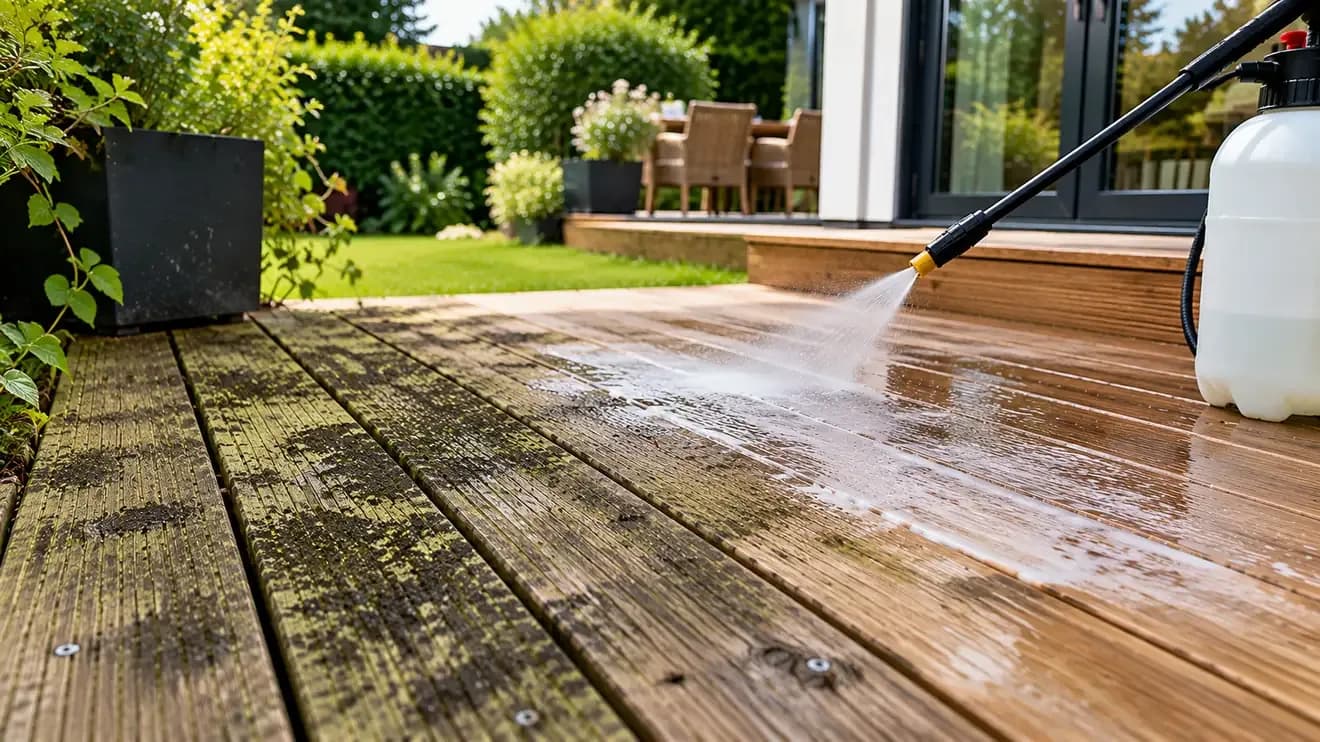
To clean mould off a wood deck, remove loose debris, apply a timber-safe mould cleaner, scrub with the grain, rinse thoroughly and let the boards dry. Do not start with maximum pressure or assume every black mark is mould.
Mould often develops where damp air, shade and organic debris keep timber wet. Cleaning can remove surface contamination and improve grip. Cleaning cannot repair soft, decayed or structurally weakened boards.
This distinction matters. A strong cleaner or pressure washer can remove colour and roughen sound timber. The same treatment still cannot restore rotten wood. Start by identifying the surface, its finish and the type of contamination.
Is the Black or Green Mark Really Mould?
Mould usually appears as black, grey, brown or green speckling that spreads across damp, shaded timber. Algae usually looks greener and feels slippery. Dirt normally follows traffic patterns or collects beside grooves and edges.
The terms mould, mildew and algae often overlap in everyday conversation. The correct treatment still depends on what has colonised the surface. A timber-safe biological cleaner suits organic growth better than aggressive pressure alone.
Dark marks can also come from tannins, iron contamination, failed coatings or water movement. Biological cleaner will not remove every non-biological stain. A small test area prevents unnecessary treatment across the entire deck.
How to Check the Surface Before Cleaning
To check the surface, inspect the boards when the timber feels dry. Brush one affected patch and compare the exposed colour with nearby wood.
Look closely at shaded corners, board gaps, stair treads and areas beneath planters. Mould often follows persistent moisture rather than a single spill. Check gutters, taps and downpipes for leaks nearby.
Press a screwdriver gently against suspicious timber near board ends and fixings. Firm wood usually needs cleaning; soft or crumbling wood needs further inspection and possible replacement. Do not rely on cleaning when timber has lost strength.
How to Tell Mould from Algae and Timber Decay
To tell mould from algae, check colour, texture and location. Green, slippery growth usually indicates algae. Black or grey spotting across damp boards often indicates mould or fungal staining.
Timber decay presents a different problem. Decayed boards feel soft, split deeply or break around fixings. Cleaning changes appearance, but cleaning does not rebuild damaged fibres.
Painted or stained decks require another check. Black marks can sit on the coating, beneath a failing coating or inside exposed wood. Test the cleaner where any colour change will remain inconspicuous.
What Causes Mould on a Wooden Deck?
Mould grows when timber stays damp long enough for spores to colonise dirt, pollen or weathered surface fibres. Shade and poor airflow slow evaporation. Leaves and soil provide extra organic material.
Mould does not always mean the deck has rotted. Surface growth can develop on structurally sound timber. Persistent moisture still deserves attention because repeated wetting also creates conditions that favour decay.
Common causes include overhanging shrubs, blocked board gaps, poorly placed plant pots and water discharging onto the deck. Furniture covers can trap condensation. A worn coating can leave timber more absorbent.
Why Shaded Decking Stays Damp Longer
Shaded decking receives less direct sunlight and dries more slowly after rain. North-facing sections often remain damp longer than open sections. Dense planting also reduces airflow near the boards.
Move movable planters and furniture during wet months. Fit pot feet that create at least 1 inch (2.5cm) of clearance. The gap allows air to circulate and water to drain.
Why Mould Returns After Cleaning
Mould returns when the conditions supporting growth remain unchanged. A cleaner removes contamination, but a cleaner cannot move a leaking downpipe or open blocked drainage gaps.
Review the deck after rain. Water should leave the surface rather than pool beside walls, steps or planters. Clear compacted debris between boards without damaging the edges.
Regular sweeping makes a meaningful difference. The Timber Decking and Cladding Association maintenance guidance recommends clearing leaves and dirt, including beneath furniture and pots.
What Do You Need to Clean Mould Off a Wood Deck?
You need a broom, plastic-bristled brush, bucket, hose, protective gloves and a cleaner labelled for timber decking. Add eye protection when the product label requires it. Wear footwear with reliable grip.
Choose a brush firm enough to lift contamination without cutting into soft fibres. Avoid wire brushes because metal bristles scratch wood and can leave particles that create rust staining.
A garden hose provides enough rinsing power for many decks. A pressure washer remains optional. Timber condition and operator control matter more than machine size.
How to Choose a Timber-Safe Mould Cleaner
To choose a timber-safe mould cleaner, read the label before purchase. Confirm that the product suits exterior wood and the deck's existing oil, stain or paint.
Some proprietary cleaners use oxygen-releasing ingredients, surfactants or registered biocidal actives. Product strengths and dwell times vary. Follow the labelled dilution, application rate and safety controls exactly.
Do not copy an unverified online mixing ratio. Different boards, finishes and formulations react differently. Test the prepared solution on a small hidden section first.
Can You Use Washing-Up Liquid?
Yes, mild soapy water can remove light surface dirt and early contamination. Mild soap will not always control established biological growth inside weathered grain.
Use warm water rather than boiling water. Scrub gently and rinse completely. Soap residue can leave the surface slippery and attract more dirt.
Should You Use Bleach or Vinegar?
Avoid improvised chlorine bleach or vinegar treatments unless the deck manufacturer specifically approves them. Chlorine bleach can lighten timber and affect nearby plants or metal fixings. Acidic solutions can alter colour or react with existing finishes.
Never mix cleaning chemicals. Chlorine bleach and acids can release dangerous gas. Keep children and pets away during treatment and until the label states the area is safe.
How to Clean Mould Off a Wood Deck Step by Step
To clean mould off a wood deck, work on a dry, mild day without strong sunlight. Direct sun can dry cleaner before the required dwell time ends.
The method below suits sound exterior timber after a successful patch test. Stop if the wood becomes unusually pale, furry or soft.
| Task | Typical timing | Method | Difficulty |
|---|---|---|---|
| Clear and inspect | 20-40 minutes | Remove furniture, sweep and check boards | Easy |
| Protect nearby areas | 10-20 minutes | Follow label guidance for plants and finishes | Easy |
| Apply cleaner | Label-specific | Wet the section evenly without flooding it | Moderate |
| Agitate growth | 10-20 minutes | Brush with the wood grain | Moderate |
| Rinse and inspect | 15-30 minutes | Use clean water at controlled pressure | Easy |
| Dry before finishing | Usually 24-48 hours | Wait for suitable dry weather and verify dryness | Easy |
1. How to Prepare the Deck
To prepare the deck, remove chairs, rugs, barbecues and plant pots. Sweep leaves, soil and loose growth from the boards and gaps.
Check protruding screws, loose boards and splintered edges before wet work begins. Mark damaged areas so nobody steps onto weakened timber during cleaning.
Protect materials that the cleaner could affect, including painted walls, uncoated metals and delicate planting. Follow the product label rather than covering plants for long periods in strong sun.
2. How to Test the Cleaner
To test the cleaner, choose an area about 6 inches (15cm) square. Prepare the solution at the labelled dilution and apply the specified amount.
Complete the full dwell, agitation and rinsing process. Let the patch dry before judging colour or finish. Wet timber always looks darker than dry timber.
3. How to Apply the Cleaner Evenly
To apply the cleaner evenly, divide the deck into manageable sections. A section around 5 feet (1.5m) wide usually prevents premature drying.
Apply the solution with a low-pressure sprayer, brush or watering can when the label permits. Keep the whole section evenly wet. Do not allow treatment to dry on the boards.
Work away from the house toward an open exit. Keep untreated walking space behind you. Avoid stepping through cleaner and carrying residue onto indoor floors.
4. How to Scrub Without Raising the Grain
To scrub without raising the grain, move a plastic-bristled brush along each board. Use controlled passes instead of aggressive sideways scrubbing.
Pay extra attention to grooves, board ends and shaded edges. Do not gouge soft springwood between harder grain lines. Heavy force can leave a striped, rough surface.
Give the cleaner the labelled contact time before judging performance. Chemical action and light agitation often remove growth more safely than repeated high pressure.
5. How to Rinse and Check the Result
To rinse the deck, use clean water and move runoff away from doors, ponds and sensitive planting. Rinse until visible foam and loosened residue disappear.
Let the boards dry before assessing remaining marks. Repeat the labelled process on persistent biological contamination. Do not increase chemical strength beyond the manufacturer's instructions.
Some shadowing can remain after active growth disappears. Weathered colour, tannin marks and coating failure require separate treatment. More scrubbing does not always produce a better result.
Can You Pressure Wash Mould Off a Wood Deck?
Yes, controlled pressure can support rinsing on sound timber, but pressure alone does not identify or treat the contamination. Excessive force can feather fibres, cut lines into boards and drive water into joints.
Use a wide fan pattern and the lowest effective setting. Begin at least 12 inches (30cm) from the surface. Increase cleaning gradually only after testing.
Keep the nozzle moving with the grain. Maintain a consistent distance and angle. Never use a concentrated pencil jet or rotary nozzle on timber decking.
Chiltern Surface Co explains the wider principle in pressure washing explained: the surface and contamination should determine the method. The largest machine does not provide the best diagnosis.
When Should You Avoid Pressure Washing?
Avoid pressure washing on soft, heavily weathered, splintered or decayed boards. Avoid pressure around loose coatings and unstable fixings. Use manual cleaning when control matters more than speed.
Stop immediately if the surface develops pale lines or furry fibres. Those changes indicate damage rather than deeper cleanliness. Let the wood dry before deciding whether light sanding is needed.
Do You Need to Sand or Refinish After Removing Mould?
You only need to sand when cleaning exposes raised fibres, failed coating or persistent surface damage. Sound boards with an intact finish may only need cleaning and complete drying.
Sanding cannot solve damp conditions beneath the deck. Repair leaks and drainage faults first. Otherwise, mould can return beneath a new decorative finish.
When Sanding Makes Sense
Sand after the timber dries when the grain feels rough or an old finish has failed. Start with the least aggressive grade suitable for the coating system.
Keep dust away from neighbouring homes, plants and open doors. Vacuum sanding residue before applying any new product. Residual dust weakens adhesion and spoils the finish.
When to Apply Oil, Stain or Paint
Apply oil, stain or paint only after the deck reaches the moisture condition required by the manufacturer. A fixed waiting period cannot account for rainfall, shade or timber density.
Choose a compatible exterior decking finish. An oil penetrates differently from a film-forming paint. Follow the finish manufacturer's preparation, coverage and drying instructions.
Professional cleaning can form part of a wider restoration when surface condition allows.
What Common Mould-Cleaning Mistakes Damage Decking?
The most common mistake involves using more pressure or stronger chemistry before identifying the mark. A quick patch test provides better information than an aggressive full-deck attempt.
Another mistake involves treating wet timber repeatedly. Dark wet boards can look contaminated even after successful cleaning. Let the surface dry before repeating treatment.
Homeowners also overlook runoff. Cleaner can reach lawns, ponds, painted walls and neighbouring surfaces. Plan containment and rinsing before opening the container.
Do not combine products to create a stronger mixture. Do not leave cleaner drying in direct sunlight. Do not coat the deck before moisture has escaped.
How Can You Stop Mould Returning?
Keep the deck cleaner and drier by improving airflow, drainage and routine debris removal. Prevention cannot stop every spore, but prevention removes the damp organic layer that supports growth.
Sweep after leaf fall and inspect after prolonged wet weather. Clear board gaps with a non-metallic tool. Move pots and furniture periodically so hidden areas can dry.
Trim planting where dense growth blocks airflow. Redirect leaking outlets and repair overflowing gutters. Do not place impermeable mats across damp timber for long periods.
Inspect the finish each season. Recoat at the interval specified for the chosen product and exposure. A neglected finish can allow moisture to enter the surface more readily.
Chiltern EverGuard™ Treatment can help reduce future biological regrowth where the treatment suits the assessed surface. Typical protection lasts 12-24 months, depending on timber, exposure, weather and maintenance. The treatment does not create permanent protection.
When Does Professional Deck Cleaning Make Sense?
Professional help makes sense when the deck has widespread growth, an unknown coating, delicate timber or signs of deterioration. Professional assessment also helps when earlier DIY cleaning produced stripes, bleaching or rapid regrowth.
DIY cleaning remains reasonable for sound timber with light contamination and a clearly compatible product. You should feel able to identify the surface, control runoff and follow the label safely.
A professional should still set realistic expectations. Cleaning can produce significant improvement where condition allows. Cleaning cannot replace rotten boards or reverse deep structural decay.
Restore the Deck by Treating the Cause
Successful mould removal starts with diagnosis, not force. Identify the mark, choose a compatible cleaner and protect the timber during every stage.
Address shade, debris, leaks and poor airflow after cleaning. Those changes help the deck stay drier and slow biological regrowth.
For widespread contamination or uncertain timber condition, arrange a Free Site Assessment. Chiltern Surface Co will inspect the material, finish, drainage and contamination before recommending an appropriate restoration method.
Frequently asked questions
Can black mould permanently stain a wood deck?
Yes, dark shadowing can remain after biological growth has been removed. Tannins, iron marks, weathering or staining beneath a failed finish can require different treatment.
Can you clean mould from painted decking?
Yes, when the cleaner is compatible with the paint and the coating remains firmly attached. Patch-test first. Flaking paint normally needs separate preparation and refinishing.
Will pressure washing remove mould spores from decking?
No, water pressure alone does not provide reliable biological treatment. Use a suitable labelled cleaner and controlled rinsing where the surface condition permits.
How long should deck cleaner remain on the wood?
Use the exact dwell time printed on the product label. Keep the treated area wet during that period and never let the cleaner dry.
Is mouldy decking unsafe?
Yes, mould and related biological films can make wet decking slippery. Restrict access until cleaning, rinsing and drying have restored a dependable walking surface.