
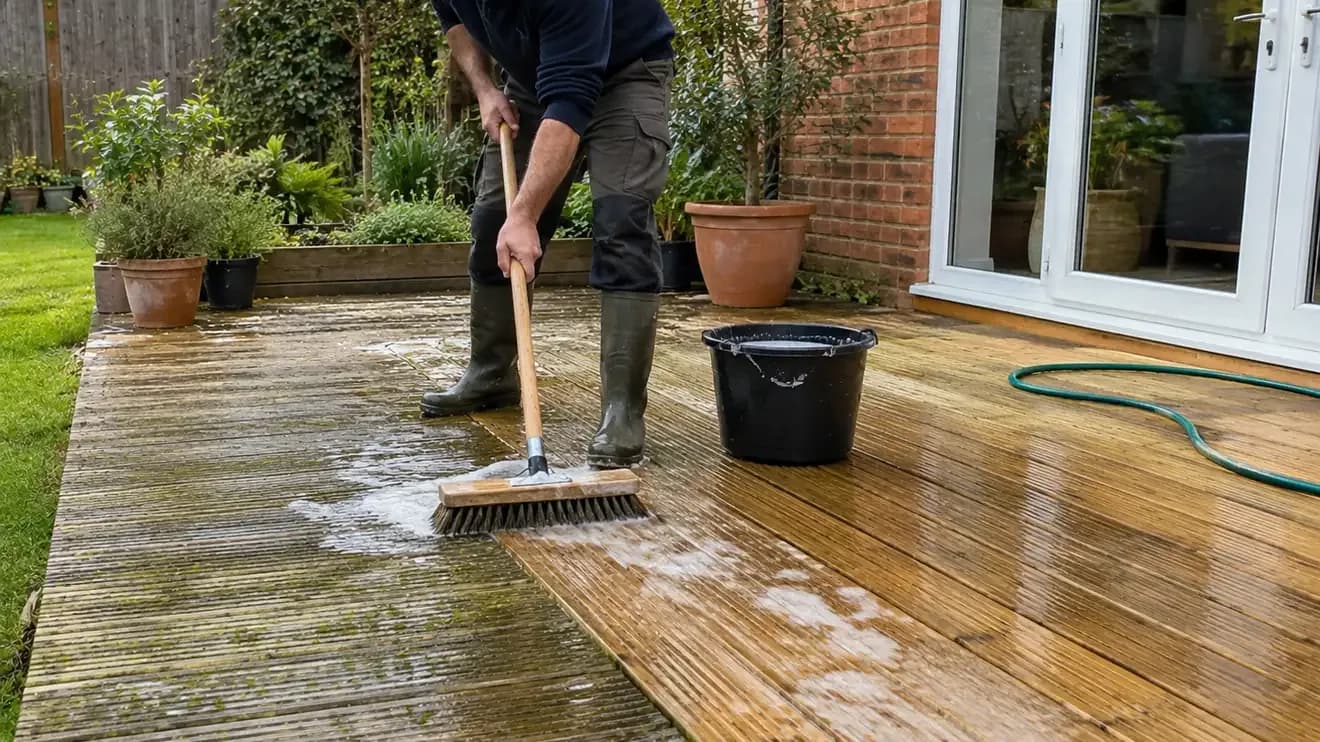
To clean a deck without a pressure washer, sweep away loose debris, apply a cleaner suited to the decking material, allow it time to work, scrub the boards methodically and rinse thoroughly with a garden hose. The cleaner loosens the contamination, the brush lifts it from the surface, and the water carries it away.
This method is not simply a weaker substitute for pressure washing. On older timber, softwood, unknown finishes and certain composite boards, manual cleaning can offer far greater control. It also reduces the risk of raised grain, splintering, visible wand marks and accidental coating removal.
However, the choice of cleaner matters. A product that works on unfinished timber may affect painted, stained or composite decking differently. Before reaching for soap, bleach, vinegar or any homemade mixture, identify the surface and decide what you are actually trying to remove.
Can You Really Clean a Deck Without a Pressure Washer?
Yes. A pressure washer is useful for certain surfaces, but it is not essential for routine deck cleaning.
Most garden decking becomes dirty because leaves, soil, pollen and moisture remain on the boards. These deposits may support algae, fine mosses and mildew, particularly in shaded areas. A suitable cleaning solution can soften this material so that it can be released with controlled brushing.
The method works because each stage has a separate purpose. Sweeping removes loose debris. The cleaner breaks down or loosens the remaining contamination. Agitation separates it from the surface. Rinsing removes the dirty solution before it can settle again.
The process takes more physical effort than pressure washing, but it gives you time to observe how the material is responding. That control is especially useful when the decking is old, previously coated or difficult to identify.
The Timber Decking and Cladding Association advises that decking can be cleaned methodically with a scrubbing brush and mild soap solution, followed by thorough rinsing and drying before any further treatment.
Why Avoid Using a Pressure Washer on Decking?
You do not always need to avoid one. On sound, suitable decking, controlled pressure can form part of an effective cleaning process. The problem is that the margin between cleaning and surface damage can be small.
A concentrated jet may lift the soft fibres from timber, particularly when the boards are weathered. This can leave a rough or furry texture that becomes more visible after drying. Working too close may also produce pale stripes, small grooves or inconsistent colour.
Pressure can disturb a previous oil, stain or paint coating as well. If only part of the coating lifts, the deck may need broader stripping or sanding before it can be refinished evenly.
Composite decking presents different concerns. Some products permit carefully controlled pressure washing, while others have specific restrictions. The embossed or protective surface can become scratched, dulled or permanently marked if treated too aggressively.
Manual cleaning avoids many of these risks, but it is not entirely risk-free. An unsuitable chemical or overly abrasive brush can still cause damage. The safest method continues to depend on the material, its condition and the contamination present.
Identify the Decking Before Choosing a Cleaner
The most effective cleaner is not necessarily the strongest one. It is the product that removes the problem without unnecessarily affecting the surface beneath it.
Pressure-treated softwood
Pine, spruce and other pressure-treated softwoods are common in UK gardens. As they weather, their surface fibres may become more vulnerable to rough cleaning.
A proprietary cleaner approved for timber is usually a more reliable starting point than an improvised chemical mixture. Use a non-metallic brush firm enough to loosen contamination without tearing the wood.
If the boards are already splintered or badly weathered, inspect them carefully before introducing water. Cleaning can improve their appearance, but it will not correct decay or rebuild lost fibres.
Hardwood decking
Hardwood is denser than most softwood, but its colour and surface finish can still be affected by cleaning products. This is particularly important for tropical hardwoods and decks that have previously been oiled.
Test the chosen cleaner in a hidden location and let that area dry. A product may appear harmless while the timber is wet yet leave a lighter or uneven patch afterwards.
Composite decking
Composite boards should be cleaned according to their manufacturer’s instructions. Many can be maintained with warm water, a suitable soap and a soft-bristled brush. However, different brands and product generations may have different restrictions.
Avoid assuming that a cleaner described as safe for wood is automatically safe for composite material. Strong chemicals may affect colour, surface texture or the protective cap.
If you cannot identify the manufacturer, start with the gentlest reasonable solution and complete a small test patch.
Painted, stained or oiled decking
An existing coating changes the job. You are no longer cleaning bare timber; you are cleaning a surface treatment that may have its own chemical limitations.
If the finish is sound and you want to preserve it, use a compatible maintenance cleaner. If the coating is peeling, patchy or worn through, ordinary cleaning will not make it uniform again.
Decide whether the deck needs a maintenance clean or preparation for refinishing. Those are different tasks and may require different products.
Inspect the Deck Before You Wet It
A layer of grime can conceal more than discolouration. Before cleaning, examine the boards in dry daylight.
Walk slowly across the surface and notice any movement. Look at board ends, steps, railings and fixings. Timber that feels soft, flexes unexpectedly or shows deep decay needs repair rather than stronger cleaning.
Check where the decking meets the house. Water and dirty solution should not be allowed to enter beneath doors, behind cladding or through air vents. Look beneath pots and furniture, where trapped moisture may have created localised algae or dark staining.
Also inspect the gaps between the boards. Packed leaves and soil restrict drainage and hold water against the timber. Removing this debris may make a significant difference to how quickly the deck dries after rain.
This assessment-led thinking is central to the Chiltern Surface Co approach: the method should follow the surface, its condition and the contamination present.
What Is the Best Cleaner for a Deck?
There is no universal mixture suitable for every deck. Cleaner selection should be based on the material and the type of soiling.
Mild soap for routine dirt
A mild soap solution may be sufficient when the deck mainly has dust, light soil, footprints or recent surface dirt.
It is less likely to provide a complete result where green algae, mildew, grease or deeply weathered deposits are present. In those cases, repeated hard scrubbing with weak soap can become less controlled than using a properly selected specialist cleaner.
If the deck will be stained or oiled afterwards, make sure the soap can be rinsed away completely. Residue left on the timber may interfere with the next product.
Proprietary decking cleaner
A cleaner formulated for the decking material is generally the most straightforward option. Its instructions should explain where it can be used, how it should be diluted, how long it needs to remain on the surface and whether agitation is required.
“Deck cleaner” is still a broad description. Confirm whether the product is intended for timber, composite boards, coated decking or bare wood. Also check whether it is designed for maintenance cleaning, algae removal, coating preparation or another specific purpose.
Oxygen-based cleaner
Some timber-cleaning systems use oxygen-releasing ingredients such as sodium percarbonate to loosen organic dirt and biological contamination. These products can be useful on suitable unfinished timber, but they are not automatically appropriate for every coating or composite board.
Follow the product directions and keep the surface appropriately wet during the stated dwell time. Test first because the cleaner may change the apparent colour of weathered wood as contamination is removed.
Wood brightener
A brightener is not simply another name for deck cleaner. Brighteners often use an acidic ingredient, such as oxalic acid, to address particular discolouration and help restore a more even appearance after certain cleaning processes.
Cleaning and brightening are separate stages. A brightener should only be used when it is appropriate for the timber and compatible with the cleaning system.
Never mix a brightener with another chemical. Rinse between stages and follow the manufacturer’s instructions carefully.
Chlorine-based products
Strong chlorine-based cleaners are frequently recommended in online discussions because they can change the appearance of organic growth quickly. However, they may affect timber, coatings, metals, planting and nearby materials if selected or used incorrectly.
Do not create a concentrated homemade mixture based on an informal recipe. If a chlorine-containing product is being considered, it should be specifically suitable for the deck and used exactly as directed.
Vinegar and baking soda
Vinegar and baking soda are often presented as natural solutions, but “natural” does not mean universally safe.
Vinegar is acidic and may affect some timber finishes or react with surrounding materials. Baking soda is mildly abrasive and alkaline, which may make it unsuitable for certain coatings or composite surfaces.
Avoid mixing them in the hope of creating a more powerful cleaner. Their acid and alkali react with one another, reducing the useful cleaning action of each. A tested product suited to the surface is a more predictable choice.
What Equipment Do You Need?
For most manual deck cleaning, you need a good broom, a non-metallic deck brush, a bucket or pump sprayer, a garden hose and an appropriate cleaner. Gloves, protective eyewear and footwear with reliable grip are also important.
Choose the brush according to the material. A moderately firm brush may help release contamination from sound timber, while composite boards and delicate coatings may require softer bristles. Wire brushes should not be used for general deck cleaning because they can damage the surface and may leave metal fragments that later cause staining.
A long-handled brush makes it easier to work consistently and reduces the temptation to scrub one small patch too aggressively.
How to Clean a Deck Without a Pressure Washer Step by Step
1. Choose a suitable day
Select a mild, calm day when the deck is not expected to become excessively hot.
Strong sunlight can dry the cleaning solution before it has completed its dwell time. Heavy rain may dilute the product, while wind can carry spray onto plants, windows and surrounding surfaces.
If you intend to oil or stain the deck, allow enough suitable weather for the timber to dry afterwards.
2. Remove everything from the surface
Move furniture, pots, outdoor rugs, toys and barbecues away from the deck. Cleaning around them creates visible outlines and prevents the solution from being applied evenly.
Look beneath each item as it is moved. Dark circles under pots may be caused by persistent moisture, while marks beneath metal furniture may need a stain-specific treatment.
3. Sweep thoroughly
Sweep the deck before introducing water. Remove dry leaves, pollen, loose algae, soil and grit from the boards.
Pay attention to corners, steps, railings and the gaps between boards. Clearing debris now makes the wet cleaning stage more efficient and helps water drain away.
If the underside of the deck is accessible, check whether leaves or organic debris have accumulated there. Removing trapped material can improve airflow and reduce moisture retention.
4. Protect surrounding surfaces
Close nearby doors and windows and move vehicles away from the cleaning area. Identify painted walls, glazing, metals, plants and electrical fittings that could be affected by spray or cleaning solution.
Follow the product instructions for protecting vegetation. Consider where the dirty water will run and prevent it from entering ponds or sensitive drainage areas.
Keep children and pets away until the work is complete, the deck has been rinsed and the product guidance says the area is safe to use.
5. Test the cleaner
Prepare the cleaner exactly as directed. Do not make it stronger in the hope of saving time.
Apply a small amount to a hidden section. Allow the recommended dwell time, agitate gently, rinse and let the area dry.
The dry result will show whether the cleaner has altered the timber colour, softened a coating or affected a composite finish. If the test patch becomes pale, rough, dull or uneven, stop and select a different method.
6. Wet the surface if instructed
Some cleaners are applied to dry decking, while others require the boards to be damp first. Follow the product label rather than assuming one method applies to every solution.
Where pre-wetting is required, use the garden hose to dampen the surface evenly. Avoid flooding the timber or allowing water to pool beneath the deck.
7. Apply the cleaner evenly
Work in manageable sections so the cleaner does not dry before it can be agitated and rinsed.
Apply an even amount across complete boards rather than treating only the darkest patches. Spot cleaning may leave visible differences when the deck dries.
Allow the stated dwell time. The solution needs time to loosen the contamination, but it should not remain longer than the manufacturer permits. Keep an eye on edges and sunlit areas, which may dry faster.
8. Scrub in the direction of the boards
Use long, controlled strokes along the boards. This creates a more consistent finish and helps the bristles follow the timber grain.
Give extra attention to grooves, shaded areas and places where furniture has trapped moisture. However, avoid repeatedly attacking one spot with excessive force. If a stain is not responding, it may require a different treatment rather than harder scrubbing.
Rinse the brush periodically so loosened dirt is not spread back over the deck.
9. Rinse thoroughly with a garden hose
Rinse each section before the dirty solution dries.
Use a steady flow of clean water and work towards the natural drainage direction. Continue until no cleaner residue or discoloured water remains.
Check textured composite boards and deep grooves carefully, as residue can settle in their surface pattern. Clear the gaps again if loosened debris has collected between the boards.
10. Allow the deck to dry naturally
Leave the deck clear of furniture while it dries. Do not assess its final colour while it is wet because moisture temporarily darkens timber and can hide uneven cleaning.
Once dry, inspect the surface for missed contamination, coating damage, remaining stains and raised fibres. Decide whether it only needed cleaning or whether repair, sanding, brightening or refinishing is also required.
How Do You Remove Green Algae Without Pressure Washing?
Green algae should be loosened with a product approved for the surface and then removed through agitation and rinsing.
First clear away leaves and soil. Apply the chosen cleaner evenly rather than treating only the greenest sections. Allow the correct dwell time, scrub methodically and rinse before the residue dries.
Avoid assuming that more chemical strength will prevent the algae from returning. Regrowth is influenced by the surrounding environment. A deck that remains shaded, poorly drained or covered in wet leaves will become affected again more quickly.
Regular sweeping, clearer gaps and better airflow can make a meaningful difference. Move pots occasionally and consider placing them on suitable feet so moisture is not continually trapped beneath them.
Can You Clean an Old Deck Without Sanding?
You can remove dirt and biological growth from an old deck without sanding, but cleaning and surface restoration are not the same thing.
If the timber is sound and the goal is a more presentable surface for summer, careful washing may produce a significant improvement. Use a cleaner suited to the wood, a controlled brush and thorough rinsing.
However, cleaning will not remove deep grooves, splintered fibres or a failing coating evenly. It will not flatten cupped boards or repair decay. If the deck is intended to receive a new translucent stain, existing colour differences and coating remnants may remain visible.
“No sanding” is therefore a reasonable limit for a maintenance clean, but it may restrict the finish that can be achieved. The condition of the surface should determine what is realistic.
How Do You Prepare a Deck for Staining Without a Pressure Washer?
The deck must be clean, sound, compatible with the new product and sufficiently dry.
Begin by checking the stain manufacturer’s preparation instructions. Some finishes require bare or uniformly weathered timber. Others may be suitable over a compatible existing treatment.
Remove dirt and biological contamination using an approved cleaner. If the previous coating is peeling or remains in irregular patches, cleaning alone may not provide a suitable base. A stripper or sanding process may still be necessary.
After rinsing, allow the timber to dry to the moisture level required by the coating manufacturer. Do not rely entirely on a fixed number of hours. Shade, humidity, temperature, rainfall and airflow all influence drying.
Apply a small test area before coating the whole deck. This reveals how the colour appears on the prepared timber and whether the product is absorbing evenly.
Why Does the Deck Still Look Dirty After Scrubbing?
Sometimes the remaining colour is not removable dirt.
Timber naturally weathers and gradually changes colour. Tannin marks, resin, rust, water staining and previous coatings may remain after general cleaning. Areas that spent years beneath pots or furniture may also weather differently from exposed boards.
Before repeating the entire process, allow the surface to dry and identify what remains. A specialist stain treatment, timber brightener, coating remover or refinishing process may be needed.
Scrubbing harder with the same solution can damage the surface without addressing the cause.
A realistic result may be a cleaner, safer and more even deck rather than timber that looks newly installed. Chiltern Surface Co describes results in terms of restoring appearance where the condition allows, because cleaning cannot reverse every form of age or deterioration.
Common Mistakes When Cleaning Decking by Hand
Using one cleaner on every surface
Timber, composite boards and existing coatings have different care requirements. Always check compatibility rather than relying on a universal homemade recipe.
Allowing the cleaner to dry
Once dirty cleaning solution dries, it may leave residue or patchy colour. Work in smaller sections and rinse within the stated time.
Cleaning only visible marks
Spot cleaning often creates uneven results. Treat complete boards or logical sections so that any colour change remains consistent.
Scrubbing too aggressively
Harder scrubbing is not always better. It may roughen soft timber or dull a composite surface. If contamination remains, reconsider the cleaner and dwell time.
Mixing cleaning products
Combining products can create unsafe reactions and unpredictable results. Complete one approved process at a time, with the required rinsing between stages.
Coating damp timber
A deck can appear dry on top while still retaining moisture. Applying stain or oil too soon may affect absorption, colour and long-term performance.
Manual Cleaning or Professional Restoration?
Cleaning a deck without a pressure washer is a realistic DIY task when the boards are sound, the material is known and the contamination is moderate.
A careful homeowner can achieve a worthwhile result by following the cleaner manufacturer’s instructions, testing first and working patiently. There is no reason to make routine DIY maintenance sound more dangerous than it is.
Professional assessment becomes more useful when the timber is badly weathered, the coating history is unknown or several types of staining are present. It may also be appropriate where the deck has drainage problems, significant biological growth, restricted access or signs of decay.
In those situations, the key question is not simply how to clean the boards. It is whether they need maintenance cleaning, coating removal, timber brightening, repair or a broader Surface Restoration process.
Chiltern Surface Co provides specialist exterior cleaning and restoration services based on the material and condition of each surface rather than applying one standard treatment.
How to Keep a Deck Cleaner for Longer
Regular maintenance reduces the need for heavy scrubbing.
Sweep the boards before leaves and soil form a damp layer. Keep the gaps clear and move furniture or pots occasionally so hidden areas can dry. Clean food and grease spills promptly using a surface-compatible method.
Pay attention to the environment around the deck. Overhanging planting, persistent shade and poor drainage can all accelerate biological regrowth. These factors cannot always be removed, but understanding them helps set realistic expectations for maintenance.
Inspect timber periodically for raised fixings, splinters and early decay. Addressing small problems promptly is more useful than waiting until the deck requires extensive restoration.
A Gentler Method Can Still Deliver a Thorough Clean
Understanding how to clean a deck without a pressure washer means recognising that effective cleaning does not depend on aggressive force.
The cleaner loosens the contamination. Appropriate dwell time allows it to work. Controlled brushing lifts the dirt, and thorough rinsing removes it from the surface. When each stage is completed properly, manual cleaning can provide a significant improvement while reducing the risk of pressure-related damage.
The most important decision is not which household ingredient to use. It is whether the cleaner, brush and aftercare are right for the decking material, existing finish and intended result.
If your deck is heavily weathered, affected by persistent biological growth or being prepared for refinishing, Chiltern Surface Co can assess the surface and explain the most appropriate options.
We work across Buckinghamshire, Berkshire and Oxfordshire, providing honest advice and surface-specific restoration rather than a one-method-fits-all clean.
Arrange a Free Site Assessment for a clear recommendation and a no-obligation Free Quotation.
Frequently asked questions
What is the easiest way to clean decking without a pressure washer?
For routine dirt, sweep the deck, apply a suitable cleaner, allow the specified dwell time, scrub along the boards and rinse thoroughly with a garden hose. The cleaner should loosen the contamination so you do not need to scrub with excessive force.
Can I use washing-up liquid to clean decking?
A small amount of mild soap may be sufficient for light dirt if it is compatible with the surface. However, washing-up liquid is not designed to address every type of algae, mildew, coating or stain. If you plan to oil or stain the timber, rinse all residue thoroughly and follow the finish manufacturer’s preparation guidance.
What is the best brush for cleaning a wooden deck?
Use a non-metallic brush firm enough to release dirt without tearing the timber fibres. A long handle helps maintain consistent pressure and makes larger areas easier to clean. Weathered softwood may need a gentler brush than sound, dense timber.
How can I remove algae from decking naturally?
Avoid assuming that a homemade product is safe simply because its ingredients are described as natural. Acids, alkalis and abrasive powders may still affect timber, coatings and composite boards. A cleaner approved for the specific decking material offers more predictable instructions and results.
Can I use bleach on wooden decking?
Only use a bleach-containing product if it is intended for the timber or coating and the manufacturer’s instructions permit it. Strong or incorrectly diluted chlorine products may affect wood, metals, plants and surrounding finishes. Never mix bleach with another cleaner.
Is vinegar safe for decking?
Not universally. Vinegar is acidic and can affect some coatings, timber finishes and nearby materials. Check the decking and coating manufacturer’s guidance and test any approved method in an inconspicuous area.
Do I need to rinse deck cleaner off?
Most manual deck cleaners require thorough rinsing, but you should follow the specific product instructions. Residue left on the boards can create a film, attract dirt or interfere with a later coating.
How long should a deck dry before staining?
The correct time depends on the timber, weather, shade, humidity and coating requirements. Follow the stain manufacturer’s maximum-moisture guidance rather than relying on a universal waiting period.
Can composite decking be scrubbed?
Many composite boards can be cleaned with warm soapy water and a soft-bristled brush, but the exact method should come from the manufacturer. Avoid highly abrasive brushes that may dull or scratch the surface.
Can manual cleaning remove an old deck coating?
Cleaning may loosen a coating that is already failing, but it is not a controlled substitute for stripping or sanding. If the deck needs to be returned to bare, even timber, a dedicated refinishing process may be necessary.
How often should decking be cleaned?
Sweep it regularly and arrange a deeper clean when dirt or biological growth begins to build up. Shaded decking beneath trees may need attention more frequently than a deck with good sunlight, airflow and drainage.