
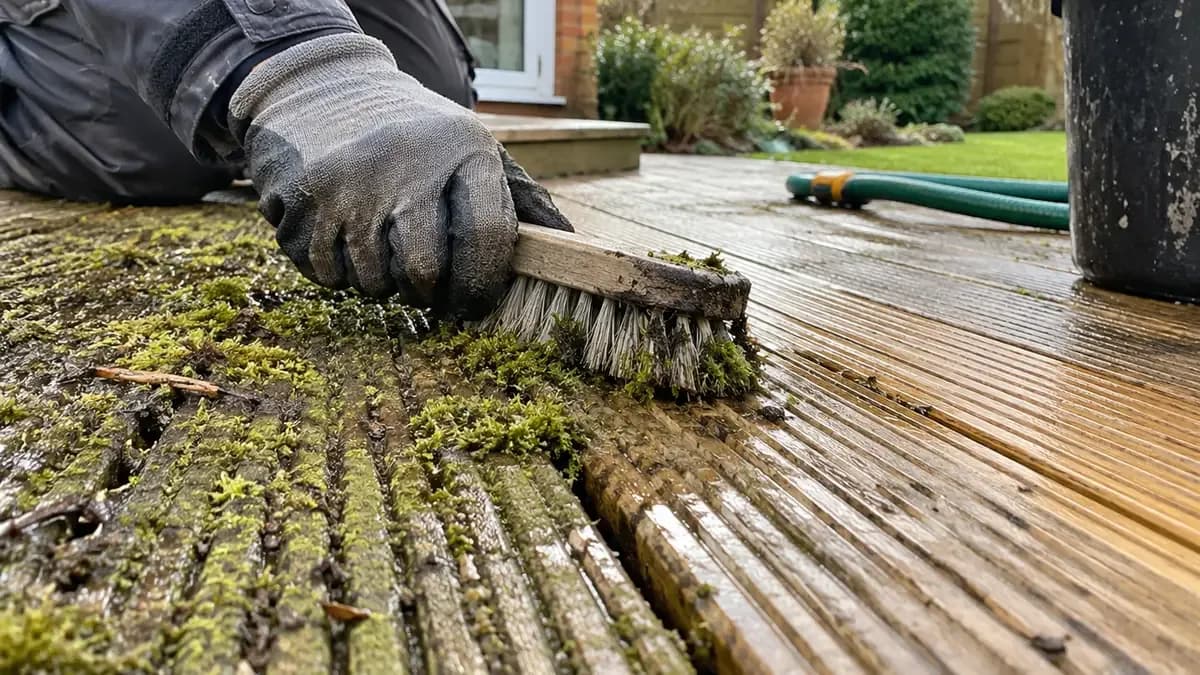
To learn how to clean moss off a deck, remove growth, apply a deck-safe cleaner, scrub gently and rinse thoroughly. Choose the method after checking the deck material and condition, because excessive pressure can damage weathered timber.
Moss makes decking slippery and holds moisture against the surface. Safe cleaning removes the growth without cutting grooves, raising fibres or stripping a sound finish.
A good result does not always mean uniform colour. Weathering, ultraviolet exposure and old coatings can remain visible after biological growth disappears.
What Is the Safest Way to Clean Moss Off a Deck?
The safest starting method uses a stiff nylon brush, a compatible decking cleaner and controlled rinsing. Manual cleaning gives you direct control over pressure. Manual cleaning also suits older softwood and boards with worn coatings.
Use a pressure washer only after a hidden-area test. Select a wide fan spray and the lowest effective pressure. Keep the lance moving with the grain. Never chase a brighter colour by moving the nozzle closer.
The correct sequence matters more than force. Dry sweeping removes loose material. A suitable treatment loosens attached growth. Brushing lifts residue. Thorough rinsing clears cleaner and debris.
Plan the work for calm, dry weather without frost. Strong sun can dry some products too quickly. Rain can dilute treatments before completion.
Quick-reference cleaning plan
| Task | Timing | Method | Difficulty |
|---|---|---|---|
| Inspect boards and fixings | 10-15 minutes | Probe suspect areas gently; mark loose boards | Easy |
| Remove loose growth | 15-30 minutes | Sweep and lift moss with a nylon brush | Easy |
| Treat attached moss | Label dwell time | Apply a deck-compatible cleaner evenly | Moderate |
| Scrub and rinse | 20-45 minutes | Brush with the grain; rinse with a hose | Moderate |
| Dry and reassess | 24-48 hours | Keep furniture off until fully dry | Easy |
Is the Green Growth Moss, Algae or Lichen?
Moss forms soft, raised clumps; algae forms a thin, slippery film; lichen forms attached, crust-like patches. Correct identification helps you choose a proportionate cleaning process.
How to Identify Moss on Deck Boards
To identify moss on deck boards, look for cushioned green tufts around grooves, edges and shaded joints. Moss has small stems and leaves. Mature growth often lifts in pieces when you use a plastic scraper.
Moss favours surfaces that stay damp. North-facing boards, covered corners and areas beneath planters often develop the heaviest growth.
Check steps and thresholds first because moss creates the greatest immediate risk on changes of level. Restrict access until cleaning and drying finish.
How to Distinguish Algae and Lichen
To distinguish algae and lichen, inspect the growth before wetting the deck. Algae usually looks green or black and feels slick. Lichen usually looks grey, white, yellow or black and grips the surface firmly.
Do not scrape firmly attached lichen from soft timber with metal tools. A metal edge can gouge the wood before releasing the growth.
The Royal Horticultural Society explains why these growths favour damp hard surfaces in its RHS hard-surface guidance. The source also identifies slip risk as the main reason for control on walked surfaces.
What Should You Check Before Cleaning a Mossy Deck?
Check the deck material, board strength, coating condition, fixings, drainage and nearby planting before cleaning. Cleaning cannot repair decayed timber or failed supports.
How to Check Timber Condition
To check timber condition, press a blunt screwdriver gently against discoloured areas. Sound timber resists light pressure. Soft, crumbling or deeply split wood needs repair assessment before washing.
Walk the deck slowly and note movement, lifted screws and unstable steps. Tighten suitable fixings before cleaning. Replace corroded or failed components with compatible parts.
Inspect the underside where access remains safe. Dark staining alone does not prove decay. Persistent softness, fungal fruiting bodies and structural movement need investigation.
How to Protect the Surrounding Area
To protect the surrounding area, move furniture, pots and loose objects at least 5 feet (1.5m) away. Cover sensitive plants where the cleaner label requires protection.
Block access for children and pets during treatment. Control runoff near ponds, drains and borders. Follow every product label for dilution, dwell time and disposal.
How to Choose the Right Cleaning Method
To choose the right cleaning method, match the process to the surface, condition and contamination. Sound treated timber tolerates more intervention than soft, weathered boards.
Composite decking needs manufacturer-specific care. Painted or stained timber needs a patch test because some cleaners alter coatings. Chiltern Surface Co follows a surface-specific cleaning approach for the same reason.
How to Clean Moss Off a Deck by Hand
To clean moss off a deck by hand, sweep, apply a compatible cleaner, scrub with the grain and rinse completely. Manual cleaning offers the safest control for delicate timber.
How to Clear Loose Moss and Debris
To clear loose moss and debris, work on a dry surface where safe. Sweep leaves, soil and detached growth with a stiff nylon broom. Avoid wire bristles because wire scratches timber and can leave fragments behind.
Use a plastic scraper for thick clumps. Hold the scraper nearly flat and follow the board direction. Clear board gaps with a narrow plastic tool without forcing debris beneath the deck.
Start at the house and work towards the open edge. A consistent direction prevents you from walking across loosened, slippery material.
Collect thick moss rather than washing every clump into the garden. Bagging removed growth keeps drains clear and limits debris around neighbouring surfaces.
How to Apply a Deck-Safe Cleaner
To apply a deck-safe cleaner, read the label and confirm compatibility with timber or composite decking. Test a patch measuring about 6 inches (15cm) square in a hidden area.
Apply the stated dilution evenly with a watering can, pump sprayer or brush. Named application tools include polypropylene sprayers, nylon deck brushes and low-pressure garden sprayers.
Keep the test patch wet only for the labelled dwell time. Do not let a rinse-required cleaner dry on the boards. Recheck colour, coating and surface texture after rinsing.
Oxygen-based cleaners suit many uncoated timber-cleaning tasks. Proprietary biocidal products target biological growth. Product formulation varies, so the label must decide suitability and use.
Do not combine separate products to strengthen the treatment. Chemical mixtures can create harmful reactions, damage coatings and produce unpredictable colour changes.
How to Scrub and Rinse Deck Boards
To scrub and rinse deck boards, use moderate pressure and work along the grain. Scrub 3 or 4 boards at a time. Keep each section evenly wet during the stated contact period.
Rinse with clean water from a garden hose. Direct water towards the deck edge and away from doors. Clear loosened residue from grooves without flooding the substructure.
Allow 24-48 hours of drying in suitable weather before replacing furniture. Longer drying times apply in shade, low temperatures and humid conditions.
Reinspect the dry boards from 2 viewing angles. Remaining green tufts need targeted retreatment. Grey weathering or old stains need different restoration work.
How to Clean Moss Off a Deck With a Pressure Washer
To clean moss off a deck with a pressure washer, test a wide fan spray at low pressure before cleaning. Use pressure only when the board condition supports the method.
How to Test the Spray Safely
To test the spray safely, select a 25-40 degree fan nozzle. Start at least 12 inches (30cm) from a hidden board. Increase cleaning effect through treatment and dwell time before reducing distance.
Aim the lance along the grain rather than across the board. Keep both hands on the lance. Maintain stable footing outside the wet working area.
How to Wash Along the Wood Grain
To wash along the wood grain, make overlapping passes from one end of each board to the other. Keep the nozzle distance and travel speed consistent.
Stop at board ends without holding the jet over one point. Uneven pauses create pale lines and furred patches. Rinse loosened moss instead of repeatedly blasting the timber.
How to Recognise Pressure Damage
To recognise pressure damage, look for raised fibres, fresh grooves, splintering and uneven pale bands. Stop immediately after any surface change. Let the area dry before reassessing.
Pressure damage often becomes clearer after drying. Sanding and refinishing can correct minor fibre raising. Deep cuts or softened boards need a timber specialist.
Do not increase pressure because one dark patch remains. The mark can represent tannin staining, an old coating or embedded discolouration rather than live moss.
How Does Moss Removal Differ on Composite Decking?
Composite boards usually need warm water, mild detergent and a soft nylon brush, subject to manufacturer guidance. Composite surfaces do not behave like timber fibres.
Check the brand and product range before selecting a cleaner. Capped composite, uncapped composite and polyvinyl chloride (PVC) boards carry different maintenance instructions.
Clean grooves with the board direction. Remove trapped leaves from gaps using a plastic tool. Avoid abrasive pads, solvent cleaners and unapproved moss killers.
A pressure washer can mark some composite finishes or affect warranty terms. Follow the stated nozzle, pressure and distance limits from the board manufacturer.
Moss between composite boards often signals trapped organic material or restricted drainage. Clearing the gaps treats the supporting condition, not only the visible growth.
Rinse each manageable area before starting the next section. Dried detergent can leave a visible film on dark brown, charcoal or black composite boards.
Which Moss-Cleaning Mistakes Damage Decking?
The most damaging mistakes involve excessive pressure, harsh chemicals, metal tools, poor rinsing and rushed aftercare. Each mistake attacks the surface differently.
High pressure cuts soft springwood faster than dense grain. The result looks striped and feels rough after drying. Repeated aggressive cleaning makes subsequent maintenance harder.
Chlorine bleach can discolour timber, affect finishes and harm nearby planting. Never mix cleaning chemicals. Mixing chlorine bleach with acids or ammonia releases dangerous gases.
Undiluted vinegar also creates risks for coatings, metal fixings and surrounding materials. A household ingredient does not become surface-safe without compatibility guidance.
Wire brushes scratch boards and leave rust-prone fragments. Rotary surface cleaners designed for paving can apply unsuitable force to decking. Boiling water creates burn risks and stresses some finishes.
Poor rinsing leaves residue that attracts soil or affects later coatings. Early oiling traps moisture. Wait until the timber reaches the dryness required by the finish manufacturer.
How Do You Stop Moss Returning?
Reduce persistent dampness by improving airflow, drainage, light exposure and routine debris removal. No responsible treatment promises permanent prevention outdoors.
How to Improve Drying Around the Deck
To improve drying around the deck, prune manageable overgrowth and move pots onto feet. Keep air paths open beside walls, fences and dense planting.
Check whether water pools after rainfall. Clear blocked gaps and outlets. Ask a decking contractor to assess incorrect falls, trapped ground moisture or inadequate ventilation beneath boards.
How to Maintain Deck Boards Through the Year
To maintain deck boards, sweep weekly during heavy leaf fall and inspect shaded zones monthly during wet periods. Remove soil, leaves and bird feed promptly.
Wash light surface film before thick moss develops. Early intervention needs less pressure and shorter working time. Keep furniture feet clean and rotate movable pots periodically.
How to Protect Timber After Cleaning
To protect timber after cleaning, let the boards dry fully and follow the coating manufacturer's preparation standard. Choose compatible decking oil, stain or sealer after checking existing finishes.
Protection reduces water uptake where the product and timber remain compatible. Protection does not correct rot, poor drainage or structural defects.
Apply finish only within the temperature and moisture limits on the label. Coat exposed board ends where the product instructions include end-grain treatment.
What Result Should You Expect After Moss Removal?
You should expect a safer, cleaner surface with the live growth removed where the deck condition allows. Existing wear, fading and coating failure can remain visible.
Wet timber looks darker than dry timber, so judge colour only after full drying. Allow at least 24-48 hours under suitable conditions.
A second targeted treatment often makes more sense than aggressive first-pass cleaning. Targeted work protects sound fibres and reduces uneven striping.
Persistent black, grey or brown marks need correct identification. Tannin, rust, grease and decay require different responses from moss removal.
When Does a Mossy Deck Need Professional Attention?
Professional assessment makes sense when growth is extensive, boards feel weak, access feels unsafe or earlier cleaning caused damage. DIY cleaning remains reasonable for sound, accessible decking with light growth.
A professional should identify the material, inspect the condition and test the least aggressive effective method. The assessment should set realistic expectations before treatment.
Ask how the contractor will protect plants, walls, glazing and drainage routes. Ask whether the process targets biological growth or only removes visible residue.
Controlled low-pressure treatment can suit contamination that pressure alone cannot address. Chiltern Surface Co's exterior soft wash treatment explains why treatment strength and pressure must follow the surface.
Chiltern EverGuard™ Treatment can help reduce future biological regrowth on suitable surfaces. Typical protection lasts 12-24 months, depending on the surface, weather, environment and maintenance. A site assessment must confirm suitability for any deck material.
A Cleaner Deck Starts With the Right Assessment
Cleaning deck moss safely means choosing enough cleaning action without damaging the boards. Start with inspection, manual removal and a compatible treatment. Add controlled pressure only when sound material supports the method. For surface-specific advice, book a site assessment. Chiltern Surface Co will explain the suitable approach and provide a Free Quotation without pressure.
Frequently asked questions
Can You Use Bleach to Remove Moss From Decking?
No. Avoid chlorine bleach unless a decking manufacturer expressly approves a labelled formulation. Chlorine bleach can affect timber colour, coatings, plants and metal fixings.
Can You Pressure Wash Moss Off Wooden Decking?
Yes, on sound timber with controlled settings. Use a 25-40 degree fan, low pressure and at least 12 inches (30cm) starting distance.
Does Washing-Up Liquid Kill Deck Moss?
No. Washing-up liquid removes light dirt and surface film, but detergent does not provide reliable control of established moss. Use a labelled deck-compatible treatment.
How Often Should You Clean Moss Off a Deck?
Clean visible growth promptly and inspect vulnerable areas every month during damp seasons. Exposure, shade, drainage and nearby trees determine the practical schedule.
Should You Oil Decking After Moss Removal?
Yes, when bare timber needs protection and the selected finish suits the existing surface. Let the deck dry and follow the finish manufacturer's moisture requirements.