
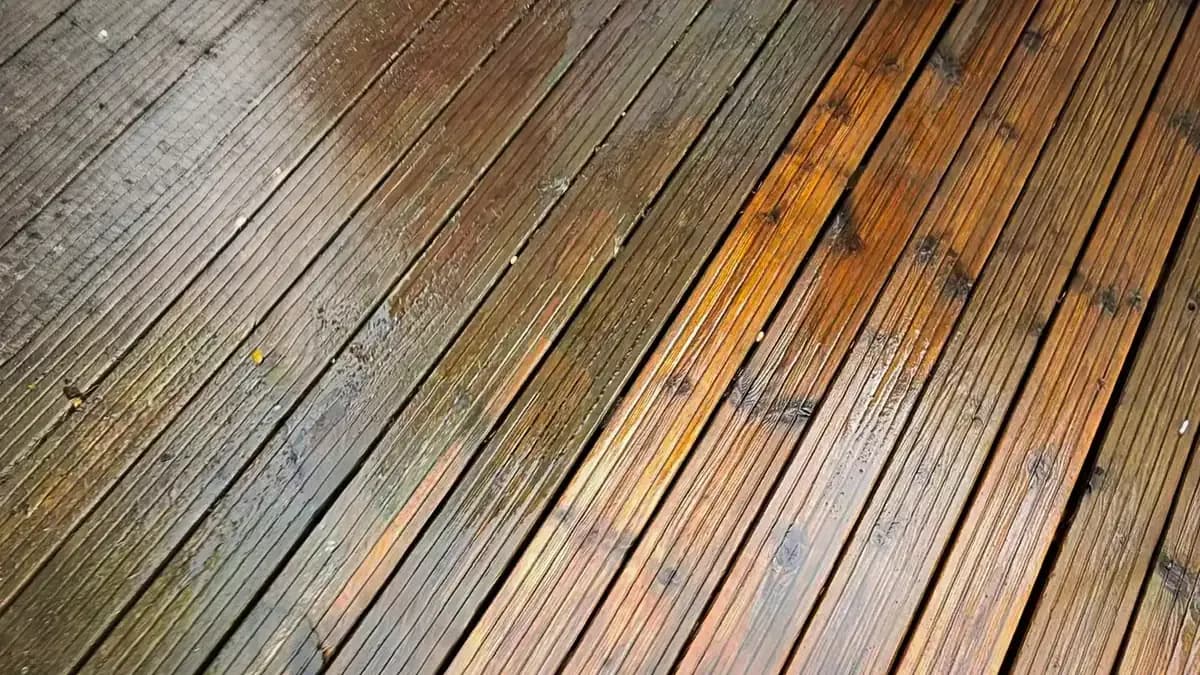
The safest way to clean a wood deck is to remove loose debris, check the condition of the boards, apply a cleaner suitable for exterior timber, scrub along the grain, and rinse thoroughly with clean water. For most decks, that is a better starting point than reaching immediately for the highest pressure setting on a washer.
Wood is softer and more absorbent than paving. Too much pressure can lift the grain, leave the surface rough or 'furred', create visible stop marks, and strip an existing finish unevenly. The cleaning method should therefore match the timber, its age, its coating and the type of contamination present.
A deck that is simply dirty needs a different process from one covered in slippery algae, one that has weathered grey, or one that needs an old coating stripped before refinishing.
The Best General Method for Cleaning Timber Decking
For routine cleaning, use this sequence:
- Remove furniture, pots and loose items.
- Sweep away leaves, soil and loose debris.
- Inspect the boards, fixings and edges for damage or rot.
- Pre-wet nearby plants and protect surfaces that should not receive cleaner.
- Apply a wood-compatible decking cleaner according to its instructions.
- Scrub along the grain with a suitable decking brush.
- Rinse thoroughly with a garden hose or carefully controlled low pressure where appropriate.
- Allow the timber to dry fully before deciding whether it needs oil, stain or another finish.
This approach gives the cleaner time to loosen contamination so the timber does not have to be cleaned by water force alone.
Step 1: Clear and Sweep the Deck
Take furniture, planters, barbecues and loose objects off the decking so the whole area can be cleaned evenly.
Sweep thoroughly, including the gaps between boards and the edges beside walls or planting. Leaves and soil hold moisture against the timber, and decomposing organic material can encourage green growth.
If the deck is already slippery, take care while moving items. Wet algae can make timber much less secure underfoot than it appears when dry.
Step 2: Inspect the Timber Before You Add Water
Cleaning is not a repair, so check the deck before starting.
Look for:
- Soft or crumbling areas.
- Boards that flex unusually under light foot pressure.
- Raised screws, nails or fixings.
- Splintering or heavily weathered fibres.
- Loose boards or damaged edges.
- Peeling paint, stain or oil that may need stripping rather than ordinary cleaning.
If the timber is structurally weak, heavily rotten or already breaking down, stronger cleaning is unlikely to help. Those areas should be repaired or replaced before cosmetic restoration is treated as the priority.
Step 3: Choose the Right Decking Cleaner
Use a cleaner intended for exterior timber and compatible with the finish already on the deck.
A routine decking cleaner is suitable for dirt, light algae and general weathering. A stripper is a different product intended to remove old coatings before refinishing, while a wood reviver or brightener is used when weathered bare timber needs colour correction after cleaning.
Do not substitute a strong household chemical simply because it removes green growth. The product needs to suit the timber, the existing coating and the next stage of maintenance.
What about bleach?
Some specialist wood-cleaning systems use carefully controlled oxidising treatments for biological growth, but that does not make household bleach a universal decking cleaner.
Incorrect strength, poor rinsing or uncontrolled runoff can affect the timber, nearby planting and future coatings. For DIY maintenance, a proprietary product approved for the deck is the more predictable choice.
What about vinegar or washing-up liquid?
General household products are not automatically suitable for exterior wood. They may be ineffective against established algae, alter the timber or leave residue that affects a later oil or stain.
Use products designed for timber and follow the label rather than mixing a stronger homemade solution.
Step 4: Scrub With the Grain
Work the cleaner into the boards with a decking brush, following the direction of the grain.
Scrubbing helps loosen grime and biological film without cutting into the fibres. On grooved or heavily textured boards, spend extra time where moisture and debris collect.
Do not let the cleaner dry on the surface unless the product instructions specifically say otherwise. Work in manageable sections so dwell time and rinsing remain consistent.
Step 5: Rinse Thoroughly
Once the cleaner has done its work, rinse it away thoroughly.
A garden hose is the safest general option. If a pressure washer is used, it should only be because the timber, condition and cleaner instructions allow it, and it should be used with a wide fan, reduced pressure and continuous movement.
The objective is to carry loosened contamination off the deck, not to carve a clean surface out of the wood.
Can You Pressure Wash a Wood Deck?
You can pressure wash some timber decks carefully, but it is not the best default method for every deck.
Manufacturer guidance differs because timber species, finishes and products differ. Some cleaning systems permit a controlled pressure rinse, while others specifically recommend manual cleaning because pressure can damage wood fibres or strip finishes.
For an older softwood deck, weathered boards or timber with an uncertain coating, the safer assumption is to start without pressure and increase cleaning intensity only if the surface can tolerate it.
If pressure washing is appropriate
- Test a hidden area first.
- Use the widest suitable fan spray.
- Start farther away from the timber and move closer only if necessary.
- Keep the lance moving continuously.
- Work with the grain and along complete board lengths where practical.
- Avoid stopping the jet in one spot.
- Do not chase stubborn marks by moving the nozzle very close to the board.
Chiltern Surface Co treats pressure washing as one tool rather than the service itself. The same principle is explained in Pressure Washing Is a Tool, Not a Service: the surface and its condition decide the method and pressure.
What Does 'Furring' a Deck Mean?
Furring happens when cleaning lifts or tears the softer wood fibres, leaving the board rough or fluffy rather than smooth.
It is most likely when soft or weathered timber is cleaned too aggressively, particularly with a narrow jet or repeated pressure over the same area.
Once the fibres are raised badly, the deck may need sanding before it can be refinished properly. That is why a dramatic pressure-washed colour change is not automatically evidence of a good clean.
How to Clean a Slippery Wood Deck
A slippery deck is usually affected by moisture, algae, moss or a film of decomposing organic material.
Sweep first, then use a timber-safe cleaner intended to deal with biological growth. Scrub the boards thoroughly and rinse away the loosened material.
Also look at why the deck remains damp. Heavy shade, poor airflow, leaves sitting between boards and planters that stay in one position can all encourage regrowth.
Cleaning improves the surface, but removing the conditions that keep it wet can make maintenance easier in future.
How to Clean Old or Weathered Decking
Old timber needs more caution, not more force.
Grey colour does not always mean dirt. UV exposure naturally changes the surface of wood over time, so a deck can be clean and still look weathered.
If the aim is simply to remove grime and algae, use a normal timber cleaner. If the aim is to bring grey bare wood closer to its warmer natural colour before oiling, a dedicated wood reviver or brightener may be more appropriate.
If an old stain or coating is peeling, ordinary cleaning may not give an even base. The coating may need stripping or sanding before a new finish is applied.
Cleaning Untreated Wood Decking
Untreated timber absorbs water readily, so gentle cleaning and thorough drying matter.
Use a wood-compatible cleaner, work with the grain and avoid saturating the boards more than necessary. Once the deck is clean, allow it to dry completely before deciding whether to apply a protective oil or stain.
If the deck has been left untreated for years, check its physical condition as well as its appearance. Cleaning can reveal sound timber underneath dirt, but it can also expose boards that are already badly weathered.
Softwood and Hardwood Need Different Judgement
| Deck condition / type | Safer starting method | Main caution |
|---|---|---|
| Newer softwood | Timber cleaner, brush and hose | Soft fibres can mark under excessive pressure |
| Older softwood | Gentle cleaner and manual scrub first | High risk of furring, splinters and stop marks |
| Dense hardwood | Cleaner and brush; controlled rinse | Existing oil or finish may still be stripped |
| Weathered bare timber | Cleaner, then wood reviver if needed | Greying may be weathering, not dirt |
| Painted / stained deck | Clean according to coating instructions | Aggressive cleaning can remove the finish unevenly |
How Long Should a Wood Deck Dry After Cleaning?
Allow the deck to dry thoroughly before applying oil, stain or another coating.
Drying time depends on weather, timber thickness, shade and how wet the boards became during cleaning. In suitable conditions, many coating systems require at least around 48 hours of drying, while some products or weather conditions need longer.
Follow the finish manufacturer's requirements rather than coating damp wood. Applying oil or stain too early can affect penetration, adhesion and the final appearance.
Should You Oil or Stain the Deck After Cleaning?
Not every maintenance clean needs a new finish.
If the existing oil or stain remains sound, routine cleaning may be enough. If the timber is bare, dry, faded or the old finish is failing, cleaning can be the preparation stage before oiling or staining.
The correct finish depends on the timber and the appearance you want. Do not apply a new coating until cleaning residue has been removed and the deck has dried properly.
What About Composite Decking?
Composite decking is not cleaned exactly like natural timber.
It can usually be washed with a cleaner approved by the board manufacturer and a suitable brush, but the permitted pressure, products and stain treatments vary by brand.
If you are unsure whether the deck is natural wood or composite, identify it before using a stripper, brightener or aggressive cleaning method.
Common Wood Deck Cleaning Mistakes
Starting with maximum pressure
A powerful washer can produce a fast colour change while leaving soft timber rough, striped or damaged.
Holding the lance still over a dark mark
Stop marks can remain visible after the timber dries and may show even more clearly after staining.
Cleaning rotten timber as though it is only dirty
Soft, failing boards need repair or replacement. Cleaning cannot restore structural strength.
Using a cleaner without checking the existing finish
A product intended to strip coatings is very different from one designed for routine maintenance.
Skipping the rinse
Cleaner residue left in the timber can affect appearance and may interfere with a later coating.
Oiling or staining before the deck is dry
A clean deck can still hold significant moisture. Let the timber dry to the level required by the coating system.
When Professional Deck Cleaning Makes Sense
DIY cleaning is reasonable when the deck is sound, easy to access and affected by ordinary dirt or light biological growth.
Professional assessment is more useful when:
- The timber is old, soft or heavily weathered.
- The deck is extremely slippery or covered in established algae and moss.
- Previous pressure washing has left the surface rough or striped.
- An old coating needs to be stripped before refinishing.
- There are mixed timber, composite or surrounding surfaces that need different methods.
- The deck is large enough that an even finish is difficult to achieve by hand.
- You are unsure whether the boards are dirty, weathered or physically deteriorated.
Chiltern Surface Co includes decking cleaning and treatment within its surface-specific exterior cleaning services. Timber and composite decks are assessed individually so the pressure, products and treatment suit the material and condition.
How Chiltern Surface Co Approaches Decking
Decking is treated as timber or composite first and as a cleaning job second.
The surface, age, coating, biological growth and existing damage are checked before the method is selected. The goal is to remove slippery growth and restore appearance without unnecessarily opening the wood fibres or stripping a finish that is still serviceable.
That follows Chiltern Surface Co's assessment-first approach: use the lowest effective pressure, match the process to the material, and explain what cleaning can realistically achieve before work begins.
Frequently asked questions
What is the best way to clean a wood deck?
Sweep the deck, inspect the boards, apply a timber-compatible decking cleaner, scrub along the grain and rinse thoroughly. Start with a hose or manual method rather than assuming a pressure washer is necessary.
Can I pressure wash a wood deck?
Sometimes, but only where the timber and existing finish can tolerate it. Use low pressure, a wide fan spray, continuous movement and a test area first. Older or softwood decking is more easily damaged.
How do I clean slippery decking?
Remove leaves and loose debris, then use a decking cleaner suited to algae and organic growth. Scrub thoroughly and rinse. Also reduce sources of persistent damp such as trapped leaves and heavy shade where practical.
Why has my deck gone furry after pressure washing?
The water pressure has lifted or torn the softer wood fibres. Once badly furred, the surface may need sanding before oil or stain can be applied evenly.
Can I use bleach to clean timber decking?
Do not assume household bleach is suitable. Some professional wood-cleaning systems use controlled oxidising treatments, but DIY cleaning is more predictable with a proprietary product approved for the timber and existing finish.
How long should decking dry before oiling?
Allow it to dry fully and follow the oil or stain manufacturer's requirement. In suitable weather, many systems need at least around 48 hours, but shaded or heavily wetted timber may take longer.
Should I sand a deck after cleaning?
Not routinely. Sanding is useful where pressure washing has raised fibres, the surface is splintered, or an old coating needs preparation. A sound deck that has been cleaned gently may not need sanding.
Does old grey decking need cleaning or replacing?
Grey colour can be normal weathering rather than decay. Clean and inspect the boards first. Timber that remains firm may be suitable for restoration, while soft, rotten or structurally weak boards need repair or replacement. If your decking has become slippery, heavily weathered or difficult to clean without marking the timber, arrange a Free Site Assessment with Chiltern Surface Co. We can inspect the boards, existing finish and level of biological growth, explain the safest practical cleaning method and provide a clear Free Quotation before any work begins. We serve homes across Buckinghamshire, Berkshire and Oxfordshire, with no pressure to book work the deck does not need.