
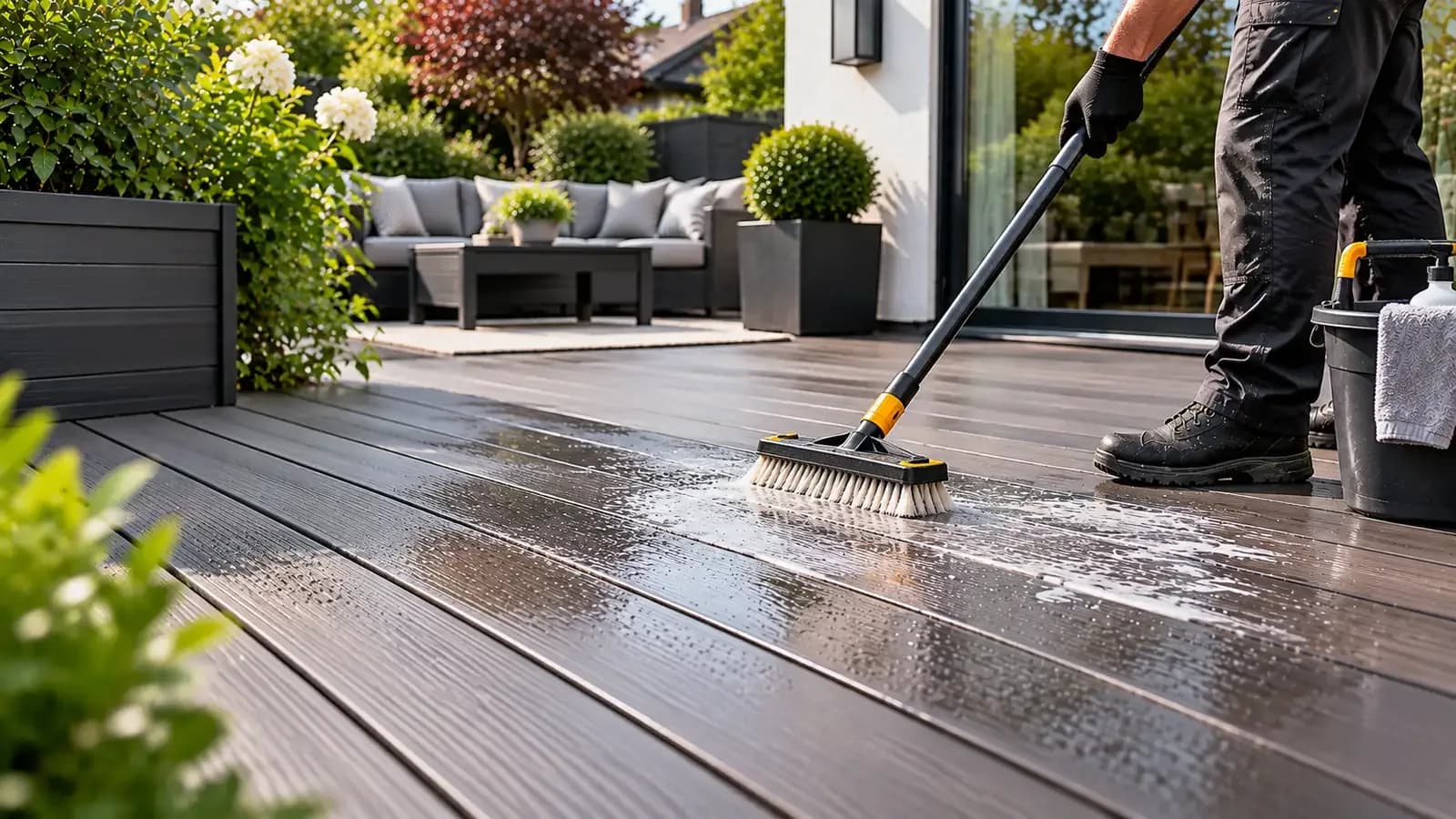
The best way to clean a composite deck is to remove loose debris, use a cleaner compatible with the specific decking product, scrub with the correct non-abrasive brush, and rinse thoroughly before the cleaner dries. For most routine dirt and green growth, that is safer than treating composite decking like timber or paving.
Composite decking is designed to be lower maintenance than natural wood, but it still needs regular maintenance. Dirt settles into the embossed grain, food and grease can leave marks, shaded boards can develop algae, and debris around pots or furniture can hold moisture against the surface.
The important point is that composite decking varies by brand and generation. Some capped boards tolerate carefully controlled pressure washing, while other products limit pressure washing to rinsing only or advise against it altogether. The decking manufacturer’s care instructions should therefore take priority over a generic cleaning recipe.
The Best General Method for Cleaning Composite Decking
For routine maintenance, use this sequence:
- Remove furniture, planters and loose items.
- Sweep or vacuum leaves, grit and surface debris.
- Identify the decking brand or product where possible.
- Choose a cleaner approved for that composite or PVC surface.
- Work in small sections so the cleaner stays wet.
- Scrub with the recommended soft or medium nylon brush.
- Rinse each section thoroughly before moving on.
- Let the deck dry and inspect for remaining stains or missed areas.
The most common avoidable problem is letting dirty cleaning solution dry back onto the boards. That can leave a pale or cloudy film which then needs another clean to remove.
Step 1: Identify What Type of Composite Decking You Have
“Composite decking” covers several different materials. Older wood-plastic composite boards, modern capped composites and PVC decking can look similar from a distance but may have different care instructions.
If you know the brand, check the current cleaning guidance before choosing a product or pressure setting. If you do not know the brand, start with the gentlest practical method: mild board-compatible cleaner, a non-abrasive brush and a garden-hose rinse.
Avoid assuming that a method used successfully on one composite deck will automatically be safe on another. Surface coatings, textures and warranties differ.
Step 2: Sweep and Clear the Surface
Remove leaves, grit and soil before wet cleaning starts. Small particles trapped under a brush can act like an abrasive across the surface, particularly on darker or smoother boards where marks are more visible.
Pay attention around planters, furniture legs, door thresholds and the edges of the deck. These are common places for damp debris and green growth to collect.
If the deck is slippery, move carefully while clearing it. Algae on composite decking can make the surface unexpectedly slick when wet.
Step 3: Choose a Cleaner That Suits Composite Decking
For general dirt and grime, many composite decking systems can be cleaned with warm soapy water or a proprietary composite-deck cleaner. The exact product matters less than compatibility with the board.
Avoid reaching immediately for strong household bleach, acidic cleaners, solvent-based products or stain removers unless the decking manufacturer specifically allows them. A chemical that removes a mark can still dull, lighten or discolour the surrounding surface.
General dirt and traffic marks
Use a mild composite-safe cleaner and enough water to keep the section wet while scrubbing. Dirt often sits in the embossed grain, so brushing is more useful than simply spraying the surface.
Algae and green growth
Green growth is common where composite decking remains damp or shaded. Use a cleaner approved for biological staining and follow its dwell time rather than trying to remove the colour with extra pressure.
Food, grease and oily marks
Deal with spills promptly. Blot or lift excess material first, then use the decking manufacturer’s recommended stain-cleaning method. Scrubbing a greasy mark with the wrong solvent can spread the stain or alter the finish.
Step 4: Use the Right Brush
A brush helps lift dirt from the embossed texture, but the bristle type should suit the board. Modern capped composite products often favour a soft or medium nylon brush, while some PVC products allow a firmer natural-fibre brush.
Do not use a wire brush, abrasive pad or stiff improvised scrubber. Composite surfaces cannot be sanded back in the same way as timber if you damage the visible finish.
Brush in the direction recommended for the product and keep the pressure consistent so one patch is not polished or dulled more than another.
Step 5: Work in Small, Wet Sections
Do not cover the whole deck in cleaner and then start scrubbing from one end. By the time you reach the last boards, the first section may already have dried.
Instead, work in manageable areas. Apply the cleaner, scrub the texture, rinse thoroughly, then move to the next section.
Avoid cleaning in strong direct sunlight where possible. Warm boards can dry cleaning solution very quickly, making residue and streaking more likely.
Step 6: Rinse Thoroughly
Rinsing is not an afterthought. Dirty water and cleaner left on composite decking can dry into a visible film, especially in textured grain patterns.
A garden hose is enough for many products. Rinse along the board length where practical and keep flushing until the water runs clear.
If the manufacturer allows a pressure washer for rinsing, use the specified fan tip, pressure limit and working distance. Do not improvise a higher pressure because the deck looks heavily soiled.
Can You Pressure Wash Composite Decking?
Sometimes, but there is no single pressure-washing rule for all composite decks.
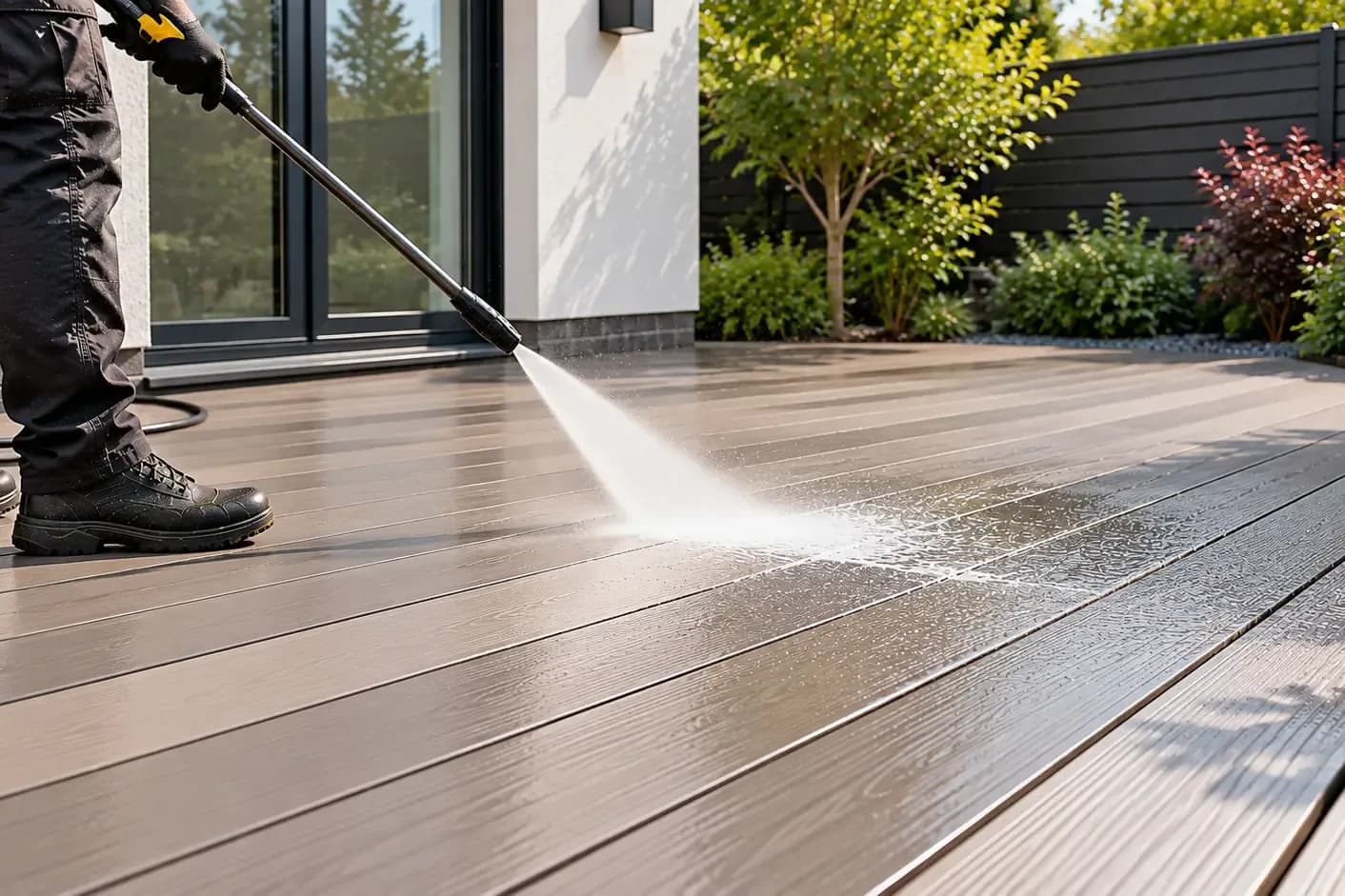
Some current capped composite products allow gentle pressure washing with a fan tip and a minimum working distance. Other composite systems recommend that a power washer is used only for rinsing, at a lower maximum pressure. Older products may advise against pressure washing completely.
That is why the model number or brand matters. The safest general advice is to check the product instructions first and treat pressure as optional rather than essential.
If the product allows pressure washing
- Use a wide fan tip, never a concentrated jet.
- Start at the lowest practical pressure.
- Keep the nozzle at or beyond the manufacturer’s minimum distance.
- Move continuously and evenly.
- Work along the board pattern rather than randomly across it.
- Use pressure for controlled rinsing, not to grind out a stubborn mark.
Chiltern Surface Co follows the same surface-first principle across exterior cleaning: the lowest effective pressure for the material in front of us, rather than treating maximum pressure as the starting point.
Why Composite Decking Should Not Be Cleaned Like Timber
Natural wood can sometimes be sanded, brightened, oiled or stained after cleaning. Composite decking is different.
The visible surface may include a manufactured cap or embossed finish that cannot simply be sanded away and refinished if it is marked. Aggressive abrasion can permanently change the appearance of the board.
Composite decking also does not normally need timber oil or stain. Applying a wood finish to a capped composite surface can create adhesion, appearance or maintenance problems rather than improving it.
How to Clean Slippery Composite Decking
If composite decking has become slippery, the usual problem is biological growth or a film of dirt sitting on the textured surface.
Sweep first, then use a compatible cleaner for algae or organic growth. Scrub the texture thoroughly and rinse away the loosened material before it dries.
Then look at why the surface stays damp:
- Leaves may be collecting around furniture or pots.
- Dense planting may be limiting airflow.
- Shade may keep one part of the deck wet for longer.
- Blocked gaps or drainage around the deck may be holding water.
Cleaning removes the growth that is there now. Reducing trapped debris and persistent moisture can make the next clean easier.
How to Remove Mould or Dark Organic Staining
Dark organic staining should be treated with a product approved for the decking system rather than automatically with stronger pressure.
Composite boards can retain dirt and biological material within the embossed grain even when the main surface has been rinsed. A compatible cleaner plus thorough brushing usually gives a more even result than trying to erase individual marks with a concentrated jet.
If the staining returns quickly in one area, check for constant moisture, planters, poor airflow or organic debris around the boards.
How to Remove Grease, Food and Barbecue Marks
Composite decks are often used around dining areas and barbecues, so oily food marks are common.
Act quickly. Remove excess material without spreading it, then use the cleaner recommended for the specific deck. The longer an oily mark remains, the more difficult it can become to lift evenly.
Avoid putting rubber-backed mats or products on a composite deck for long periods unless the decking manufacturer permits them. Some materials can react with or discolour certain composite surfaces.
What About Rust, Cement or Paint Marks?
Specialist marks need specialist treatment. Rust, cement dust, paint, adhesive and construction residue should not be approached as ordinary dirt.
Do not scrape them with metal tools or experiment with strong solvents. Identify the decking product and use the stain-removal method approved for that surface. If the contamination is severe, test a hidden area before treating the whole mark.
Should You Use Bleach on Composite Decking?
Not as a general rule.
Some composite decking care guides permit specific diluted treatments for certain stains, while others warn that bleach or acidic products can lighten or alter the surface.
Because different composites react differently, a manufacturer-compatible cleaner is the safer default. Stronger chemistry should be used only where the board instructions specifically allow it and after a small test area has been checked.
Can You Sand Composite Decking?
Usually no. Sanding can permanently change the manufactured texture or cap of composite boards and may affect the appearance or warranty.
If a board has been scratched, dulled or damaged by cleaning, sanding is not the equivalent of refinishing a timber deck. The correct repair depends on the product and may require advice from the supplier or installer.
Composite Decking vs Timber Decking: Cleaning Differences
| Cleaning point | Composite decking | Timber decking |
|---|---|---|
| Routine cleaner | Product-compatible cleaner or mild soap-and-water method | Timber-compatible decking cleaner |
| Brush | Non-abrasive brush suited to the board finish | Decking brush suited to the wood grain |
| Pressure washing | Only where the product allows it; limits vary | Conditional; soft or weathered wood can fur |
| Sanding | Generally not recommended | May be part of refinishing |
| Oil / stain | Usually not required for capped composites | Often used on bare or weathered timber |
| Main risk | Dulling, scratching or altering manufactured finish | Raising fibres, furring or stripping finish |
How Often Should Composite Decking Be Cleaned?
There is no need to clean a composite deck on an arbitrary monthly schedule. Routine sweeping and prompt spill removal do much of the maintenance.
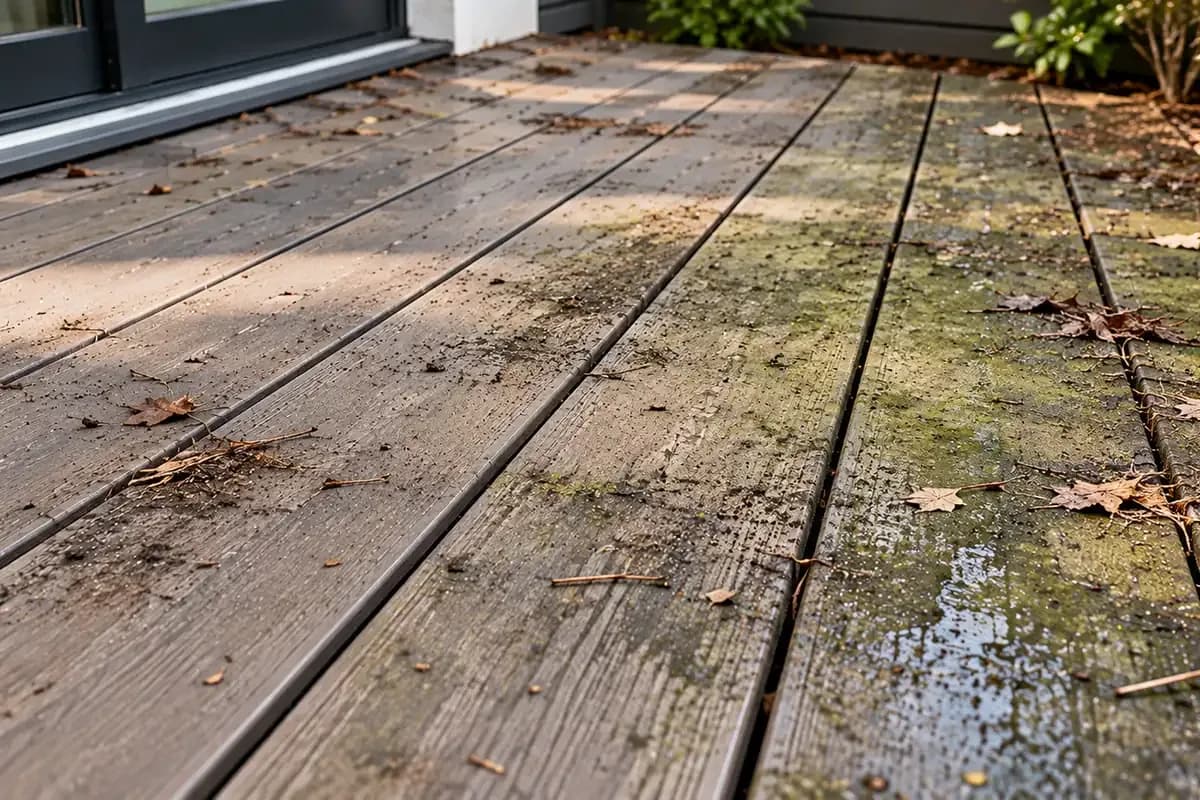
A deeper clean once or twice a year is reasonable for many decks, but shaded locations, trees, pets, heavy outdoor dining or persistent algae may justify more frequent attention.
The better rule is to clean before grime and organic growth become heavily established, while avoiding unnecessary repeated treatment when the surface is already clear.
Common Composite Deck Cleaning Mistakes
Treating every composite deck the same
Pressure limits, brush types and approved cleaners vary between products. Identify the decking before using an aggressive method.
Letting cleaner dry on the boards
Cleaner and dirty water can dry into a visible film. Work in small sections and rinse each one completely.
Using a concentrated pressure-washer nozzle
A narrow jet can mark or dull the manufactured surface. If pressure is permitted, use a fan tip and the specified working distance.
Using wire brushes or abrasive pads
Composite decking cannot simply be sanded back like timber if the surface texture is damaged.
Applying timber oil or stain to capped composite
Composite and timber finishes are different. Do not assume a wood oil or stain will improve a manufactured composite cap.
Ignoring the cause of repeated green growth
Heavy shade, trapped leaves and standing moisture can bring slippery growth back quickly even after a thorough clean.
When Professional Composite Deck Cleaning Makes Sense
DIY cleaning is usually reasonable when the deck is easy to access, the brand is known and the main problem is ordinary dirt or light green growth.
Professional assessment is more useful when:
- The decking brand or material is uncertain.
- The surface has widespread algae, mould or slippery growth.
- Previous pressure washing has left dull or uneven areas.
- There are grease, rust, paint or construction stains that need targeted treatment.
- The deck is large enough that keeping cleaner wet and rinsing evenly is difficult.
- The area includes mixed timber, composite, glass or painted surfaces that need different treatment.
Chiltern Surface Co includes professional cleaning and treatment for timber and composite decking. The decking is assessed first so the pressure, products and cleaning method suit the actual material and condition.
Frequently asked questions
What is the best way to clean a composite deck?
Sweep away loose debris, use a cleaner compatible with the decking product, scrub with the recommended non-abrasive brush, work in small sections and rinse thoroughly before the cleaner dries.
Can I pressure wash composite decking?
Some composite products allow carefully controlled pressure washing, while others limit a power washer to rinsing only or advise against it. Follow the care instructions for the exact decking product.
Can I use washing-up liquid on composite decking?
Some capped composite products allow mild soap and water for routine dirt. Check the board manufacturer’s guidance and rinse thoroughly so no film is left behind.
How do I remove algae from composite decking?
Use a composite-compatible cleaner for biological growth, scrub the board texture and rinse fully. Also remove trapped leaves and reduce persistent moisture where practical.
Can I use bleach on composite decking?
Do not assume bleach is suitable. Some products permit specific diluted treatments, while others can lighten or discolour. Use only what the decking care instructions allow.
Can I sand composite decking?
Generally no. Sanding can alter the manufactured texture or protective cap and may affect the appearance or warranty.
How often should I clean composite decking?
Routine sweeping should be ongoing. A deeper clean once or twice a year is reasonable for many decks, with more frequent attention where shade, leaves or algae create persistent build-up.
Does composite decking need oiling after cleaning?
Capped composite decking normally does not need timber oil or stain. If you have an older uncapped product, follow the care guidance for that specific board before applying any finish. If your composite decking has become slippery, heavily stained or difficult to clean without leaving marks, arrange a Free Site Assessment with Chiltern Surface Co. We can identify the decking type where possible, check the condition and contamination, and explain the safest practical cleaning method before providing a clear Free Quotation. We serve homes across Buckinghamshire, Berkshire and Oxfordshire, with no pressure to book work the deck does not need.