
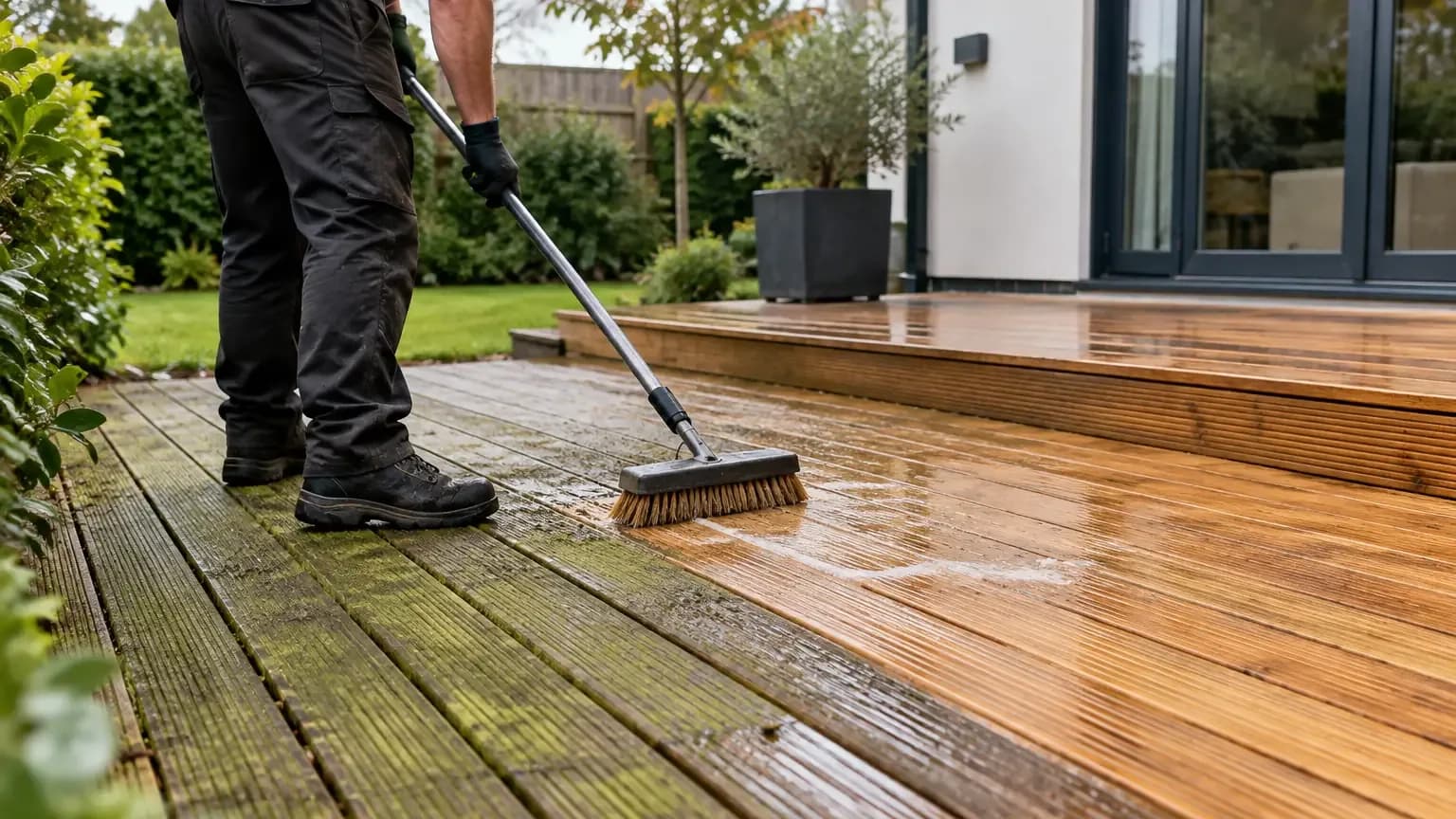
To learn how to clean algae off wood deck boards, sweep first and apply a timber-safe treatment. Scrub with the grain, rinse thoroughly, and let the wood dry before judging the result.
The safest method uses treatment and agitation before pressure.
Green algae creates a slick film on damp timber. Heavy water pressure removes colour quickly but can tear soft wood fibres.
A controlled clean removes biological growth while protecting the board surface. The deck condition decides the treatment, pressure, and aftercare.
What removes algae from wooden decking?
A timber-compatible algae treatment and a stiff non-metallic brush remove most green growth. The treatment loosens contamination before brushing lifts residue.
Use mild soap and warm water for light surface growth. Choose a labelled decking treatment for a thick or slippery film.
Read the product label before application. Each formula sets its own dilution, coverage, contact time, and rinsing instructions.
Never strengthen a formula beyond the labelled rate. Extra concentration can fade coatings, discolour boards, and harm nearby planting.
Avoid a wire brush because metal bristles scratch timber. Broken fragments can also rust and leave dark marks.
The correct process treats complete boards rather than isolated patches. Whole-board cleaning produces a more even dry finish.
How to identify algae on a wood deck
To identify algae on a wood deck, inspect the colour, texture, and location. Algae usually forms a thin green film.
Rain darkens the film and makes the surface slippery. Dry weather can make early growth difficult to see.
How to distinguish algae from moss mould and weathering
To distinguish green growth, touch only after wearing gloves. Moss forms soft clumps, while algae feels smooth or slimy when wet.
Mould and mildew produce grey, black, or green patches. Lichen forms firm, crusted spots that resist ordinary brushing.
Weathered timber looks silver-grey or uneven without forming a slippery layer. Old oil and stain can also create patchy colour.
Cleaning removes contamination but cannot reverse every colour change. Separate algae removal from timber brightening, stripping, sanding, and recoating.
How to find the moisture source
To find the moisture source, inspect shaded boards after rainfall. Check areas beneath pots, benches, storage boxes, and dense planting.
Clear leaves and soil from the board gaps. Trapped debris absorbs water and slows surface drying.
Watch for standing water on individual boards. Persistent puddles can indicate blocked gaps, uneven boards, or drainage problems.
Algae returns quickly when the deck remains damp. Cleaning works longer after you improve airflow and drainage.
What to check before cleaning a wood deck
Check the timber condition and existing finish before cleaning. Softwood, hardwood, paint, stain, and oil respond differently.
Press a blunt screwdriver gently against suspicious board ends. Sound timber resists pressure, while decayed timber feels soft or crumbly.
Tighten raised fixings and secure loose boards before cleaning. Replace unsafe sections before cosmetic work.
Inspect painted or stained areas for peeling edges. Strong scrubbing can widen coating failure and create an uneven finish.
Test the chosen method on a hidden area measuring about 6 inches (15cm) square. Complete every cleaning stage on the test area.
Let the test area dry fully before approval. Wet wood hides fading, raised grain, and coating changes.
Chiltern Surface Co follows a surface-specific cleaning approach. The method starts with the surface, condition, contamination, and realistic result.
How to clean algae off wood deck boards step by step
To clean algae off wood deck boards, work on a mild, dry day. Avoid strong sunlight and forecast rain.
Direct sunlight dries treatments too quickly. Rain dilutes most rinse-off formulas before the active contact period ends.
How to clear and prepare the deck
To clear and prepare the deck, remove furniture, pots, rugs, barbecues, and storage boxes. Expose every board before sweeping.
Sweep from the house towards the outer edge. Lift leaves from grooves and gaps instead of packing debris deeper.
Move portable plants at least 5 feet (1.5m) from the work zone. Cover sensitive surfaces when the product label requires protection.
Wear gloves, eye protection, long trousers, and closed footwear. Wet algae can make the working area slippery.
How to apply and agitate the treatment
To apply the treatment, start at the furthest corner and work towards your exit. Treat complete boards whenever possible.
Follow the labelled dilution and coverage. Apply an even layer with a watering can, pump sprayer, brush, or approved applicator.
Keep the surface wet during the stated contact time. Add a light application if warm air starts drying the boards.
Scrub along the timber grain with a stiff non-metallic deck brush. Work carefully through grooves, joints, edges, and stair treads.
Let the chemistry loosen the growth before increasing force. Excessive scrubbing can roughen soft boards and expose pale fibres.
How to rinse and assess the dry timber
To rinse the timber, use clean water and move towards a safe drainage point. Keep dirty runoff away from ponds.
Rinse grooves and board edges until the water runs clear. Remaining residue can attract dirt or affect a later coating.
Allow at least 24 hours before checking colour during dry weather. Shaded timber can need 48 hours or longer.
Inspect the dry deck from 5 feet (1.5m) away, then examine stubborn areas closely. Distance reveals uneven cleaning across boards.
Repeat the labelled treatment on remaining green growth. Do not increase pressure against grey or naturally weathered areas.
Wood deck algae cleaning quick reference
Use the table to plan the job before starting. Product labels control any treatment-specific timing.
| Task | Typical timing | Method | Difficulty |
|---|---|---|---|
| Clear and inspect | 15-30 minutes | Remove objects, sweep boards, check timber | Easy |
| Patch test | Label time plus drying | Treat 6 inches (15cm) square | Easy |
| Treat and scrub | 30-60 minutes | Work along complete boards and grain | Moderate |
| Rinse | 15-30 minutes | Use clean water and controlled runoff | Easy |
| Dry and assess | 24-48 hours | Keep boards clear and inspect dry colour | Easy |
How to match the cleaning method to the algae level
To match the method to the algae level, inspect the dry deck before starting. Growth thickness and timber condition guide the work.
How to remove light green film
To remove light green film, sweep the deck and wash complete boards with mild soapy water. Scrub gently and rinse immediately.
Light growth usually appears near pots, steps, and shaded edges. Early cleaning prevents a thin film from becoming slippery.
Check the area again after 7 dry days. Recurring colour indicates a moisture source that needs correction.
How to remove established slippery algae
To remove established slippery algae, use a treatment labelled for timber decking. Give the formula its full stated contact time.
Divide a large deck into sections measuring about 6 feet (1.8m) across. Smaller sections keep application and scrubbing even.
Complete each section before starting the next section. Consistent treatment prevents dry edges, lap marks, and missed grooves.
How to handle neglected boards
To handle neglected boards, inspect structure before surface cleaning. Replace rotten timber and secure unstable steps first.
Remove loose moss with a broom before applying treatment. Thick moss blocks the formula from reaching algae beneath the growth.
Plan 2 controlled applications for extensive contamination. Let the first clean dry before deciding whether the second application remains necessary.
Accept colour variation where weathering has changed the timber. A clean, stable board can still look older than a sheltered board.
How to clean algae off wood deck with a pressure washer
To clean algae off wood deck surfaces with pressure, apply treatment first. Use the machine mainly for controlled rinsing.
Fit a wide fan nozzle and start at the lowest effective setting. Keep the nozzle moving along each board.
Begin at least 12 inches (30cm) from the timber. Increase the distance if the grain starts lifting.
Hold the nozzle at a consistent angle. Uneven distance creates stripes that become clearer after drying.
Avoid zero-degree nozzles, turbo nozzles, and concentrated jets. Focused water can cut grooves into softwood within seconds.
Stop if the boards develop pale streaks or a furry texture. Those signs show fibre damage rather than improved cleaning.
Use manual brushing on splintered timber, loose coatings, and weak board ends. Controlled agitation protects vulnerable surfaces better.
How to choose a treatment for bare coated and weathered timber
To choose a treatment, identify the finish before reading product claims. A suitable formula must match both wood and coating.
How to clean bare timber
To clean bare timber, use a decking cleaner approved for softwood or hardwood. Test colour change before treating the full deck.
Bare wood absorbs water quickly and can show lap marks. Work along complete boards and maintain an even application.
How to clean painted stained or oiled boards
To clean coated boards, choose a formula that preserves the existing finish. Reduce brushing force around worn or peeling areas.
Stop when colour transfers onto the brush or rinse water. The coating needs restoration rather than stronger cleaning.
How to treat grey or rough timber
To treat grey timber, remove algae first and assess the dry surface. Grey colour usually comes from weathering, not contamination.
Use a separate restoration process for raised grain, failed oil, or deep staining. Cleaning alone cannot rebuild damaged fibres.
Chiltern Surface Co's exterior restoration services match the method to each surface and condition. That assessment prevents unnecessary pressure and unrealistic promises.
How to fix a deck that stays green after cleaning
To fix persistent green areas, let the deck dry before choosing another action. Damp boards distort colour and hide progress.
Check whether the growth remains slippery. A dry, non-slip mark can represent stain, weathering, tannin, or coating variation.
Repeat the treatment only where green growth remains. Respect the maximum application frequency stated on the label.
Brush grooves from both directions when algae remains inside ribbed boards. Finish each pass along the board length.
Clean complete boards if spot treatment creates pale patches. Board-level cleaning blends the transition better than isolated scrubbing.
Stop repeated washing after 2 complete attempts. Diagnose the remaining mark before removing more timber fibre or coating.
Use sanding only for a planned refinishing job. Sanding removes wood and requires suitable dust control and coating preparation.
How to prevent algae from returning
To prevent rapid regrowth, keep the deck dry and clear. Sweep leaves before rain turns the debris into a damp layer.
Raise pots by 1 inch (2.5cm) with stable feet. The gap allows air movement and reduces trapped moisture.
Move benches and storage boxes every 4 weeks during wet seasons. Inspect the covered boards and remove trapped debris.
Clear drainage gaps without widening them. Replace distorted boards when cupping creates persistent puddles.
Trim overhanging branches where safe and permitted. More light and airflow shorten the drying period after rainfall.
Brush the deck monthly during autumn and winter. Inspect north-facing and shaded edges after prolonged wet weather.
The Timber Decking and Cladding Association recommends regular brushing and at least 1 thorough annual clean. Read its timber deck maintenance guidance.
Apply oil or stain only after proper preparation and drying. A coating cannot seal away active algae or trapped moisture.
No outdoor treatment keeps decking permanently algae-free. Surface position, weather, vegetation, and maintenance control the regrowth rate.
When professional deck cleaning makes sense
Professional cleaning makes sense when timber condition or coating history remains unclear. A site assessment can prevent permanent pressure damage.
Request help when boards feel soft, coatings peel widely, or algae covers steps. Elevated and extensively slippery decks also need careful access.
DIY cleaning suits a sound deck with light or moderate growth. Use the labelled treatment and controlled brushing process.
Professional input also helps before staining or oiling. Incorrect preparation can shorten coating life and create visible lap marks.
A responsible specialist explains expected improvement before work starts. Some stains and weathering remain after biological growth disappears.
Chiltern Surface Co assesses the surface, condition, contamination, runoff, and surrounding materials. The assessment guides pressure, treatment, and aftercare.
Keep the deck clean without damaging the timber
Cleaning algae successfully requires the correct sequence. Remove debris, identify the finish, treat complete boards, scrub with the grain, and rinse fully.
Judge the deck only after drying. Remaining grey colour can show natural weathering rather than failed algae removal.
Reduce regrowth by clearing leaves, opening drainage gaps, raising pots, and improving airflow. Regular maintenance reduces the need for aggressive cleaning.
Chiltern Surface Co provides calm, surface-specific advice across Buckinghamshire, Berkshire, and Oxfordshire. Book a Free Site Assessment for a clear recommendation and Free Quotation.
Frequently asked questions
Can you remove algae from decking without a pressure washer?
Yes. A timber-safe treatment, stiff non-metallic brush, and garden hose remove most light or moderate algae growth.
Does washing up liquid remove algae from wood?
Yes, for very light growth. Established slippery algae needs a labelled decking treatment with suitable biological action.
Can you use bleach on wooden decking?
No, not as a universal household remedy. Strong chlorine bleach can fade timber, affect coatings, and harm surrounding plants.
How long should a deck dry after cleaning?
Allow at least 24-48 hours in dry weather. Shaded boards need longer before oiling, staining, or replacing furniture.
Does algae mean the deck has rotted?
No. Algae signals persistent surface moisture, while rot softens timber and weakens board structure. Inspect suspicious areas before cleaning.