
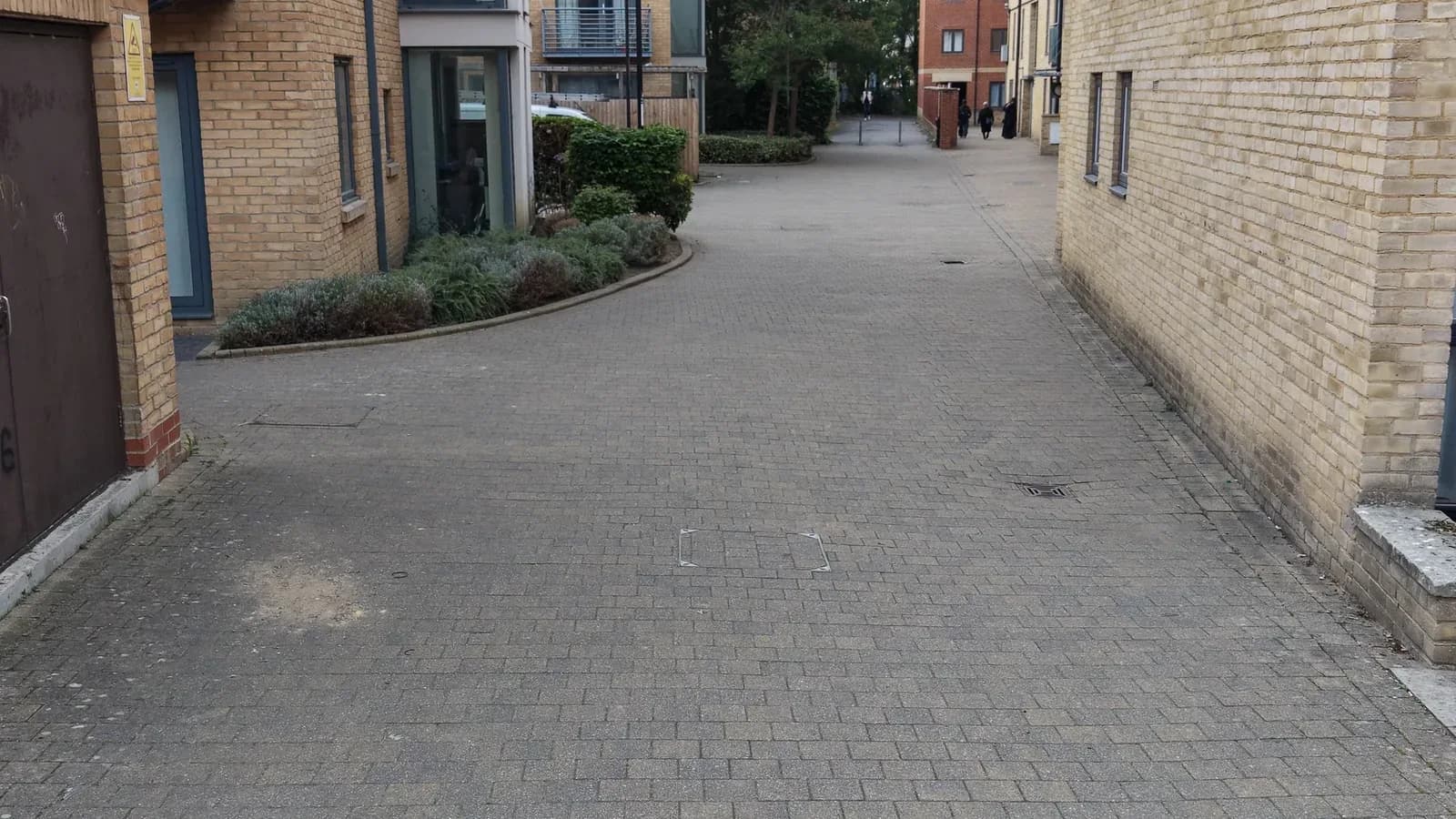
Winter slip risks around a care home, school or managed building need more than a warning sign. A practical plan identifies the outdoor routes people actually use, checks them as conditions change, removes slippery growth where appropriate, manages frost and ice separately, and records what has been done. The aim is to reduce slip risk while keeping essential access working.
A shaded entrance may stay damp for days. A short ramp can become difficult to negotiate after rainfall, while algae on paving can be hard to see until someone steps onto it. For site managers, the challenge is not simply making an area look clean. It is deciding which risks need attention first, choosing a suitable intervention and showing that the site is being managed consistently.
This guide is for care home managers, school estates teams, managing agents, facilities managers and anyone responsible for shared external areas during the colder months.
Why Do Outdoor Walkways Become More Slippery in Winter?
Winter brings several different hazards that can overlap. Shorter days, low temperatures and persistent moisture affect how outdoor surfaces behave. Moss and algae can build up on shaded paving, leaves become wet and compacted, and standing water may freeze overnight. An entrance that appears normal at midday may present a different risk early the next morning.
Algae, moss and trapped moisture
Green or dark biological growth commonly develops on north-facing paths, stair treads, ramps and paved areas beneath trees or beside walls. A thin film can be slippery when wet even where the surface does not look heavily overgrown. Moss can also collect in joints and at the edges of steps, retaining moisture and obscuring details in the paving.
Leaves, mud and drainage problems
Leaf litter can hide changes in level or block channel drains. Mud transferred from lawns and planted borders may create a slick layer on hardstanding. Pooled water also suggests that drainage, levels or blocked outlets deserve attention. Cleaning without investigating a recurring source of water may offer only a temporary improvement.
Frost, ice and changing weather
Frost and ice are not the same problem as algae. Removing biological growth will not prevent a surface from freezing. A separate cold-weather procedure is needed for forecasts, gritting where appropriate, temporary restrictions and alternative routes. Weather can change between the last inspection of the day and the first arrivals in the morning.
Which Areas Should a Site Manager Prioritise?
Start with the routes people depend on rather than treating every metre of paving as equally urgent. The Health and Safety Executive highlights entrances, pedestrian walkways, shaded or wet areas and slopes among the places that need particular attention during icy weather.
At a care home, focus on the main entrance, visitor approach, accessible ramps, steps, links to car parks and routes used by staff during shift changes. Residents may use mobility aids or require assistance, so a short affected section can have an outsized effect on access.
At schools, review gates, drop-off points, classroom entrances, playground access, outdoor stairs and routes between buildings. Timings matter: a path that is quiet in mid-afternoon may carry a concentrated flow of pupils at the start of the day.
For managed blocks, inspect shared entrances, communal paths, bin-store approaches, car park pedestrian routes and steps near drainage outlets. Do not overlook back or side routes used by cleaners, delivery teams and maintenance contractors. Where the problem extends across a car park, Chiltern Surface Co's car park and walkway cleaning covers larger paved areas.
How Should You Assess External Slip Risks?
Walk the site in the conditions that matter
An inspection on a warm, dry afternoon may miss problems residents and visitors experience after rain or on frosty mornings. Review known trouble spots following persistent wet weather and before periods of heavy use. Keep inspections proportionate to the site, its occupants, the forecast and the hazards already known.
Record what you see and who is affected
A useful log identifies the precise location, visible condition, relevant users, any immediate restriction, the action requested, the person responsible and the date of follow-up. Photographs can help show whether green growth, pooling water or a damaged surface has changed over time. Records support management decisions; they do not replace the need to act on a known hazard.
Separate cleaning needs from repair needs
A mossy, structurally sound paved path may need appropriate cleaning. Loose slabs, badly worn nosings, broken handrails, failed drainage or damaged ramps may need repair or design changes instead. Treating every problem as a cleaning job can leave the underlying hazard untouched.
What Should You Do When a Path or Entrance Is Slippery?
The immediate response depends on what is making it slippery. If a heavily used route has an obvious hazard, assess whether access can be managed while the issue is addressed. Where practicable, direct people along an alternative route that is suitable for the people who need it. Barriers and temporary information can help communicate a restriction, but a sign alone does not remove the hazard.
For wet leaves or loose debris, arrange timely clearance without creating an additional obstruction. For green growth, select a cleaning method suitable for the actual material and its condition. For ice or frost, follow the site winter-weather plan rather than assuming a recent wash has solved the problem.
Never send staff onto a dangerously slippery slope with improvised equipment. Staff should have appropriate instruction, equipment and safe access arrangements for their tasks; where the work is more demanding, use a competent contractor.
How Can Professional Cleaning Reduce Slip Risk?
Cleaning is most useful where the primary problem is algae, moss, dirt or other surface growth. An assessment should identify the paving material, its condition, nearby drainage, level changes, access requirements and the kind of contamination present. Limestone, sandstone, concrete, brick paving and timber do not all respond to the same cleaning method.
On commercial sites, works also need to fit around the people using the building. Chiltern Surface Co plans commercial exterior cleaning from a visit to the site, with working areas and access agreed around the people who use it. An agreed working zone and a realistic reopening plan matter as much as the cleaning method.
Why aggressive washing is not always the answer
Excess pressure may disturb joints, mark softer stone or force water into vulnerable details. Cleaning agents must also be compatible with the surface and used with due regard to nearby planting, drainage and site users. On a shared entrance, an unsuitable process can create a fresh problem even if it removes visible green staining.
What about protective winter treatment?
Where suitable, Chiltern Surface Co may follow cleaning with the Chiltern EverGuard™ Treatment to help slow the return of biological growth. Suitability depends on the surface and conditions at the time of application, and Chiltern EverGuard™ inhibits regrowth, typically for two to three years, depending on the surface and its environment. The treatment is not a substitute for ice management, maintenance inspections or necessary repairs, and it does not make paving slip-proof.
How Should Cleaning Be Scheduled Around an Occupied Site?
A cleaning programme should account for the building's operating pattern before work begins. A care home cannot simply close every route to its entrance. A school may need to programme works outside pupil movements, while a managed block may require advance notice to residents and arrangements for deliveries.
For hard surfaces, commercial pressure washing is one possible approach where the paving is suitable, but the correct method should be determined on site. Discuss cordons, water management, pedestrians, mobility access, noise, drying time and any weather-related postponement before confirming a date.
Chiltern Surface Co's winter cleaning for slippery paths, steps and patios removes slippery growth from paths, steps, ramps and entrances and, where the surface and the weather allow, applies the Chiltern EverGuard™ Treatment. Access arrangements, cordoned working areas and suitable treatments are agreed at the site visit.
To discuss a site, book a free site visit and describe the paths, steps or entrances affected and the main access concerns.
Should You Book One Winter Clean or Planned Visits?
One-off work can be appropriate when a clearly defined area has developed problematic growth. However, sites with recurring shade, heavy footfall or persistent moisture may benefit from a schedule. Chiltern Surface Co offers either a single winter visit or two planned visits, one in early winter and another later in the season, depending on the site and conditions.
A schedule makes it easier to decide when previously treated areas should be reviewed, but it should not create an assumption that no further checks are needed between visits. Weather changes and a new drainage issue can bring a risk forward unexpectedly.
For managers responsible for several blocks or buildings, it helps to keep comparable notes: which areas repeatedly require attention, whether works are being completed, and what needs repair rather than cleaning. It also gives the next contractor a clearer picture of the site.
What Records Should Schools, Care Homes and Managing Agents Keep?
A simple, dated service record is often more useful than a long document no one updates. Record the location, date, scope of work, access controls used, relevant weather limitations, observations of defects and any follow-up advised. Before-and-after photographs may help with handover and future comparison.
Keep records of risk assessments and the site's own inspection or gritting arrangements in the appropriate system. A contractor's completion record documents its work; it does not replace the property manager's wider responsibilities. For institutions with formal reporting procedures, align the record with those procedures rather than creating a disconnected folder.
If a job is moved because frost is forecast or treatment conditions are unsuitable, record the reason and any interim access decision. This makes the timetable understandable to colleagues and occupiers.
How Does Winter Management Differ Across Care Homes, Schools and Managed Blocks?
Care homes: continuity and assisted access
Consider visitors, residents using walkers or wheelchairs, staff shifts, emergency access and those who may need assistance. Agree which entrances can remain available during work, and ensure any alternative route is genuinely appropriate. Communicate temporary changes clearly to staff and visitors.
Schools: predictable peaks of movement
School gates, shared paths and external steps may have short periods of very high use. Prioritise checks before arrival and departure times. Where cleaning is needed, school holidays or other low-occupancy periods may make access arrangements simpler, but site-specific safeguarding and operational requirements come first.
Managed blocks: shared responsibilities
Residents may assume that someone else has reported an issue. Provide a clear way to raise concerns, identify who arranges inspections and cleaning, and keep a consistent record of shared-area work. Communicate any route restrictions in time for residents to make alternative arrangements.
What Should a Winter Slip-Risk Plan Include?
A practical plan does not need complicated language. It should identify high-priority pedestrian routes, known shaded and wet areas, who monitors weather, who carries out checks, when gritting or access restriction may be required, how urgent defects are escalated, and how cleaning is booked and recorded. Make the plan accessible to the people expected to use it.
The HSE advises workplaces to assess risks from ice and frost, identify vulnerable outdoor routes and put a system in place for managing them. Its guidance also describes gritting and diverting people away from affected walkways as possible measures. The specific measures must suit the site and do not eliminate the need for judgement.
Final Takeaway
Managing slippery walkways in winter is an ongoing process, not a single wash. Identify the routes people depend on, distinguish biological growth from frost and structural defects, act on the most important risks, and keep the record clear. Professional cleaning can remove slippery growth and reduce slip risk, but it works best as one part of a wider winter maintenance plan.
Chiltern Surface Co works with managed properties and commercial premises across Buckinghamshire, Oxfordshire and Berkshire. To arrange a visit, book a free site visit and share the site location, the affected surfaces and any access requirements.
Frequently asked questions
Can cleaning make a communal path completely safe in winter?
No. Cleaning can remove slippery growth and reduce one source of risk, but rain, frost, ice, spills, poor drainage and damaged surfaces may still create hazards. Continue inspections and weather management.
Should we close an entrance while it is being cleaned?
That depends on the work and the site. Agree access arrangements and exclusion zones with the contractor beforehand. Where the main route cannot remain available, any alternative must be suitable for the people who use the building.
Does a winter surface treatment replace gritting?
No. Treatment of biological growth and control of ice are separate activities. Use the site's frost and ice procedures when freezing weather is expected.
How often should external paths be inspected?
There is no single inspection interval appropriate to every property. Use the site risk assessment, occupant needs, footfall, weather forecast and history of problems to set checks, and review the frequency when conditions change.
Can a contractor provide photographs and a service record?
Ask before booking. Chiltern Surface Co provides a dated record of each visit, noting what was cleaned and treated and anything that needs a repair rather than a clean, and can discuss planned follow-up visits for scheduled work.
When is professional cleaning worth considering?
Consider an assessment where algae or moss is widespread, shared access is difficult to manage, the paving material is sensitive, or the same areas repeatedly become slippery. Structural defects and drainage failures may require other trades.