
Car parks and walkways
Buckinghamshire · Oxfordshire · Berkshire
Commercial Car Park and Walkway Cleaning
Cleaning for commercial car parks, walkways, pavements, courtyards and entrances across Buckinghamshire, Oxfordshire and Berkshire, with every clean planned around the property and how it is used.
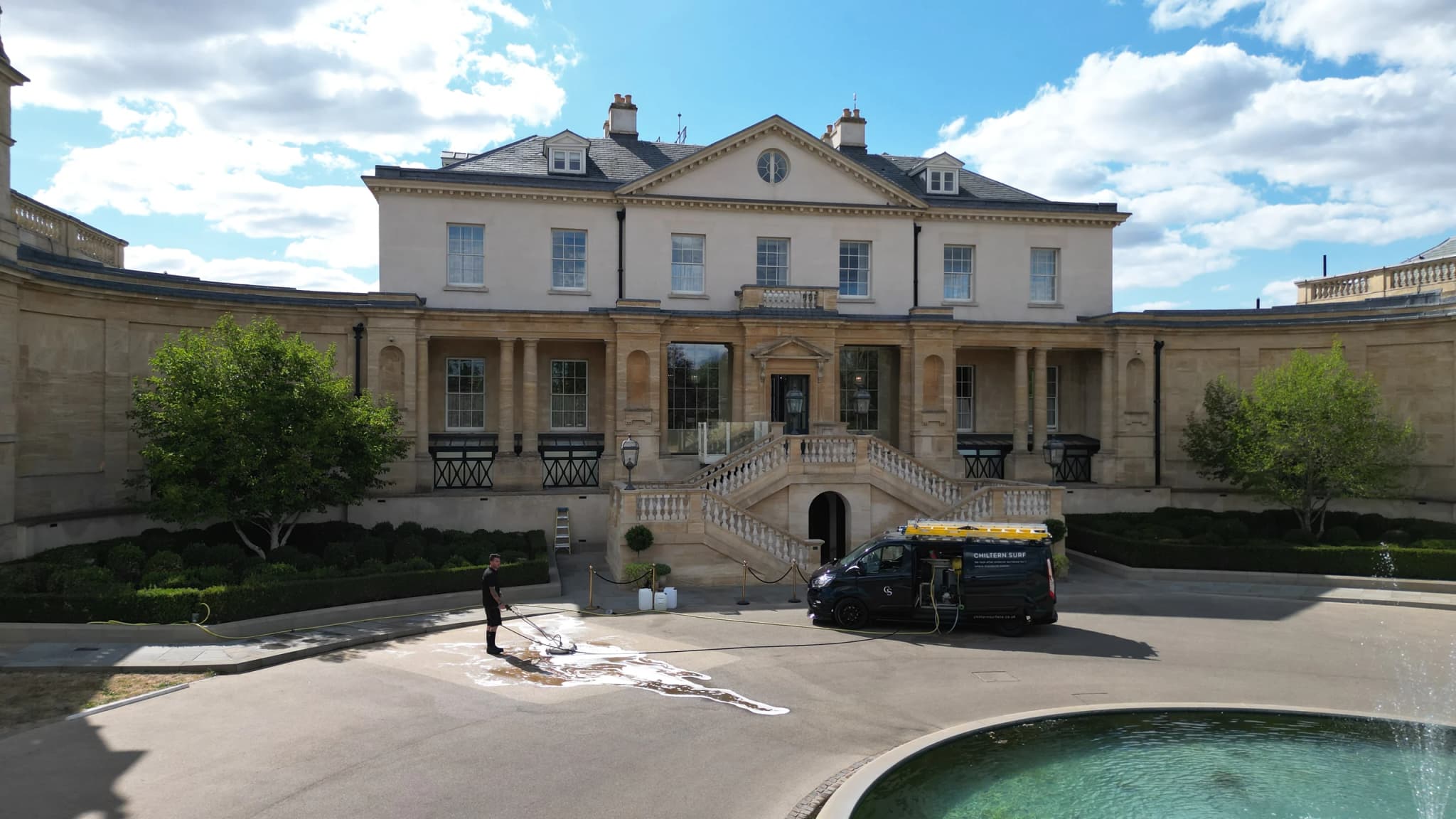
On siteWorks: surface cleaner on a foamed patch of paving, stanchions and van behind
- IPAF
- Accredited operators on every lift
- £10m
- Public liability insurance
- RAMS
- Site-specific, issued before we mobilise
- 5 days
- From request to survey
Photographic record
Works phased around the site
- Office
- 01628 232 450
- Mobile / WhatsApp
- 07308 755 755WhatsApp
The problem
Surfaces that carry the site's traffic
Car parks are among the hardest-working exterior areas of a commercial property. Vehicle traffic, tyres, dirt, organic growth and continual exposure to the weather gradually leave the surface looking weathered and inconsistent. Walkways, pavements and entrances form the first route occupiers, tenants and the public take through the property, and regular footfall and year-round weather leave them dull and marked by algae and moss.
These areas usually have to stay in use while they are cleaned. Concrete, tarmac, block paving, natural stone and resin-bound surfacing respond differently to cleaning, and several may meet around one entrance or courtyard. One method used across all of them produces inconsistent results and may place unnecessary stress on more delicate materials. The objective is to achieve the required result without cleaning any surface more aggressively than necessary.
Sites surrounded by trees, busy roads or shade collect dirt and growth faster than more open ones, so some benefit from planned rather than reactive cleaning. After the first clean we assess how quickly contamination is likely to return, and planned preventative maintenance (PPM) can bring car parks, walkways, entrances and courtyards into one cycle.
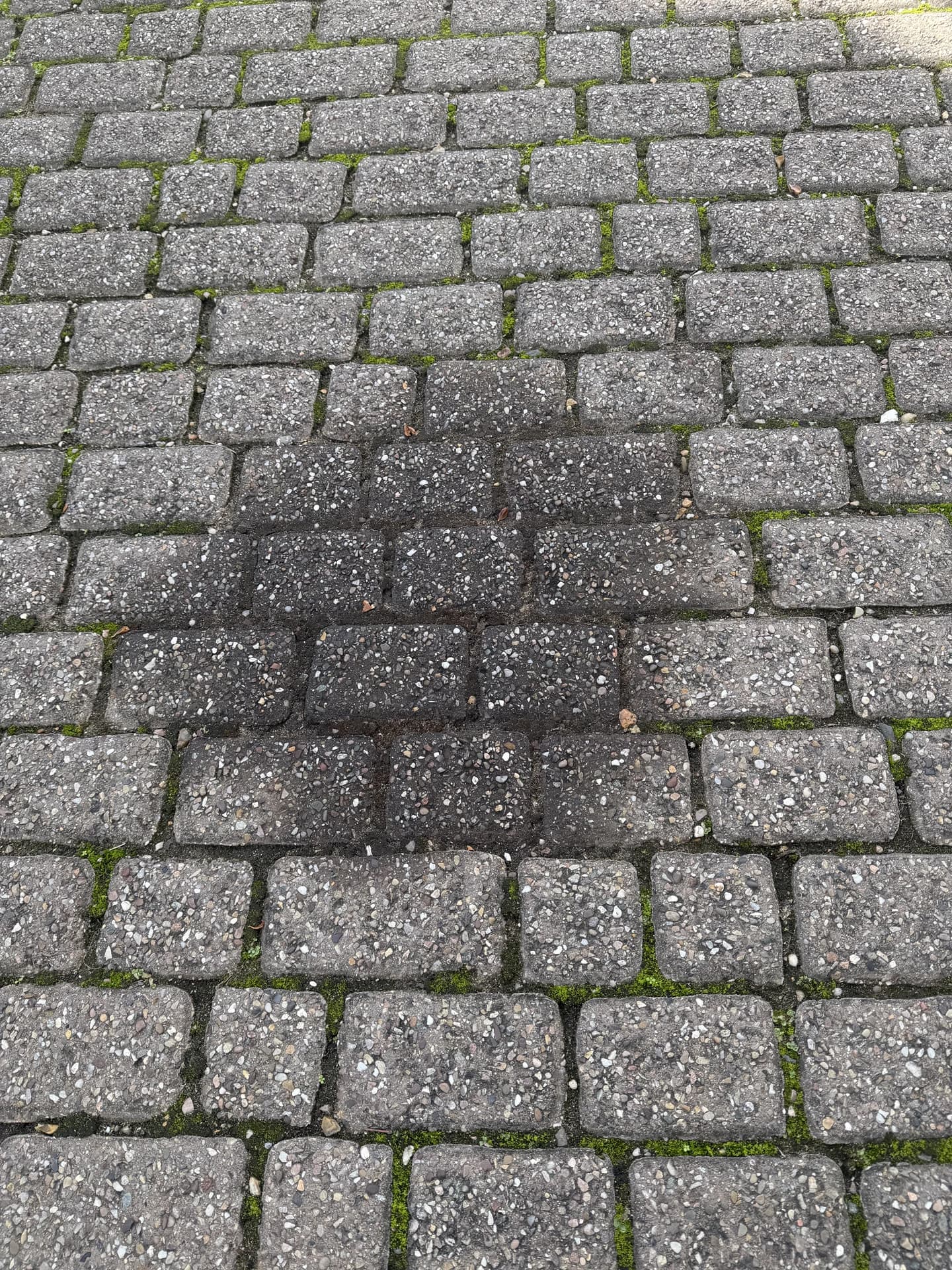
- Algae and biological growth
- Green or dark growth develops in damp, shaded areas and on surfaces that receive little sunlight. We assess its extent and the surface underneath before selecting the treatment.
- Moss
- Moss develops around joints, edges, kerbs and areas where moisture stays longer, and is removed with consideration for the paving and surrounding surfaces.
- Traffic grime
- Vehicle movement gradually deposits dirt and road grime across parking bays and access routes, and the surface loses its uniform appearance.
- Surface staining
- Not every stain responds to the same treatment. We identify the likely cause, assess how deeply it has penetrated and explain the expected result before work begins.
- Oil and vehicle contamination
- Oil penetrates porous surfaces and may not be fully addressed by pressure washing alone.
What we do
Specification of works
Car parks, walkways and paved areas can be cleaned individually or specified together, in one specification of works that names each area, its method and anything excluded. How the site is used shapes the sequence, and each sector page sets out those constraints: parking areas and paved entrances on retail sites, parking and approaches at offices and business parks, courtyards and guest areas in hospitality and leisure, communal walkways on managed residential sites, pathways at schools and colleges, and access routes around industrial and logistics premises. For multi-site portfolios, each property is specified on its own condition, under one contact and one standard.
| Areas | Car parks in concrete, tarmac, block paving and resin-bound materials, with particular attention to parking bays, pedestrian routes, kerbs, entrances and sections where dirt or growth has built up. Pavements, pedestrian walkways, access pathways, communal walkways, paved entrances, steps and courtyards, including natural stone paving, and the paths around commercial buildings. |
|---|---|
| Method | Pressure washing is used where the surface suits it, and Chiltern Surface Co technicians select the equipment and settings for each material. Concrete is cleaned according to its finish, age and condition; tarmac under controlled pressure once its condition is assessed; block paving with the condition of both the blocks and the jointing in mind; resin-bound surfaces at lower pressure where the installation needs it. Natural stone varies in hardness and porosity, so we identify it wherever possible before choosing the method. Where a lower-pressure method or targeted treatment suits a surface better, we use that instead, and adjust the approach as the work moves between materials across an entrance or courtyard. |
| Arisings | Moss and growth cleared from joints, edges and kerbs are removed from site as arisings, with skip provision where required. |
| Before work starts | The survey records each surface's type, age and condition, existing damage, the growth and staining present, and how water drains across the site. Access, vehicle activity, pedestrian movement and the walls, doors, glazing and landscaping beside the working area are planned into the sequence before work begins. |
| Recorded | Existing damage and deterioration in the surfaces, joints and kerbs are listed in the completion report's defect schedule, so the property team can decide what action is required. |
| Exclusions | Repairs to surfaces, joints and kerbs are not part of the clean. Oil staining and heavier vehicle contamination are assessed separately, and specified under oil stain and contamination removal where specialist treatment is needed. |
- Office
- 01628 232 450
- Mobile / WhatsApp
- 07308 755 755WhatsApp
Included on the project
- Fixed-price proposalspecification of works, programme and exclusions
- Site-specific RAMS issued before mobilisation
- Arisings removed from site
- Completion reportbefore-and-after photography and defect schedule
- £10 million public liability cover
How the work is delivered
Survey it. Specify it. Plan it. Deliver it. Document it. Maintain it.
- 01SurveySite visit, with the condition photographed.
- 02ProposalFixed price, with specification of works, programme and exclusions.
- 03MobilisationRAMS issued; asbestos register, drainage drawings and site rules checked.
- 04WorksZone by zone behind exclusion areas, with arisings removed and wash-water control planned.
- 05Completion reportBefore-and-after photography, a defect schedule and sign-off.
- 06PPMA planned maintenance proposal, so the problem does not come back unnoticed.
- Office
- 01628 232 450
- Mobile / WhatsApp
- 07308 755 755WhatsApp
Safety and site control
Planned before we arrive
- Wash water
- We plan wash-water control and drain protection for every site.
- Schools and care settings
- We work in school holidays and INSET days, or behind exclusion zones away from pupils and residents.
Related
Where car park and walkway work connects
Questions
Car park and walkway cleaning FAQs
Can you clean walkways and pavements at the same time as a car park?
Yes. Pavements, walkways, pathways, courtyards and entrances can be surveyed with the car park and included in the same specification of works and fixed-price proposal.
Can you clean a car park without damaging tarmac?
Yes, where its condition allows. Excessive pressure can damage or disturb tarmac, so we inspect its condition at the survey before deciding whether controlled pressure or another method is appropriate. The specification of works names the method for each area.
Can the car park and walkways stay in use while they are cleaned?
Yes. Works are phased zone by zone behind agreed exclusion areas, so access can be maintained wherever the site conditions allow. Vehicle movements and pedestrian routes are planned into the sequence at the survey, and out-of-hours working is available where the site needs it.
What do we receive when the work is complete?
A completion report: before-and-after photography of each area, the works completed against the specification, a defect schedule recording damage to surfaces, joints and kerbs, and sign-off. Where the site warrants it, the report ends with a planned preventative maintenance (PPM) proposal and a suggested review cycle.
How often should a commercial car park be cleaned?
There is no single frequency that suits every property. Traffic levels, surrounding trees, shade, drainage, surface type and exposure all affect how quickly dirt and growth return, so the cycle is set for each site after the first clean.
What do you need from us before the survey?
The site address, the car parks, walkways and paved areas involved, known staining or drainage concerns, how the site is used and any access restrictions or site rules. Photographs and site plans help.
Next step
Request a Site Survey
Tell us which areas need attention and how the site is used. We survey them, then send a fixed-price proposal with a specification of works, programme and exclusions.
- Office
- 01628 232 450
- Mobile / WhatsApp
- 07308 755 755WhatsApp