
Commercial façade restoration
Buckinghamshire · Oxfordshire · Berkshire
Commercial Façade Restoration for Stone, Brick and Render
Cleaning-led façade restoration for commercial buildings and managed properties, including listed and conservation-area buildings, across Buckinghamshire, Oxfordshire and Berkshire.
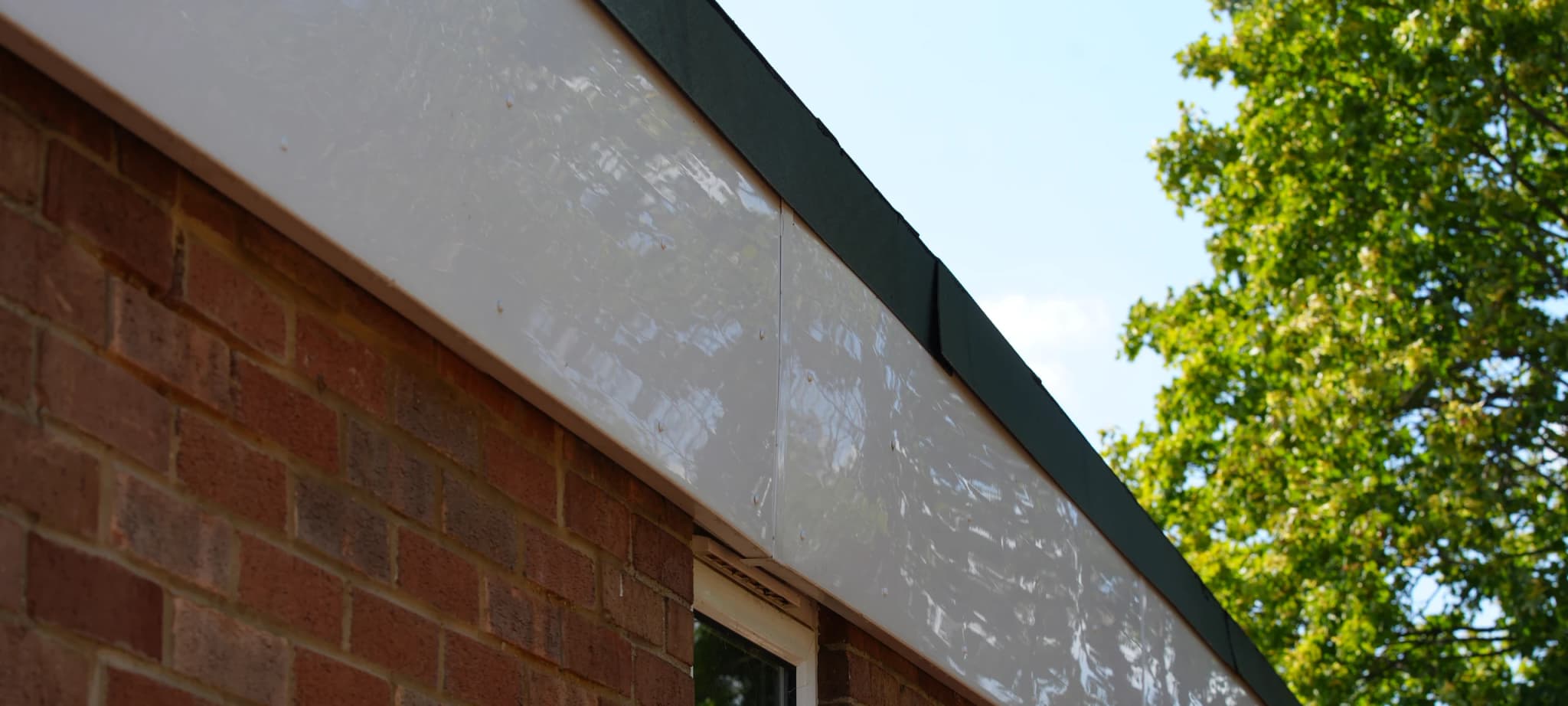
On siteSurvey: white fascia along a brick wall
- IPAF
- Accredited operators on every lift
- £10m
- Public liability insurance
- RAMS
- Site-specific, issued before we mobilise
- 5 days
- From request to survey
Photographic record
The work on site
- Office
- 01628 232 450
- Mobile / WhatsApp
- 07308 755 755WhatsApp
The problem
When routine façade cleaning is not enough
Years of atmospheric dirt, organic growth, water run-off, traffic film and uneven weathering become established across a façade, leaving individual elevations with a tired or inconsistent appearance. On an office, hotel, school, managed residential block or customer-facing retail or automotive site, that is how the whole property presents to occupiers, tenants and the public. Routine façade cleaning suits a façade in sound condition; restoration is for the façade that has gone past that point.
A harsh clean creates its own problem: on weathered fabric, excessive pressure can mark the surface, disturb vulnerable joints and leave the elevation uneven.
Restoration therefore takes a more detailed view. We survey the material, age, finish, joints, previous treatments and the way contamination has developed across each elevation, then specify a method the surface can safely tolerate and the result it can realistically achieve. The aim is a cleaner, more consistent appearance that respects the character and condition of the original surface.
- Organic growth
- Algae, red or green staining and mould, spreading across exposed or shaded elevations.
- Run-off and weathering
- Rainwater marks and uneven surface weathering that set one elevation apart from the next.
- Architectural detail
- General grime held around architectural details and in sheltered areas.
What we do
Specification of works
We consider the façade as part of the wider building, including adjoining surfaces, windows, entrances, drainage and the areas below the working elevation.
| Areas | Stone, brick, masonry and render elevations, including those on listed and conservation-area buildings, with their architectural details and sheltered areas. Buildings that combine materials, or where repairs and previous treatments have created variation, are included. Routine work on a sound surface sits with brick and stonework cleaning and render and masonry cleaning. |
|---|---|
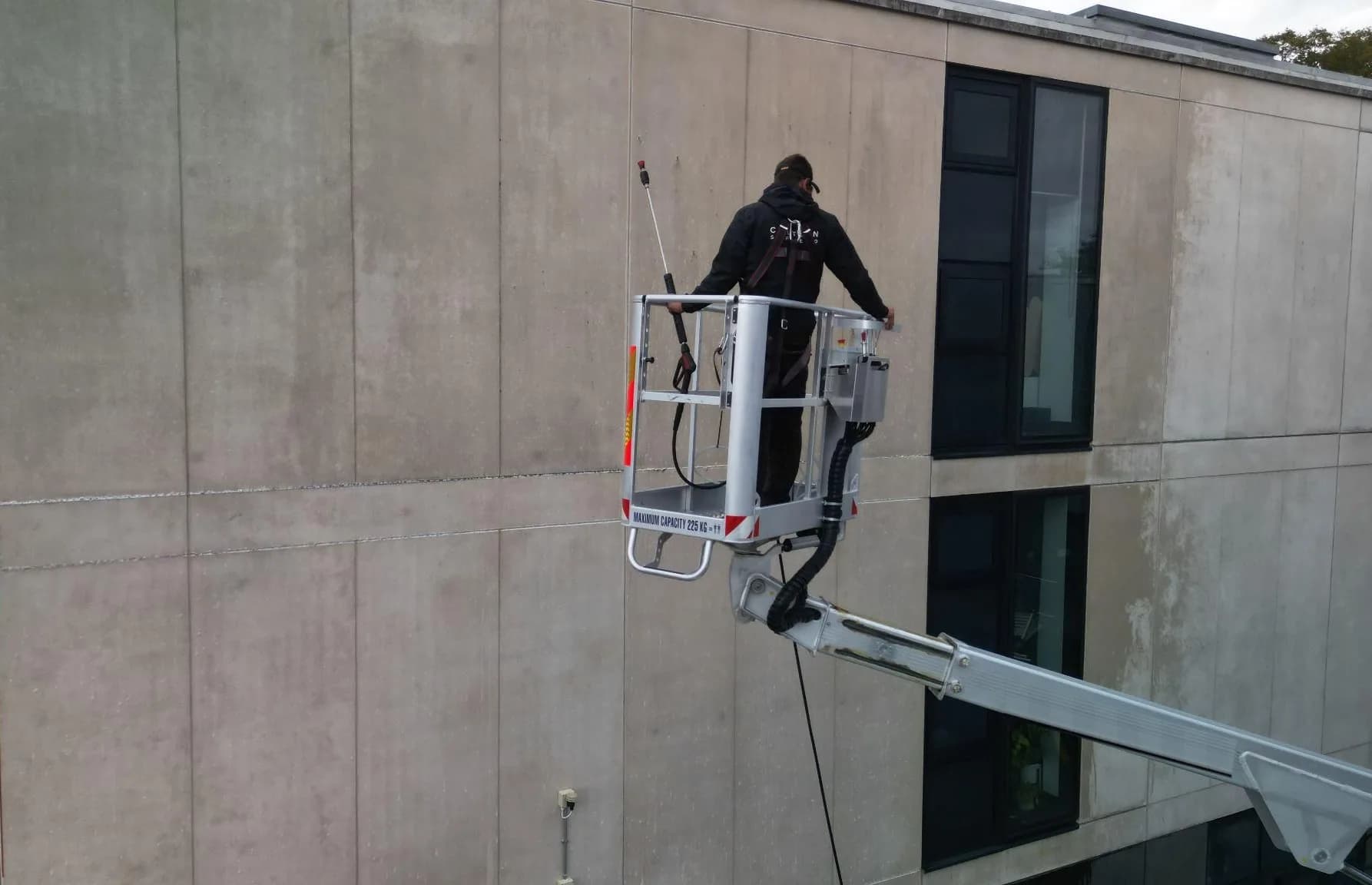
| Method | Pressure, temperature, products and equipment are chosen for each material and its condition. On render, the render system and its condition decide between low-pressure cleaning, soft washing or another controlled treatment. Heated water is used where the method calls for it. Elevations at height are reached from our dedicated tracked spider lift, operated by IPAF-accredited Chiltern Surface Co technicians: see high-level access cleaning. |
| Before work starts | The height, elevation layout, ground conditions and normal site activity set the access plan and the sequence of works. Where appropriate, a representative test area comes first. |
| Recorded | Cracking, loose areas, failed coatings and failed joints go into the completion report's defect schedule. The report closes with a proposal for planned preventative maintenance. |
| Exclusions | Masonry repairs, repointing and render repairs: this is cleaning-led restoration. Marks that are part of the surface, a previous coating or a deeper material defect are not contamination the clean can remove. |
- Office
- 01628 232 450
- Mobile / WhatsApp
- 07308 755 755WhatsApp
Included on the project
- Drone survey of roofs and high-level areas before pricing
- Fixed-price proposalspecification of works, programme and exclusions
- Site-specific RAMS issued before mobilisation
- Dedicated tracked spider-lift accessIPAF-accredited technicians
- Completion reportbefore-and-after photography and defect schedule
- £10 million public liability cover
How the work is delivered
Survey it. Specify it. Plan it. Deliver it. Document it. Maintain it.
- 01SurveySite visit and drone survey, with the condition photographed.
- 02ProposalFixed price, with specification of works, programme and exclusions.
- 03MobilisationRAMS issued; asbestos register, drainage drawings and site rules checked.
- 04WorksZone by zone behind exclusion areas, with arisings removed and wash-water control planned.
- 05Completion reportBefore-and-after photography, a defect schedule and sign-off.
- 06PPMA planned maintenance proposal, so the problem does not come back unnoticed.
- Office
- 01628 232 450
- Mobile / WhatsApp
- 07308 755 755WhatsApp
Safety and site control
Planned before we arrive
- Wash water
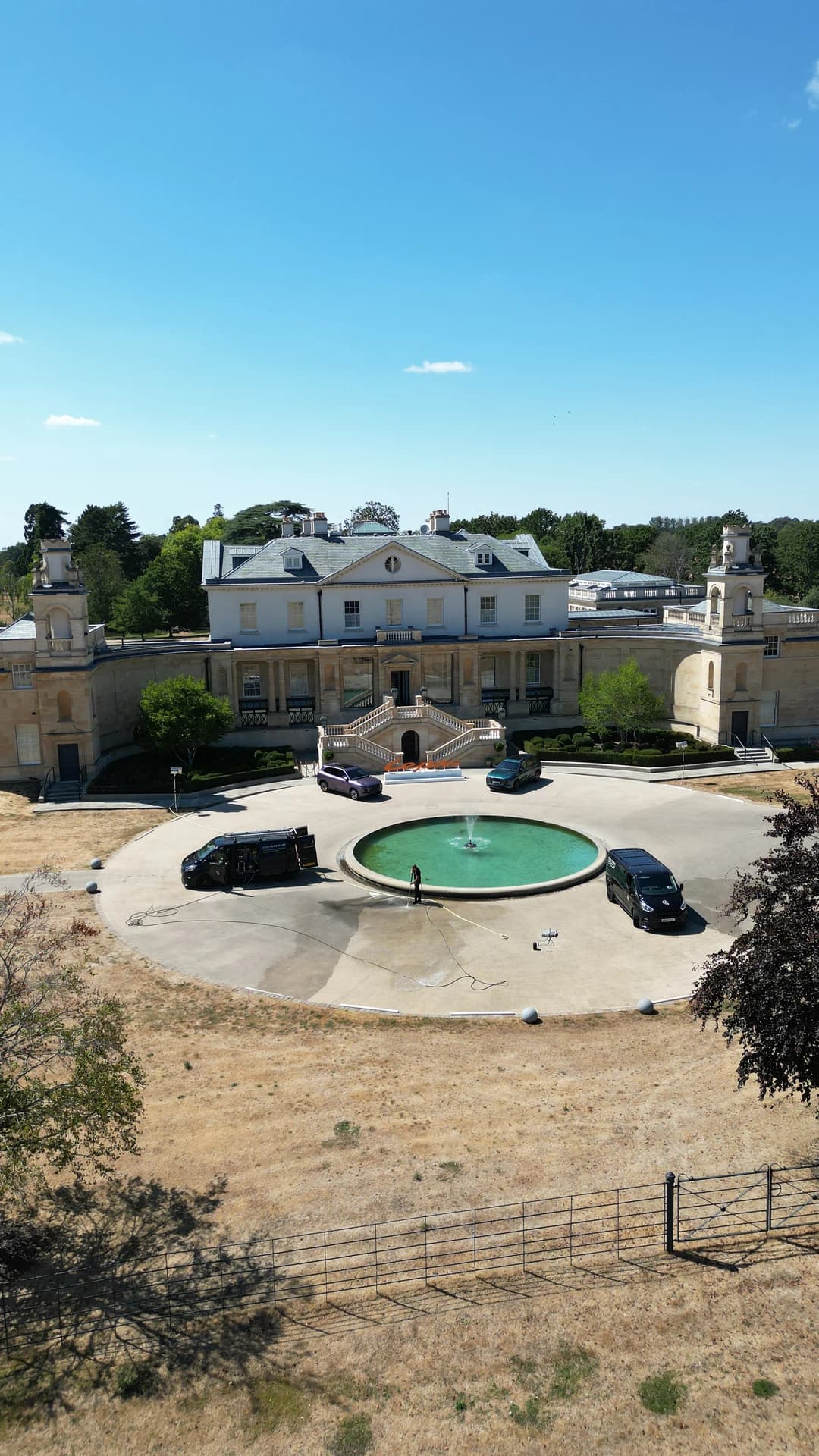
- We plan wash-water control and drain protection for every site.
- Listed and conservation buildings
- We use test areas and low-pressure methods on listed and conservation-area buildings.
- Schools and care settings
- We work in school holidays and INSET days, or behind exclusion zones away from pupils and residents.
- Weather
- Our normal lift wind limit is 20 mph. Weather rescheduling is free of charge.
Related
Where façade restoration connects
Questions
Façade restoration FAQs
Will restoration remove every stain?
No, not always. The achievable result depends on the material, its age and condition, and the depth and nature of the staining within the substrate. Where complete removal cannot be guaranteed, this is identified before works begin and the expected improvement is set out clearly.
Do you test the method before the main work?
Yes, where appropriate, and on every listed or conservation-area building. A representative test area shows how the surface responds and establishes a realistic finish before the wider work proceeds.
Do you carry out masonry repairs or repointing?
No. This service is cleaning-led. Where the survey or the works find defective masonry, failed joints or other repairs outside the cleaning scope, we set them out so they can be addressed separately.
Can the work be planned around an occupied building?
Yes. Works are phased zone by zone behind agreed exclusion areas, planned around entrances, pedestrian routes and vehicle movements, so access can be maintained wherever the site conditions allow. Out-of-hours working is available.
How soon will staining return after restoration?
It depends on the building. Orientation, nearby trees, traffic, exposure, drainage and the façade material all influence how quickly staining returns, so the PPM proposal in the completion report is set for that building rather than a standard cycle.
What do you need from us to arrange a survey?
The property address, building type, approximate height, the affected elevations, the known façade materials, whether the building is listed or in a conservation area, and any access restrictions. Photographs are helpful.
Next step
Request a Site Survey
Tell us about the building and the condition of its façade. We survey the elevations, then send a fixed-price proposal with a specification of works, programme and exclusions.
- Office
- 01628 232 450
- Mobile / WhatsApp
- 07308 755 755WhatsApp