
Building surfaces
Buckinghamshire · Oxfordshire · Berkshire
Commercial Cladding Cleaning
Professional cladding cleaning for commercial buildings, warehouses, factories and industrial units across Buckinghamshire, Oxfordshire and Berkshire, with the method set by the cladding material, coating and condition.
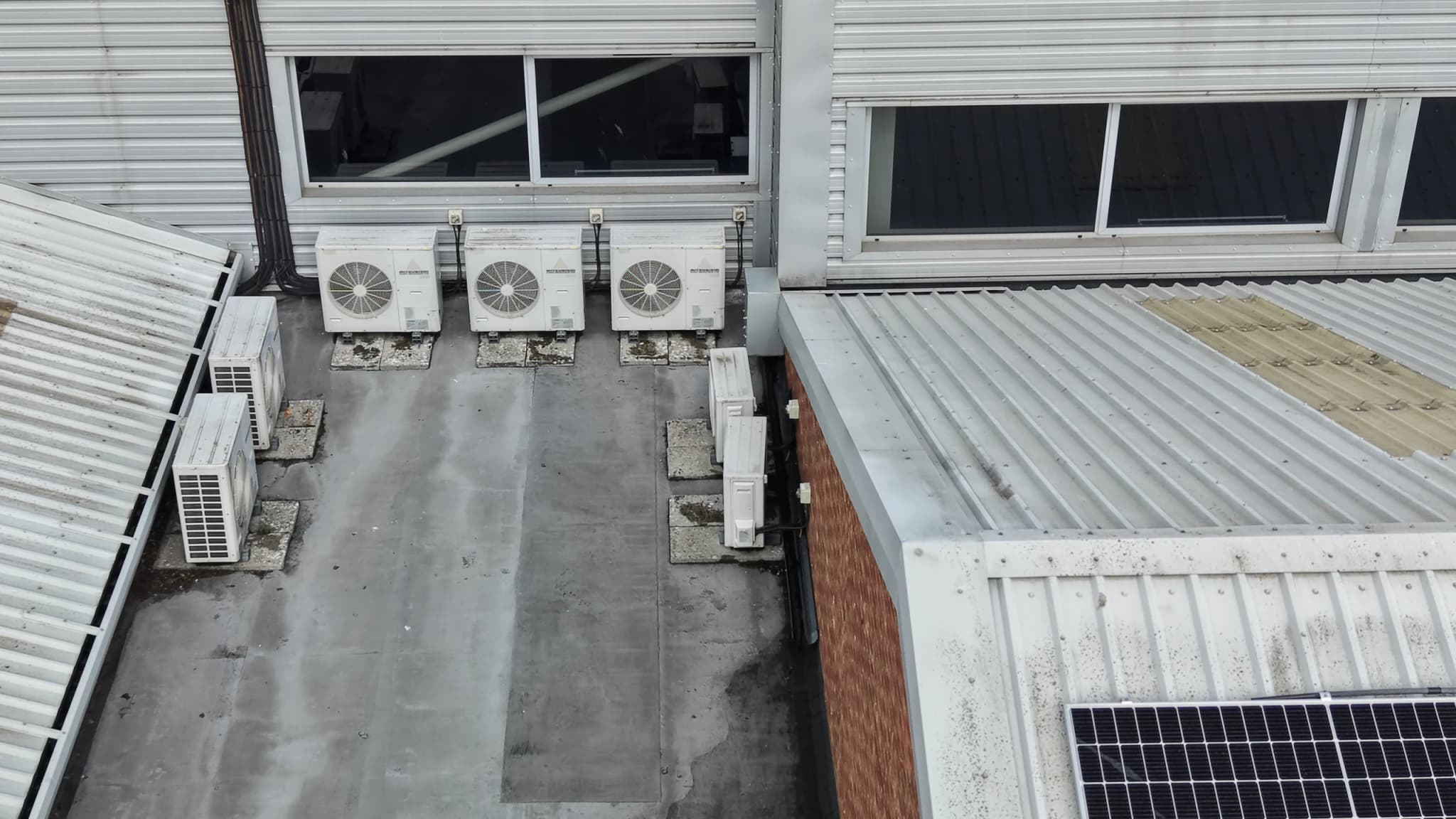
On siteSurvey: profiled metal cladding above a flat section with plant units
- IPAF
- Accredited operators on every lift
- £10m
- Public liability insurance
- RAMS
- Site-specific, issued before we mobilise
- 5 days
- From request to survey
Photographic record
Mobilisation for work at height
- Office
- 01628 232 450
- Mobile / WhatsApp
- 07308 755 755WhatsApp
The problem
What contamination does to a clad building
Commercial cladding is continually exposed to rain, atmospheric dirt, traffic pollution and organic growth. Fine dirt leaves panels grey and dull, water run-off draws dark streaks across lighter-coloured cladding, and shaded, moisture-prone elevations develop green algae and other biological growth.
Warehouses, factories and industrial units often sit close to busy roads, vehicle yards and operational areas, which increases the grime reaching the building. Their elevations are large and highly visible, and they weather at different rates: one side may carry mainly atmospheric grime while a shaded elevation holds significantly more growth.
- Presentation
- Cladding can cover a substantial proportion of a commercial building, so visible contamination on it sets the impression of the whole property for occupiers, tenants and the public.
- A realistic outcome
- Not every mark is removable contamination. Fading, coating deterioration and ageing can resemble surface dirt, and the survey separates the two wherever possible before the work is specified.
- Recurrence
- Dirt and growth return after cleaning at a rate set by the building's exposure. Where the site warrants it, planned preventative maintenance (PPM) puts the cladding on a known maintenance cycle instead of waiting until it is heavily weathered again.
What we do
Specification of works
Cladding can be specified on its own or within a wider planned exterior maintenance programme covering gutters, yards and other external areas. Where an organisation manages several commercial properties, it can form part of a multi-site programme.
| Areas | Metal cladding and coated or painted exterior panels on warehouses, factories, industrial units, offices and other managed commercial buildings, from individual units to larger industrial and business estates. Whole elevations, or the entrances, lower sections, shaded elevations, joints and run-off areas where contamination is heavier than on the surrounding panels. |
|---|---|
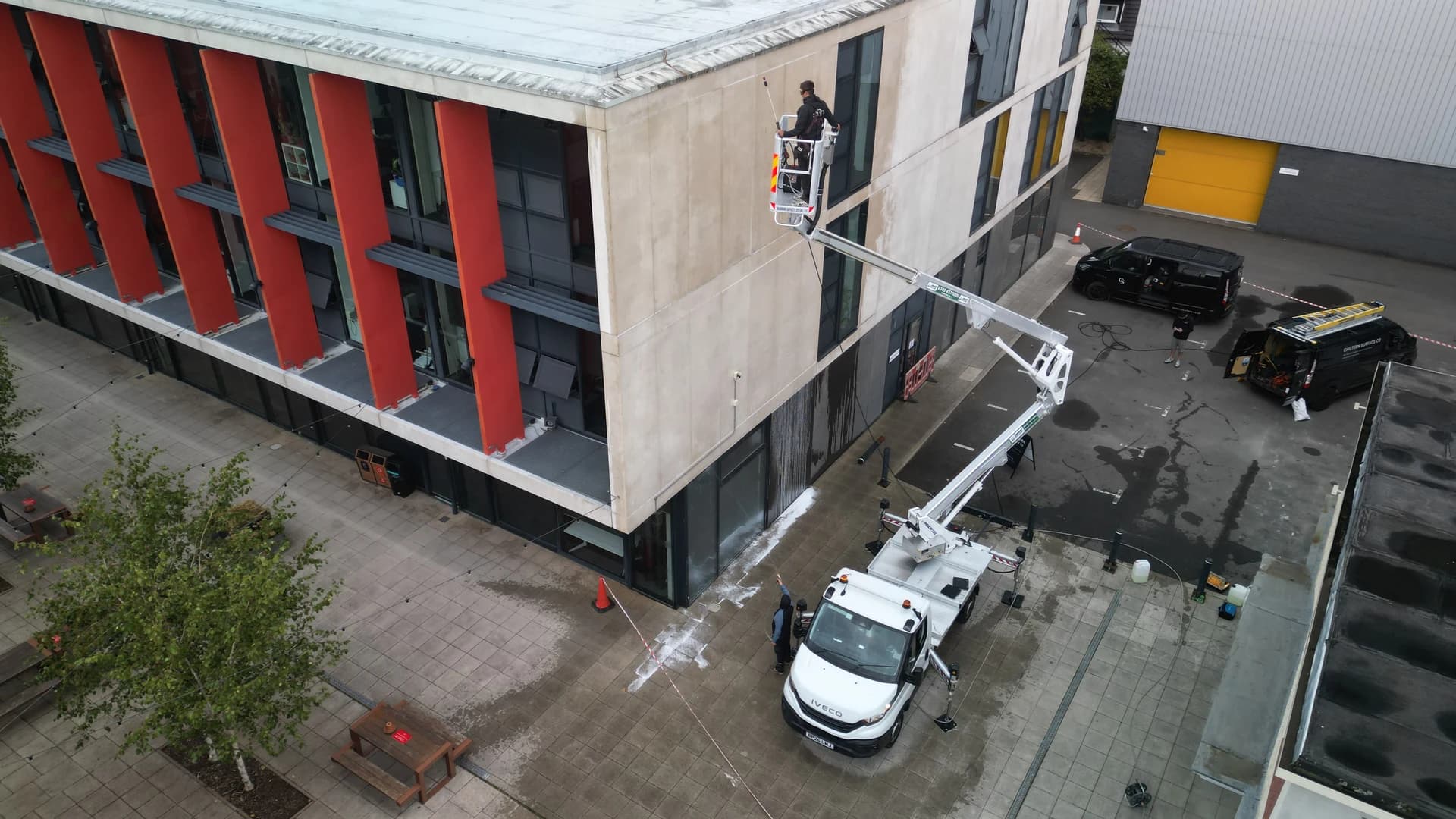
| Method | The survey sets the method for each elevation from the material, finish, coating age and contamination: controlled pressure where the surface suits it, lower-pressure cleaning or treatment where it does not. We do not use excessive pressure to speed up the work. Algae and biological growth are treated rather than removed by pressure alone, with additional attention at joints, corners and sheltered sections. Upper elevations are reached from our dedicated tracked spider lift, operated by IPAF-accredited Chiltern Surface Co technicians: see high-level access cleaning. |
| Before work starts | The survey records the cladding material, surface finish and coating, its age and condition, the growth, contamination and staining present, joints and fixings, water run-off, height and access. Windows, doors, signage, neighbouring surfaces and drainage are identified for protection, and the programme is planned around the normal operation of the site. |
| Recorded | Fading, coating deterioration and visible concerns at joints and fixings noted during the works go into the completion report's defect schedule, so the property team can decide what action is required. |
| Exclusions | Cleaning removes suitable surface contamination. It does not repair or recoat panels, and it cannot reverse fading or coating deterioration. Where complete removal of staining cannot be guaranteed, this is identified before works begin and the expected improvement is set out clearly. |
- Office
- 01628 232 450
- Mobile / WhatsApp
- 07308 755 755WhatsApp
Included on the project
- Drone survey of roofs and high-level areas before pricing
- Fixed-price proposalspecification of works, programme and exclusions
- Site-specific RAMS issued before mobilisation
- Dedicated tracked spider-lift accessIPAF-accredited technicians
- Completion reportbefore-and-after photography and defect schedule
- £10 million public liability cover
How the work is delivered
Survey it. Specify it. Plan it. Deliver it. Document it. Maintain it.
- 01SurveySite visit, with the condition photographed and high-level cladding surveyed by drone where airspace permits.
- 02ProposalFixed price, with specification of works, programme and exclusions.
- 03MobilisationRAMS issued; asbestos register, drainage drawings and site rules checked.
- 04WorksZone by zone behind exclusion areas, with arisings removed and wash-water control planned.
- 05Completion reportBefore-and-after photography, a defect schedule and sign-off.
- 06PPMA planned maintenance proposal, so the problem does not come back unnoticed.
- Office
- 01628 232 450
- Mobile / WhatsApp
- 07308 755 755WhatsApp
Safety and site control
Planned before we arrive
- Wash water
- We plan wash-water control and drain protection for every site.
- Weather
- Our normal lift wind limit is 20 mph. Weather rescheduling is free of charge.
Related
Where cladding cleaning connects
Questions
Cladding cleaning FAQs
What types of cladding do you clean?
Metal cladding and coated or painted exterior panels, cleaned across whole elevations or concentrated on the sections where staining and growth are most noticeable.
Can you clean warehouse cladding at height?
Yes. We survey high-level cladding by drone before pricing, where airspace permits, and reach upper elevations from our own dedicated tracked spider lift, operated by IPAF-accredited Chiltern Surface Co technicians. The survey also records the elevation size, contamination, surface condition and access. Any area the lift cannot reach from the available set-up positions is named in the exclusions.
Can the work be carried out while the site is operating?
Yes. Works are phased zone by zone behind agreed exclusion areas, so access can be maintained wherever the site conditions allow. Out-of-hours working is available where the site needs it.
Can cladding cleaning remove algae?
Yes, where the growth is suitable for treatment. The joints and shaded sections where growth is heaviest receive additional attention.
Will cleaning restore faded cladding?
No. Cleaning removes suitable surface contamination, but it cannot reverse fading or deterioration of the coating. We set out the expected improvement after inspecting the building, before works begin.
What do we receive when the work is complete?
A completion report: before-and-after photography, a defect schedule recording anything found during the works, such as coating deterioration, and sign-off. Where the building warrants it, the report ends with a PPM proposal and a review cycle set by the location, orientation, nearby roads, vegetation, shade and exposure.
Next step
Request a Site Survey
Tell us about the building, its cladding and the elevations that need attention. We survey the cladding, then send a fixed-price proposal with a specification of works, programme and exclusions: no day rates and no overrun charges.
- Office
- 01628 232 450
- Mobile / WhatsApp
- 07308 755 755WhatsApp