
Commercial roof treatment
Buckinghamshire · Oxfordshire · Berkshire
Commercial Roof Moss and Algae Treatment
Survey-led moss removal, soft washing and biological growth treatment for commercial and industrial roofs across Buckinghamshire, Oxfordshire and Berkshire.
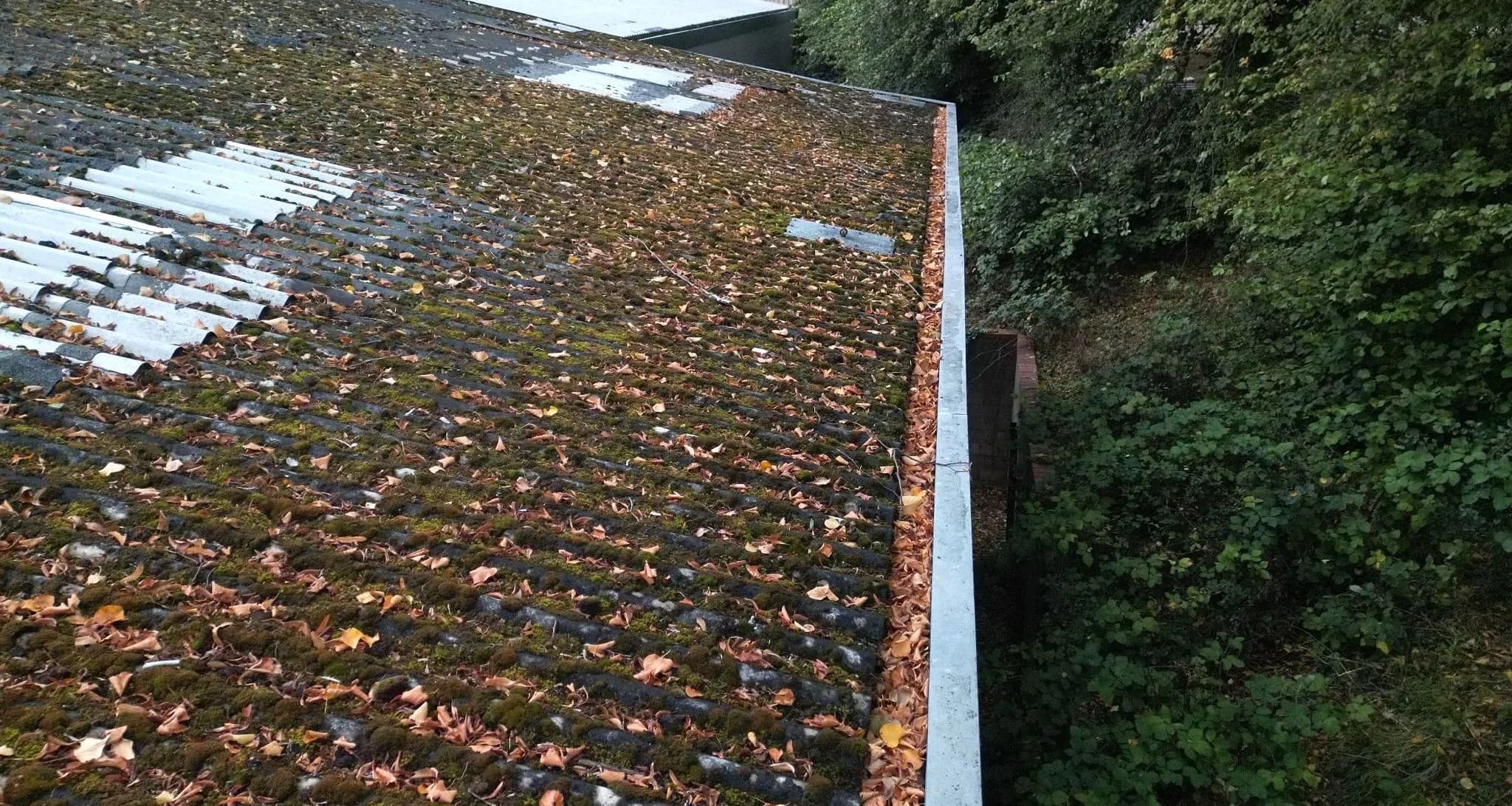
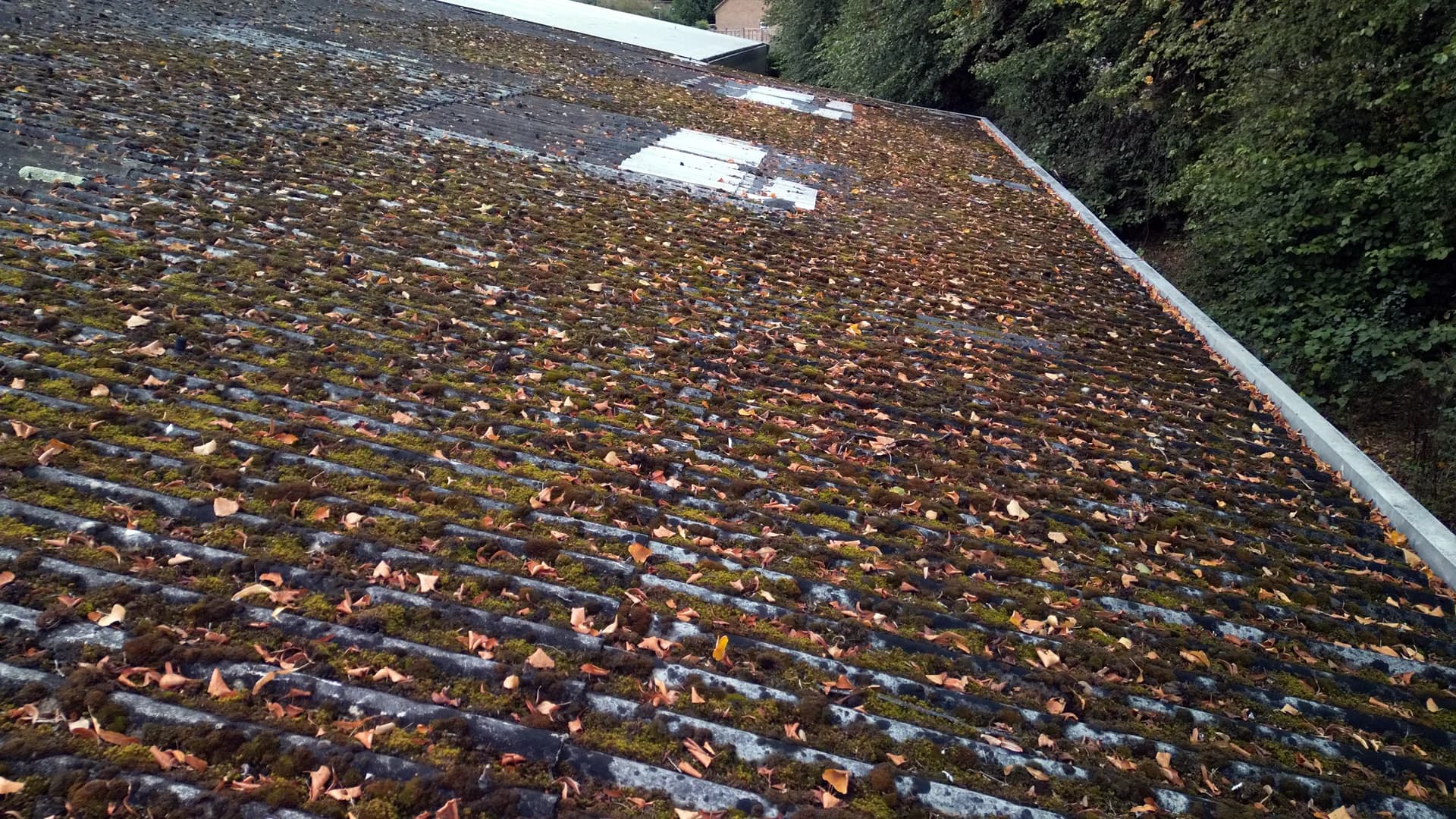
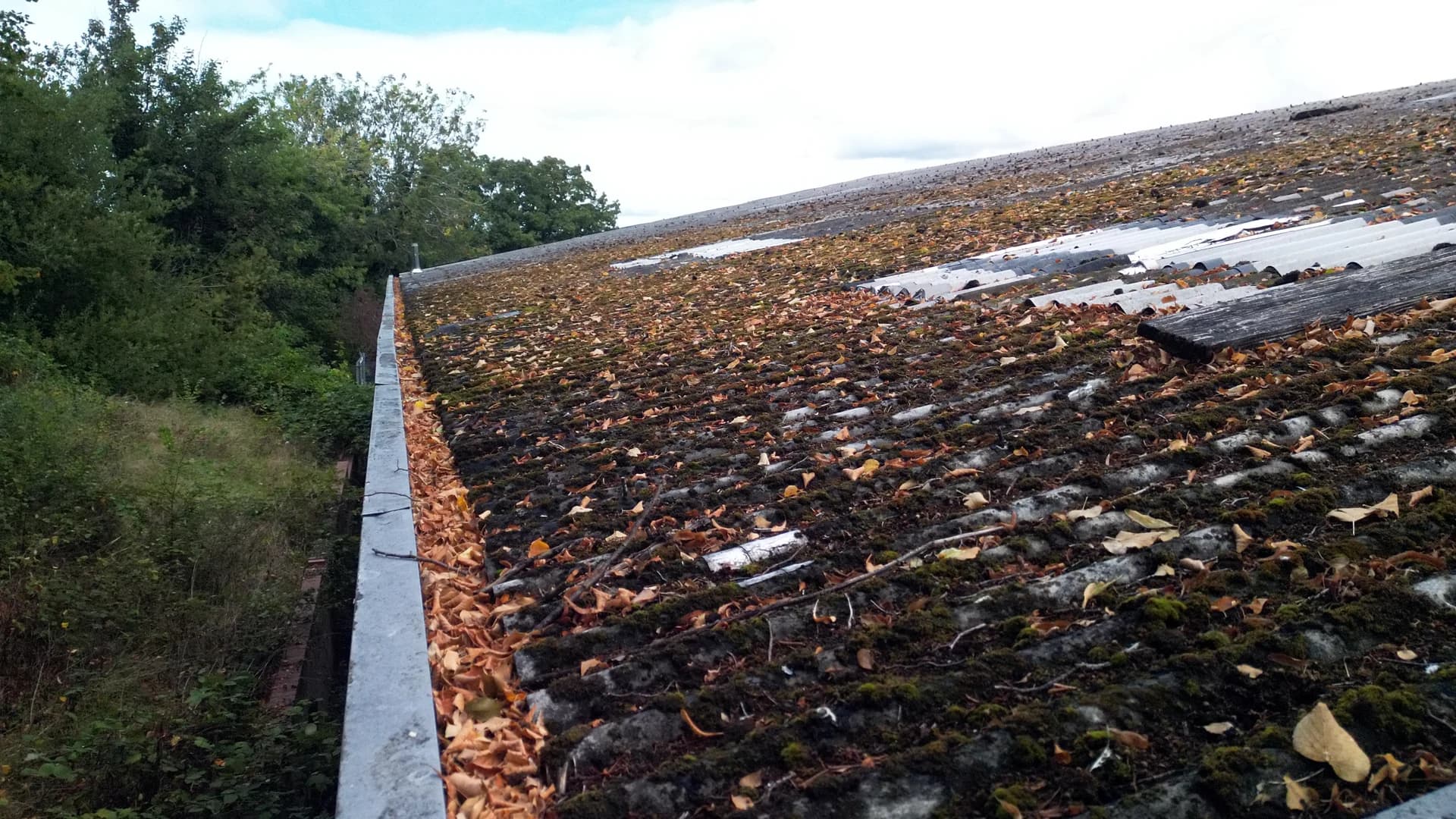
On siteSurvey: moss and leaf fall across profiled roof sheets beside a leaf-choked box gutter, photographed by drone.
- IPAF
- Accredited operators on every lift
- £10m
- Public liability insurance
- RAMS
- Site-specific, issued before we mobilise
- 5 days
- From request to survey
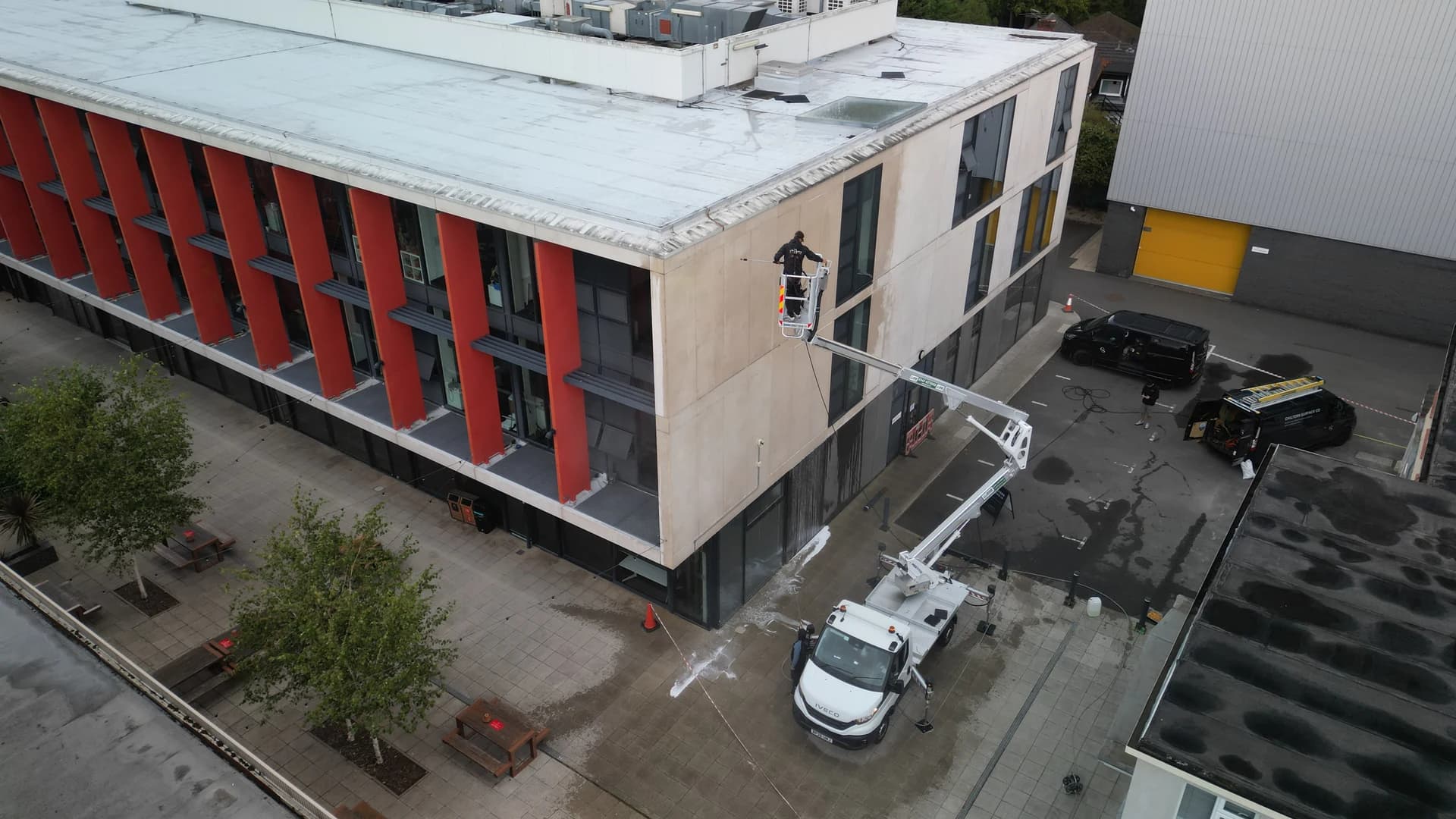
Photographic record
From mobilisation to the completion report
- Office
- 01628 232 450
- Mobile / WhatsApp
- 07308 755 755WhatsApp
The problem
What roof growth does to a commercial building
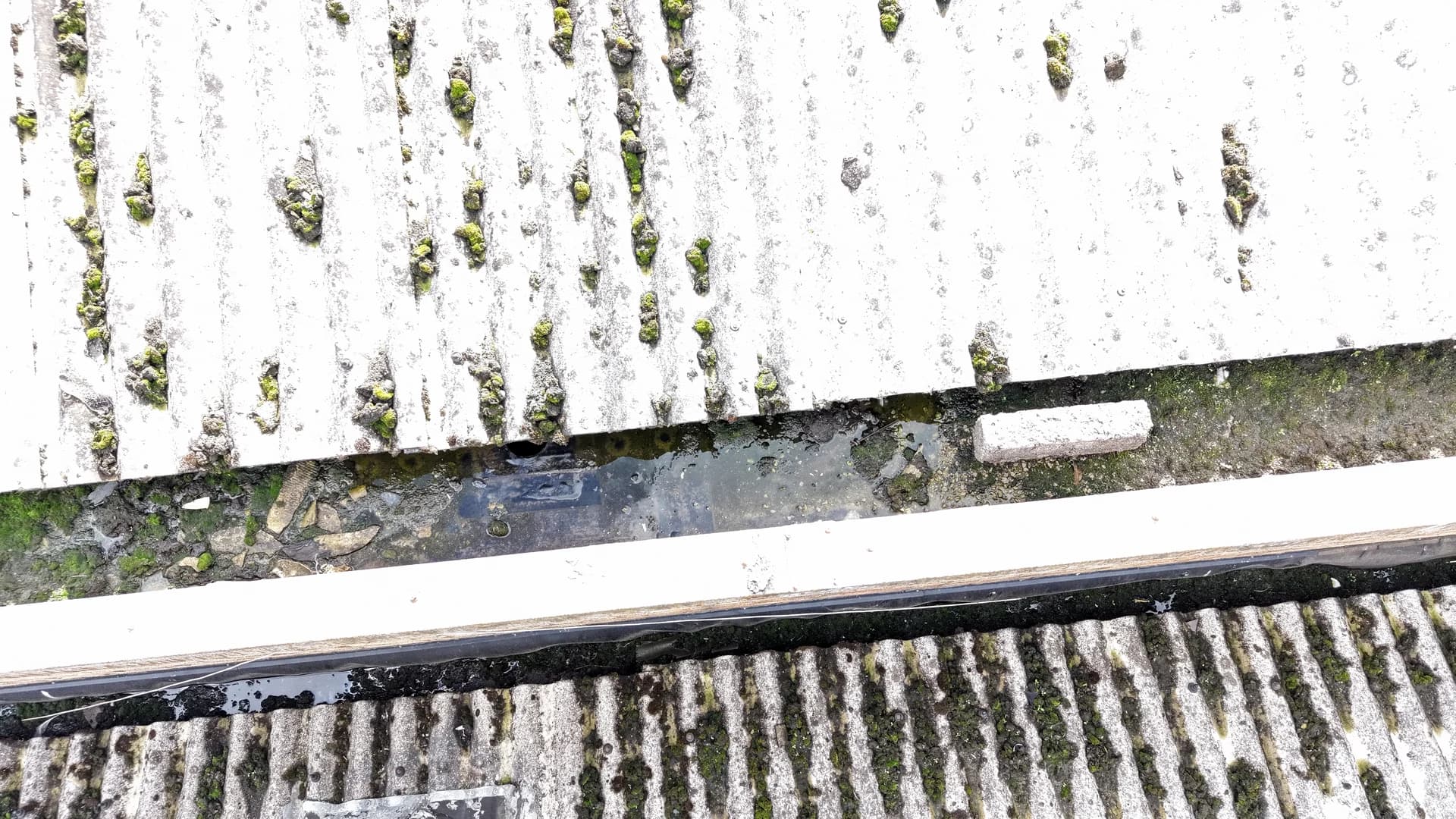
Moss holds moisture on the roof covering and sheds loose material into valleys, gutters, outlets and downpipes, where it restricts how the roof drains. Algae shows as green, dark or discoloured areas across the surface, and lichen attaches firmly.
On a working building, that is a drainage problem as well as a presentation one, particularly ahead of a handover, survey, refurbishment or planned roof work. We survey the roof before we specify physical removal, soft washing, treatment or a staged combination.
- Where growth concentrates
- Shaded sections and north-facing slopes, behind upstands, near drainage points and under adjoining trees and structures.
- Operations below
- Offices, schools, care settings, hotels, managed residential blocks, retail sites and industrial units stay in use beneath the roof, so entrances, staff routes, public areas, vehicles and plant shape the work zones.
What we do
Specification of works
The specification identifies the roof sections included, the preparation, the method and sequence, access assumptions and a realistic expectation of the result.
| Areas | Tiled, profiled-sheet and flat commercial roofs where the covering and its condition suit the work, including valleys, upstands and the areas around rooflights, outlets, vents and plant. Growth on walls and render is covered by algae and biological growth removal. |
|---|---|
| Method | Heavy moss is removed first with controlled physical methods chosen for the covering: tile profile, fixings, surface finish, pitch and fragility decide how much contact is appropriate. Soft washing applies a cleaning solution at low pressure where the roof material and condition allow it, with product, dilution, dwell time and any rinse set by the approved product guidance. A compatible treatment then addresses remaining algae, lichen and residual growth. High-level areas are reached from our dedicated tracked spider lift, operated by IPAF-accredited Chiltern Surface Co technicians, with the set-up planned around roof height, pitch, fragility, edge conditions and the ground area available: see high-level access cleaning. |
| Arisings | Moss and loosened growth are managed as arisings so they do not collect in gutters, outlets or around the building. Skip provision where required, and arisings removed from site. Gutter and outlet clearance is included where the specification states it: see gutter and high-level cleaning. |
| Before work starts | We request the site's asbestos register and drainage drawings before roof work, with any roof surveys, known defects, permit procedures and site rules. We also ask about drainage restrictions, sensitive discharge points and the site's environmental procedures, and set how overspray is controlled around vegetation, glazing, metal and painted surfaces, vehicles and neighbouring property. Anything that needs controls beyond normal exterior cleaning is raised before the work is agreed. |
| Recorded | The completion report records what was treated and what may continue to change as treated growth weathers away; loose, cracked or displaced roof materials found during the works go into its defect schedule. A previously treated roof may later need only a condition review and maintenance treatment rather than the full process: see planned preventative maintenance. |
| Exclusions | Roof repairs: loose, cracked or displaced materials may need attention from a roofing specialist before cleaning proceeds, and we record them so the property team can bring one in. Known hazardous materials, process residues and suspected asbestos-containing surfaces need specialist information and controls and are outside a standard moss-removal specification. Historic staining, weathering, fading and worn coatings are not biological growth; cleaning or treatment may expose them but cannot reverse them. |
- Office
- 01628 232 450
- Mobile / WhatsApp
- 07308 755 755WhatsApp
Included on the project
- Drone survey of roofs and high-level areas before pricing
- Fixed-price proposalspecification of works, programme and exclusions
- Site-specific RAMS issued before mobilisation
- Dedicated tracked spider-lift accessIPAF-accredited technicians
- Completion reportbefore-and-after photography and defect schedule
- £10 million public liability cover
How the work is delivered
Survey it. Specify it. Plan it. Deliver it. Document it. Maintain it.
- 01SurveySite visit and drone survey, with the condition photographed.
- 02ProposalFixed price, with specification of works, programme and exclusions.
- 03MobilisationRAMS issued; asbestos register, drainage drawings and site rules checked.
- 04WorksZone by zone behind exclusion areas, with arisings removed and wash-water control planned.
- 05Completion reportBefore-and-after photography, a defect schedule and sign-off.
- 06PPMA planned maintenance proposal, so the problem does not come back unnoticed.
- Office
- 01628 232 450
- Mobile / WhatsApp
- 07308 755 755WhatsApp
Safety and site control
Planned before we arrive
- Roofs
- We identify the roof covering before any work is proposed and request the asbestos register. Asbestos-cement and fragile roofs are never pressure-washed or walked on.
- Wash water
- We plan wash-water control and drain protection for every site.
- Schools and care settings
- We work in school holidays and INSET days, or behind exclusion zones away from pupils and residents.
- Weather
- Our normal lift wind limit is 20 mph. Weather rescheduling is free of charge.
Related
Where roof treatment connects
Questions
Commercial roof treatment FAQs
Does every mossy commercial roof need scraping?
No. The amount of growth, the roof covering, its condition and your objective decide whether physical removal, treatment or a combined approach is right. Light growth on a suitable roof may need treatment only, where a result that develops gradually is acceptable. Heavy or loose moss is removed first, so it can be collected and the drainage routes stay manageable.
Will the roof look completely clean straight away?
No. Physical moss removal gives an immediate visible change, but treated algae, lichen and residual staining weather away gradually. Lichen can take longer than light algae to release, and shaded sections change at a different rate from exposed slopes. We set out the expected result before work begins.
How long does a roof treatment last?
We do not promise one standard lifespan. Regrowth depends on orientation, shade, tree cover, moisture, airborne spores, surface porosity and local exposure. The completion report ends with a PPM proposal and a suggested review cycle for the roof.
Do you treat large industrial roofs?
Yes, where the roof covering and access suit the work. Large roofs are divided into practical sections, with the roof material, fragile areas, rooflights, plant, vents, known hazards and the operations below built into the specification of works. The work can be staged where the whole roof cannot be treated at once, or limited to the priority zones.
Can the building stay open during the work?
Yes, wherever the site conditions allow. Works are phased zone by zone behind agreed exclusion areas, with entrances, air intakes, pedestrian routes and vehicles planned into the sequence. Out-of-hours working is available where the site needs it.
What do you need from us before the survey?
The site address, building use, known roof type, approximate roof area, the growth you can see, access information and any previous treatment history. For roof work we also ask for the site's asbestos register, drainage drawings and any roof surveys. Photographs and condition reports help where you have them.
Next step
Request a Site Survey
Tell us about the roof, the moss, algae or lichen you can see, the building use and any known defects or drainage restrictions. We survey the roof, by drone where airspace permits, then send a fixed-price proposal with a specification of works, programme and exclusions.
- Office
- 01628 232 450
- Mobile / WhatsApp
- 07308 755 755WhatsApp