
Biological growth treatment
Buckinghamshire · Oxfordshire · Berkshire
Commercial Algae and Biological Growth Removal
Specialist treatment for algae and biological staining on commercial buildings across Buckinghamshire, Oxfordshire and Berkshire, specified from the façade and the growth affecting it.
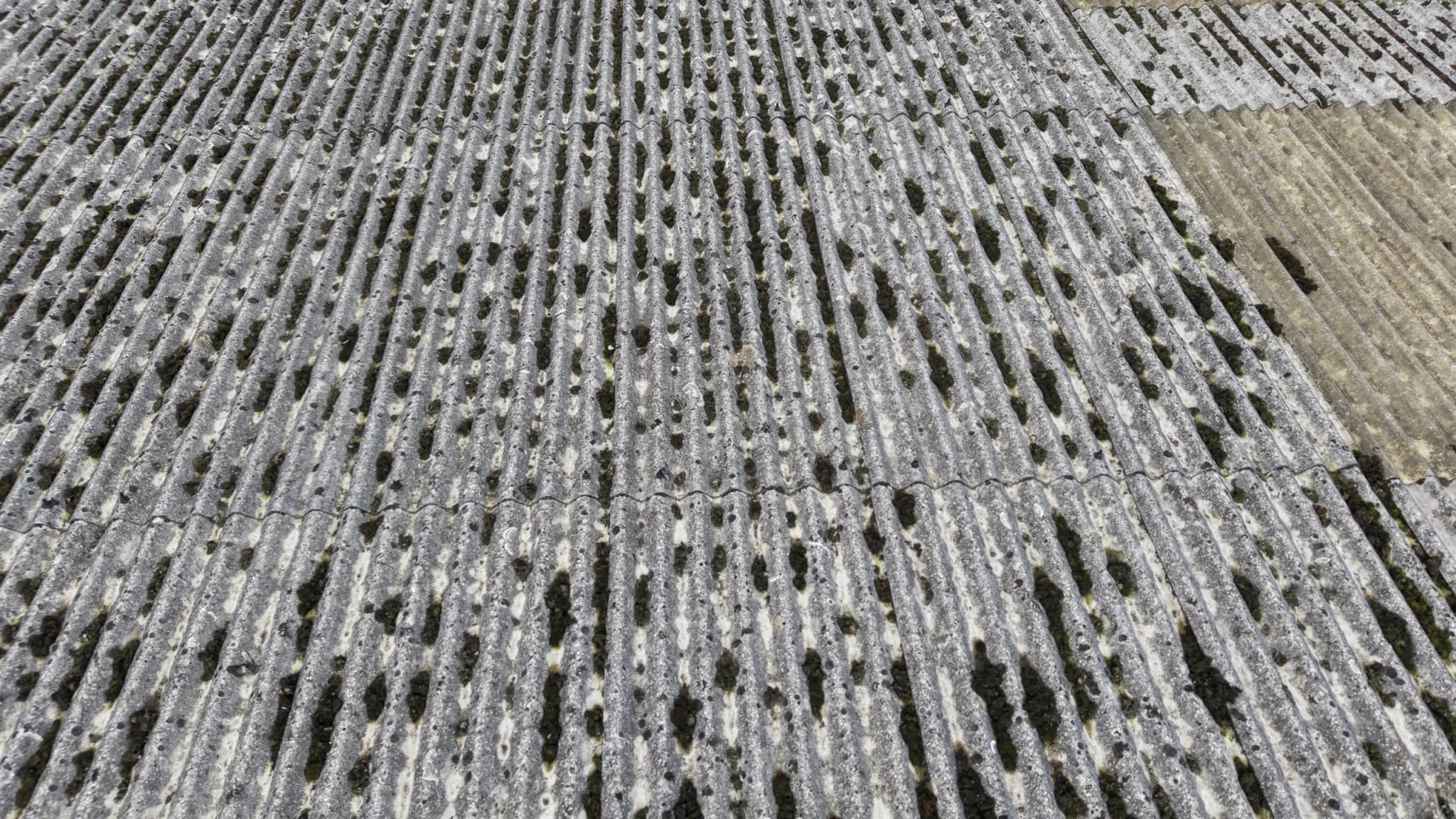
On siteSurvey: moss and algae growth in corrugated fibre-cement sheeting before treatment
- IPAF
- Accredited operators on every lift
- £10m
- Public liability insurance
- RAMS
- Site-specific, issued before we mobilise
- 5 days
- From request to survey
Photographic record
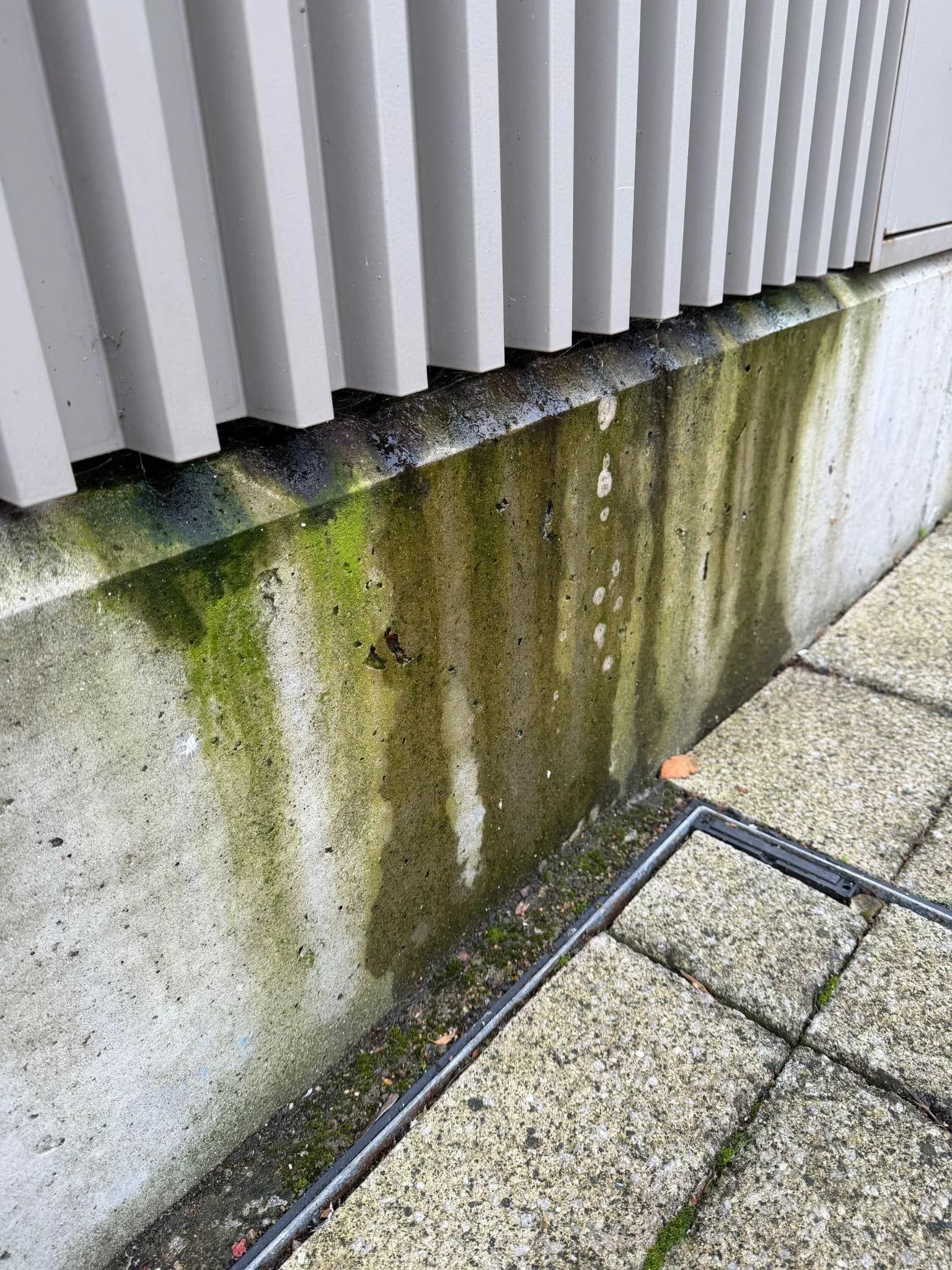
Photographed at survey
- Office
- 01628 232 450
- Mobile / WhatsApp
- 07308 755 755WhatsApp
The problem
When a dirty wall is a biological problem
Green, black and red staining on a commercial façade is often more than surface dirt. Once biological growth has colonised render or another wall surface, it can spread across large elevations and create noticeable colour differences, and a relatively modern building starts to look older and less well maintained than it is.
Blasting the visible marks away removes the growth without treating it, so the improvement may be only temporary and the same elevation returns to the maintenance list. We establish what is growing and why before we specify the treatment.
The pattern of growth shows where to work. One elevation can be heavily affected while another on the same building stays comparatively clean, with growth concentrated behind downpipes, around projections, under window details and close to ground level. Reading that pattern lets us treat the affected areas rather than the whole building.
Growth is sometimes more noticeable because another defect, such as damaged drainage or water ingress, is keeping the wall persistently damp. Where the survey finds one, we take it into account when we set out the expected result.
- Shaded and north-facing elevations
- Walls with little direct sunlight dry more slowly after rain, so one side of a building can develop growth much faster than another.
- Nearby trees and planting
- Dense vegetation increases shade and influences moisture around the building.
- Persistent dampness
- Areas that stay wet give biological growth favourable conditions to colonise.
- Water run-off
- Repeated run-off leaves distinctive staining beneath parapets, sills and drainage points.
What we do
Specification of works
Soft washing is not pressure washing on a low setting. A suitable treatment is given time to act on the growth, so the treatment, not the force of the water, does most of the work.
| Areas | Green growth, black staining and red or pink organic discolouration on rendered, painted and masonry façades, plinths, window surrounds and lower wall sections of offices, schools, hotels, retail buildings, managed blocks and mixed-use units. Where render also needs cleaning for atmospheric dirt, see render and masonry cleaning; where brick or stone also needs cleaning for dirt and weathering, see brick and stonework cleaning. |
|---|---|
| Method | Soft washing: the treatment strength, application and contact time are set in the specification of works. The treatment is applied in a controlled way to the affected areas and left to work rather than washed straight off, then rinsed where the method requires it. High elevations are worked from our dedicated tracked spider lift: see high-level access cleaning. |
| Before work starts | We check the render system and its condition, painted sections, repairs, cracks and sealants, and the glazing, signage, metalwork, planting and pedestrian routes beside each elevation, and set the application around them. Timing is part of the specification: heavy rain cuts contact time, strong wind makes controlled application harder and very warm conditions change how a treatment behaves. |
| Recorded | Cracked render, failed coatings, signs of water ingress and other visible defects are listed in the completion report's defect schedule. The report ends with a planned preventative maintenance (PPM) proposal, with a suggested review cycle based on how quickly growth is expected to return on that building. |
| Exclusions | Treatment does not repair the building. It does not correct cracked render, failed coatings, structural movement, water ingress, damaged drainage, defective detailing or discolouration within the substrate itself, and it cannot change the shade and moisture that allow growth to return. |
- Office
- 01628 232 450
- Mobile / WhatsApp
- 07308 755 755WhatsApp
Included on the project
- Drone survey of roofs and high-level areas before pricing
- Fixed-price proposalspecification of works, programme and exclusions
- Site-specific RAMS issued before mobilisation
- Dedicated tracked spider-lift accessIPAF-accredited technicians
- Completion reportbefore-and-after photography and defect schedule
- £10 million public liability cover
How the work is delivered
Survey it. Specify it. Plan it. Deliver it. Document it. Maintain it.
- 01SurveySite visit and drone survey, with the condition photographed.
- 02ProposalFixed price, with specification of works, programme and exclusions.
- 03MobilisationRAMS issued; asbestos register, drainage drawings and site rules checked.
- 04WorksZone by zone behind exclusion areas, with arisings removed and wash-water control planned.
- 05Completion reportBefore-and-after photography, a defect schedule and sign-off.
- 06PPMA planned maintenance proposal, so the problem does not come back unnoticed.
- Office
- 01628 232 450
- Mobile / WhatsApp
- 07308 755 755WhatsApp
Safety and site control
Planned before we arrive
- Wash water
- We plan wash-water control and drain protection for every site.
- Schools and care settings
- We work in school holidays and INSET days, or behind exclusion zones away from pupils and residents.
- Weather
- Our normal lift wind limit is 20 mph. Weather rescheduling is free of charge.
Related
Where algae treatment connects
Questions
Algae and biological growth FAQs
Can you remove black algae from render?
Yes. Black biological staining on render can be treated by soft washing. The result depends on the growth and the condition of the render beneath it. Where complete removal cannot be guaranteed, this is identified before works begin and the expected improvement is set out clearly.
Is pressure washing the right way to remove algae from render?
No. Visible growth can sometimes be removed physically, but pressure alone does not treat the biological contamination, and excessive pressure can be inappropriate on render. We soft wash render and give the treatment the contact time it needs.
How quickly does the treatment work?
Some improvement may be visible quickly, while remaining organic discolouration can continue to weather away after treatment. We explain before work begins what the treatment is intended to achieve and whether improvement will continue after the visit.
Will algae return after treatment?
Yes, it can. Treatment cannot change the shade, moisture and building orientation that encourage growth, and the rate of regrowth varies between properties. The completion report ends with a PPM proposal, so an elevation with a history of growth can be monitored rather than left until the whole façade is heavily discoloured again.
Can you treat high elevations on an occupied building?
Yes. High elevations are reached from our dedicated tracked spider lift, operated by IPAF-accredited Chiltern Surface Co technicians. Works are phased zone by zone behind agreed exclusion areas so that access can be maintained wherever the site conditions allow, and out-of-hours working is available where the site needs it.
What do you need from us before the survey?
The site address, the elevations affected, any access restrictions and site rules, and whether the façade has been cleaned or treated before. If you are unsure whether the staining is algae, general dirt or something else, the survey establishes that before any treatment is recommended.
Next step
Request a Site Survey
Tell us about the building, the elevations affected and any earlier cleaning. We survey the façade and the pattern of growth, then send a fixed-price proposal with a specification of works, programme and exclusions.
- Office
- 01628 232 450
- Mobile / WhatsApp
- 07308 755 755WhatsApp