
Commercial roof cleaning
Buckinghamshire · Oxfordshire · Berkshire
Commercial Roof Cleaning
Survey-led roof cleaning for commercial, industrial and managed properties across Buckinghamshire, Oxfordshire and Berkshire.
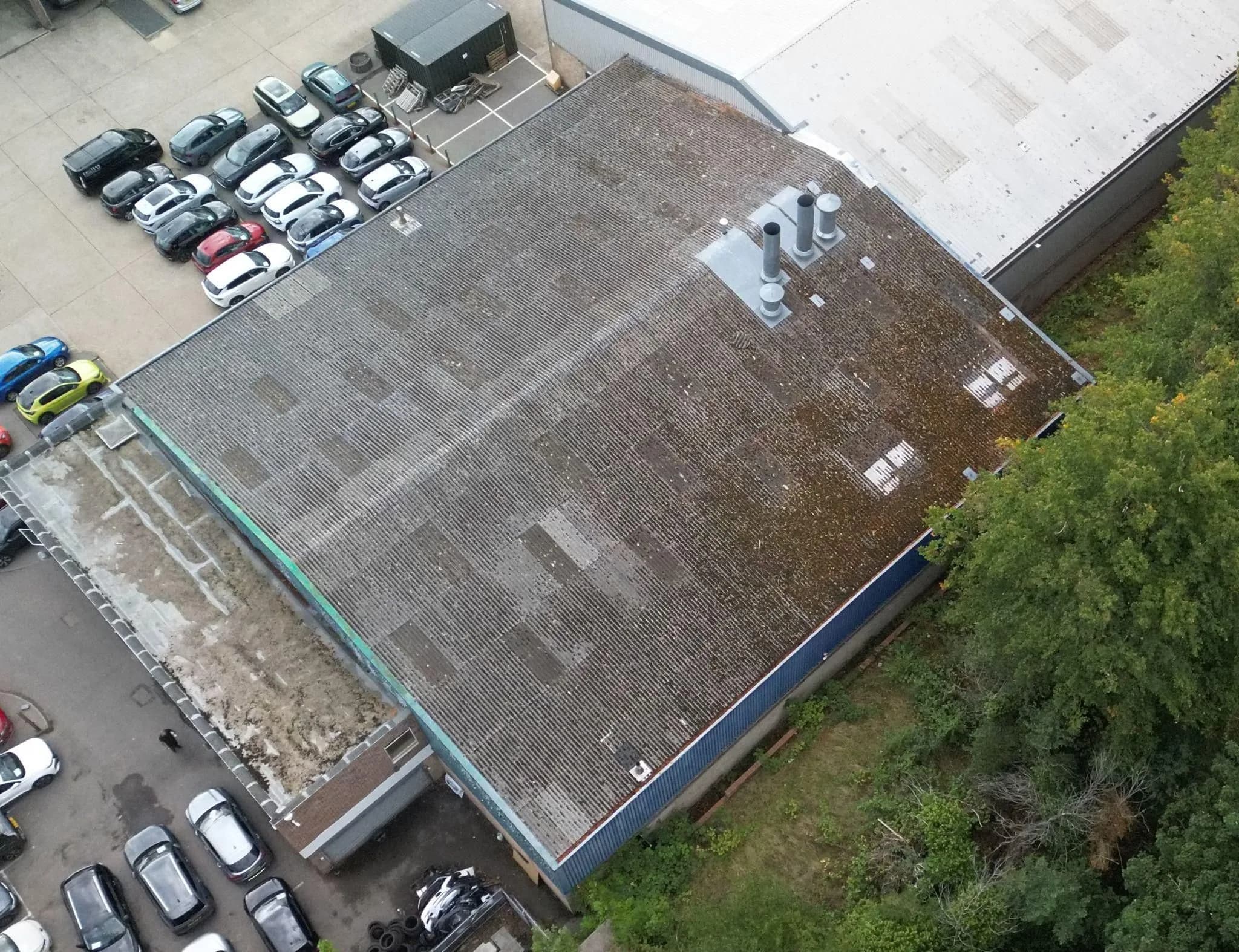
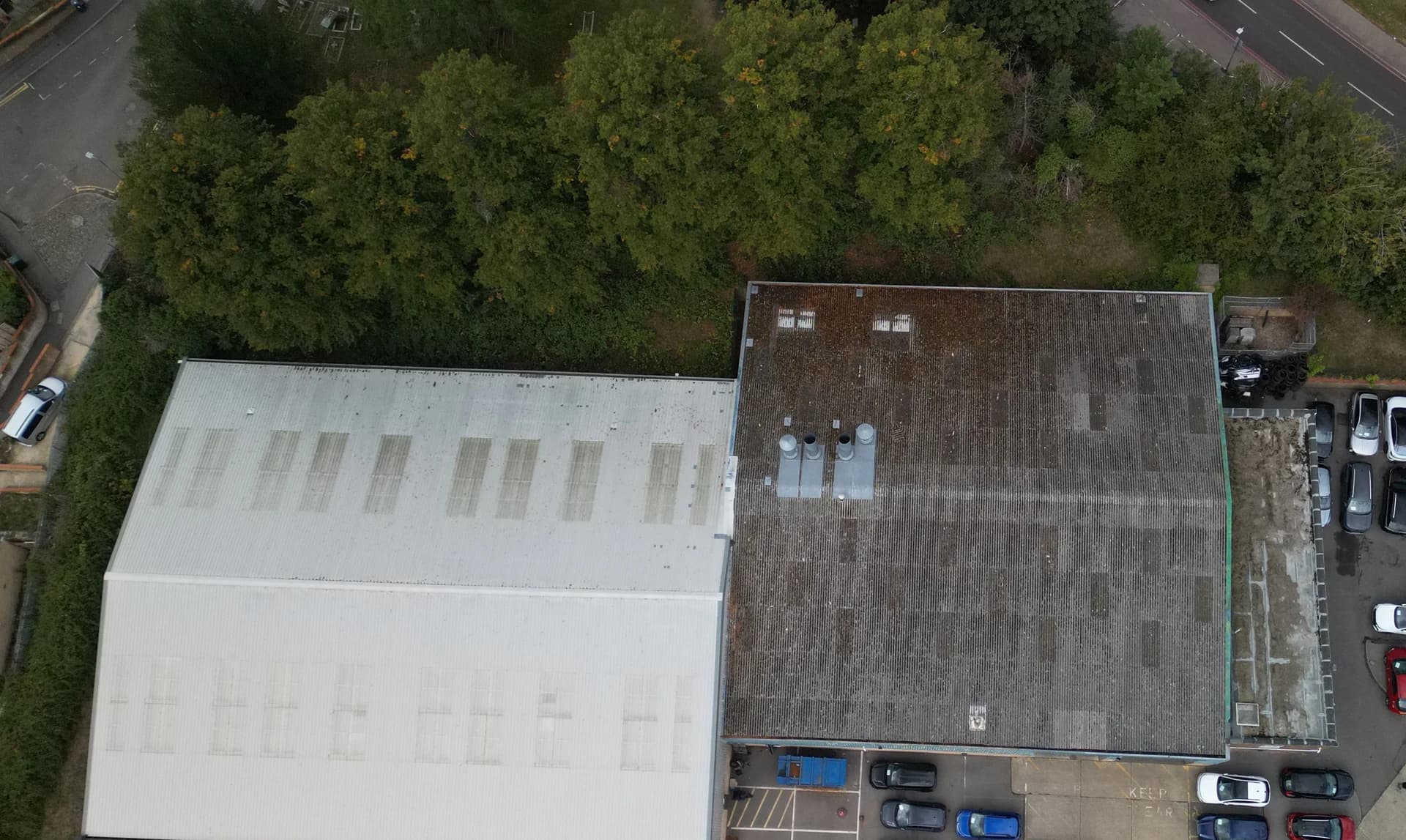
On siteSurvey: a moss-darkened profiled-sheet roof with patched rooflights, photographed by drone before pricing.
- IPAF
- Accredited operators on every lift
- £10m
- Public liability insurance
- RAMS
- Site-specific, issued before we mobilise
- 5 days
- From request to survey
Photographic record
Survey and works
- Office
- 01628 232 450
- Mobile / WhatsApp
- 07308 755 755WhatsApp
The problem
What growth and debris do to a commercial roof
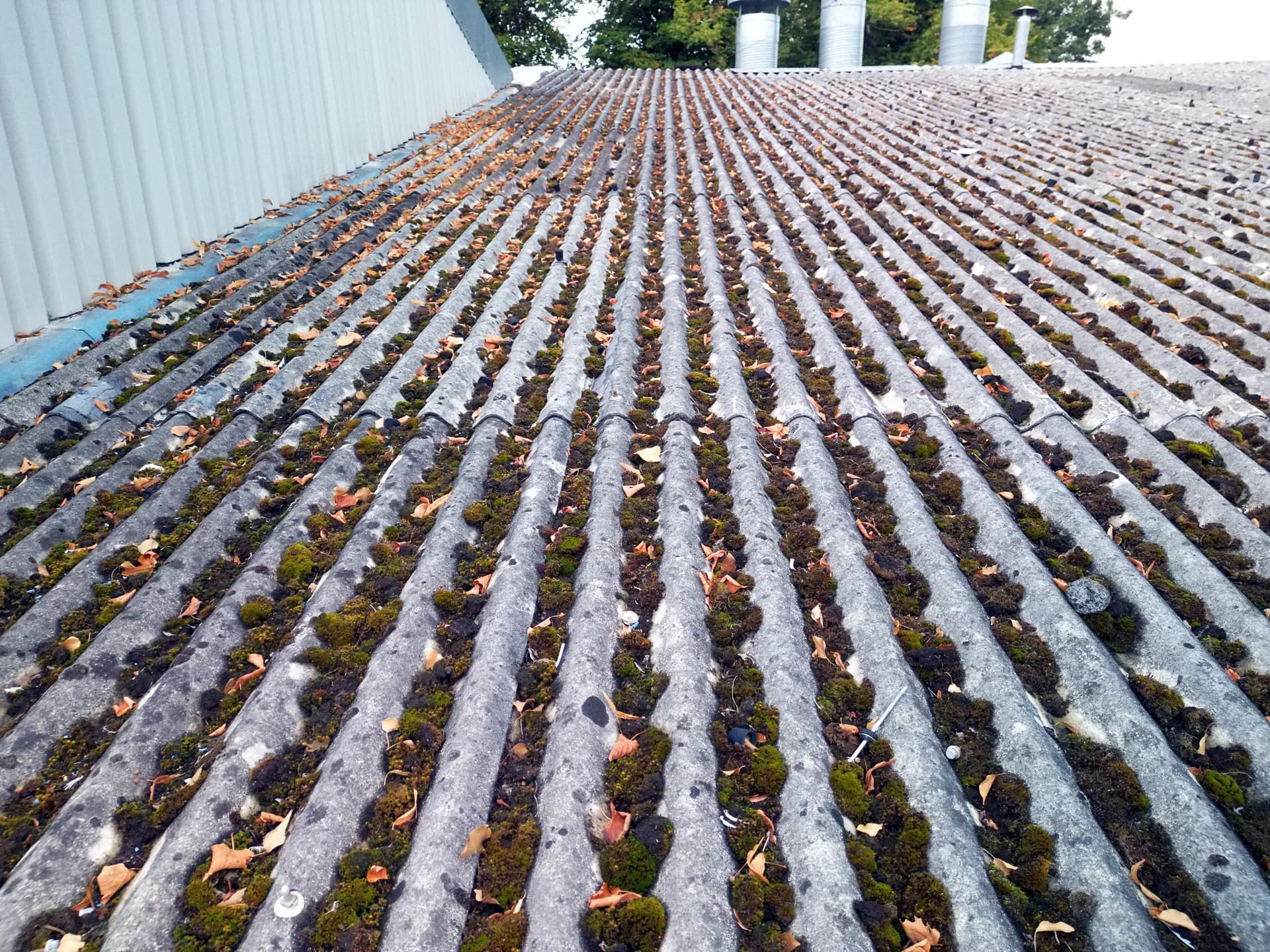
Organic growth and accumulated debris hold moisture and obstruct the flow of rainwater. Build-up caught early is a targeted clean; left alone, it becomes a larger cleaning task.
A commercial roof is part of a working building, not an isolated surface. Its material, age, condition, drainage, access points, rooflights, plant and daily operations all affect how it should be cleaned. We survey the roof by drone before we price it, where airspace permits, and recommend the method and access plan from what we find.
The building's use shapes the programme as much as the roof does. Warehouse and factory roofs sit above loading activity, vehicle routes and production. On school and college sites and care settings, the working window is agreed with the site before the programme is fixed. Apartment blocks need communal access, parking and resident communication agreed through the managing agent or freeholder.
- Blocked outlets
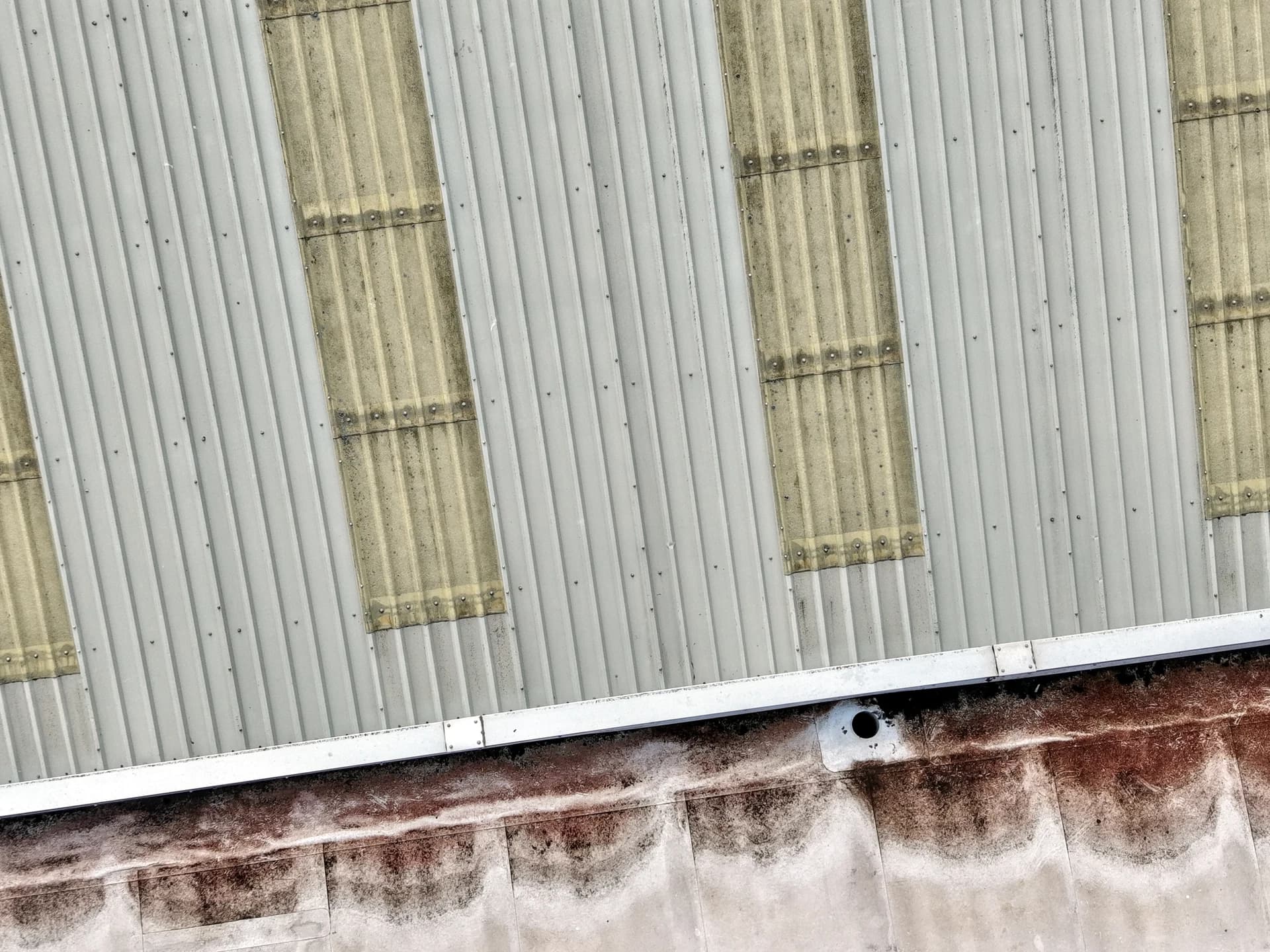
- On flat roofs, leaves, silt and moss collect behind upstands, around plant bases and at outlets, often where the roof is shaded or cannot be inspected from ground level, and the build-up holds rainwater on the roof.
- Growth in the drainage
- On pitched roofs, moss loosens and moves into valleys, gutters and downpipes, where it restricts how the roof drains.
- Standing water
- Water left standing on a flat roof can indicate blocked drainage, poor falls or a roof defect.
- Defects out of sight
- Growth and debris can hide damaged tiles, sheets and membranes, and make the roof harder to assess.
- Presentation
- Growth and staining on visible slopes and canopies affect how the building presents to occupiers, tenants and the public.
What we do
Specification of works
A one-off clean may be needed before a building survey, handover, lease event, refurbishment, sale or planned repair programme. Roofs where build-up keeps returning are better on planned preventative maintenance (PPM).
| Areas | Pitched tiled roofs; flat roofs and accessible membrane systems; profiled metal and coated sheet roofs; warehouse and factory roof areas; canopies and suitable ancillary roof surfaces; roof areas around outlets, valleys and gutters. Large roofs, where growth, bird-related residue and atmospheric deposits vary from section to section, can be phased by elevation, roof section or priority area. |
|---|---|
| Method | Set by the roof covering and its condition, never by maximum pressure: controlled manual moss removal, low-pressure cleaning and soft washing, alone or combined. On flat roofs, loose material is cleared first, then the method follows the membrane and any manufacturer or roofing contractor guidance. Where growth remains after cleaning, a compatible treatment may be specified: see roof moss and algae treatment. High-level areas are reached from our dedicated tracked spider lift, operated by IPAF-accredited Chiltern Surface Co technicians, with the set-up planned around roof height, pitch, fragility, edge protection, ground conditions and the surroundings: see high-level access cleaning. |
| Arisings | Moss, silt and leaf material from the roof are arisings, removed from site, with skip provision where required. Gutters and outlets below the roof can be specified alongside it: see gutter and high-level cleaning. |
| Before work starts | We request the site's asbestos register and drainage drawings before roof work, with any roof surveys, known defects, access restrictions, permit procedures and site rules. Entrances, parked vehicles, pedestrian routes, neighbouring property and sensitive equipment below the roof set the exclusion zones and the sequence. |
| Recorded | Cracked tiles, failed fixings, damaged sheets, open laps, defective membranes and standing water are listed in the completion report's defect schedule for the appropriate roofing specialist, rather than presented as cleaning issues. The PPM proposal can prioritise outlets, valleys, shaded sections and areas near trees instead of repeating the whole roof. |
| Exclusions | Cleaning does not replace roof inspection, repair or waterproofing. It cannot restore worn coatings, repair damaged tiles, correct poor falls or make a roof watertight. Fragile roofs, asbestos-containing materials, uncertain coatings and significantly deteriorated surfaces are not treated as standard cleaning surfaces. Known hazardous or process-related residues must be identified by the client before a method is recommended, and may need controls or contractors beyond exterior cleaning. Some lichen and historic staining weathers gradually rather than disappearing immediately; where complete removal cannot be guaranteed, this is identified before works begin. |
- Office
- 01628 232 450
- Mobile / WhatsApp
- 07308 755 755WhatsApp
Included on the project
- Drone survey of roofs and high-level areas before pricing
- Fixed-price proposalspecification of works, programme and exclusions
- Site-specific RAMS issued before mobilisation
- Dedicated tracked spider-lift accessIPAF-accredited technicians
- Completion reportbefore-and-after photography and defect schedule
- £10 million public liability cover
How the work is delivered
Survey it. Specify it. Plan it. Deliver it. Document it. Maintain it.
- 01SurveySite visit and drone survey, with the condition photographed.
- 02ProposalFixed price, with specification of works, programme and exclusions.
- 03MobilisationRAMS issued; asbestos register, drainage drawings and site rules checked.
- 04WorksZone by zone behind exclusion areas, with arisings removed and wash-water control planned.
- 05Completion reportBefore-and-after photography, a defect schedule and sign-off.
- 06PPMA planned maintenance proposal, so the problem does not come back unnoticed.
- Office
- 01628 232 450
- Mobile / WhatsApp
- 07308 755 755WhatsApp
Safety and site control
Planned before we arrive
- Roofs
- We identify the roof covering before any work is proposed and request the asbestos register. Asbestos-cement and fragile roofs are never pressure-washed or walked on.
- Wash water
- We plan wash-water control and drain protection for every site.
- Schools and care settings
- We work in school holidays and INSET days, or behind exclusion zones away from pupils and residents.
- Weather
- Our normal lift wind limit is 20 mph. Weather rescheduling is free of charge.
Related
Where roof work connects
Questions
Commercial roof cleaning FAQs
Do you pressure wash every commercial roof?
No. Pressure is only one possible tool. The survey decides whether controlled manual removal, low-pressure cleaning, soft washing or a compatible treatment suits the roof.
Can roof cleaning stop a leak?
No. Cleaning may remove debris and expose areas that need attention, but leaks, damaged coverings and waterproofing defects need investigation and repair by the appropriate roofing specialist. We record what we find in the defect schedule.
Can the building stay open during roof cleaning?
Yes, where entrances and sensitive areas can be kept clear of the work. Works are phased zone by zone behind agreed exclusion areas, so access can be maintained wherever the site conditions allow. Out-of-hours working is available where the site needs it.
What if the roof may contain asbestos?
An asbestos-cement roof is never pressure-washed or walked on. Suspected or confirmed asbestos-containing materials are not treated as standard roof-cleaning surfaces: we review the asbestos register, the relevant surveys and any specialist requirements before anything is specified.
How often should a commercial roof be cleaned?
There is no fixed cycle. Roof material, pitch, shading, nearby trees, drainage, exposure and the rate of growth all affect how quickly deposits return, so the completion report ends with a PPM proposal and a suggested review cycle for the roof.
What do you need from us before the survey?
The site address, building use, approximate roof area, the roof type if known, access restrictions and any previous cleaning history. For roof work we also ask for the site's asbestos register and drainage drawings. Photographs, plans and condition reports help where available.
Next step
Request a Site Survey
Tell us about the building, the roof type, visible growth, access and any known defects or site restrictions. We survey the roof, then send a fixed-price proposal with a specification of works, programme and exclusions.
- Office
- 01628 232 450
- Mobile / WhatsApp
- 07308 755 755WhatsApp