
Commercial render cleaning
Buckinghamshire · Oxfordshire · Berkshire
Commercial Render and Masonry Cleaning
Professional cleaning for rendered façades, brickwork and masonry on commercial buildings across Buckinghamshire, Oxfordshire and Berkshire, with each elevation surveyed before the method is chosen.
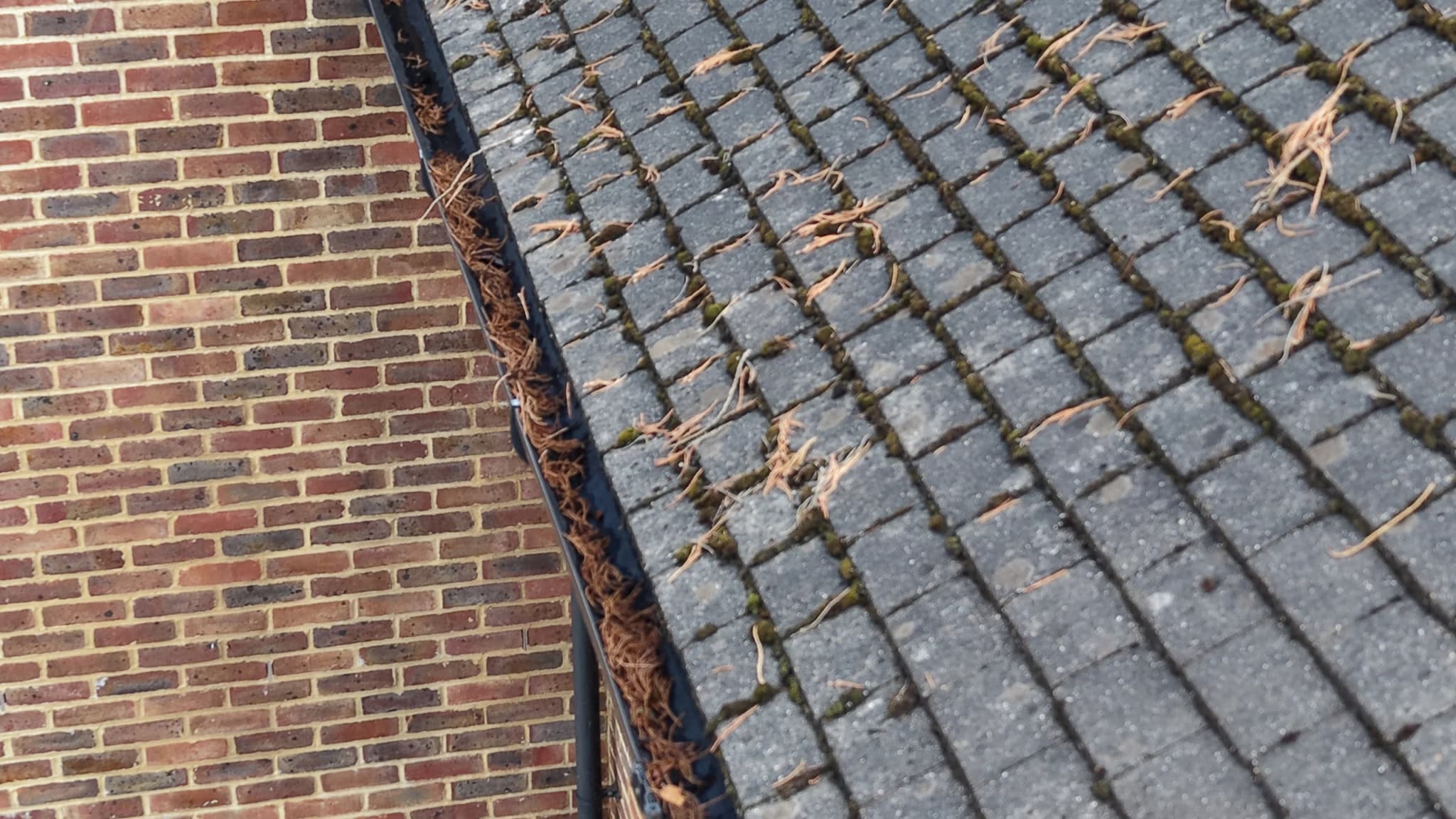
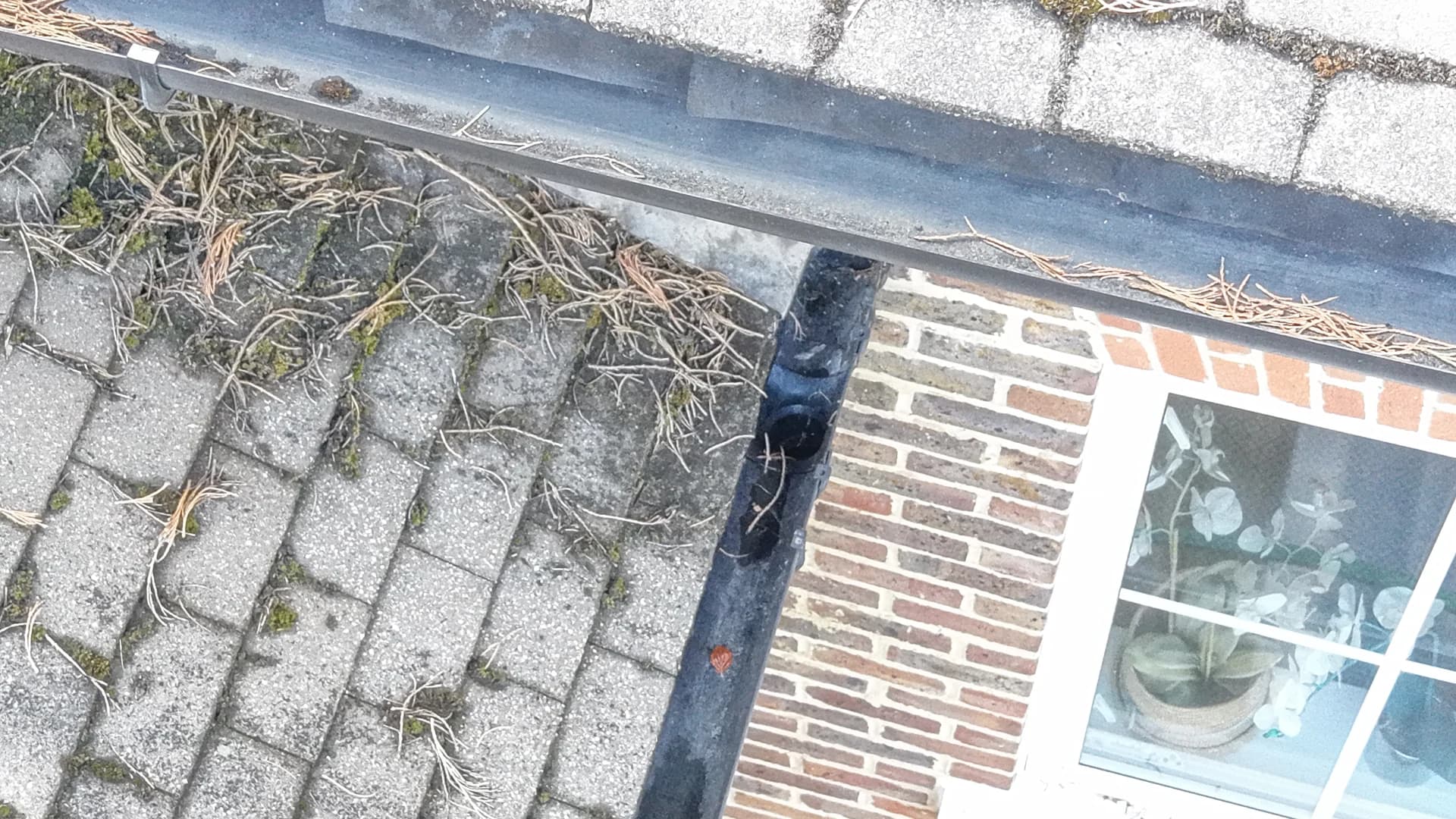
On siteSurvey: brick wall beside a tile edge with a gutter packed with needles
- IPAF
- Accredited operators on every lift
- £10m
- Public liability insurance
- RAMS
- Site-specific, issued before we mobilise
- 5 days
- From request to survey
Photographic record
Works at height
- Office
- 01628 232 450
- Mobile / WhatsApp
- 07308 755 755WhatsApp
The problem
Why elevations stain, and why the method matters
Rendered and masonry walls collect atmospheric dirt, biological growth, weather staining and construction residue. Over time a commercial building can lose its clean, uniform appearance: streaks, patches and darkened areas appear on the elevations occupiers, visitors and the public see, and they show most on light-coloured render.
The cleaning method carries its own risk. Excessive pressure can mark render or expose weaknesses already present in the surface, and older or weakened pointing may not tolerate a process that suits sound modern brickwork. Washing away the visible colour does not always address the underlying biological growth.
- Biological growth
- Green, red, black or darker staining develops where an elevation stays damp. Shade, a north-facing aspect, nearby trees, rainwater movement and surface texture all encourage it.
- Atmospheric dirt
- Buildings close to roads, industrial activity or busy urban areas collect airborne contamination and traffic film.
- Run-off streaking
- Repeated rainwater movement leaves vertical streaks beneath window details, drainage points and other architectural features.
- General weathering
- Years of exposure leave render dull and uneven even where there is no single obvious source of contamination.
- Construction residue
- New, extended and refurbished buildings can be left with site dirt, dust and mortar deposits on their brick elevations.
What we do
Specification of works
The method is set by what the wall is made from, its condition and what is causing the staining, never by a standard pressure setting.
| Areas | Rendered façades, brickwork, stone and other masonry on offices, hotels, retail units, managed buildings, industrial and commercial units and schools. Listed, conservation-area and heavily weathered façades are covered under façade restoration. |
|---|---|
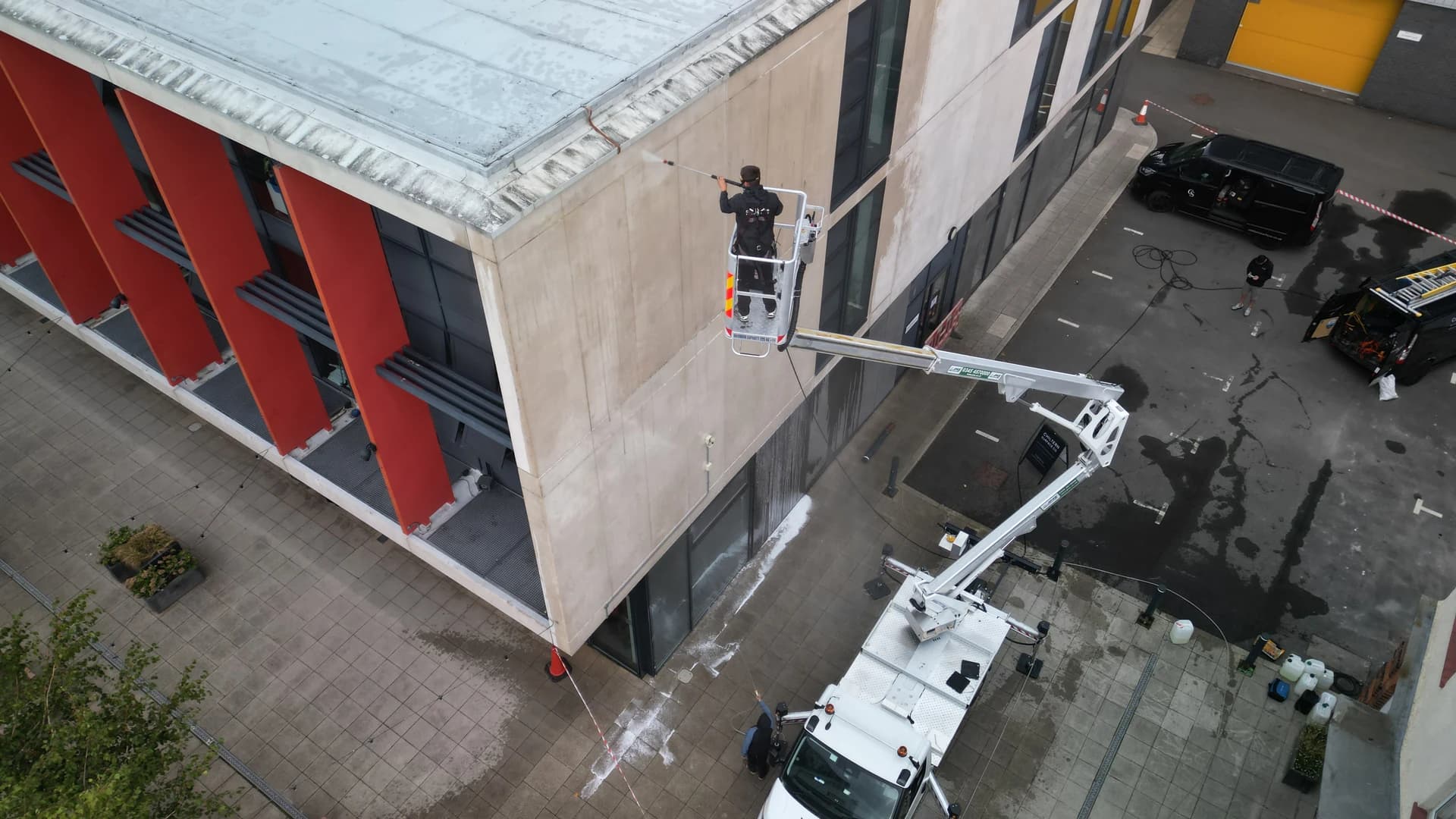
| Method | Soft washing on render where biological growth is the cause, with controlled rinsing where the finish and its condition suit it. Where algae or similar growth is the main issue, algae and biological growth removal covers the treatment. Brick and stone requirements are covered in more detail under brick and stonework cleaning. High elevations are reached from our dedicated tracked spider lift, operated by IPAF-accredited Chiltern Surface Co technicians; see high-level access cleaning. |
| Before work starts | We check for cracks, damaged render, weak pointing, previous coatings and repairs. Access is planned around the building height, ground conditions, canopies, obstructions, vehicles and pedestrian areas. The specification of works also allows for the windows, doors, signage, paving and adjoining timber, metal, glazing or stone beside each elevation. |
| Recorded | Defects found during the work are listed in the completion report's defect schedule, separate from the cleaning result. |
| Exclusions | Repair of cracks, damaged render, failed coatings, eroded masonry and defective pointing. Long-term weathering, historical repairs and variation within the render itself may remain visible once the dirt is removed. |
- Office
- 01628 232 450
- Mobile / WhatsApp
- 07308 755 755WhatsApp
Included on the project
- Drone survey of roofs and high-level areas before pricing
- Fixed-price proposalspecification of works, programme and exclusions
- Site-specific RAMS issued before mobilisation
- Dedicated tracked spider-lift accessIPAF-accredited technicians
- Completion reportbefore-and-after photography and defect schedule
- £10 million public liability cover
How the work is delivered
Survey it. Specify it. Plan it. Deliver it. Document it. Maintain it.
- 01SurveySite visit and drone survey, with the condition photographed.
- 02ProposalFixed price, with specification of works, programme and exclusions.
- 03MobilisationRAMS issued; asbestos register, drainage drawings and site rules checked.
- 04WorksZone by zone behind exclusion areas, with arisings removed and wash-water control planned.
- 05Completion reportBefore-and-after photography, a defect schedule and sign-off.
- 06PPMA planned maintenance proposal, so the problem does not come back unnoticed.
- Office
- 01628 232 450
- Mobile / WhatsApp
- 07308 755 755WhatsApp
Safety and site control
Planned before we arrive
- Wash water
- We plan wash-water control and drain protection for every site.
- Listed and conservation buildings
- We use test areas and low-pressure methods on listed and conservation-area buildings.
- Schools and care settings
- We work in school holidays and INSET days, or behind exclusion zones away from pupils and residents.
- Weather
- Our normal lift wind limit is 20 mph. Weather rescheduling is free of charge.
Related
Where render and masonry work connects
Questions
Questions about render and masonry cleaning
Do you pressure wash commercial render?
No, not as a default. High pressure can be inappropriate for some rendered finishes, particularly where the surface is aged, damaged or delicate, so the specification of works states the method for each elevation before work starts.
Can the survey tell us whether the façade needs cleaning now?
Yes. The survey establishes whether the elevations need cleaning now and which treatment suits them. You then receive a fixed-price proposal with a specification of works, programme and exclusions.
Do you clean brick and stone as well as render?
Yes. Brick, stone and other masonry are covered by the same survey and specification of works as the render. Construction residue after building work is covered on our brick and stonework cleaning page.
Can you work around an occupied building?
Yes. Works are phased zone by zone behind agreed exclusion areas, so access can be maintained wherever the site conditions allow. Access routes, staff, vehicles and the normal operation of the property are planned into the programme, and out-of-hours working is available where the site needs it.
Will cleaning repair damaged render?
No. Cleaning removes or reduces contamination; it does not repair cracks, failed coatings or damaged render. Defects we find are listed in the completion report so they can be addressed separately.
How often should commercial render be cleaned?
There is no universal cleaning schedule. Some elevations stay presentable for long periods; others stain quickly because of shade, vegetation, moisture or exposure. The completion report ends with a PPM proposal and a suggested review cycle for the building.
Next step
Request a Site Survey
Tell us about the building and the elevations affected. We survey them, then send a fixed-price proposal with a specification of works, programme and exclusions.
- Office
- 01628 232 450
- Mobile / WhatsApp
- 07308 755 755WhatsApp