
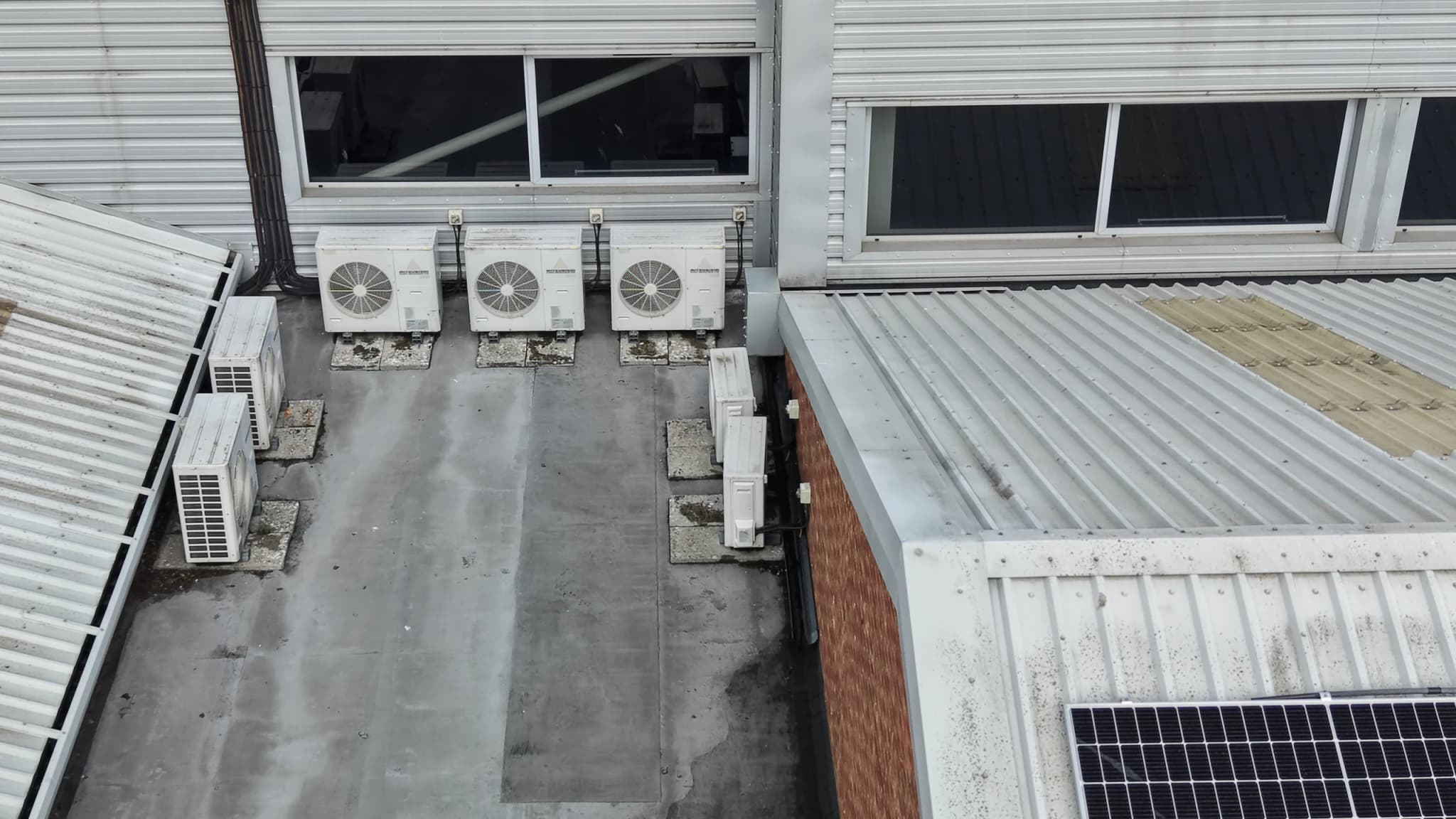
Elevations and cladding
Cladding cleaning
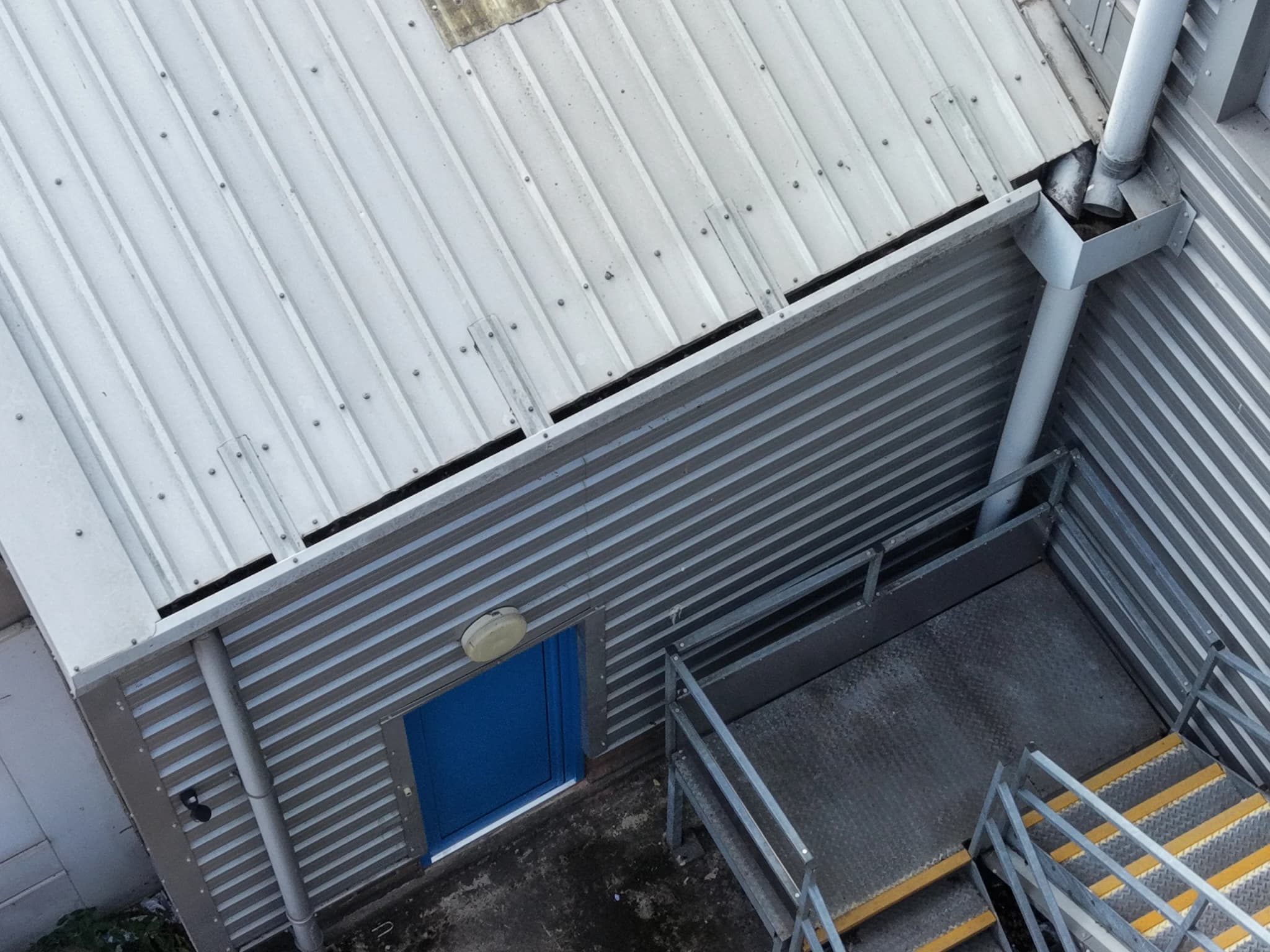
Coated metal panels on long warehouse and factory elevations, where streaking and atmospheric dirt collect around panel joints, beneath rooflines and below drainage points.
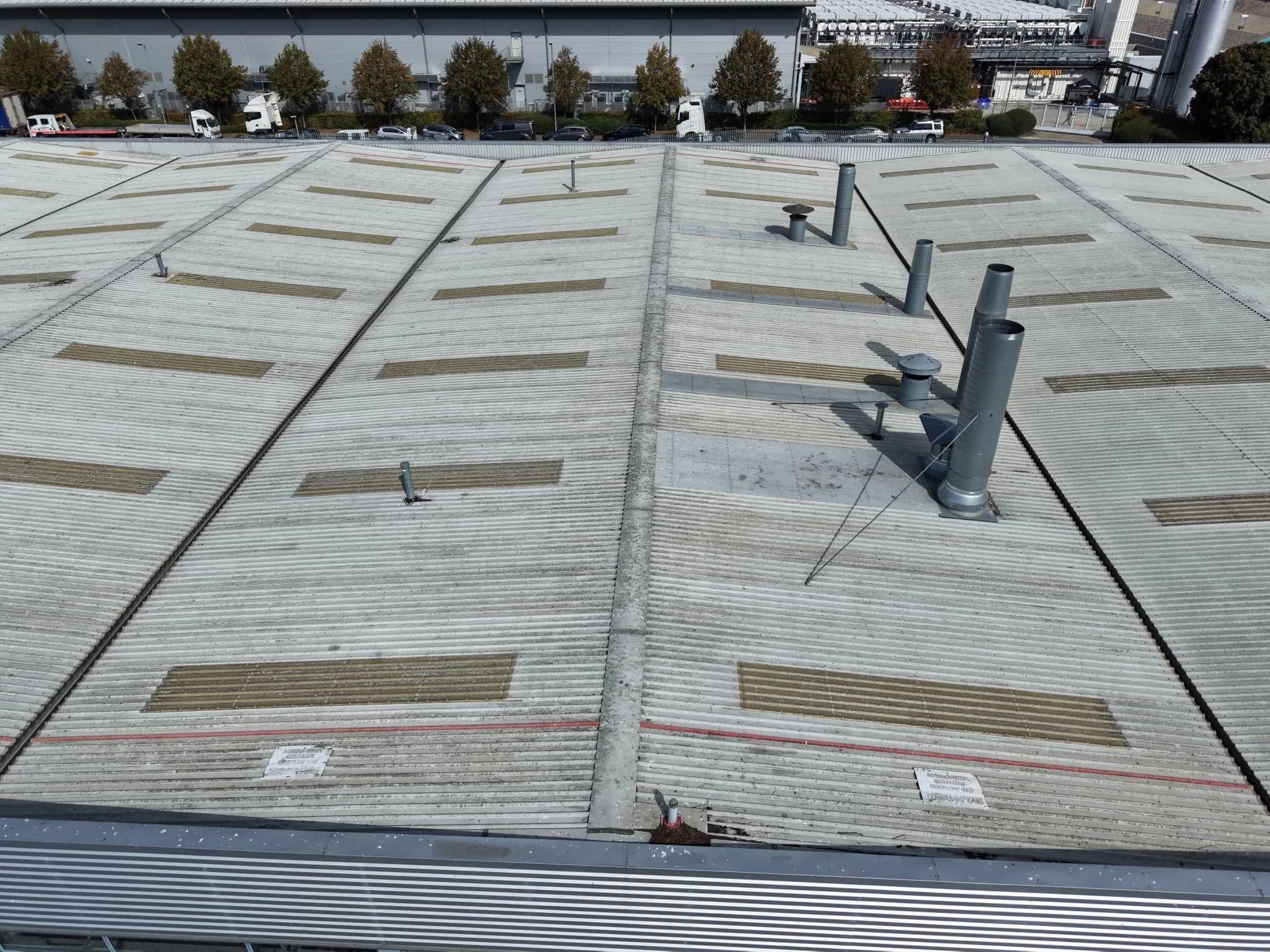
Industrial and logistics
Buckinghamshire · Oxfordshire · Berkshire
Exterior cleaning for warehouses, factories, distribution centres, logistics centres and industrial units across Buckinghamshire, Oxfordshire and Berkshire: surveyed, delivered at a fixed price and phased zone by zone around a site that keeps operating.
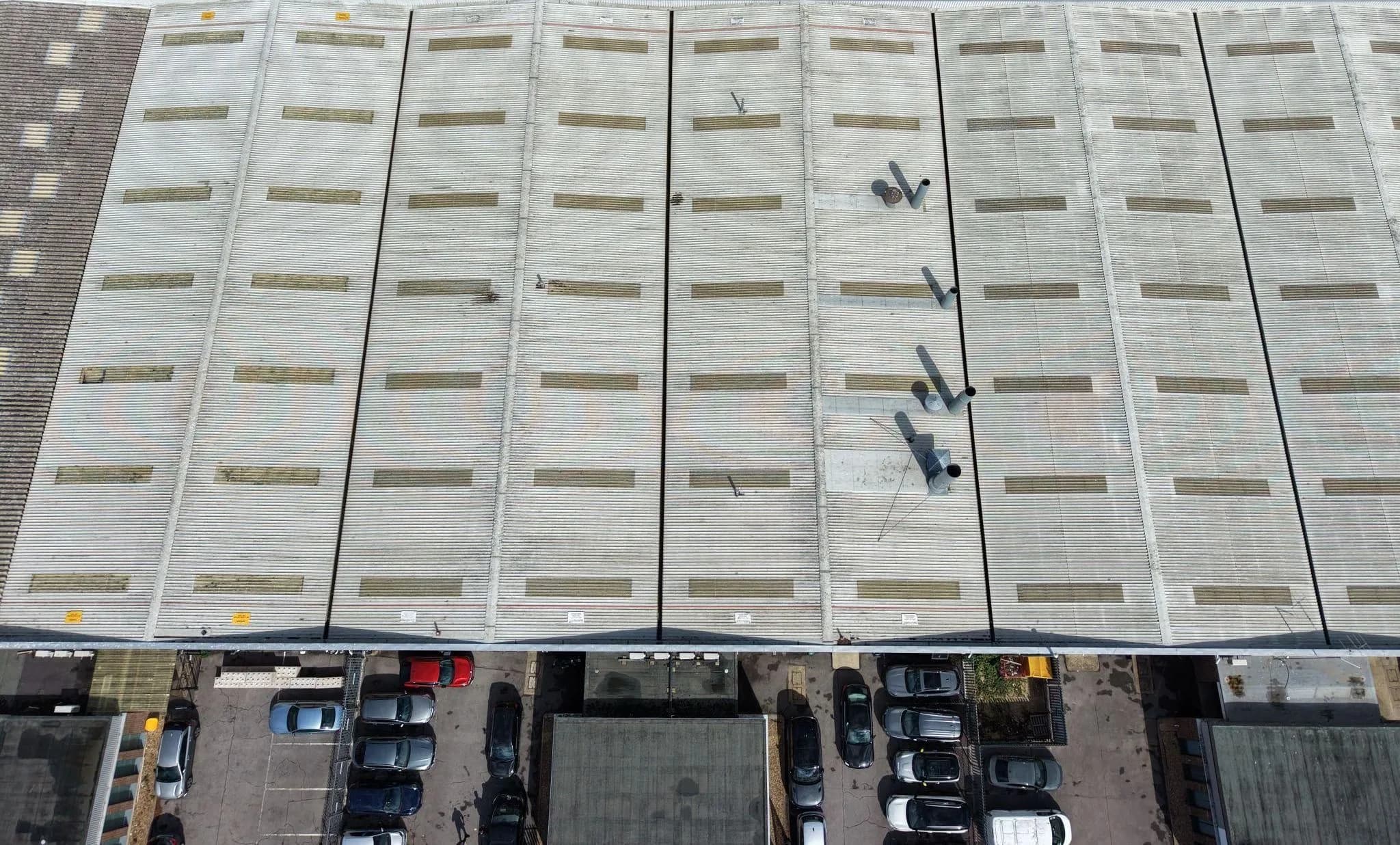
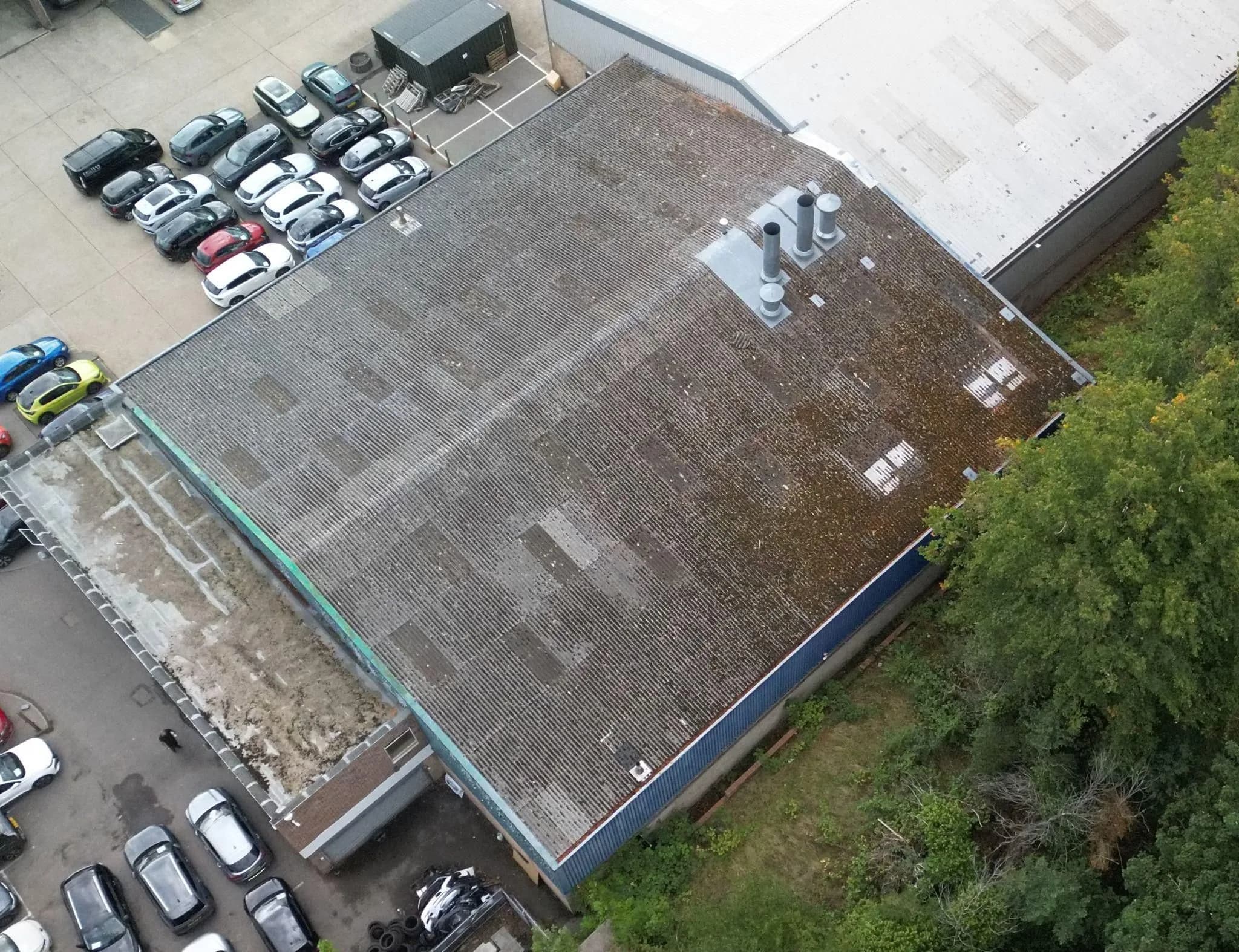
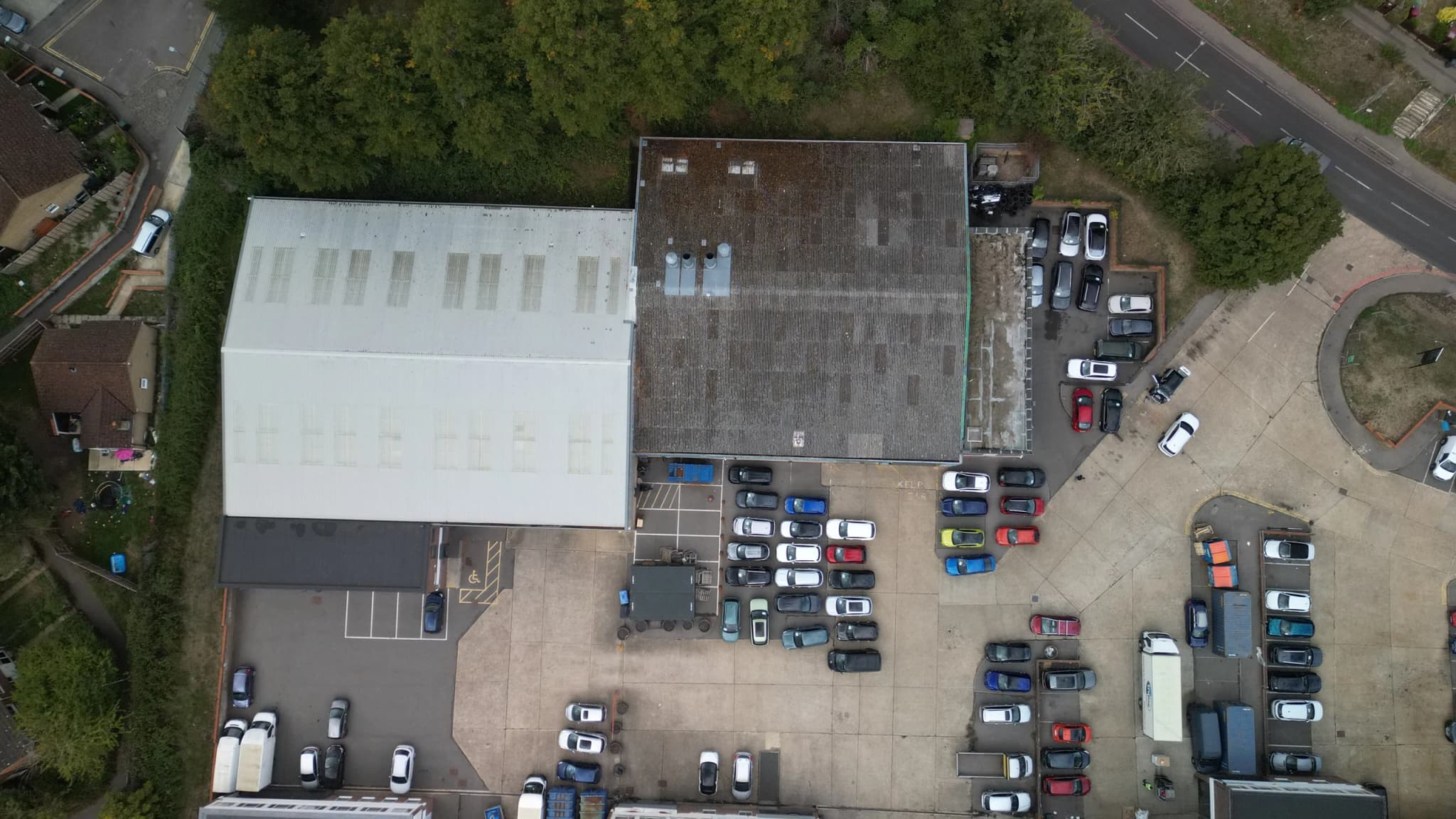
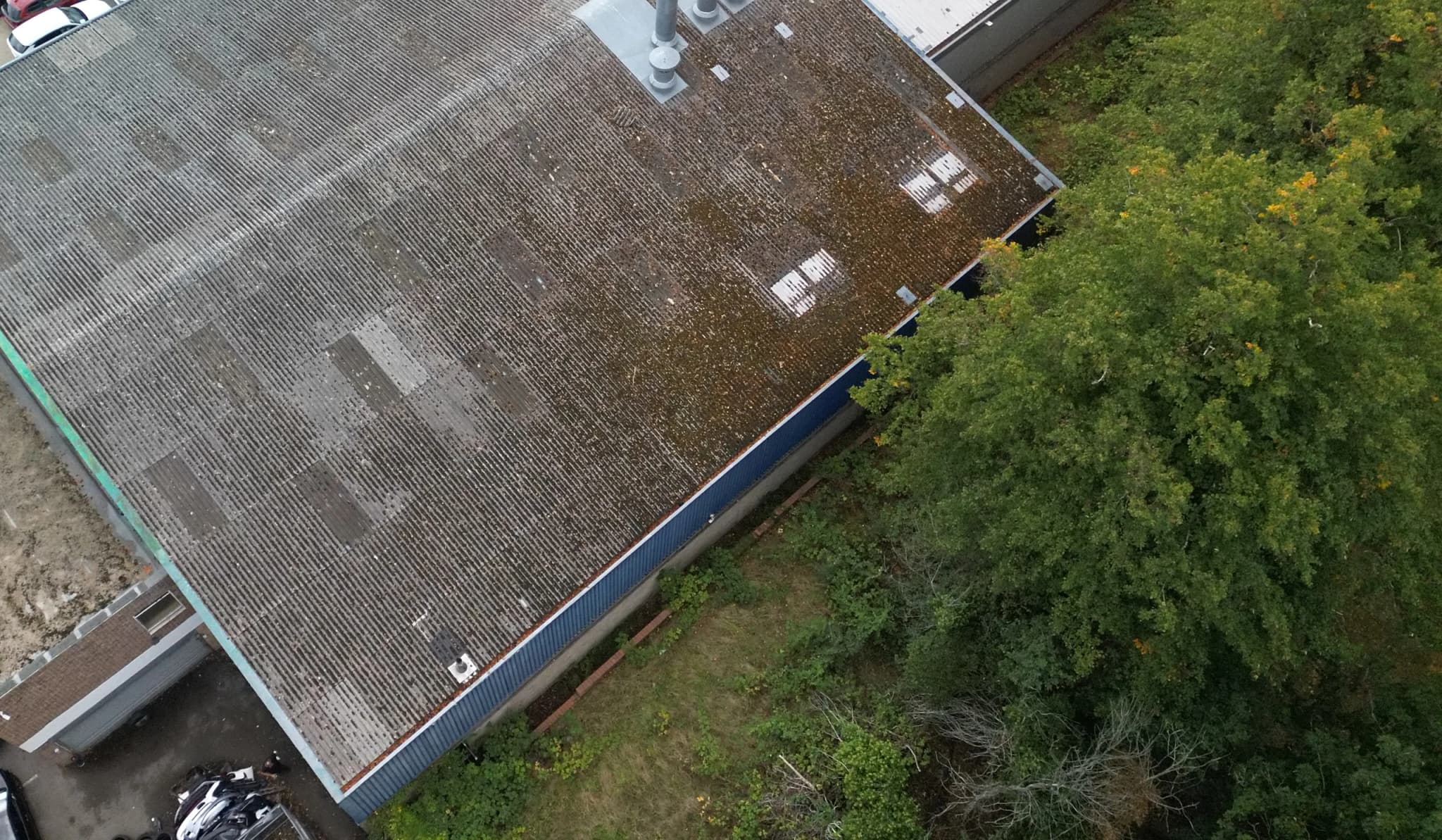
On siteSurvey: a multi-span factory roof with rooflights, flues and fragile-roof signs, photographed by drone.
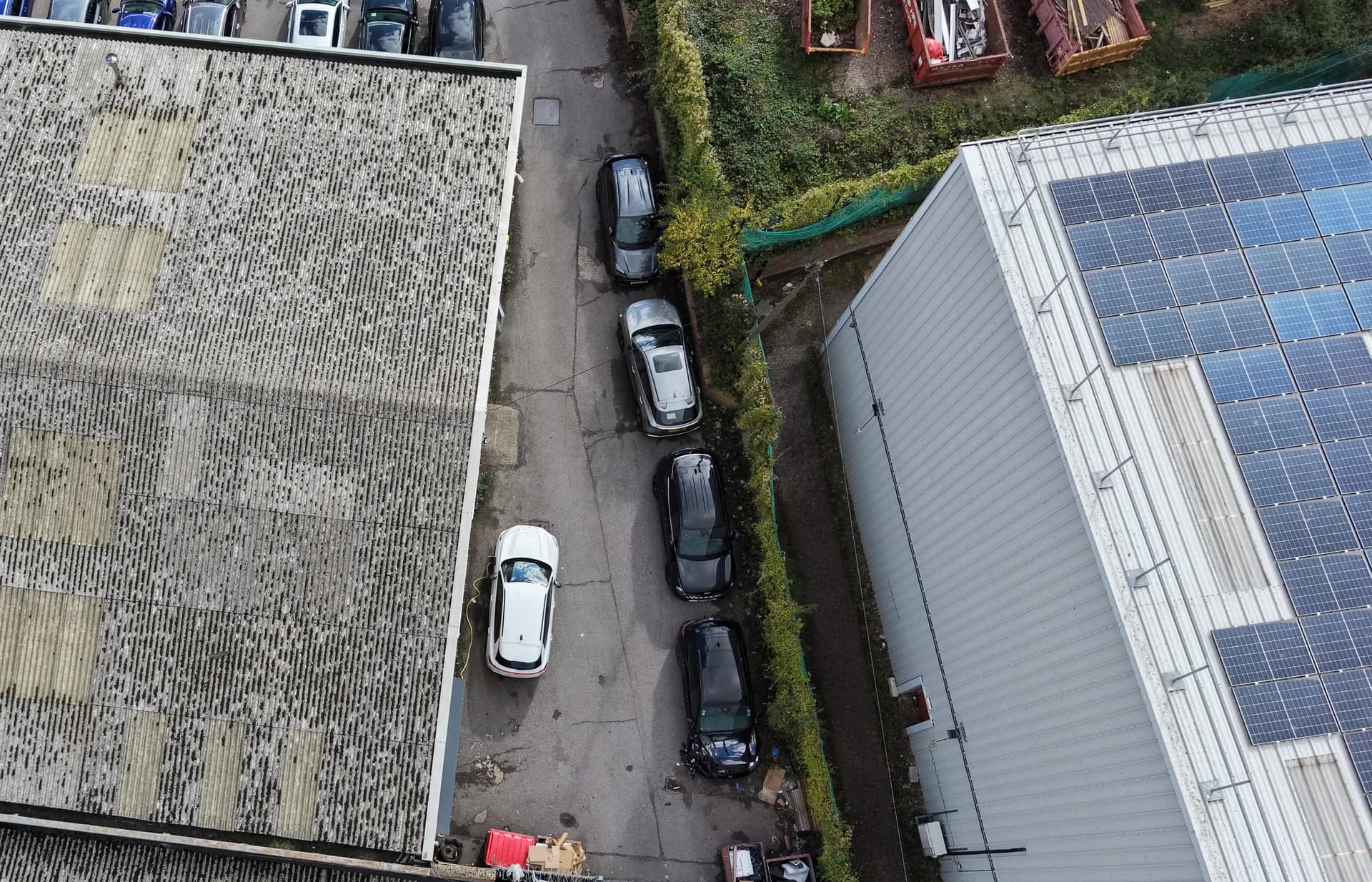
Photographic record
The problem
HGV movements, loading operations, exposed elevations and large roof areas all add to the build-up of dirt and staining around an industrial site. The building cannot always stop operating while its exterior is cleaned: deliveries still arrive, loading bays stay in use, HGVs enter and leave throughout the day, and employees and contractors move around the premises.
That makes access and sequencing the real risk. Before we price the work, we establish which areas need attention, where equipment and hoses can operate, and how that relates to vehicle routes, loading zones, entrances, pedestrian areas and emergency access. We would rather define the job properly at the start than create complications once equipment is on site. Chiltern Surface Co is owner-led and takes responsibility for the survey, specification, mobilisation, delivery and handover, so the exterior work fits the property instead of becoming another operational problem for the people managing it.
Appearance still has commercial value on a functional building. Customers visit, prospective tenants inspect units and investors review assets, and a neglected entrance or heavily weathered façade can influence the impression of the wider site, even when operations inside run well.
What we do
Cladding, roofs, gutters, yards and specialist contamination can be surveyed on one visit and brought into one specification of works, or a single priority area dealt with on its own. Large sites are divided into zones (front elevation, loading elevation, service areas, roofline and gutters, pedestrian areas), each with its own access arrangements and timing, so the facilities team knows what is being cleaned and when. The survey also identifies what can be excluded, so the proposal reflects the actual property rather than a generic package.
Elevations and cladding
Coated metal panels on long warehouse and factory elevations, where streaking and atmospheric dirt collect around panel joints, beneath rooflines and below drainage points.
Elevations and cladding
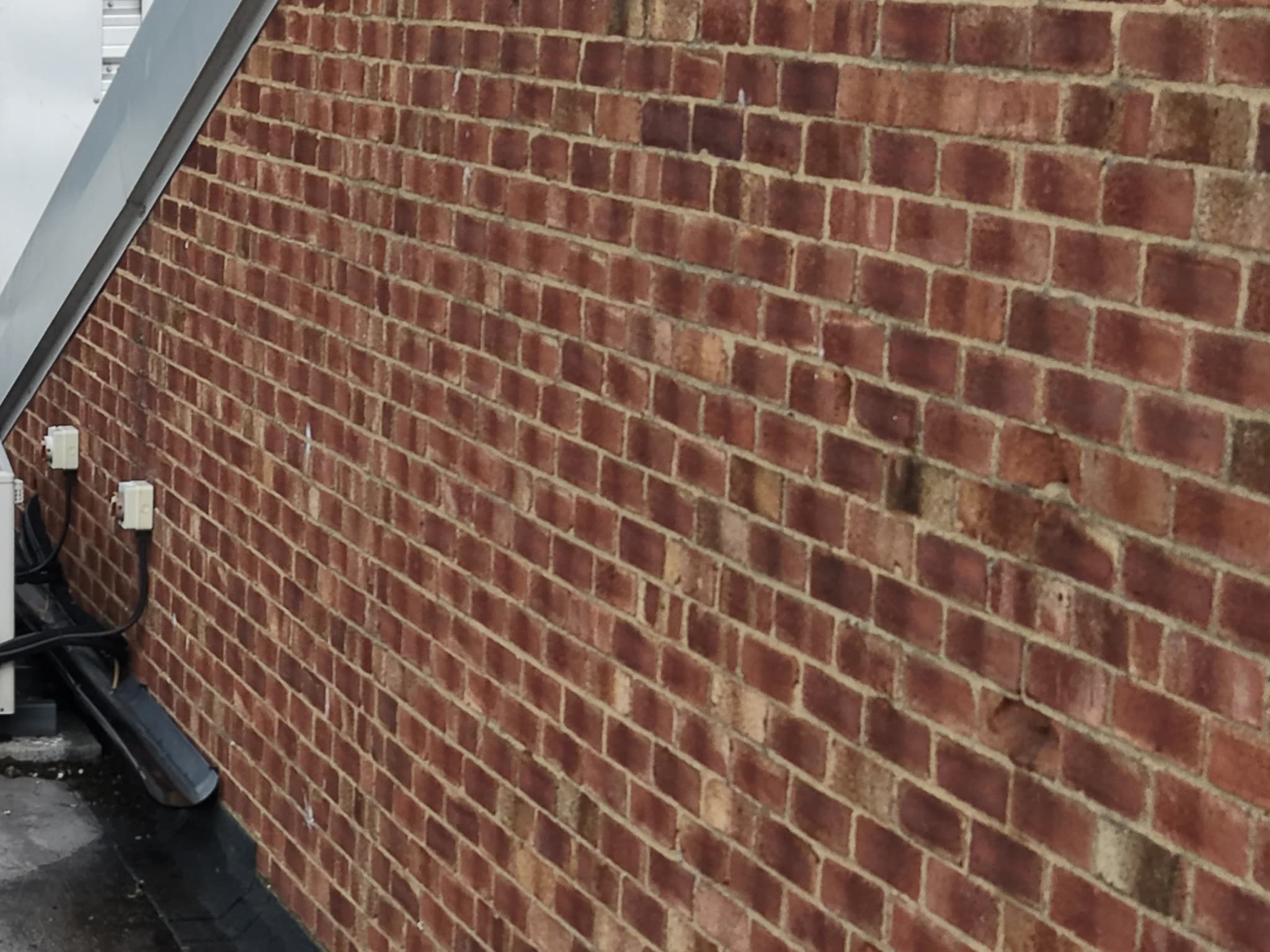
Front elevations and visitor-facing entrances, where presentation matters most.
Roofs and high level
Large roofs with rooflights, vents and drainage, scoped as their own part of the project.
Roofs and high level
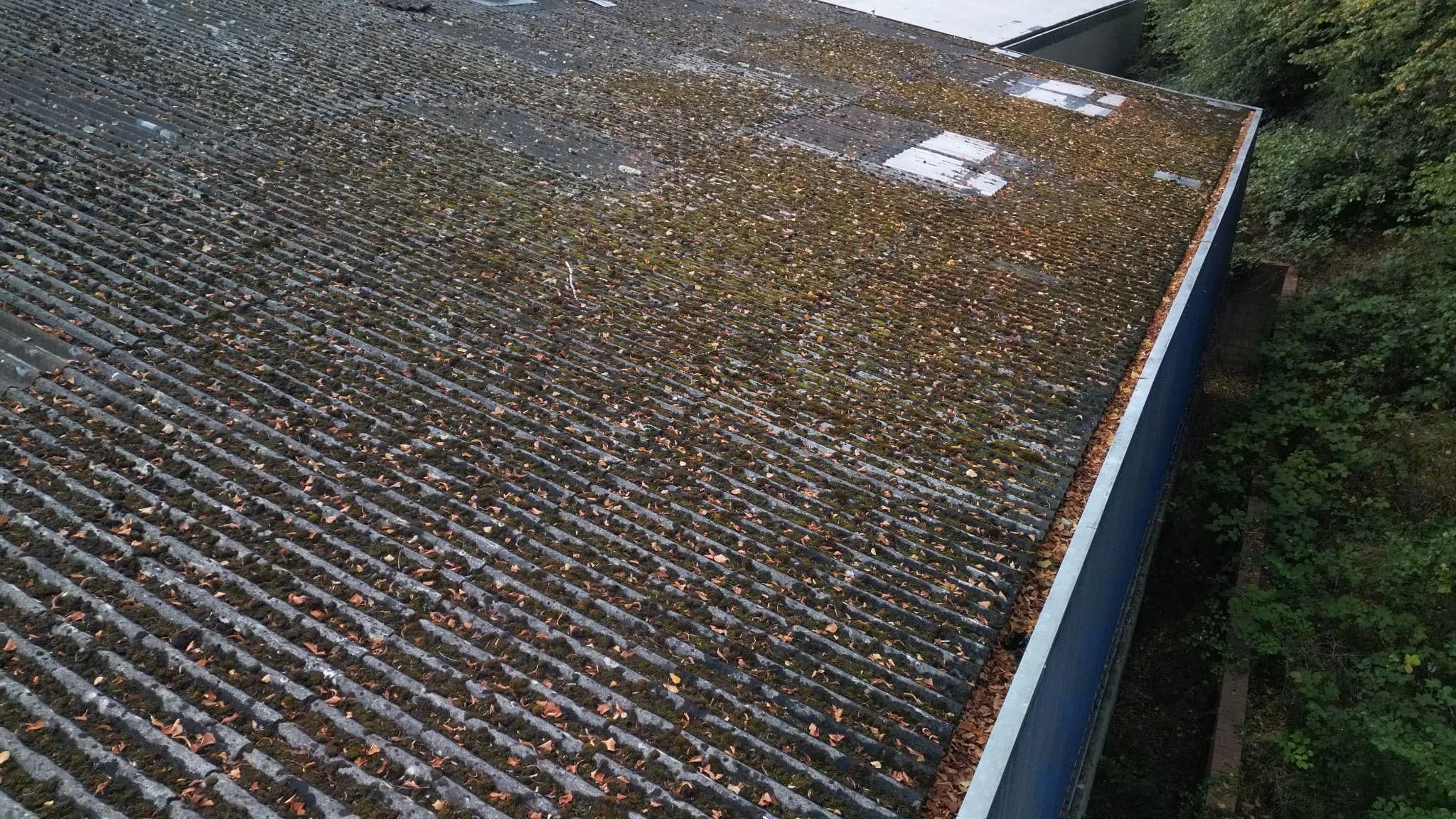
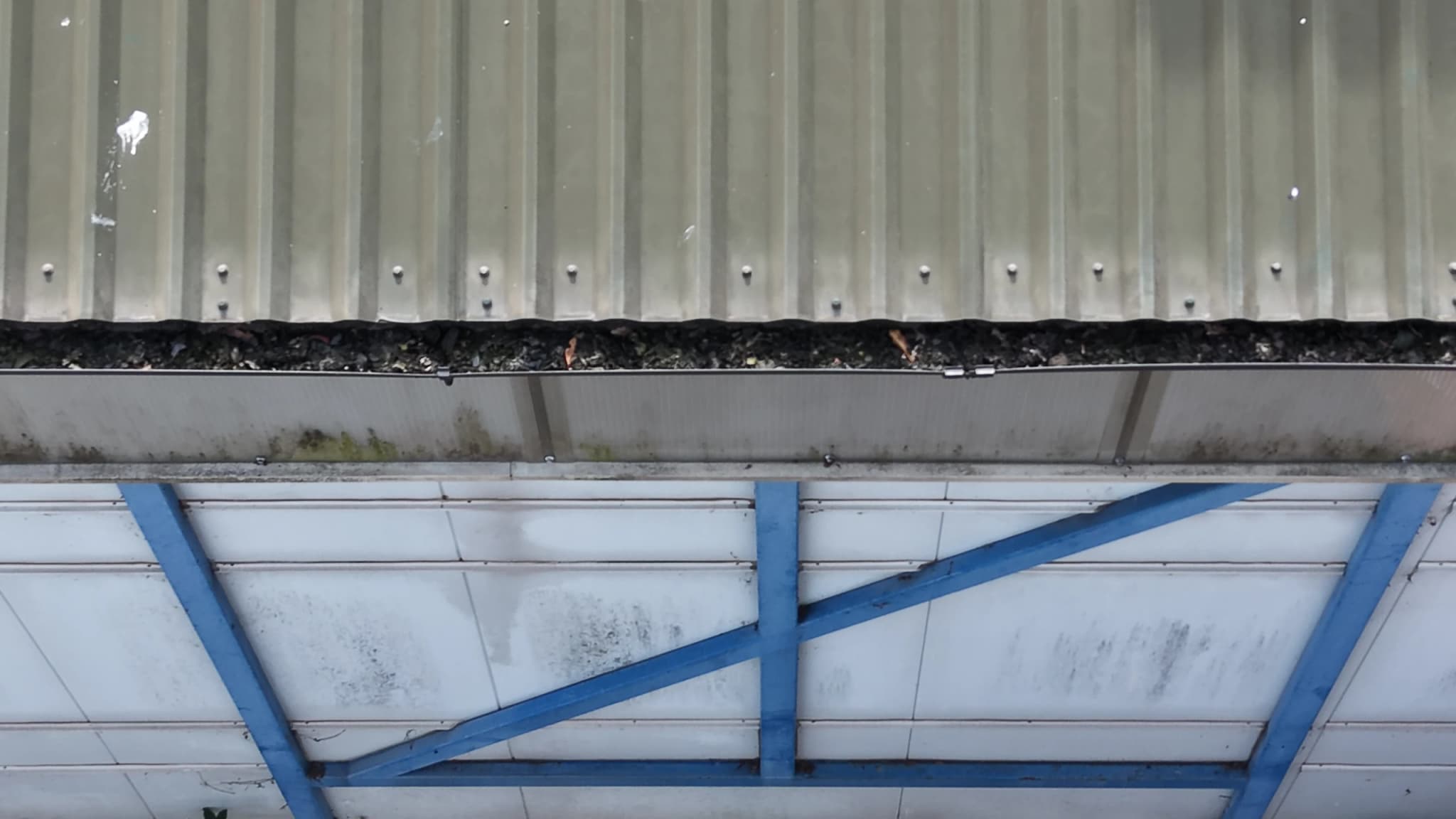
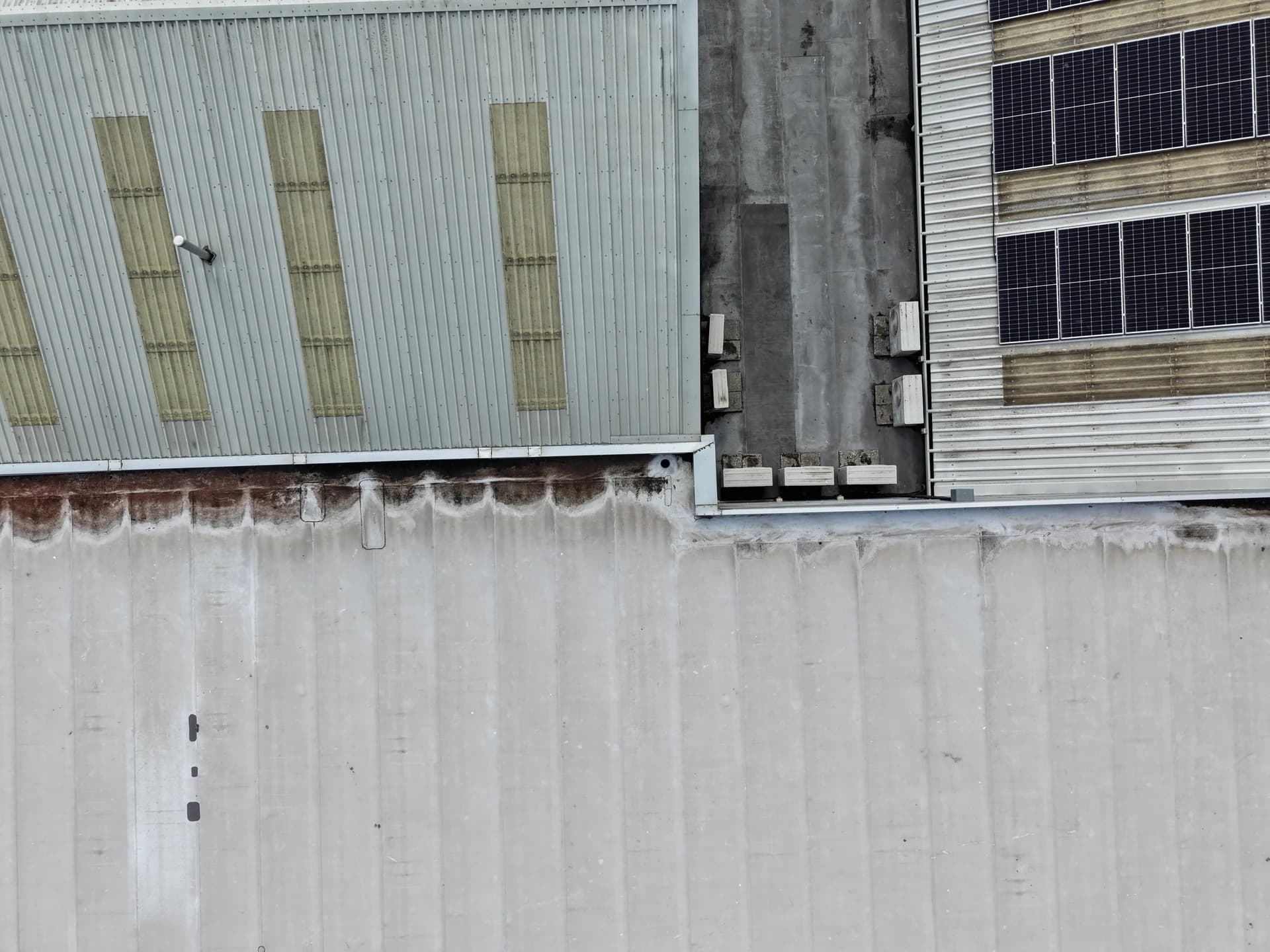
Long gutter runs and outlets on large roofs, cleared of debris and then flushed with our van-mounted system.
Roofs and high level
High elevations and rooflines reached from our own tracked spider lift, with its exclusion area planned around vehicle routes.
Yards and hard surfaces
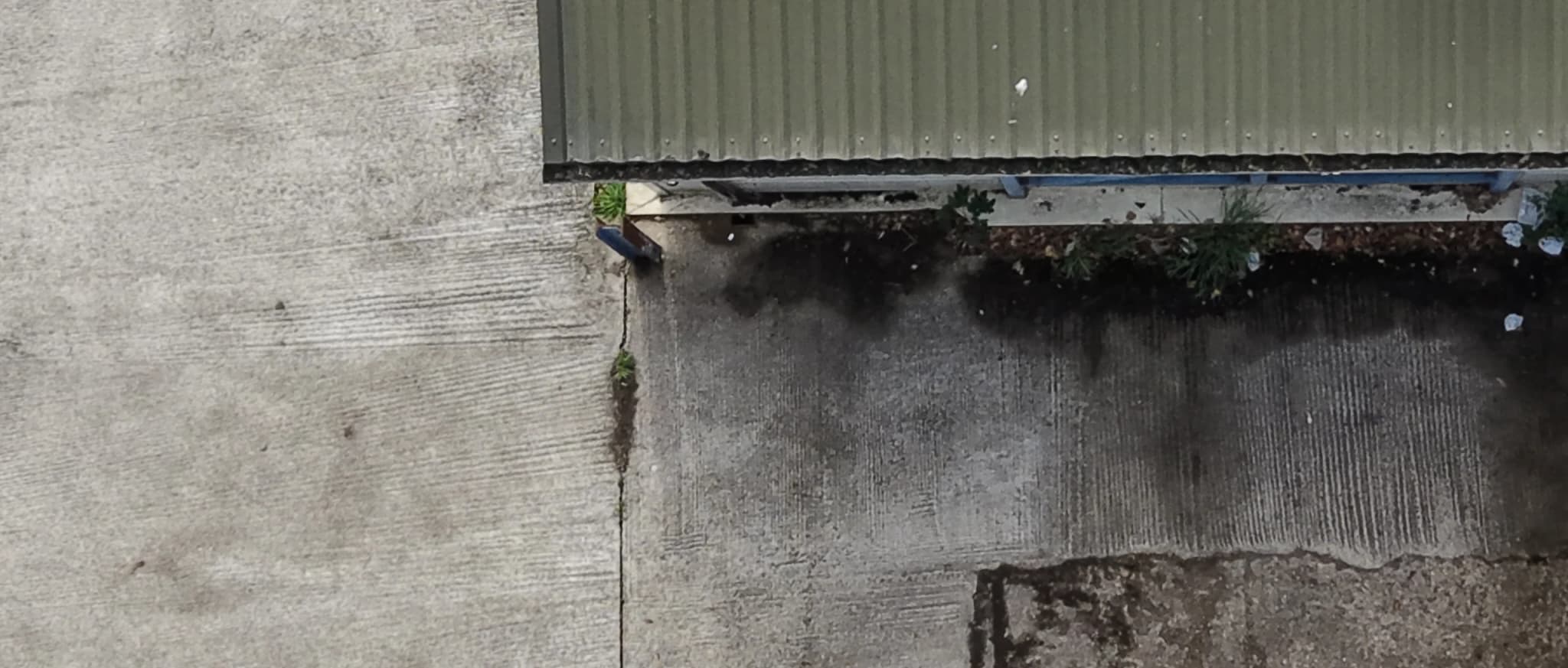
Service yards, loading aprons, turning areas and hard standings, worked bay by bay around vehicle movements.
Yards and hard surfaces
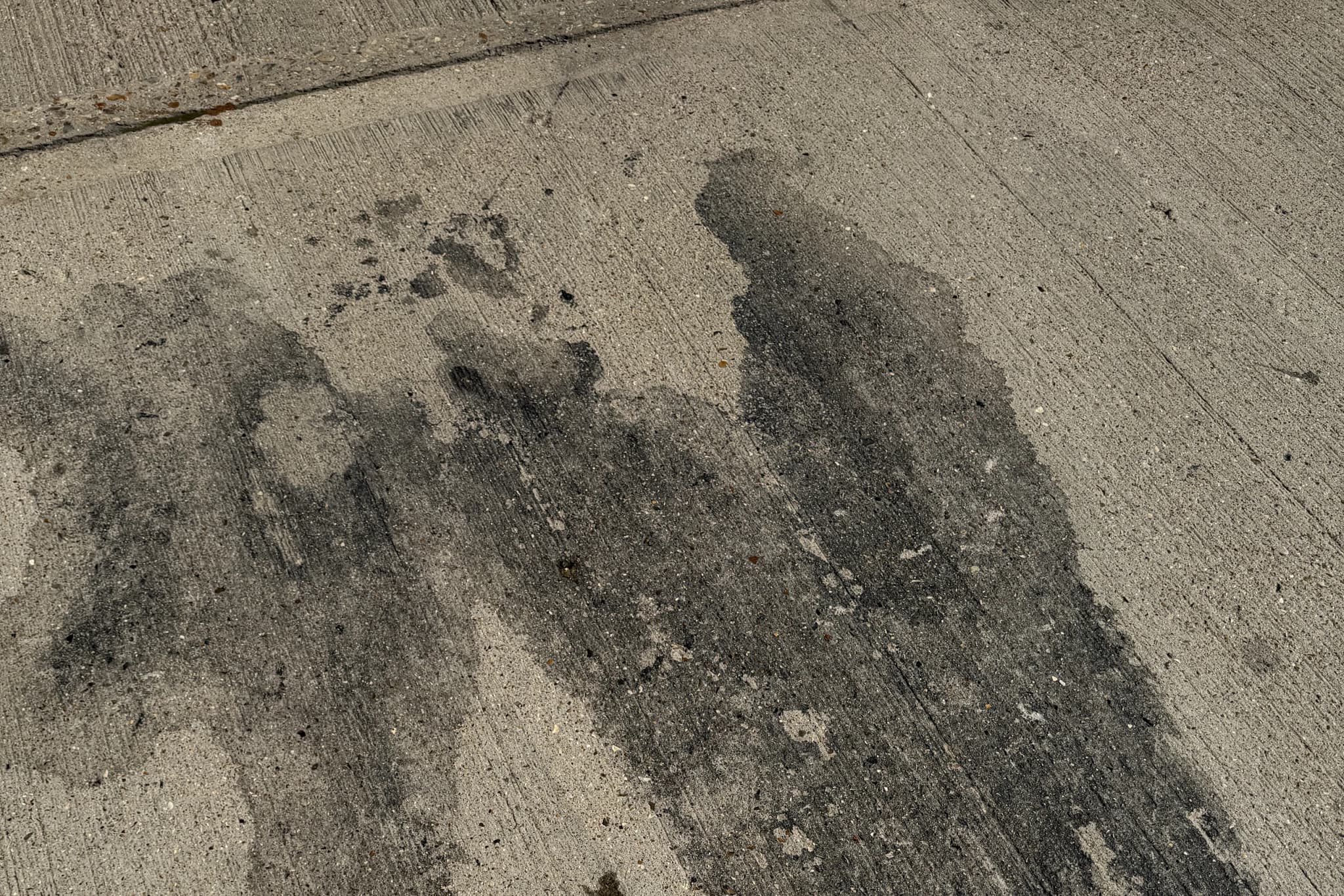
Tyre marks, hydraulic and diesel staining, rubber and residues in loading bays and service yards.
Yards and hard surfaces
Residual oil, fuel and grease staining, identified at the survey and specified as a targeted treatment.
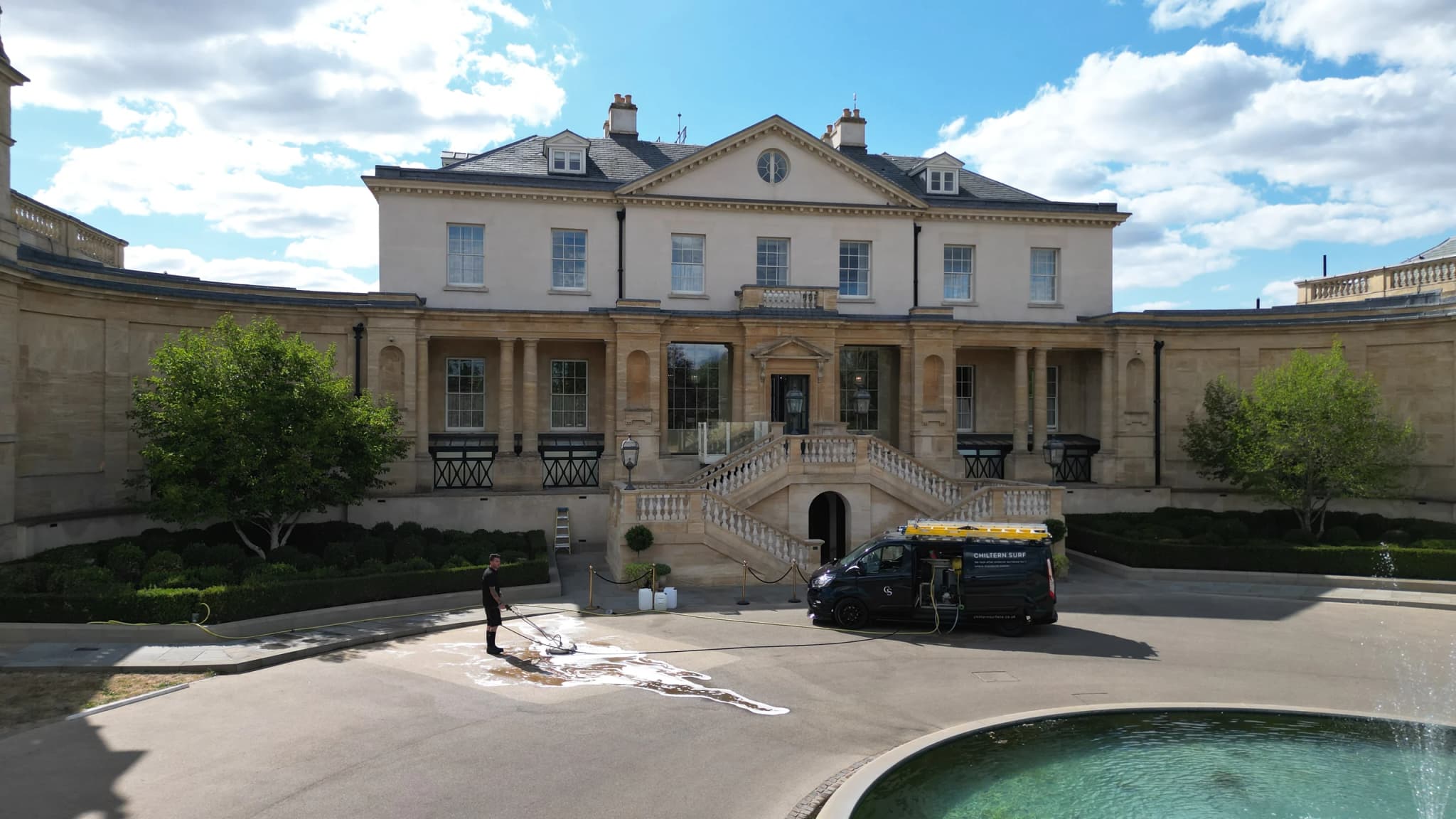
Yards and hard surfaces
Staff car parks, entrances and pedestrian walkways.
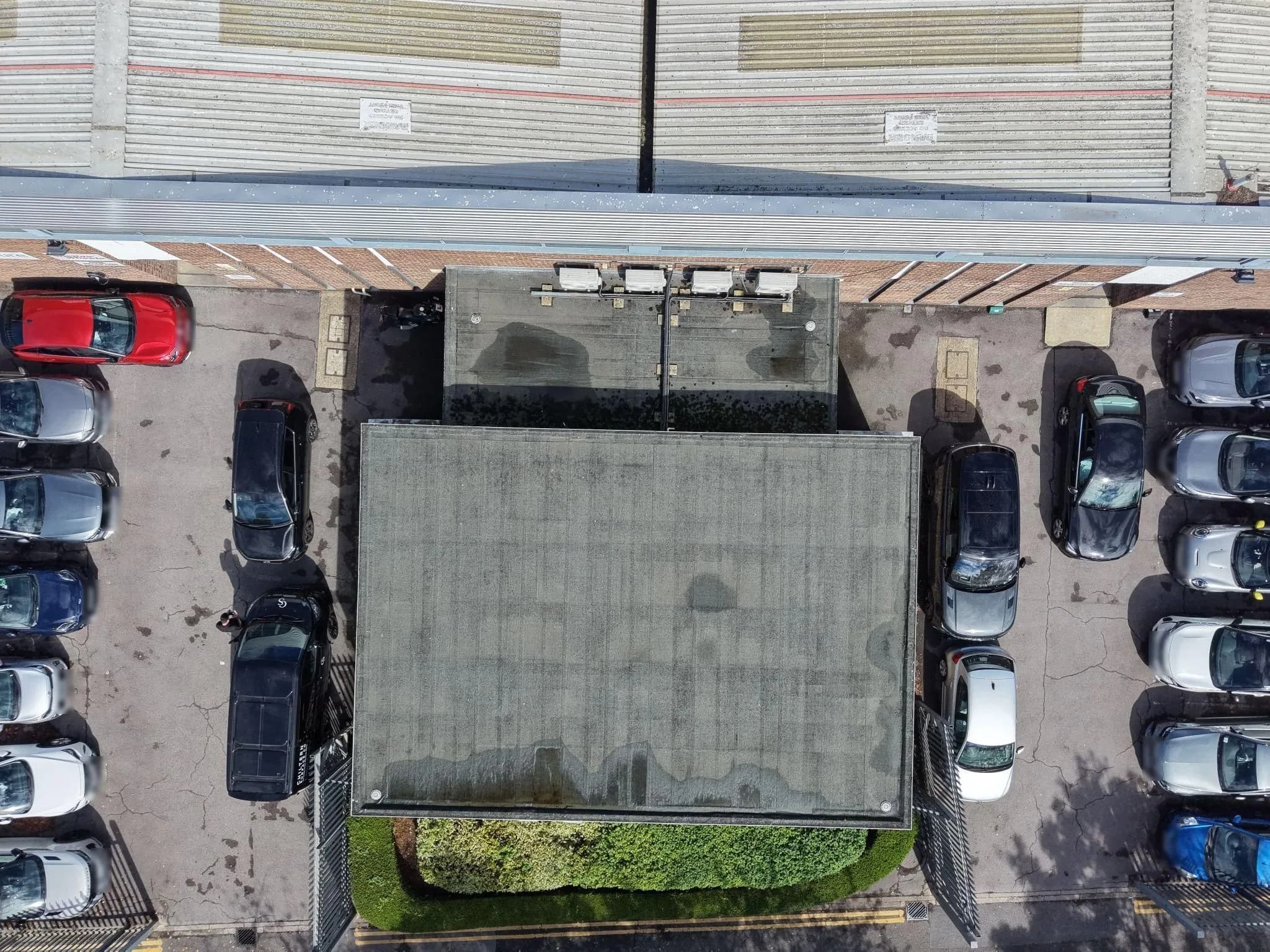
One-off, planned and estate work
A one-off clean before a new tenant takes occupation, a lease ends or a unit is marketed, or planned preventative maintenance (PPM) where yards and elevations build up again.
One-off, planned and estate work
Several units, or an estate's shared roads, parking and pedestrian areas, worked in sections while occupiers stay operational: one contact, one standard, site-specific specifications and consolidated reporting.
Included on the project
How the work is delivered
Safety and site control
Related
Questions
Yes. We survey vehicle routes, loading activity and access requirements before the work is planned, then phase the works zone by zone behind agreed exclusion areas, so access can be maintained wherever the site conditions allow. Out-of-hours working is available where the site needs it.
Cladding and exterior walls, roofs, gutters and outlets, entrances, loading-area surrounds, service yards, pedestrian routes and suitable external hard surfaces. The survey confirms which areas are included, and which are excluded, in the specification of works. Several areas can be specified together in one fixed-price proposal, with no day rates and no overrun charges.
Yes. Oil, diesel, fuel and grease deposits are surveyed separately from routine hard-surface cleaning because they need targeted treatment, and we treat residual staining after the event, not active spills. The achievable result depends on the depth and nature of the staining within the substrate; where complete removal cannot be guaranteed, this is identified before works begin.
Roofs and high-level areas are surveyed by drone before pricing, where airspace permits. High elevations and gutter runs are reached from our own tracked spider lift, operated by IPAF-accredited Chiltern Surface Co technicians.
A completion report: the works completed against the specification, before-and-after photography, a defect schedule, any items outside the specification that need your attention, and sign-off. Where the site warrants it, the report ends with a planned preventative maintenance (PPM) proposal and a suggested review cycle.
The site address, the areas of concern, how the site operates (vehicle routes, loading times, working hours and site rules) and any access restrictions. For roof or gutter work we also ask for the site's asbestos register and drainage drawings. Site plans and photographs help where available.
Next step
Tell us about the warehouse, factory, distribution centre or industrial property, and how the site operates. We walk the relevant areas with you, then send a fixed-price proposal with a specification of works, programme and exclusions.