
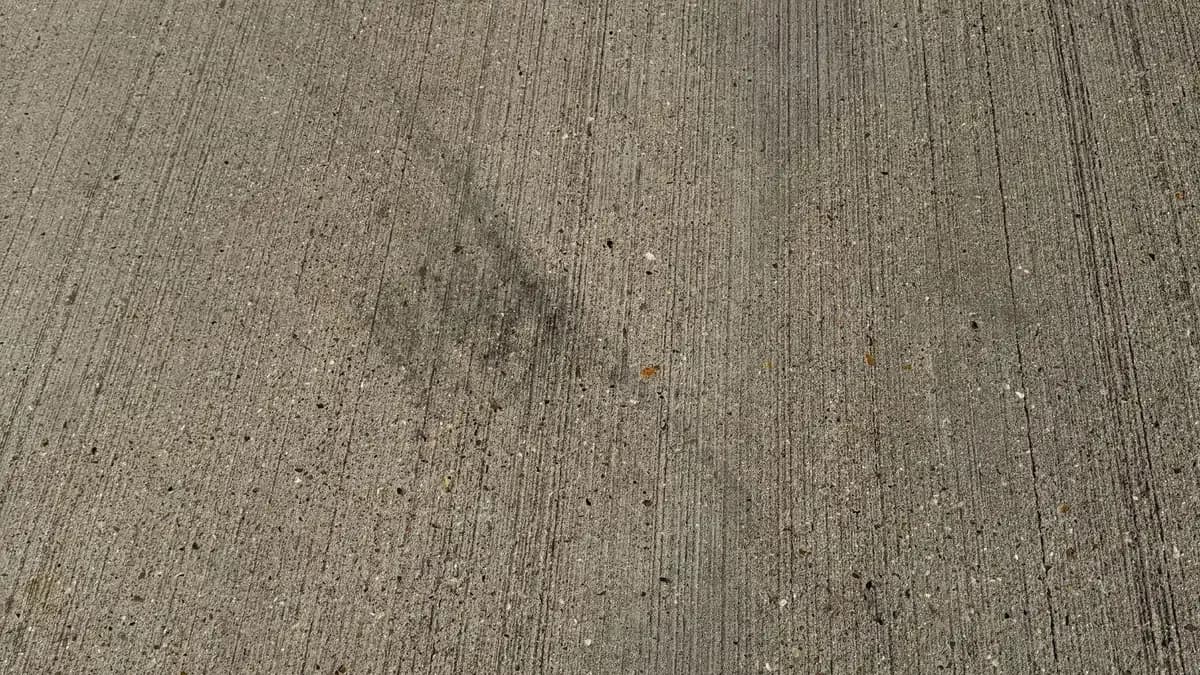
To remove tyre marks from a driveway, first identify the surface and check whether it has been sealed. Apply a compatible cleaner to a small test patch, allow the correct dwell time, agitate the mark with a nylon brush and rinse with controlled pressure.
Fresh scuffs often respond to careful DIY cleaning. Older marks can resist treatment because heat, weight and steering press rubber into the surface or coating. Maximum pressure can replace the mark with a pale line, damaged sealer or roughened patch.
The method should always follow the surface. Concrete, block paving, resin-bound aggregate and tarmac do not react in the same way to detergents, heat or pressure.
Why Tyres Leave Black Marks on Driveways
Tyre marks usually form when friction transfers rubber compounds and road residue onto the driveway. The transfer becomes more noticeable when a warm tyre turns against the surface while the vehicle remains almost stationary.
A vehicle returning from a long journey can leave stronger marks because its tyres are warm. Sharp braking, acceleration and repeated steering add further friction. Pale concrete and paving show the contrast most clearly.
Rubber compound, tread, vehicle weight and temperature also affect marking. A change of vehicle or tyres can therefore introduce new scuffs.
Rubber transfer and plasticiser migration
Most fresh scuffs are surface deposits. Rubber and accumulated road film sit on or close to the driveway surface, where a suitable cleaner can loosen them.
Some marks on coated or sealed driveways involve plasticiser migration. Plasticisers keep tyre rubber flexible. Under heat and pressure, these compounds can move into a compatible coating rather than remaining on top of it. The mark then becomes part of the affected sealer layer, so harder scrubbing does not necessarily solve the problem.
This distinction explains why one black mark lifts easily while another remains after repeated washing. It also explains why a solvent can appear to remove the mark but leave the coating dull, sticky or discoloured.
How to Identify the Mark Before Cleaning
To identify the mark, examine its shape, location and behaviour when lightly cleaned. Tyre transfer normally follows a tread, curve or repeated wheel path. Oil forms a less regular patch and often penetrates outward from a drip point.
Wipe a small area with a white cloth and mild surface-safe detergent. Dark transfer suggests loose residue. No transfer indicates that simple detergent may not be enough.
Gloss, enhanced colour or water beading can indicate a sealer. Imprinted concrete can resemble blocks although it forms one coated slab. Resin-bound and resin-bonded surfacing also have different constructions.
Do not guess when the surface or coating is uncertain. Product compatibility matters more than the strength of the cleaner.
Quick Reference for Different Driveway Surfaces
The table gives a safe starting point rather than a universal specification. Surface age, deterioration and previous treatments can change the correct method.
| Driveway surface | Sensible first method | Main risk | DIY difficulty |
|---|---|---|---|
| Unsealed concrete | Compatible alkaline cleaner, nylon brushing and thorough rinsing | Pale spot or surface etching | Moderate |
| Block paving | Paving-safe cleaner and controlled agitation | Lost jointing sand or uneven colour | Moderate |
| Sealed or imprinted concrete | Sealer-approved detergent and a discreet test | Softened, whitened or stripped coating | High |
| Resin-bound aggregate | Manufacturer-approved mild detergent and low pressure | Resin softening or discolouration | High |
| Tarmac | Mild detergent, gentle brushing and time | Binder softening or aggregate loss | Moderate |
How to Remove Tyre Marks Safely
To remove tyre marks safely, work from the mildest suitable treatment towards stronger professional methods. This controlled sequence gives you several opportunities to stop before the surface changes.
Prepare the area and make a test patch
Sweep away loose grit, soil and leaves. Abrasive particles can scratch decorative coatings when trapped beneath a brush.
Choose an inconspicuous test area about 30cm by 30cm. Apply the intended cleaner at the manufacturer’s stated dilution, follow the contact time and rinse it completely. Allow the test to dry before judging colour, texture and sheen.
Wet paving can hide whitening and clean patches. A test that looks successful during rinsing can appear different once fully dry.
Protect plants and control runoff. Keep products away from children and pets, and follow the label’s protective-equipment instructions.
Apply the cleaner and allow dwell time
Use a product intended for both the driveway material and the contamination. A stronger concentration does not automatically produce a better result. Excess chemical strength can alter colour, attack a coating or make rinsing more difficult.
Apply the cleaner evenly across the mark. Allow the stated dwell time, but do not let the product dry.
Work in mild conditions. Direct sun and warm paving shorten dwell time, so clean a manageable section.
Agitate without scratching the finish
Scrub with a stiff nylon brush using overlapping strokes. Agitation helps the cleaning solution reach textured areas and small pores that water pressure can miss.
Avoid wire brushes on concrete blocks, resin and decorative finishes. Metal bristles can scratch coatings, alter the face of a block and leave fragments that later produce rust marks.
The mark should begin to break down during agitation. If the surface becomes sticky, unusually pale or cloudy, stop and rinse immediately.
Rinse and judge the dry result
Rinse thoroughly with a hose or carefully controlled pressure. Direct the runoff towards a suitable collection or drainage point without washing chemical residue into planting beds or neighbouring property.
Allow the treated area to dry fully. Repeat the treatment once if the surface remains unchanged and the first test caused no damage. Repeated aggressive cleaning in one session can create a clean patch more noticeable than the original mark.
Can a Pressure Washer Remove Tyre Marks?
A pressure washer can remove loose rubber transfer, but pressure alone often leaves older marks behind. Cleaner selection, dwell time and agitation usually do more of the stain-removal work.
A narrow jet held close to the driveway can cut a line into concrete, disturb paving joints or mark a decorative coating. Moving the lance unevenly can produce stripes that remain visible after drying. More pressure can therefore exchange a black mark for physical surface damage.
On suitable concrete or block paving, a rotary surface cleaner can produce a more even finish than a lance. The operator still needs the correct water flow, pressure and pre-treatment. Equipment does not remove the need to assess the surface first.
Chiltern Surface Co uses a surface-specific cleaning approach because pressure washing is one possible tool rather than the default answer for every driveway.
When hot water helps
Controlled hot-water cleaning can soften some rubber and oily road residues. Heat can also affect sealers, resin systems and tarmac, so it needs the same surface assessment as chemical treatment.
Domestic machines rarely provide stable temperature and flow. Boiling water on a cold or coated driveway is not a safe substitute.
How the Method Changes by Driveway Type
The safest cleaner and pressure level depend on the construction beneath the mark. Treating every black line as though it sits on plain concrete creates avoidable damage.
Concrete driveways
Unsealed concrete contains pores that can hold rubber residue and road grime. Begin with a concrete-compatible cleaner, controlled dwell time and nylon brushing. Rinse the treated area evenly rather than concentrating on a single point.
Older concrete can have weak surface paste, scaling or previous pressure damage. Excessive pressure exposes aggregate and creates a rough, pale patch. Recently laid concrete also needs care because a hard-looking surface may still be developing strength. Ask the installer when chemical or pressure cleaning can begin.
Sealed and imprinted concrete require a separate judgement. Tyre compounds can migrate into acrylic or similar coatings. A strong solvent may dissolve both the mark and the sealer, leaving a dull or sticky area. Use only a product confirmed as compatible with the identified coating. Where migration has affected the sealer itself, local coating repair or wider resealing may be more appropriate than stronger cleaning.
Block paving
Concrete blocks often respond to a paving-safe degreaser and firm brushing. Clay pavers can react differently, so confirm the paving material before applying an alkaline or acidic product.
Pressure cleaning can remove kiln-dried sand from the joints. The joints should be replenished after the blocks have dried, provided weather and surface conditions suit re-sanding. Empty joints should not be treated as a harmless cosmetic detail because the jointing material helps the paved area work as a system.
Spot cleaning also reveals the difference between clean blocks and the weathered driveway around them. If the wheel path carries general grime, treating a natural boundary or the full parking bay can give a more balanced result. Professional driveway cleaning and restoration should include joint condition and finish consistency, not only the darkest mark.
Resin-bound driveways
Resin-bound surfacing contains aggregate mixed through a resin binder. The surface is permeable when correctly installed and maintained. Strong solvents, harsh degreasers and concentrated pressure can soften, discolour or disturb the binder.
Start with the installer’s maintenance instructions. Use a manufacturer-approved mild detergent and a soft or medium nylon brush. Rinse at low pressure while keeping the nozzle a safe distance from the surface.
Avoid acetone, petrol, white spirit and paint thinners. A product that dissolves rubber can also attack the resin. If the mark remains after a safe test, specialist assessment is preferable to escalating the chemistry.
Tarmac driveways
Tarmac contains a bituminous binder. Petroleum-based solvents, high heat and strong degreasers can soften that binder and loosen the surface aggregate.
Use warm water, mild detergent and gentle brushing for a fresh scuff. Some light marks fade through weathering and normal use. If the affected area feels soft, sticky or indented, stop cleaning because the problem may involve the driveway surface rather than removable rubber.
A faint black scuff is usually less serious than a softened or eroded repair patch. Surface preservation should take priority over complete cosmetic removal.
Why Spot Cleaning Can Leave a Pale Patch
A pale patch often appears because the cleaned area has returned closer to its original colour while the surrounding driveway still carries general dirt. The difference becomes especially obvious on continuous concrete and resin surfaces.
Pressure damage can also create light areas by removing weak surface material. Chemical damage can whiten a coating, change its gloss or expose the material beneath. Allow the area to dry, then compare its texture and sheen with the untreated surface.
A harmless clean patch usually retains the original texture. Etched concrete feels rougher. Affected sealer can appear cloudy, dull or tacky. Do not keep treating the area until you understand which change has occurred.
Cleaning to a natural boundary can reduce unevenness. On block paving, that boundary might be a complete row of blocks. On concrete, it may be an expansion joint or the full parking section. Our driveway restoration projects show why an even overall finish often depends on treating the wider surface rather than chasing one dark line.
Household Products and Common Mistakes
Washing-up liquid can loosen a fresh scuff on unsealed concrete. It often lacks the strength needed for older rubber transfer.
Bleach targets biological contamination more effectively than tyre residue. Biological washing powder is made for fabrics, not driveway coatings. Neither product should become a universal substitute for a surface-compatible cleaner.
Solvents present the greatest risk. Petrol, acetone, white spirit and similar products can leave oily residue, create fumes and affect resin, tarmac or sealers. WD-40 can also leave its own residue and is not a general driveway-cleaning product.
Acid cleaners can attack cement-based materials and change their texture or colour. Mixing cleaning chemicals creates additional hazards and should be avoided. Use one suitable product exactly as directed, then rinse it completely before considering another method.
When DIY Cleaning Is Reasonable
DIY cleaning is reasonable for a small, fresh mark on sound unsealed concrete or known block paving. You should be able to identify the surface, confirm product compatibility and test the method away from the main entrance.
Professional help makes more sense where the driveway has an unknown sealer, decorative coating, resin binder or widespread marks. It is also sensible after previous cleaning has left pale patches, stripes or surface damage.
A professional assessment should identify whether the remaining mark is loose rubber, contamination held in pores, migration into a coating or damage to the driveway itself. That diagnosis sets realistic expectations. Significant improvement is often possible, but a deeply bonded mark may not disappear completely without affecting the surrounding finish.
How to Reduce Future Tyre Marks
Avoid turning the steering wheel while the vehicle remains stationary. Allowing the car to move slowly during steering reduces friction between the tyre and driveway.
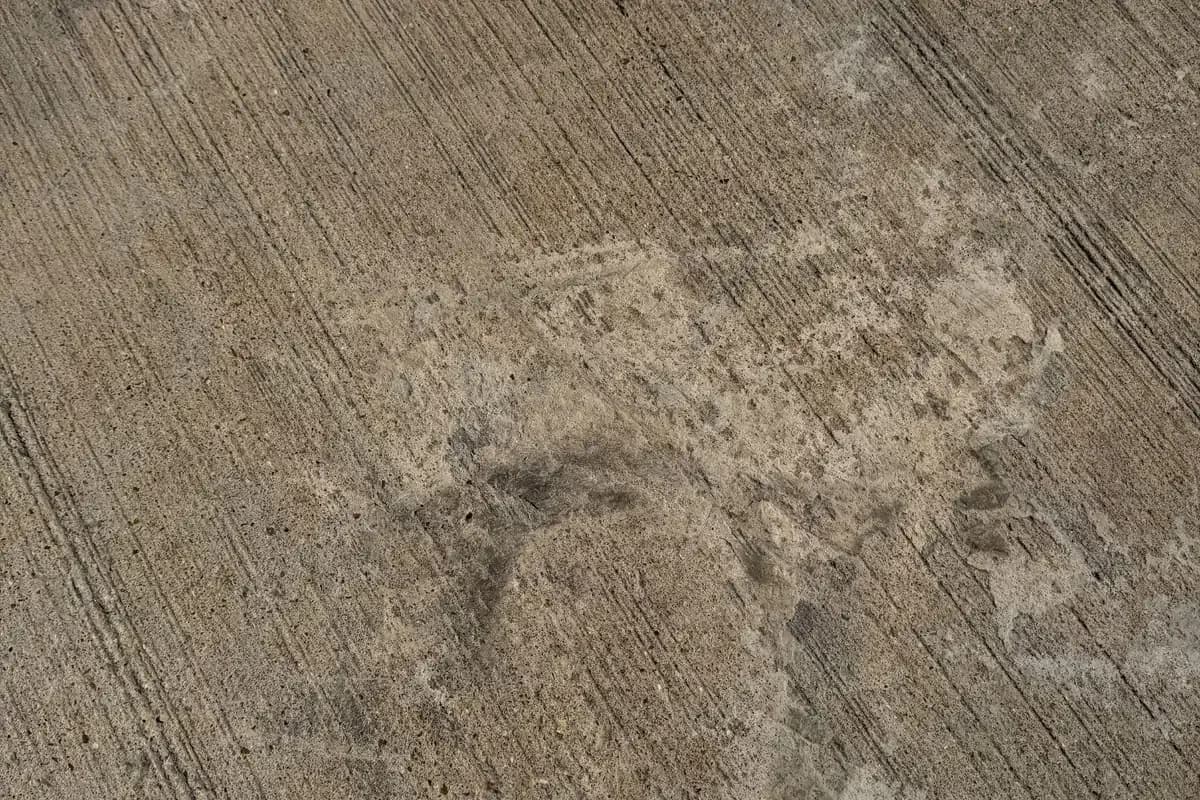
Repeated sharp braking or acceleration in the same place also increases rubber transfer. Warm tyres can mark pale sealed concrete and resin more readily, particularly after a long drive.
Routine cleaning removes road film that can combine with rubber. A suitable sealer can ease maintenance, but no coating makes a driveway tyre-mark proof. Some sealers show warm-tyre marking more clearly.
Remove the Mark Without Creating a Larger Problem
Successful tyre-mark removal begins with diagnosis. Identify the driveway, check for a coating and test a compatible cleaner before increasing chemical strength, heat or pressure.
Careful DIY treatment suits many fresh marks. Older contamination, sealed finishes, resin and uneven previous cleaning need more judgement. The realistic aim is the best improvement the surface can safely support, not removal at any cost.
If you are unsure what your driveway needs, arrange a Free Site Assessment with Chiltern Surface Co. We will inspect the surface, explain the likely result and provide a clear Free Quotation without pressure.
Frequently asked questions
Will washing-up liquid remove tyre marks?
Yes, light fresh marks can improve on some unsealed surfaces. Use a small amount, agitate with a nylon brush and rinse completely. Older marks usually need a purpose-made cleaner.
Can bleach remove black tyre marks?
No, bleach is not the correct first treatment for rubber transfer. Bleach is more effective against organic growth such as algae and can affect nearby planting or surface finishes.
Will tyre marks fade naturally?
Yes, some light scuffs fade through rain, weathering and normal traffic. Deep marks on pale concrete, sealers or resin can remain visible without treatment.
Can pressure washing damage block paving?
Yes. Excessive pressure can mark the block faces and remove jointing sand. Controlled cleaning should be followed by appropriate joint aftercare once the paving has dried.
Can every tyre mark be removed completely?
No. Rubber embedded in porous concrete or migrated into a coating can leave a residual shadow. Further cleaning is not worthwhile when removal would damage the surrounding finish.