
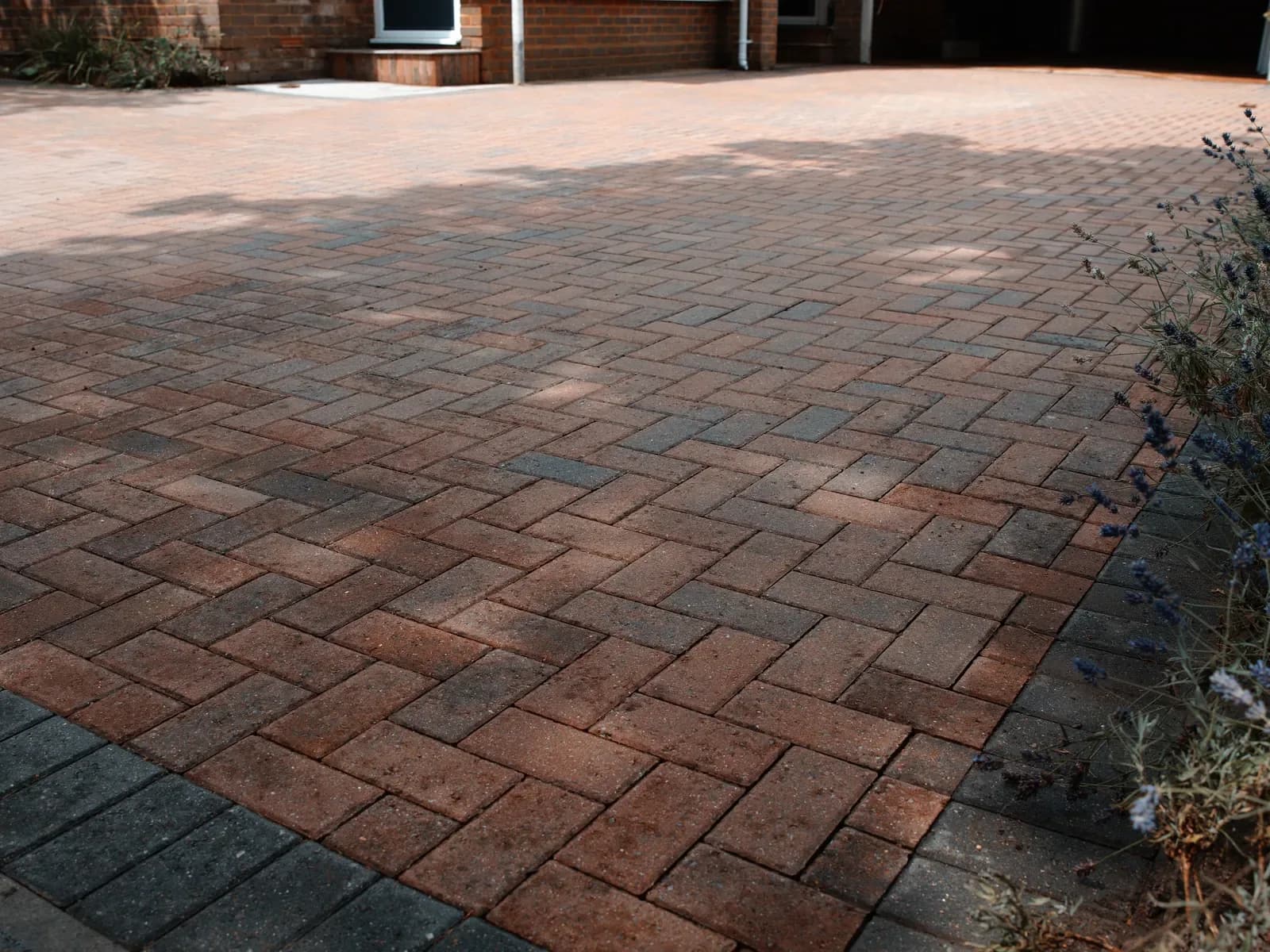
Act fast, absorb the oil, apply a surface-safe degreaser, scrub with a stiff brush, and rinse carefully. This is how to clean a driveway oil stain without spreading oil deeper into concrete, block paving, resin-bound stone, or tarmac.
A driveway oil stain needs the right method because oil sinks into pores, joints, and textured finishes. For serious staining, Chiltern Surface Co can inspect your driveway and provide a safe cleaning service for your home.
How to Clean a Driveway Oil Stain Safely
To clean a driveway oil stain safely, remove loose oil first, then clean the surface with a degreaser. Work from the outside edge toward the centre so the oil mark does not spread.
Use gloves, eye protection, a stiff brush, absorbent granules, and clean water. Choose products for the driveway surface, such as concrete, block paving, resin-bound stone, or tarmac.
Do not start with maximum pressure. High pressure can push oil into concrete pores and block paving joints.
Knowing how to clean a driveway oil stain also means knowing when to stop. Stop DIY cleaning when the surface starts shedding sand, colour, or loose aggregate.
The safest answer to how to clean a driveway oil stain changes by surface. Check for sealant, decorative stone, and repaired patches.
How to Absorb Fresh Oil Before Scrubbing
To absorb fresh oil, cover the mark with cat litter, sawdust, sand, or baking soda. Cover at least 6 inches (15cm) beyond the visible stain.
Press the absorbent gently into the oil with a shoe or board. Leave small spots for 30 minutes and larger spills overnight.
Sweep the used absorbent into a dustpan. Bag the waste before disposal because used absorbent can contain engine oil.
How to Scrub the Stain With a Degreaser
To scrub the stain with a degreaser, apply washing-up liquid or driveway degreaser directly to the dry stain. Add only enough water to create foam.
Use a stiff nylon brush on concrete, block paving, and textured stone. Avoid wire brushes on resin-bound stone, tarmac, and decorative surfaces.
Scrub for 2 minutes, then wait 10 minutes. Repeat the scrub once before rinsing the driveway surface.
How to Rinse the Stain Without Spreading Oil
To rinse the stain without spreading oil, use a controlled low-flow rinse. Push dirty water away from drains, lawns, beds, and doors.
Start at the clean edge and move toward the stain centre. Use a bucket or hose, not a narrow pressure jet.
Blot remaining residue with absorbent granules. A second degreaser treatment removes more oil from deep pores.
What Causes Oil Stains on UK Driveways?
Vehicle leaks cause most driveway oil stains. Engine oil, transmission fluid, brake fluid, and hydraulic oil often drip from parked cars.
Garden tools also create stains. Lawnmowers, strimmers, chainsaws, and pressure washer engines can leak fuel, grease, and lubricant.
Home maintenance tasks create sudden spills. Oil changes, barbecue cleaning, bicycle repairs, and paint tool storage leave marks on porous paving.
Rain spreads oil across slopes. A 5 feet (1.5m) run-off path can carry oil into joints, gravel edges, and drains.
The stain age changes the cleaning result. Fresh oil stays near the surface, while old oil bonds with pores and jointing sand.
People search how to clean a driveway oil stain because 3 materials hold oil differently: concrete, paving blocks, and tarmac.
Timing shapes how to clean a driveway oil stain safely because fresh oil lifts faster than set-in oil.
How to Clean a Driveway Oil Stain on Different Surfaces
To clean a driveway oil stain on different surfaces, match the method to the material first. Concrete, block paving, resin-bound stone, and tarmac react differently to scrubbing, chemicals, and pressure.
Chiltern Surface Co provides a driveway cleaning service for block paving, resin-bound, concrete, and tarmac driveways across Buckinghamshire.
If you ask how to clean a driveway oil stain on a mixed driveway, treat each material separately. Mixed driveways often include paving edges, gravel borders, and concrete aprons.
How to Treat Concrete Driveway Oil Stains
To treat concrete driveway oil stains, use absorbent granules first, then apply a concrete-safe degreaser. Concrete accepts firmer brushing because concrete has a hard surface.
Work on a test patch measuring 6 inches (15cm) wide. The test patch reveals lightening, etching, or colour change.
For old oil, use a poultice-style oil remover. A poultice draws oil upward as the paste dries.
How to Treat Block Paving Oil Stains
To treat block paving oil stains, absorb the spill before water touches the surface. Oil can move into jointing sand quickly.
Avoid pressure washing first. A pressure jet can spread oil sideways through 1/8 inch (3mm) to 1/4 inch (6mm) joints.
Use washing-up liquid, a block paving-safe degreaser, and a stiff nylon brush. Rinse gently and check the jointing sand after cleaning.
How to Treat Resin-Bound and Tarmac Oil Stains
To treat resin-bound and tarmac oil stains, use mild cleaning first. Strong solvents can soften tarmac and affect resin surfaces.
Apply washing-up liquid or a manufacturer-approved cleaner. Scrub lightly with a soft-to-medium brush, then rinse with clean water.
Call a professional when resin or tarmac shows dark patches larger than 12 inches (30cm). The wrong product can leave permanent marks.
What Should You Avoid When Cleaning Driveway Oil Stains?
Avoid petrol, strong solvents, bleach, brick acid, and uncontrolled pressure washing. These methods create safety risks and surface damage.
Petrol creates a fire risk and carries oil deeper into porous surfaces. Strong solvents can strip sealers and leave pale marks.
Bleach does not break down oil properly. Brick acid can damage limestone, concrete, coloured paving, and metal drainage covers.
Pressure washing works after pretreatment only. A cold rinse and degreaser treatment should come before any controlled pressure cleaning.
Chiltern Surface Co uses surface-specific methods because every surface needs the correct pressure, treatment, and aftercare plan.
Search results for how to clean a driveway oil stain often suggest quick fixes. Quick fixes can damage premium paving when products do not suit the surface.
How to Decide Between DIY Cleaning and Professional Service
Choose DIY cleaning for fresh, small stains and professional service for old, large, or sensitive-surface stains. The right choice protects the driveway finish.
DIY cleaning suits a fresh spot under 6 inches (15cm) wide on sound concrete or plain paving. You still need safe runoff control.
Professional cleaning suits oil marks on expensive block paving, resin-bound stone, tarmac, natural stone, and sealed driveways.
Chiltern Surface Co can inspect the surface, identify the material, and provide the right cleaning service for the driveway condition.
A homeowner who knows how to clean a driveway oil stain still benefits from service. Book help when oil reaches joints, cracks, or resin.
How to Judge Stain Size and Age
To judge stain size and age, measure the stain width and check the colour. A small fresh stain looks wet, glossy, and sharp-edged.
An old stain looks dull, grey, brown, or spread out. Old oil usually needs repeated treatment or professional driveway cleaning.
Book service when the stain covers more than about 0.1m². Large oil marks need stronger control than household products provide.
How to Check Surface Condition Before Cleaning
To check surface condition, inspect cracks, loose joints, failed sealers, open pores, and crumbling edges. Cleaning can worsen weak areas.
Look for 3 surface problems before scrubbing: loose sand, broken edges, and worn sealant. These problems change the safest method.
Stop DIY cleaning when water lifts jointing sand or exposes loose aggregate. A professional assessment prevents extra repair costs.
How Much Time Does Driveway Oil Stain Cleaning Take?
To plan driveway oil stain cleaning time, allow 30 minutes for fresh spots and 24 hours for deep stains. Older oil usually needs repeated treatments.
| Task | Timing | Method | Difficulty |
|---|---|---|---|
| Fresh spill absorption | 30 minutes to 24 hours | Cat litter, sawdust, sand, or baking soda | Easy |
| Light surface stain | 20 to 45 minutes | Washing-up liquid and stiff nylon brush | Easy |
| Set-in concrete stain | 2 to 6 hours | Concrete-safe degreaser and repeat scrubbing | Medium |
| Deep porous stain | 5 to 12 hours | Poultice-style oil remover | Medium |
| Sensitive driveway stain | Site assessment required | Professional driveway cleaning service | Professional |
The timing depends on oil type, surface texture, stain age, and drainage. Engine oil, diesel, grease, and hydraulic fluid need different treatment strength.
How to Prevent New Oil Stains on Your Driveway
To prevent new oil stains, fix leaks, use drip trays, and clean fresh spills quickly. Prevention protects appearance and reduces cleaning cost.
Place a drip tray under vehicles that leak oil. Choose a tray at least 24 inches (61cm) wide for a parked car.
Use cardboard or absorbent mats during car maintenance, bicycle servicing, and lawnmower refilling. Replace soaked materials before oil spreads.
Sweep the driveway every 2 weeks. Early checks catch small drips before rain spreads oil across the driveway.
Ask about sealing when the driveway surface suits sealant. Sealed concrete and some block paving resist oil penetration better than bare surfaces.
How to Clean a Driveway Oil Stain After a Vehicle Leak
To clean a driveway oil stain after a vehicle leak, stop the leak source before treating the driveway. Cleaning fails when fresh oil keeps dripping.
Move the car away from the stained area. Place a drip tray under the engine, gearbox, or hydraulic system.
Use absorbent granules on the oil mark immediately. A 12 inches (30cm) border around the stain catches oil spread.
The best way to answer how to clean a driveway oil stain after a leak starts with source control. A clean driveway will stain again when the vehicle remains untreated.
How to Stop the Source Before Cleaning
To stop the source before cleaning, check 3 common leak points: sump plug, oil filter, and transmission line.
Use a clean cardboard sheet under the car for 1 night. The drip pattern shows whether the leak continues.
Do not park the vehicle on a newly cleaned area. Fresh sealers and treated surfaces need clean conditions.
How to Protect Nearby Surfaces During Cleaning
To protect nearby surfaces, wet surrounding grass, gravel, and edging before rinsing. Water reduces cleaner strength on nearby areas.
Cover planted borders within 12 inches (30cm) of the stain. Use plastic sheeting for shrubs, herbs, and bedding plants.
Clean one small section at a time. This method helps control oily residue and dirty water movement.
How to Clean a Driveway Oil Stain Without Harming Drainage
To clean a driveway oil stain without harming drainage, keep oily water out of surface drains. Oil residue can travel quickly during rinsing.
Block the nearest drain with absorbent socks, towels, or sand-filled bags. Keep the barrier at least 3 inches (8cm) high.
Collect thick residue with absorbent granules before water rinsing. Dry removal reduces the amount of oily water on the surface.
A careful answer to how to clean a driveway oil stain must include runoff control. Runoff can move oil toward drains, lawns, and neighbouring paving.
How to Control Oily Runoff
To control oily runoff, rinse from the clean edge toward the stained middle. This direction limits contamination spread.
Use short rinses lasting 10 seconds at a time. Pause between rinses and add absorbent material where oily water gathers.
Avoid rinsing toward garage thresholds, air bricks, timber gates, and flower beds. Oil residue can mark surrounding materials.
How to Handle Repeat Cleaning Safely
To handle repeat cleaning safely, wait until the driveway dries fully between treatments. Dry surfaces reveal remaining oil more clearly.
Repeat degreaser treatment 2 times before using stronger products. More force does not always create a better result.
Book professional service when how to clean a driveway oil stain becomes a repeated problem. Repeated staining usually means deeper oil or an active leak.
How Chiltern Surface Co Handles Driveway Oil Stain Cleaning
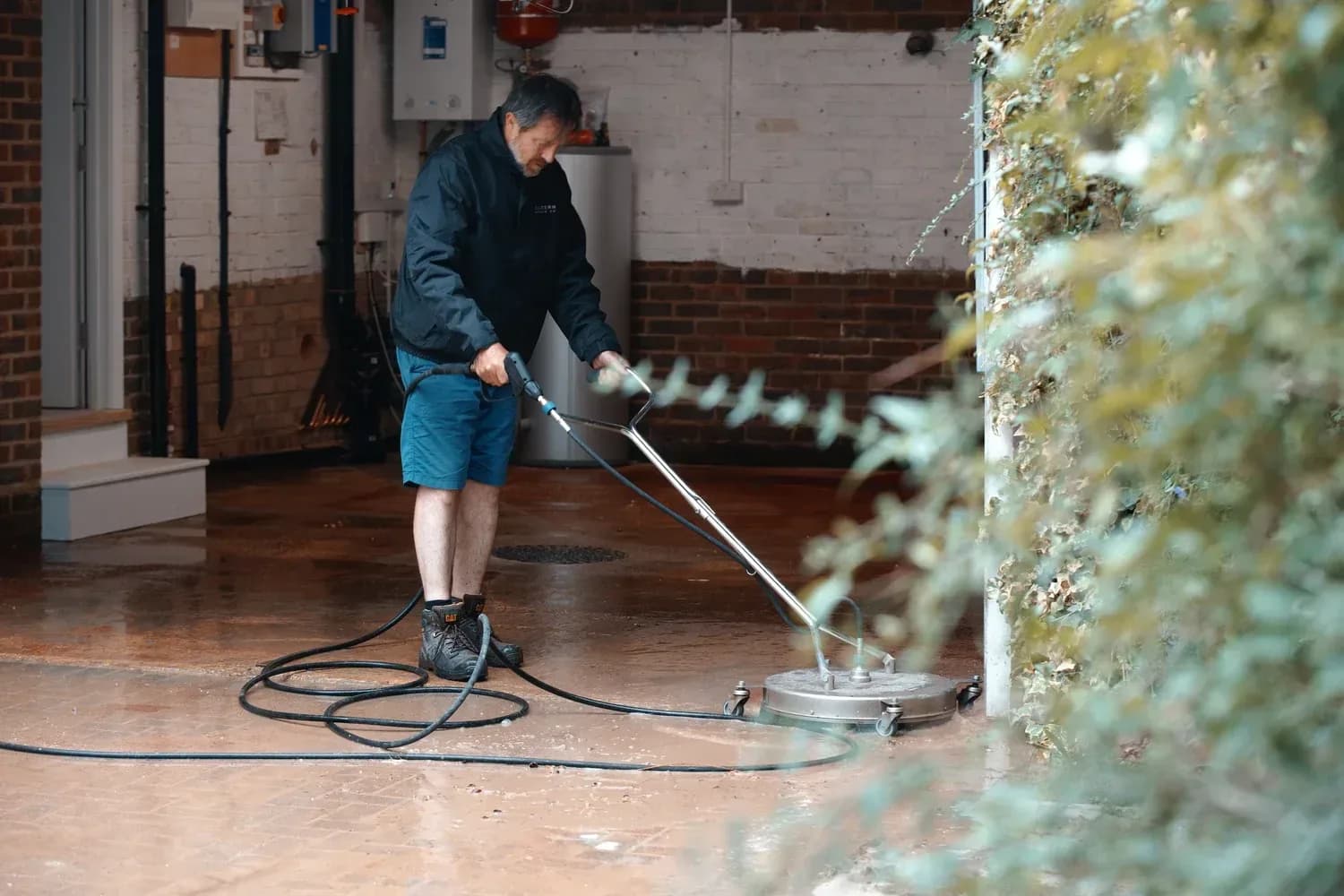
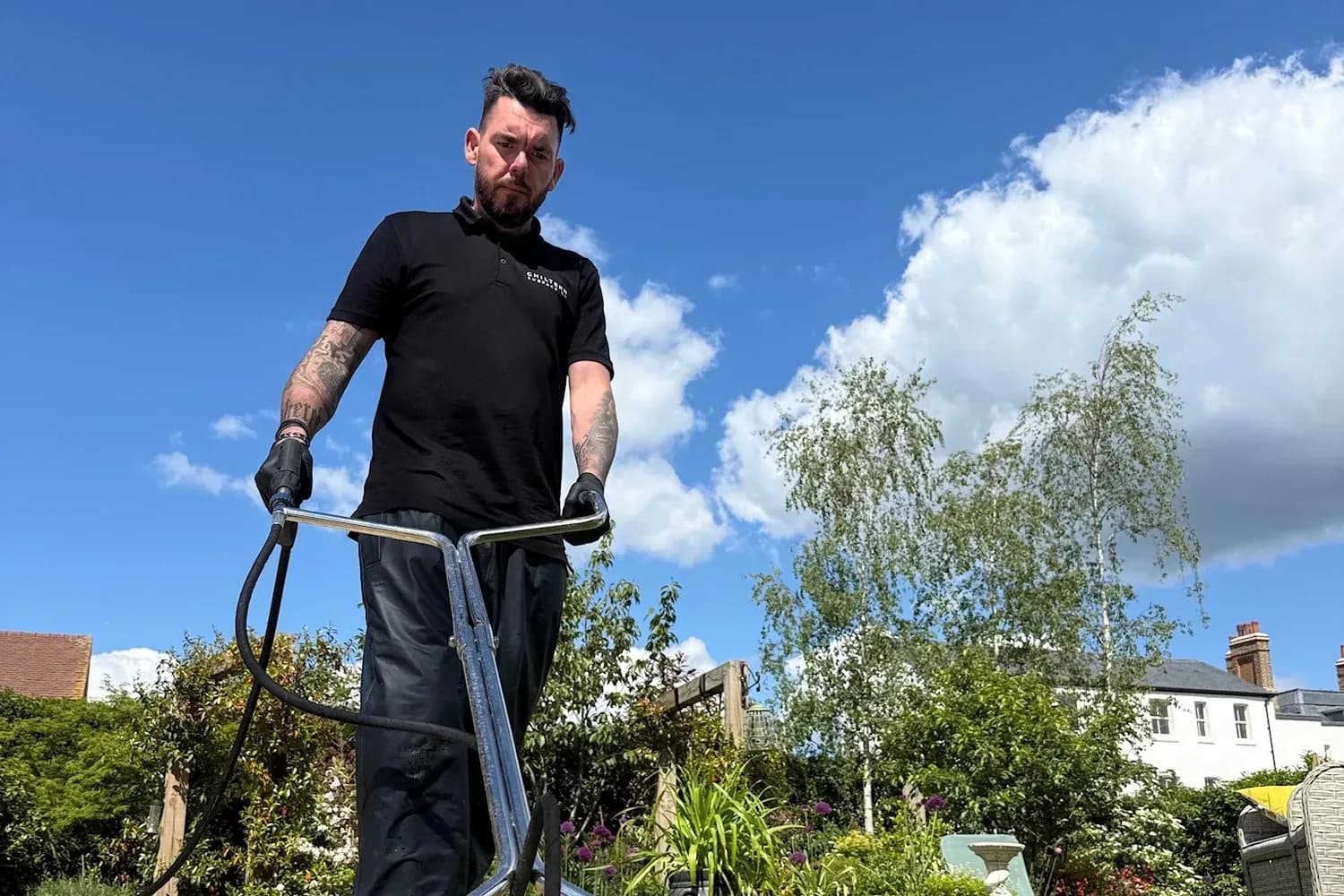
To handle driveway oil stain cleaning professionally, Chiltern Surface Co starts with a proper surface assessment. The team checks material, age, staining, drainage, and surrounding areas.
Chiltern Surface Co then selects the correct cleaning method. The service can include pretreatment, controlled pressure cleaning, stain treatment, and aftercare advice.
This service-led answer to how to clean a driveway oil stain protects the driveway finish while improving appearance.
A professional view on how to clean a driveway oil stain also protects jointing, drainage, and nearby planting.
Oil stains often sit beside moss, algae, weeds, and traffic grime. Nearby walls, paving edges, and exterior masonry can also need soft wash treatments.
Service-led cleaning matters because pressure, detergent strength, and dwell time change the result. The wrong method can damage joints, texture, and finish.
Chiltern Surface Co works across Marlow, Beaconsfield, Gerrards Cross, and surrounding Buckinghamshire areas. The service suits homeowners who want careful cleaning for homes where standards matter.
Frequently asked questions
Can washing-up liquid remove a driveway oil stain?
Yes. Washing-up liquid can remove a fresh, light oil stain when you scrub the area before oil penetrates deeply. Washing-up liquid helps when you know how to clean a driveway oil stain early.
Should I pressure wash a driveway oil stain first?
No. Pressure washing should not be the first step because pressure can push oil deeper and spread oil sideways. Safe oil-stain guidance starts with absorption.
Can baking soda clean oil off block paving?
Yes. Baking soda can absorb fresh oil and lift light residue from block paving when you scrub gently. Baking soda suits how to clean a driveway oil stain DIY steps.
Are old oil stains permanent on driveways?
No. Old oil stains often lighten, but deep stains rarely disappear after 1 treatment on porous concrete or paving. Professional service helps when how to clean a driveway oil stain steps fail.
When should I book professional driveway cleaning?
Book professional cleaning when the stain exceeds about 0.1m². Book when oil affects resin or block paving joints. Expert oil-stain removal protects premium surfaces.
What should I do first when I find an oil stain on the driveway?
Treat a fresh oil stain the same day and avoid harsh cleaning shortcuts. Quick absorption gives you the best chance of removal. Use DIY cleaning for a small fresh spot under 6 inches (15cm). Book help for old oil, sensitive surfaces, or stains larger than about 0.1m². For a safer answer to how to clean a driveway oil stain, book professional driveway cleaning. Chiltern Surface Co can inspect your driveway, choose the right method, and provide the cleaning service your property needs. Chiltern Surface Co gives homeowners a practical route when how to clean a driveway oil stain becomes difficult, repeated, or risky.