
To clean brake fluid from driveway surfaces, absorb the spill first, then scrub the mark with detergent or a surface-safe degreaser. Avoid hosing the spill into drains because brake fluid can spread across porous concrete, block paving, resin-bound surfacing, and tarmac.
Brake fluid stains need fast action because the liquid can soak into open pores and leave a dark patch. The right method depends on 4 factors: spill age, surface type, stain depth, and drainage risk.
Use this guide when you need to know how to clean brake fluid from driveway areas without damaging the surface. The safest answer stays the same: contain first, clean second, and request service for stubborn marks.
How to Clean Brake Fluid from Driveway Safely in 2026
To clean brake fluid from driveway safely, wear gloves, block nearby drains, absorb liquid, then choose a surface-safe cleaner. Fast absorption gives the best result because fresh brake fluid stays closer to the surface.
Brake fluid differs from engine oil because most Department of Transportation (DOT) 3, DOT 4, and DOT 5.1 fluids use glycol-based formulas. DOT 5 brake fluid uses a silicone-based formula, which can still mark porous surfaces.
Treat brake fluid as a driveway spill, not just a cosmetic mark. Brake fluid can leave residue on concrete, block paving, tarmac, and resin-bound driveways.
A homeowner asking how to clean brake fluid from driveway surfaces usually needs 2 outcomes. The stain must fade, and the driveway must keep its texture, colour, and drainage function.
How to protect your hands and eyes
To protect your hands and eyes, wear nitrile gloves, safety glasses, long sleeves, and closed shoes. Personal protective equipment (PPE) protects skin and eyes during scrubbing and rinsing.
Keep children and pets at least 10 feet (3m) from the stained area. Wet brake fluid creates a slip risk on smooth concrete and sealed paving.
How to stop brake fluid reaching drains
To stop brake fluid reaching drains, place absorbent material around the stain before rinsing. Use sand, non-clumping cat litter, absorbent granules, or baking soda.
Never wash brake fluid directly into a road drain, garden drain, or surface channel. Collect contaminated absorbent before you add water.
How to identify the driveway material
To identify the driveway material, check texture, colour, joints, and surface finish before cleaning. Concrete has a solid slab surface, while block paving has individual blocks and sand-filled joints.
Tarmac looks black and flexible, while resin-bound surfacing shows visible stone set in a bonded layer. Natural stone driveways can include sandstone, granite, limestone, and slate.
How to Check Whether the Stain Is Brake Fluid
To check whether the stain is brake fluid, look for a slick patch near a parked vehicle, wheel area, or garage entrance. Brake fluid stains often look wet, dark, or slightly amber on concrete and paving.
Fresh brake fluid can appear clear, pale yellow, brown, or amber. Older fluid from a leaking braking system can look dark brown after road dirt mixes with the liquid.
The question of how to clean brake fluid from driveway surfaces changes when you face another vehicle fluid. Engine oil, coolant, transmission fluid, and power steering fluid need similar first absorption, but different stain behaviour.
What Should You Do in the First 5 Minutes?
Absorb the brake fluid before any scrubbing or rinsing. Quick absorption limits penetration and keeps the cleaning area smaller.
Fresh brake fluid can spread across a driveway in 30 seconds during rain or rinsing. Contain the stain first, then clean the remaining residue.
If you want to know how to clean brake fluid from driveway stains during rain, delay rinsing and increase absorbent coverage. Rain spreads residue faster than careful blotting.
How to absorb fresh brake fluid
To absorb fresh brake fluid, cover the stain with a layer at least 0.5 inches (1.3cm) thick. Use non-clumping cat litter, automotive absorbent granules, baking soda, or dry sand.
Leave the absorbent for 30 minutes on small stains. Leave the absorbent overnight on larger stains above about 0.1m².
How to lift the first surface residue
To lift the first surface residue, sweep away the absorbent, then blot the area with paper towels. Press the towel down without rubbing across clean paving.
Add dish soap to the stained patch after blotting. Scrub the patch with a stiff nylon brush for 2 minutes.
How to bag contaminated waste
To bag contaminated waste, sweep used absorbent into a dustpan and place the waste in a strong plastic bag. Seal the bag before cleaning nearby surfaces.
Check local waste rules before disposal. Brake fluid residue belongs with contaminated garage waste in many areas.
How to Clean Fresh Brake Fluid from Driveway Surfaces
To clean fresh brake fluid from driveway surfaces, work from containment to cleaning in 6 controlled steps. The first clean should stop spread, not chase perfection.
1. Put on nitrile gloves, safety glasses, and closed shoes.
2. Place absorbent material around the stain perimeter.
3. Cover the stain with absorbent for 30 minutes.
4. Sweep the used absorbent into a bag.
5. Scrub the patch with warm water and dish soap.
6. Rinse lightly while keeping dirty water away from drains.
Use a brush with stiff nylon bristles, not wire bristles. Wire brushes can scratch concrete, loosen block jointing, and damage resin-bound surfacing.
The fresh-spill answer to how to clean brake fluid from driveway materials depends on light contact and repeat cleaning. Heavy force can create a larger pale patch.
How to Remove Dried Brake Fluid from Driveway Surfaces
To remove dried brake fluid from driveway surfaces, soften the residue with a degreaser, scrub carefully, then rinse under control. Old stains need repeated light treatments because one aggressive wash can damage the driveway.
Dried brake fluid often leaves a darker mark on concrete and block paving. Tarmac and resin-bound driveways need extra caution because strong solvents can soften or discolour the binder.
The dried-stain answer to how to clean brake fluid from driveway areas is patience. Use 2 light treatments before you consider stronger cleaning.
How to treat concrete driveway stains
To treat concrete driveway stains, apply a concrete-safe degreaser across the mark and 2 inches (5cm) beyond the edge. Scrub the area for 3 minutes with a stiff nylon brush.
Leave the degreaser for the product dwell time, often 10 to 20 minutes. Keep the degreaser damp during the dwell time.
Rinse with low water volume, then blot dirty water with cloths or absorbent granules. Repeat the process after 24 hours if a shadow remains.
How to protect block paving joints
To protect block paving joints, avoid blasting sand from gaps between blocks. Jointing sand supports block edges and helps stop movement.
Clean the stained block faces first with detergent and a nylon brush. For block paving, how to clean brake fluid from driveway starts at the stained blocks.
For deep brake fluid on 1 or 2 blocks, replacement can give a cleaner result than harsh chemical treatment. Replacement also protects surrounding clean blocks.
How to handle tarmac and resin-bound surfaces
To handle tarmac and resin-bound surfaces, avoid solvent-heavy cleaners, petrol, brake cleaner, and strong chemical strippers. Gentle detergent and professional assessment protect the binder.
Tarmac can soften under harsh solvents. Resin-bound surfacing can lose stones when aggressive brushing or high pressure damages the bonded layer.
Use mild detergent, short dwell times, and light brushing on these surfaces. Stop cleaning if the surface becomes sticky, soft, or loose. For tarmac, how to clean brake fluid from driveway demands no solvents.
What Mistakes Make Brake Fluid Driveway Stains Worse?
The worst mistakes are hosing first, using solvent on tarmac, and pressure washing before absorption. Each mistake spreads fluid or damages the surface.
Many searches for how to clean brake fluid from driveway stains mention shortcuts. Shortcuts often fail because brake fluid behaves differently across concrete, block paving, resin-bound surfacing, and tarmac.
Do not use petrol, paint thinner, acetone, or brake cleaner on a residential driveway. These products create fire, fume, runoff, and surface damage risks.
Which Cleaning Products Work on Brake Fluid Stains?
The safest first products are absorbent granules, dish soap, warm water, and a surface-suitable degreaser. Stronger products need surface testing and careful runoff control.
The table below gives a quick view of common brake fluid cleaning tasks.
| Task | Timing | Method | Difficulty |
|---|---|---|---|
| Fresh spill containment | First 5 minutes | Add cat litter, sand, or absorbent granules | Easy |
| Light residue cleaning | Same day | Scrub with dish soap and warm water | Easy |
| Dried concrete stain | 24 hours plus | Apply concrete-safe degreaser and scrub | Medium |
| Block paving stain | 24 hours plus | Clean block faces and protect jointing sand | Medium |
| Resin or tarmac stain | Same day | Use mild detergent and request assessment | Hard |
| Deep or large stain | 48 hours plus | Book professional driveway cleaning | Hard |
Choose cleaners by surface, not just by stain colour. Concrete tolerates stronger degreasers than resin-bound surfacing and tarmac. For old stains, how to clean brake fluid from driveway starts with realistic expectations.
For most homes, how to clean brake fluid from driveway stains starts with 3 safe products: absorbent granules, dish soap, and a labelled driveway degreaser.
Avoid bleach because bleach does not break down brake fluid residue well. Avoid petrol because petrol creates fire risk and stronger contamination.
Use commercial concrete cleaners only on surfaces named on the product label. Test any cleaner on a hidden 6 inch (15cm) patch before full use.
How to Clean Brake Fluid from Driveway Materials Without Damage
To clean brake fluid from driveway materials without damage, match the cleaner, brush, pressure, and dwell time to the surface. Material-specific cleaning prevents avoidable surface wear.
Chiltern Surface Co uses surface-specific methods because block paving, resin, tarmac, concrete, and stone react differently to cleaning pressure and treatment products.
Concrete has pores that hold fluid. Block paving has joints that trap residue. Resin-bound surfacing has a bonded stone finish. Tarmac has a flexible bitumen surface.
This material check gives the safest answer to how to clean brake fluid from driveway surfaces across UK homes. The correct service method changes with the surface.
How to clean concrete without etching
To clean concrete without etching, use pH-neutral detergent first, then a concrete degreaser for deeper marks. Keep acidic cleaners away from concrete driveways.
Use controlled brushing across the stain, not harsh scraping. For concrete, how to clean brake fluid from driveway often needs repeated light cleaning.
How to clean block paving without spreading residue
To clean block paving without spreading residue, work from the outside edge toward the centre of the stain. This direction keeps dirty water inside the affected area.
Place absorbent granules along the downhill edge if the driveway slopes more than 1 inch per 10 feet (2.5cm per 3m). The absorbent line catches contaminated wash water.
How to clean resin-bound and tarmac safely
To clean resin-bound and tarmac safely, use mild detergent, cool water, and minimal pressure. Avoid hot water, solvent cleaners, and narrow pressure washer jets.
Book professional help when a stain sits on a premium driveway finish. Resin-bound and tarmac surfaces need careful cleaning to avoid permanent texture changes.
When Should You Avoid Pressure Washing Brake Fluid?
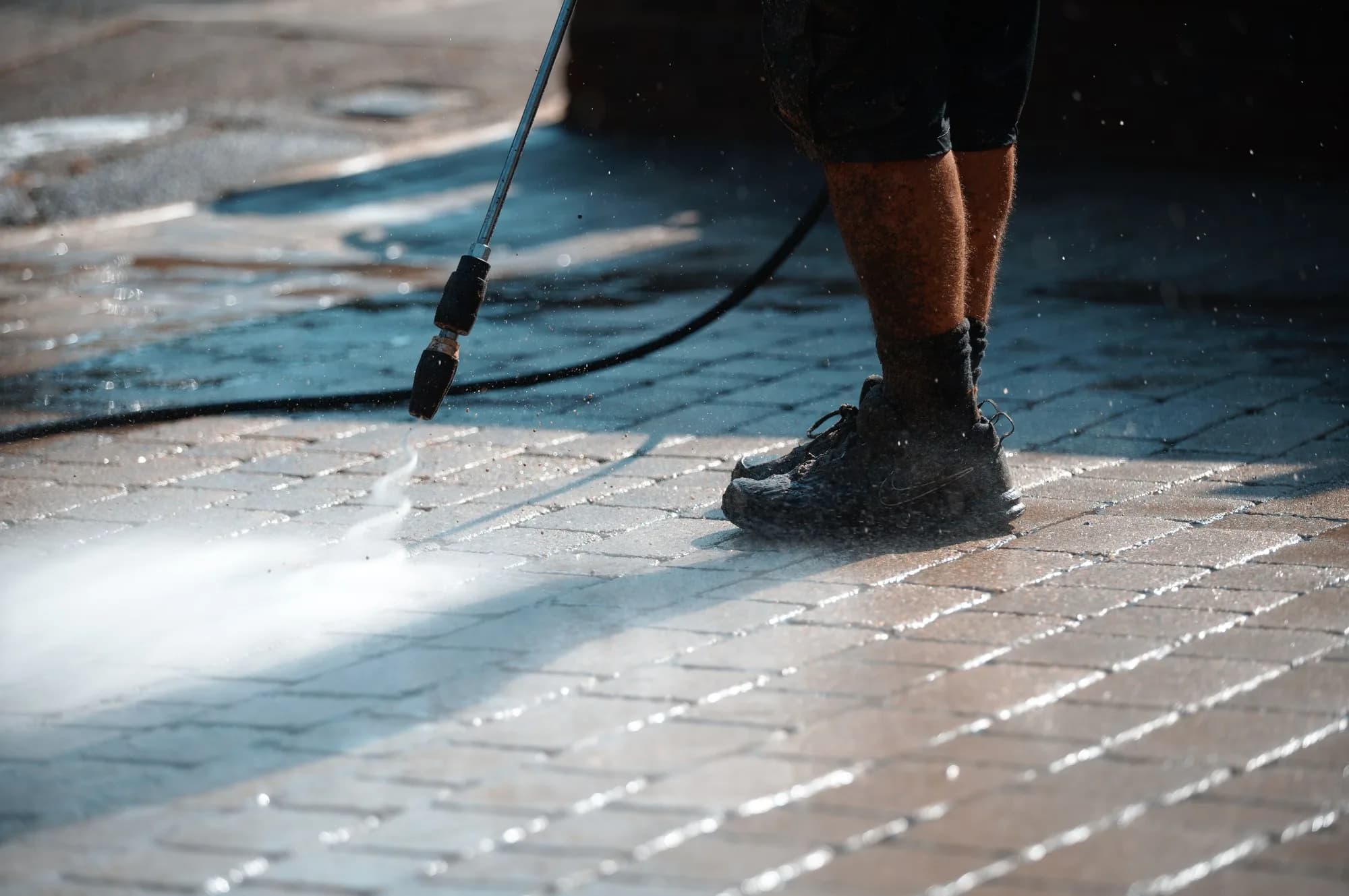
Avoid pressure washing until you absorb and pre-treat the brake fluid stain. Pressure can push brake fluid deeper or spread contamination across clean paving.
Pressure washing also creates wastewater. Dirty runoff can move toward drains, lawns, borders, garage thresholds, and neighbouring surfaces.
High pressure causes 3 common problems on driveway materials. Pressure removes jointing sand from block paving, scars tarmac, and loosens resin-bound stones. For delicate surfaces, how to clean brake fluid from driveway means using less pressure.
A pressure washer with a narrow jet can cut lines into softer materials. A fan nozzle and controlled distance reduce risk, but assessment still matters.
If you ask how to clean brake fluid from driveway areas with pressure, the safe answer is pre-treatment first. Pressure should support the cleaning process, not replace containment.
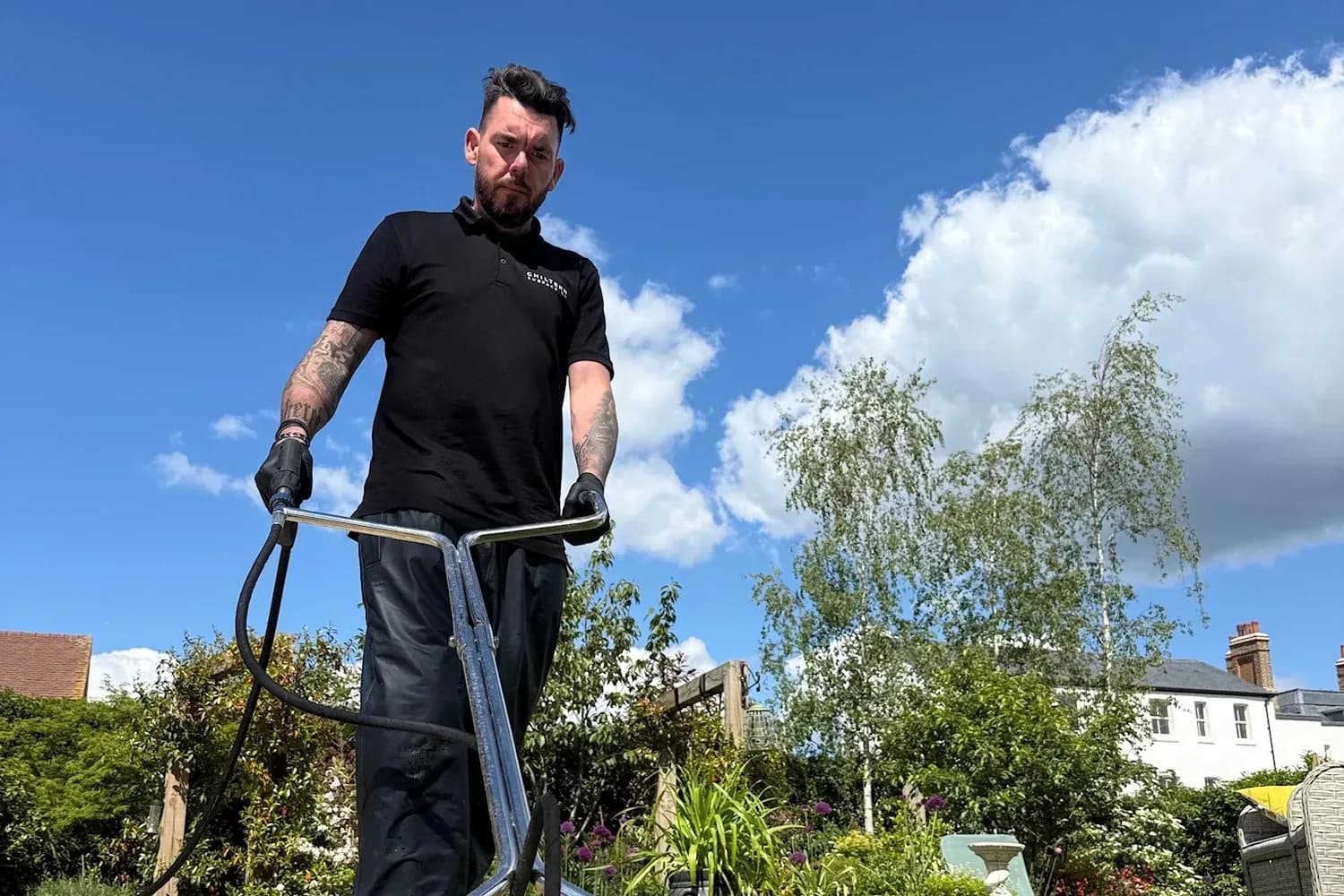
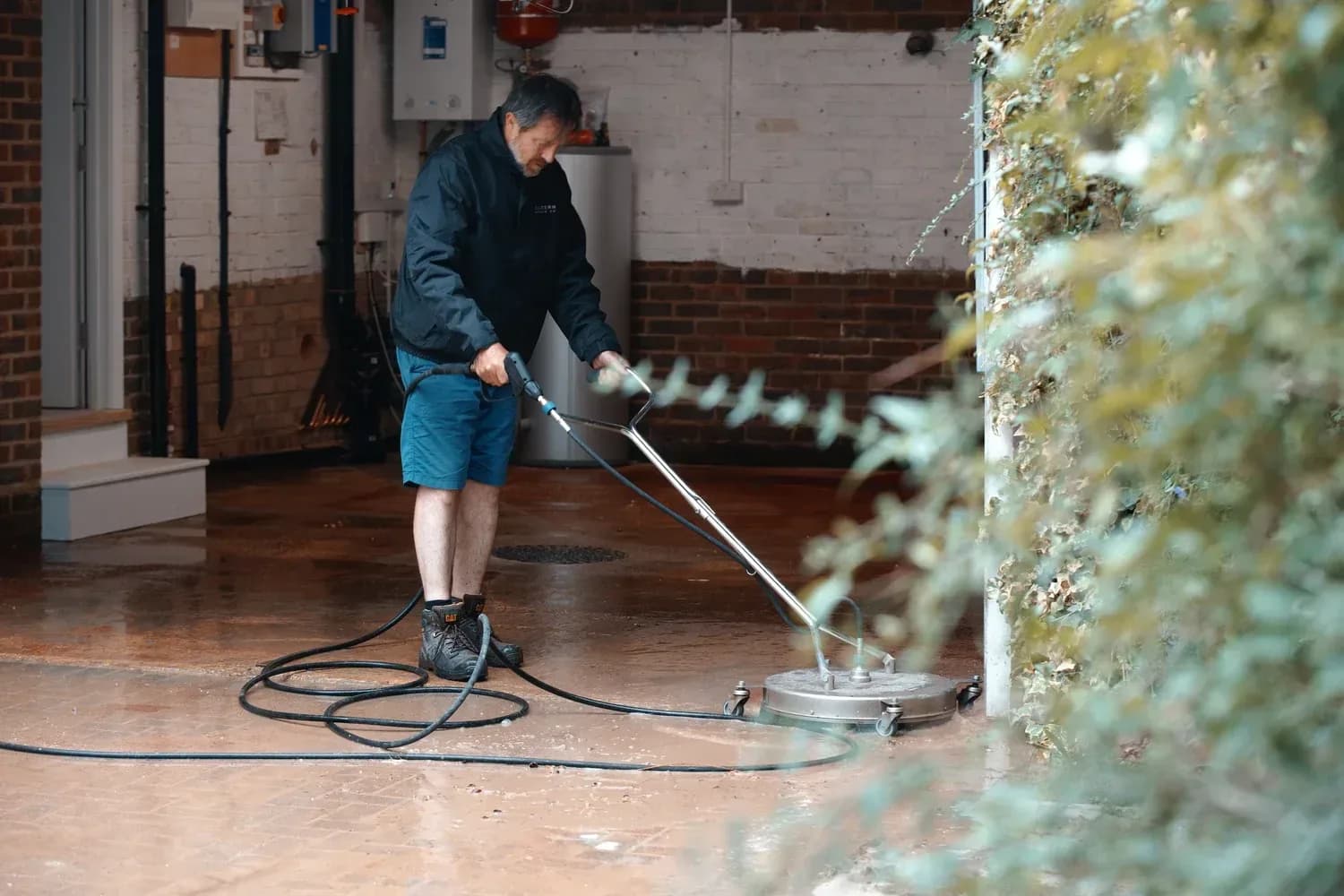
Professional driveway cleaning uses controlled pressure when pressure suits the surface. Chiltern Surface Co offers a driveway cleaning service for block paving, resin-bound, concrete, and tarmac driveways.
How to Prevent Brake Fluid Stains on a Driveway
To prevent brake fluid stains on a driveway, use a drip tray, check leaks early, and clean vehicle fluids immediately. Prevention costs less than stain removal.
Place an absorbent mat under any vehicle that loses fluid. Use a mat at least 24 inches (60cm) wide under the main drip area.
Keep 1 bag of absorbent granules in the garage or shed. Fast access helps you handle spills before brake fluid reaches deeper driveway pores.
Seal suitable concrete surfaces when the driveway condition allows. A sealer reduces absorption, but sealer choice must match concrete type, age, and finish.
The best prevention plan also answers how to clean brake fluid from driveway stains before they happen. You need absorbent, gloves, a brush, detergent, and a waste bag ready.
When Should You Book Professional Driveway Cleaning?
Book professional cleaning when the stain covers more than about 0.1m², sits longer than 24 hours, or affects resin-bound surfacing. A professional can assess stain depth, material condition, and drainage risk.
You should also book help when the driveway has 3 issues together: brake fluid, oil staining, and organic growth. Large marks need a service-led plan.
Chiltern Surface Co provides service-led driveway cleaning across Marlow, Beaconsfield, Gerrards Cross, and Buckinghamshire. The team can inspect the stain, choose the right method, and provide the cleaning service for your property.
If you remain unsure how to clean brake fluid from driveway surfaces safely, stop before aggressive products cause damage. A service visit can protect the finish and improve the result.
Frequently asked questions
Can brake fluid permanently stain a driveway?
Yes. Brake fluid can leave a permanent shadow when a porous driveway absorbs the spill before cleaning.
Can water remove brake fluid from a driveway?
No. Water alone spreads brake fluid before absorbent material removes the liquid residue.
Can dish soap clean brake fluid from concrete?
Yes. Dish soap can lift fresh brake fluid residue after cat litter, sand, or absorbent granules remove liquid.
Should I use bleach on a brake fluid stain?
No. Bleach does not target brake fluid residue and can discolour concrete, stone, and surrounding surfaces.
Should I pressure wash brake fluid from block paving?
No. Pressure washing can remove jointing sand if you wash block paving before absorption and pre-treatment.
What should I do immediately after a brake fluid spill?
Treat a fresh spill in 5 minutes, then book help for large, old, or delicate-surface stains. Use absorbent first, detergent second, and pressure only after the stain has been controlled. If a stained surface still looks patchy, the safest next step is a professional driveway cleaning service. Now you know how to clean brake fluid from driveway surfaces without spreading the mark across clean paving. Book a free site visit with Chiltern Surface Co for assessment, clear advice, and the right cleaning service for your driveway.