
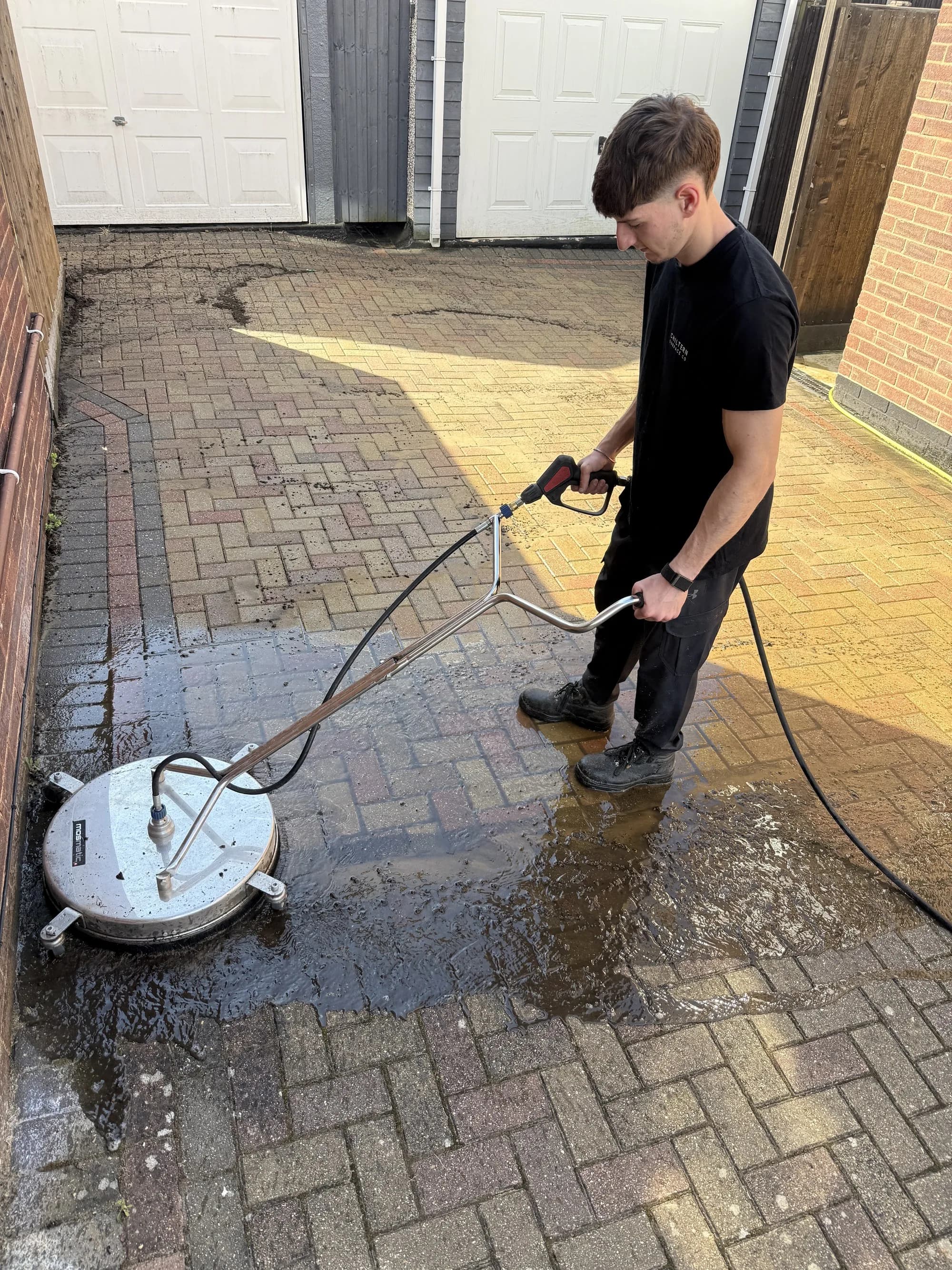
A diesel spill can quickly leave ugly stains and strong smells on your driveway. If you are wondering how to clean diesel from driveway surfaces, the good news is that fast action can remove most stains and prevent long-term damage. This guide explains the best cleaning methods for concrete, block paving, and other driveway surfaces.
Why Is Diesel So Difficult to Remove From a Driveway?
Diesel is different from water or many other liquids. It contains oily hydrocarbons that soak into porous materials such as concrete and block paving. Once the fuel gets deep into the surface, it becomes much harder to remove.
A small spill may seem harmless at first, but it can quickly turn into a dark stain. It can also leave behind a strong smell that lingers for weeks.
Some common problems caused by diesel spills include:
- Dark patches on concrete.
- Slippery surfaces.
- Strong fuel odours.
- Damage to the appearance of your driveway.
- Dirt sticking to oily areas.
The sooner you start diesel stain removal, the better the results will be.
Does Diesel Permanently Stain a Driveway?
In many cases, no. Fresh spills can often be cleaned successfully if they are treated quickly. However, old stains that have been left for weeks or months can penetrate deeper into the surface.
Concrete and block paving are porous materials. They absorb liquids like a sponge. This means diesel can travel beneath the top layer of the driveway.
Even if the stain fades, the fuel smell may remain if the spill is not cleaned properly.
Professional driveway cleaning is sometimes needed when:
- The spill is large.
- The diesel has been sitting for a long time.
- Multiple cleaning attempts have failed.
- The driveway has expensive stone or decorative paving.
What Should You Do Immediately After a Diesel Spill?
The first few minutes are extremely important. Acting quickly can stop the diesel from soaking deeper into the surface.
Step 1: Stop the Source of the Leak
If possible, move the vehicle or container that is leaking fuel. Prevent more diesel from reaching the driveway.
Check for:
- A damaged fuel line.
- A leaking container.
- A loose fuel cap.
- A spill caused by refuelling.
Stopping the leak prevents the problem from becoming worse.
Step 2: Absorb the Excess Diesel
Never wash fresh diesel away with water straight away. Water can spread the fuel and push it further into the driveway.
Instead, use absorbent materials such as:
- Cat litter
- Sawdust
- Sand
- Absorbent granules
Cover the entire spill with the material and leave it for at least thirty minutes.
The absorbent material will soak up much of the fuel before it can penetrate the concrete.
Step 3: Sweep Up the Material
Once the material has absorbed the diesel, carefully sweep it into a bag and dispose of it properly.
At this stage, the surface may still look stained, but you have removed much of the excess fuel.
This makes the next cleaning steps much easier.
How to Clean Fresh Diesel From a Driveway
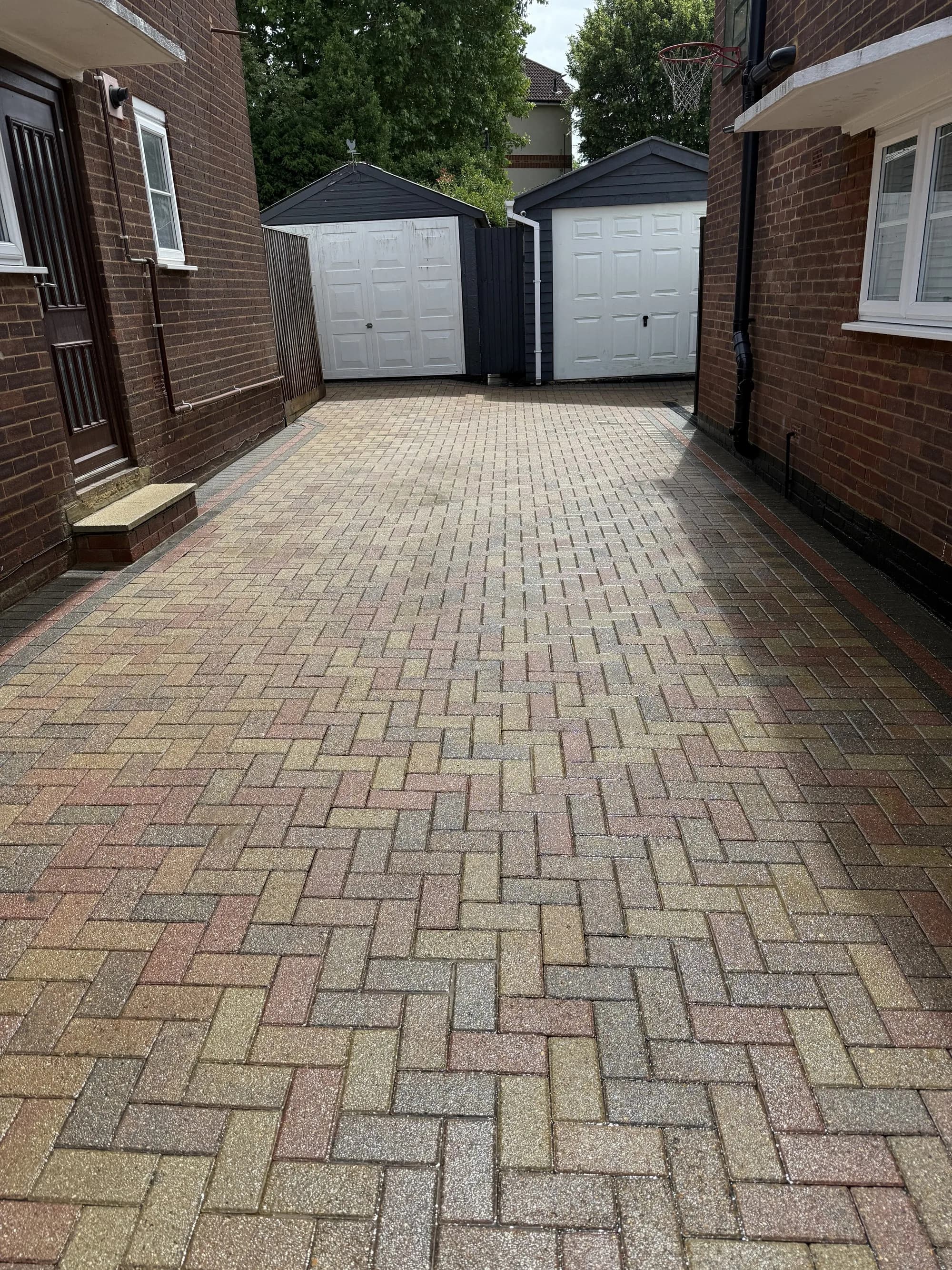
If the spill has only just happened, you have a good chance of removing most of the stain.
Apply a Driveway Degreaser
A suitable driveway degreaser can break down the oily residue left by diesel fuel.
Apply the degreaser directly to the stained area and follow the manufacturer's instructions.
Most products require:
- Applying the cleaner.
- Leaving it to work for several minutes.
- Scrubbing the area.
- Rinsing with water.
Degreasers work by breaking down the hydrocarbons found in diesel fuel.
Scrub the Surface Thoroughly
Use a stiff brush to work the cleaner into the surface.
Pay particular attention to:
- Dark patches.
- Cracks.
- Joints in block paving.
- Areas where fuel has pooled.
Scrubbing helps lift the diesel from the pores of the driveway.
Rinse With Warm Water
After scrubbing, rinse the area thoroughly.
Avoid using excessive amounts of water during the first rinse. Too much water can spread any remaining fuel.
Inspect the driveway carefully once it dries. Some stains disappear after one treatment, while others may require several attempts.
Can Household Products Remove Diesel Stains?
Many homeowners try DIY methods before calling professionals. Some household products can help with diesel spill cleanup, especially if the spill is fresh.
Baking Soda
Baking soda is useful because it absorbs both oil and odours.
To use it:
- Sprinkle baking soda over the stain.
- Leave it overnight.
- Sweep it away.
- Wash the area with warm water.
This method can help reduce the smell of diesel.
Washing-Up Liquid
Washing-up liquid is designed to cut through grease.
Mix it with warm water and scrub the affected area using a stiff brush.
For light spills, this can improve the appearance of the driveway.
Laundry Detergent
Laundry detergent can also help with concrete stain removal.
Apply the detergent directly to the stain and scrub thoroughly.
However, household products do not always remove deep diesel contamination.
Why Does Diesel Leave Such a Strong Smell?
Many people notice that the stain fades before the smell disappears.
This happens because diesel contains compounds that continue releasing odours long after the surface appears clean.
The smell can become trapped in:
- Concrete pores.
- Block paving joints.
- Cracks in the driveway.
- Surface coatings.
Removing the smell usually requires more than simply washing the driveway.
How to Remove Diesel Smell From a Driveway
Getting rid of the odour is often the hardest part of fuel odour removal.
Use Baking Soda
Baking soda is excellent at absorbing unpleasant smells.
Cover the affected area generously and leave it overnight.
Repeat the process if necessary.
Try White Vinegar
White vinegar can help neutralise some odours.
Mix equal parts vinegar and water and scrub the area thoroughly.
Allow the solution to sit for several minutes before rinsing.
Use an Enzyme Cleaner
An enzyme cleaner is often one of the most effective products for old diesel smells.
These cleaners work by breaking down organic residues and hydrocarbons trapped within the driveway surface.
For older spills, an enzyme treatment may need several applications before the smell disappears completely.
Why Concrete Driveways Need Extra Care
Concrete is highly porous. This means it absorbs liquids very quickly.
Once diesel penetrates deep into concrete, simple washing often fails to remove it completely.
You may notice:
- A dark ring around the stain.
- Persistent odours.
- Oily residue after rain.
- Dirt collecting in the affected area.
Deep contamination usually requires specialist driveway cleaning techniques.
How to Remove Old Diesel Stains From Concrete
Fresh spills are much easier to deal with than old ones. Once diesel has been left on a driveway for several days or weeks, it starts to penetrate deeper into the surface. The stain may also become darker as dirt sticks to the oily residue.
The good news is that even old stains can often be improved with the right cleaning methods.
Start With a Heavy-Duty Degreaser
A strong driveway degreaser is usually the first step in diesel stain removal. Apply the product generously and allow it to sit on the affected area for the recommended time.
The cleaner needs time to break down the hydrocarbons trapped in the concrete.
After allowing the product to work, scrub the surface thoroughly using a stiff brush. In many cases, you may need to repeat the process more than once.
Patience is important. Deep stains rarely disappear after a single treatment.
Use an Enzyme Cleaner for Stubborn Stains
An enzyme cleaner can be highly effective for old diesel spills because it works differently from ordinary detergents.
Instead of simply washing the surface, the enzymes break down the fuel residue left inside the concrete.
This method works particularly well for:
- Older diesel stains.
- Strong fuel odours.
- Small spills that have been ignored for several months.
The treatment may need several applications, but it often produces better results than ordinary household products.
Try a Poultice Treatment
For very stubborn stains, some homeowners use a cleaning paste known as a poultice.
The paste is spread over the stain and covered before being left to dry. As it dries, it can draw oil and fuel from the concrete.
This method takes longer than ordinary cleaning, but it can help lift deeply embedded stains.
How to Clean Diesel From Block Paving
Block paving requires extra care because diesel can seep between the joints and into the sand beneath the blocks.
The stain may appear small on the surface, but contamination can spread underneath.
Remove Excess Fuel First
If the spill is fresh, use absorbent material immediately. This prevents the fuel from travelling deeper into the paving.
Avoid spraying water directly onto the spill because this can push the diesel further into the joints.
Clean the Surface Thoroughly
Apply a suitable degreaser and gently scrub the paving.
Pay particular attention to the joints because these areas often hold the most contamination.
You may need to repeat the cleaning process several times before seeing noticeable improvement.
Replace Contaminated Jointing Sand
Sometimes the jointing sand absorbs a large amount of diesel.
If the smell remains after cleaning, removing and replacing the affected sand may solve the problem.
This simple step can make a huge difference when dealing with lingering fuel odours.
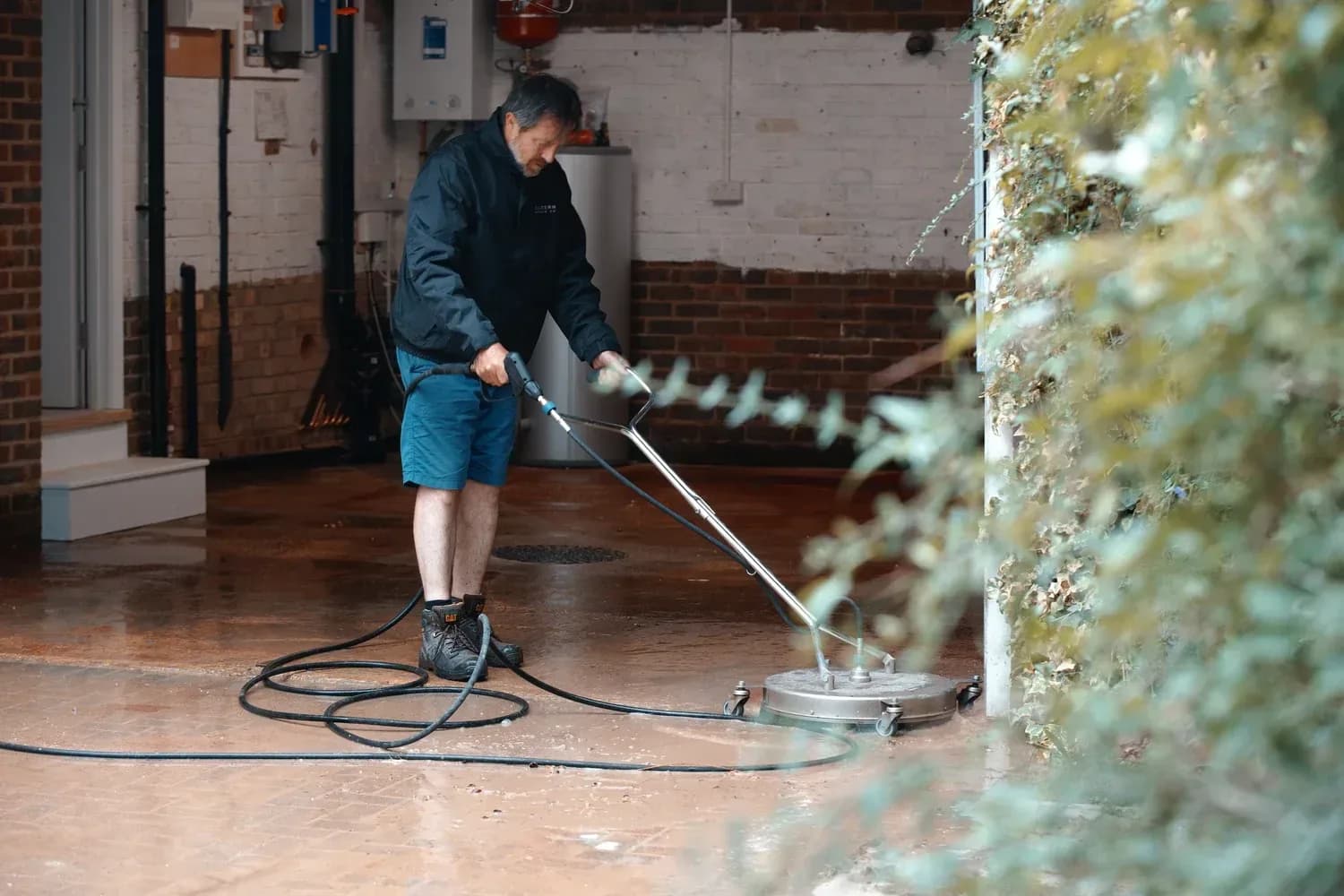
Can Pressure Washing Remove Diesel Stains?
Many people ask whether pressure washing driveway surfaces will completely remove diesel.
The answer depends on the age and severity of the spill.
When Pressure Washing Works
A soft wash treatment is recommended when:
- The spill is fresh.
- Most of the diesel has already been absorbed.
- A degreaser has been applied first.
- The contamination has not penetrated deeply.
Pressure washing can remove dirt, surface residue, and some staining.
When Pressure Washing Is Not Enough
Older spills are more difficult to remove.
If the diesel has soaked deep into concrete or block paving, pressure washing alone may not solve the problem.
In some cases, using high pressure without proper preparation can even spread the contamination further across the driveway.
This is why professional cleaning often combines several methods rather than relying solely on pressure washing.
Common Mistakes to Avoid
Many people accidentally make the problem worse when trying to clean diesel spills.
Washing the Spill Immediately
It may seem natural to use a hose straight away, but this is one of the biggest mistakes.
Water spreads the fuel and can force it deeper into porous surfaces.
Using Harsh Chemicals
Some strong chemicals can damage driveways or discolour the surface.
Always use products that are suitable for concrete and block paving.
Leaving the Spill Untreated
The longer diesel remains on a driveway, the harder it becomes to remove.
Quick action gives you the best chance of preventing permanent staining.
Ignoring the Smell
Even if the stain looks better, the smell can indicate that fuel remains trapped inside the surface.
Treating the odour is just as important as treating the stain itself.
Does Diesel Damage a Driveway?
Diesel does not usually cause structural damage to concrete, but it can affect the appearance of the surface.
Over time, untreated spills may lead to:
- Permanent staining.
- Surface discolouration.
- Unpleasant smells.
- Dirt build-up.
- A slippery surface.
On some types of paving, repeated spills may even weaken sealants and protective coatings.
This is why diesel spill cleanup should never be ignored.

How Long Does Diesel Smell Last?
There is no single answer because every spill is different.
A small spill that is cleaned immediately may lose its smell within a few days.
However, larger spills can leave an odour that lasts for weeks or even months.
Several factors affect how long the smell remains:
- The amount of fuel spilled.
- The type of driveway.
- The weather conditions.
- How quickly the spill was treated.
- The cleaning methods used.
Concrete driveways often hold smells longer because they are highly porous.
Can Rain Wash Diesel Away?
Many homeowners hope that rainfall will naturally clean the driveway.
Unfortunately, rain usually does very little to solve the problem.
In fact, rain can sometimes make the stain larger by spreading the fuel over a wider area.
The hydrocarbons in diesel do not simply disappear when exposed to water.
Proper cleaning is almost always required.
How to Prevent Future Diesel Spills on Your Driveway
Although accidents happen, there are several ways to reduce the risk of another spill.
Regular vehicle maintenance is extremely important. Small leaks can quickly become larger problems if they are ignored.
You should also check fuel containers for damage before storing or transporting them.
Many homeowners place protective trays beneath vehicles that have minor leaks. This simple step can prevent costly driveway cleaning later.
Applying a quality driveway sealer can also make future spills easier to clean because the fuel cannot penetrate the surface as quickly.
Prevention is always easier than removing a deep diesel stain.
Is Professional Cleaning Worth It?
Sometimes DIY methods simply are not enough.
Large spills, old stains, and strong odours often require specialist equipment and professional cleaning products.
Professional cleaners understand how different driveway materials react to fuel contamination and can choose the safest cleaning method.
At Chiltern Surface, we regularly deal with difficult stains, including diesel, oil, algae, and other forms of surface contamination.
Professional cleaning can often restore the appearance of a driveway that homeowners thought was permanently damaged.
When Should You Call a Professional Driveway Cleaning Company?
DIY cleaning methods can work well for small and fresh spills. However, there are times when professional help is the best option.
You should consider professional driveway cleaning if:
- The diesel spill covers a large area.
- The stain has been left for several weeks or months.
- The smell remains after repeated cleaning.
- The driveway is made from expensive stone or decorative paving.
- Previous cleaning attempts have failed.
Professional cleaners have access to specialist equipment and professional-grade products that can remove deep stains more effectively than household cleaners.
At Chiltern Surface, we understand that every driveway is different. Concrete, block paving, resin, and natural stone all require different cleaning methods. Using the wrong technique can sometimes make the problem worse.
Our team carefully assesses the surface and chooses the safest and most effective treatment for the stain.
Why Choose Professional Diesel Stain Removal?
A professional service offers several advantages over DIY methods.
First, experienced technicians know how to remove fuel contamination without damaging the surface. They also understand how to deal with strong odours and deep staining.
Professional cleaning can help:
- Restore the appearance of your driveway.
- Remove stubborn fuel stains.
- Reduce unpleasant diesel smells.
- Improve the safety of slippery surfaces.
- Extend the life of your driveway.
Many homeowners are surprised by how much cleaner their driveway looks after professional treatment.
Can a Sealer Protect Against Future Diesel Spills?
A quality driveway sealer cannot completely prevent staining, but it can provide valuable protection.
Sealers create a protective barrier on the surface. This means that liquids do not soak into the material as quickly.
Benefits of sealing your driveway include:
- Easier maintenance.
- Better stain resistance.
- Improved appearance.
- Longer-lasting surfaces.
- Faster spill clean-up.
If your driveway is older or has never been sealed, it may absorb diesel much more quickly than a protected surface.
For this reason, many homeowners choose to seal their driveway after professional cleaning.
Conclusion
Knowing how to clean diesel from driveway surfaces quickly can make a huge difference. The faster you act, the easier it is to remove stains and prevent long-lasting smells.
For the best results:
- Absorb the spill immediately.
- Use a suitable degreaser.
- Scrub the affected area thoroughly.
- Treat lingering odours with an enzyme cleaner.
- Seek professional help for deep or old stains.
Diesel spills can be frustrating, but they do not always mean your driveway is permanently damaged. With the right approach, most stains can be improved or completely removed.
Need Professional Help With Diesel Stains?
If you are struggling with diesel stain removal, concrete stain removal, or fuel odour removal, the team at Chiltern Surface is here to help.
We provide expert driveway cleaning services across Buckinghamshire and the surrounding areas, offering driveway, patio, and exterior surface services to keep your property looking its best.
Whether you have a fresh fuel spill or an old stain that refuses to disappear, our experienced team can assess the problem and recommend the most effective solution.
Contact Chiltern Surface today for a free quote and let us help bring your driveway back to its best.
Frequently asked questions
Does diesel permanently stain concrete?
Not always. Fresh spills can often be removed completely if they are treated quickly. Older spills are more difficult, but professional cleaning can still significantly improve the appearance of the surface.
What is the best way to clean diesel from driveway surfaces?
The best method depends on the age of the spill. Fresh spills should be absorbed immediately before using a suitable degreaser and scrubbing the area thoroughly.
Can baking soda remove diesel stains?
Baking soda can help absorb small amounts of fuel and reduce odours. However, it may not completely remove deep stains.
How do I remove diesel smell from my driveway?
An enzyme cleaner is often one of the most effective products for removing lingering fuel odours. In severe cases, professional treatment may be necessary.
Will pressure washing remove diesel stains?
Pressure washing driveway surfaces can help remove surface contamination, but deep stains often require additional treatments such as degreasers or enzyme cleaners.
Is diesel harmful to block paving?
Diesel can penetrate the joints and sand beneath block paving. If left untreated, it may leave stains and unpleasant smells for a long time.
How long does it take for diesel to evaporate from concrete?
Some of the fuel may evaporate within a few days, but residue trapped inside porous concrete can remain for weeks or even months.
Should I use bleach to clean diesel spills?
Bleach is generally not recommended. It may damage certain surfaces and is usually ineffective at breaking down oily fuel residues.