
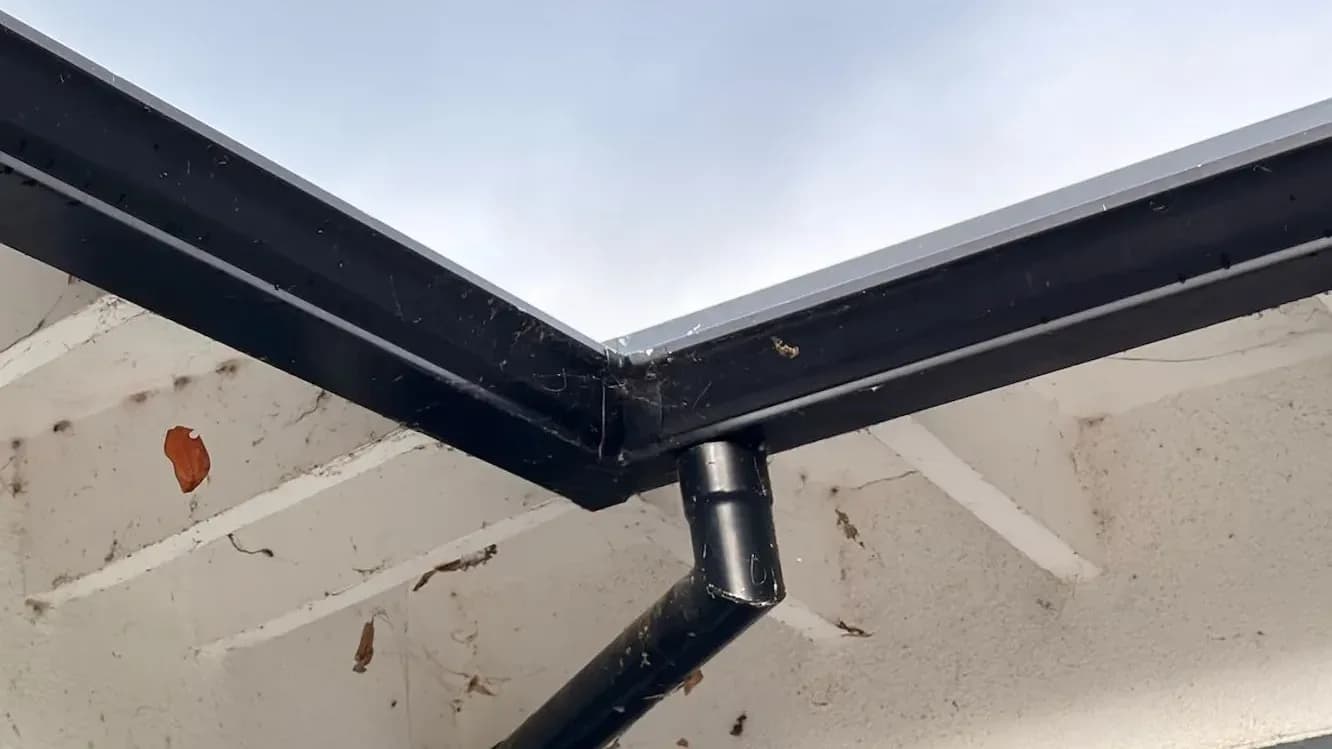
A blocked gutter downpipe usually becomes obvious when rainwater stops leaving the gutter properly. Water may sit around the outlet, spill over the gutter edge, leak from downpipe joints or back up at the bottom of the pipe.
The first job is not to push something down the pipe as hard as possible. It is to work out where the blockage sits. Leaves and roof moss often collect at the gutter outlet or in a bend near the top, but a downpipe that remains full of water can also be blocked lower down, at the gully or in the underground drain.
For a straightforward blockage that is safely accessible, a homeowner can often clear the outlet, flush the pipe or carefully rod it from an accessible end. If the pipe disappears into the ground and water still cannot escape, the problem may be beyond the downpipe itself and needs a different approach.
The Short Answer: Find the Blockage Before You Try to Clear It
A sensible sequence is:
- Clear leaves, moss and debris from the gutter around the downpipe outlet.
- Check whether the bottom of the downpipe discharges into an open gully, shoe or underground drain.
- Clear any accessible debris at the bottom before forcing more material down from above.
- Flush the pipe gently with a hose if safe access allows.
- Use drain rods or a flexible cleaning tool carefully where the blockage remains.
- Dismantle an accessible push-fit section only if you understand how it reconnects and can work safely.
- Finish with a flow test so you know water is moving freely from gutter to drain.
If water still backs up after the downpipe itself is clear, stop treating it as a gutter problem. The underground rainwater drain, gully or soakaway may be blocked and may need drainage work.
How to Tell if the Downpipe Is Blocked
Water overflows beside the outlet
If the gutter fills quickly around one downpipe and spills over the edge, the outlet or pipe below it may be restricted. A gutter can look reasonably clear along most of its length while a compact plug of moss and leaves sits directly over the outlet.
Little or no water comes out at the bottom
During steady rain, a working downpipe should move water away consistently. If the gutter above is full but the bottom of the pipe is barely flowing, the restriction is likely somewhere between the outlet and the drain.
Water leaks from downpipe joints
Plastic downpipe joints are not designed to hold a column of backed-up water under pressure. If water begins escaping from a joint when the pipe fills, that often points to a blockage lower down.
The downpipe stays full after the rain stops
Standing water inside the lower section suggests that the problem may be near ground level or beyond the visible downpipe. That is an important clue because clearing the top of the pipe alone will not solve an underground drainage blockage.
Where Do Gutter Downpipes Usually Block?
| Likely location | What commonly collects there | What to check first |
|---|---|---|
| Gutter outlet | Leaves, moss, twigs and roof debris | Remove visible material around the outlet |
| Swan neck / top bends | Compacted moss and leaves | Check whether water backs up immediately below the outlet |
| Vertical pipe | Leaf plugs, nesting material and compacted debris | Flush gently or rod from an accessible end |
| Bottom bend / shoe | Heavy wet debris and silt | Disconnect or inspect the lower section if safely accessible |
| Gully | Leaves, silt and mud | Lift the grate and clear the gully before pushing more debris down |
| Underground drain / soakaway | Silt, roots, displaced pipework or wider drainage failure | Treat as a drainage problem if the visible downpipe is clear but water still backs up |
Step 1: Clear the Gutter and Downpipe Outlet
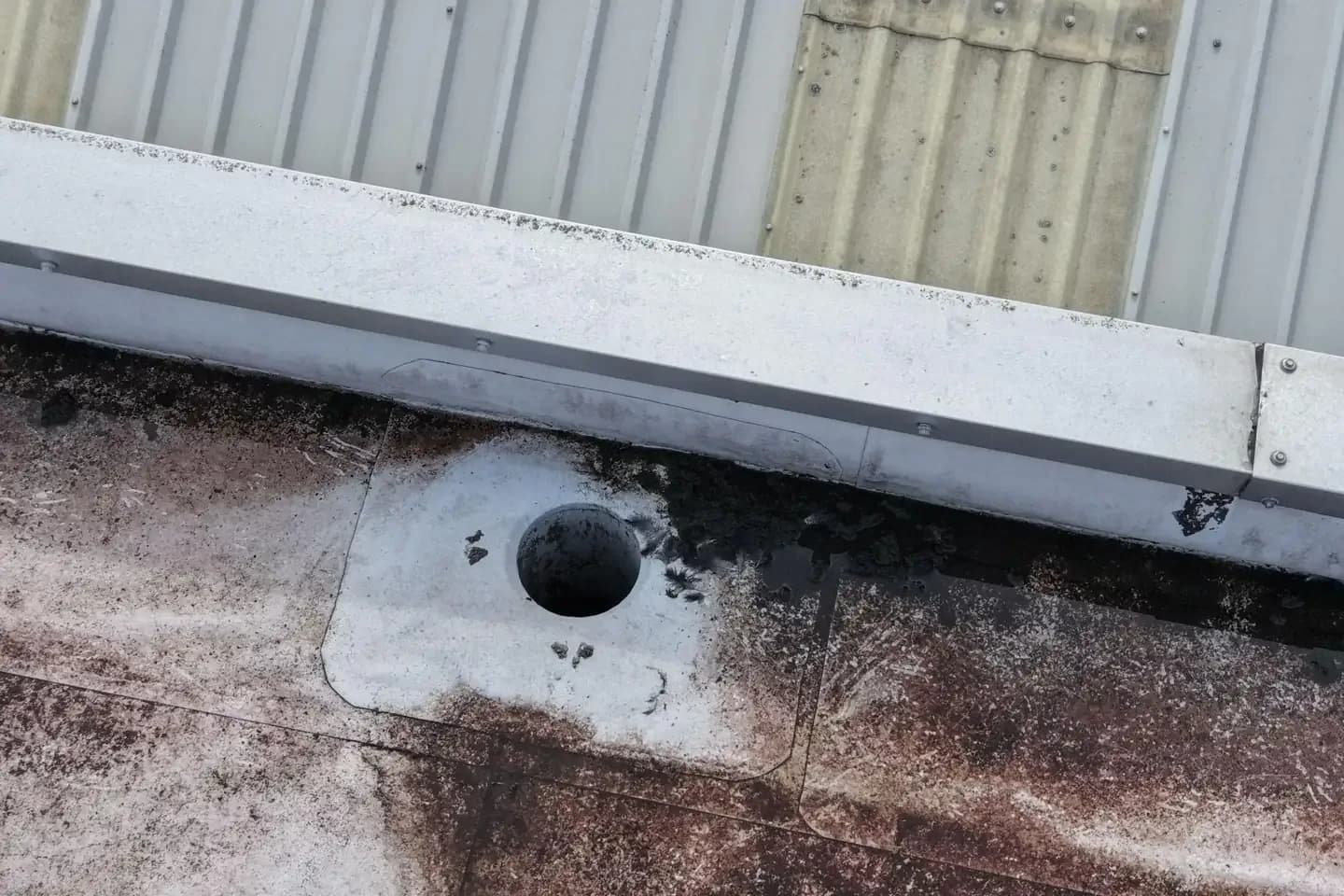
Start at the point where the gutter feeds into the downpipe. This is one of the easiest places for a blockage to form because leaves and roof moss are carried towards a relatively small opening.
Remove loose material from the gutter before trying to flush the pipe. Otherwise, the first thing the water does may be to push another handful of debris into the same opening you are trying to clear.
If the outlet is high, do not improvise by leaning a ladder against plastic guttering or overreaching from the side. Ground-based gutter-vacuum equipment is often a safer way to remove the bulk debris from high-level runs.
Step 2: Check the Bottom Before You Push Debris Down
The bottom of the system tells you a lot about what is happening above.
If the downpipe ends over an open gully
Remove the grate if it is designed to lift out and clear leaves, mud and silt from the gully. A perfectly clear downpipe cannot drain if the gully beneath it is already full.
If the pipe finishes with a shoe
Check the outlet of the shoe for compacted debris. Lower bends often catch material that has made it through the vertical section.
If the downpipe disappears directly into the ground
Be more cautious. If the visible pipe is full of water and there is no accessible gully, the blockage may be in the underground rainwater drain rather than inside the plastic downpipe.
If several downpipes on the same property are backing up at once, that makes a shared underground drainage restriction more likely.
Step 3: Flush the Downpipe Gently With a Hose
Once obvious debris has been removed, a garden hose can clear light material and help show where the resistance remains.
Introduce the water gradually rather than turning the flow to maximum immediately. Watch what happens at the bottom. If water flows freely, continue long enough to carry the loosened debris out. If the pipe immediately fills and backs up, stop adding water and move to the next diagnostic step.
Do not use a normal pressure-washer lance as a substitute for drain-clearing equipment. High pressure inside a lightweight rainwater system can separate push-fit joints or turn a simple blockage into a leak.
Step 4: Use Drain Rods or a Flexible Cleaning Tool Carefully
A stubborn plug may need mechanical movement rather than more water.
Where the lower end is accessible, feeding a suitable rod or flexible cleaning tool upwards can be useful because loosened debris can fall towards you instead of being pushed deeper into the underground drain.
Work gradually. If the tool meets a hard stop at a tight bend, do not force it. Downpipes contain offset bends, joints and connectors that can be damaged if a rigid rod is driven through them aggressively.
When rodding from the top makes sense
If the outlet is safely accessible and the blockage is clearly in the upper vertical section, a flexible rod may be fed downwards. The important point is to have somewhere for the loosened debris to go at the bottom rather than simply compacting it into a lower bend.
Step 5: Dismantle an Accessible Section if Necessary
Many modern plastic downpipes are made from sections held by brackets with push-fit or socketed joints. If a blockage is sitting in a lower bend or short section, taking that part apart can be more effective than repeatedly pushing tools through it.
Before undoing anything, be prepared for trapped water and decomposed debris to come out quickly. Use gloves, keep a bucket nearby and note how the fittings overlap so the pipe can be reassembled in the same orientation.
Do not cut a downpipe simply because it is blocked unless replacement or a proper access fitting is genuinely required. Cutting creates another joint to maintain and is unnecessary when an existing section can be disconnected safely.
Step 6: Flush the Full Run and Confirm the Flow
Clearing a handful of leaves is not the same as proving the system is open.
Once the blockage has moved, run water through the gutter and downpipe and watch the complete route. The gutter should drain towards the outlet without holding a deep pool, the downpipe should not leak at its joints and water should leave freely at the bottom.
This final flow test is the point at which you know the job is actually complete rather than assuming that the pipe is clear because you removed some debris.
Chiltern Surface Co follows the same principle in its gutter cleaning service: the gutters are cleared, outlets and downpipes are flushed, and the system is checked for free water flow rather than stopping once the visible debris has been removed.
What if the Downpipe Is Clear but Water Still Backs Up?
At that point, the likely problem has moved below the rainwater pipe.
The gully may be silted up, the underground drain may be blocked, or an older soakaway may no longer be accepting water properly. On older properties, underground rainwater pipes can also become displaced, cracked or affected by roots.
This is where repeated gutter cleaning will not solve the issue. A drainage contractor or plumber may need to rod, inspect or jet the underground system and confirm where the water is meant to discharge.
Signs the Problem Is Probably Underground
- The visible downpipe has been cleared but remains full of water.
- Water backs up from the gully rather than flowing into it.
- Several downpipes connected to the same drainage route are affected.
- The blockage repeatedly returns immediately after the downpipe has been cleared.
- The property relies on an older soakaway and the surrounding ground remains saturated.
Can You Unblock a Downpipe From the Ground?
Often, yes. If the blockage is in the lower section, gully or accessible shoe, working from the bottom is usually the most convenient approach.
Ground-based work also avoids the temptation to balance on a ladder while handling hoses and rods. For high-level gutter debris, professional pole-fed vacuum equipment can remove leaves and moss from the gutter without leaning equipment against the fascia.
Some properties still need ladder access because of deep overhangs, conservatories or awkward rooflines. That should be planned around stable access rather than improvised once the blockage has already become urgent.
This is consistent with Chiltern Surface Co's assessment-first approach: access, drainage and the condition of the guttering are checked before the clearing method is chosen.
Common Mistakes When Unblocking a Gutter Downpipe
Pushing the blockage deeper without checking the drain
If the gully or underground drain is already restricted, forcing more leaves and moss down the pipe only moves the blockage somewhere harder to reach.
Using excessive water pressure
A downpipe is a rainwater route, not a pressure-rated drain hose. Aggressive pressure can disturb joints and create leaks.
Forcing rigid rods around bends
Offset bends and swan necks can stop a rigid rod even when the pipe itself is clear. If a tool will not pass with reasonable pressure, do not keep driving it forward.
Working from an unstable ladder
Do not rest a ladder against plastic guttering, overreach sideways or try to control heavy clearing tools from an unstable position. If the job cannot be reached safely, the access method needs to change.
Assuming every overflow is a downpipe blockage
A gutter can also overflow because it is sagging, incorrectly aligned, undersized for the roof area or affected by a failed joint. If the downpipe flows freely but the gutter still holds water, the guttering itself needs inspection.
How to Reduce Future Downpipe Blockages
The easiest blockage to deal with is the one that never becomes compacted inside the pipe.
- Clear gutters before heavy leaf litter turns into wet, dense debris.
- Remove roof moss from the gutter before it is washed into the outlet.
- Keep hopper heads and gutter outlets visibly clear.
- Inspect the gully at ground level and remove silt before it builds up.
- Use leaf or outlet guards only where they suit the system, and remember that the guard itself still needs cleaning.
- Check the flow during heavy rain occasionally rather than waiting for water to cascade over the gutter edge.
- If one downpipe repeatedly blocks, investigate why debris is collecting there instead of treating each blockage as an isolated event.
Routine maintenance should make the next clean easier, not create a promise that the guttering will never need attention again. Trees, roof moss, weather and the design of the rainwater system will always influence how often attention is needed.
When Professional Gutter Cleaning Makes More Sense
Professional help is the better option when:
- The gutter or outlet is too high to reach safely.
- The blockage sits in an awkward swan neck or concealed section.
- The downpipe repeatedly fills even after the visible pipe has been cleared.
- There are leaks, split joints or damaged brackets as well as a blockage.
- A conservatory, extension or mature planting makes access difficult.
- You want the full gutter run, outlets and downpipes checked together rather than clearing one pipe in isolation.
The value of a professional service is not simply stronger equipment. It is being able to identify whether the problem is in the gutter, the downpipe or the drainage below, then clear the part that is actually causing the overflow.
Frequently asked questions
What is the easiest way to unblock a gutter downpipe?
Start by clearing the gutter outlet and the bottom gully, then flush the pipe gently. If the blockage remains, use a suitable drain rod or flexible cleaning tool from the most accessible end. Finish with a flow test.
Can I use a hose to unblock a downpipe?
Yes, a garden hose can clear light debris and help locate a blockage. Introduce the water gradually. If it immediately backs up, stop adding water and check the lower pipe, gully or drain.
Can I use drain rods in a gutter downpipe?
They can be useful for a stubborn blockage, particularly from the lower end, but they should be used carefully. Do not force a rigid rod around tight bends or through joints.
Why is my downpipe full of water?
The blockage is likely lower in the pipe, at the bottom bend, in the gully or in the underground rainwater drain. A downpipe that stays full after rain needs the lower drainage route checked.
Why does my gutter overflow even though it looks clean?
The outlet or downpipe may be blocked, or the gutter may have an alignment or capacity problem. A flow test helps separate a drainage blockage from a guttering defect.
Can a blocked soakaway make the downpipe back up?
Yes. If the downpipe discharges to a soakaway that can no longer accept water, the rainwater system can back up even when the visible downpipe is clear.
Should I fit a leaf guard to stop downpipe blockages?
A suitable guard can reduce larger debris entering the outlet, but it still needs periodic cleaning. A blocked guard can become the restriction itself.
How does Chiltern Surface Co clear blocked downpipes?
The guttering, outlets and downpipes are inspected first. Debris is removed with a pole-fed vacuum from the ground wherever access allows, then channels, outlets and downpipes are flushed so free water flow can be confirmed. If your gutters are overflowing, a downpipe is holding water, or you cannot tell whether the blockage is in the guttering or the drainage below, arrange a Free Site Assessment with Chiltern Surface Co. We can inspect the gutter run, outlets and downpipes, explain what is actually causing the problem and provide a clear Free Quotation before any work begins. Our gutter cleaning service is available across Buckinghamshire, Berkshire and Oxfordshire, with ground-based clearing used wherever the property allows.