
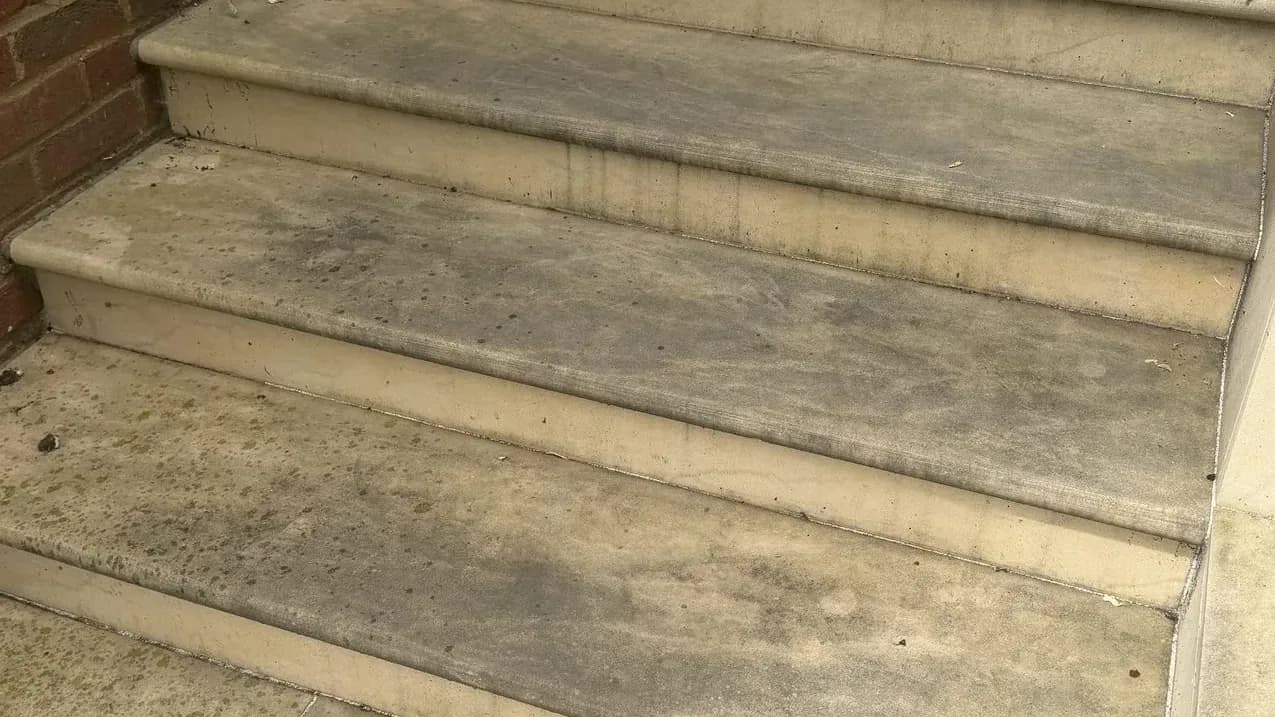
To stop paths and steps going green and slippery, remove loose debris, identify whether the growth is algae or moss, and arrange cleaning suited to the paving material. Then tackle the damp, shaded conditions that encourage it to return. If a walkway is already slippery, restrict use where practical until the risk has been addressed. Cleaning removes growth and can reduce slip risk, but it does not prevent rain, frost or ice from creating new hazards.
A green film on a garden path may look like a cosmetic issue. On front steps, a side passage or the route to a bin store, it becomes more important: these are surfaces people rely on in all weather. This guide explains why green growth appears, what homeowners can reasonably do, which cleaning shortcuts to avoid and when to arrange professional help.
Why Do Paths and Steps Turn Green?
Green discolouration usually develops where outdoor surfaces remain damp for extended periods. Algae can produce a thin, green or dark film; moss tends to form thicker, softer patches, particularly along joints and edges. Other organisms, including lichen, can also colonise paving. The appearance alone does not always establish which growth is present, so it is worth checking before choosing any treatment.
Shade and slow drying
North-facing steps, narrow side returns, spots beneath overhanging trees and paths between high fences receive less direct sunlight or moving air. After rain, the surface dries slowly. Growth can become established even where the rest of the garden looks clean.
Water, debris and poor drainage
Blocked channels, settled paving, soil washing across the path and leaves sitting in corners all contribute to a persistently wet surface. Water trapped in joints gives moss an especially welcoming place to grow. Sometimes the real issue is not a lack of cleaning but an underlying drainage defect.
Seasonal conditions
Cool, wet autumn and winter weather can leave less opportunity for paving to dry. There is no single month when algae appears or disappears, though: a shaded, damp path can remain green in spring or summer too. Regular checks matter more than relying on an annual clean alone.
Why Does Green Growth Make Steps and Walkways Slippery?
A surface coated with biological growth can offer less reliable grip, particularly when wet. The thin film of algae is easy to overlook on dark stone or concrete. Moss and accumulated leaves can also conceal uneven joints, damaged edges or standing water. A path does not need to look bright green to present a problem.
Steps deserve particular attention because a small loss of footing at a change in level has greater consequences than a slip on flat ground. Check the top and bottom landing, the front edge of each tread, nearby handrails and the route people take when carrying shopping or bins. In poor light, a wet patch may be difficult to spot.
The UK Health and Safety Executive identifies moss, mud, wet grass and leaves on outdoor routes as potential slip hazards and recommends routine checks and prioritising well-used paths. The practical lesson for homeowners is simple: focus first on the routes people actually use, not just on the paving that looks most stained.
How to Tell Algae, Moss and Lichen Apart
Algae: a film across the surface
Algae often appears as a greenish, sometimes dark and slippery-looking layer spread across paving. It commonly affects the dampest part of a path, including shaded sections and areas near downpipes. A surface can feel slick even when the colour is faint.
Moss: a thicker growth in joints and edges
Moss forms visible tufts or cushions, frequently around paving joints, step corners, brickwork and cracks. Pulling visible moss away does not necessarily resolve the conditions that let it reappear. Loose jointing or damage also needs attention, rather than simply brushing harder.
Lichen: more firmly attached patches
Lichen can look like small dark, grey or pale patches that resist ordinary sweeping. It is not the same as surface algae, and aggressive removal may damage softer paving. For a useful comparison, our guide to black spot on a patio explains how to recognise this kind of stubborn growth.
What Should You Do First If Your Steps Are Already Slippery?
Start by dealing with access, not by reaching for a cleaning chemical. Where possible, use an alternative route, keep children and visitors away from the affected steps, and avoid carrying bulky items over them. Make sure any handrail is secure and lighting works. If the surface is icy, wet cleaning is not the answer; wait for conditions that allow safe work and follow appropriate winter ice precautions.
Next, note where the growth appears and when the surface seems worst. Is it after rain? Under the gutter outlet? Only on the shaded bottom two steps? That information helps distinguish a cleaning issue from drainage, surface wear or another defect. Photographing the area before it is cleaned can also help explain a recurring problem to a contractor.
How to Clean Green Algae From a Path Without Damaging the Surface
For light loose debris, a careful sweep using a suitable, non-metal brush may be enough to expose the extent of the issue. Work from a stable, dry position and avoid attempting slippery steps during frost or heavy rain. Do not assume that removing visible green colour means the surface has been adequately cleaned or its slip risk eliminated.
Beyond this basic housekeeping, the right cleaning method depends on the material, finish, jointing, drainage and condition of the walkway. Products suitable for concrete may not be suitable for limestone, sandstone, painted finishes or delicate jointing. Always follow manufacturer guidance, and seek specialist advice rather than experimenting with household chemicals. Our guide on how to clean green off a patio covers cleaning methods for each type of paving in more depth.
Concrete and block paving
Concrete may tolerate some cleaning methods that would be unsuitable for more delicate stone, but worn concrete, loose blocks and weakened jointing need care. Strong washing can dislodge jointing sand or expose defects. The appropriate method should be chosen after inspecting the surface rather than simply using the highest available pressure.
Natural stone steps and slabs
Sandstone, limestone and other natural stones vary in porosity, finish and chemical sensitivity. An acidic cleaner or harsh abrasive approach can etch or mark some stones in a way that cannot be reversed. If you cannot identify the stone, avoid chemical trial-and-error and obtain advice before treating it.
Porcelain and smooth-finish paving
Porcelain is often easier to maintain than porous natural stone, but its texture and wet grip still matter. A glossy-looking or very smooth surface can require particular caution when wet. Cleaning cannot change an inherently unsuitable surface finish, so persistent slipperiness may warrant assessment of the paving itself.
Cleaning Mistakes That Can Make the Problem Worse
The most common mistake is treating every green surface as though it needs a powerful high-pressure wash. Concentrated pressure, metal scraping or unsuitable chemicals may mark stone, loosen mortar, wash out joints, splash nearby plants or leave a damp working area that people can slip on. Combining household products is especially unsafe; do not mix cleaners or improvise dilution ratios.
Another mistake is cleaning just before freezing temperatures. Any washing adds moisture, and runoff may freeze on steps or adjacent paths. A responsible contractor will consider the forecast, drainage and the time the surface needs to dry before deciding whether to proceed.
Finally, do not overlook mechanical problems. A rocking paving slab, broken nosing, uneven threshold or blocked gully will still need repair after the green growth is removed. Cleaning and repairs solve different parts of the problem.
How Can You Help Stop Moss and Algae Coming Back?
Prevention is about making the route less favourable to growth and noticing changes early. No method keeps a shaded path clear of growth for good, and every route still needs regular upkeep. A realistic plan reduces the conditions that encourage regrowth and addresses patches before they become widespread.
Clear leaves and soil routinely, particularly in autumn. Keep gullies and drainage channels unobstructed, and investigate water that repeatedly runs across a step or pools near an entrance. Where appropriate, pruning overhanging vegetation can improve airflow and daylight; use a qualified professional for work beyond safe reach.
Look at the joints and edges during a dry spell. Broken pointing, displaced blocks or soft ground beside a path may need repair. If water is consistently collecting on one section, investigate the fall and drainage rather than repeatedly cleaning the symptom.
For routes that turn green each winter, planned maintenance may be more useful than waiting for heavy growth. Chiltern Surface Co's winter cleaning for slippery paths, steps and patios starts with an assessment of the route. Where the surface and the weather allow, the Chiltern EverGuard™ Treatment is applied after cleaning; it inhibits regrowth, typically for two to three years, depending on the surface and its environment. It helps reduce regrowth, and it is not a promise that a walkway will never become slippery.
When Is Professional Path or Step Cleaning Worth It?
A professional assessment makes sense when steps are heavily affected, growth keeps returning, the paving material is uncertain, or cleaning requires working on an awkward slope. It is also sensible where vulnerable people use the entrance or where a route cannot easily be closed while work takes place.
A proper visit starts with the surface and surroundings: the team checks the material, visible growth, access, drainage, nearby plants and weather. The cleaning method is then selected to suit the site, rather than treating every path the same way. Where appropriate, the work may include a follow-up treatment designed to slow the return of growth.
If a path leads into a larger paved area, it can be helpful to address adjoining surfaces together. Chiltern Surface Co's patio cleaning service explains its approach to sandstone, porcelain and concrete, and driveway cleaning covers block paving and other driveway surfaces where a front path joins the drive.
What About Frost, Ice and Wet Winter Weather?
Algae removal and winter ice management are separate jobs. Even clean paving can become slippery when frozen or coated in frost. Avoid washing immediately before a forecast frost, and do not assume that an algae treatment will solve an ice hazard. In icy weather, restrict access where possible and use the appropriate winter maintenance approach for the site.
Treatment products also have application conditions. If temperatures, rainfall or surface moisture make treatment unsuitable, the visit may need to be rescheduled. That is a practical precaution, not a sign that the cleaning has been forgotten.
Which Paths and Steps Should You Prioritise?
Begin with the main entrance and the route used most frequently. Then check side passages, garden steps, the way to bins, gate thresholds, ramps and paths used by deliveries or visitors. Look carefully at shaded changes in level, areas below leaking downpipes and any place where water collects.
Homes with older residents, mobility concerns or regularly visiting children may need more frequent checks and a clearer alternative route while a problem is being addressed. If the patio at the end of the path is the trouble spot, our guide to why a patio gets slippery in winter explains what to look for, and slippery decking in winter covers steps and routes on timber and composite boards.
Final Takeaway
Green paths and steps are usually a sign that moisture, shade and biological growth are combining on a frequently exposed surface. The most useful approach is to recognise the hazard early, remove loose debris, address drainage and arrange the right cleaning for the paving material. For recurring moss or algae, professional work and ongoing checks can help reduce slip risk without damaging the surface.
If your paths, steps or entrances keep turning green, book a free site visit. Chiltern Surface Co works across Buckinghamshire, Oxfordshire and Berkshire and can advise on a suitable cleaning and maintenance approach.
Frequently asked questions
Why is my garden path green even after cleaning?
The path may remain damp and shaded, allowing growth to return. Cleaning may also have removed loose material without fully addressing established biological growth. Check drainage and the surface condition, and consider a professional assessment if the problem recurs quickly.
Does moss on steps always mean they are slippery?
Not necessarily to the same degree in every condition, but moss on a walking surface should be treated as a potential slip and trip concern. Wet growth can conceal uneven edges and reduce reliable footing. Do not rely on a visual judgement alone.
Can I use bleach to remove green algae from paving?
Do not assume household bleach is suitable. Different paving materials, nearby plants, drainage routes and product instructions matter. Avoid mixing chemicals and seek material-specific professional guidance rather than following an unverified online recipe.
Is pressure washing the best way to remove moss from steps?
Not automatically. Excessive pressure can harm softer materials, joints and edges, while the wash water itself can create an immediate slip hazard. The appropriate cleaning method depends on the particular steps and their condition.
How often should paths be cleaned in winter?
There is no universal interval. Check regularly during damp spells and after heavy leaf fall, especially on frequently used routes. Shaded sites with recurring growth may benefit from a planned visit early in the season and a further visit later in the winter.
Will a treatment stop my steps becoming slippery again?
A suitable treatment may help slow biological regrowth, but it cannot eliminate all hazards or prevent rain, frost and ice. Continued housekeeping, repairs and seasonal checks remain important.