
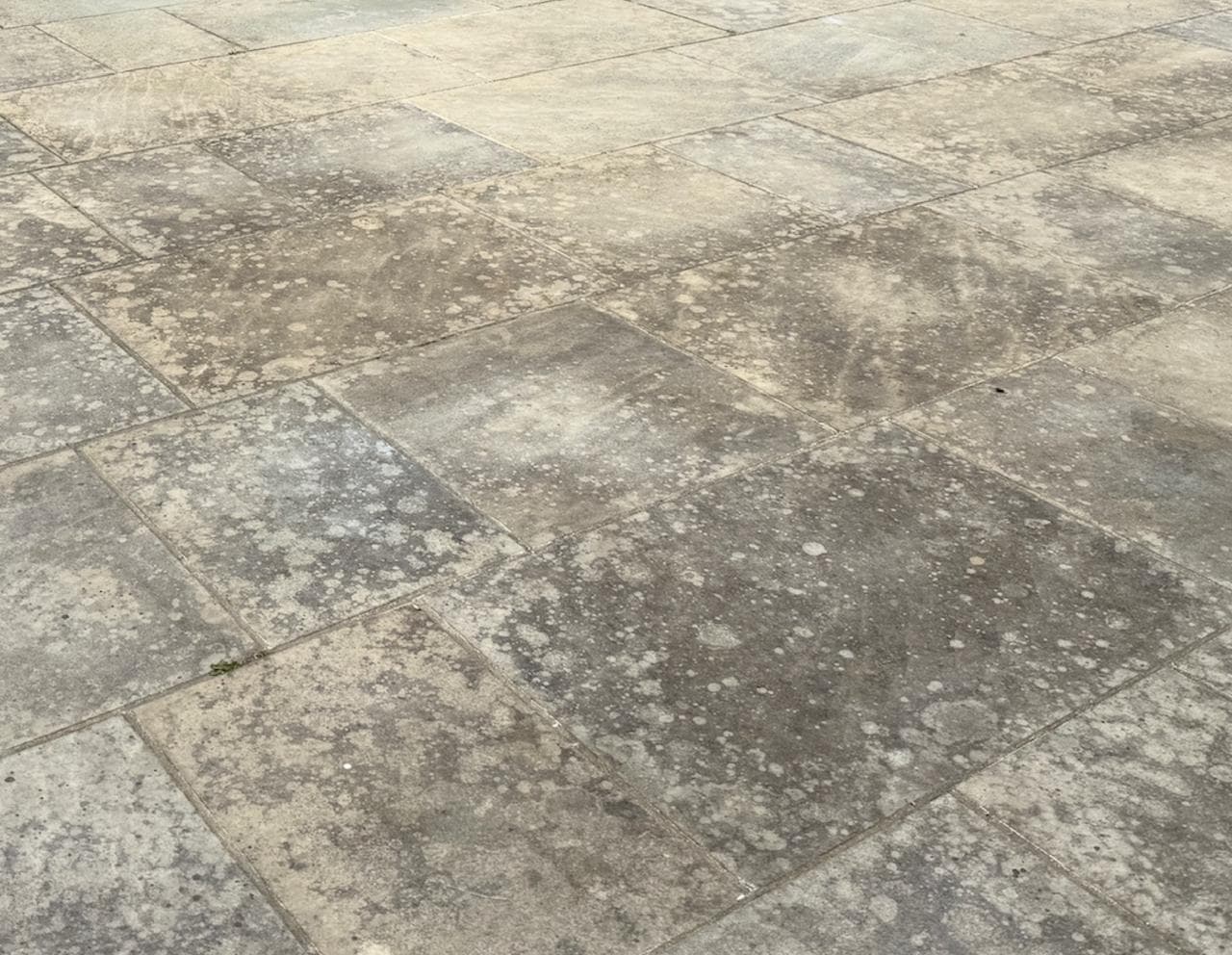
Black spot on a patio is lichen, not dirt. It looks like small dark stains scattered across the slabs, and it resists almost every cleaning method homeowners try first. This guide explains what black spot is, why it forms, and how to remove it properly.
What Is Black Spot on a Patio?
Black spot is a hardy lichen that bonds into the surface of stone paving. It is not soil, mould, or general grime. Black spot lichen grips tightly to the stone and works into the surface, which is why it does not simply wash off. The growth spreads slowly and stains the slab from within, which is why a quick wash never shifts it.
Black spot affects 5 surface types most often: Indian sandstone, natural limestone, concrete paving, riven stone, and older porcelain with a textured finish. Sandstone suffers worst because the stone is soft and porous, giving the lichen an easy grip.
What Causes Black Spot to Grow?
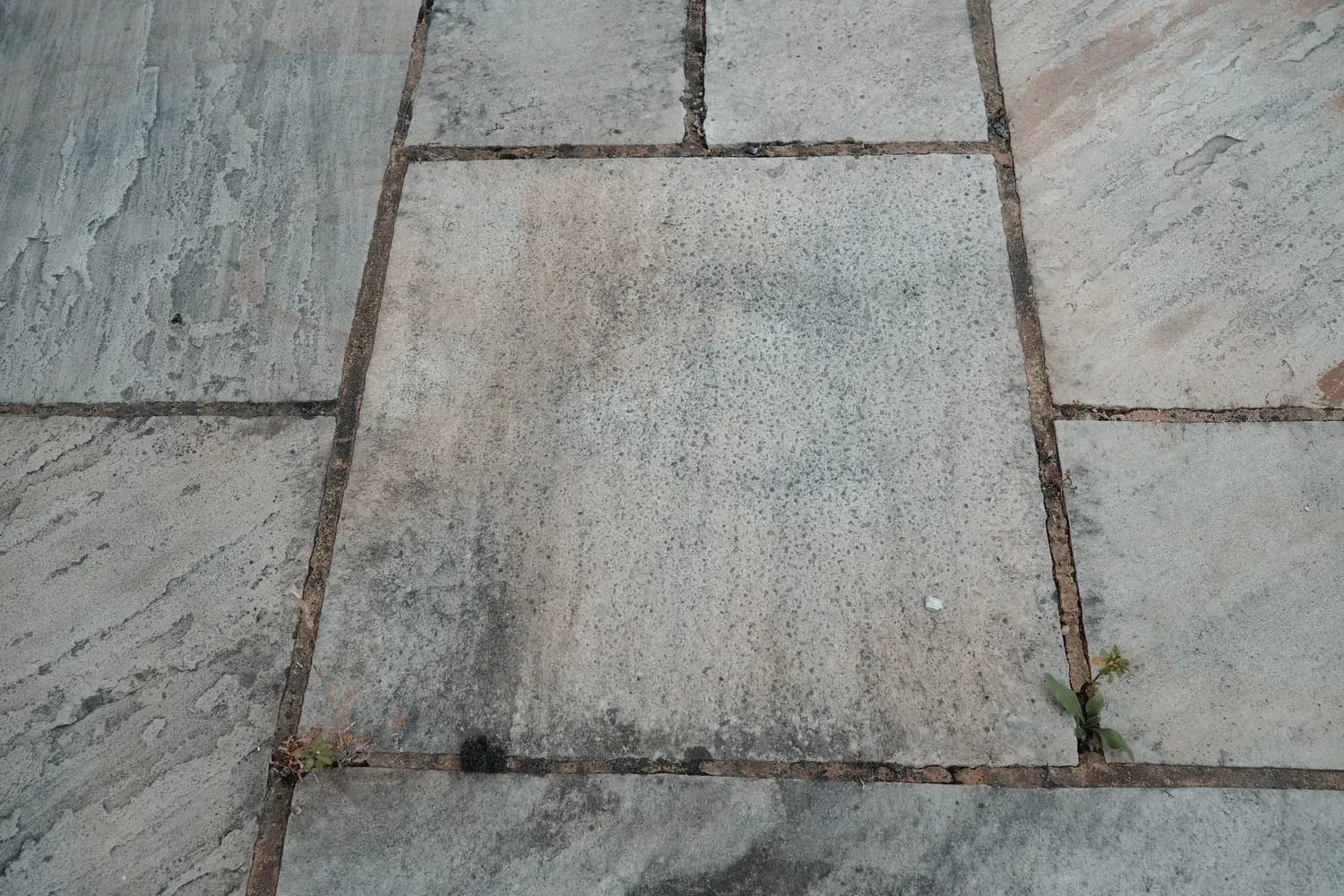
Black spot needs damp, shade, and an untreated surface. The UK climate supplies the first two for most of the year. These 4 conditions drive the growth:
- Damp, shaded areas — north-facing patios and spots under trees stay wet longest, so lichen settles there first.
- Lack of sealing — an unsealed patio has open pores, and lichen anchors directly into the stone.
- Poor drainage — standing water keeps the surface saturated and feeds the growth.
- Years without treatment — lichen matures slowly, so a patio left 5 or more years without cleaning builds deep, stubborn staining.
Is Black Spot the Same as Algae and Moss?
No. Black spot, algae, and moss are 3 different problems that need 3 different treatments. Algae forms a green or black film on the surface and wipes away fairly easily. Moss grows as soft green clumps in joints and shaded patches. Black spot bonds into the stone itself and stays after the surface looks clean. A treatment that clears algae will leave black spot untouched, which is why correct diagnosis matters before any cleaning starts.
Why Pressure Washing Does Not Remove Black Spot
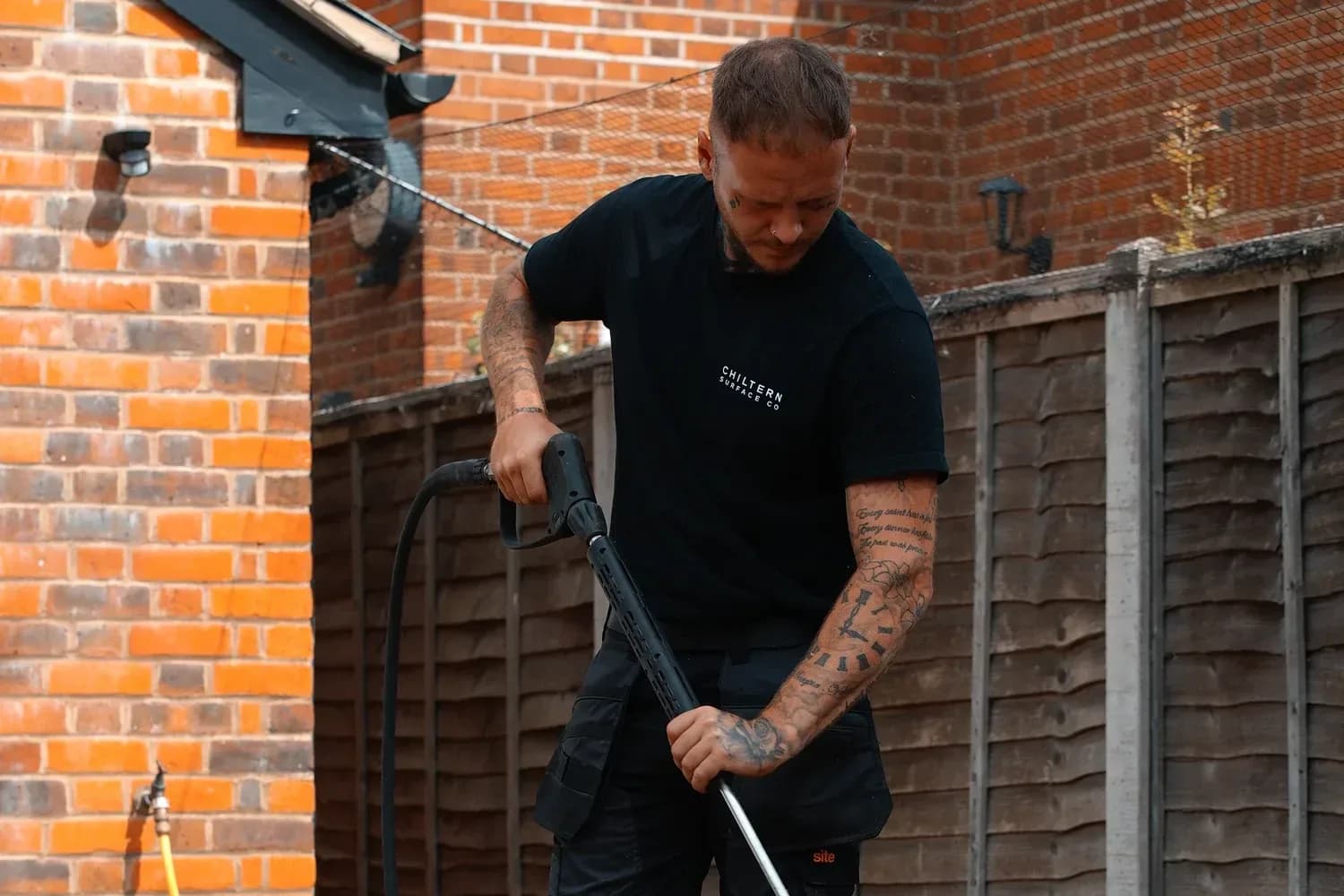
Pressure washing strips the top layer of grime but leaves the lichen behind. The hyphae sit below the surface, beyond the reach of water alone. Worse, a strong jet erodes soft sandstone, opens the pores further, and gives the lichen more room to spread. A patio often looks clean for a few weeks after jet washing, then the black spots reappear because the root structure was never killed.
The Risk of Aggressive DIY Cleaning
Turbo nozzles and wire brushes damage the stone surface. Once sandstone is pitted, it holds moisture for longer and becomes more vulnerable to regrowth. Damage from over-cleaning is difficult to reverse.
How to Remove Black Spot From a Patio
Black spot removal works through chemical treatment, not force. A specialist applies a biocide or a sodium hypochlorite solution that breaks down the lichen. Follow these 6 steps for a correct removal:
- Clear the patio of furniture, pots, and loose debris so the whole surface is exposed.
- Pre-wet the slabs with clean water to stop the treatment soaking in too fast.
- Apply the black spot treatment evenly with a pump sprayer, covering every stained area.
- Leave the solution to dwell for the time the product specifies, usually 1 to 2 hours.
- Rinse the surface thoroughly with clean water to neutralise and lift the dead lichen.
- Re-treat any stubborn patches, because older staining often needs a second application.
Treatment kills the lichen, then the stain fades over the following days as the dead growth breaks down. Deep staining on a patio that is 10 or more years old can take 2 or 3 visits to clear fully.
Protecting Plants and Surrounding Areas
Black spot treatments harm grass and garden plants. Cover nearby borders, and avoid rinsing the solution onto lawns or flower beds. A professional masks these areas before starting.
Should You Treat Black Spot Yourself or Hire a Professional?
DIY treatment suits light, recent staining on a small, hard-wearing patio. For widespread or deep black spot, a professional service gives better and longer-lasting results for 4 reasons:
- Correct diagnosis — a specialist confirms the problem is lichen, not algae, before choosing a treatment.
- Surface-specific methods — the right strength and technique are matched to sandstone, limestone, or concrete.
- Safe chemical handling — trained operators manage biocides without harming plants, pets, or the surface.
- Lasting protection — a professional finishes with advice on sealing to slow regrowth.
How to Stop Black Spot Coming Back
Black spot regrows because lichen spores are always present in the air. Prevention slows the return rather than stopping it completely. These 4 measures keep a patio cleaner for longer:
- Seal the patio after cleaning to close the pores and reduce moisture absorption.
- Cut back overhanging branches to let more light and air reach the surface.
- Sweep the patio regularly to remove the organic debris that feeds lichen.
- Book a maintenance clean every 1 to 2 years to remove growth before it embeds.
Frequently asked questions
Does bleach remove black spot from a patio?
Household bleach weakens surface algae but rarely kills established lichen. Black spot needs a dedicated biocide or a correctly mixed sodium hypochlorite treatment to reach the root structure.
How long does black spot take to disappear after treatment?
The stain fades over the following days rather than disappearing immediately. Older, deeper staining can need a second treatment before it clears fully.
Will black spot damage my patio?
Yes. Left untreated, lichen holds moisture against the stone, makes slabs slippery, and slowly degrades the surface. Early treatment protects both the look and the structure of the patio.