
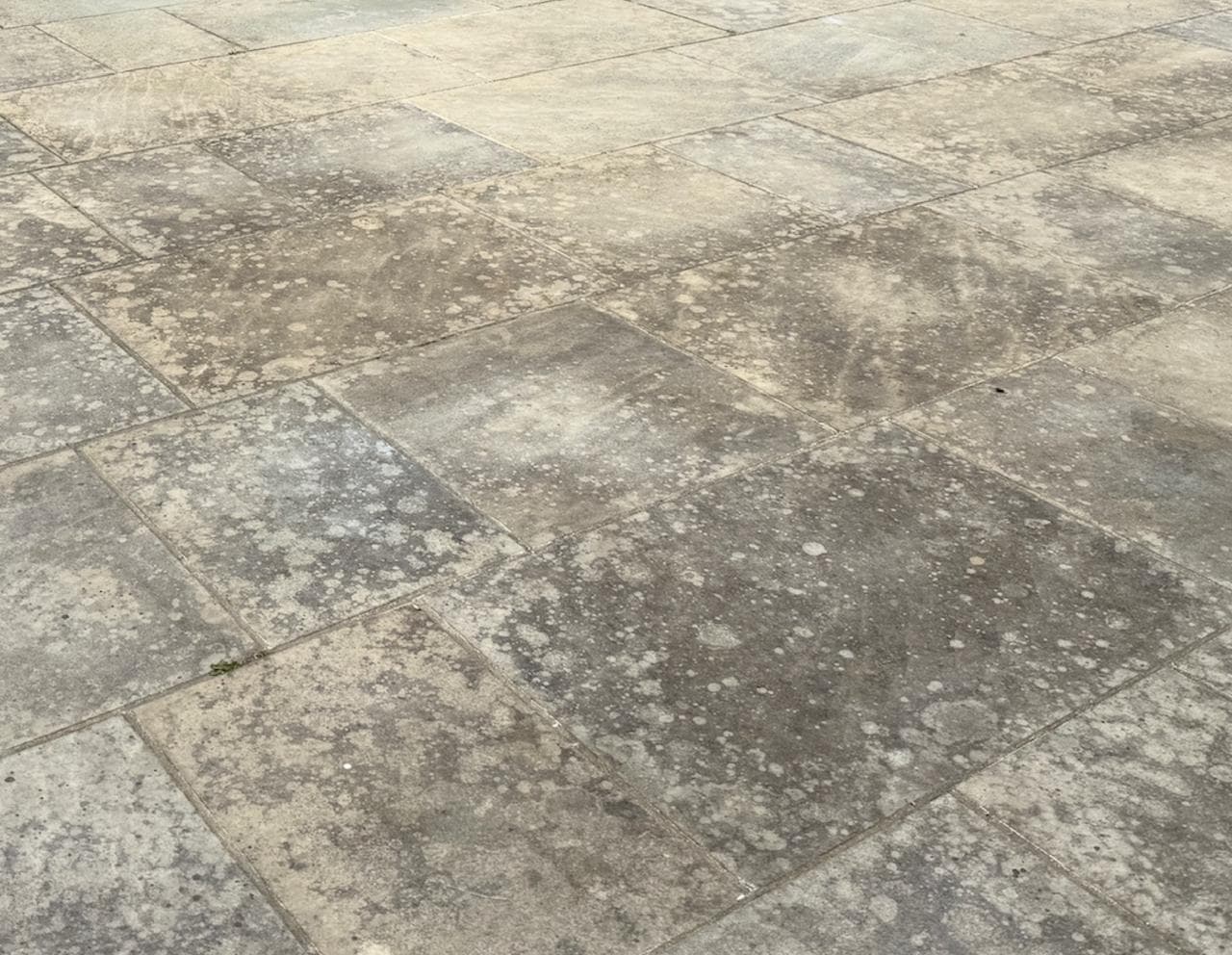
If you want to know how to clean black spots off patio slabs, this guide gives you the clear answer. Black spots are often caused by black lichen, which can root into patio surfaces and become very hard to remove with normal cleaning.
Many homeowners try scrubbing, pressure washing, bleach, vinegar, or general patio cleaners, only to find the marks return or do not fully disappear. That is because black spots on patio slabs are not usually simple dirt. In many cases, they are biological growth that has attached itself deep into the surface.
At Chiltern Surface, we clean patios with care, skill, and surface knowledge. Black spot removal needs the right method, especially on sandstone, limestone, concrete, porcelain, and natural stone paving.
What Are Black Spots on Patio Slabs?
Black spots are usually a form of lichen. Lichen is a living growth made from algae and fungus. It sticks tightly to outdoor surfaces and can spread across patio slabs over time.
These marks often look like:
- Small black dots
- Dark speckled stains
- Round black patches
- Deep marks on stone
- Stubborn spots that survive pressure washing
Unlike surface dirt, lichen grips the slab. It can settle into tiny pores in the stone or concrete. This is why black lichen on patio slabs can be so difficult to remove.
Why Black Spots Are So Hard to Remove
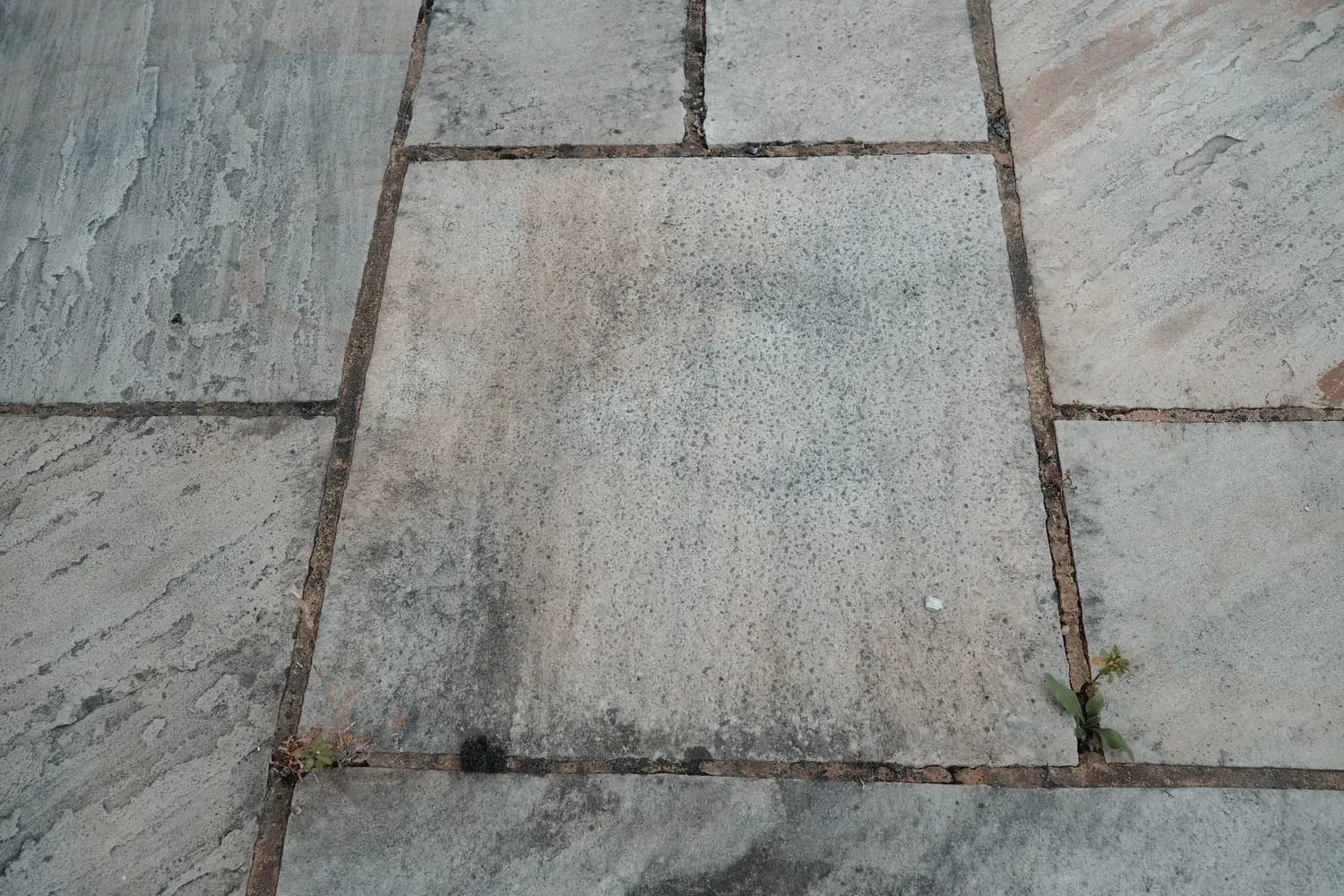
Black spots are hard to clean because they root into the patio surface. A pressure washer may remove loose dirt and green algae, but it often only removes the top of the lichen.
The deeper growth can remain inside the pores. Then, after a few weeks or months, the black spots may return.
This is why many DIY methods fail. Black spot removal usually needs a treatment that breaks down the biological growth before it is rinsed away.
What Causes Black Spots on Patio Slabs?
Black spots often appear because of damp, shade, spores, and poor maintenance. UK patios are especially prone to this because of wet weather and long periods of low sunlight.
Common causes include:
- Damp conditions
- Shaded garden areas
- Leaves left on slabs
- Poor drainage
- Porous stone
- Winter moisture
- Moss and algae buildup
- Untreated natural stone
- Lack of regular cleaning
Once lichen starts growing, it can spread slowly across the patio.
Can Pressure Washing Remove Black Spots?
Pressure washing can help, but it often does not fully remove black spots. It may clean the surrounding slab and make the patio look better, but the dark lichen marks can remain.
Using too much pressure can also damage:
- Sandstone
- Limestone
- Pointing
- Grout
- Jointing sand
- Older concrete
- Delicate paving
So, while pressure washing black spots may lighten the surface, it is not always the full solution. A specialist treatment is often needed first.
Best Way to Clean Black Spots Off Patio Slabs
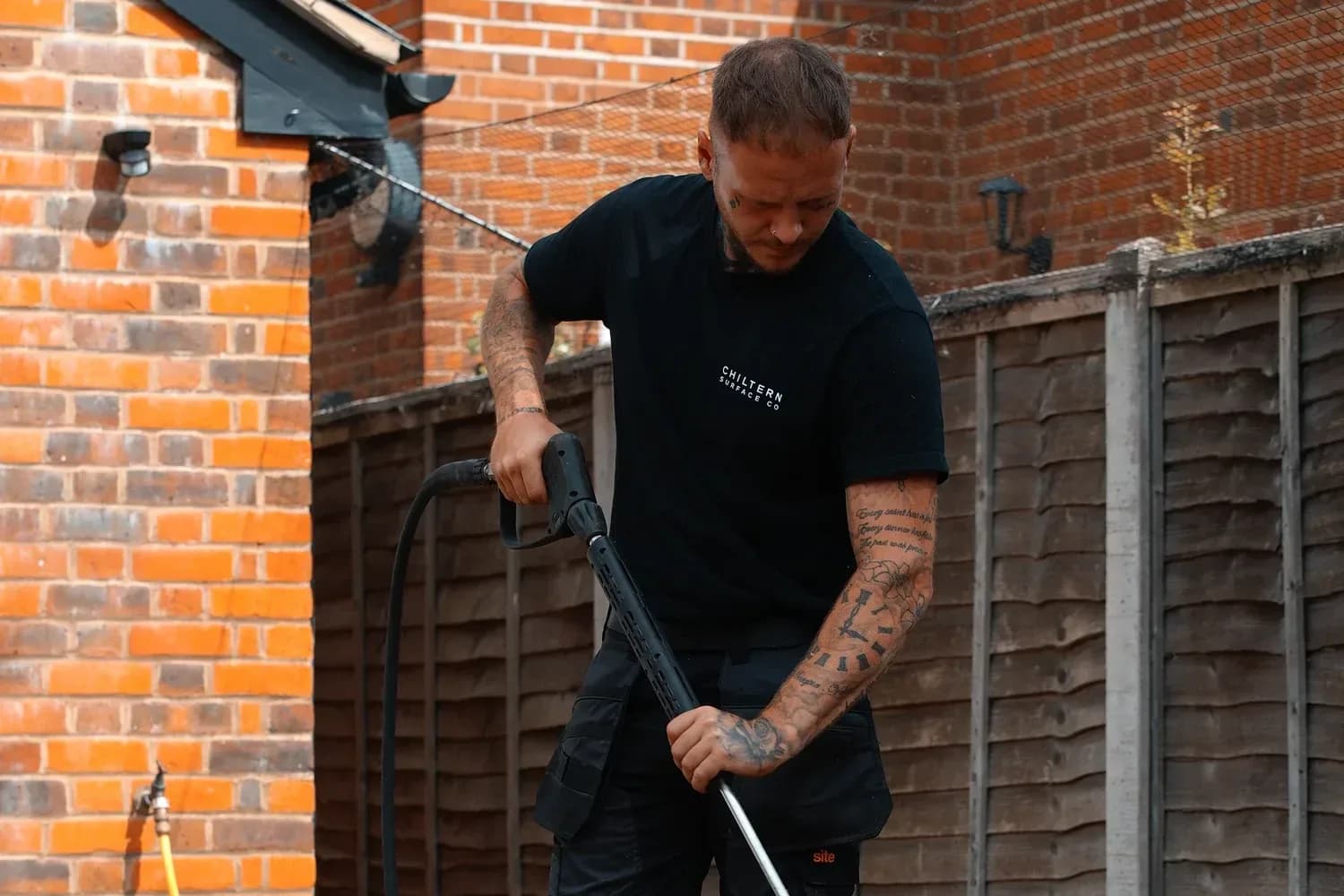
The best way to clean black spots off patio slabs is to use a proper black spot treatment, allow it to work, scrub the surface, and rinse thoroughly. The exact method depends on the patio material.
A safe process includes:
- Sweep the patio first
- Identify the slab type
- Test a small hidden area
- Apply a suitable treatment
- Allow proper dwell time
- Scrub with a stiff brush
- Rinse thoroughly
- Repeat if needed
- Consider professional cleaning for heavy lichen
Do not rush the process. Black spot removal takes time.
Use a Patio Black Spot Remover
A patio black spot remover is designed to target lichen and deep biological staining. These products are often stronger than standard patio cleaners.
Before using one:
- Read the label carefully
- Check if it suits your surface
- Wear gloves and safety goggles
- Protect nearby plants
- Keep pets and children away
- Test a small area first
- Rinse well after treatment
Some products may not be suitable for delicate natural stone. When in doubt, ask a professional.
Can Bleach Remove Black Spots?
Bleach may lighten black spots, but it rarely gives the best result. It can also damage plants, lawns, clothing, and some patio materials.
Bleach can be risky on:
- Sandstone
- Limestone
- Natural stone
- Coloured slabs
- Sealed paving
- Delicate grout
Never use neat bleach. Never mix bleach with other cleaners. Always rinse thoroughly.
For deep lichen, a specialist cleaner or professional treatment is usually safer and more effective.
Can Vinegar Remove Black Spots?
Vinegar is not recommended for most black spot removal. It is acidic and can damage natural stone, especially limestone.
It may also be too weak to remove rooted lichen.
Avoid vinegar on:
- Limestone
- Sandstone
- Marble
- Natural stone paving
- Sealed surfaces
Using the wrong cleaner may leave pale marks or surface damage.
How to Remove Black Spots from Concrete Patio Slabs
Concrete is usually stronger than natural stone, but it is still porous. Black lichen can grip into the surface.
For concrete:
- Sweep away dirt
- Apply a concrete-safe black spot remover
- Let it work as directed
- Scrub with a stiff brush
- Rinse with clean water
- Repeat if needed
Avoid using extreme pressure too close to the surface. It can leave lines or rough patches.
How to Remove Black Spots from Sandstone Patio
Sandstone is a popular patio material, but it is porous and delicate. Black spots often take hold in sandstone because moisture sits in the stone.
For sandstone:
- Avoid strong acids
- Avoid harsh DIY mixtures
- Use a sandstone-safe cleaner
- Test first
- Scrub gently
- Rinse well
- Consider professional treatment
Sandstone can be damaged by aggressive pressure washing. If black spots are widespread, Chiltern Surface can clean the patio safely with the right method.
How to Remove Black Spots from Limestone Patio
Limestone is sensitive to acidic cleaners. This means vinegar and many acid-based products are unsuitable.
For limestone:
- Use a pH-safe stone cleaner
- Avoid harsh acids
- Avoid high-pressure blasting
- Use gentle brushing
- Rinse with clean water
Black spot removal on limestone is best handled carefully. A professional assessment can prevent costly damage.
How to Remove Black Spots from Porcelain Patio
Porcelain is dense and low-porous, so black spots are usually less likely to root deeply into the tile itself. However, dirt, algae, and lichen can still sit in textured surfaces, grout lines, and edges.
For porcelain:
- Use a pH-neutral cleaner first
- Scrub with a soft or medium brush
- Rinse thoroughly
- Treat grout lines carefully
- Avoid oily or wax-based products
If marks remain, they may be residue, grout haze, or staining rather than true black lichen.
How to Remove Black Spots from Block Paving
Block paving can develop black spots, moss, and algae in the surface and joints.
To clean block paving:
- Sweep the area
- Remove weeds and loose moss
- Apply suitable treatment
- Scrub or pressure wash carefully
- Avoid washing out too much jointing sand
- Re-sand joints if needed
Block paving often needs aftercare because pressure washing can disturb the joints.
Do Natural Methods Work on Black Spots?
Natural methods like warm water, baking soda, and scrubbing may help light surface marks. However, they usually do not remove deep black lichen.
Natural cleaning is better for:
- Light dirt
- Mild algae
- Fresh organic marks
- General patio upkeep
For real black spots, a specialist treatment is normally needed.
Common Mistakes to Avoid
Many homeowners make black spots worse by using the wrong method.
Avoid:
- Using high pressure too close
- Scrubbing with wire brushes
- Using vinegar on natural stone
- Using neat bleach
- Mixing chemicals
- Skipping a test patch
- Letting cleaner dry on the slabs
- Ignoring plant protection
- Expecting one quick wash to remove deep lichen
Careful cleaning protects both the patio and your garden.
How to Stop Black Spots Coming Back
Black spots can return if the patio stays damp and untreated.
To reduce regrowth:
- Sweep leaves often
- Improve drainage
- Trim overhanging plants
- Move pots regularly
- Clean algae early
- Treat lichen before it spreads
- Consider sealing suitable surfaces
- Book seasonal professional cleaning
Prevention is much easier than full black spot removal.
Should You Seal Patio Slabs After Black Spot Removal?
Sealing can help some patios resist moisture and staining. It may also make future cleaning easier.
Sealing may be useful for:
- Concrete
- Sandstone
- Limestone
- Natural stone
- Some block paving
Porcelain usually does not need sealing, but grout lines may still need care.
Always choose the right sealer for the surface. The wrong sealer can cause patchiness, clouding, or poor drainage.
When Professional Black Spot Removal Is Better
Professional cleaning is best when:
- Black spots cover a large area
- DIY methods have failed
- The patio is sandstone or limestone
- Pressure washing did not work
- You are unsure what cleaner to use
- The surface is delicate
- You want long-lasting results
Chiltern Surface can assess the patio and choose the right cleaning method for the surface.
Professional Patio Black Spot Removal by Chiltern Surface
Chiltern Surface provides expert professional patio cleaning for homeowners who want safe, careful, and lasting results.
Our black spot removal service may include:
- Surface inspection
- Lichen assessment
- Suitable treatment selection
- Controlled pressure washing
- Soft washing where appropriate
- Careful rinsing
- Joint and edge cleaning
- Sealing advice
- Aftercare guidance
We do not use one method for every patio. Each surface gets the care it needs.
Why Choose Chiltern Surface?
Black spot removal needs more than a quick wash. It needs knowledge, patience, and the right products.
Chiltern Surface offers:
- Expert surface care
- Safe cleaning methods
- Professional equipment
- Careful pressure control
- Premium attention to detail
- Honest advice
- Local service
- Long-lasting results
Whether your patio has black lichen, moss, algae, grime, or deep staining, we can help restore it safely.
About How to Clean Black Spots Off Patio SlabsConclusion
Knowing how to clean black spots off patio slabs helps you understand why these marks are so stubborn. Black spots are often black lichen, not simple dirt. That means pressure washing alone may not fully remove them.
For light marks, careful scrubbing and the right patio cleaner may help. For deep lichen, sandstone, limestone, block paving, or large stained areas, professional treatment is the safer and more effective choice.
Chiltern Surface provides expert black spot and patio cleaning services with careful methods and premium results.
Contact Chiltern Surface today to restore your patio and enjoy a cleaner, brighter, better-looking outdoor space.
Frequently asked questions
What are black spots on patio slabs?
Black spots are often black lichen, a biological growth that grips into patio surfaces and becomes hard to remove.
Can pressure washing remove black spots?
Pressure washing may lighten black spots, but it often does not remove the rooted lichen fully.
What is the best patio black spot remover?
The best remover depends on your patio surface. Natural stone, concrete, porcelain, and block paving all need different care.
Can bleach remove black spots from patio slabs?
Bleach may lighten some marks, but it can damage plants and certain patio materials. Specialist treatment is usually better.
How do I remove black spots from sandstone?
Use a sandstone-safe cleaner and avoid aggressive pressure washing. Professional cleaning is often the safest choice.
Why do black spots keep coming back?
They return when lichen roots remain or the patio stays damp, shaded, and untreated.
Can vinegar remove black lichen?
Vinegar is not a good choice for black lichen and may damage natural stone.
When are black spots on patio slabs a job for a professional?
Call Chiltern Surface if black spots are widespread, stubborn, or on delicate surfaces like sandstone or limestone.