
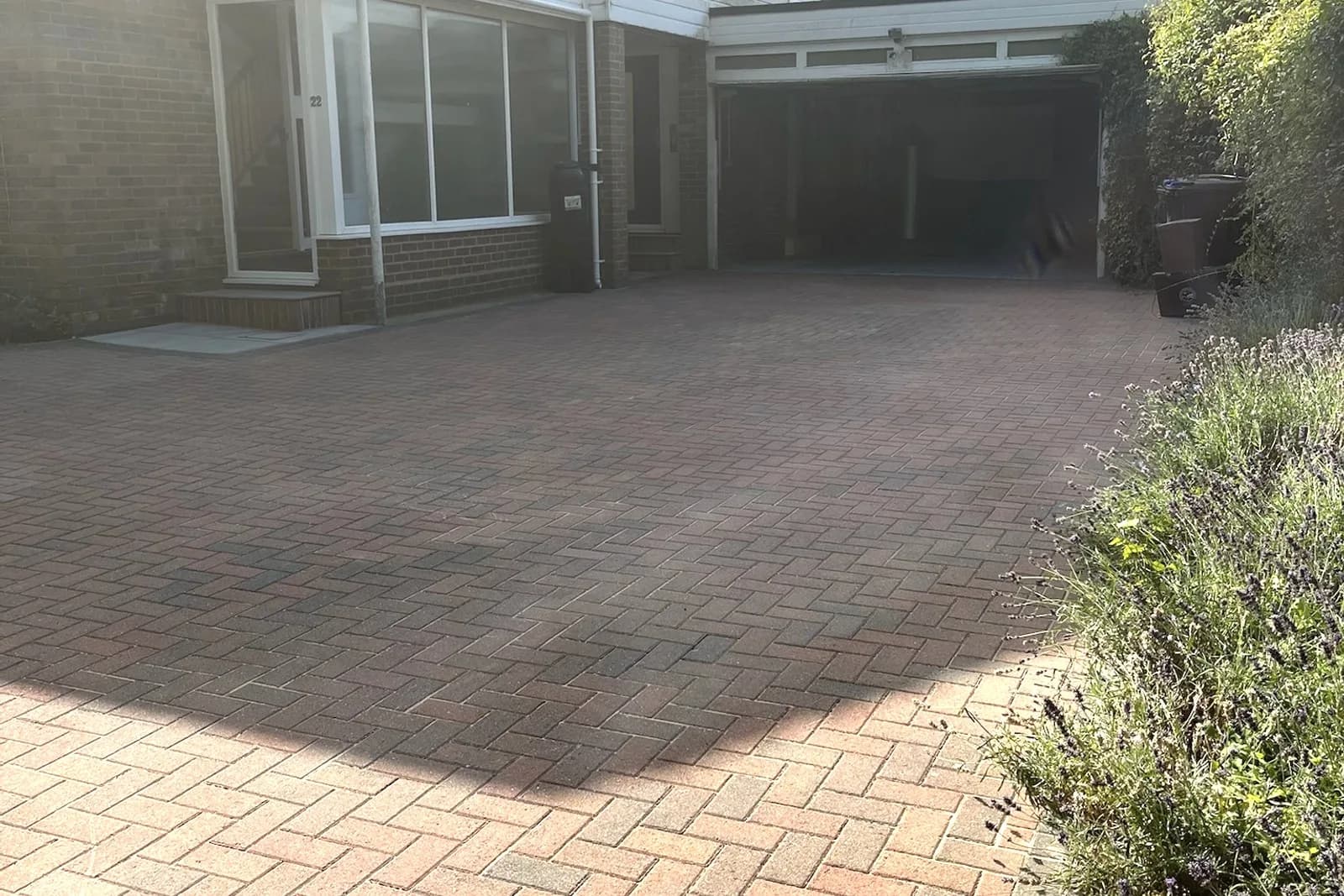
Block paving is one of the most popular driveway surfaces across Buckinghamshire — and one of the most commonly neglected. Over a few years, weeds push up through the joints, oil and tyre marks build up, and a green-black film of algae dulls the colour. The good news is that a properly restored block paving driveway can look close to new again.
Why block paving needs more than a jet wash
A high-pressure lance on its own will shift surface dirt, but it also blasts the stabilising sand out of the joints — which is exactly what lets weeds and ants back in within weeks. A lasting result depends on what happens before and after the clean, not just the clean itself.
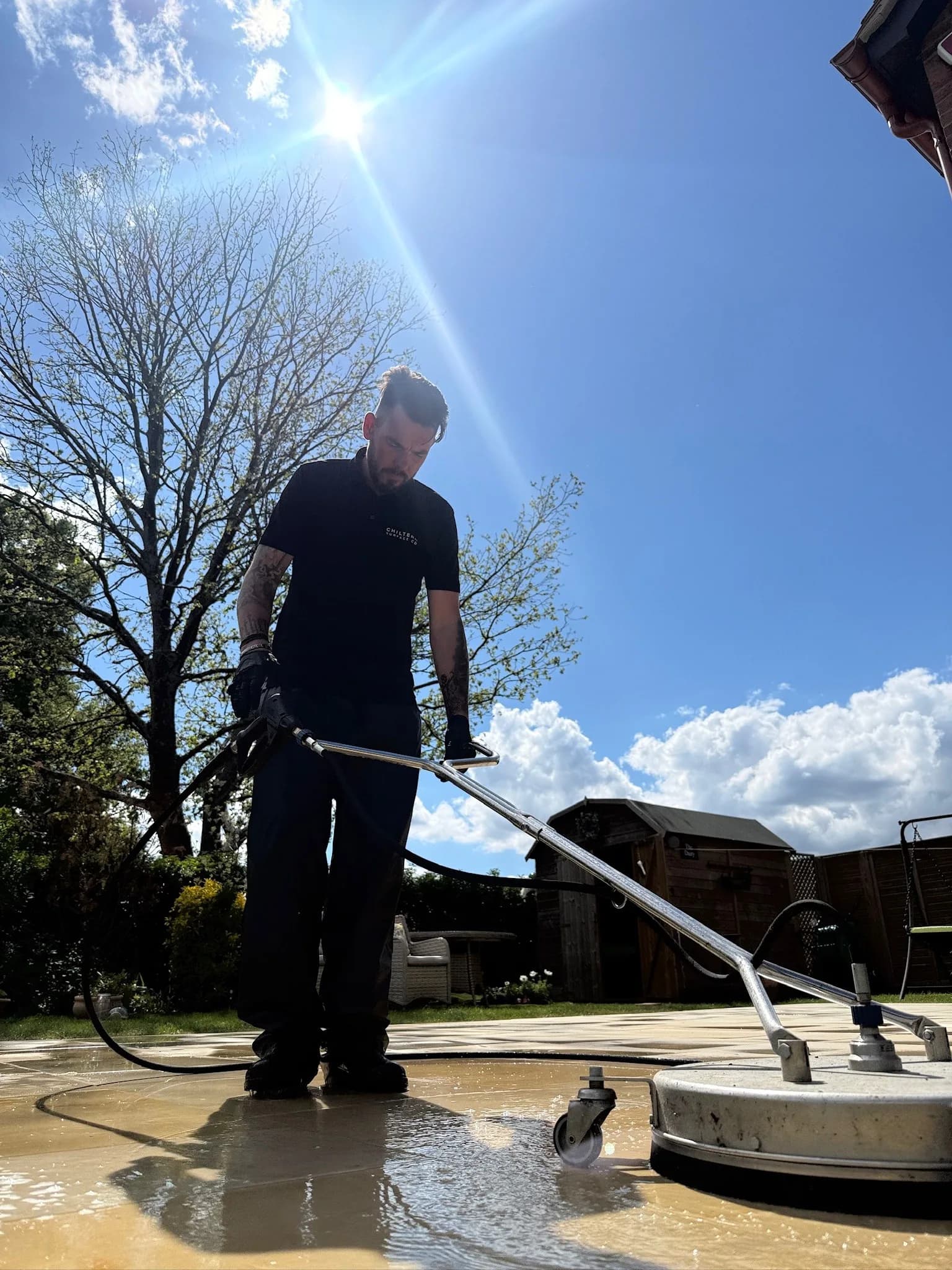
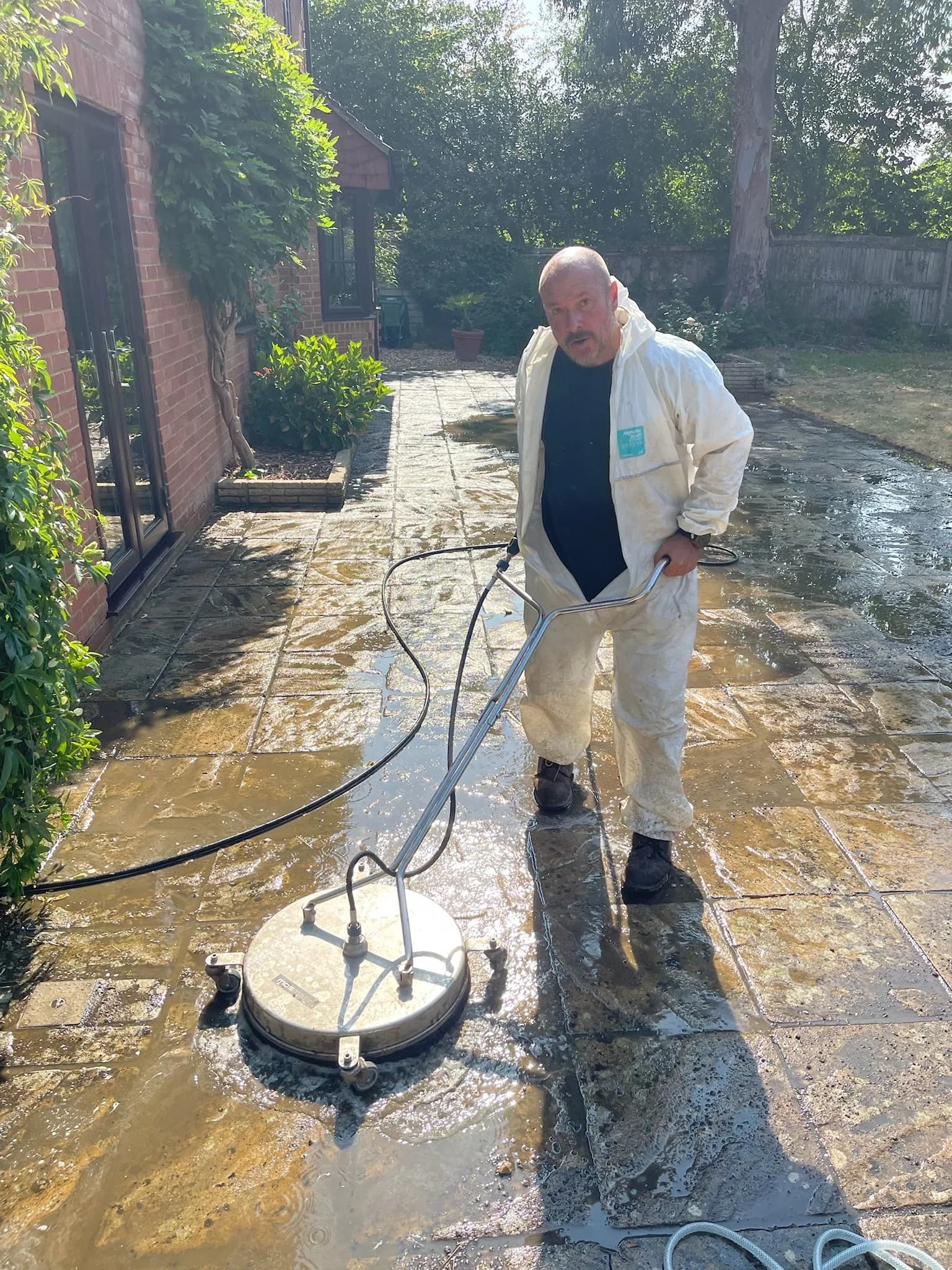
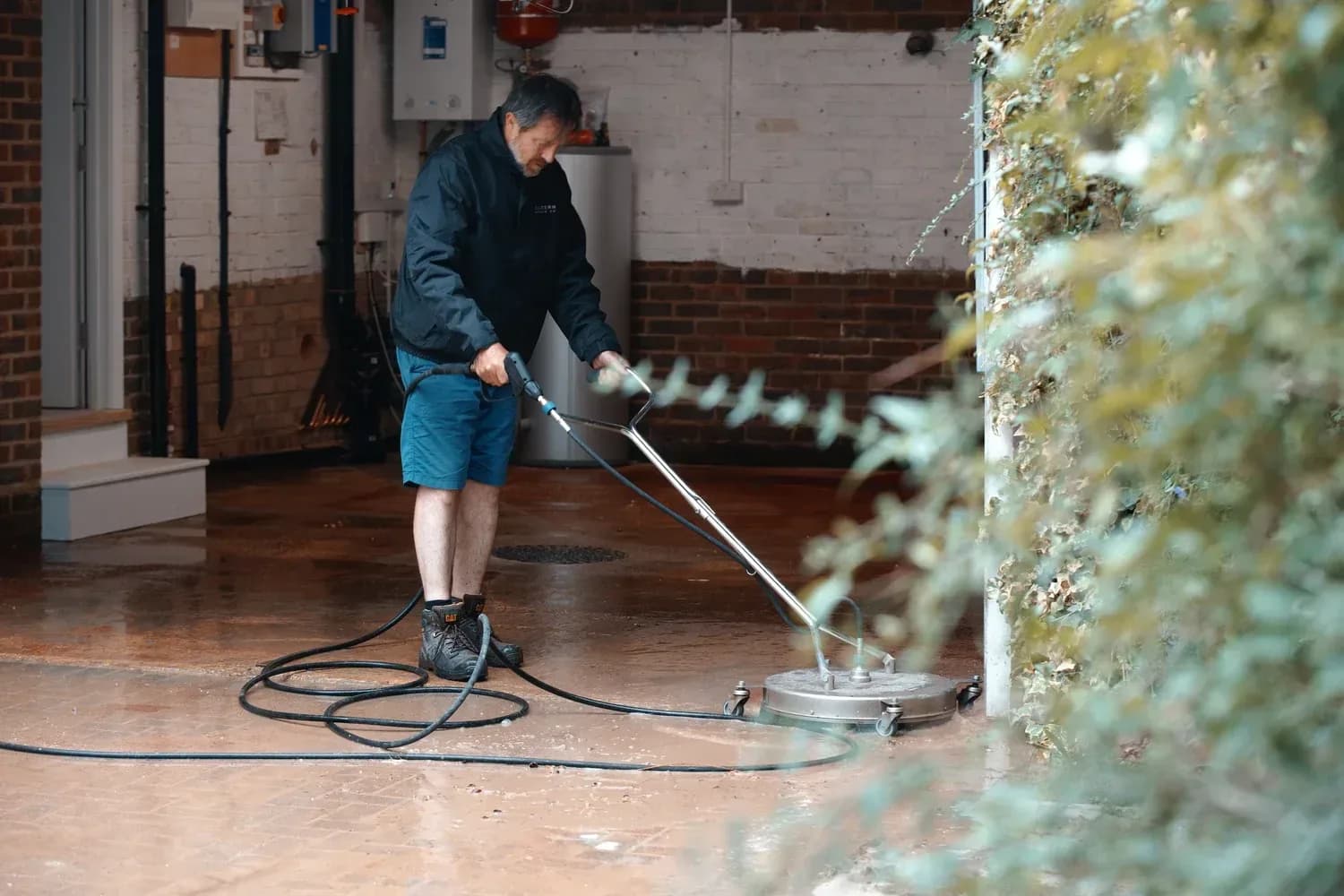
Our block paving restoration process
- Clear weeds, moss and debris from the joints by hand and at the root.
- Treat oil stains and organic growth with the correct targeted products.
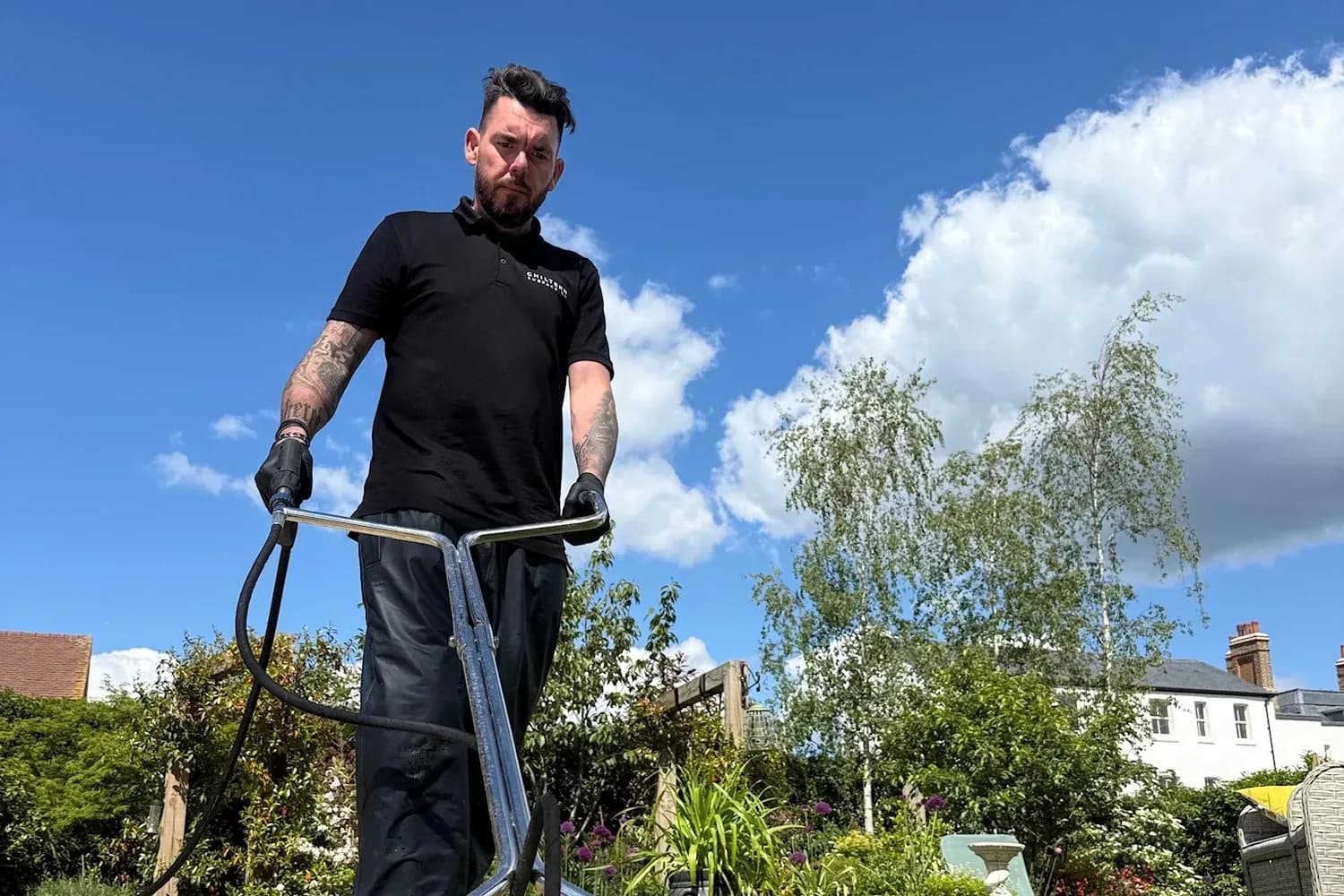
- Deep clean the blocks evenly with controlled pressure for a consistent finish.
- Re-sand the joints with kiln-dried sand to lock the blocks and resist weeds.
- Optional sealing to protect the colour and make future cleaning easier.
Re-sanding: the step most people skip
Kiln-dried sand is brushed into the joints once the blocks are dry. It locks the blocks together, stops them shifting under car tyres, and makes it much harder for weeds to return. Skipping it is the single biggest reason a freshly cleaned driveway looks tired again within a season.
Weeds, oil stains and sunken blocks
Recurring weeds are almost always a sign the jointing sand has washed away. Oil marks need treating with the right product rather than scrubbing, and the odd sunken or lifted block is worth resetting while the driveway is being restored — it's far easier to address as part of the same visit.
Should you seal block paving?
Sealing isn't essential, but it helps lock in the sand, deepen the colour and make future cleans easier. We'll only ever recommend it where it genuinely adds value for your driveway, and give you an honest view at the site visit.
How often should a block paving driveway be cleaned?
For most homes across Buckinghamshire, a thorough professional clean every two to three years keeps a block paving driveway looking its best — more often on shaded, north-facing or tree-lined plots where algae returns faster.
Frequently asked questions
Will pressure washing damage my block paving?
Not when it's done correctly. We use controlled pressure and always re-sand the joints afterwards, so the blocks stay stable rather than loose.
Do I need my driveway sealed?
Sealing isn't essential, but it helps lock in the sand, protect the colour and make future cleans easier. We'll give you an honest recommendation at the site visit.
Can you remove oil stains from block paving?
In most cases, yes. Oil is treated with a dedicated product that draws it out of the surface — older, deeply soaked stains may lighten rather than vanish completely.