
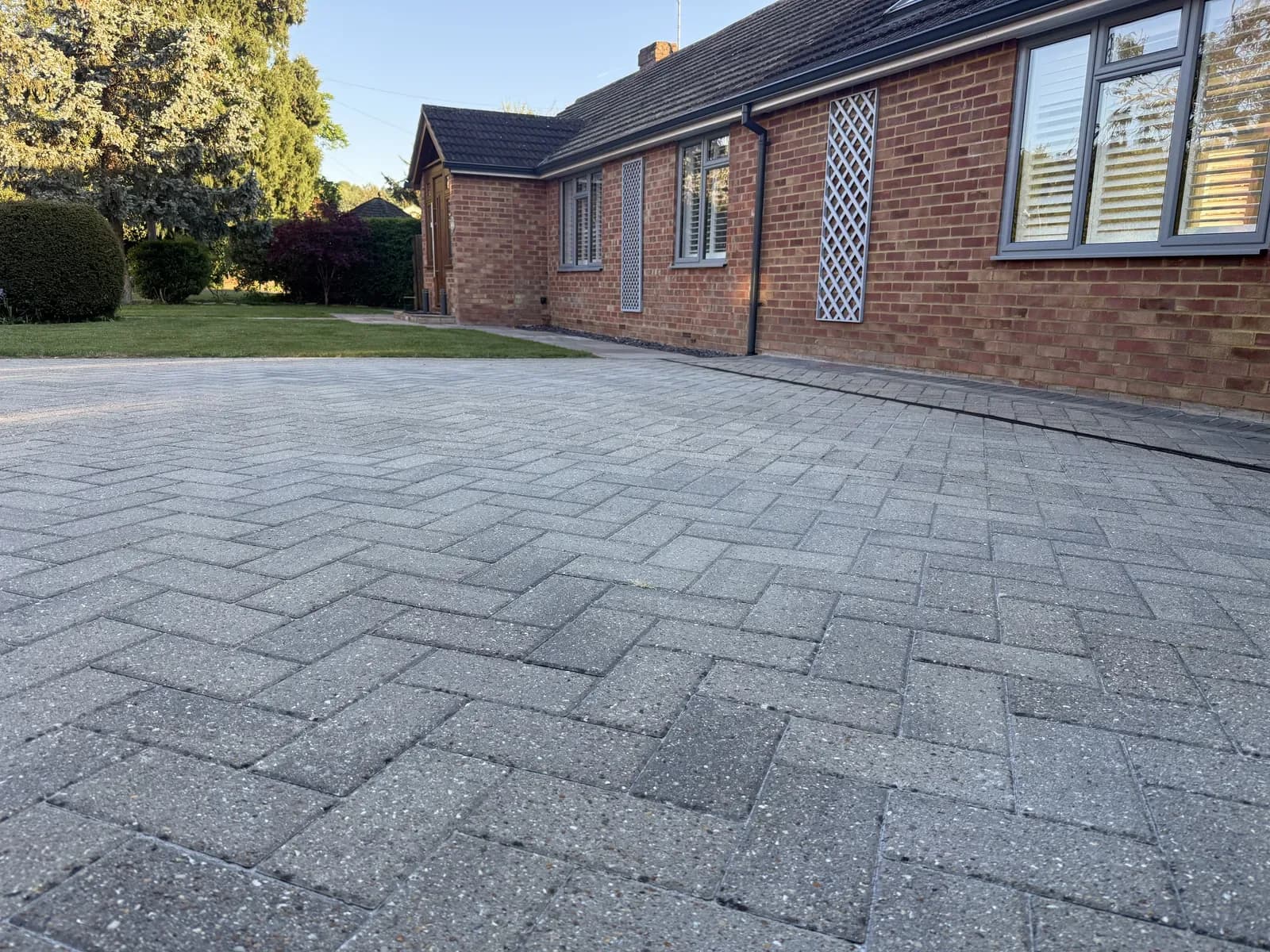
Cleaning a block paving driveway washes out the jointing sand between the blocks. Re-sanding replaces it. Skip this step and the driveway loses stability, grows weeds, and shifts under weight. This guide explains why re-sanding matters and how the process works.
What Is Jointing Sand and Why Does It Matter?
Jointing sand is the kiln-dried sand brushed into the gaps between paving blocks. Block paving is not held together with mortar. Instead, the sand locks each block in place, creates friction between the blocks, and lets the surface spread weight evenly. The sand is structural, not decorative. Without it, a driveway is simply a set of loose blocks.
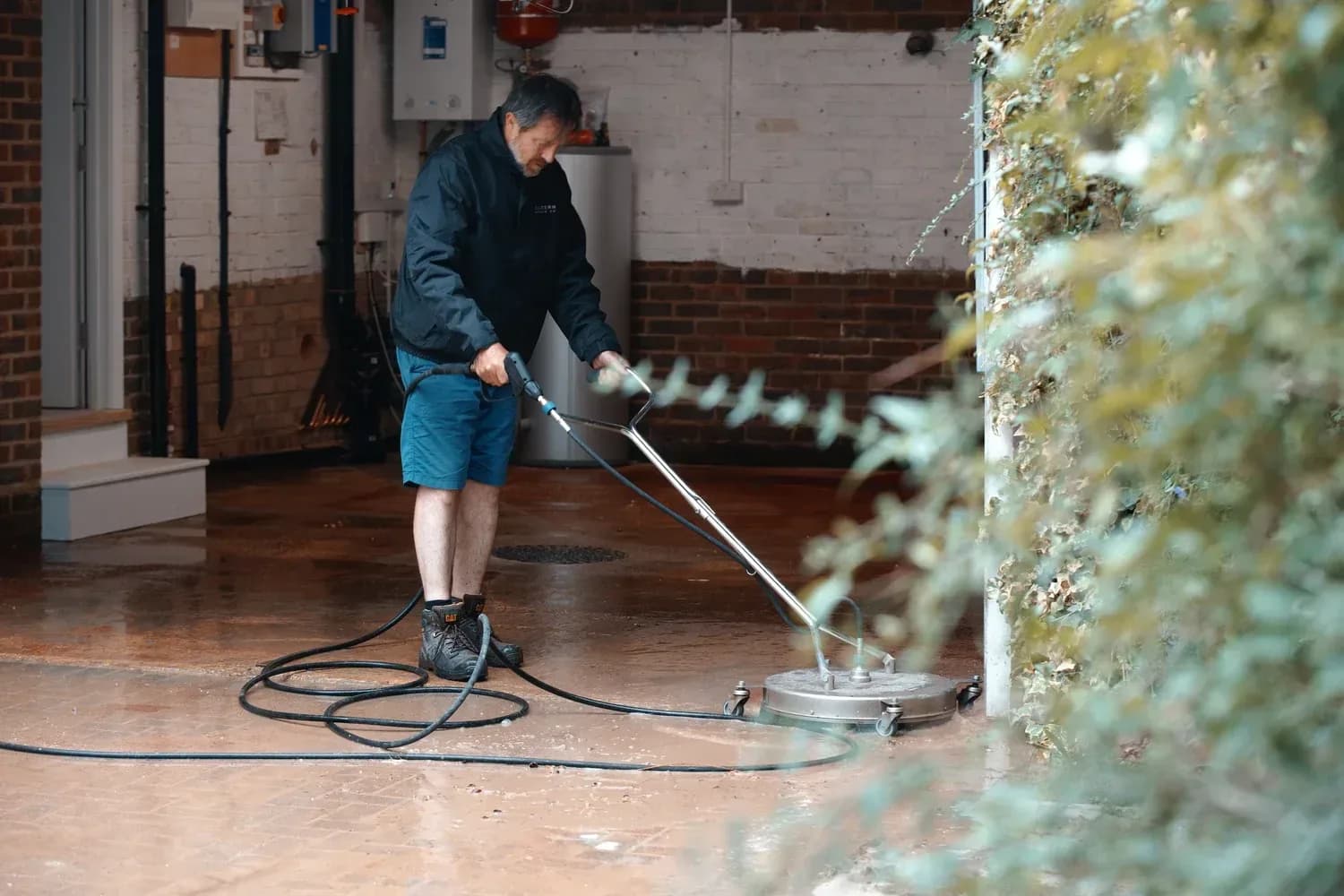
Why Does Cleaning Remove the Sand?
Pressure washing lifts dirt, weeds, and moss from the joints, and it removes jointing sand at the same time. This is unavoidable. A thorough clean of an older driveway can strip 5 to 10 millimetres (mm) of sand from each joint, which is roughly 10 to 20 percent of the block depth. The dirtier and older the driveway, the more sand is lost. Re-sanding is the step that puts that lost material back.
What Happens If You Skip Re-Sanding?
A driveway left without re-sanding after cleaning develops problems within months. Skipping the step causes 4 issues:
- Block movement — without sand locking them, blocks shift and rock under vehicle and foot traffic.
- Uneven, sinking surface — loose blocks dip and tilt, creating trip hazards and an unstable drive.
- Weed and moss growth — empty joints let wind-blown seeds settle and take root in the gaps.
- Poor drainage — joints that are not correctly filled stop directing water to the right runoff points.
Block movement is the most serious of these. Once blocks shift, edges separate, and the damage often needs a full re-lay rather than a simple repair.
How Does Re-Sanding Block Paving Work?
Re-sanding is straightforward when the timing and materials are correct. A professional follows these 5 steps:
- Let the driveway dry fully, because damp sand clumps and will not drop into the joints.
- Spread kiln-dried jointing sand evenly across the cleaned surface.
- Brush the sand into every joint with a soft broom until the gaps are filled.
- Check the joints for consistent fill, topping up any low or uneven areas.
- Sweep off the excess sand so it does not stain the blocks or wash away in the next rain.
As a rough guide, a 60 mm paving block needs around 4.5 kilograms (kg), or about 10 pounds (lb), of jointing sand per square metre. The exact amount depends on joint width and block size.
Why Dry Conditions Matter
Re-sanding only works on a completely dry surface. Moisture makes the sand stick together, so it bridges the top of the joint instead of filling it. The joint then looks full but stays hollow underneath, which leaves the blocks unstable once the sand dries out.
Should You Re-Sand a Driveway Yourself?
DIY re-sanding is possible, but 3 mistakes are common and costly:
- Underestimating sand loss — a driveway can look fine yet still have hollow, under-filled joints.
- Re-sanding while damp — sand applied to a wet surface never fills the joint properly.
- Using the wrong grade — only kiln-dried jointing sand flows into the gaps correctly.
A professional cleaning service includes re-sanding as part of the job and checks the joints once the surface is dry. For a driveway that carries regular vehicle weight, that check is worth having.
How to Keep Jointing Sand in Place for Longer
Sand erodes naturally over time through rain, sweeping, and daily use. These 3 measures slow the loss:
- Seal the driveway after re-sanding to bind the sand and harden the joints. Sealing also reduces staining and slows weed growth.
- Use polymeric sand as an alternative, since its binders set the sand firm once activated with water.
- Avoid aggressive jet washing in future, because holding the lance too close blasts the sand straight out of the joints.
Frequently asked questions
Do you always need to re-sand block paving after cleaning?
Yes, in most cases. Pressure washing removes jointing sand along with the dirt. Recently laid paving with well-compacted joints may only need a light top-up, but the joints should always be checked once dry.
Does re-sanding stop weeds completely?
Re-sanding strongly reduces weed growth by filling the gaps where seeds settle. For longer protection, a biocide treatment after cleaning and a sealant help slow the return of weeds and moss.
Should you seal a driveway after re-sanding?
Sealing is optional but beneficial. It locks the sand in place, cuts how often you need to re-sand, protects against stains, and deepens the colour of the blocks.