
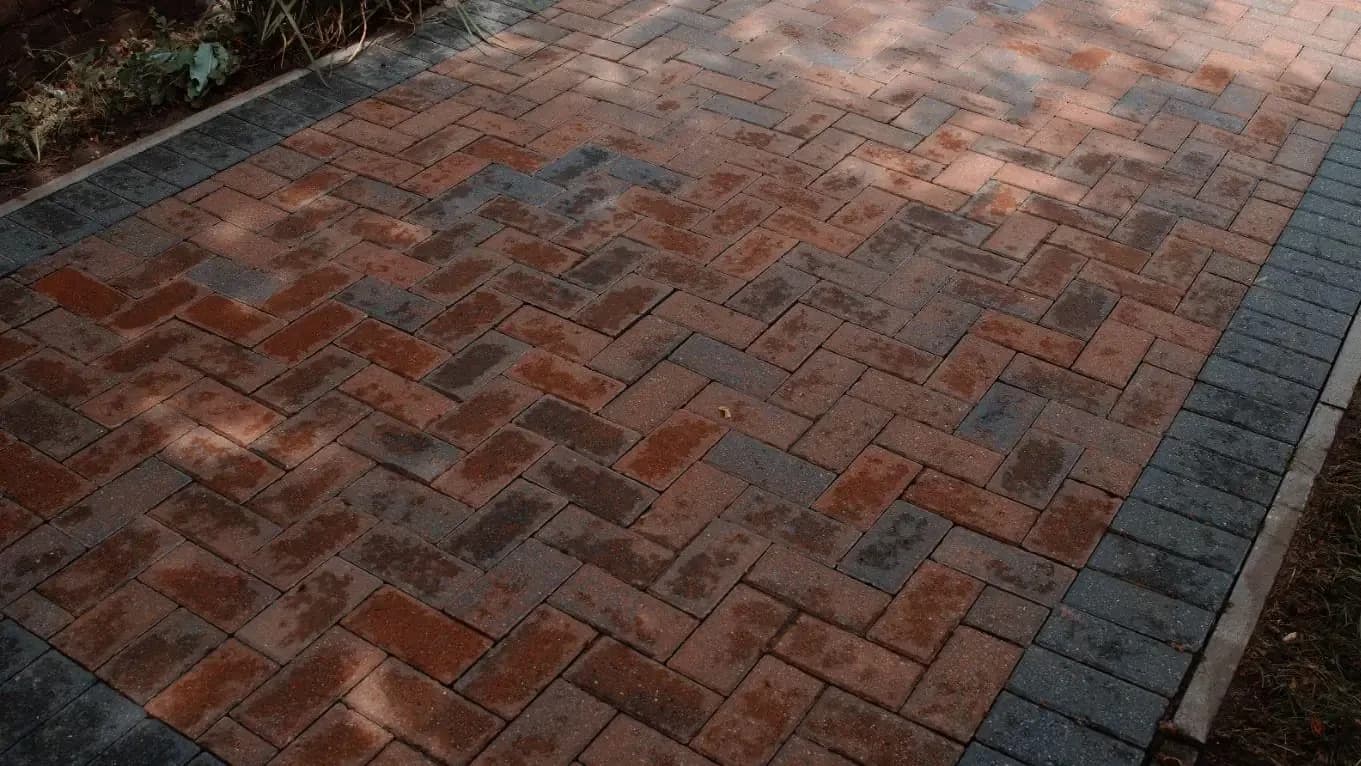
To stop weeds growing between block paving, remove the established plants and roots, clear soil and decayed material from the joints, then refill those joints correctly with suitable sand. Regular sweeping and prompt removal of new seedlings will reduce regrowth, but no honest method can guarantee that weeds will never return.
The lasting improvement comes from treating the joint as well as the weed. Pulling, burning or spraying the visible growth can clear the driveway temporarily. Empty or contaminated joints still collect windblown seeds, moisture and organic matter, creating the same growing conditions again.
Can You Stop Block-Paving Weeds Permanently?
You can reduce weeds significantly, but permanent prevention is unrealistic outdoors. Seeds arrive in wind, bird droppings, garden waste and vehicle tyres. Even a well-constructed driveway needs occasional maintenance as jointing material settles or washes away.
A good result means fewer weeds, slower regrowth and joints that remain full enough to stabilise the blocks. Claims that one spray, sealer or sand will remove every future weed ignore how exposed paving behaves.
Why Do Weeds Grow Between Block Paving?
Most weeds on established block paving germinate inside the joints rather than forcing through the entire construction from below. Dust, soil, moss and decaying leaves build a shallow growing medium above the sub-base.
Seeds arrive from above
Windblown seeds settle between the blocks, especially where the jointing sand sits below the block edge. Small seedlings need little soil. Once roots develop, they trap more dirt and hold moisture, making the joint increasingly suitable for growth.
Jointing sand has been lost or contaminated
Traffic, rain, ants and aggressive pressure washing can remove kiln-dried sand. The remaining material becomes mixed with soil and organic debris. Weeds then root into the contaminated joint instead of growing through sound clean sand.
Grass spreads from the edges
Lawn grasses can enter through driveway edges using runners or rhizomes. Edge growth needs a different response from scattered seedlings. Cutting back the turf, repairing restraints and maintaining a clear boundary can reduce repeated invasion.
Drainage and shade keep joints damp
Standing water, poor falls and shade encourage moss as well as weeds. Damp organic material accumulates faster and seedlings survive longer. Joint repair will help, but persistent drainage defects also need attention.
Does a Weed Membrane Stop Weeds in Block Paving?
A membrane beneath correctly installed paving can separate the construction layers, but it cannot stop seeds landing in the joints from above. Lifting a sound driveway solely to add membrane rarely addresses the most common cause of surface weeds.
Dense growth emerging from deep, soil-filled gaps can indicate failed jointing, edge movement or construction problems. Inspect the paving before assuming that every weed proves the membrane is missing.
How to Remove Existing Weeds Before Re-Sanding
Remove existing growth before refilling the joints. New sand placed over live plants, roots and soil will not create a clean, stable joint.
Pull or scrape small weeds
Work after light rain when roots release more easily. Use a patio knife, narrow weeding tool or long-handled joint brush. Lift as much root as practical without levering against the block edges.
Use heat or boiling water carefully
Heat wilts foliage and can weaken young weeds, but established roots often need repeated treatment. Avoid flame weeders near dry grass, timber boundaries, sheds, vehicles and services. Boiling water can injure nearby planting and presents a scald risk.
Use an approved weedkiller only as directed
Where manual removal is impractical, choose a product authorised for the intended hard-surface use and follow the label. Protect drains, lawns, beds, pets and wildlife. Do not increase concentration or mix products to chase faster results.
The Royal Horticultural Society provides practical advice on hard-surface weed control, including manual tools and responsible treatment choices.
Clear contaminated joint material
Remove dead growth, roots, moss and soil from the joint. Controlled cleaning can help where contamination runs throughout the paved area. Allow the surface and joints to dry fully before applying kiln-dried sand or another dry-installed jointing material.
How to Re-Sand Block Paving Properly
Re-sanding restores the interlock between blocks and removes open spaces where debris gathers. The work must follow the paving and jointing-product specification; sprinkling a light layer over dirty joints will not provide the same result.
Choose suitable jointing material
Traditional block paving commonly uses clean kiln-dried jointing sand. Some suitable driveways can receive polymeric sand, which contains binders that help the joint resist erosion. Joint width, depth, drainage and block condition decide whether a bound material is appropriate.
Wait for dry blocks and joints
Kiln-dried sand bridges across damp joints instead of flowing to full depth. Work during a genuinely dry weather window after cleaning. Check shaded areas because they often remain damp after the exposed blocks look dry.
Sweep, compact and top up
Sweep sand diagonally across the blocks so it enters joints from several directions. Mechanical compaction helps settle material and restore interlock on suitable driveways. Sweep again after compaction because the sand level normally falls.
Chiltern Surface Co’s guide to compaction and polymeric sand explains why joint depth, compaction and correct activation matter more than the product name alone.
Kiln-Dried Sand or Polymeric Sand: Which Is Better?
Kiln-dried sand is the traditional flexible jointing material for concrete block paving. It flows into narrow joints, supports interlock and can be topped up easily. It does not kill weeds, so maintenance and joint cleanliness still matter.
Polymeric sand contains a binder that firms after correct activation. The firmer joint can resist washout, ant disturbance and seed establishment better than loose sand. Polymeric sand is not suitable for every installation and can haze blocks or fail when applied to shallow, wet or dirty joints.
Neither product repairs a moving driveway, failed edge restraint or unsuitable base. Diagnose movement and drainage before selecting a stronger jointing material.
Does Pressure Washing Stop Weeds?
Pressure washing removes visible growth and contaminated sand, but pressure alone does not provide long-term prevention. The cleaned joints become open channels unless they are dried and refilled afterwards.
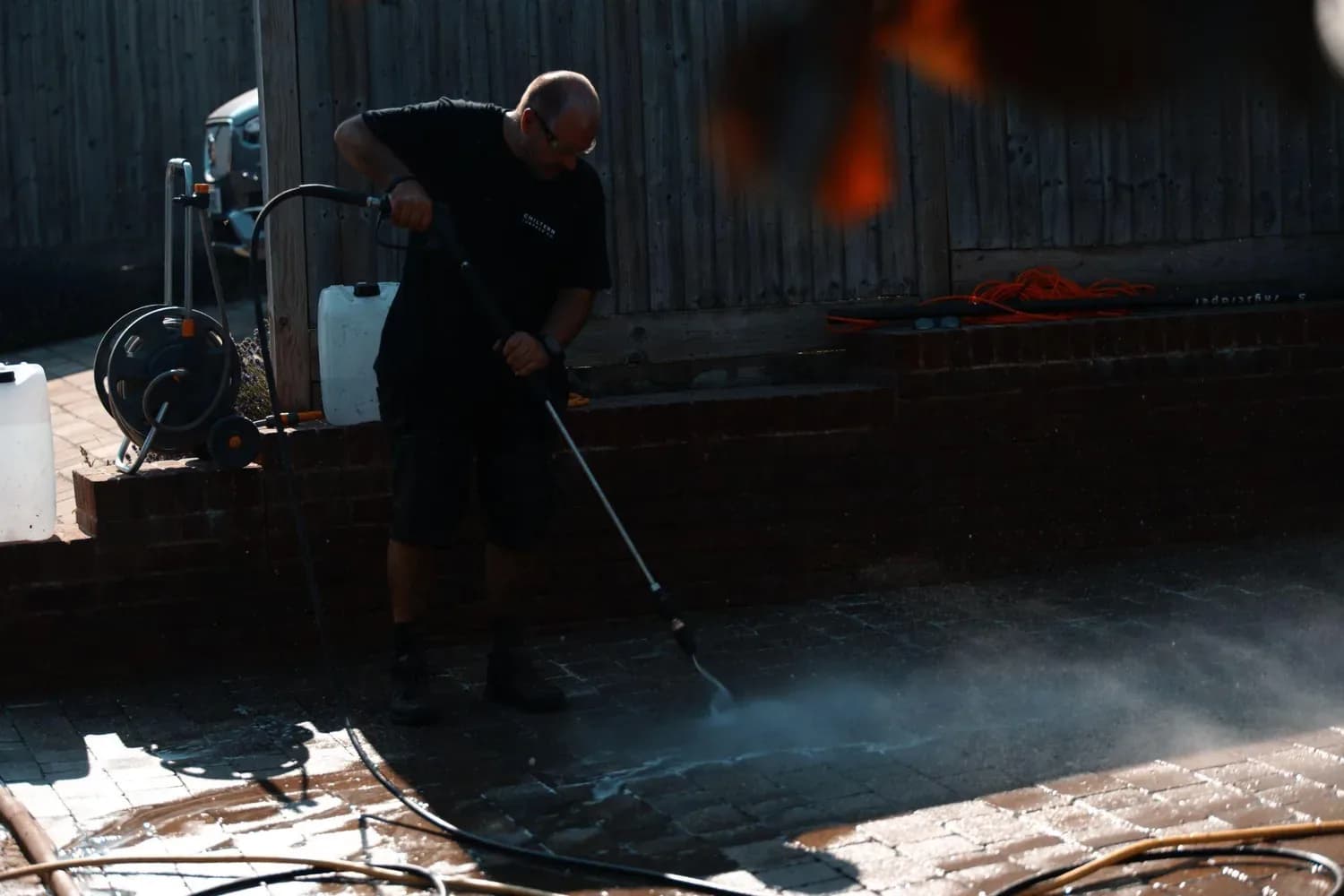
Excessive pressure can dislodge sound sand, chip block edges and drive debris deeper into joints. Use a controlled method and keep the jet moving. Chiltern Surface Co’s guide on how to pressure wash pavers safely explains why re-sanding forms part of the cleaning process.
Does Sealing Block Paving Prevent Weeds?
A suitable sealer can stabilise jointing sand and reduce water and dirt entry, which can slow weed establishment. Sealing does not sterilise the surface or stop every seed from germinating in debris collected later.
Apply sealer only to clean, dry and structurally sound paving. Trapping weeds, dampness or efflorescence beneath a coating creates a different problem. Confirm compatibility with both the blocks and the jointing system.
Why Salt and Vinegar Need Caution
Salt and vinegar are often described as natural solutions, but natural does not mean surface-safe or environmentally neutral. Salt can accumulate in soil, damage nearby planting, corrode metals and move through runoff. Repeated use can also leave deposits on paving.
Vinegar is acidic and non-selective. It can damage desirable plants and alter acid-sensitive materials, including limestone and some concrete finishes. Household mixtures also lack the controlled instructions provided with approved products.
How Ants Affect Block-Paving Joints
Ants can excavate loose jointing sand and leave small piles beside their entrances. Repeated activity lowers the joint level, allows debris to collect and creates more space for seeds.
Treating weeds alone will not replace missing sand. Address active nests responsibly, clear contaminated joints and refill them correctly. Recurring sand piles can also justify checking whether the jointing material or paving movement has made the area unusually easy to excavate.
A Practical Maintenance Schedule
| Task | Timing | Method | Difficulty |
|---|---|---|---|
| Sweep debris | Every 1–2 weeks | Stiff outdoor broom | Easy |
| Remove seedlings | As soon as seen | Hand pull or joint tool | Easy |
| Inspect joint level | Every 3 months | Check after rain and cleaning | Easy |
| Top up clean joints | When sand sits low | Compatible dry jointing sand | Moderate |
| Deep clean and re-sand | When joints are contaminated | Controlled clean, dry and refill | Moderate to high |
When Professional Restoration Makes Sense
Professional work makes sense when weeds cover most joints, blocks have moved, sand loss is widespread or previous pressure washing has left unstable joints. A specialist can separate a maintenance problem from drainage, edge-restraint or construction failure.
A verified Chiltern Surface Co High Wycombe driveway restoration shows the complete sequence: inspection, weed and moss clearance, controlled cleaning and joint re-sanding. The project demonstrates why cleaning is only one stage of block-paving care.
Treat the Joint, Not Just the Weed
Long-term weed control comes from removing current growth, clearing the growing medium and rebuilding the joints correctly. Keep the surface swept, top up lost sand and deal with new seedlings before roots mature.
For extensive growth or failing joints, arrange a Free Site Assessment with Chiltern Surface Co. We will inspect the paving, explain whether cleaning and re-sanding are appropriate and provide a clear Free Quotation.
Frequently asked questions
Do weeds grow through block paving from underneath?
Usually, no. Most seeds germinate in soil and debris collected in the joints, although grass can spread from edges and failed construction can support deeper growth.
Will kiln-dried sand stop weeds?
Kiln-dried sand helps keep joints full and stable, reducing space for weeds. It is not a weedkiller and cannot guarantee permanent prevention.
Can I put polymeric sand over existing weeds?
No. Remove the plants, roots and contaminated material first. Polymeric sand needs clean joints of suitable depth and correct moisture conditions.
How often should block paving be re-sanded?
Inspect the joints after cleaning and several times each year. Re-sand when levels fall, rather than following an arbitrary calendar interval.
Is sealing necessary after re-sanding?
No. Some driveways benefit from a compatible sealer, while others perform well with correct sand and routine care. Surface condition decides the recommendation.