
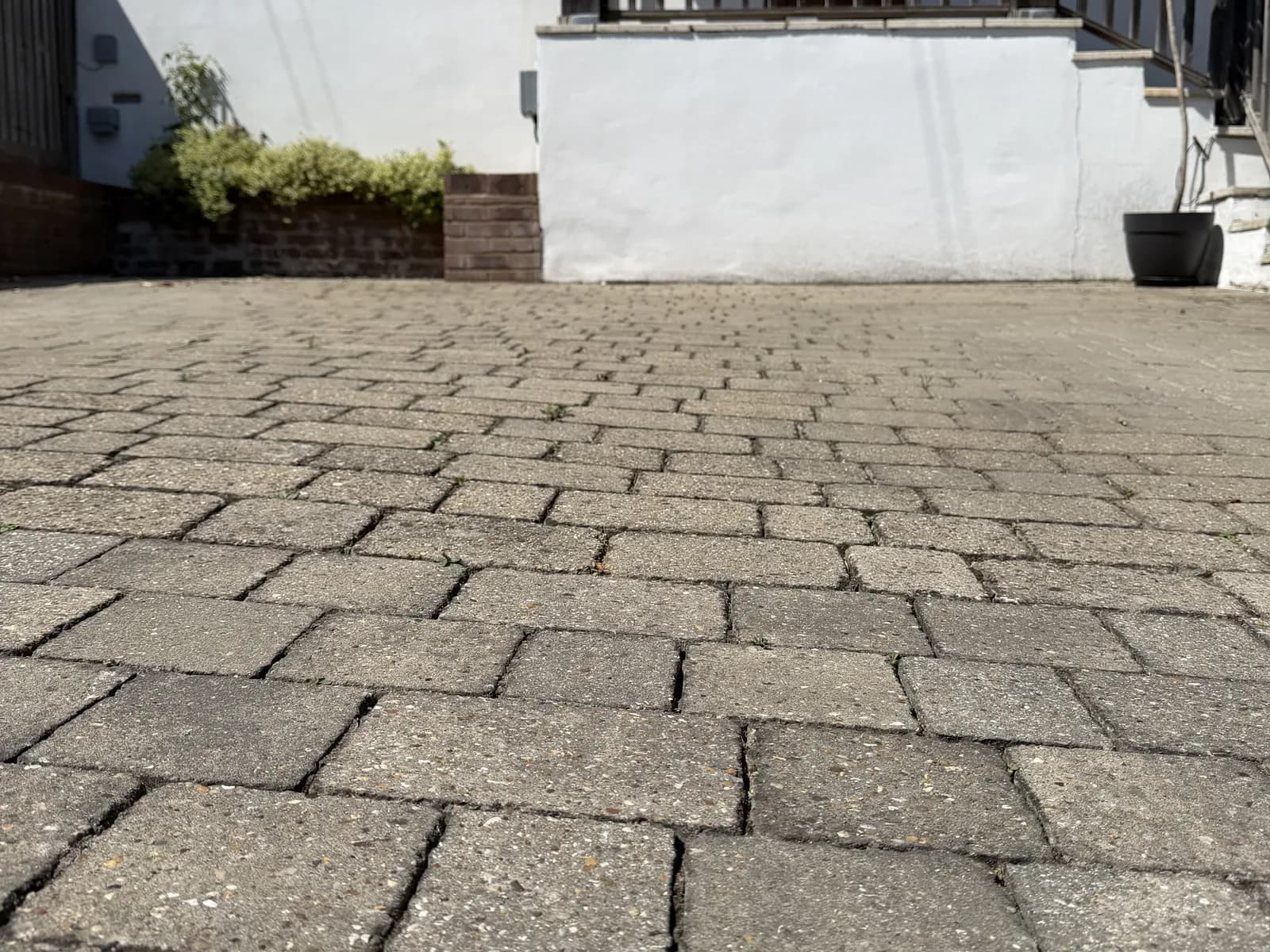
Can You Pressure Wash Pavers?
Yes, you can pressure wash pavers when the surface, pressure, nozzle, angle and joints can handle the method. Can you pressure wash pavers without damage depends on material, joint condition, existing sealer, staining and operator skill. Pressure washing suits some concrete pavers and block paving after assessment. Aggressive washing can remove jointing sand, scar natural stone, loosen edges and expose weak bedding.
Can You Pressure Wash Pavers Safely in 2026?
Can you pressure wash pavers safely when you start with inspection, low pressure and a wide fan nozzle. A controlled method cleans dirt, algae, moss and traffic film without stripping the surface. A careless method damages joints, faces, sealers and bedding.
The Direct Answer for UK Homeowners
Yes, pressure washing can clean suitable pavers. The safest result comes from controlled pressure, correct nozzle choice and surface-specific cleaning. UK homeowners use the word pavers for block paving, paving slabs, concrete blocks, clay blocks and natural stone setts. Each material needs a different method.
The Main Risk
The main risk is joint loss. High-pressure water can remove sand from gaps between block paving, concrete pavers and clay pavers. Empty joints weaken interlock, invite weeds and allow movement.
The Better Standard
A proper clean includes inspection, weed removal, treatment, controlled washing, rinsing, drying and joint restoration. Chiltern Surface Co follows a surface cleaning approach before selecting pressure, treatment or restoration.
Can You Pressure Wash Pavers Without Removing Sand?
Can you pressure wash pavers without removing sand when you avoid direct blasting into joints. Use a broad fan pattern and keep the water moving across the surface. Do not chase the line between each paver.
Use the Correct Angle
Aim the nozzle across the surface at about 45 degrees. Keep the spray moving in even passes. A straight downward jet pushes water and grit into joints.
Use the Correct Nozzle
Use a 25-degree or 40-degree fan nozzle for many suitable paver surfaces. Avoid a 0-degree red nozzle, because concentrated force scars surfaces. Avoid turbo nozzles on natural stone, clay pavers and weak joints.
Use the Correct Distance
Keep the nozzle 12–18 inches (30–46cm) from the surface during testing. Move closer only after a discreet test area responds safely. Never start close to the paver face.
Can You Pressure Wash Pavers When Joints Are Weak?
Can you pressure wash pavers when joints are weak only after planning joint restoration. Weak joints make cleaning risky because water can remove sand and expose bedding. Choose repair before washing when gaps look deep, loose or soil-filled.
Check Joint Depth
Can you pressure wash pavers with shallow joints safely when you avoid direct joint blasting. Measure low joints with a small ruler before work starts. A joint lower than 0.5 inch (1.3cm) usually needs refilling after cleaning.
Plan Re-Sanding
Can you pressure wash pavers and leave joints empty after cleaning? No. Empty joints reduce stability and allow weeds to return. Plan kiln-dried sand or polymeric sand before starting a deep clean.
Protect Edges
Can you pressure wash pavers near borders without care? No. Edge blocks need gentle rinsing because water can disturb bedding. Support loose edging before washing.
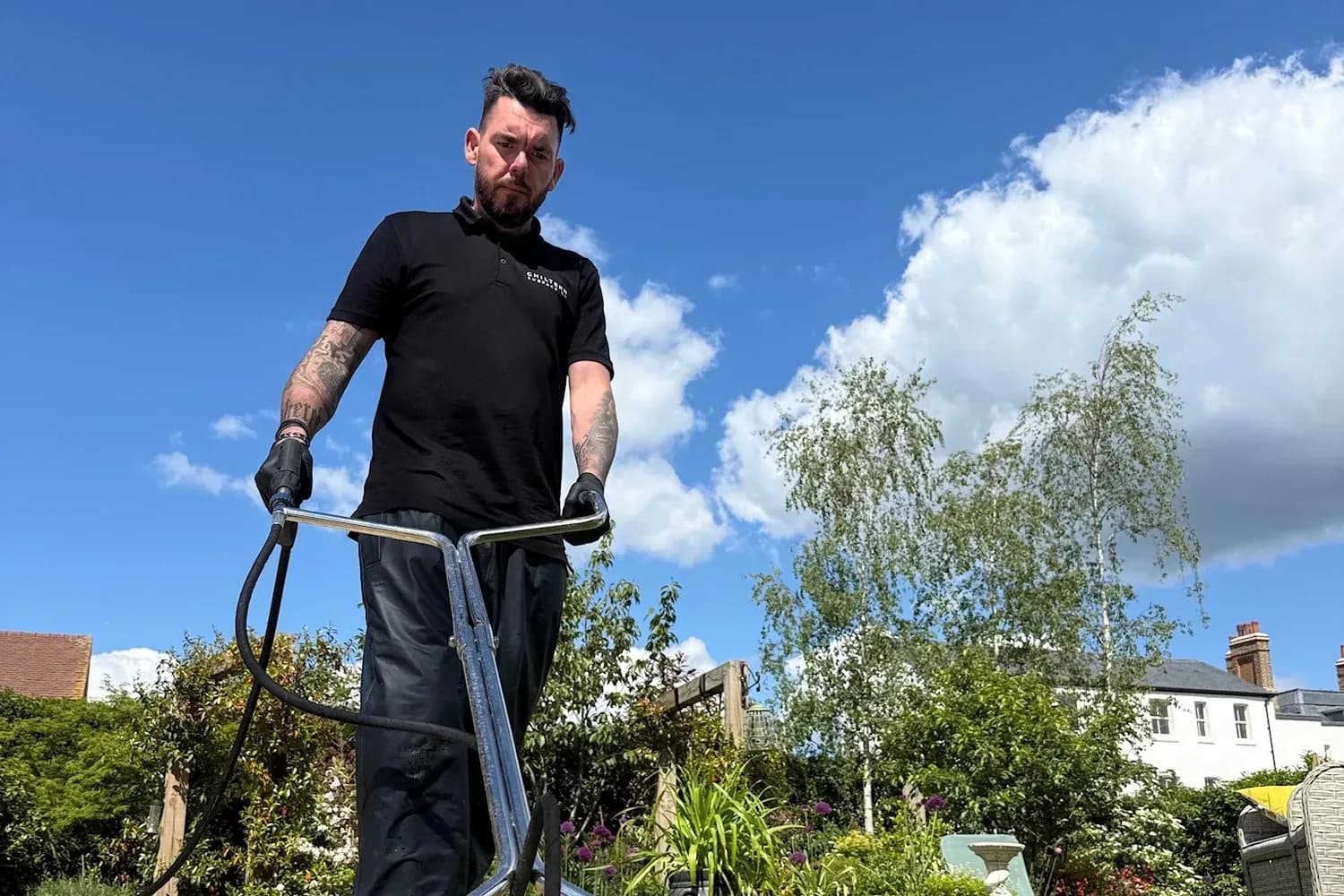
Can You Pressure Wash Pavers by Material?
Can you pressure wash pavers by material after confirming strength, age, finish and joint condition. Dense concrete pavers tolerate more cleaning force than soft sandstone or worn clay. Porcelain often needs less pressure because dirt sits on the surface.
Concrete Pavers
Concrete pavers often handle controlled washing when the surface remains sound. Use moderate pressure and a surface cleaner for large flat areas. Treat oil, algae and black staining before repeated water passes.
Block Paving
Block paving can be pressure washed, but joints need aftercare. Deep cleaning often removes old sand, soil and weed roots. Re-sanding with kiln-dried sand or polymeric sand restores interlock.
Clay Pavers
Clay pavers need a gentler test because age, porosity and fired finish vary. Use broad spray and controlled treatment. Avoid repeated close passes on chipped faces or exposed edges.
Natural Stone Pavers
Natural stone needs careful identification before pressure washing. Sandstone, limestone, granite and slate react differently to water force and chemicals. Excessive pressure can pit sandstone and mark limestone.
Porcelain Pavers
Porcelain pavers usually clean well with lower pressure. Porcelain absorbs very little water, so grime usually sits on the surface. Protect grout, edges and drainage channels during rinsing.
How to Pressure Wash Pavers Safely
To pressure wash pavers safely, clear the area, inspect joints, treat stains, test pressure and rinse slowly. The method should clean the surface without stripping support from the gaps. Work in small zones and check the result after each zone.
1. Clear and Sweep the Area
Remove furniture, plant pots, bins, mats and loose stones. Sweep leaves, soil, moss clumps and gravel before washing. Loose debris can become abrasive under the water jet.
2. Inspect Pavers and Joints
Check for loose blocks, rocking slabs, sunken areas, cracked faces and missing jointing. Repair unstable areas before washing. Pressure water can worsen existing movement.
3. Pre-Treat Organic Growth
Apply a surface-safe treatment for algae, moss, lichen and black spot. Let the product dwell for the stated time. Pre-treatment reduces repeat washing and surface stress.
4. Test a Hidden Area
Test a corner behind a planter or edge feature. Check for colour loss, pitting, sealer lift and joint washout. Continue only when the test area remains stable.
5. Wash with Controlled Passes
Clean with overlapping passes of 10–20%. Use a rotary surface cleaner on suitable broad areas. Use a wand only for edges, corners, drains and steps.
6. Rinse and Check Drainage
Rinse dirty water away from doors, walls and planting. Clear gullies, channels and low points. Collect loose moss and sand rather than pushing debris into drains.
Can You Pressure Wash Pavers with Domestic Equipment?
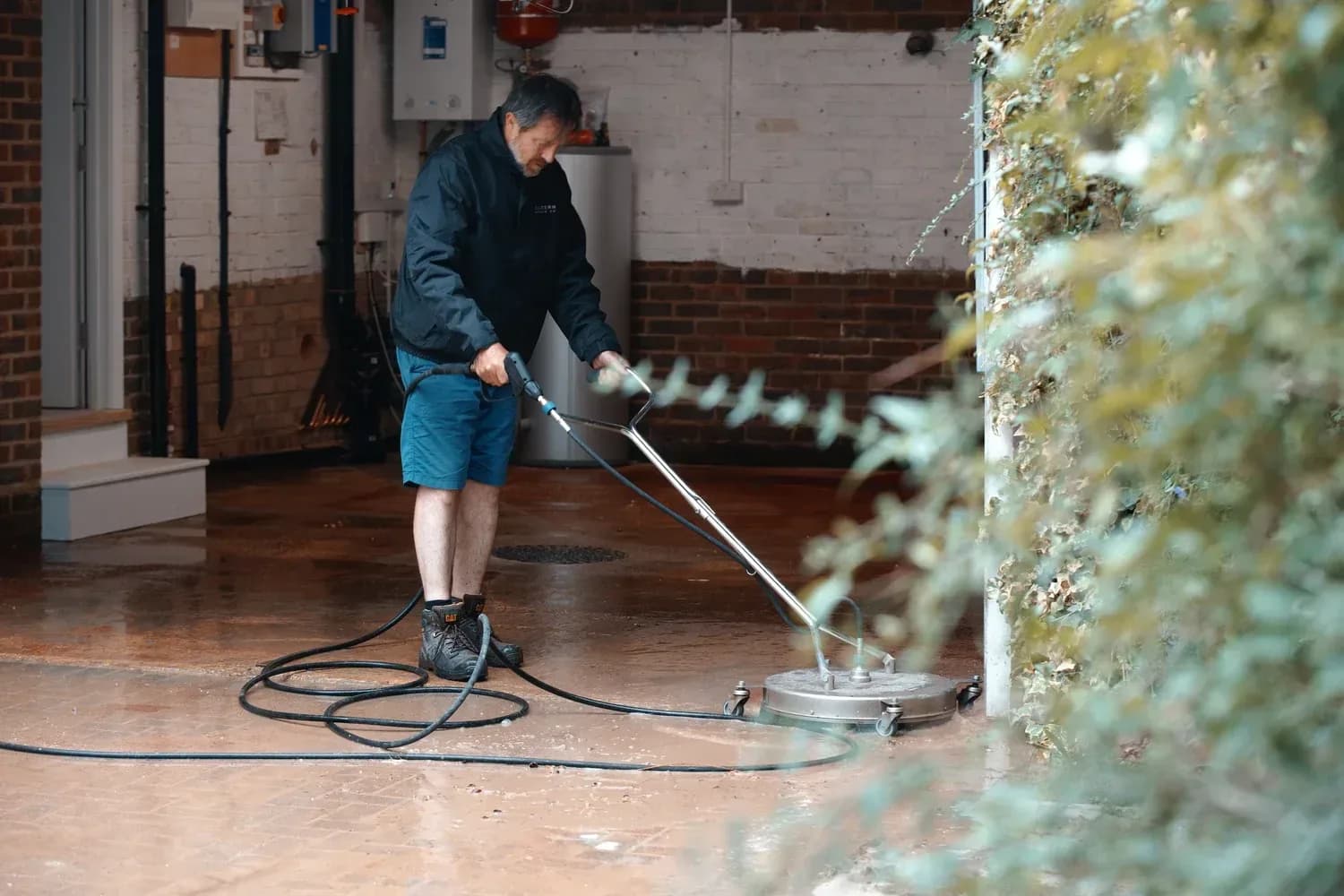
Can you pressure wash pavers with domestic equipment when the machine has controlled pressure and a suitable fan nozzle. Domestic machines clean small patios, paths and light driveway staining. Professional equipment gives better flow control for large paver areas.
Can you pressure wash pavers with a cheap narrow jet? No. A narrow jet increases the risk of lines, joint loss and surface scars. Use a fan nozzle or surface cleaner after a hidden test.
Can you pressure wash pavers with domestic settings depends on nozzle choice and flow. Pressure loosens dirt, while water flow carries dirt away. Too much pressure with weak flow creates lines and joint damage.
Pressure Range
Start at the lowest effective setting. Many domestic machines operate around 1,300–2,000 pounds per square inch (90–138 bar). Some professional machines use higher capacity with better flow control.
Flow Rate
Domestic machines often deliver 1.2–2.0 gallons per minute (4.5–7.6 L/min). Professional machines often deliver 3.0–5.0 gallons per minute (11.4–18.9 L/min). Higher flow can rinse faster without relying on aggressive pressure.
Surface Cleaner Width
A 12-inch (30cm) surface cleaner suits small patios and paths. A 15-inch (38cm) surface cleaner suits many residential paved areas. A 20-inch (51cm) unit suits larger professional work with suitable flow.
Should You Re-Sand Pavers After Pressure Washing?
Yes, re-sand pavers after pressure washing when joints look low, empty or uneven. Jointing supports block stability and slows weed growth. A clean surface still needs stable joints.
Kiln-Dried Sand
Kiln-dried sand suits many traditional block-paving joints. Sweep dry sand into dry joints after the surface dries. Compact the paving where the specification requires compaction.
Polymeric Sand
Polymeric sand forms a semi-rigid joint after correct activation. The product helps resist washout, weed growth and insect activity. Follow the manufacturer instructions for joint width, depth and water activation.
Drying Time
Most block paving needs 24–48 hours of dry weather before re-sanding. Shaded joints can dry slower than visible paver faces. Do not brush fresh sand into damp joints.
Can You Pressure Wash Pavers on a Patio?
Can you pressure wash pavers on a patio when you protect the surface, joints, plants and nearby finishes. Patios often include natural stone, porcelain, concrete slabs and clay pavers. Each surface needs a tailored method.
Natural Stone Patios
Natural stone patios need gentle treatment before water force. Black spot is lichen, not ordinary dirt. Pressure washing alone rarely removes black spot safely.
Porcelain Patios
Porcelain patios often need surface film removal rather than aggressive blasting. Use controlled pressure around grout and drainage falls. A streak-free result depends on rinsing and water management.
Concrete Paving Slabs
Concrete slabs tolerate careful washing when the face remains sound. Avoid holding the nozzle close enough to cut lines. Treat stains before repeating passes.
Chiltern Surface Co offers a patio cleaning service for natural stone, porcelain, sandstone and concrete patios. The service includes assessment, surface-safe cleaning, black-spot treatment and suitable aftercare.
Can You Pressure Wash Pavers on a Driveway?
Can you pressure wash pavers on a driveway when the blocks remain stable and joints receive restoration. Driveway pavers carry vehicle loads, so jointing and interlock matter. A quick wash can leave the driveway cleaner but weaker.
Block-Paved Driveways
Block-paved driveways need deep cleaning, drying, re-sanding and compaction after joint loss. Lost jointing allows blocks to move under tyres. Professional restoration restores structure as well as appearance.
Resin, Tarmac and Mixed Edges
Driveways often include resin edges, tarmac repairs, concrete aprons and drainage channels. Each material handles pressure differently. Protect mixed boundaries before washing pavers.
Professional Restoration
Chiltern Surface Co provides a driveway restoration service for block paving, resin-bound, natural stone, porcelain, tarmac and concrete. The process includes joint restoration, polymeric re-sanding and Chiltern EverGuard where appropriate.
Quick Reference: Pressure Washing Pavers
| Task | Timing | Method | Difficulty |
|---|---|---|---|
| Inspect pavers and joints | 10–20 minutes | Check movement, cracks and old sealer | Easy |
| Clear and sweep surface | 15–30 minutes | Remove furniture, leaves and grit | Easy |
| Treat algae and stains | 10–30 minutes | Use surface-safe treatment | Moderate |
| Test pressure setting | 5–10 minutes | Try hidden area first | Easy |
| Pressure wash pavers | 30–180 minutes | Use fan nozzle or surface cleaner | Moderate |
| Rinse and clear drains | 15–45 minutes | Manage runoff and debris | Moderate |
| Dry before re-sanding | 24–48 hours | Wait for dry joints | Easy |
| Re-sand and compact | 1–4 hours | Add jointing sand and compact | Advanced |
What Mistakes Damage Pavers During Pressure Washing?
The fastest way to damage pavers is to use maximum force without assessment. A slower controlled method protects surface texture, colour and joint stability. Avoid 5 common mistakes before starting.
Blasting Joints Directly
Direct joint blasting removes sand and weakens interlock. Work across the joints rather than along each gap. Check joint depth after washing.
Using a Turbo Nozzle
A turbo nozzle concentrates force into a rotating jet. The jet can scar soft stone, lift sand and mark clay. Use a fan nozzle or surface cleaner instead.
Ignoring Old Sealer
Old sealer can lift, whiten or patch under pressure. Identify sealed surfaces before washing. Professional assessment prevents uneven results.
Using Unsuitable Chemicals
Strong acids can damage limestone and other acid-sensitive stones. Bleach-heavy mixes can affect plants, finishes and coloured materials. Choose surface-safe treatments and test first.
Sealing Too Soon
Pavers need dry joints and a clean surface before sealing. Trapped moisture can cause cloudy patches and poor bonding. Follow the sealer drying and weather instructions.
Can You Pressure Wash Pavers After Sealing?
Can you pressure wash pavers after sealing when the sealer remains sound and compatible with water pressure. Old, cloudy or peeling sealers need inspection before cleaning. Strong pressure can lift weak sealer and create patchy colour.
Test Old Sealer
Can you pressure wash pavers with old sealer without testing? No. Test a hidden area and check for whitening, lifting and dull patches. Stop cleaning when the coating softens or peels.
Choose Gentle Maintenance
Use sweeping, gentle rinsing and surface-safe treatment for sealed pavers. Plan resealing only after the surface dries and the coating type is clear.
When Should You Avoid Pressure Washing Pavers?
Avoid pressure washing pavers when the surface is unstable, delicate, newly laid or poorly jointed. A gentler clean or professional restoration gives safer results. Do not force a method onto a surface that fails inspection.
Loose or Sunken Pavers
Loose pavers need repair before washing. Water can wash bedding material from unstable edges. Reset the blocks before cleaning.
Soft Natural Stone
Soft sandstone, weathered limestone and fragile slate need specialist care. High pressure can leave permanent marks. Treatment-led cleaning often works better.
Newly Installed Pavers
Newly installed pavers need curing, settlement and joint stability. Follow installer guidance before pressure washing. Early washing can disturb bedding and fresh jointing.
Heavily Weed-Filled Joints
Dense weeds indicate joint failure or soil-filled gaps. Remove weeds and old material before full cleaning. Rebuild joints after the surface dries.
How Long Do Clean Pavers Stay Clean?
Clean pavers can stay cleaner for 6–24 months, depending on shade, drainage, trees and aftercare. Biocide treatment, good drainage and regular sweeping slow regrowth. Poor drainage brings algae and moss back faster.
Shaded Areas
North-facing patios, tree-covered driveways and damp side paths regrow faster. Organic growth thrives where sunlight and airflow stay limited. Regular sweeping reduces seed and spore buildup.
Drainage Areas
Standing water increases algae, lichen and moss growth. Clear channels, gullies and low points after cleaning. Improve falls where water repeatedly sits.
Aftercare Treatment
Chiltern EverGuard helps slow algae, moss and lichen regrowth where treatment suits the surface. Aftercare cannot keep exterior surfaces clean forever. Planned maintenance protects the result.
Book Safe Paver Cleaning and Restoration
Can you pressure wash pavers safely depends on material, pressure, joints and aftercare. A professional clean protects the surface while removing algae, moss, stains and traffic film. Chiltern Surface Co can assess patios, paths and driveway pavers across Buckinghamshire, Berkshire and Oxfordshire. Book a free site visit for clear advice, suitable treatment and a fixed quotation.
Frequently asked questions
Can you pressure wash pavers without damage?
Yes, when the pavers, joints and method are suitable. Use controlled pressure, a wide fan nozzle and a hidden test area.
Can pressure washing remove polymeric sand?
Yes. High-pressure water can damage polymeric sand when the nozzle follows the joints. Inspect joints after cleaning and repair low areas.
Should pavers be sealed after pressure washing?
Sometimes. Sealing depends on material, finish, age, jointing and required protection. Some natural stone and porcelain surfaces need different aftercare.
Can you pressure wash old block paving?
Yes, when the blocks remain stable. Old block paving often needs re-sanding and compaction after deep cleaning.
Can you pressure wash natural stone pavers?
Yes, but only with care. Sandstone, limestone, granite and slate need different pressure levels and treatments.