
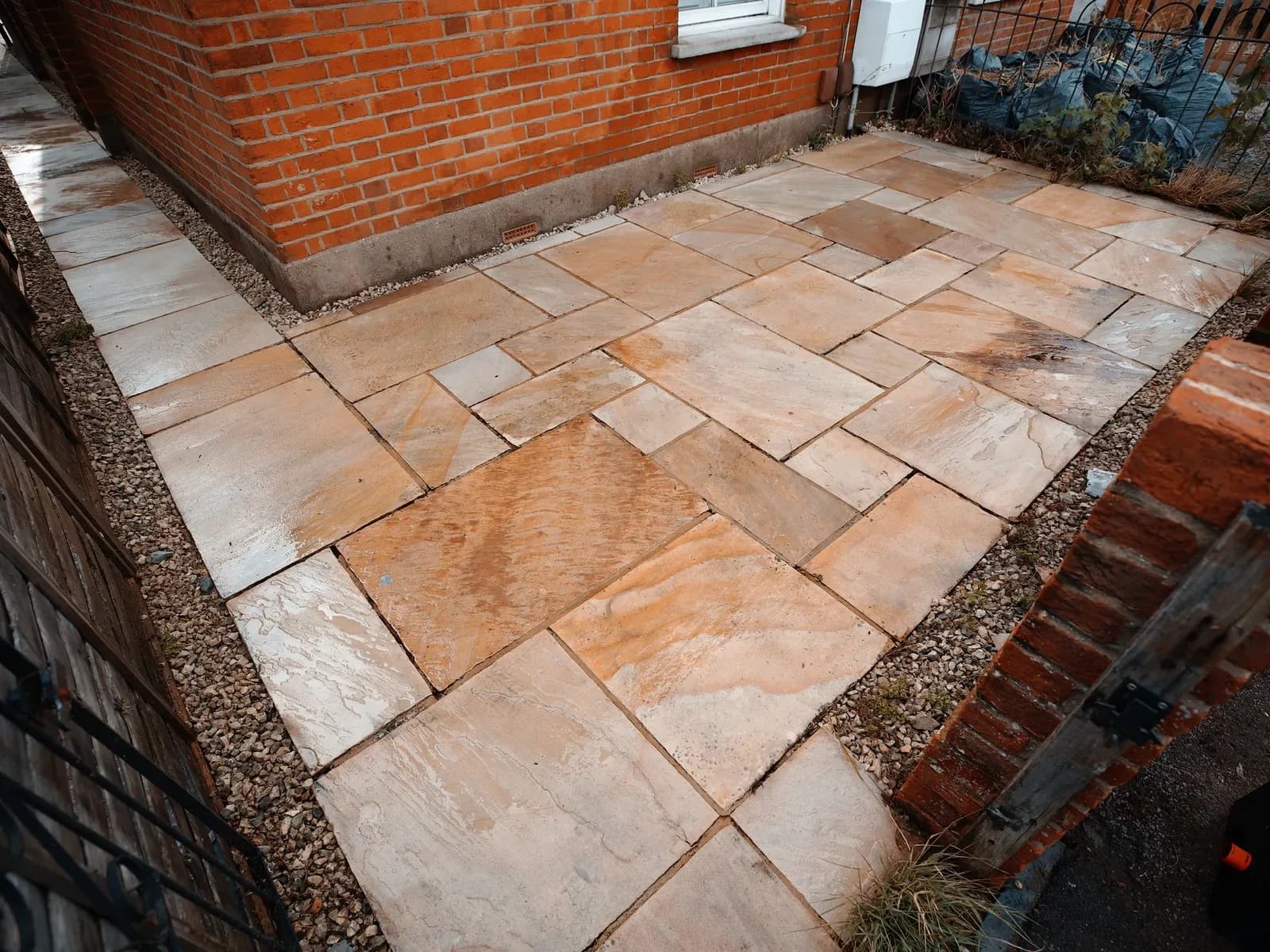
If you want to know how to clean a patio with a pressure washer, this guide gives you the safe and correct method. You’ll learn how to remove moss, algae, grime, dirt, and stains while protecting patio slabs, joints, grout, pointing, and delicate surfaces.
A pressure washer can make a tired patio look fresh again. It can lift years of dirt, remove slippery green growth, and improve the whole look of your garden. However, it can also cause damage if used the wrong way.
At Chiltern Surface, we clean patios with care, not guesswork. Every patio surface is different. Concrete, sandstone, limestone, porcelain, and block paving all need the right pressure, nozzle, cleaning method, and aftercare. That is why safe patio pressure washing starts with understanding the surface first.
Why Pressure Washing Is Popular for Patio Cleaning
A pressure washer uses high-powered water to remove dirt from outdoor surfaces. It is popular because it can clean large areas quickly and give a strong visual result.
Pressure washing can help remove:
- Dirt and mud
- Green algae
- Moss
- Slippery surface film
- Leaf stains
- Loose weeds
- General grime
- Surface discolouration
- Light organic growth
For many homeowners, pressure washing patio areas is one of the fastest ways to improve kerb appeal. A clean patio makes your garden look brighter, safer, and more cared for.
However, pressure washing is not always enough by itself. Some stains, such as black spot, oil, rust, and deep lichen, may need specialist treatment.
Can Pressure Washing Damage Patio Slabs?
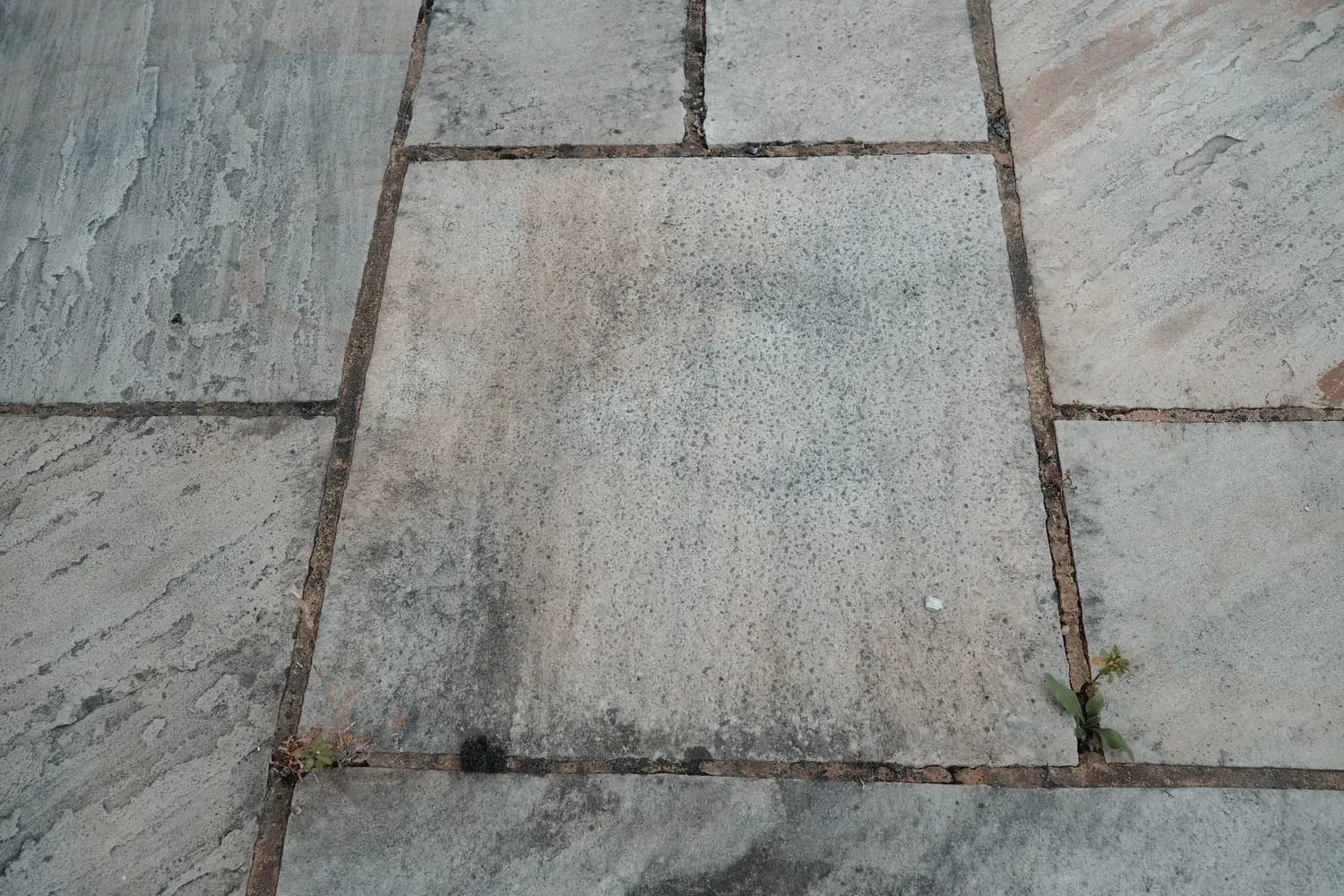
Yes, pressure washing can damage patio slabs if the pressure is too strong or the wrong nozzle is used.
Damage may include:
- Lines or striping marks
- Surface etching
- Loose pointing
- Lost jointing sand
- Cracked grout
- Damaged natural stone
- Rough surface patches
- Water forced under slabs
This is why you should never start on full power. Always test a small hidden area first. Also, avoid holding the nozzle too close to the slabs.
A professional clean from Chiltern Surface reduces this risk because the method is matched to the surface.
Tools You Need to Clean a Patio with a Pressure Washer
Before you begin, prepare the right tools.
You may need:
- Pressure washer
- Garden hose
- Fan nozzle
- Patio cleaner attachment
- Broom
- Stiff brush
- Protective footwear
- Safety goggles
- Gloves
- Patio cleaner, if suitable
- Moss or algae treatment
- Patio sealer, if needed
A surface cleaner attachment is often better than a narrow jet. It helps clean more evenly and reduces streaks.
Avoid using a turbo nozzle on delicate slabs. It can be too aggressive.
Step 1: Clear the Patio
Before you clean patio with pressure washer, remove everything from the area.
Move:
- Garden furniture
- Plant pots
- BBQ equipment
- Outdoor rugs
- Toys
- Storage boxes
- Decorative items
This gives you a clear working space and stops dirt from collecting around objects.
Check under pots and furniture. These areas often hide algae, moss, stains, and water marks.
Step 2: Sweep Loose Debris
Use a broom or stiff brush to remove leaves, soil, grit, weeds, and loose moss.
This step matters because loose debris can spread across the patio when water hits it. It can also block drains or create muddy patches.
Sweep from one side to the other and clear the waste before washing.
Step 3: Check the Patio Surface
Before starting patio pressure washing, inspect the surface.
Look for:
- Cracked slabs
- Loose pointing
- Weak grout
- Uneven paving
- Damaged joints
- Soft natural stone
- Areas with standing water
- Heavy moss or algae
If the patio is damaged, high pressure can make it worse. In that case, professional cleaning is safer.
Step 4: Connect and Test the Pressure Washer
Connect your pressure washer to the garden hose and turn on the water supply.
Start with:
- Low pressure
- A wide fan nozzle
- A safe distance from the surface
- A small test patch
Hold the nozzle around 30cm away from the patio at first. Then adjust only if needed.
Never point the spray at people, pets, windows, door seals, lights, or delicate plants.
Step 5: Pre-Rinse the Patio
Give the patio a light rinse before deep cleaning. This helps loosen surface dirt and shows how water drains from the area.
If water pools in one spot, take care. Standing water can carry dirt back over clean areas.
Step 6: Apply Patio Cleaner If Needed
For light dirt, water alone may work. For deeper grime, algae, or moss, a suitable pressure washer patio cleaner may help.
Always use a cleaner that is safe for your patio type. Do not use harsh products on natural stone, porcelain, or sealed surfaces unless they are approved for that material.
Let the cleaner dwell for the correct time, but do not let it dry.
Step 7: Pressure Wash in Sections
Work in small sections. This gives a more even finish.
Use slow, steady passes. Overlap each pass slightly so you do not leave stripes.
Best practice:
- Start at the highest point
- Work toward drainage
- Keep the nozzle moving
- Use even pressure
- Avoid blasting joints directly
- Rinse dirty water away as you go
This method helps stop patchy results.
Step 8: Use a Patio Cleaner Attachment for Even Results
A patio cleaner attachment is one of the best tools for pressure washing patio slabs. It has rotating jets inside a covered head. This helps clean evenly and reduces splashback.
Benefits include:
- Less streaking
- Faster cleaning
- More even finish
- Better control
- Less mess on walls and windows
This is especially useful on larger patios.
Step 9: Clean Edges and Corners Carefully
Edges, corners, and joints often hold the most dirt. Use a fan nozzle or brush to clean these areas carefully.
Avoid using full pressure on:
- Wall edges
- Door thresholds
- Pointing
- Grout lines
- Drain covers
- Raised borders
These areas are easier to damage.
Step 10: Rinse Thoroughly
After pressure washing, rinse the whole patio with clean water. Remove dirty water, loosened grime, and leftover cleaner.
This helps prevent streaks and residue.
If your patio is porcelain, rinsing is even more important because residue can dry into cloudy marks.
Step 11: Let the Patio Dry Fully
Allow the patio to dry before replacing furniture.
Drying helps you see:
- Missed patches
- Stains that remain
- Damaged joints
- Areas needing treatment
- Whether sealing is needed
Some stains only become clear once the patio dries.
Step 12: Consider Sealing the Patio
After cleaning, some patio surfaces may benefit from sealing.
A patio sealer can help:
- Reduce staining
- Slow moss and algae growth
- Protect against weather
- Improve colour
- Make future cleaning easier
However, not every surface needs sealing. Porcelain usually does not need it. Natural stone and concrete may benefit from it if the right product is used.
Chiltern Surface can advise whether sealing is suitable for your patio.
How to Remove Moss from Patio with a Pressure Washer
Pressure washing can remove visible moss, but it may not stop it returning.
For best results:
- Remove thick moss by hand first
- Brush the joints
- Pressure wash carefully
- Treat the area if needed
- Improve drainage and sunlight
Avoid blasting joints too hard. This can loosen pointing or jointing sand.
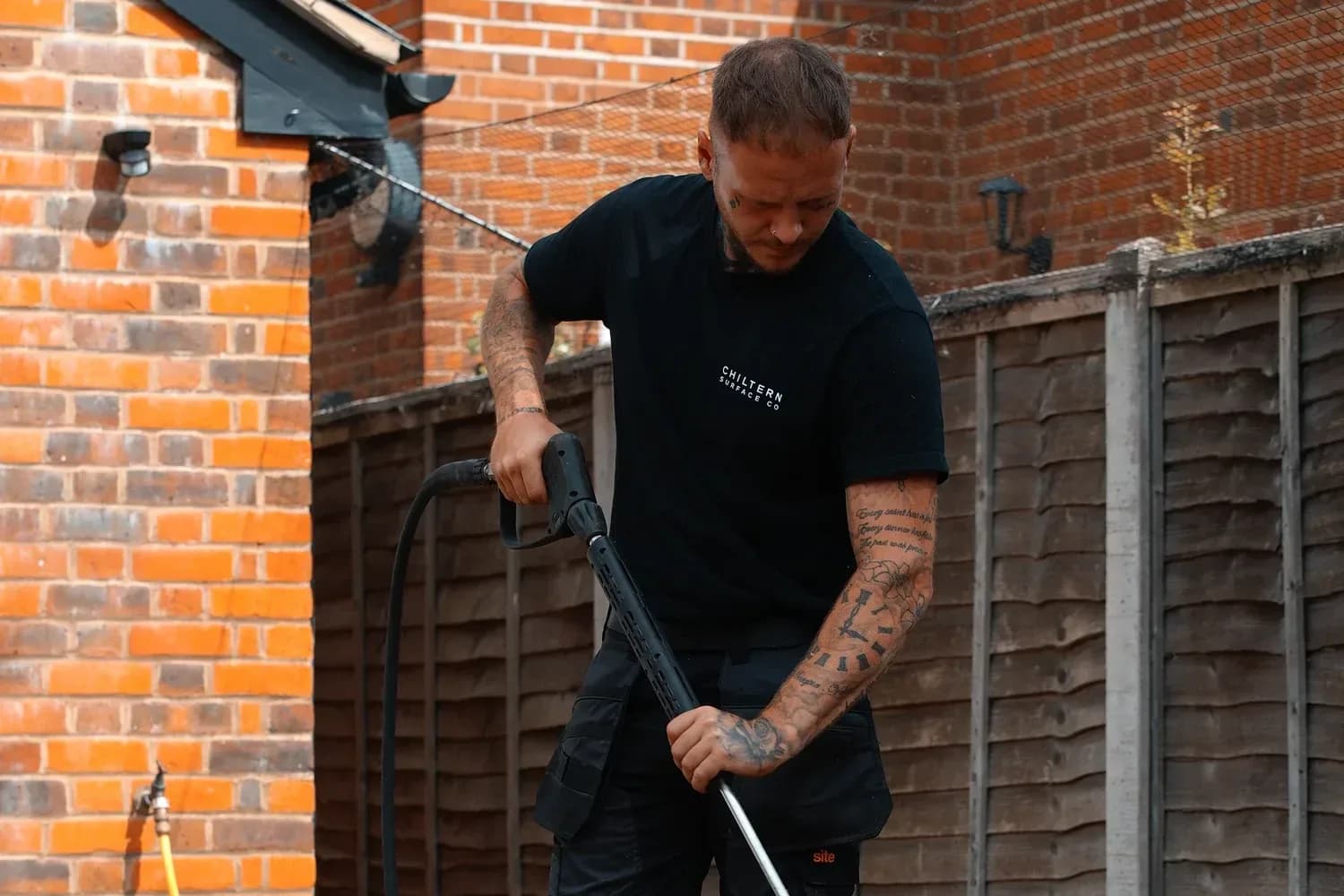
How to Remove Algae from Patio with a Pressure Washer
Algae is often green and slippery. Pressure washing can remove it from the surface, but damp shade may bring it back.
To reduce algae:
- Clean shaded areas regularly
- Move plant pots often
- Trim overgrown plants
- Clear leaves quickly
- Improve airflow
- Treat algae-prone areas
Professional cleaning can give longer-lasting results because it deals with the cause, not just the visible layer.
Pressure Washing Different Patio Types
Different surfaces need different care.
This is where expert knowledge matters. A setting that works on concrete may damage sandstone.
How to Pressure Wash Block Paving Without Removing Sand
Block paving needs special care because the joints are filled with sand.
To protect joints:
- Use lower pressure
- Spray at a shallow angle
- Avoid direct blasting into joints
- Work evenly
- Re-sand joints after cleaning if needed
After cleaning block paving, kiln-dried sand may need to be brushed back into the joints. This helps keep the blocks stable.
Common Pressure Washing Mistakes to Avoid
Many DIY patio cleaning problems happen because of simple mistakes.
Avoid:
- Starting on full power
- Using a turbo nozzle on delicate surfaces
- Holding the nozzle too close
- Cleaning in random patterns
- Blasting joints directly
- Using harsh cleaners
- Ignoring drainage
- Leaving dirty water to dry
- Forgetting safety goggles
- Pressure washing cracked slabs
A careful method gives a better finish and protects the patio.
When Pressure Washing Is Not Enough
A pressure washer is powerful, but it cannot solve every patio problem.
It may struggle with:
- Black spot
- Deep lichen
- Oil stains
- Rust marks
- Heavy organic growth
- Old stains
- Surface damage
- Poor drainage problems
In these cases, professional treatment is often needed.
Chiltern Surface can assess the issue and choose a safer, more effective method.
DIY Pressure Washing vs Professional Patio Cleaning
DIY pressure washing is useful for light dirt. However, it carries risk if you are unsure about the surface.
Professional cleaning offers:
- Better equipment
- Controlled pressure
- Surface-specific methods
- Safer stain treatment
- Even results
- Less risk of damage
- Long-term aftercare advice
For premium homes, delicate patios, or heavily stained surfaces, professional cleaning is often the better choice.
Professional Patio Pressure Washing by Chiltern Surface
Chiltern Surface provides careful, premium professional patio cleaning for homeowners who want a clean, safe, and long-lasting result.
Our process may include:
- Surface inspection
- Moss and algae assessment
- Safe pressure selection
- Controlled patio pressure washing
- Surface cleaner attachment use
- Stain-focused treatment
- Careful rinsing
- Optional sealing advice
- Aftercare guidance
We do not treat every patio the same. Your patio gets the method it needs.
Why Choose Chiltern Surface?
Your patio is an important part of your home. It deserves more than a quick blast with a pressure washer.
Chiltern Surface offers:
- Expert surface knowledge
- Safe cleaning methods
- Premium attention to detail
- Local, reliable service
- Careful pressure control
- Professional equipment
- Long-lasting results
Whether your patio is covered in moss, algae, grime, or stains, we can help restore it safely.
About How to Clean a Patio with a Pressure WasherConclusion
Learning how to clean a patio with a pressure washer helps you remove moss, algae, grime, and dirt while improving the look and safety of your outdoor space. The key is to use the right pressure, the right nozzle, and the right method for your patio surface.
DIY pressure washing can work for light cleaning, but it can also damage slabs, joints, grout, pointing, and natural stone if done incorrectly.
For a safer, deeper, and more professional result, Chiltern Surface provides expert patio cleaning tailored to your surface.
Contact Chiltern Surface today to restore your patio with careful, premium pressure washing and long-lasting surface care.
Frequently asked questions
What is the best way to clean a patio with a pressure washer?
The best way is to sweep first, pre-rinse, use controlled pressure, work in sections, keep the nozzle moving, and rinse thoroughly after cleaning.
Can pressure washing damage patio slabs?
Yes. Too much pressure can mark slabs, damage joints, loosen pointing, or harm soft natural stone.
What nozzle should I use for patio cleaning?
A wide fan nozzle or patio cleaner attachment is usually safer than a narrow jet or turbo nozzle.
Can I remove moss from patio with a pressure washer?
Yes, pressure washing can remove visible moss. However, treatment and maintenance may be needed to slow regrowth.
Can I remove algae from patio with a pressure washer?
Yes. Pressure washing can remove algae from the surface, but damp and shaded areas may need further treatment.
Should I seal my patio after pressure washing?
Some patios benefit from sealing after cleaning. Concrete and natural stone may benefit, while porcelain often does not need sealing.
How often should I pressure wash my patio?
Most patios need deep cleaning once a year. Shaded or damp patios may need cleaning more often.
Is professional patio cleaning better than DIY pressure washing?
For delicate surfaces, heavy stains, black spot, or large patios, professional cleaning is safer and usually gives better results.