
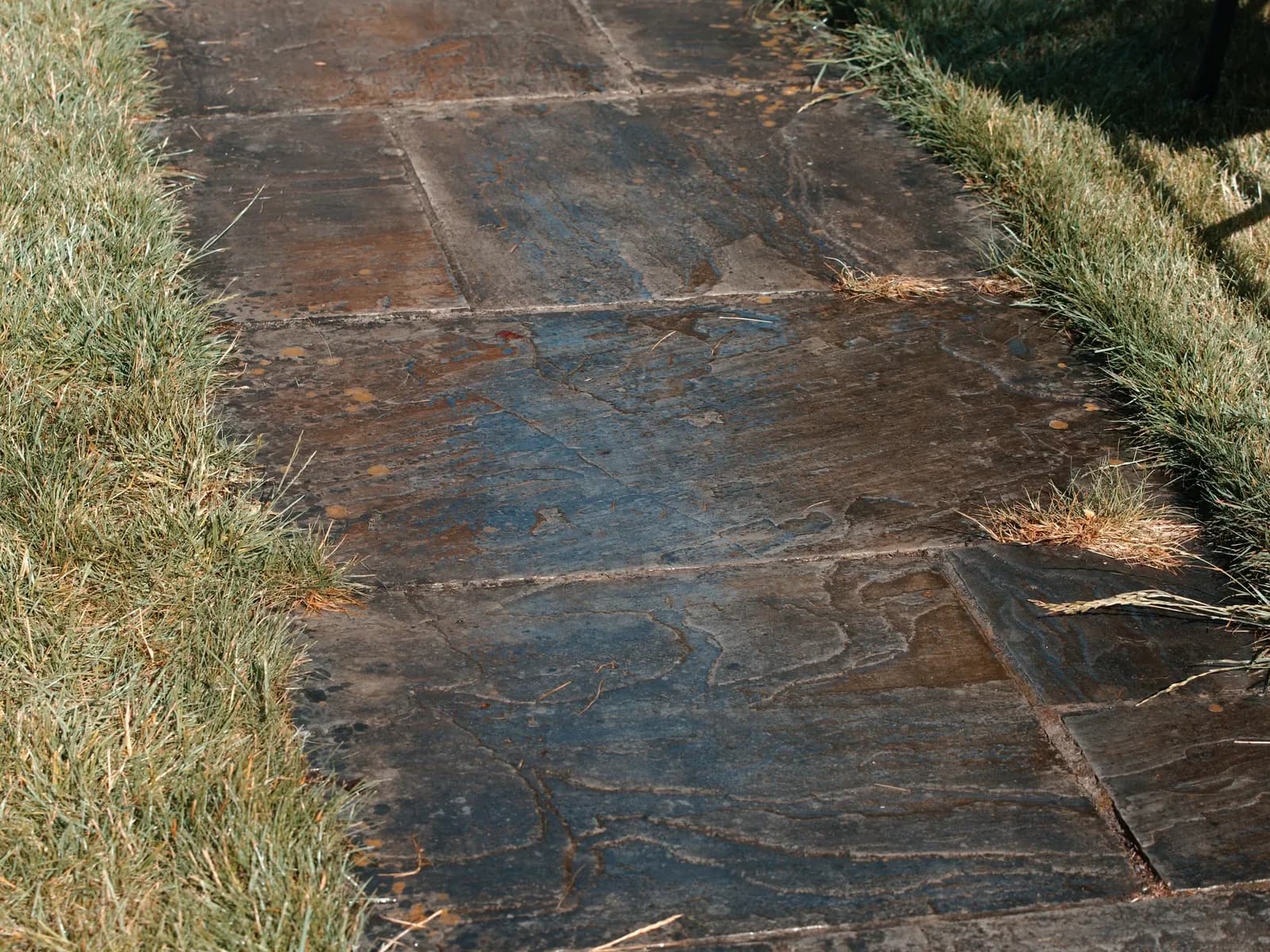
If you are wondering what to use to clean patio slabs, the answer depends on your patio type, the dirt problem, and how delicate the surface is. Warm water, mild detergent, patio cleaner, moss remover, algae remover, pressure washing, and professional cleaning can all work when used correctly.
Patio slabs face rain, mud, leaves, moss, algae, grease, and daily foot traffic. Over time, even a beautiful patio can start to look dull, green, stained, or slippery. The right cleaning product or method can restore the surface safely. The wrong one can cause marks, damage joints, or harm natural stone.
At Chiltern Surface, we clean patios with care and surface knowledge. Every patio is different. Concrete slabs, porcelain slabs, sandstone, limestone, and block paving all need the right approach.
Why Choosing the Right Patio Slab Cleaner Matters
Many homeowners think all patio slabs can be cleaned the same way. That is not true. A cleaner that works well on concrete may be too harsh for limestone. A pressure washer that refreshes block paving may damage weak pointing. A strong bleach mix may lighten some slabs or harm nearby plants.
That is why knowing what to use to clean patio slabs is important before you start.
The right method helps:
- Remove dirt and grime
- Reduce slippery moss and algae
- Improve kerb appeal
- Protect the surface
- Avoid staining or etching
- Keep joints and grout safer
- Make future cleaning easier
A clean patio is not just about looks. Moss, algae, and mildew can make slabs slippery, especially after rain. Regular patio cleaning helps keep your outdoor space safer for family, guests, and pets.
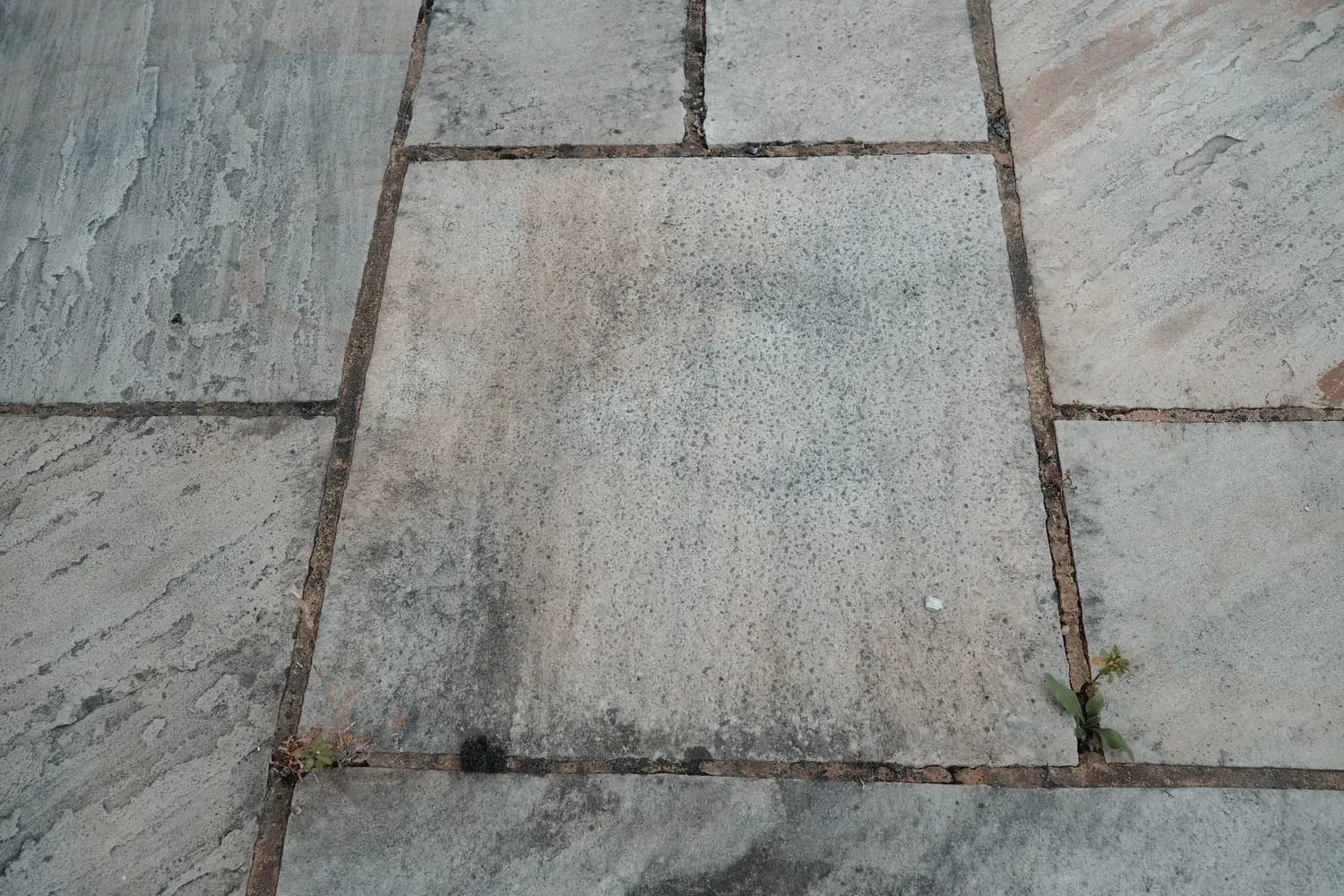
Use Warm Water for Light Patio Dirt
For light dirt, warm water is often the safest starting point. It is gentle, cheap, and suitable for most patio surfaces.
Warm water can help loosen:
- Mud
- Dust
- Bird mess
- Light grime
- Surface dirt
- Food spills
To use it, sweep the patio first. Then pour warm water over small sections and scrub with a brush. After that, rinse with clean water. This simple method works well for regular maintenance, especially if your patio is not badly stained.
Warm water is also useful before applying any cleaner because it softens grime and helps the cleaning process work better.
Use Washing-Up Liquid for General Patio Cleaning
A small amount of washing-up liquid mixed with warm water can help clean patio slabs that have everyday dirt and light grease.
Use only a small amount. Too much soap can leave residue, streaks, or a slippery finish. After scrubbing, always rinse fully with clean water.
This method is best for:
- Light food marks
- Dusty slabs
- Mild grime
- Fresh spills
- General garden dirt
It is not strong enough for deep moss, black spots, heavy algae, or oil stains, but it is a safe first option for routine care.
Use a Stiff Brush for Moss, Mud, and Grime
A stiff brush is one of the most useful tools for patio cleaning. It helps lift dirt from the surface without needing strong chemicals.
Use a stiff-bristled outdoor brush for concrete, block paving, and many hard-wearing slabs. For porcelain or delicate natural stone, use a softer brush to avoid scratches.
A brush is ideal for:
- Loosening moss
- Scrubbing joints
- Removing mud
- Lifting surface grime
- Cleaning textured slabs
Do not use a wire brush. It can scratch surfaces and may leave metal marks that later turn rusty.
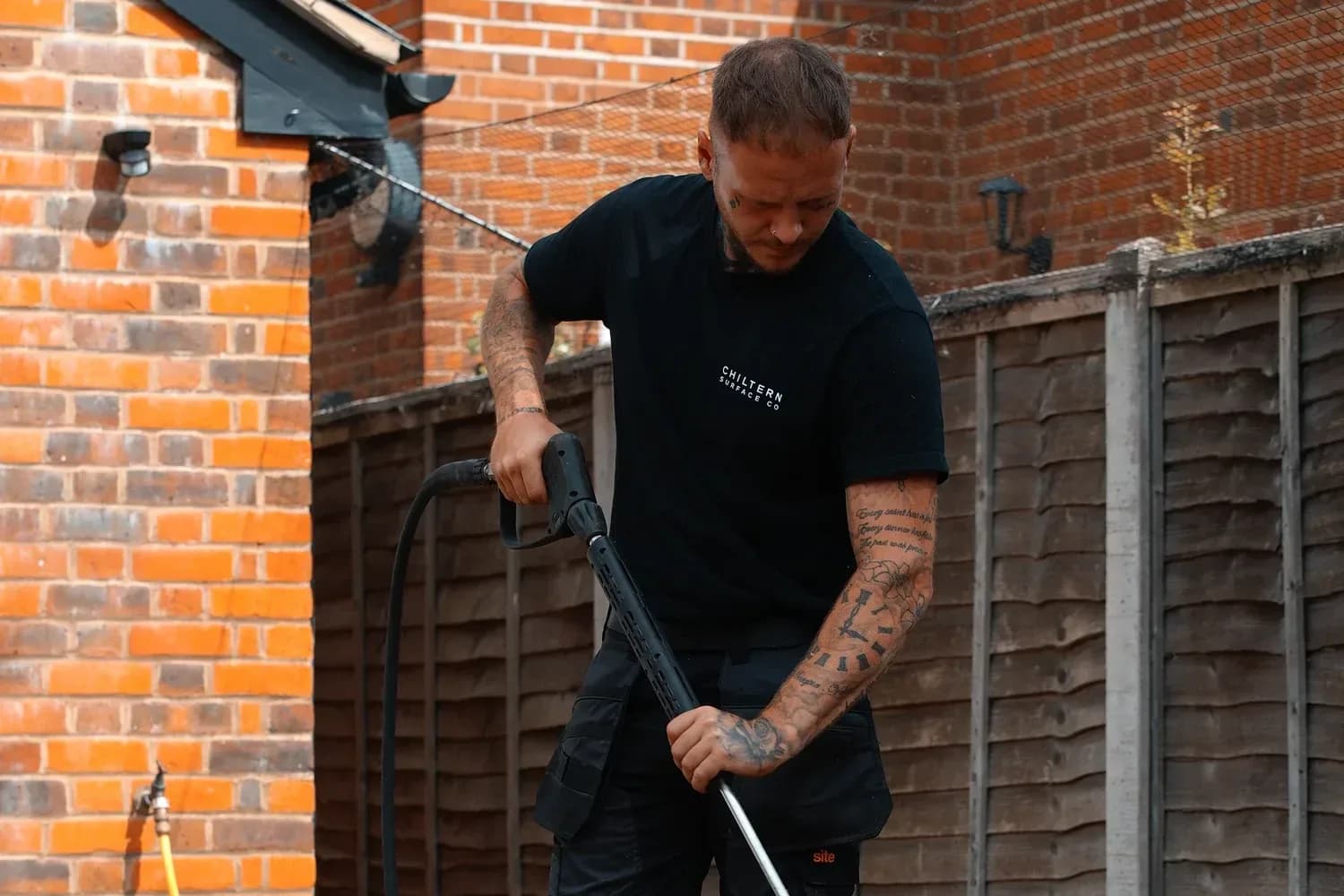
Use a Garden Hose to Rinse Properly
A garden hose is simple, but it matters. After using any cleaner, soap, or treatment, rinse the patio well. If dirty water or cleaner residue dries on the slabs, it can leave streaks and patches.
Good rinsing helps remove:
- Loose dirt
- Soap residue
- Cleaner residue
- Algae film
- Muddy water
For porcelain slabs, rinsing is especially important because residue can dry into cloudy marks. Always work toward a safe drainage area and avoid washing dirty water into flower beds where possible.
Use a Patio Cleaner for Deeper Dirt
A specialist patio slab cleaner can help when warm water and brushing are not enough. These products are made to clean outdoor surfaces and remove common patio grime.
Choose a cleaner based on your surface type. Some are made for concrete. Some are safer for stone. Others target algae, moss, or black spot.
Before use:
- Read the label
- Check surface suitability
- Test a small hidden area
- Wear gloves
- Keep children and pets away
- Rinse thoroughly after cleaning
A mild patio cleaner can be a good option for regular seasonal cleaning. Stronger products should be used with more care.
Use Algae Remover for Green Slippery Slabs
Green algae is common on patios in damp or shaded gardens. It can make slabs look dirty and feel slippery.
An algae remover for patio surfaces is designed to break down green growth more effectively than water alone. It is useful around steps, edges, shaded areas, and under plant pots.
Algae often returns if the area stays damp. So, after cleaning, try to improve airflow and sunlight. Move pots often, trim overhanging plants, and sweep leaves before they rot.
For heavy algae, professional cleaning may give longer-lasting results because the surface can be treated properly rather than just rinsed.
Use Moss Remover for Patio Joints and Edges
Moss often grows between slabs, along edges, and in damp corners. It holds moisture and can make the surface unsafe.
A moss remover for patio areas can help break down growth, but thick moss should be removed manually first. Brush or pull away heavy growth before applying any treatment.
Avoid blasting joints too hard with a pressure washer. This can loosen pointing or jointing sand. If the joints are already weak, professional care is safer.
To reduce moss regrowth:
- Sweep often
- Improve drainage
- Trim nearby plants
- Remove wet leaves
- Keep joints maintained
Use a Pressure Washer for Heavy Surface Dirt
A pressure washer can be very effective on patio slabs, especially when there is heavy dirt, mud, grime, and loose organic growth.
A pressure washer for patio slabs can help restore the surface quickly, but it must be used with care.
Use these safety tips:
- Start on low pressure
- Use a wide fan nozzle
- Keep the nozzle moving
- Do not spray too close
- Avoid blasting joints directly
- Test a small area first
- Avoid high pressure on soft stone
Pressure washing can damage sandstone, limestone, grout, pointing, and block paving joints if used badly. It can also leave stripe marks if the cleaning pattern is uneven.
For the best finish, a patio cleaner attachment or surface cleaner attachment can help clean more evenly.
Use a Surface Cleaner Attachment for Even Results
A surface cleaner attachment is a round tool that connects to a pressure washer. It cleans with rotating jets under a covered head.
This can be better than using a narrow jet because it gives a more even finish and reduces splashback.
It is useful for:
- Large patios
- Concrete slabs
- Paving slabs
- Even surface cleaning
- Reducing streaks
However, the pressure still needs to be suitable for the surface. A surface cleaner attachment does not make every patio safe for high-pressure cleaning.
Use a Stone Cleaner for Natural Stone Slabs
Natural stone needs special care. Sandstone, limestone, slate, and other stone surfaces can react badly to harsh cleaners.
For natural stone, use a specialist stone cleaner that is suitable for the exact surface. Avoid strong acids, harsh bleach, and aggressive pressure.
Natural stone can be porous. This means it can absorb liquid and stain more easily. It can also be marked by the wrong product.
If you are not sure what stone you have, it is better to get professional advice before applying a strong cleaner.
Use a Porcelain-Safe Cleaner for Porcelain Slabs
Porcelain slabs are strong, modern, and low-porous. However, they can show streaks if cleaned badly.
For porcelain, use:
- Warm water
- Mild detergent
- pH-neutral cleaner
- Soft or medium brush
- Clean rinse water
- Squeegee or microfibre mop
Avoid oily sealers, waxy products, wire brushes, and dirty mop water. Porcelain does not usually need sealing, but grout lines may still need care.
If your porcelain patio looks cloudy, the issue may be grout haze, cement residue, or cleaner buildup. A specialist cleaner may be needed.
Use a Degreaser for BBQ Grease and Oil Marks
Grease and oil need a different approach. Water alone will not always lift them because oil can sit in or on the surface.
A patio-safe degreaser can help with:
- BBQ grease
- Cooking oil
- Food spills
- Garden machinery oil
- Fresh oily marks
Treat oil marks as soon as possible. Blot fresh oil first. Do not spread it with water. Then apply a suitable degreaser, scrub gently, and rinse well.
Old oil stains may need professional treatment, especially on porous concrete or natural stone.
Use Black Spot Remover for Lichen Marks
Black spots on patio slabs are often caused by lichen. These marks are very stubborn because they grip into the surface.
Regular pressure washing may lighten them, but it often does not remove them fully. A specialist black spot remover may be needed.
Use this type of product very carefully. It may not be suitable for all surfaces. Always test first and follow the instructions.
If black spots cover a large area, Chiltern Surface can assess the patio and choose a safe professional method.
Use Bleach Only with Extreme Care
Some homeowners use bleach to clean patio slabs. Bleach can help with algae, mould, and green growth on some concrete or man-made slabs. However, it is not suitable for every patio.
Bleach can:
- Harm plants and grass
- Irritate skin and eyes
- Discolour slabs
- Damage some natural stone
- Affect sealed surfaces
- Leave harmful runoff
Never use neat bleach. Never mix bleach with vinegar or other cleaners. Always wear gloves and goggles, dilute it properly, test first, and rinse thoroughly.
For delicate patios, professional cleaning is a safer option.
Use Vinegar Carefully on Certain Surfaces
White vinegar is often mentioned as a natural patio cleaner. It may help with light marks and some surface grime, but it is acidic.
That means it can damage some natural stone, grout, or jointing materials if overused.
If using vinegar:
- Dilute it with water
- Test a hidden area
- Do not leave it too long
- Keep it away from plants
- Rinse well
Vinegar is not the best choice for sandstone, limestone, or delicate surfaces.
Use Baking Soda for Mild Stains
Baking soda is gentle and can help with light stains, mild grease, and small marks.
To use it, dampen the area, sprinkle baking soda, leave it for a short time, scrub, and rinse well.
Baking soda is not powerful enough for heavy moss, black spot, or deep staining, but it is useful for light maintenance.
What to Use for Concrete Patio Slabs
Concrete patio slabs are usually strong and can handle more cleaning power than soft natural stone. Still, they can be damaged by excessive pressure or harsh products.
For concrete, you can often use:
- Warm water
- Mild detergent
- Stiff brush
- Patio cleaner
- Pressure washer
- Degreaser for oil
- Algae remover
- Sealer after cleaning
Concrete is porous, so stains can sink in. Oil and rust marks should be treated quickly.
What to Use for Sandstone Patio Slabs
Sandstone is beautiful but more delicate than concrete. It can absorb moisture and react to harsh cleaners.
For sandstone, use:
- Clean water
- Gentle stone cleaner
- Soft or medium brush
- Low-pressure rinsing
- Professional treatment for black spots
Avoid strong bleach, acidic cleaners, and high-pressure blasting. These may damage the surface or create uneven patches.
What to Use for Limestone Patio Slabs
Limestone is also sensitive. Acidic cleaners can damage it. Strong pressure can mark the surface.
For limestone, use:
- pH-neutral stone cleaner
- Soft brush
- Clean water rinse
- Careful professional cleaning
Avoid vinegar, strong acids, neat bleach, and aggressive pressure washing.
What to Use for Block Paving
Block paving often collects moss and weeds in the joints. Cleaning must protect the jointing sand.
For block paving, use:
- Broom
- Stiff brush
- Weed removal tool
- Controlled pressure washer
- Moss treatment
- Kiln-dried sand for re-sanding
- Optional sealer
After pressure washing, block paving may need re-sanding. This helps keep the blocks stable and reduces weed growth.
What Not to Use on Patio Slabs
Some products and tools can cause damage.
Avoid:
- Wire brushes
- Neat bleach
- Strong acids on natural stone
- Harsh cleaners without testing
- Turbo nozzles on delicate slabs
- Too much pressure near joints
- Dirty mop water on porcelain
- Oil-based sealers on porcelain
- Random chemical mixtures
Good patio cleaning is not about using the strongest product. It is about using the right product.
When Professional Patio Cleaning Is Better
DIY cleaning can work for light dirt. However, professional cleaning is better when the patio is heavily stained, slippery, delicate, or covered in organic growth.
Call Chiltern Surface if your patio has:
- Heavy moss
- Thick algae
- Black spots
- Oil stains
- Rust marks
- Delicate natural stone
- Loose joints
- Large dirty areas
- Stains that keep returning
Professional cleaning saves time and reduces the risk of damage.
Professional Patio Cleaning by Chiltern Surface
Chiltern Surface provides careful, premium professional patio cleaning for homeowners who want safe, long-lasting results.
Our service may include:
- Surface inspection
- Stain assessment
- Moss and algae treatment
- Controlled pressure washing
- Soft washing where suitable
- Specialist cleaning products
- Joint care
- Rinsing and finishing
- Sealing advice
- Aftercare tips
We do not use one method for every patio. Your surface gets the care it needs.
Why Choose Chiltern Surface?
Your patio is part of your home. It should be cleaned with care, not guesswork.
Chiltern Surface offers:
- Expert surface knowledge
- Safe cleaning methods
- Premium attention to detail
- Professional equipment
- Honest advice
- Local service
- Long-lasting results
Whether your patio is concrete, porcelain, sandstone, limestone, or block paving, we can help restore it safely.
About What to Use to Clean Patio SlabsConclusion
Knowing what to use to clean patio slabs helps you protect your patio while getting a better finish. Warm water, mild detergent, stiff brushes, patio cleaners, algae removers, moss removers, pressure washers, and specialist stone cleaners all have their place.
The best choice depends on your patio surface and the problem you need to solve. Concrete, porcelain, sandstone, limestone, and block paving all need different care.
For safe, professional, and long-lasting results, contact Chiltern Surface today. Our expert patio cleaning service can restore your outdoor space and help protect it for the future.
Frequently asked questions
What is the best thing to use to clean patio slabs?
For light dirt, warm water, mild detergent, and a stiff brush are a safe start. For deeper grime, use a suitable patio cleaner or professional cleaning service.
Can I use a pressure washer on patio slabs?
Yes, but use controlled pressure. High pressure can damage joints, pointing, grout, and soft stone.
Can I use bleach to clean patio slabs?
Bleach can work on some concrete slabs, but it must be diluted and used carefully. Avoid it on delicate natural stone.
What should I use to remove moss from patio slabs?
Use a stiff brush to remove loose moss, then apply a suitable moss remover. Improve drainage and sunlight to reduce regrowth.
What should I use to remove algae from patio slabs?
Use an algae remover, warm water scrubbing, or controlled pressure washing. Treat shaded areas to slow regrowth.
What cleaner is safe for natural stone slabs?
Use a pH-neutral stone cleaner made for natural stone. Avoid acidic cleaners and harsh bleach.
How do I clean porcelain patio slabs?
Use warm water, a pH-neutral cleaner, a soft brush, and a thorough rinse. Remove excess water to avoid streaks.
When should I book professional patio cleaning?
Book professional cleaning when stains are deep, slabs are slippery, black spots remain, or the surface is delicate.