
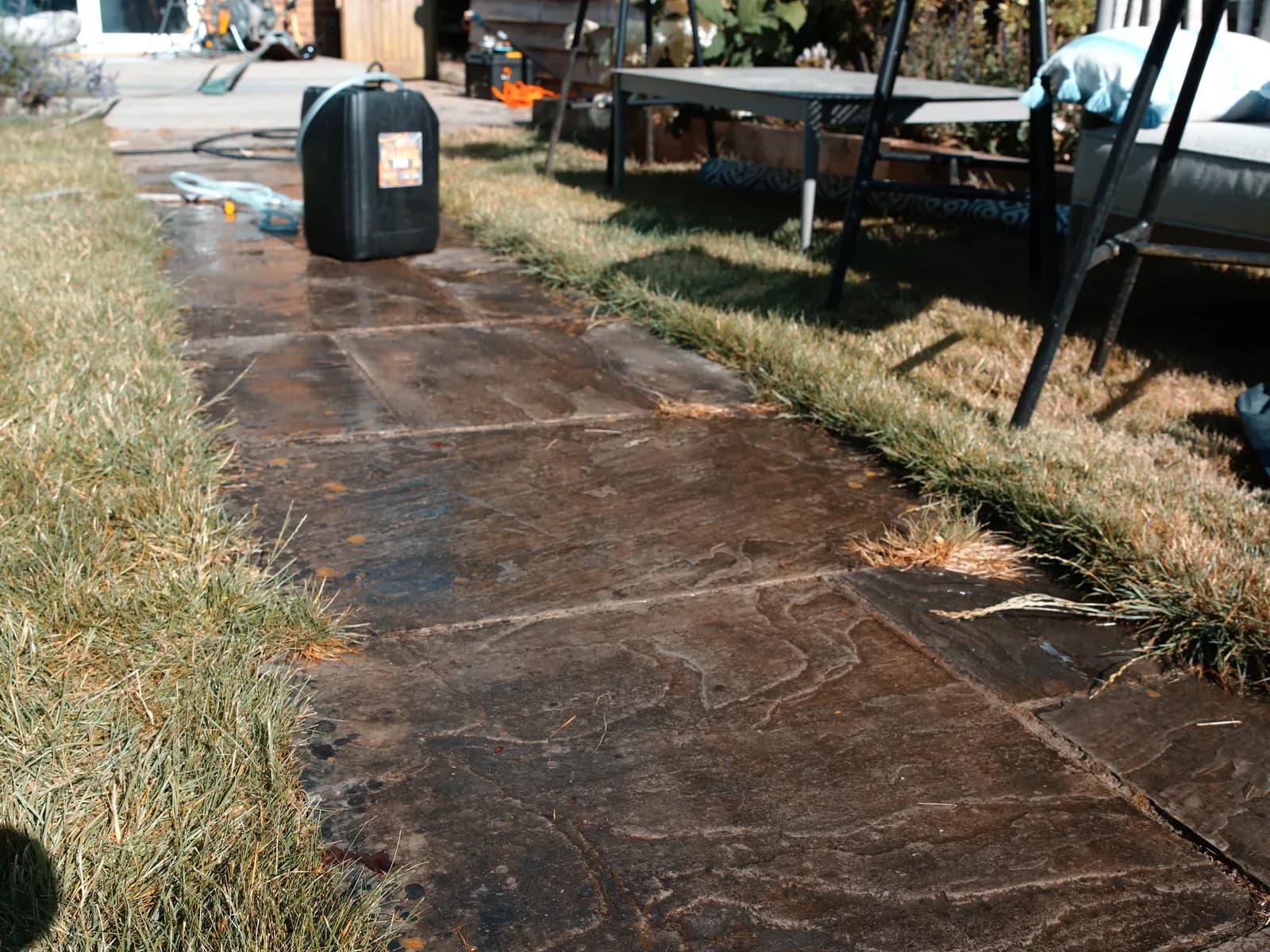
If you want to know how to clean porcelain patio tiles properly, this guide gives you the clear answer. You’ll learn how to remove dirt, algae, moss, stains, grout haze, and grime while keeping your outdoor porcelain tiles looking bright, safe, and premium.
Porcelain patios are loved for their clean look, strong finish, and low-maintenance nature. They are often chosen for modern homes because they look smart and resist many common outdoor stains. However, “low maintenance” does not mean “no maintenance.”
Over time, rain, foot traffic, leaves, soil, pollen, bird mess, barbecue grease, and shade can all affect your patio. The surface may start to look dull. The grout lines may turn dark. Algae may appear around the edges. In winter, the tiles may even feel slippery.
At Chiltern Surface, we clean outdoor surfaces with care, detail, and the right method for each material. Porcelain needs a different approach from concrete, sandstone, block paving, or natural stone. So, let’s look at the best way to clean porcelain patio areas without causing damage.
Why Porcelain Patio Tiles Still Need Cleaning
Porcelain is dense, strong, and less porous than many other patio materials. This means it does not absorb water and stains as easily as natural stone. That is one reason homeowners choose porcelain patio tiles for gardens, terraces, and outdoor dining spaces.
Still, dirt can sit on top of the surface. If the patio has a textured anti-slip finish, fine soil and grime can settle into the tiny surface grooves. Once this happens, normal rain will not always wash it away.
Common problems include:
- Mud and soil marks
- Green algae
- Moss in joints
- Mildew in shaded areas
- Grease from barbecues
- Rust from metal furniture
- Leaf stains
- Bird droppings
- Grout haze after installation
- Cement residue
- General outdoor grime
In the UK, damp weather makes these issues more common. Rain, shade, and low sunlight can leave outdoor porcelain tiles looking tired, even when the tiles themselves are high quality.
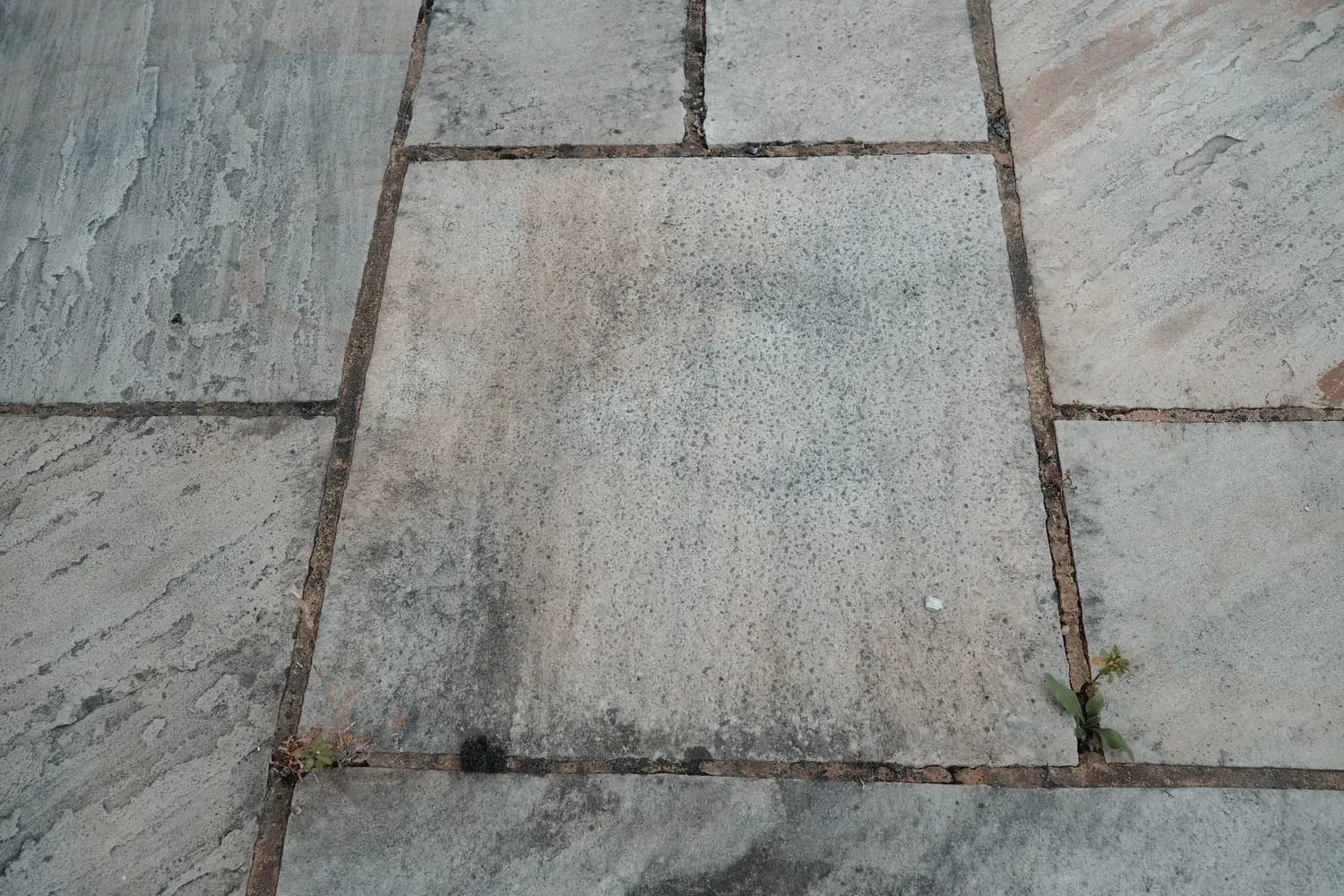
The Best Way to Clean Porcelain Patio Tiles
The best way to clean porcelain patio tiles is simple: sweep first, use a safe cleaner, scrub gently, rinse fully, and dry the surface where needed.
A good basic method looks like this:
- Remove furniture, pots, and loose items.
- Sweep the patio with a soft outdoor broom.
- Rinse the tiles with clean water.
- Apply a pH-neutral cleaner or porcelain-safe patio cleaner.
- Scrub with a soft or medium-bristle brush.
- Rinse thoroughly with fresh water.
- Remove leftover water with a squeegee or mop.
This method works well for regular porcelain patio cleaning. It helps lift dirt without scratching the surface or harming the grout.
The golden rule is this: never let dirty water dry on porcelain. It can leave streaks, cloudy patches, or water marks.
Tools You Need to Clean Porcelain Patio Surfaces
Using the right tools makes the job easier and safer. Porcelain is tough, but poor tools can still mark the surface or damage grout lines.
You may need:
- Soft broom
- Garden hose
- Bucket
- Warm water
- pH-neutral cleaner
- Soft or medium-bristle brush
- Microfibre mop
- Squeegee
- Rubber gloves
- Low-pressure washer, if suitable
- Wide fan nozzle
- Porcelain-safe degreaser
Avoid these items:
- Wire brushes
- Metal scrapers
- Harsh scouring pads
- Strong acids
- Bleach-heavy mixtures
- Wax-based cleaners
- Oil-based sealers
- Rotary pressure washer nozzles
These can cause marks, residue, or damage to the grout.
How to Clean Porcelain Patio Step by Step
Step 1: Clear the Patio
Start by removing garden furniture, plant pots, outdoor rugs, toys, and barbecue items. This helps you clean the whole area evenly.
Also check under pots and furniture. These areas often hide algae, water marks, and dirt rings.
Step 2: Sweep Away Loose Debris
Use a soft broom to remove leaves, dust, soil, and grit. This step matters because grit can act like sandpaper when you scrub.
If there are weeds or moss in the joints, remove them gently before washing.
Step 3: Pre-Rinse the Tiles
Rinse the patio with a garden hose. This removes loose dirt and prepares the surface for cleaning.
Do not flood the patio. A light rinse is enough.
Step 4: Apply a Porcelain-Safe Cleaner
Use a porcelain tile cleaner, mild detergent, or pH-neutral cleaner. Follow the correct dilution. More cleaner does not mean a better clean. Too much product can leave a film.
Apply the solution in small sections so it does not dry before you scrub.
Step 5: Scrub the Surface
Use a soft or medium-bristle brush. Scrub in straight lines and then across the tile texture. This helps lift dirt from fine grooves.
Pay close attention to:
- Edges
- Corners
- Grout lines
- Shaded areas
- Under furniture
- Around plant pots
Step 6: Rinse Thoroughly
Rinse the area with clean water. Make sure no cleaner is left behind. Residue can make tiles look dull or slippery.
Step 7: Dry for a Cleaner Finish
Use a squeegee or microfibre mop to remove water. This is useful on large porcelain patios because it helps stop streaks.
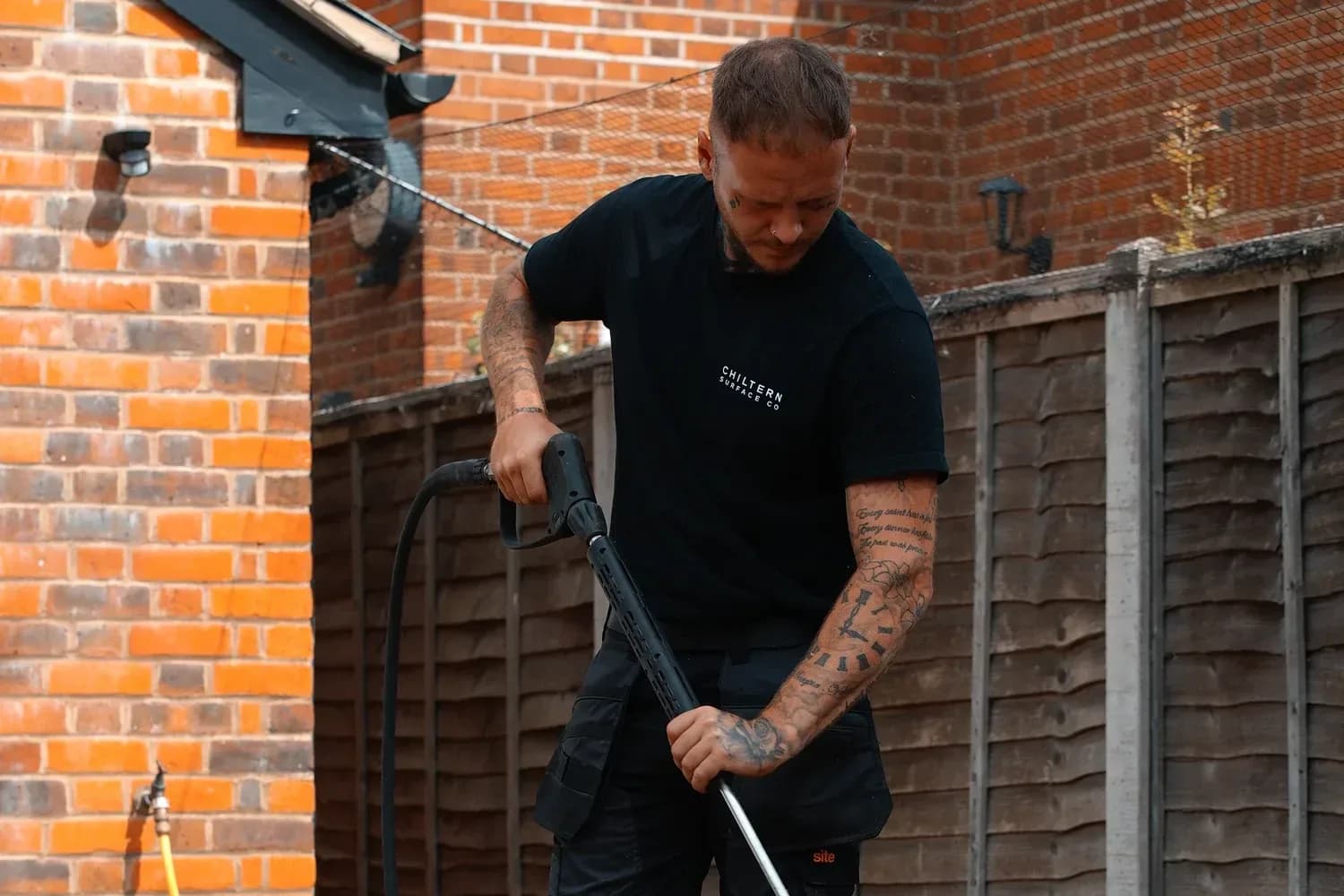
Can You Pressure Wash Porcelain Patio Tiles?
Yes, you can pressure wash porcelain tiles, but care is needed. Porcelain is strong, yet the joints and grout lines may not be.
If you use a pressure washer:
- Use low to medium pressure
- Choose a wide fan nozzle
- Keep the nozzle moving
- Do not spray too close
- Avoid blasting grout lines directly
- Test a small hidden area first
- Never use a rotary turbo nozzle on delicate areas
Pressure washing can remove surface dirt fast, but it may not solve algae or moss at the root. If organic growth is present, a treatment may be needed before or after washing.
At Chiltern Surface, we use controlled methods for pressure wash porcelain patio work. The goal is to clean the patio, not damage the finish or weaken the joints.
How to Remove Algae from Porcelain Patio Tiles
Algae often appears as green film. It grows in damp, shaded areas and can make tiles slippery.
To remove algae:
- Sweep the patio first.
- Apply an algae-safe outdoor cleaner.
- Let it dwell for the right time.
- Scrub gently with a brush.
- Rinse thoroughly.
- Treat problem areas to slow regrowth.
A quick rinse may remove the green look for a short time. However, if the algae is not treated well, it often comes back.
To reduce algae growth:
- Trim plants that block sunlight.
- Move pots now and then.
- Improve airflow.
- Clear leaves often.
- Keep water from sitting on the patio.
How to Remove Moss from Porcelain Patio Joints
Moss usually grows in joints, gaps, and edges. It holds moisture, which can make the patio slippery and messy.
For moss removal, follow these steps:
- Pull away thick moss by hand.
- Brush the joints gently.
- Apply a suitable moss treatment.
- Allow proper dwell time.
- Rinse the surface fully.
- Avoid blasting joints with high pressure.
Do not attack grout lines with too much force. This can loosen the jointing material and create more long-term problems.
How to Remove Stains from Porcelain Patio Tiles
Porcelain resists stains well, but marks can still sit on top of the surface.
Here is a quick guide:
Always test a small hidden area first before using a new product.
How to Remove Grout Haze from Porcelain Patio Tiles
Grout haze is a cloudy film left after installation. It can make new porcelain slabs look dull, patchy, or dusty.
This problem is common when residue is not cleaned properly after laying the patio.
To remove grout haze:
- Use a cleaner made for grout residue.
- Follow the instructions carefully.
- Work in small sections.
- Do not let the cleaner dry on the tiles.
- Rinse thoroughly with clean water.
Avoid random acidic products. Some may damage grout, surrounding materials, or nearby planting areas.
If the haze is heavy, professional help is best. Chiltern Surface can assess the surface and choose the safest cleaning method.
How to Clean Textured Outdoor Porcelain Tiles
Many outdoor porcelain tiles have an anti-slip texture. This is great for safety, but it also means dirt can sit in the surface pattern.
To clean textured tiles:
- Use warm water and a safe cleaner.
- Scrub across the surface texture.
- Use a medium-bristle brush where needed.
- Rinse very well.
- Remove dirty water before it dries.
Textured tiles may need more brushing than smooth tiles. However, they should still be cleaned gently.
What Not to Use on Porcelain Patio Tiles
Porcelain is strong, but the wrong product can still cause issues.
Avoid:
- Strong bleach mixtures
- Harsh acid cleaners
- Wire brushes
- Abrasive pads
- Dirty mop water
- Wax polish
- Oil-based sealers
- Very high pressure
- Rotary pressure washer nozzles
Also avoid using too much cleaner. It can leave a sticky film that attracts more dirt.
Should You Seal Porcelain Patio Tiles?
Most porcelain tiles do not need sealing. Unlike natural stone, porcelain is very dense and does not absorb much liquid.
However, the grout lines may need care. In some cases, a grout protector can help reduce staining.
Before sealing anything, check:
- Tile type
- Manufacturer guidance
- Grout condition
- Surface texture
- Existing residue
- Drainage
- Previous treatments
Using the wrong sealer can create a cloudy or patchy finish. For premium patios, professional advice is the safer route.
Why Your Porcelain Patio Looks Streaky After Cleaning
Streaks are usually caused by residue. This can come from dirty water, too much cleaner, or poor rinsing.
To avoid streaks:
- Use clean water.
- Work in small sections.
- Rinse thoroughly.
- Do not clean in strong direct sun.
- Remove excess water with a squeegee.
- Use the correct cleaner amount.
If the patio still looks cloudy, there may be grout haze, cement residue, or product buildup on the tiles.
How Often Should You Clean a Porcelain Patio?
A simple routine keeps your patio looking fresh.
Use this schedule:
Most patios need a deep clean once or twice a year. Shaded patios may need more care.
DIY Porcelain Patio Cleaning vs Professional Cleaning
DIY cleaning works well for light dirt. If your patio only needs a quick freshen-up, a broom, mild cleaner, and garden hose may be enough.
However, professional cleaning is better when:
- The patio is slippery
- Algae keeps returning
- Moss is growing in joints
- Grout haze is visible
- Cement residue remains after installation
- Stains will not lift
- The patio is large
- You want a premium finish
Chiltern Surface uses surface-specific cleaning. We do not treat porcelain like concrete or sandstone. Each surface needs the right level of pressure, product, and care.
Professional Porcelain Patio Cleaning by Chiltern Surface
Chiltern Surface offers careful porcelain patio cleaning for homeowners who want a clean, safe, and polished outdoor space.
Our process may include:
- Surface inspection
- Tile and grout condition check
- Safe debris removal
- Porcelain-safe cleaning solution
- Controlled pressure washing if needed
- Algae and moss treatment
- Grout line cleaning
- Streak-free rinsing
- Aftercare advice
We focus on long-term results, not quick shortcuts. The aim is to restore your patio while protecting the surface.
Why Chiltern Surface Is the Right Choice
Your patio is part of your home. It should be cleaned with care, not rushed.
Chiltern Surface brings:
- Professional exterior cleaning knowledge
- Surface-specific methods
- Careful pressure control
- Premium finish standards
- Local service
- Honest advice
- Detail-focused cleaning
Whether your patio is dull, slippery, stained, or affected by grout haze, we can help bring it back to life.
Maintenance Tips for Outdoor Porcelain Tiles
To keep your patio cleaner for longer:
- Sweep leaves often.
- Rinse muddy marks quickly.
- Clean barbecue grease straight away.
- Move plant pots every few weeks.
- Use trays under pots.
- Avoid dragging metal furniture.
- Trim plants that block sunlight.
- Improve drainage where water sits.
- Book seasonal patio cleaning.
These small habits help prevent grime, algae, and moss from building up.
About How to Clean Porcelain PatioConclusion
Knowing how to clean porcelain patio tiles the right way helps protect your outdoor space and keep it looking fresh. Porcelain is strong, stylish, and low maintenance, but it still needs regular care.
For everyday cleaning, sweep the patio, use a safe cleaner, scrub gently, and rinse fully. For algae, moss, grout haze, cement residue, or stubborn stains, professional porcelain patio cleaning is the better choice.
Chiltern Surface provides expert outdoor surface cleaning with care, precision, and a premium finish.
Contact Chiltern Surface today to restore your porcelain patio and enjoy a cleaner, safer, better-looking outdoor space.
Frequently asked questions
What is the best way to clean porcelain patio tiles?
The best way is to sweep first, apply a pH-neutral cleaner, scrub gently, rinse thoroughly, and remove excess water. This helps stop streaks and keeps the tiles looking clean.
Can I pressure wash porcelain patio tiles?
Yes, but use low to medium pressure and a wide fan nozzle. Avoid spraying too close or blasting grout lines. For safer results, hire a professional.
How do I remove algae from outdoor porcelain tiles?
Use an algae-safe cleaner, allow it to dwell, scrub gently, and rinse well. Treating the growth helps slow its return.
Why does my porcelain patio look cloudy?
Cloudiness may be caused by grout haze, cement residue, cleaner buildup, or dirty water drying on the tiles.
Do porcelain patio tiles need sealing?
Most porcelain tiles do not need sealing. However, grout lines may benefit from protection in some cases. Always check before applying any sealer.
What cleaner should I use on porcelain patio tiles?
Use a pH-neutral cleaner, mild detergent, or specialist porcelain tile cleaner. Avoid harsh acids, wire brushes, and strong bleach.
How often should I clean a porcelain patio?
Sweep weekly, rinse monthly, and deep clean once or twice a year. Damp or shaded patios may need more regular care.
Can I use bleach on porcelain patio tiles?
Bleach is not usually the best choice. It can harm nearby plants, affect grout, and leave residue if not rinsed well. A safer patio cleaner is better.