
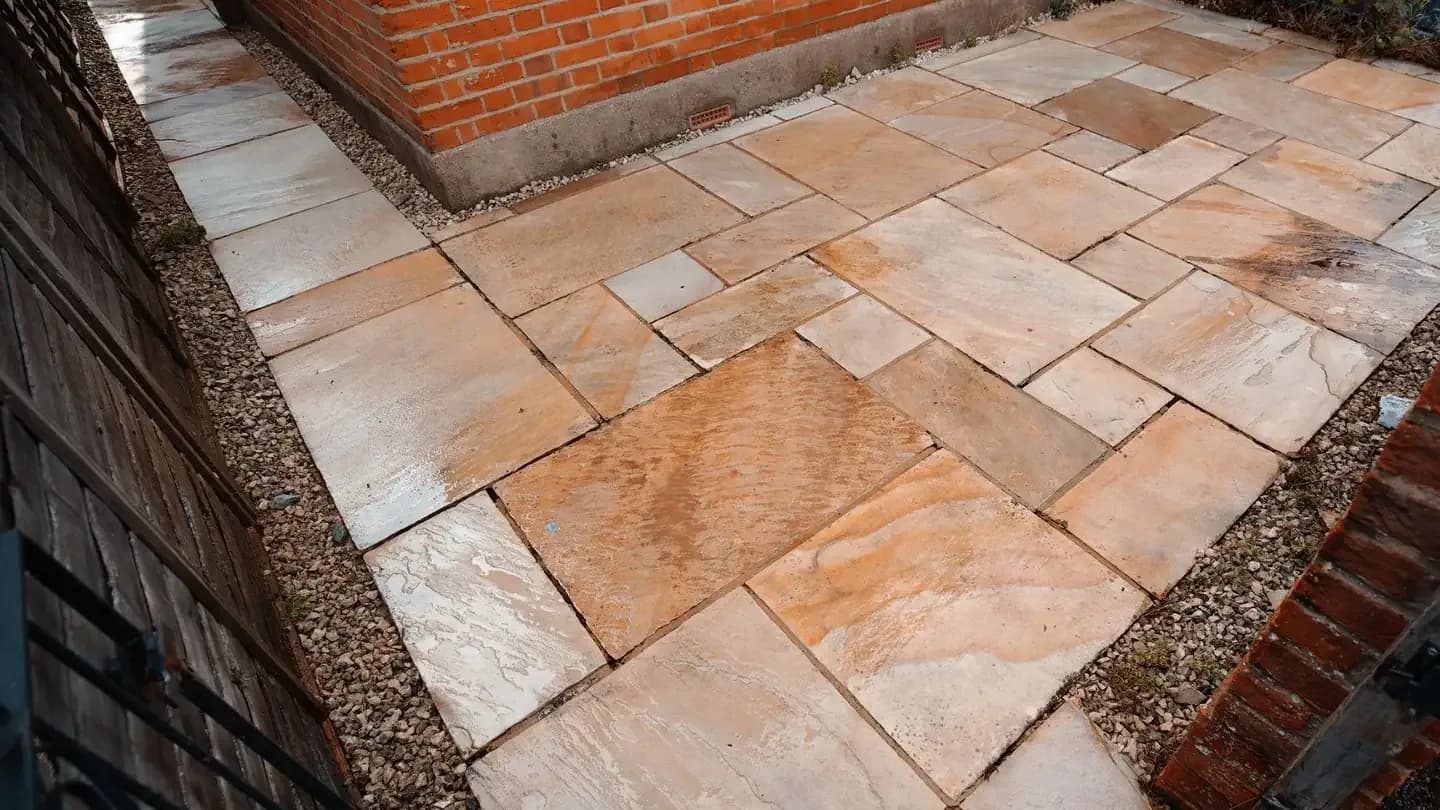
You should seal a patio after cleaning only when the paving material, its condition and the result you want make sealing worthwhile. A suitable sealer can reduce absorption and make some stains easier to manage, but many patios do not need sealing after every clean.
The patio must also be clean, sound and dry enough for the chosen product. Sealing damp stone, active efflorescence, detergent residue or defective joints can leave whitening, patchiness, poor adhesion or trapped contamination. The decision should follow the surface assessment rather than the cleaning invoice.
Is Patio Sealing Necessary After Every Clean?
No. Cleaning and sealing perform different jobs. Cleaning removes contamination; sealing changes how the paving interacts with water, oils and dirt. A patio can be clean and serviceable without a sealer.
Sealing makes most sense when a compatible product solves a defined problem. Examples include porous stone beside a dining area, concrete exposed to frequent spills or block paving that needs compatible sand stabilisation. Sealing offers less value when the surface already absorbs very little water or when moisture and joint defects remain unresolved.
What Does Patio Sealer Actually Do?
A patio sealer either penetrates the pores or forms a coating at the surface. Depending on the formulation, protection can reduce liquid absorption, slow staining, deepen colour, stabilise compatible jointing and simplify routine washing.
No sealer removes the need for maintenance. Rain, shade, leaf litter and airborne spores still reach the patio. Algae, moss and black spot can return on top of a sealed surface, especially where dirt and moisture remain.
Which Patio Materials Benefit From Sealing?
Sandstone patios
Porous sandstone can benefit from a breathable impregnating sealer where reduced water or stain absorption is desirable. Sandstone varies in mineral content and porosity, so test the actual product on the actual stone. A sealer can deepen colour or highlight variations that were less visible before treatment.
Before considering protection, use a surface-specific method to clean sandstone safely and allow the stone to reveal its true dry appearance.
Limestone and travertine patios
Limestone and travertine require careful product selection. Colour-enhancing products can substantially darken black limestone, while film-forming coatings can change texture and reflectivity. Acid damage, fading and mineral staining will not be repaired merely by covering the surface.
Concrete paving
Concrete slabs can accept penetrating or film-forming products designed for cement-based paving. The finish, age, porosity and existing treatment decide compatibility. Uneven absorption can create patchy colour, while trapped moisture can produce cloudy areas.
Porcelain patios
Porcelain usually does not need its tile faces sealed because the material absorbs very little water. Some polished porcelain, grout and jointing systems have particular requirements, so follow the paving manufacturer rather than applying a general stone sealer.
Block paving
Cleaning block paving often removes jointing sand. Re-sanding and compaction normally come before any compatible sealer or sand stabiliser. Sealer cannot correct loose blocks, shallow joints, failed edges or poor drainage.
When Should You Not Seal a Patio?
Do not seal paving that remains damp, carries cleaning residue or shows active efflorescence. Postpone treatment when rain, dew or temperatures fall outside the product limits. Repair loose slabs and defective joints before applying protection.
Avoid sealing where the existing coating is unidentified, peeling or whitening. A new product can react poorly with the old layer. Stripping and testing may be necessary, and stripping can be more demanding than the original application.
Do not use sealer to disguise acid etching, pressure damage or persistent stains. Most transparent products reveal the existing surface more clearly and can make colour differences look stronger.
How Long Should a Patio Dry Before Sealing?
There is no universal 24-hour rule. Follow the chosen sealer’s instructions and extend the drying period when stone is porous, joints are deep, weather is cool or the patio sits in shade. The face can look dry while moisture remains below.
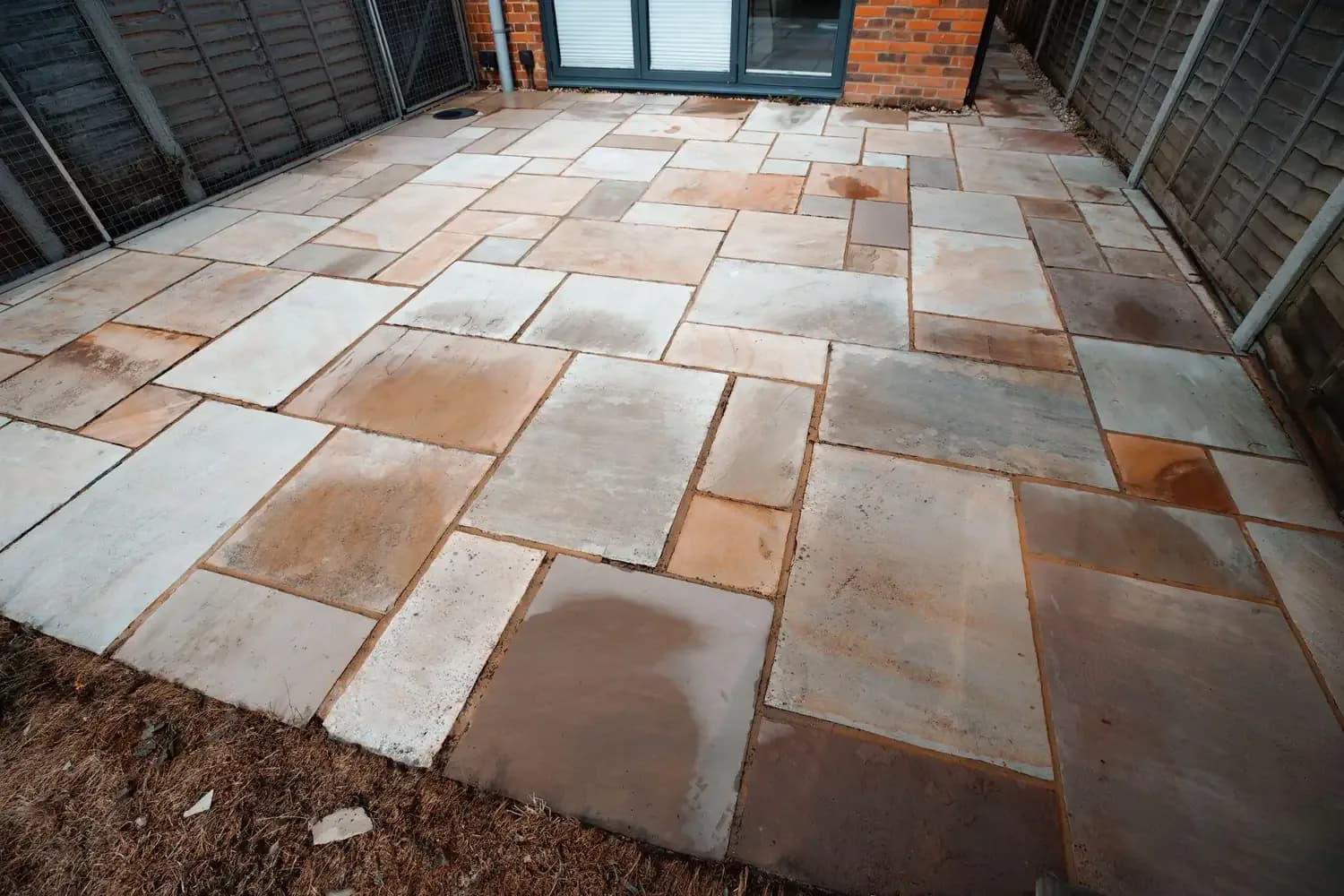
Surface dryness is only the first check
Look for darker joints, cool patches beneath furniture positions and damp edges beside walls. Moisture meters can provide supporting information on suitable materials, but representative test areas and product guidance still matter.
Weather controls the real drying time
Relative humidity, temperature, airflow, dew and overnight rain all influence drying. A warm surface can also make some products cure too quickly. Choose a stable weather window that covers preparation, application and the full initial cure.
New pointing and repairs need their own curing time
Fresh mortar, grout and jointing compounds release moisture and have manufacturer-defined curing periods. Do not assume that a dry slab means the joints are ready. Premature sealing can interfere with curing or trap salts.
Penetrating or Film-Forming Sealer: Which Is Better?
A penetrating or impregnating sealer sits within the pore structure and usually retains a more natural texture. It can reduce absorption without leaving a distinct surface film, although colour and vapour movement can still change.
A film-forming sealer creates a coating that can enhance colour or produce satin, gloss or wet-look effects. Coatings need especially careful preparation because wear, trapped moisture and overapplication become visible. Recoating may require compatibility testing or stripping.
Neither category is automatically superior. Surface type, desired appearance, slip resistance, breathability and future maintenance decide the better option.
Will Sealing Change the Patio Colour?
Some sealers leave little visible change; others deliberately deepen colour. Even products marketed as natural finish can affect tone or sheen on absorbent stone. Always complete a representative test patch and inspect it after full curing in dry and wet conditions.
A small test hidden behind a planter may not represent the main patio because weathering and absorption differ. Choose a discreet area with the same finish and exposure as the surface that matters.
Can Patio Sealer Make the Surface Slippery?
Yes, some products can reduce slip resistance, particularly film-forming sealers applied heavily or used on smooth paving. Water, algae and fallen leaves can increase the risk further.
Use a product specified for the surface and location. Steps, ramps, pool surrounds and persistently shaded areas need particular care. Anti-slip additives must also match the sealer system; adding an improvised material can create an uneven finish.
How to Prepare a Patio for Sealing
Preparation decides whether a sealer cures evenly and remains serviceable. The patio needs more than a quick rinse.
Remove contamination completely
Treat algae, lichen, oil, rust, cement haze and efflorescence according to their cause. Rinse cleaning products fully and inspect the paving after drying. Sealer can lock residual staining into the visible finish.
Repair slabs and joints
Reset loose paving, repair failed pointing and replace jointing material where required. Confirm that new materials have cured for the manufacturer’s stated period.
Allow complete drying
Keep sprinklers off, move pots and protect the patio from unexpected runoff. Extend drying time after heavy rinsing, cool weather or cleaning shaded natural stone.
Complete a representative test patch
Apply the planned number of coats at the specified coverage rate. Judge colour, sheen, texture and water behaviour only after full cure. A successful small test does not justify changing the dilution or application rate on the main area.
Quick Sealing Decision Guide
| Surface | Typical need | Main concern | Likely decision |
|---|---|---|---|
| Sandstone | Optional protection | Colour change and trapped moisture | Assess and test |
| Limestone | Optional, product-specific | Etching history and finish change | Specialist care |
| Porcelain | Usually unnecessary on tile face | Residue and joint compatibility | Check manufacturer |
| Concrete | Sometimes beneficial | Uneven absorption and whitening | Test dry surface |
| Block paving | May stabilise suitable joints | Sand loss and existing coatings | Re-sand first |
Common Patio-Sealing Mistakes
The most frequent problems come from applying too soon, applying too much or selecting by finish rather than compatibility. Pooling in low spots, spraying nearby glass or walls, sealing over salts and ignoring old coatings can all create costly remedial work.
Another mistake is promising that sealer will permanently stop weeds or biological regrowth. Full joints and routine maintenance matter for weeds. Moisture, shade and surface debris still matter for algae and lichen.
Does Sealing Prevent Moss, Algae and Black Spot?
Sealing can reduce water absorption on suitable paving and make some contamination easier to clean, but it does not prevent airborne spores landing. Organic growth can establish on dirt above the sealer.
Chiltern EverGuard™ Treatment is not described as a permanent conventional sealer. Where suitable, Chiltern Surface Co applies the treatment after cleaning to help reduce biological regrowth. Typical protection lasts 12–24 months, depending on the surface, environment, weather and maintenance.
A verified Marlow patio restoration shows natural stone cleaned and protected with Chiltern EverGuard™ Treatment without inventing a universal sealing requirement.
How Long Does Patio Sealer Last?
Service life varies with product type, application, traffic, ultraviolet exposure, drainage, cleaning and weather. High-use paths and exposed edges usually wear faster than sheltered sections. Avoid fixed promises unless the manufacturer provides them for the exact installation.
Inspect water behaviour, colour and wear rather than resealing automatically every year. Applying new coats too frequently can create build-up, gloss variation and reduced slip resistance.
Is DIY Patio Sealing Reasonable?
DIY sealing is reasonable for a small, identified surface when the product instructions clearly cover that material. You need safe weather, clean and fully dry paving, controlled application and a successful test patch.
Professional assessment makes more sense for valuable natural stone, old coatings, widespread staining, uncertain materials or slip-sensitive areas. Chiltern Surface Co’s professional patio restoration service begins with the surface and its condition before recommending protection.
Seal Only When the Patio Will Benefit
A clean patio is not automatically a patio that needs sealing. Identify the surface, define the benefit, repair defects, allow complete drying and test the chosen finish before wider application.
If you are unsure whether protection will improve the patio or create unnecessary maintenance, arrange a Free Site Assessment with Chiltern Surface Co. We will explain the realistic options and provide a clear Free Quotation.
Frequently asked questions
Should every sandstone patio be sealed?
No. Some sandstone benefits from a compatible impregnating sealer, while other patios perform well without one. Porosity, condition and the desired finish decide.
Can I seal a patio 24 hours after pressure washing?
Not automatically. Some patios dry within that period, while porous stone and damp joints take longer. Follow the product instructions and assess internal moisture.
Does sealer stop patio weeds?
No. A compatible sealer can stabilise some jointing systems, but seeds can still germinate in debris. Joint condition and maintenance remain important.
Can I seal over efflorescence?
No. Active salts can become trapped or remain visible beneath the finish. Identify the moisture source and resolve the deposit first.
Does porcelain paving need sealing?
Usually not on the tile face. Check the manufacturer’s instructions for polished finishes, grout, jointing compounds and any specific treatment.