
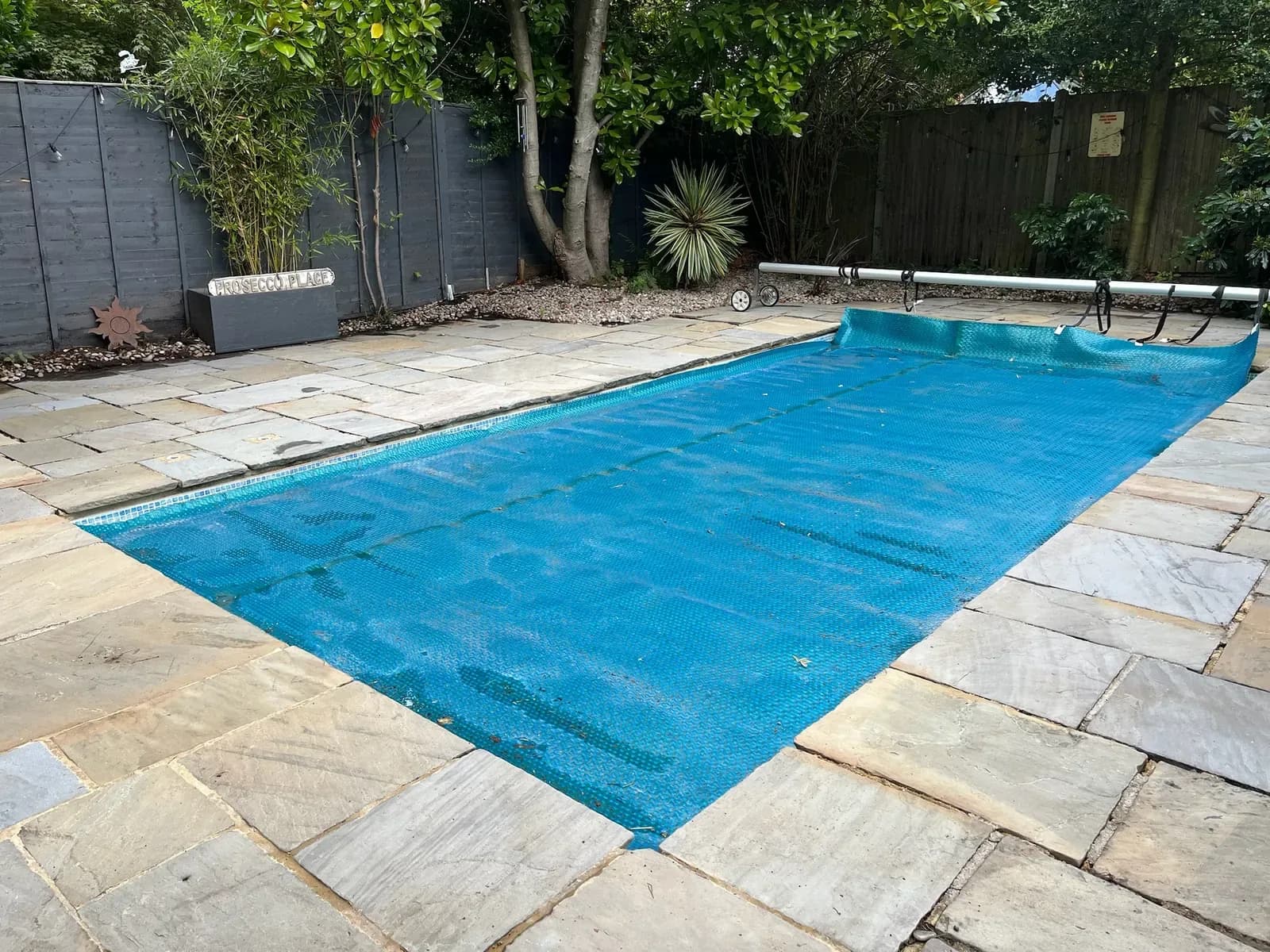
Use a pH-neutral cleaner, a stiff nylon brush, and controlled rinsing to clean sandstone without eroding the surface. Start with hand cleaning, then use low pressure only when stubborn growth remains.
The safest answer to how to clean a sandstone patio depends on finish, joints, staining, and previous sealers. Sandstone absorbs water and chemicals, so aggressive products create lasting discolouration.
Correct preparation makes how to clean a sandstone patio safer, faster, and more consistent.
Why Does Sandstone Need a Surface-Specific Cleaning Method?
How to clean a sandstone patio safely starts with gentle cleaning because sandstone contains open pores and layered mineral grains. High force removes the weathered surface.
Understanding how to clean a sandstone patio starts with accurate identification. Indian sandstone varieties include Raj Green, Kandla Grey, Rippon Buff, and Fossil Mint.
Identify riven, sawn, sealed, and unsealed sandstone
Riven sandstone has a naturally split texture with raised layers and uneven edges. Sawn sandstone has a flatter, machined face with a more consistent finish.
Sealed sandstone repels water for a short period. Unsealed sandstone darkens quickly because water enters the pores.
Test a hidden area with 2 tablespoons (30ml) of clean water. Rapid darkening signals open pores or a worn sealer.
Inspect pointing, drainage, and existing damage
Every plan for how to clean a sandstone patio should start with a joint inspection. Loose mortar, resin haze, missing compound, and cracks need careful handling.
Press a wooden scraper against doubtful joints. Sound pointing stays firm, while failing pointing crumbles under light pressure.
Clear drainage channels before washing. Blocked channels keep sandstone wet and support algae, moss, and lichen growth.
Which Tools and Products Clean Sandstone Safely?
How to clean a sandstone patio safely requires non-metal tools and a cleaner labelled for natural sandstone. The correct kit reduces abrasion and staining.
Choose non-metal hand tools
Choose 5 hand tools: a soft outdoor broom, nylon deck brush, plastic scraper, garden hose, and clean bucket. Nylon and polypropylene bristles protect the stone face.
Avoid wire brushes because broken metal fragments create rust marks. Avoid steel scrapers because sharp edges cut riven layers.
Choose a natural-stone cleaner
Your plan for cleaning a sandstone patio needs a pH-neutral or mildly alkaline sandstone product. Named examples include LTP Grimex and Lithofin MN Easy-Clean.
Follow the manufacturer dilution rate and dwell time. Strong mixtures can leave difficult residues.
Test every cleaner on one hidden slab covering about 0.1m². Let the test area dry before judging colour changes.
Protect plants, walls, and drainage
Move furniture, barbecues, pots, and ornaments at least 6 feet (1.8m) from the work area. Cover fixed timber and painted surfaces with waterproof sheeting.
Pre-wet nearby grass, hedges, roses, and herb beds before chemical treatment. Clean water reduces chemical uptake by leaves and soil.
How to Clean a Sandstone Patio by Hand
To clean a sandstone patio by hand, sweep, pre-wet, apply stone-safe cleaner, scrub evenly, and rinse fully. Hand cleaning gives maximum control.
Use hand cleaning first when you research how to clean a sandstone patio. The method suits light dirt, pollen, surface algae, and recent spills.
Clear and pre-wet the patio
Remove loose leaves, grit, bark, weeds, and soil with a soft broom. Grit under a brush can scratch smoother sawn sandstone.
Pre-wet the slabs with a hose until the sandstone darkens evenly. Pre-wetting slows cleaner absorption and supports even coverage.
Apply cleaner and scrub evenly
Mix the cleaner exactly as the label directs. Apply enough solution to wet the surface without flooding borders or drains.
Work on sections measuring about 50 square feet (4.6m2). Small sections stop the cleaner drying before agitation.
Keep the surface wet during the stated dwell time. Add more mixed solution when warm wind dries exposed slabs.
Rinse and inspect after drying
Rinse from the highest point towards the nearest safe outlet. Continue rinsing until water runs clear and foam disappears.
Remove pooled water from low spots with a squeegee or wet vacuum. Standing dirty water can leave tide marks inside porous stone.
Let the patio dry for 24 hours before assessing colour. Damp sandstone always looks darker and can hide remaining stains.
| Task | Timing | Method | Difficulty |
|---|---|---|---|
| Sweep loose debris | 10-20 minutes | Soft broom and plastic scraper | Easy |
| Hand-clean light soil | 45-90 minutes | pH-neutral cleaner and nylon brush | Easy |
| Treat algae or moss | 30-60 minutes plus dwell | Stone-safe biological cleaner | Moderate |
| Rinse with controlled pressure | 30-60 minutes | Wide fan nozzle at safe distance | Moderate |
| Treat established black spot | 1-2 hours plus fading time | Specialist treatment and thorough rinse | Hard |
| Prepare for sealing | 24-72 hours drying | Moisture check and dry weather | Moderate |
How to Clean a Sandstone Patio with a Pressure Washer
To clean a sandstone patio with a pressure washer, use a wide fan, low pressure, movement, and a hidden test.
Pressure washing changes how to clean a sandstone patio because water force can strip grains and pointing. Knowing how to clean a sandstone patio with pressure means controlling force, distance, and movement.
Set the pressure, nozzle, and distance
Use the lowest pressure that achieves the result, and reduce it further on soft, weathered or flaking slabs.
Fit a 40-degree fan nozzle or a compatible rotary surface cleaner. Never fit a 0-degree pencil jet or turbo nozzle.
Hold the nozzle at least 12 inches (30cm) from the stone. Increase the distance when the test area lightens or roughens.
Test an area measuring 6 inches by 6 inches (15cm by 15cm) behind a pot or near an inconspicuous edge.
Use controlled overlapping passes
Start at the highest drainage point and work towards the outlet. Keep dirty water away from doors, vents, and neighbouring properties.
Move the lance at a steady walking pace. Overlap each pass by about 2 inches (5cm) to prevent stripes.
Stop immediately when grains loosen, colour changes sharply, or jointing breaks away. Switch to hand cleaning after any warning sign.
Protect joints, edges, and soft slabs
Reduce pressure beside mortar joints and resin pointing. Direct water across joints rather than along open joint lines.
The safest method for how to clean a sandstone patio with weak joints uses chemical pre-treatment and a garden-hose rinse. Repair joints after full drying.
View Chiltern Surface Co's Indian sandstone restoration project for a controlled-pressure example with black-spot treatment.
How to Remove Algae, Moss, and Black Spot from Sandstone
To remove algae, moss, and black spot from sandstone, identify the growth first. Each growth type needs a different treatment.
Diagnosis improves how to clean a sandstone patio and prevents unnecessary abrasion. The 3 growth types differ in colour, texture, and depth.
Identify the biological growth
Algae forms a green, brown, or black surface film. The film becomes slippery during rain and usually responds to brushing.
Moss forms soft clumps around joints, shaded edges, and damp borders. Moss lifts easily, but spores remain inside pores and cracks.
Black spot forms hard black dots that remain after ordinary washing. Black spot lichen sends hyphae into porous stone.
Treat algae and moss safely
Remove thick moss with a plastic scraper and stiff nylon brush. Collect the debris before applying liquid treatment.
Apply a natural-stone biological cleaner at the labelled concentration. Allow the stated dwell time without letting the product dry.
Agitate green films with a brush, then rinse with clean water. Repeat treatment only after the surface dries and shows remaining growth.
Treat black spot below the surface
Use a specialist black-spot treatment because lichen sits below the visible surface. A pressure washer removes surface dirt but leaves living growth behind.
Professional treatments can include controlled sodium hypochlorite or registered biocides. Trained operators match strength, contact time, and rinsing to the sandstone.
Protect grass, pets, metalwork, and neighbouring surfaces during treatment. Never mix chlorine products with acids, ammonia, or other cleaners.
Read Chiltern Surface Co's guide to remove patio black spot before treating established lichen.
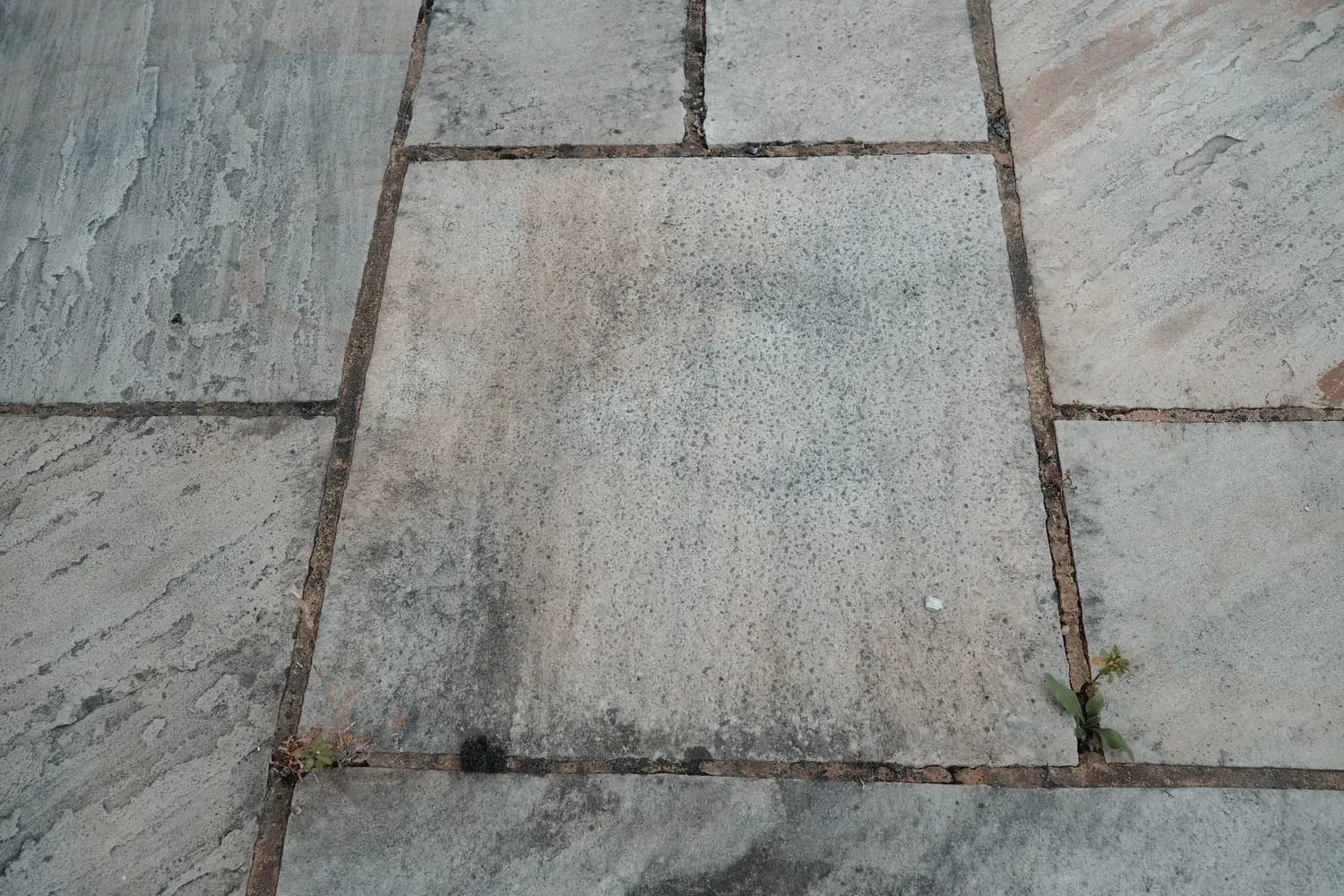
How to Remove Common Stains from a Sandstone Patio
To remove common stains from a sandstone patio, match a natural-stone product to each contaminant. Random household chemicals can spread staining.
Stain diagnosis forms an essential part of how to clean a sandstone patio. A stain map helps you decide how to clean a sandstone patio without mixing incompatible chemicals.
Remove oil, grease, and barbecue marks
Blot fresh oil with white absorbent cloths. Rubbing pushes oil across the surface and deeper into open pores.
Cover the mark with cat litter, cornflour, or bicarbonate of soda for 12 hours. Sweep the absorbent powder away after the powder darkens.
Apply a stone-safe degreaser or poultice to remaining marks. Follow the full dwell and removal instructions from the product manufacturer.
Remove rust, leaf, and berry stains
Use a rust remover specifically labelled for sandstone. General rust removers often contain acids that react with iron-bearing stone.
Remove wet leaves, fallen fruit, berries, and flower petals quickly. Tannins enter unsealed sandstone and create brown, purple, or red marks.
Treat organic colour with a natural-stone stain remover or poultice. Use repeated mild applications rather than one concentrated dose.
Manage mortar residue and efflorescence
Let white efflorescence dry, then brush loose crystals with a dry nylon brush. Moisture usually carries fresh salts to the surface during curing.
Do not attack mortar haze with brick acid. Acid can trigger permanent orange staining and weaken mineral binders inside sandstone.
Use a specialist non-acidic cement-residue product only when the label names sandstone. Follow test, dilution, dwell, and rinse instructions exactly.
Which Products and Methods Damage Sandstone?
How to clean a sandstone patio without damage means avoiding acids, wire tools, close-range jets, and uncontrolled chemicals. Use only natural-stone-approved methods.
Knowing what to avoid is central to how to clean a sandstone patio. Damage often looks cleaner while wet, then appears after drying.
Avoid acidic cleaners and wire brushes
Avoid brick acid, hydrochloric acid, vinegar, lemon juice, and acidic wheel cleaners. Acids can etch sandstone and activate orange iron staining.
Avoid steel wool, wire brushes, metal scrapers, and abrasive grinding pads. Metal tools scratch the face and can deposit rusting fragments.
Avoid unlabelled homemade mixtures. Household recipes rarely state pH, active strength, surface compatibility, or safe disposal instructions.
Control bleach-based treatments
Do not apply neat household bleach to sandstone. Neat bleach creates uneven whitening, harms planting, corrodes metals, and leaves difficult residues.
Use sodium hypochlorite only through a labelled stone product or trained professional process. Controlled dilution and full rinsing govern safe results.
Never combine chlorine with acidic cleaners. The reaction releases toxic chlorine gas and creates an immediate medical emergency.
Avoid concentrated pressure jets
Never use a turbo nozzle, pencil jet, or close-range spot blasting. Concentrated force cuts lines, opens pores, and removes weak pointing.
Avoid holding a fan jet over one stain. Use chemistry to loosen the stain, then rinse with moving, distributed pressure.
How Often Should You Clean and Seal Sandstone?
Sweep monthly, wash lightly 1 or 2 times yearly, and treat biological growth before deep colonisation. UK shade and rainfall control the final schedule.
A practical schedule makes how to clean a sandstone patio easier and safer. Frequent light care reduces the need for aggressive restoration.
Follow a practical UK maintenance schedule
Sweep monthly from March through November. Remove leaves weekly during heavy autumn leaf fall.
Wash the patio during spring and inspect the patio again during early autumn. North-facing and tree-covered patios need more frequent checks.
Treat new algae when the green film first appears. Early treatment needs less chemical, less brushing, and less water.
Let the stone dry before sealing
Seal only clean, sound, and fully dry sandstone. Trapped moisture causes cloudy patches, uneven colour, and poor sealer bonding.
Allow at least 48 hours of dry weather after washing. Extend drying to 72 hours for shaded patios or cool conditions.
Choose a breathable impregnating sealer labelled for sandstone. Test the sealer because some products deepen colour or add sheen.
Reduce moisture and organic debris
Trim shrubs, hedges, and branches to improve airflow. Move pots occasionally so trapped moisture can evaporate beneath each base.
Repair leaking taps, downpipes, and irrigation lines near the patio. Constant water supports algae and weakens jointing materials.
Avoid de-icing salt on sandstone. Salt enters pores, crystallises during drying, and can damage vulnerable layers.
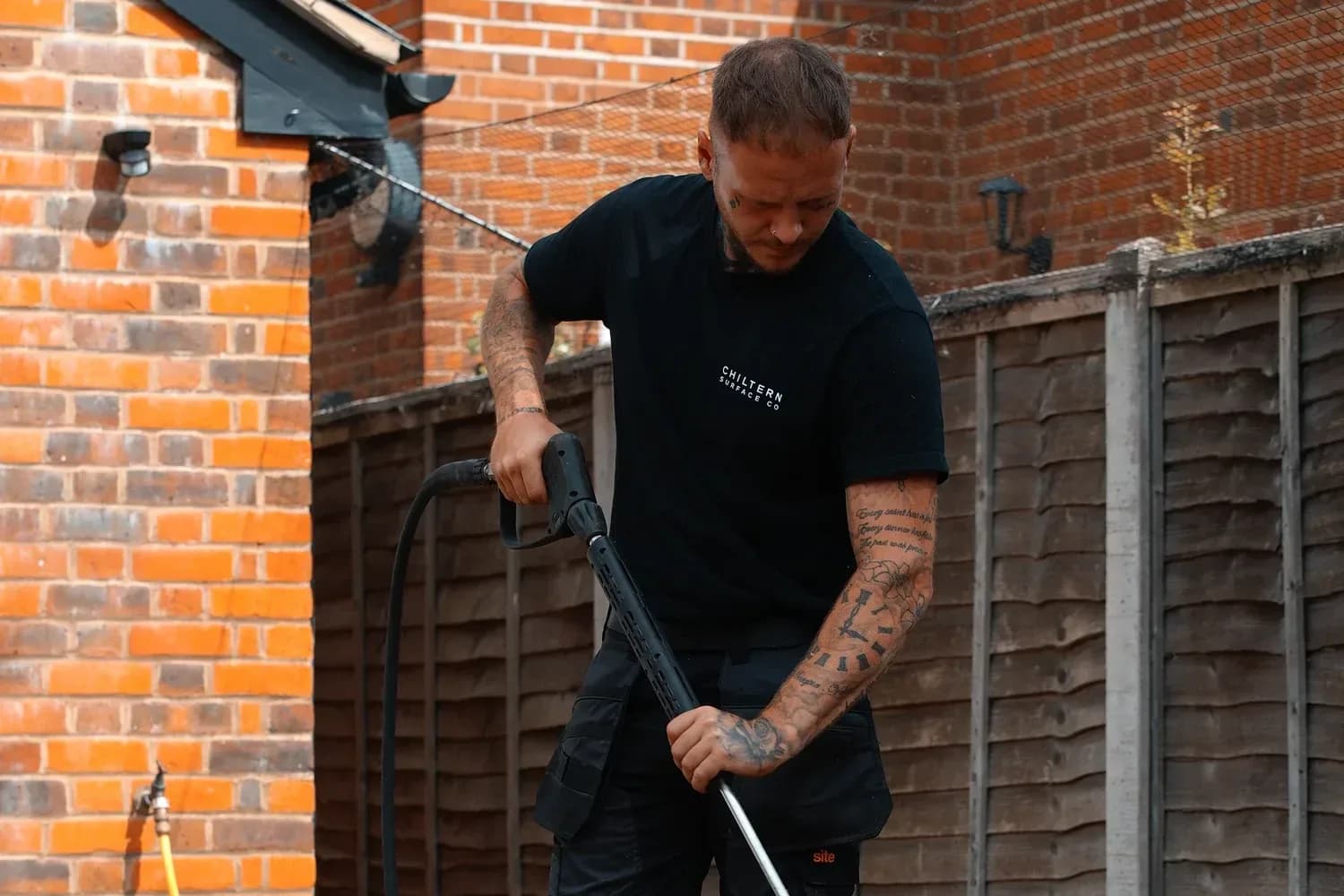
When Should You Book Professional Sandstone Cleaning?
Book professional cleaning for deep black spot, fragile joints, large areas, unknown sealers, or previous chemical damage. Professional assessment reduces costly replacement risks.
Professional help changes how to clean a sandstone patio because trained operators can combine diagnosis, treatment, controlled rinsing, and protection. DIY cleaning remains suitable for light maintenance.
Recognise high-risk cleaning conditions
Choose professional help when black spot covers more than 25% of the patio. Deep lichen usually needs measured chemical treatment and repeat assessment.
Choose professional help for patios larger than 430 square feet (40m2). Large areas increase chemical, drainage, and consistency challenges.
Choose professional help when slabs flake, joints crumble, or old sealers turn white. Cleaning can expose structural defects and incompatible coatings.
Compare professional restoration steps
A professional starts with stone identification, test patches, drainage planning, and plant protection. The operator then selects a surface-specific treatment.
The cleaning stage uses chemical dwell, controlled pressure, or soft washing where appropriate. The operator avoids one setting for every surface.
Chiltern Surface Co serves Buckinghamshire, Berkshire, and Oxfordshire. Book professional patio cleaning for a surface assessment and clear restoration plan.
Frequently asked questions
Can you use washing-up liquid on sandstone?
Yes. Use a small amount of acid-free washing-up liquid for light soil, then rinse fully to prevent slippery residue.
Can you pressure wash Indian sandstone?
Yes, with caution. Use a 40-degree fan, start below 100 bar (1,450 PSI), keep 12 inches (30cm) away, and test first.
How to clean a sandstone patio without a pressure washer?
Sweep, pre-wet, apply pH-neutral cleaner, scrub with nylon bristles, and rinse with a garden hose. Repeat only stained sections after drying.
How to clean a sandstone patio with black spot?
Use a specialist lichen treatment rather than force. Protect planting, follow the labelled dwell time, rinse fully, and repeat after assessment.
How to clean a sandstone patio before sealing?
Remove every stain and residue, rinse fully, then allow at least 48 hours of dry weather. Apply only a sandstone-compatible breathable sealer.