Sandstone Patio Cleaning and Re-Jointing in Oxford
Sandstone patio cleaning and repointing in Oxford: progressive black spot removal, loose slab repairs, Chiltern EverGuard™ and a complete resin repoint.

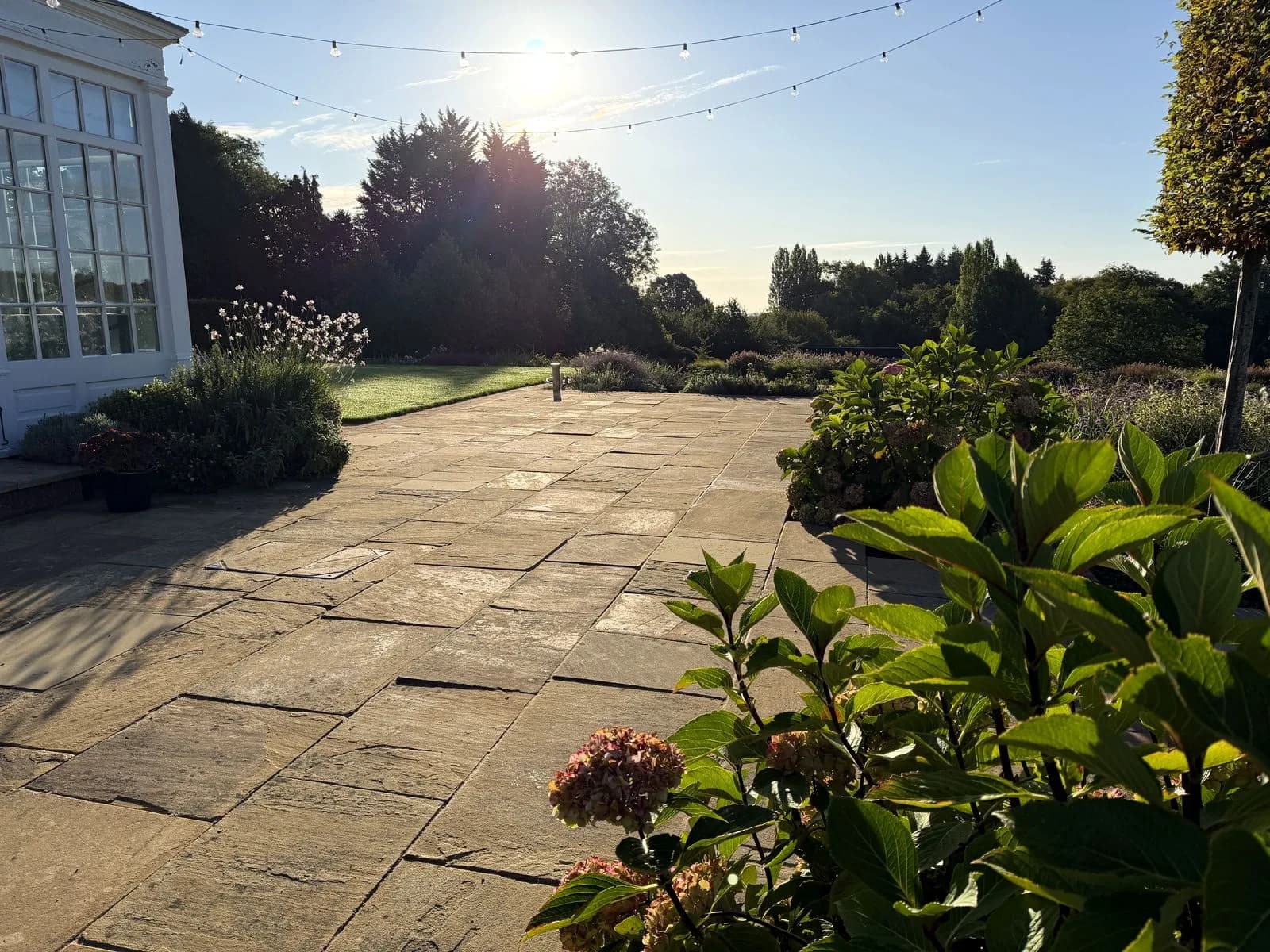
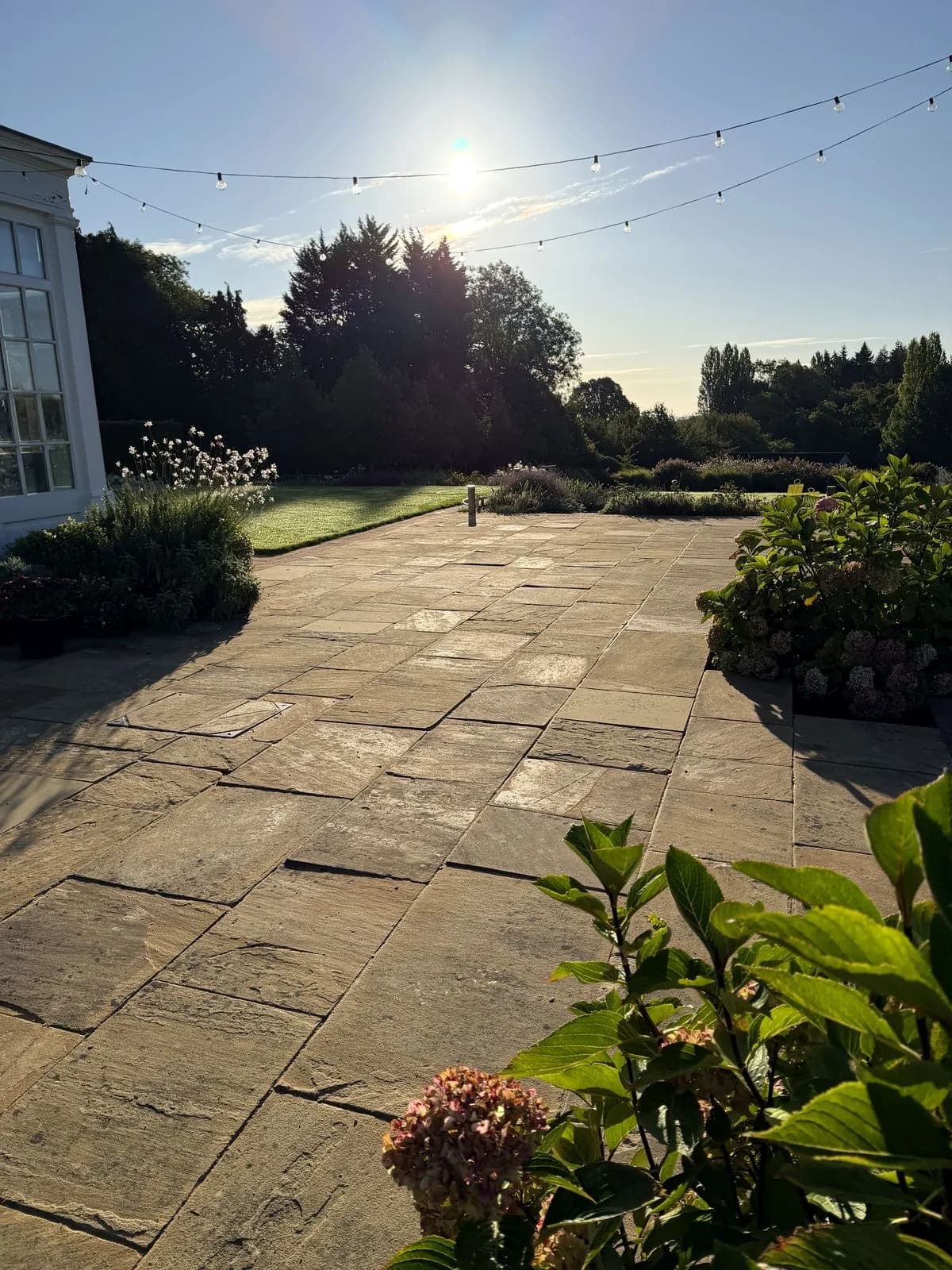
Two established Indian sandstone patios, pathways and brick steps — improved and stabilised rather than stripped back, then returned to a month later to be lifted, relaid and completely repointed.
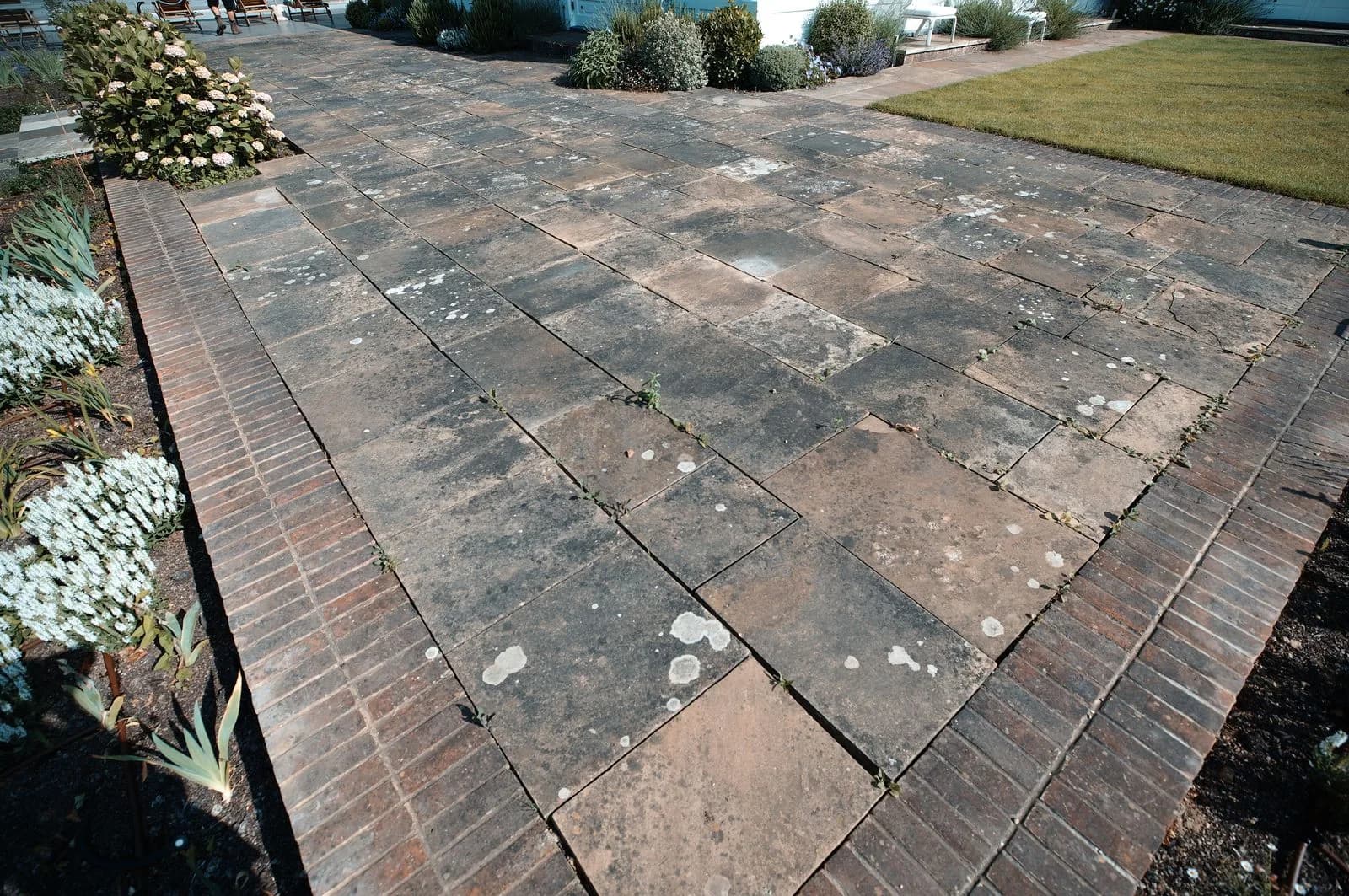
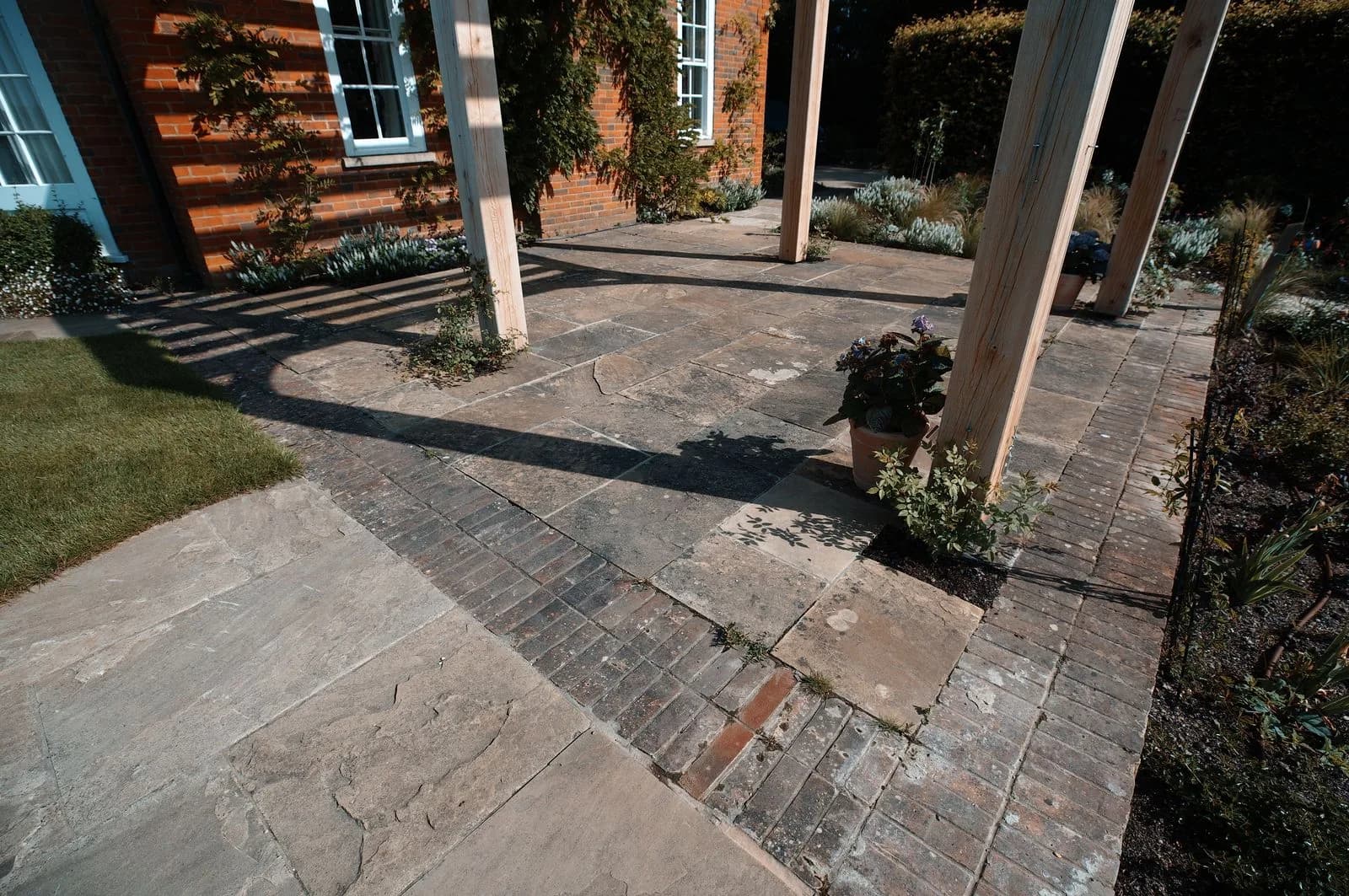
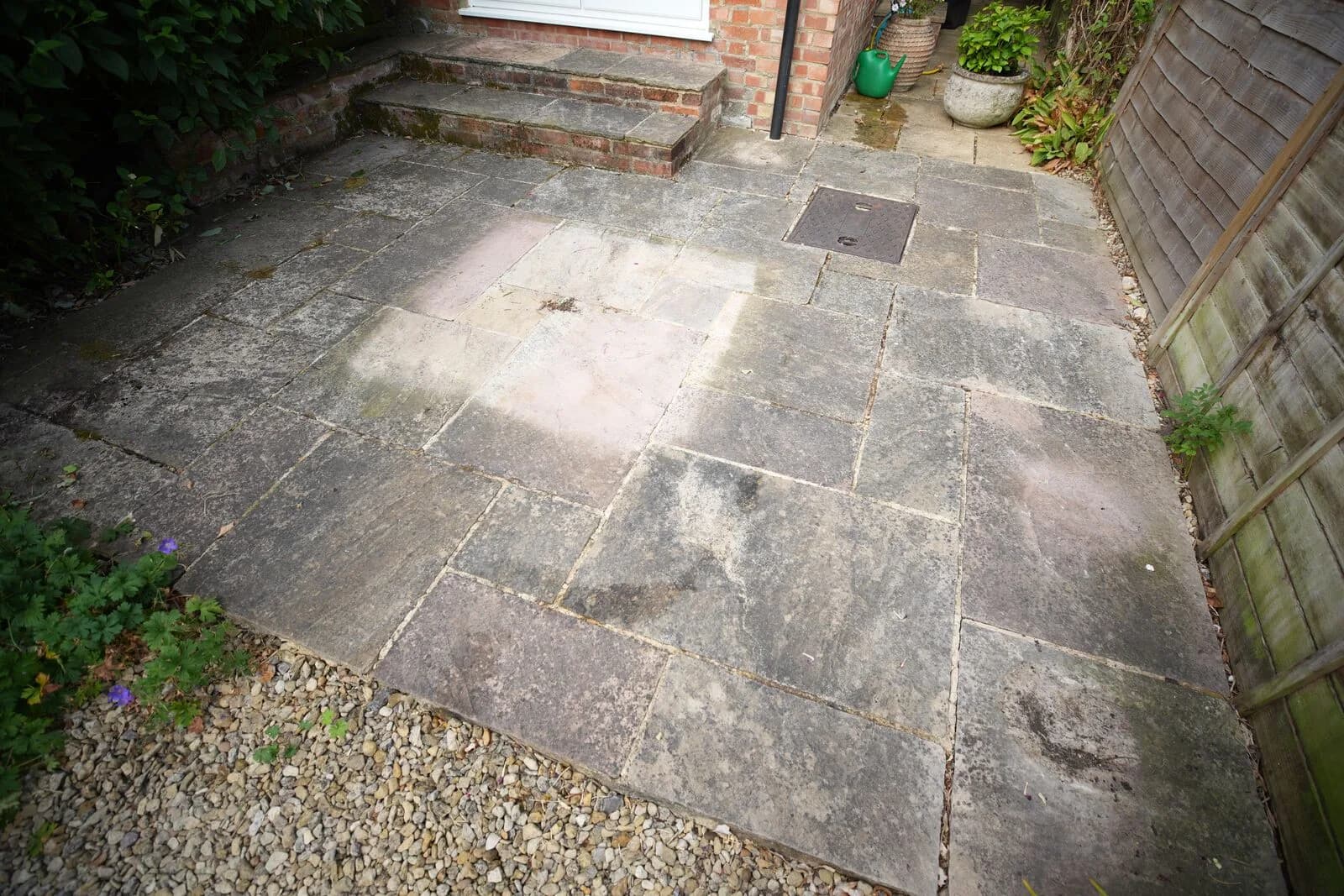
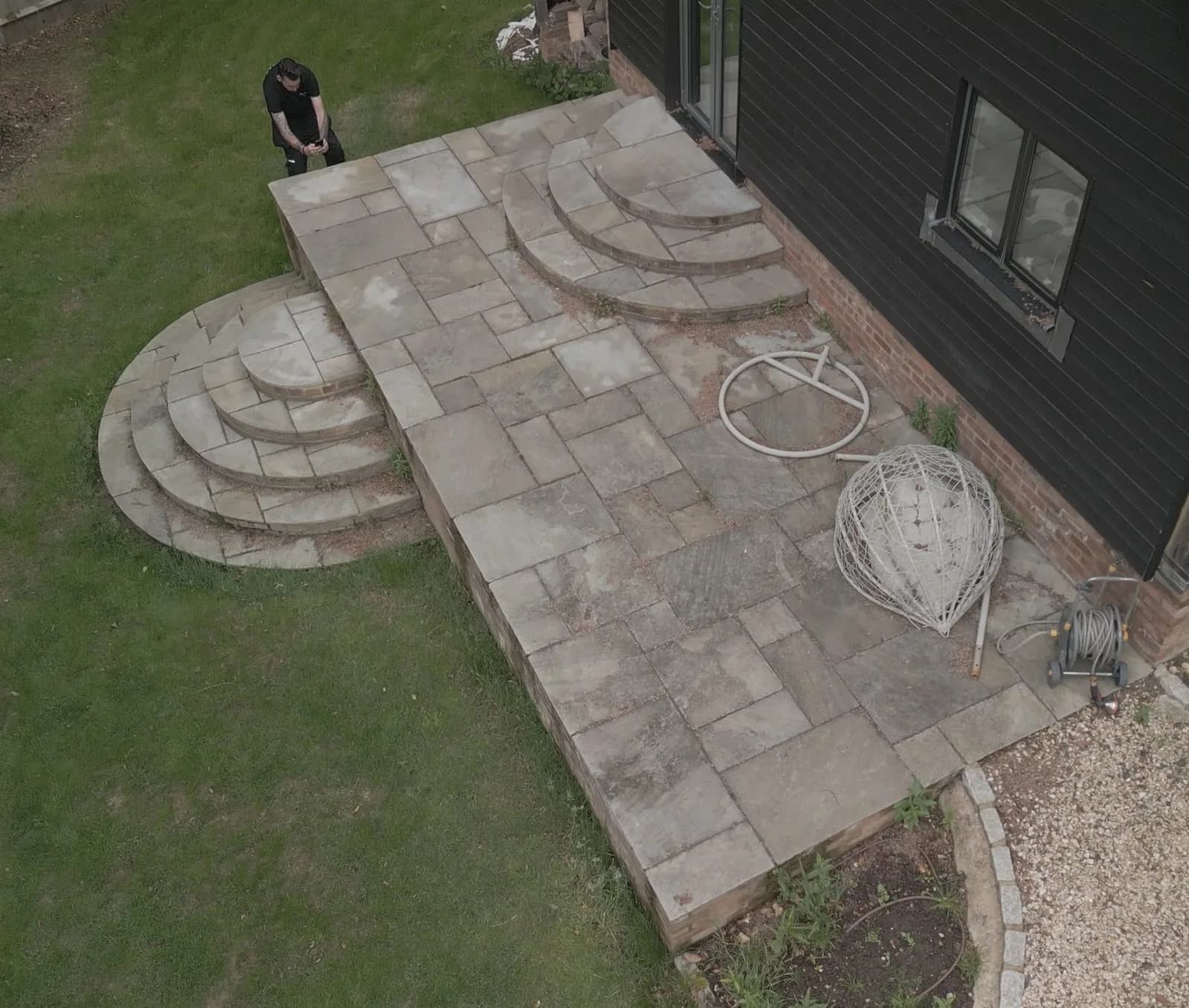
The homeowner contacted Chiltern Surface Co about two substantial patio areas at her property in Henley-on-Thames. One sat to the rear of the house, another ran alongside it. Neither had received professional cleaning or surface protection for many years.
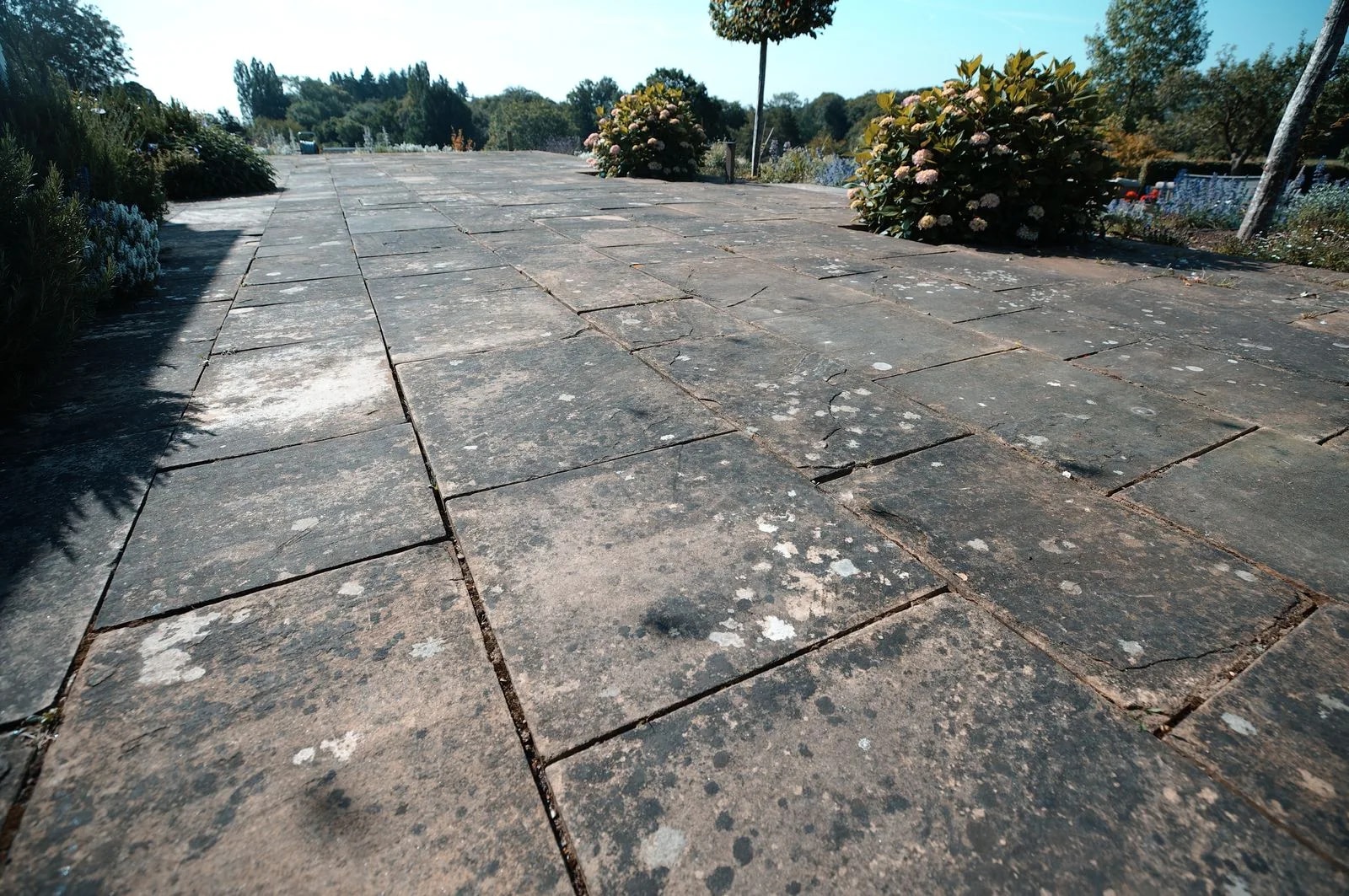
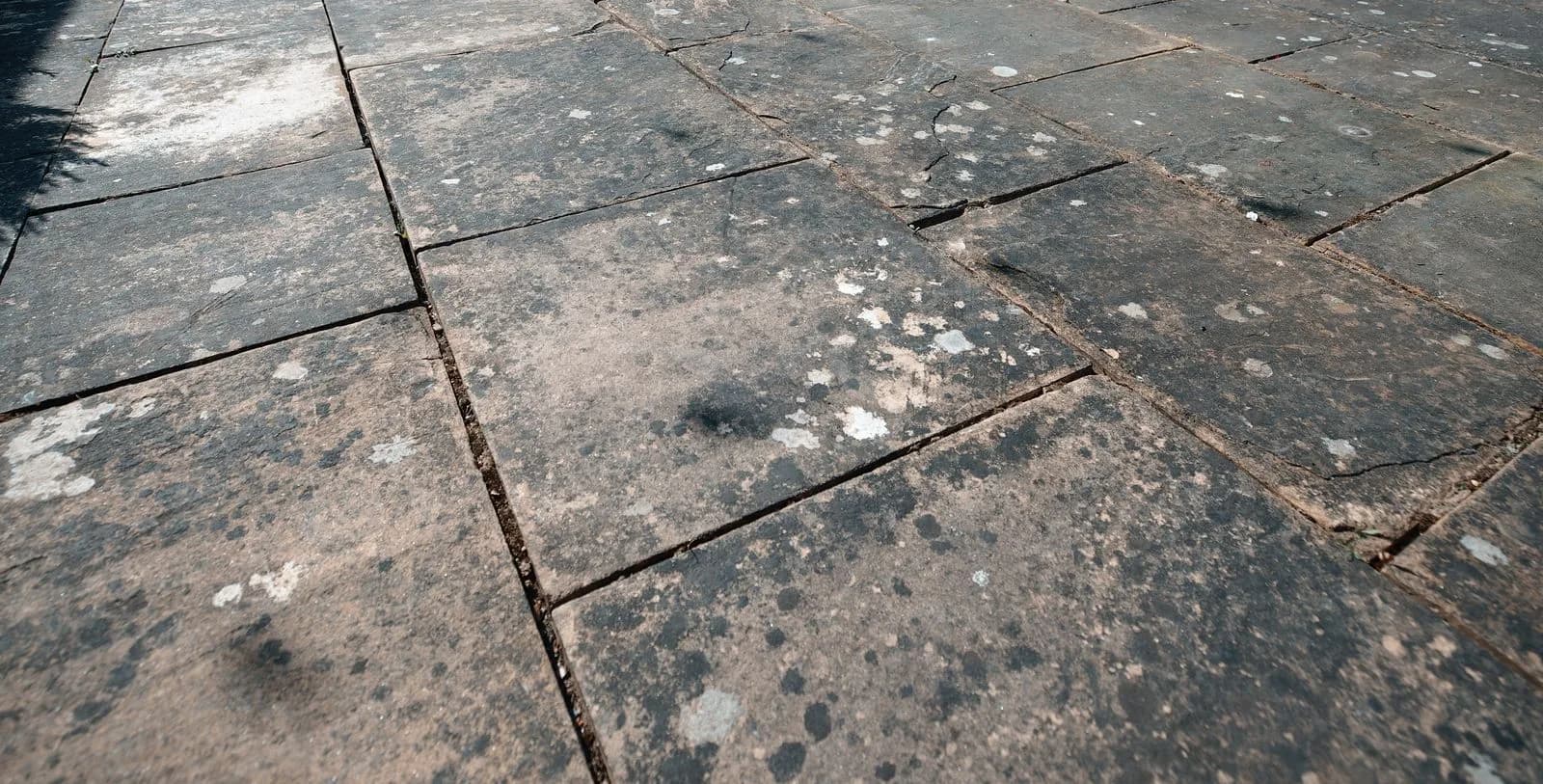
Black spot, green growth, lichen and general environmental contamination had become widespread across the porous sandstone, and much of the natural colour and variation of the paving had disappeared beneath it.
The adjoining brick steps carried a separate problem: alongside normal weathering and biological growth, sections of the brickwork held hardened concrete residue from earlier building work.
The brief, though, was not "make it look new". The client did not want a patio that looked significantly newer than the house and garden it belongs to.
Our inspection confirmed that pressure alone would not be the right way to approach the job. Black spot roots into the pores of Indian sandstone. An aggressive pressure-only clean strips away the loose contamination while leaving the deeper biological staining behind, and it puts more force through the paving and the joints than is necessary.
So the aim agreed with the homeowner was deliberately not to remove every last trace of black spot. It was to improve it substantially, bring back more of the stone's natural colour and variation, and then stabilise and repoint the patio — without changing its character.
The brick steps were assessed separately, because the construction residue called for a different and more detailed form of treatment.
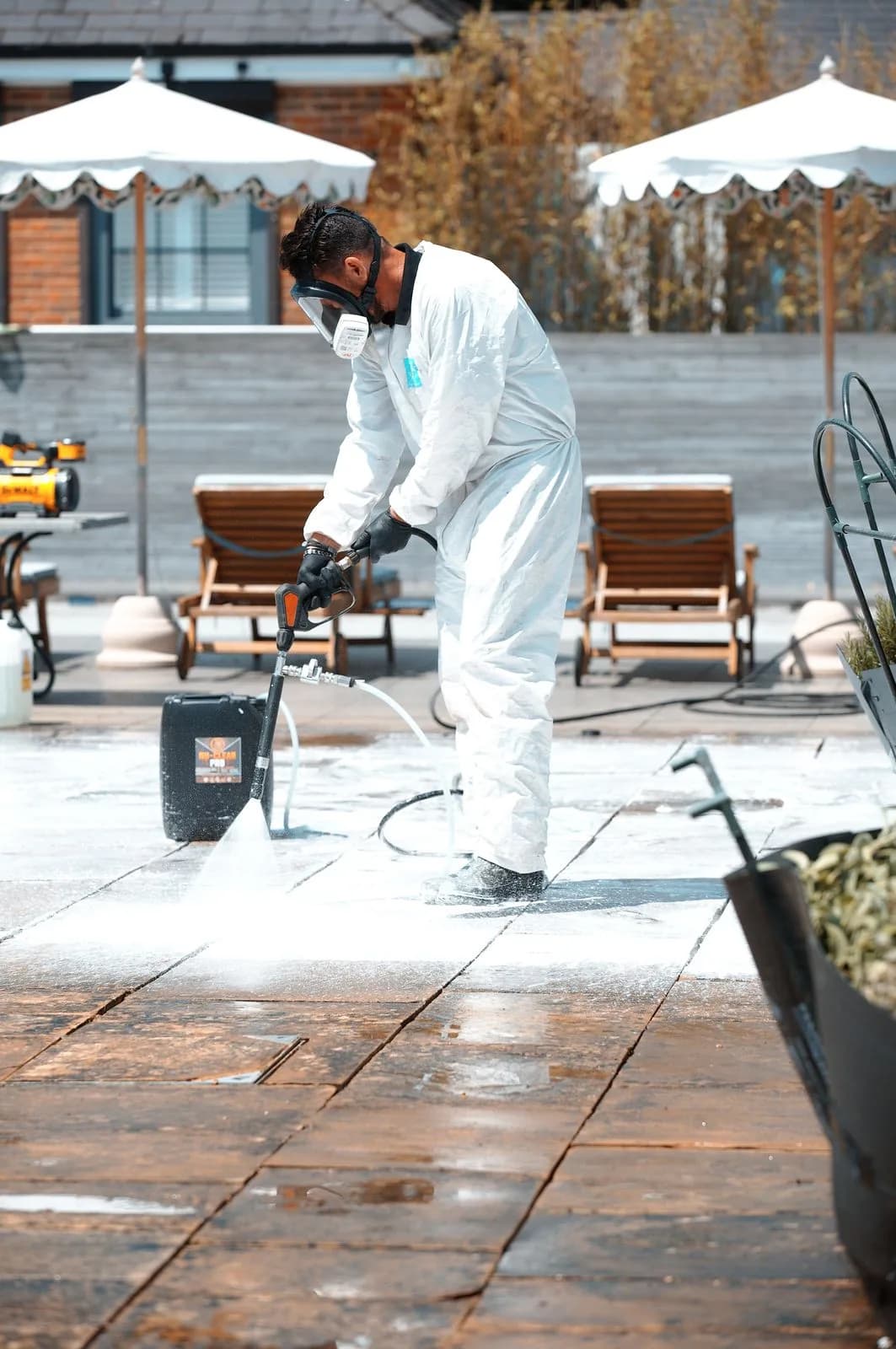
Both patio areas received professional surface treatment before any mechanical cleaning began.
The solution was given proper dwell time so it could work on the algae, lichen, black spot and other organic contamination living inside the porous surface.
This is the part of the job that does most of the work. Letting the chemistry act first reduces how much mechanical force the stone has to take at the next stage — which matters on sandstone, where the surface is softer than it looks.
Soft washing is essentially letting the chemicals do the work. Chiltern Surface Co carries a range of approaches, treatments and chemicals, and the knowledge of which one to use and when is instilled in every Chiltern Surface Co technician.
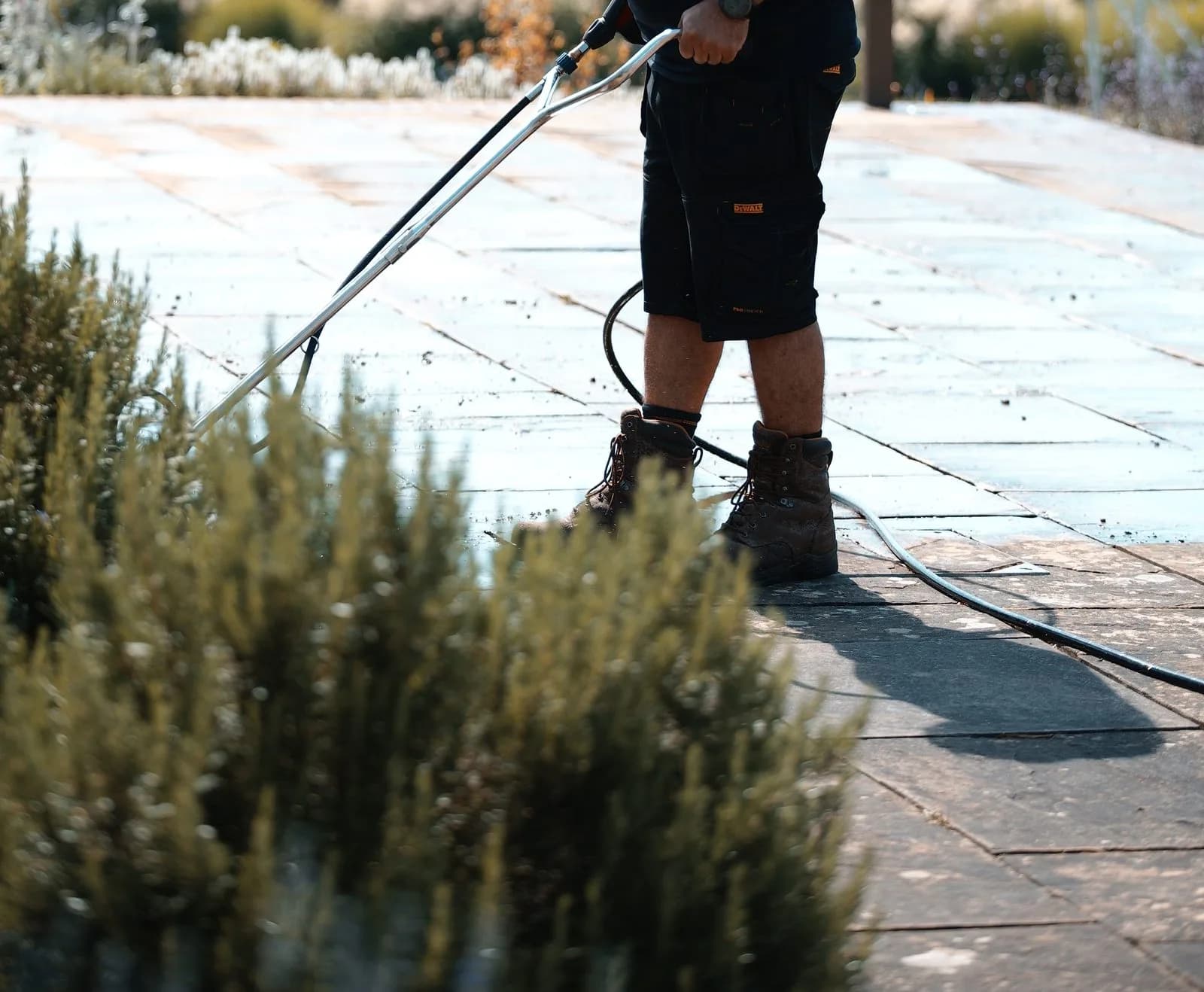
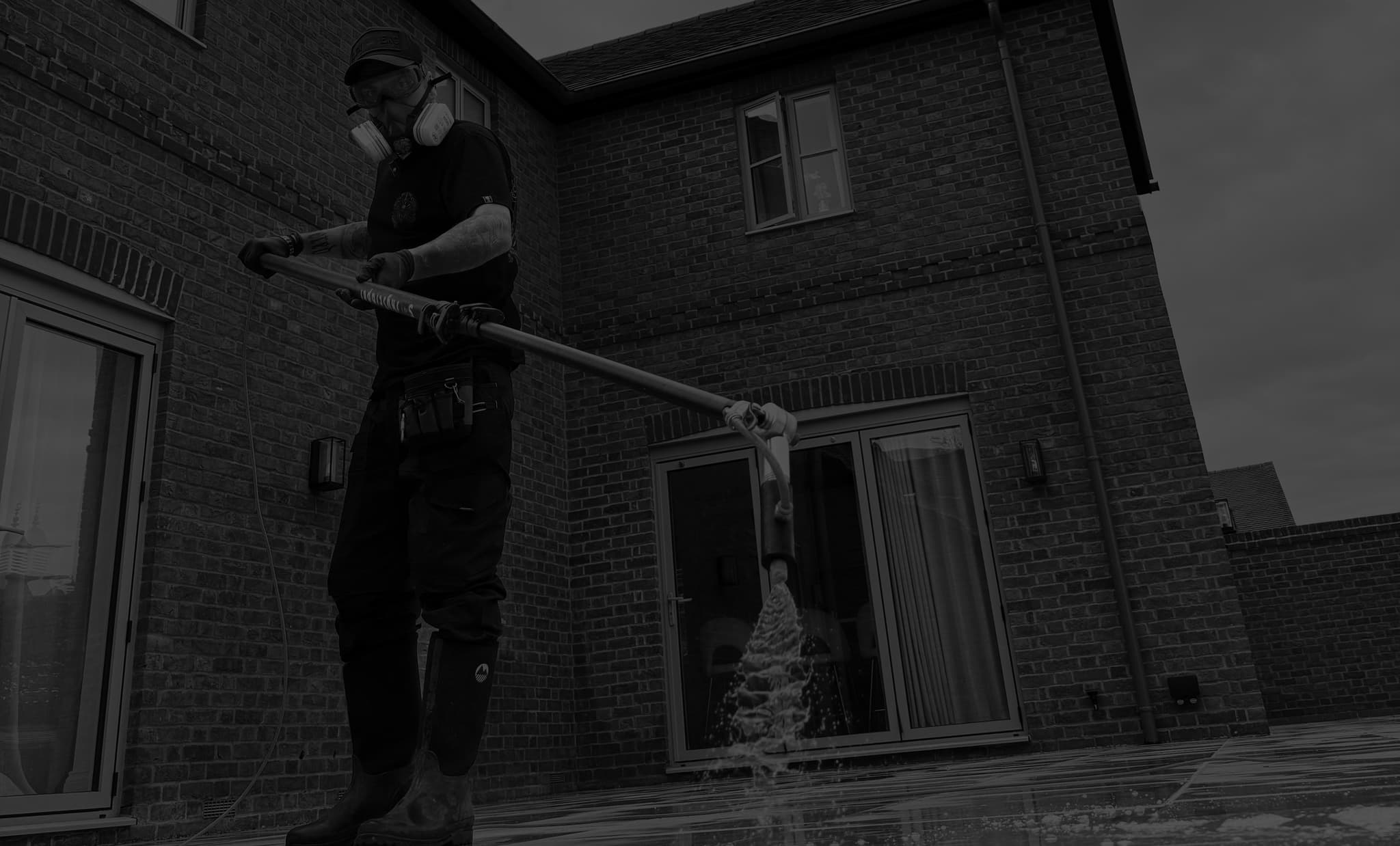
Once the pre-treatment had worked, the two patios were cleaned methodically using professional equipment selected for natural stone.
Broad areas were cleaned consistently to avoid banding and patchiness, while slab edges, joints and the heavily contaminated sections were given closer, slower attention.
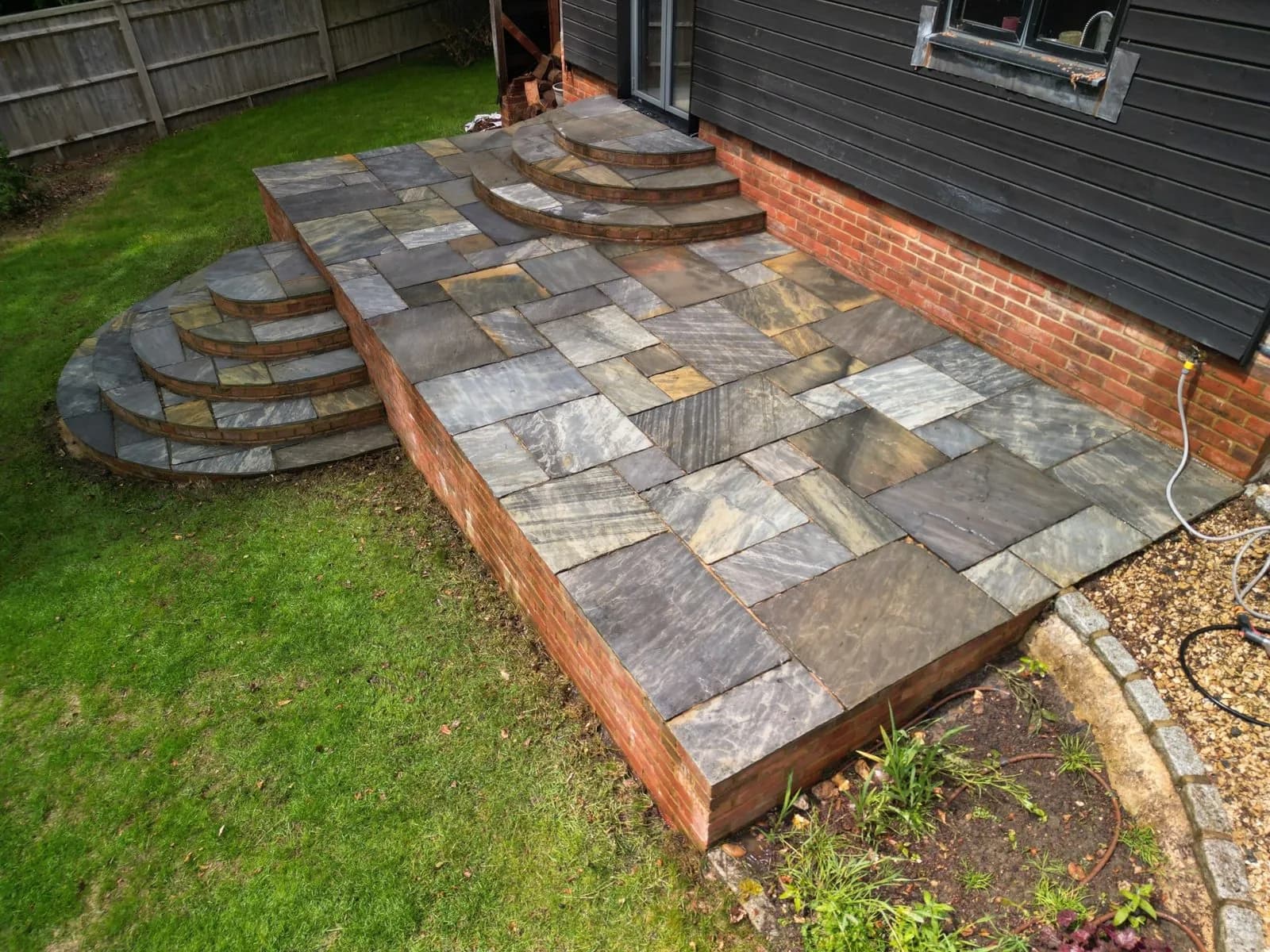
As the surface contamination lifted, far more of the sandstone's natural tonal variation came back into view — the warmth in the stone that the growth had been hiding.
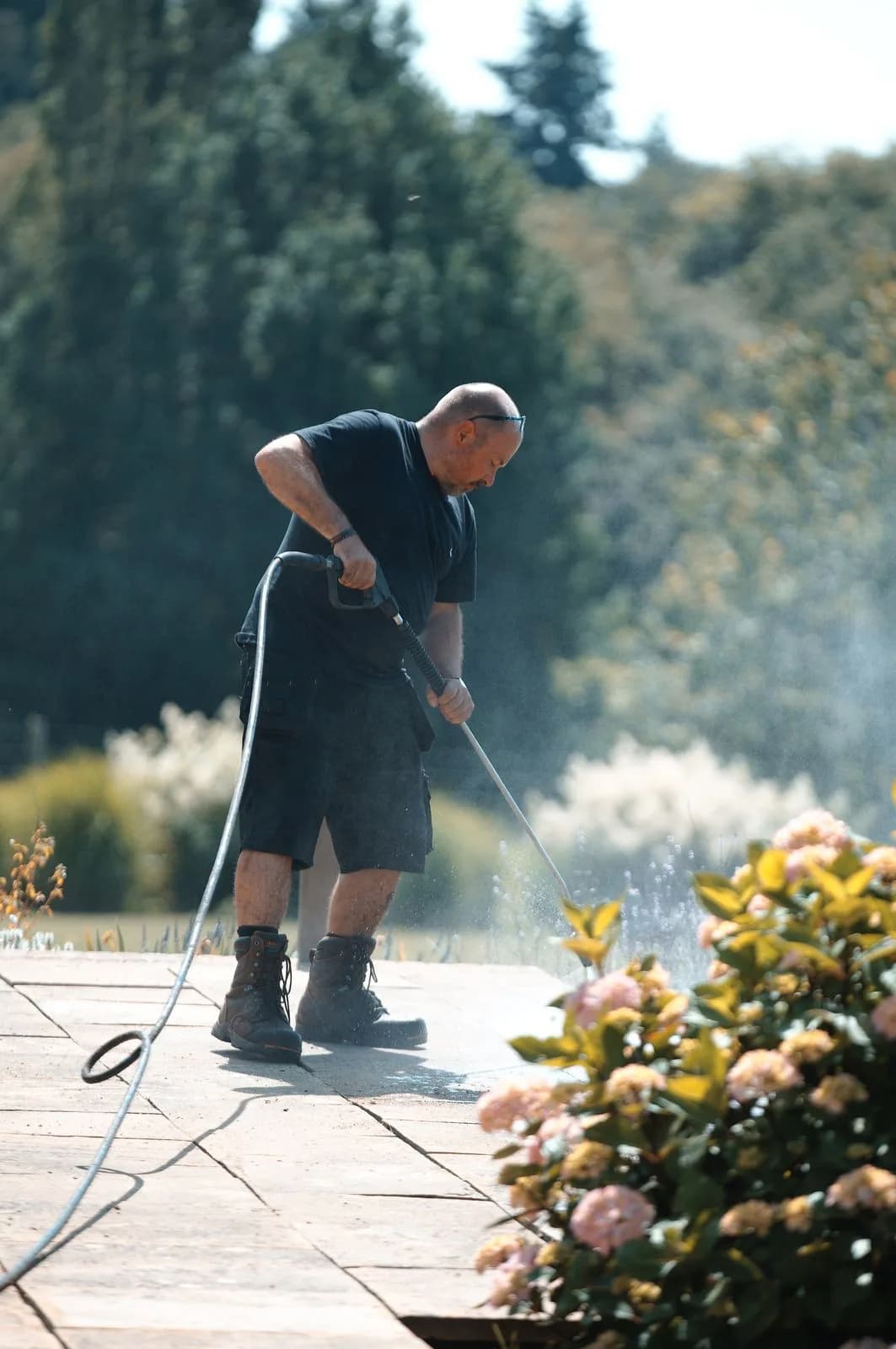
After the first cleaning pass, the full 185m² was inspected again.
Sections where black spot remained more deeply established were given further targeted treatment and detailed cleaning.
Working in stages allowed the additional treatment to be concentrated only where it was needed, rather than over-processing the areas that had already responded well. On natural stone, restraint is as important as effort.
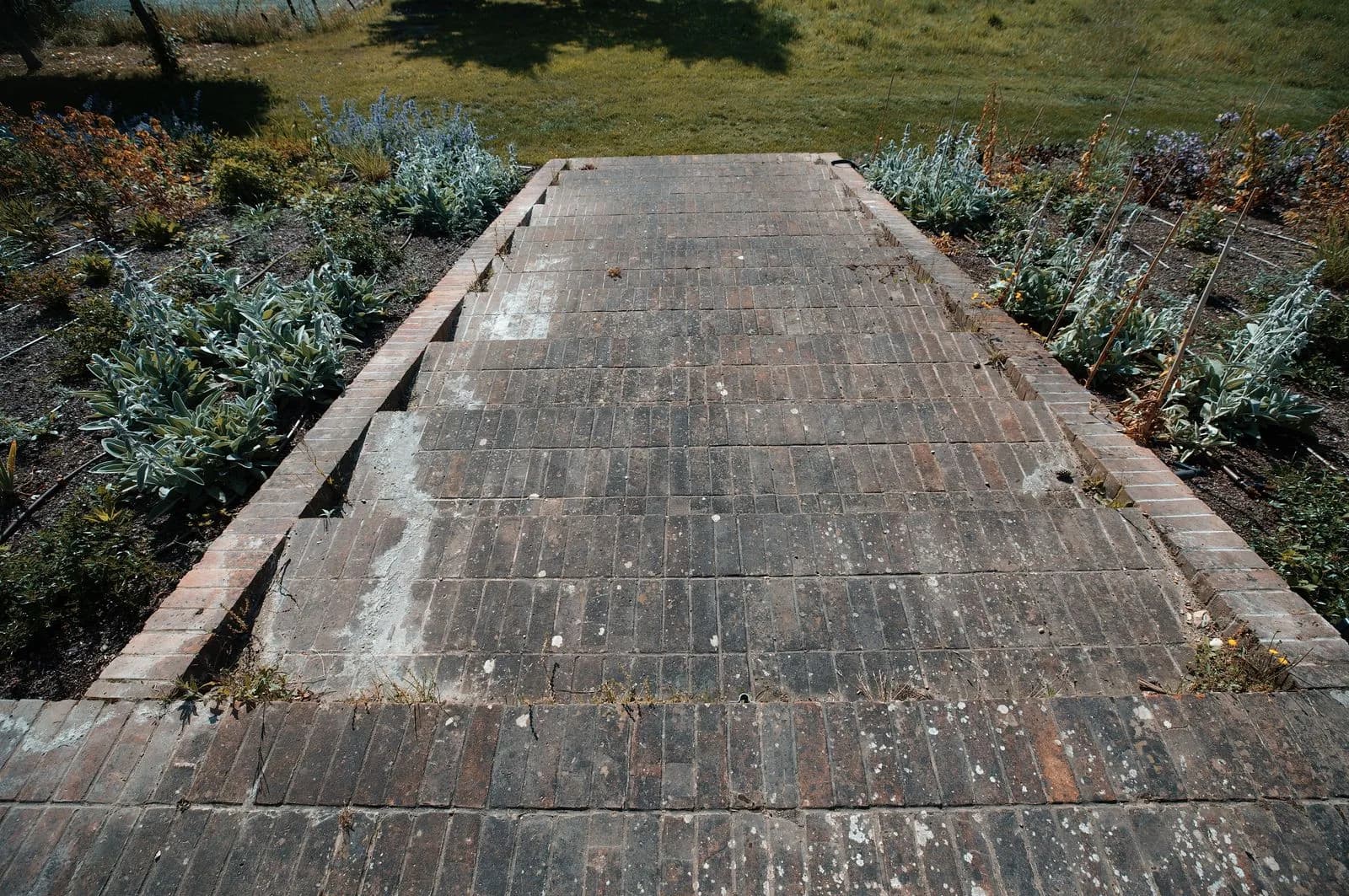
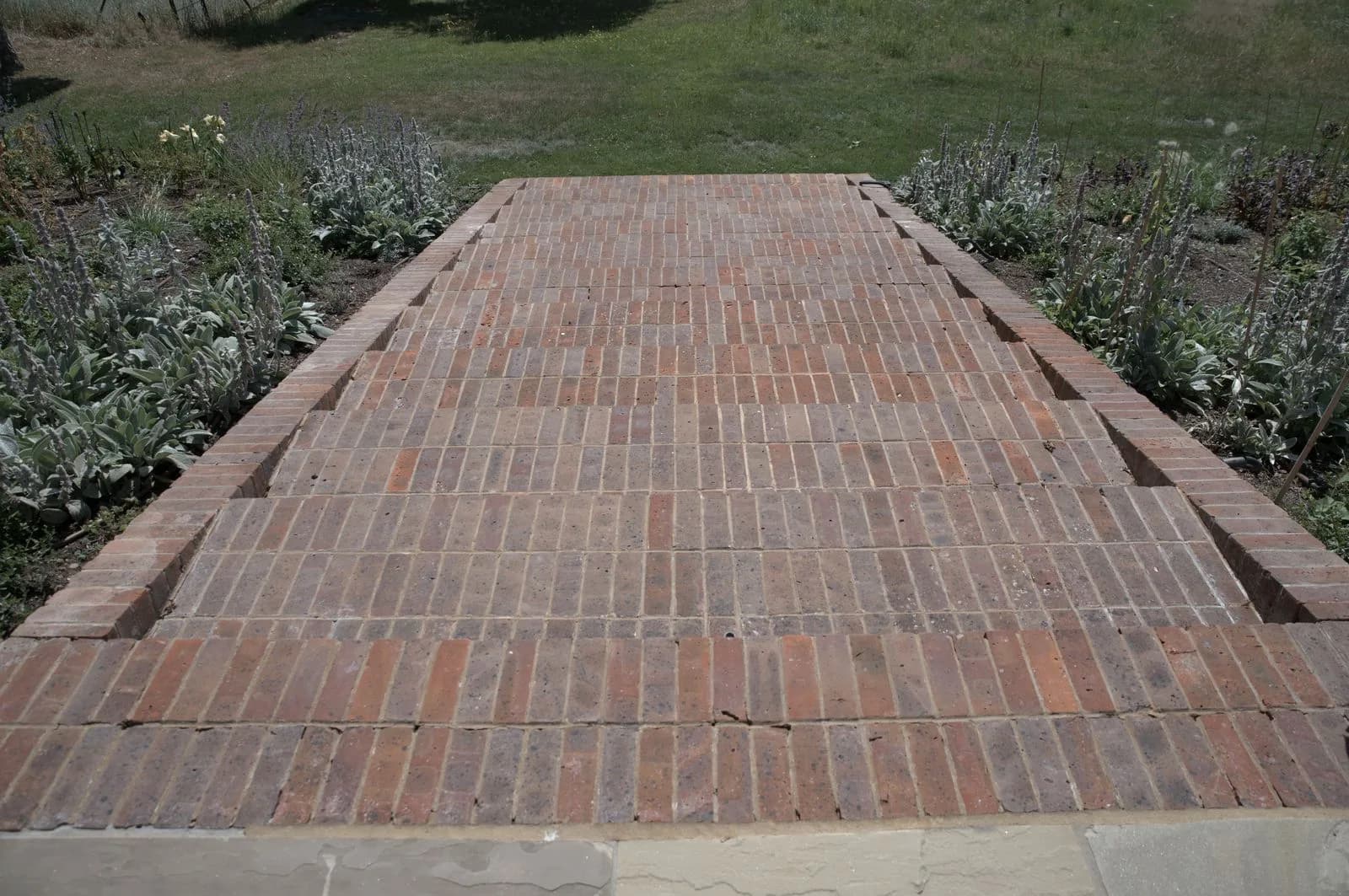
The adjoining brick steps were treated as a separate surface. Years of dirt, algae and weathering were removed, and the areas carrying hardened residue from earlier building work were carefully improved using methods appropriate to brickwork rather than to stone.
Cleaning the steps and the pathways brought back the colour and definition of the brick, and let the entrance areas sit naturally alongside the cleaned sandstone instead of drawing the eye to the one surface that had been left behind.

With both patios and the treated brickwork clean, the final stage of the first visit was Chiltern EverGuard™.
Chiltern EverGuard™ is a biocide treatment rather than a surface coating. It penetrates the pores of the stone, kills the growth living inside it and inhibits regrowth — which is why surface cleaning on its own is not enough on established black spot.
Protection typically lasts around 12–24 months depending on the environment, the surface and ongoing maintenance, and the treatment continues working after application, helping residual organic staining break down over time.
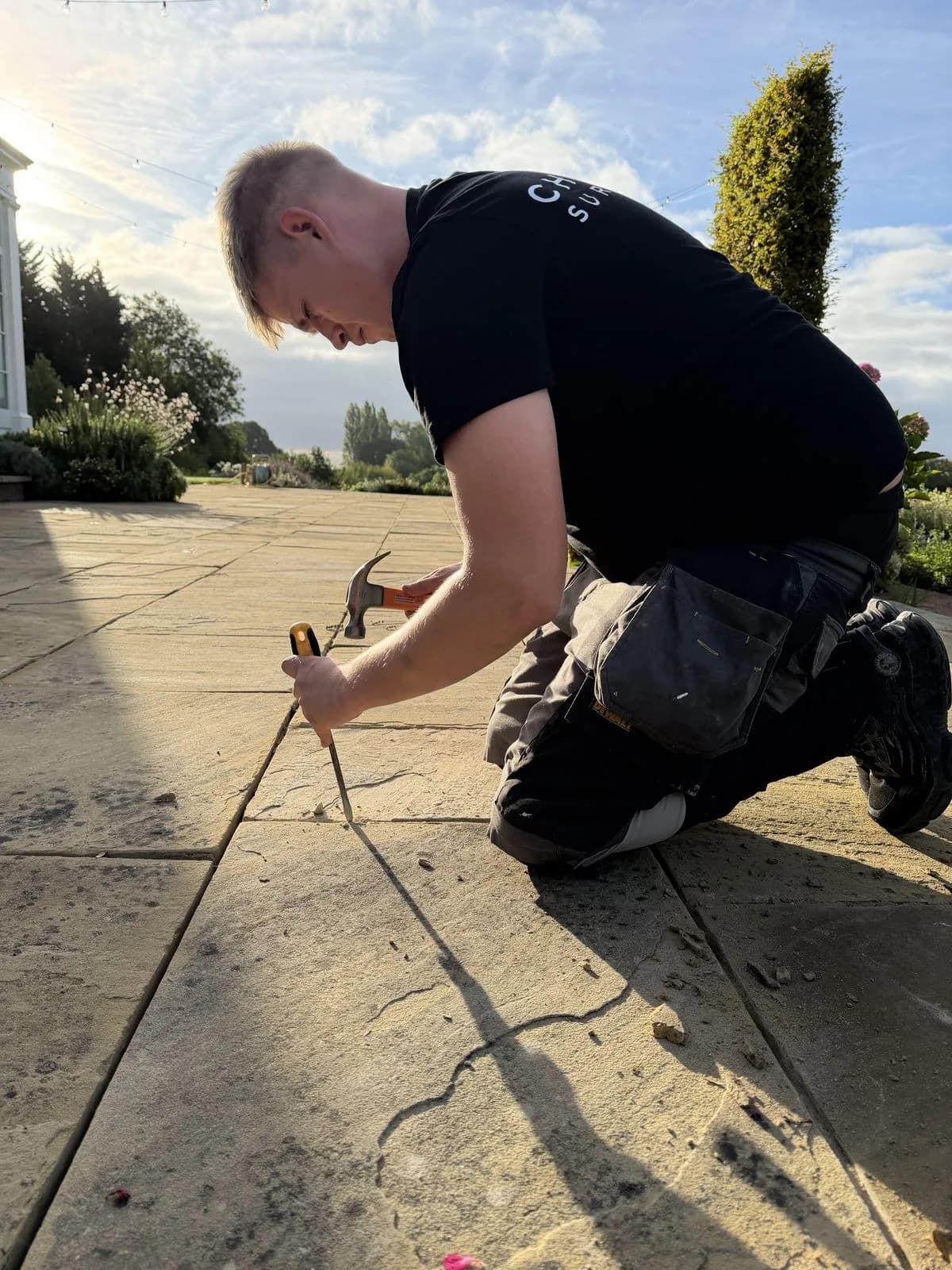
With the patios clean, the condition of the paving itself could be read properly. The original jointing had failed in places and a number of slabs were loose and rocking underfoot.
Chiltern Surface Co returned a month after the clean, for four days, to restore the structure of the patio as well as its appearance.
The existing jointing material was taken out across the whole patio, joint by joint. Every slab that had moved was lifted and relaid, and the affected areas were levelled and stabilised to bring the surface back to a safe, even plane.
Care was taken throughout to protect the surrounding lawns, beds and planting.
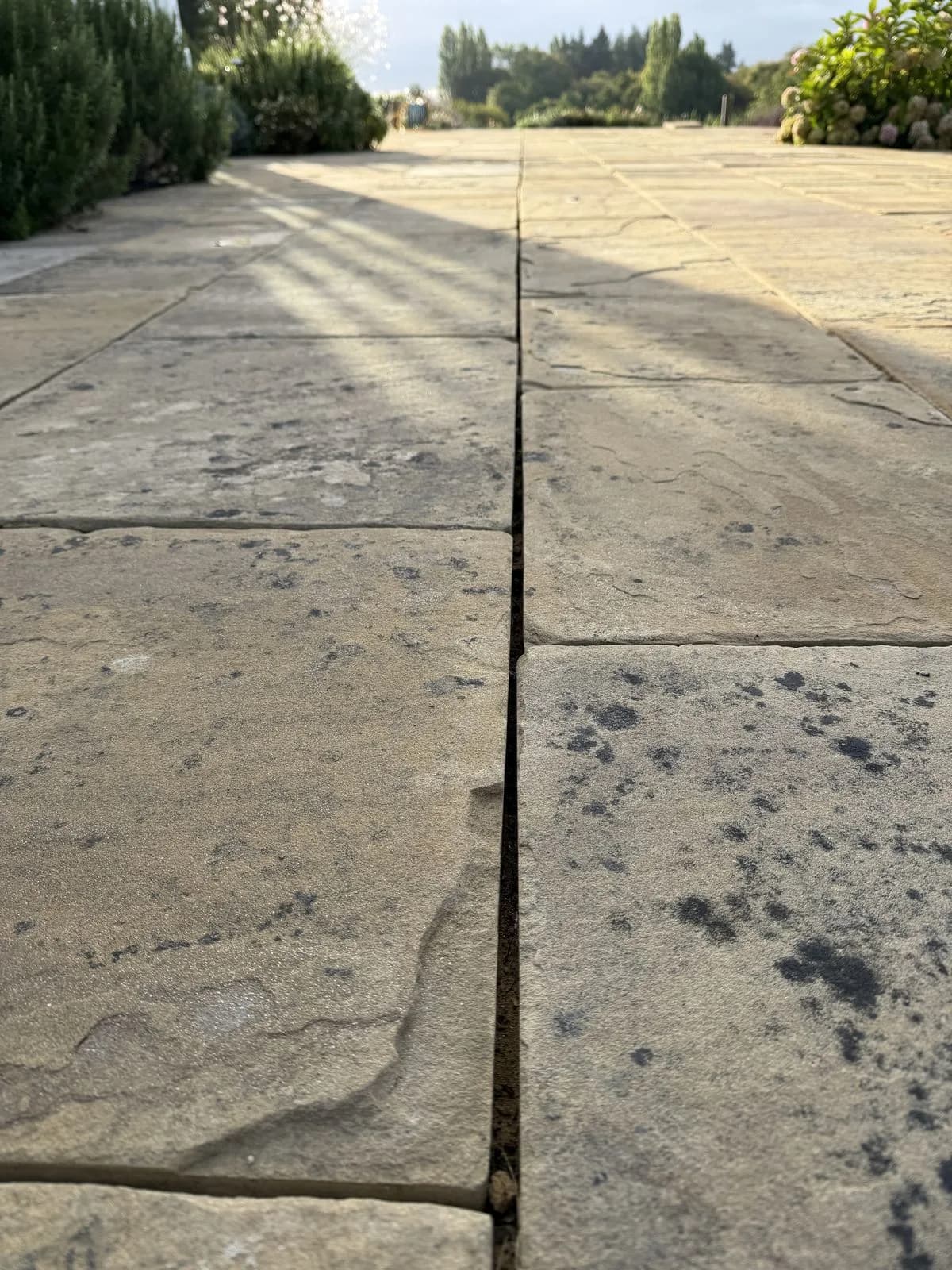
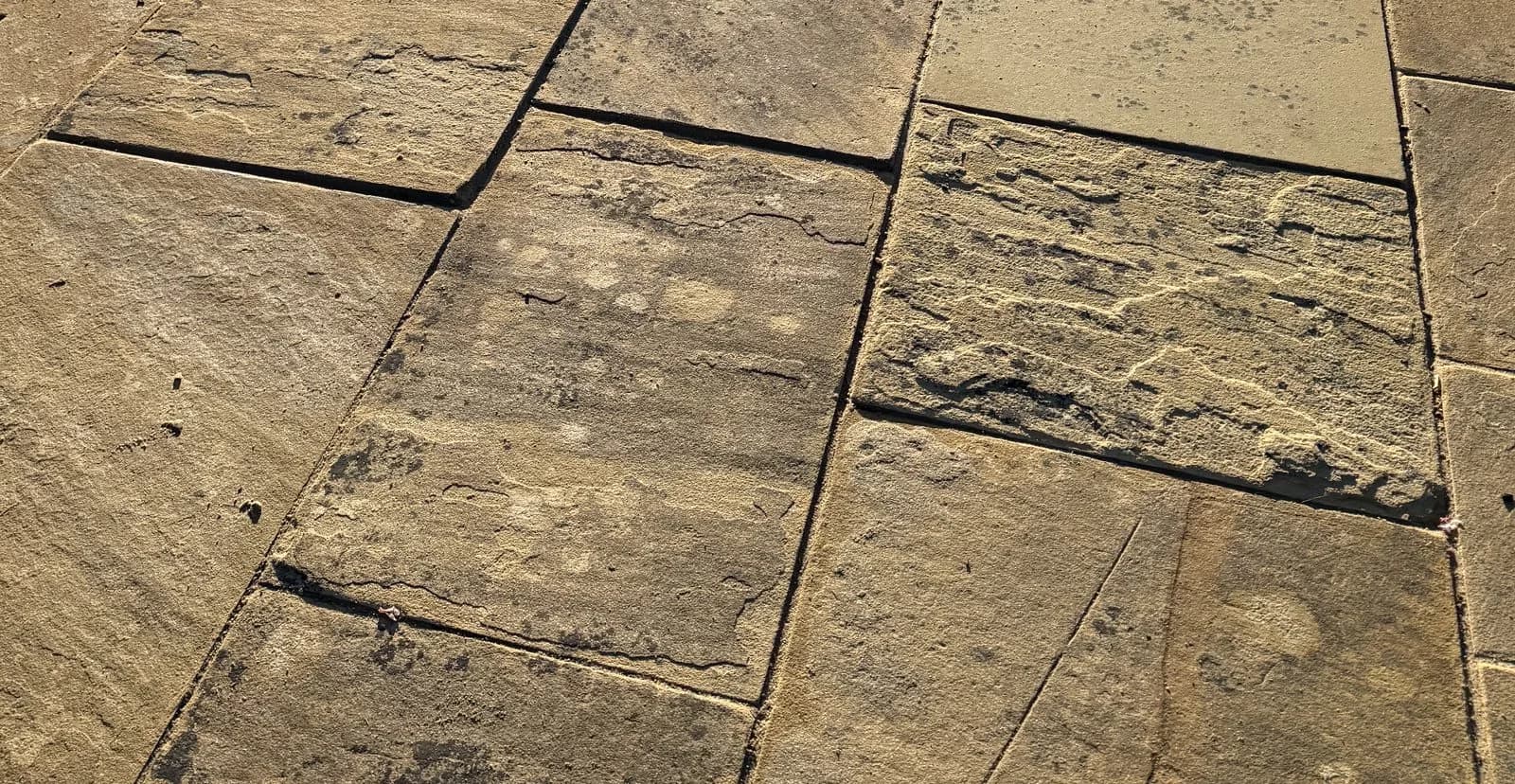
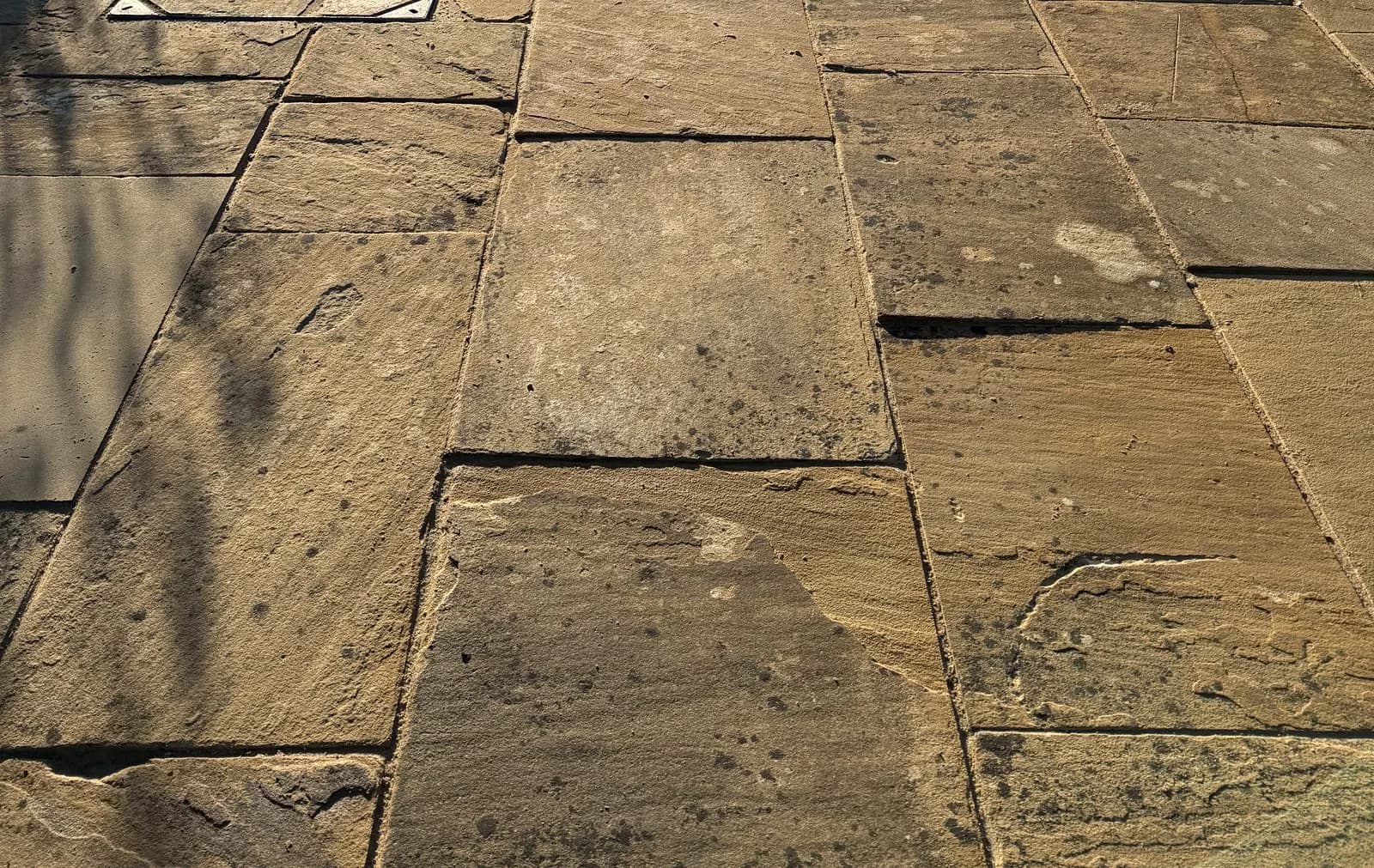
The complete patio was repointed in a premium-grade jointing compound, chosen for durability and for its resistance to freeze-thaw cycles, erosion and general weathering. A stronger jointing system reduces the likelihood of premature joint failure and gives a more consistent finish across the whole terrace.
Before the full repoint began, a sample area of the compound was laid in a section of the patio that did not need relaying, so the client could see the jointing colour against her own sandstone in daylight and agree it before the whole patio was committed to it.
The final colour was agreed with the client before the repointing works commenced.
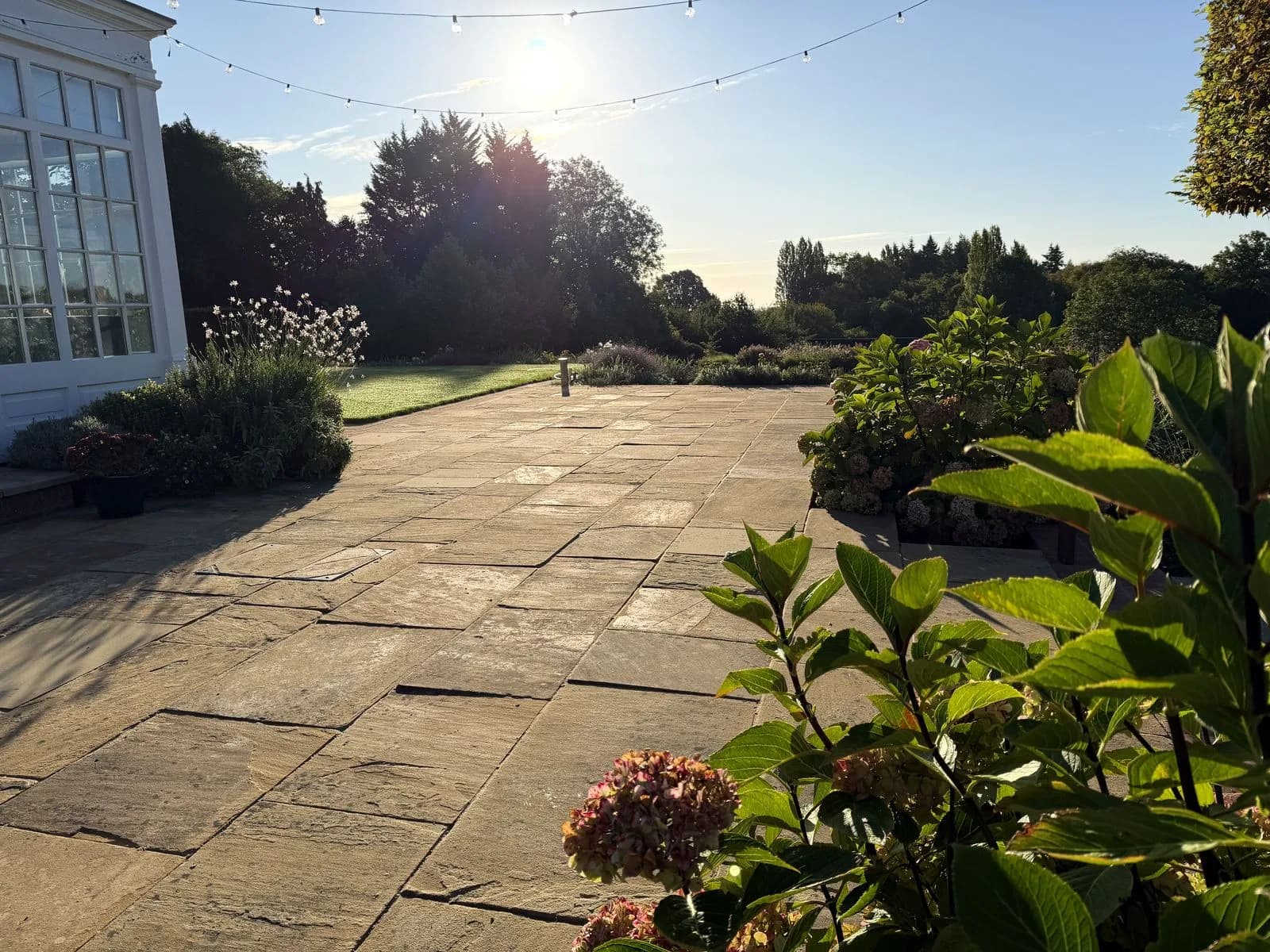
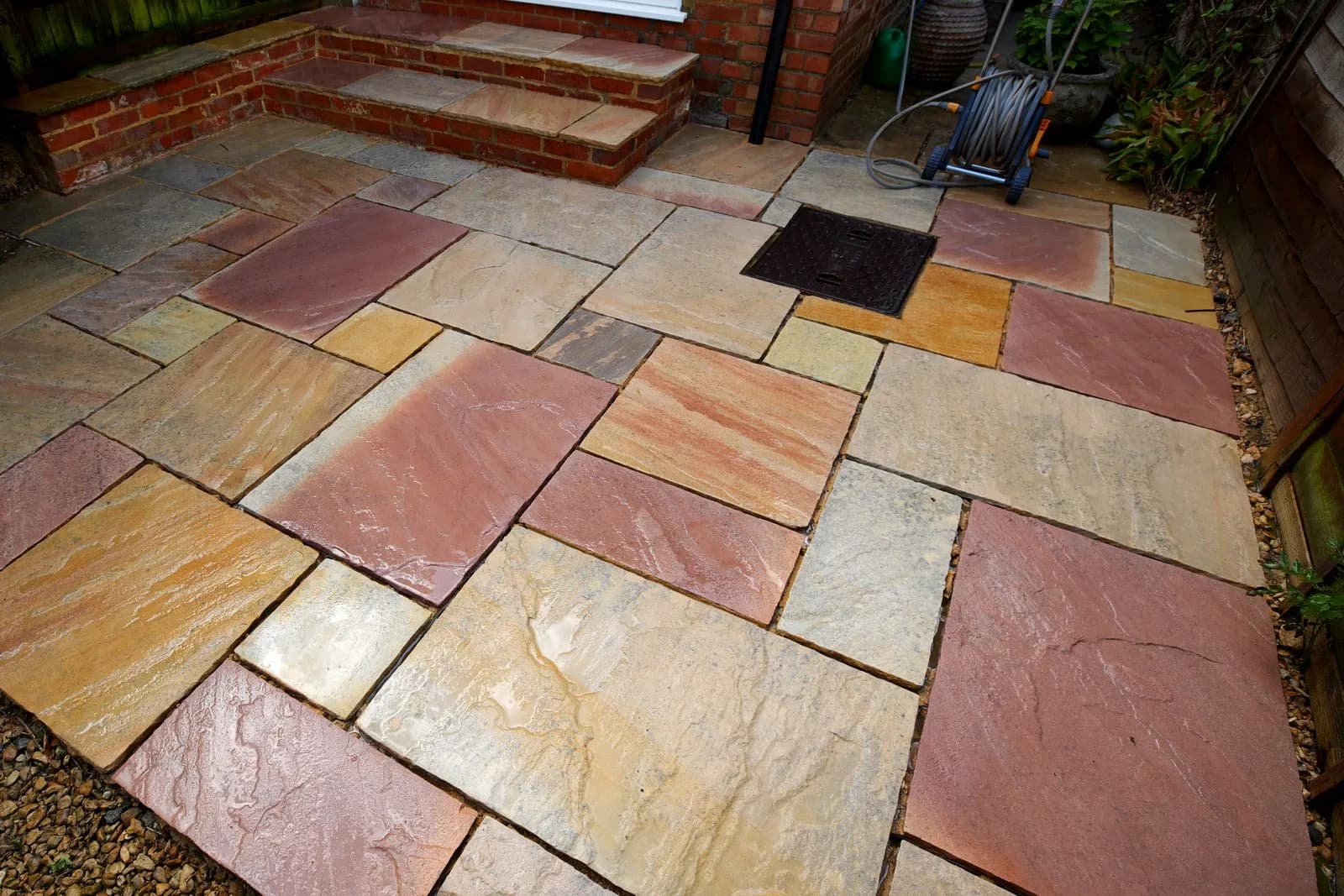
Across approximately 185m² of Indian sandstone, established black spot, algae, lichen and general organic contamination were substantially reduced — deliberately reduced rather than erased.
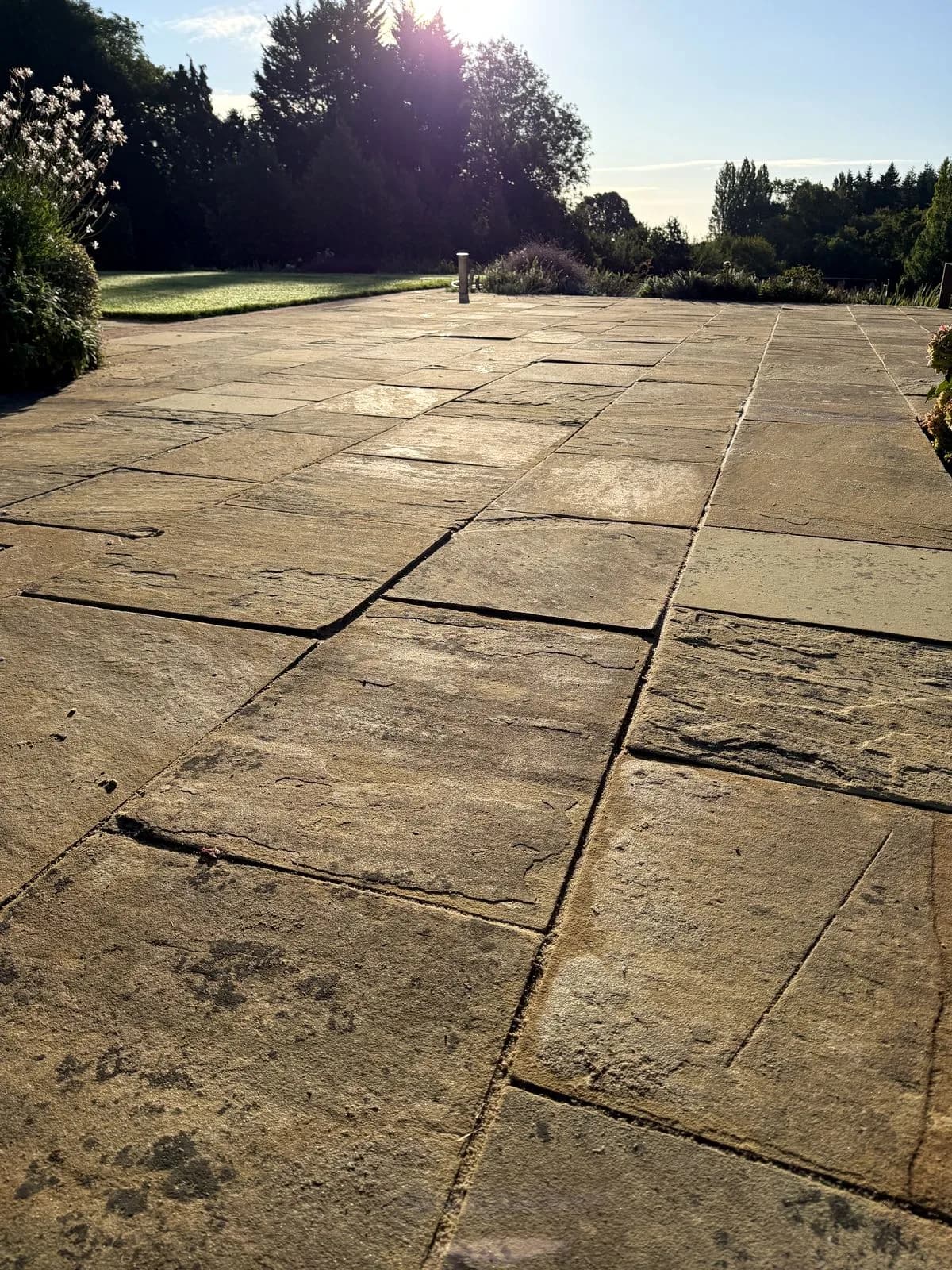
The paving regained much more of its natural colour and variation while keeping the character the homeowner asked us to protect. Judged against that brief, not against a stripped-back finish, the patio is exactly where it should be.
The brick steps and pathways are cleaner and better defined after the removal of weathering, biological staining and construction residue.
With the loose slabs lifted and relaid, the levels corrected and the whole patio repointed in a premium-grade compound, the terrace is stable underfoot and consistent from one end to the other.
Chiltern Surface Co carried out this Indian sandstone patio restoration and repoint in Henley-on-Thames, Oxfordshire. We also offer patio cleaning, driveway cleaning, roof cleaning and roof moss removal across Buckinghamshire and Berkshire, including High Wycombe, Gerrards Cross, Twyford and Hurley.
Black spot on sandstone is not surface dirt. It roots into the pores of the stone, which is why a proper restoration is a staged process — treatment, controlled cleaning, targeted work where it is needed, and protection with Chiltern EverGuard™ — rather than a single pass with a pressure washer.
Sandstone patio cleaning and repointing in Oxford: progressive black spot removal, loose slab repairs, Chiltern EverGuard™ and a complete resin repoint.
Natural sandstone patio cleaning in Marlow — heavy moss, algae and early black spot removed, protected with Chiltern EverGuard™, plus a full gutter clean.

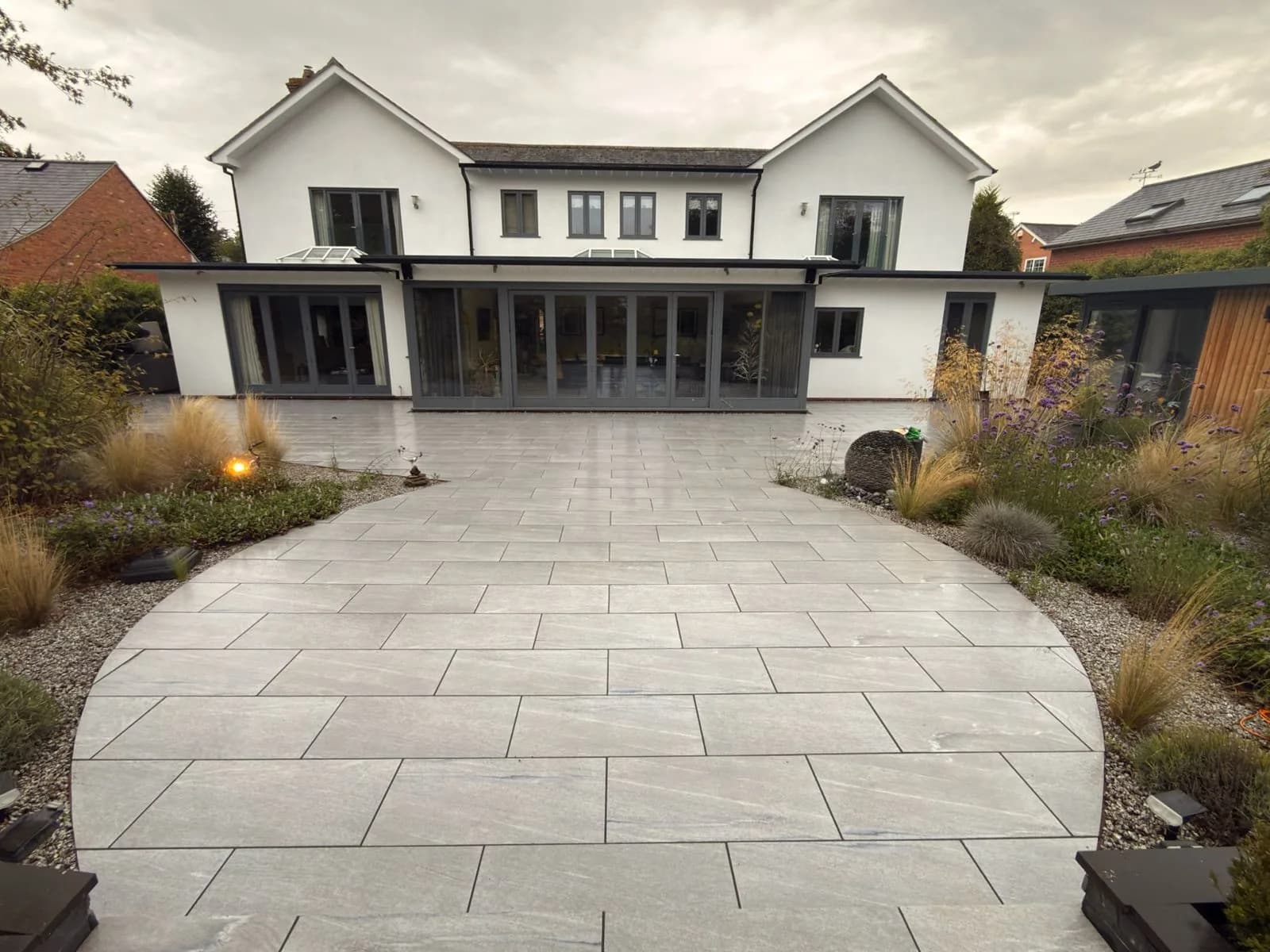
A full-house soft wash of the render, soffits and fascias, then a porcelain patio deep clean, joint grinding and complete repoint by Chiltern Surface Co.
Chiltern Surface Co
We’ll come to your property, inspect the surfaces, recommend the correct approach, and provide a clear quote. No pressure, no obligation — just information.
We assess your surfaces and recommend the right approach for the best, long-lasting results.
You'll receive a detailed, transparent quote with no hidden extras.
We'll provide honest advice so you can decide what's right for you.
Speak directly with the owner and get expert advice you can trust.