Indian Sandstone Patio Cleaning and Repointing in Henley-on-Thames
185m² Indian sandstone patio in Henley-on-Thames: black spot improved, loose slabs relaid and the patio fully repointed, with Chiltern EverGuard™ protection.
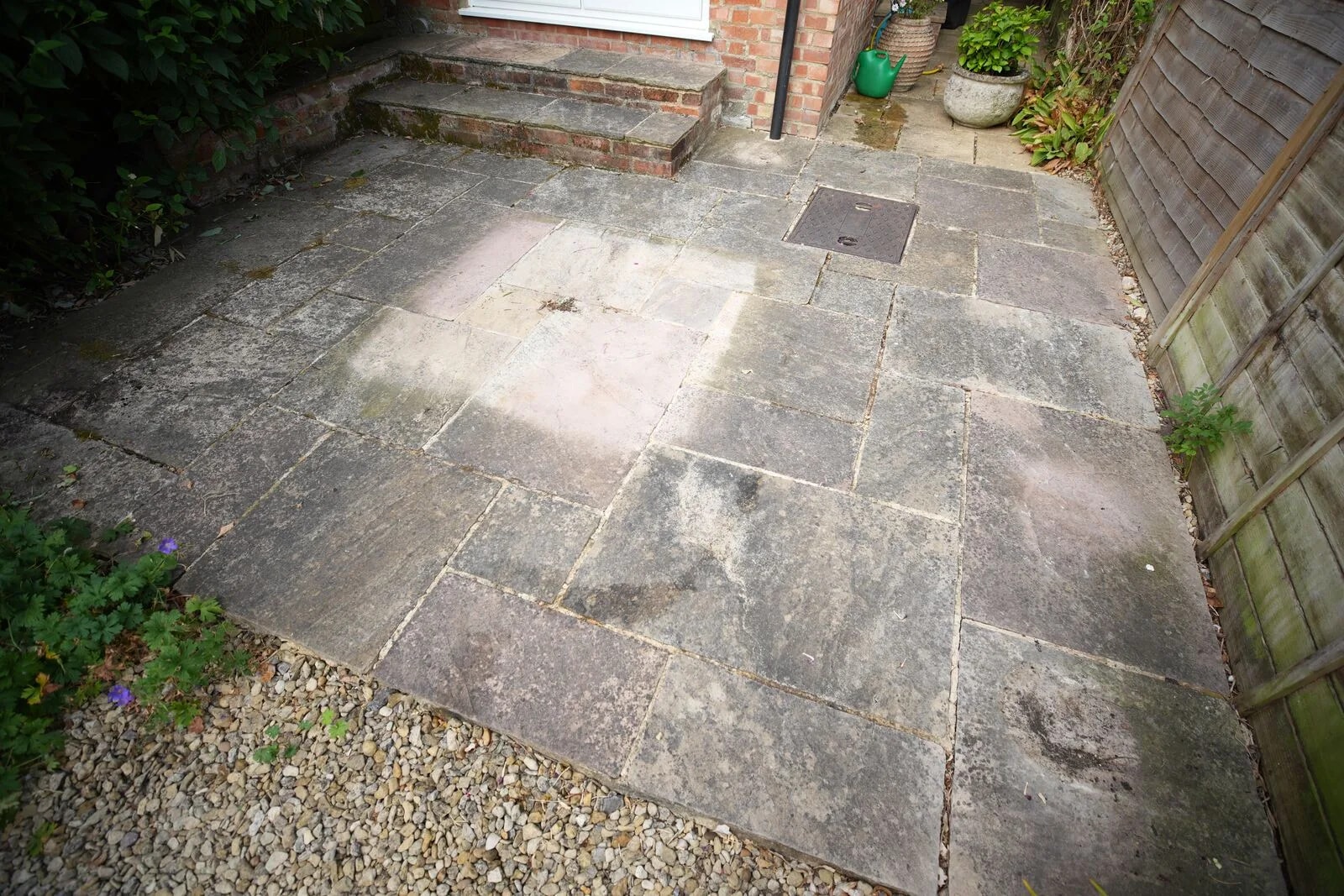

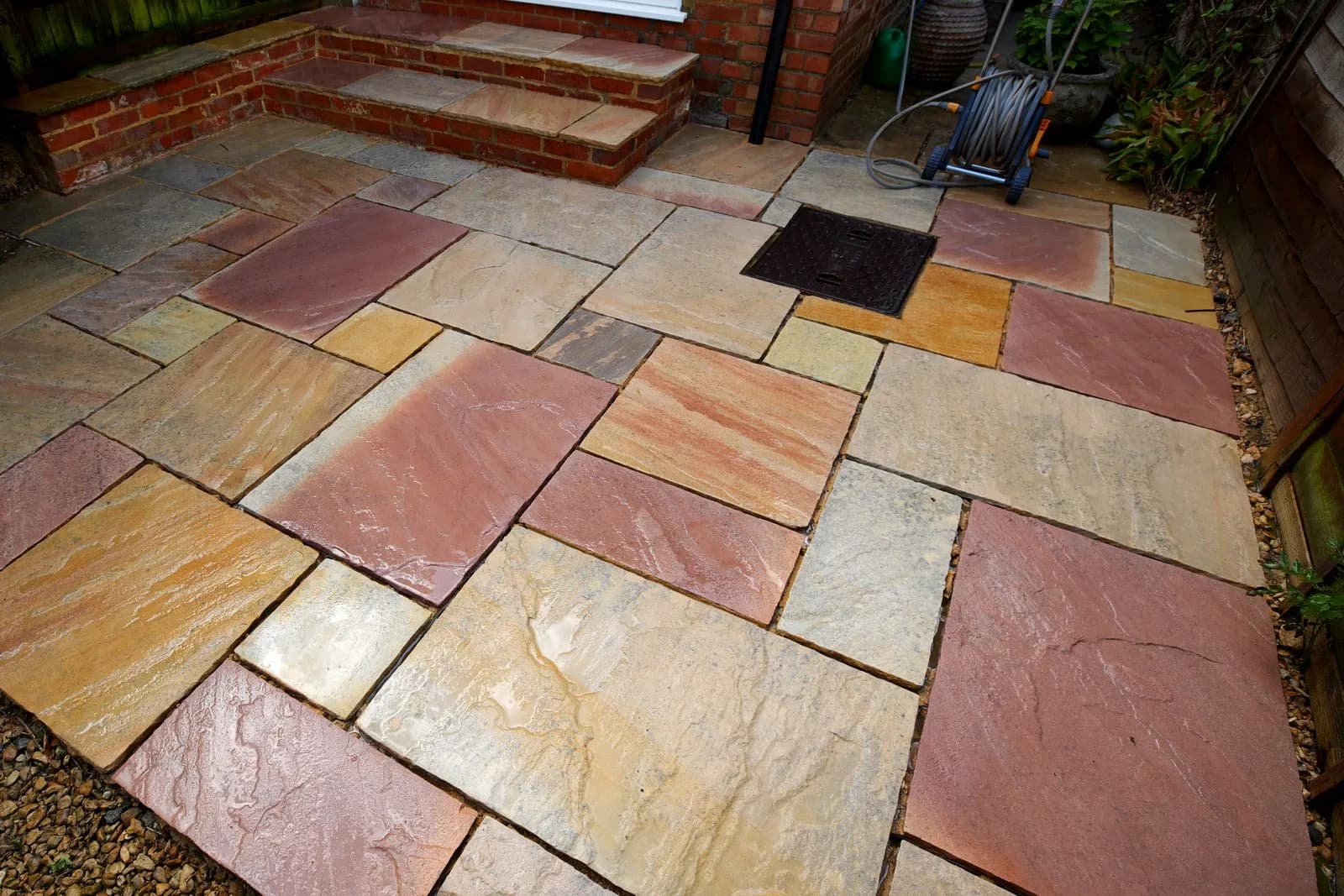
Years of black spot and failed jointing had hidden a remarkably colourful natural sandstone. Four to five progressive treatment stages, slab repairs and a complete resin repoint brought it back.
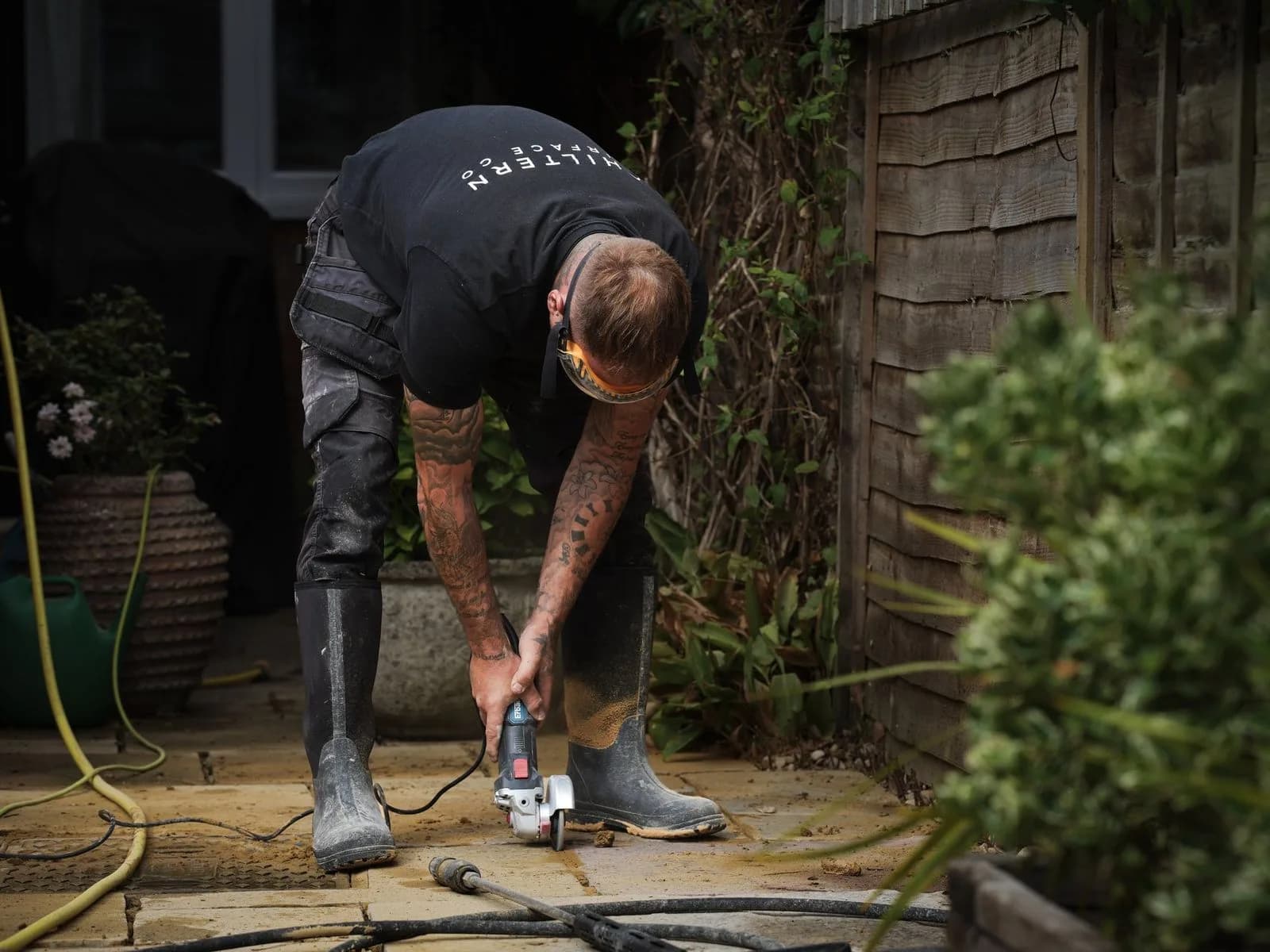
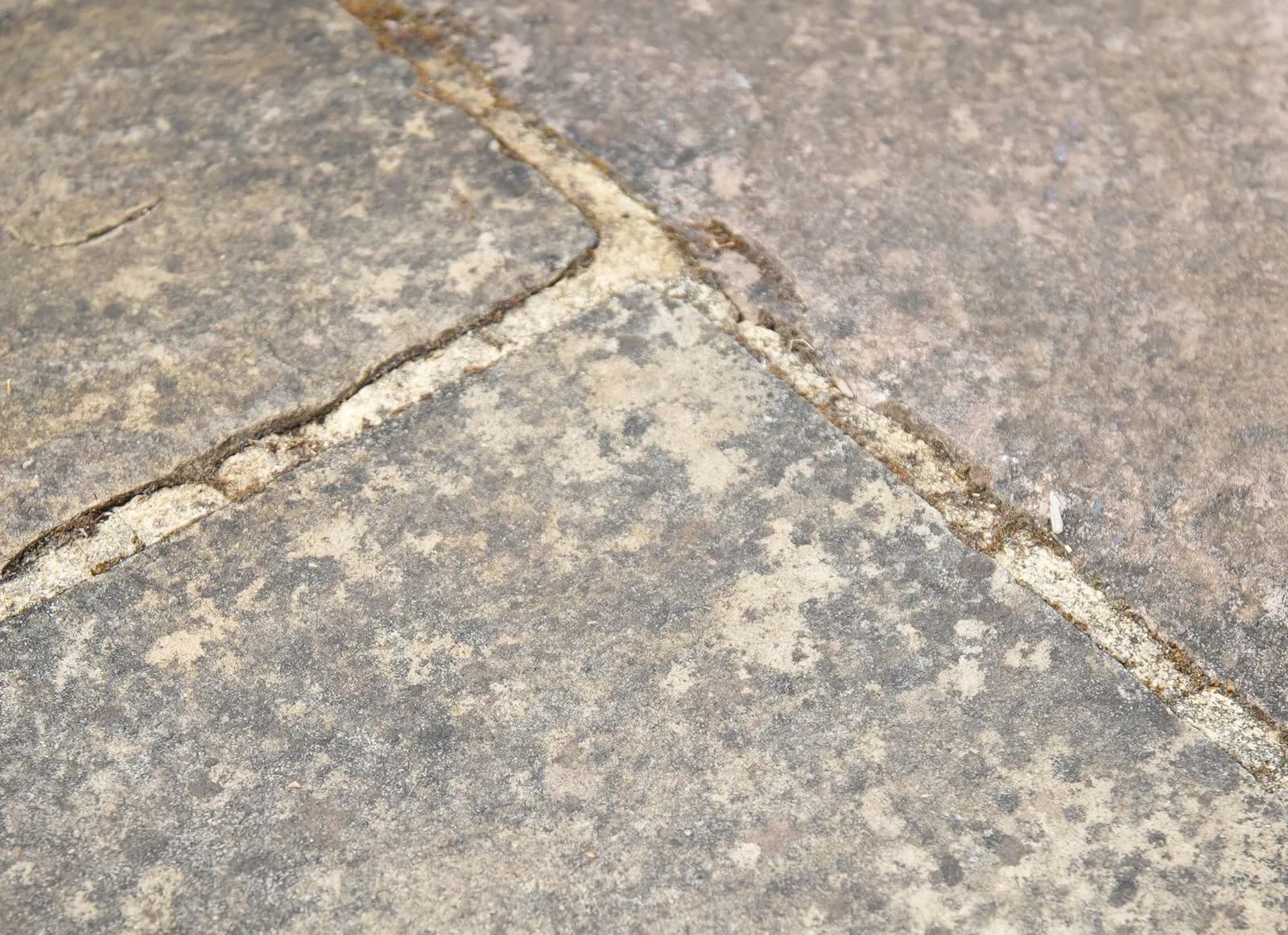
Because some sections had already failed while others remained sound, the old material was carefully cut out using angle grinders. The joints were then cleaned and prepared to create a consistent depth and clean cavity for the new jointing compound.
Carrying out this preparation before the final repointing allowed us to address the patio properly rather than simply filling over deteriorated material.
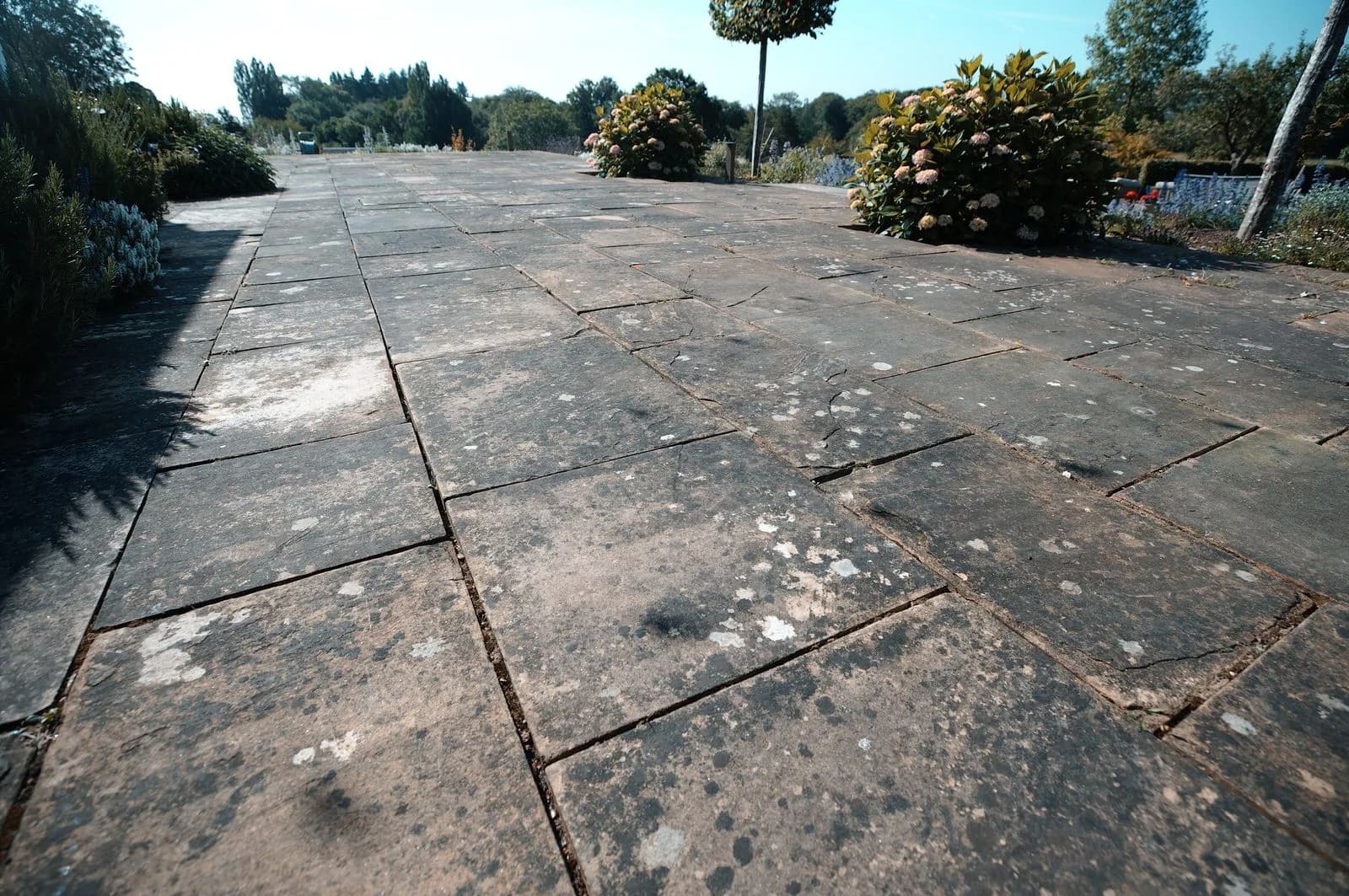
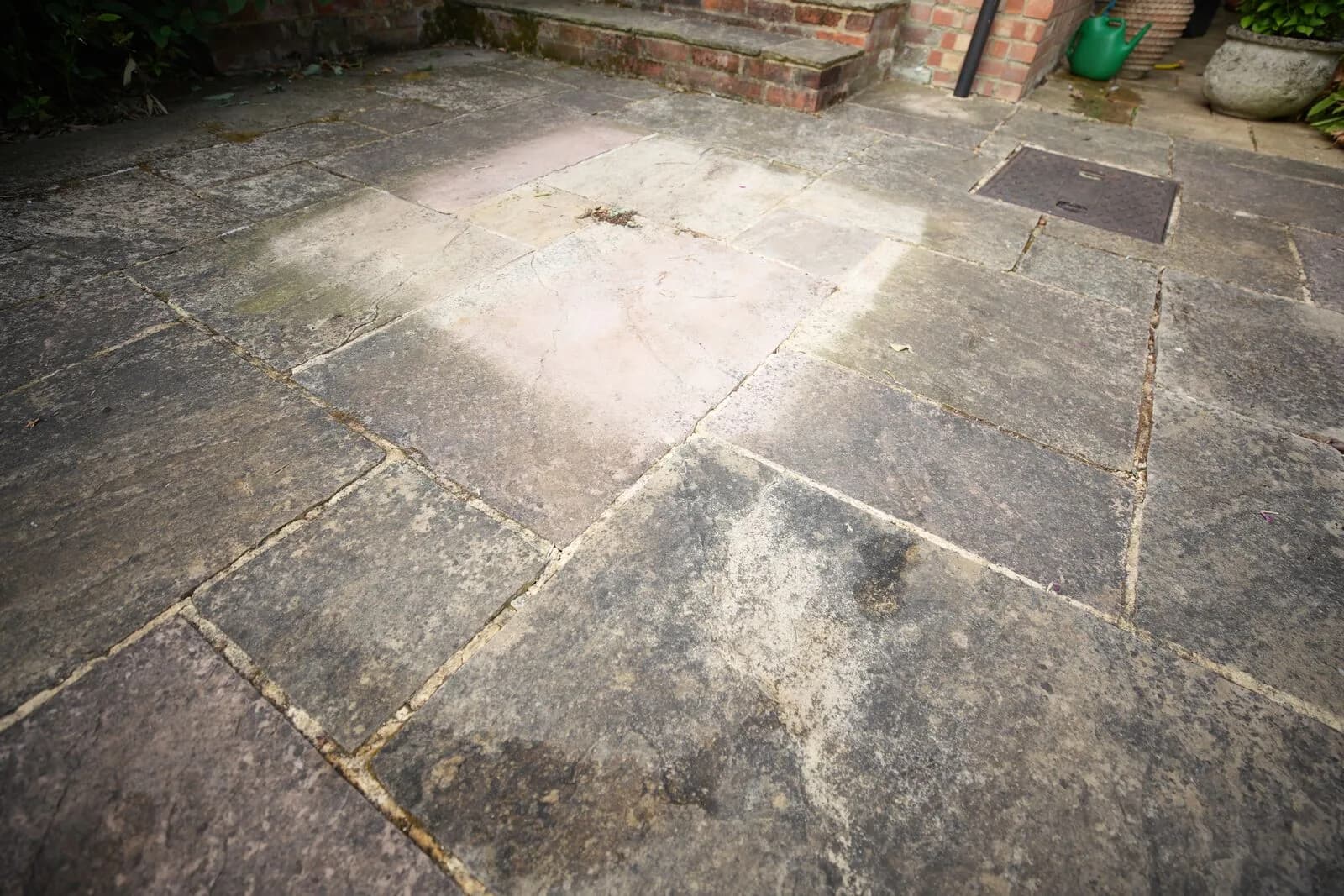
The most significant cleaning challenge was the amount of established black spot across the sandstone. Our approach to chemical treatment of natural stone is deliberately progressive. Rather than immediately applying an unnecessarily strong treatment, we begin at a lower concentration, assess the response of the individual stone and increase treatment strength only where the contamination requires it.
Carole’s patio ultimately required four to five separate targeted treatment stages. Each application progressively reduced the established black spot, organic staining and surface dullness while allowing us to maintain control over the treatment of the sandstone.
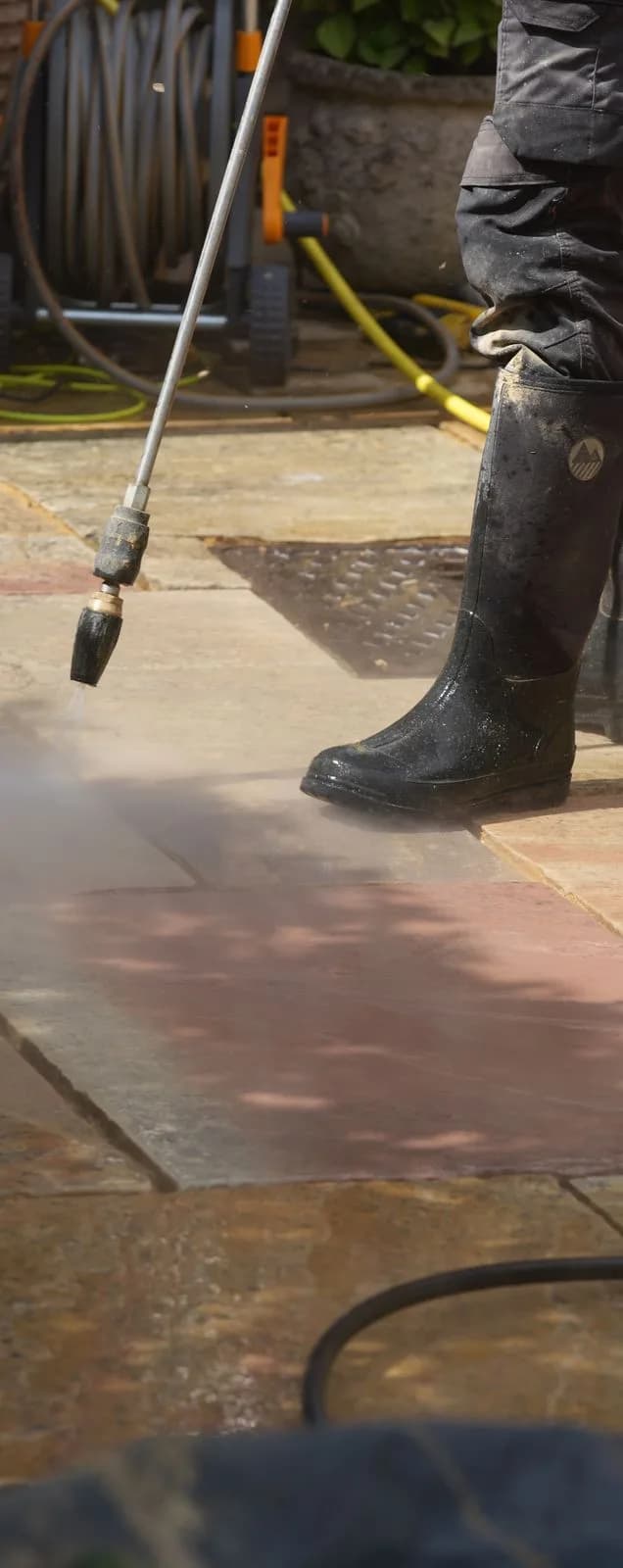
As the successive treatments worked through years of contamination, the character of the sandstone began to change dramatically.
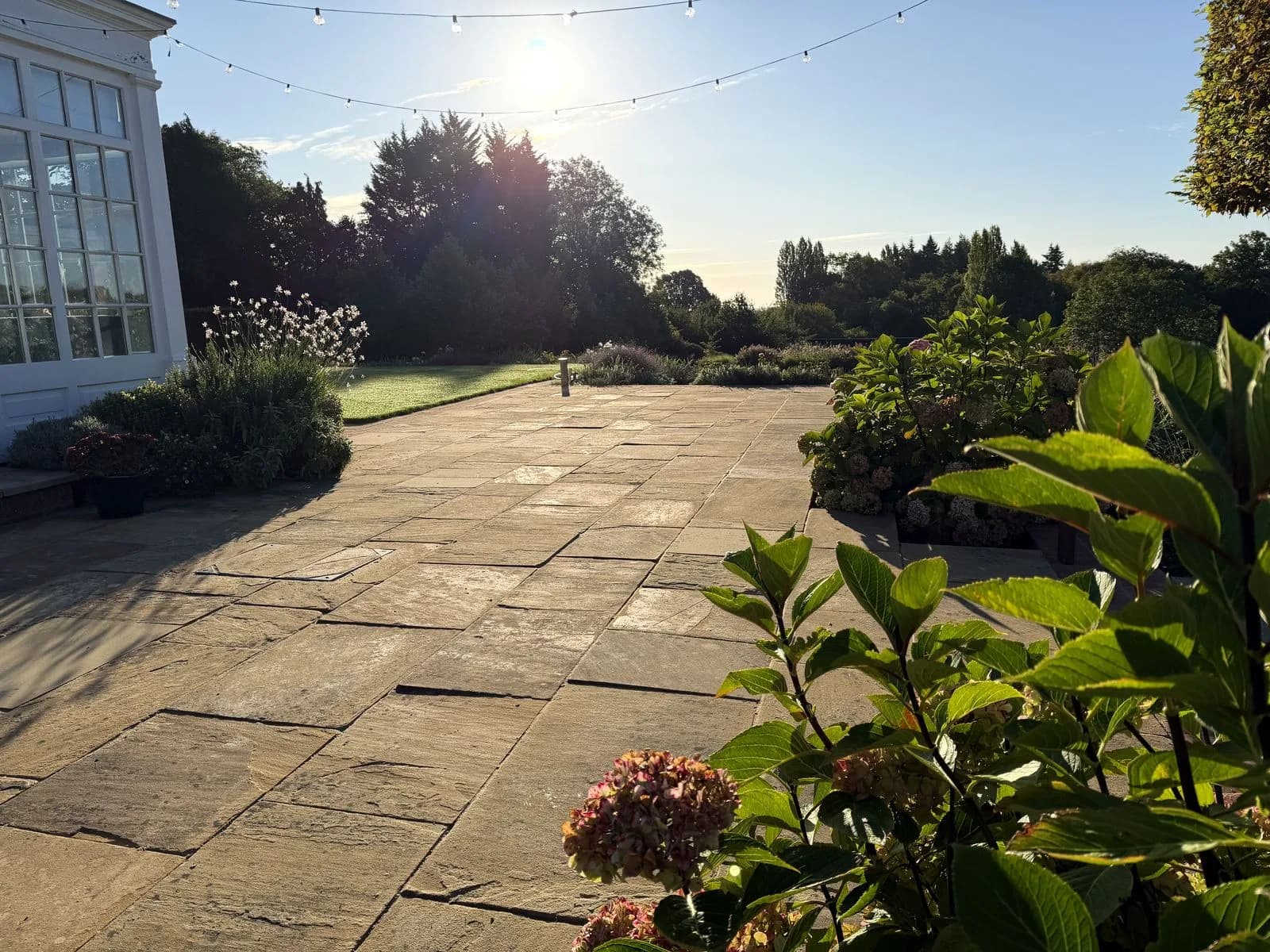
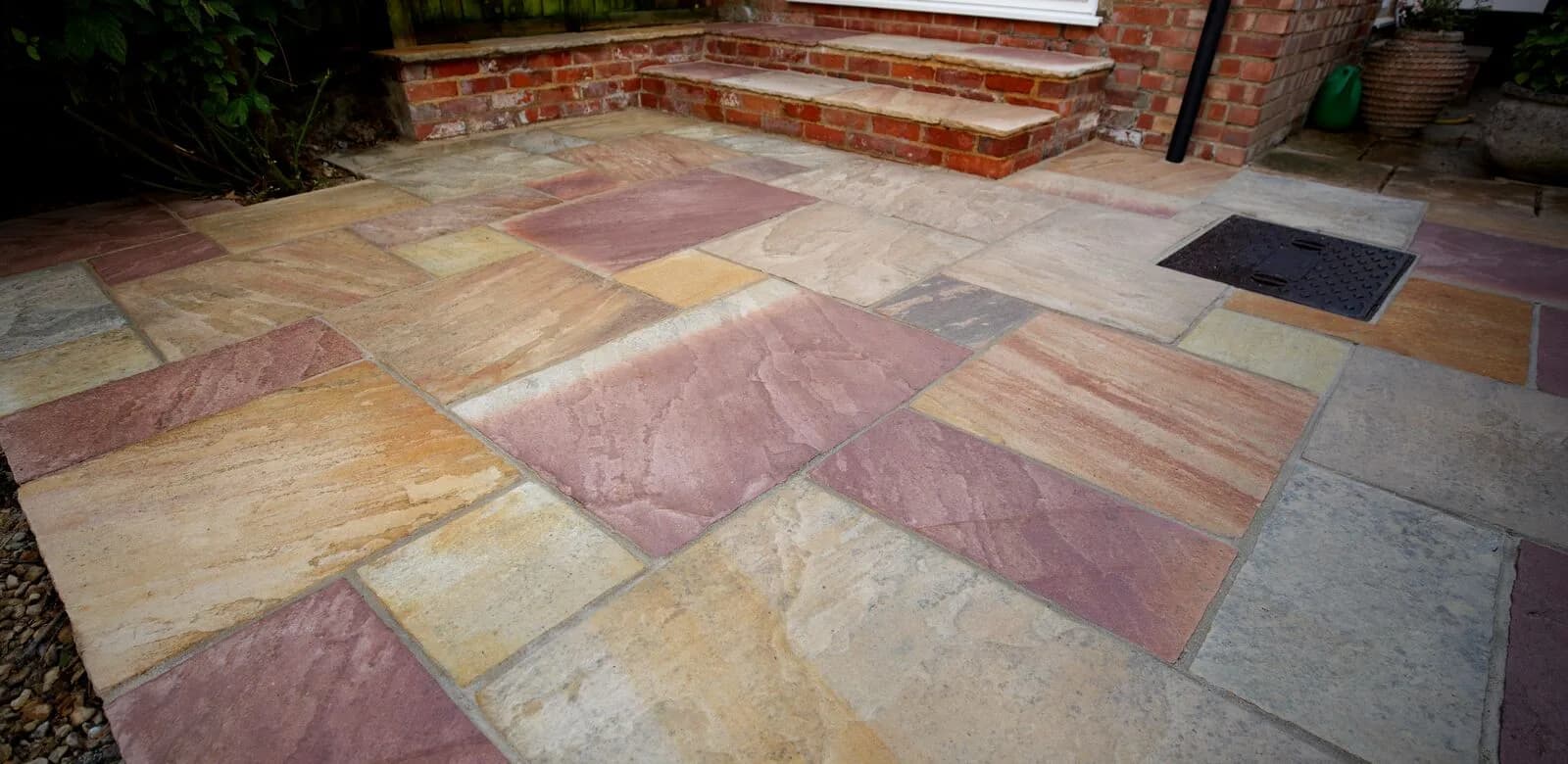
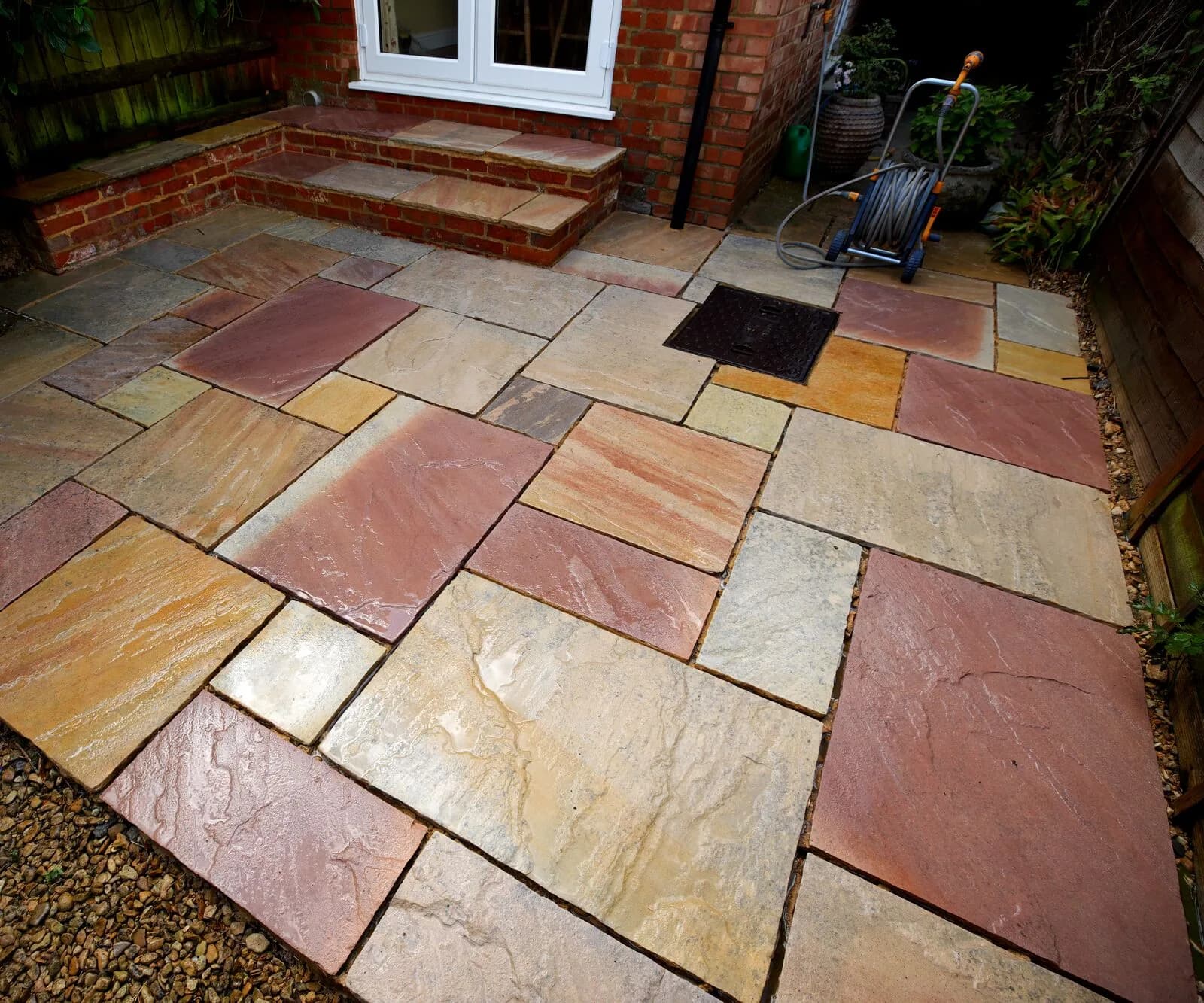
What initially appeared to be relatively muted paving revealed an unexpectedly rich range of natural colours. Purple, orange and warm mineral tones became visible across individual slabs as the black spot, organic build-up and environmental dirt were removed.
This was one of the most striking parts of the project. The cleaning did not add colour to the stone; it revealed colour and variation that had been hidden beneath years of contamination.
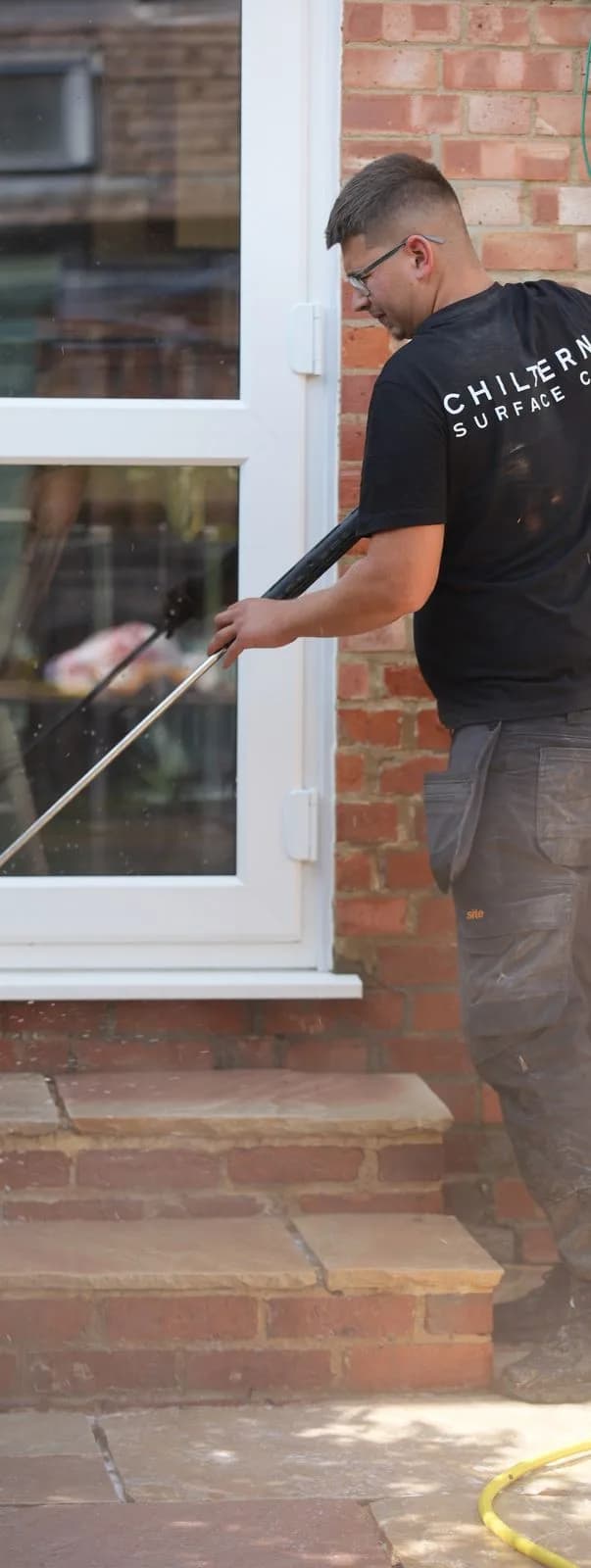
The adjoining brickwork also formed part of the clean.
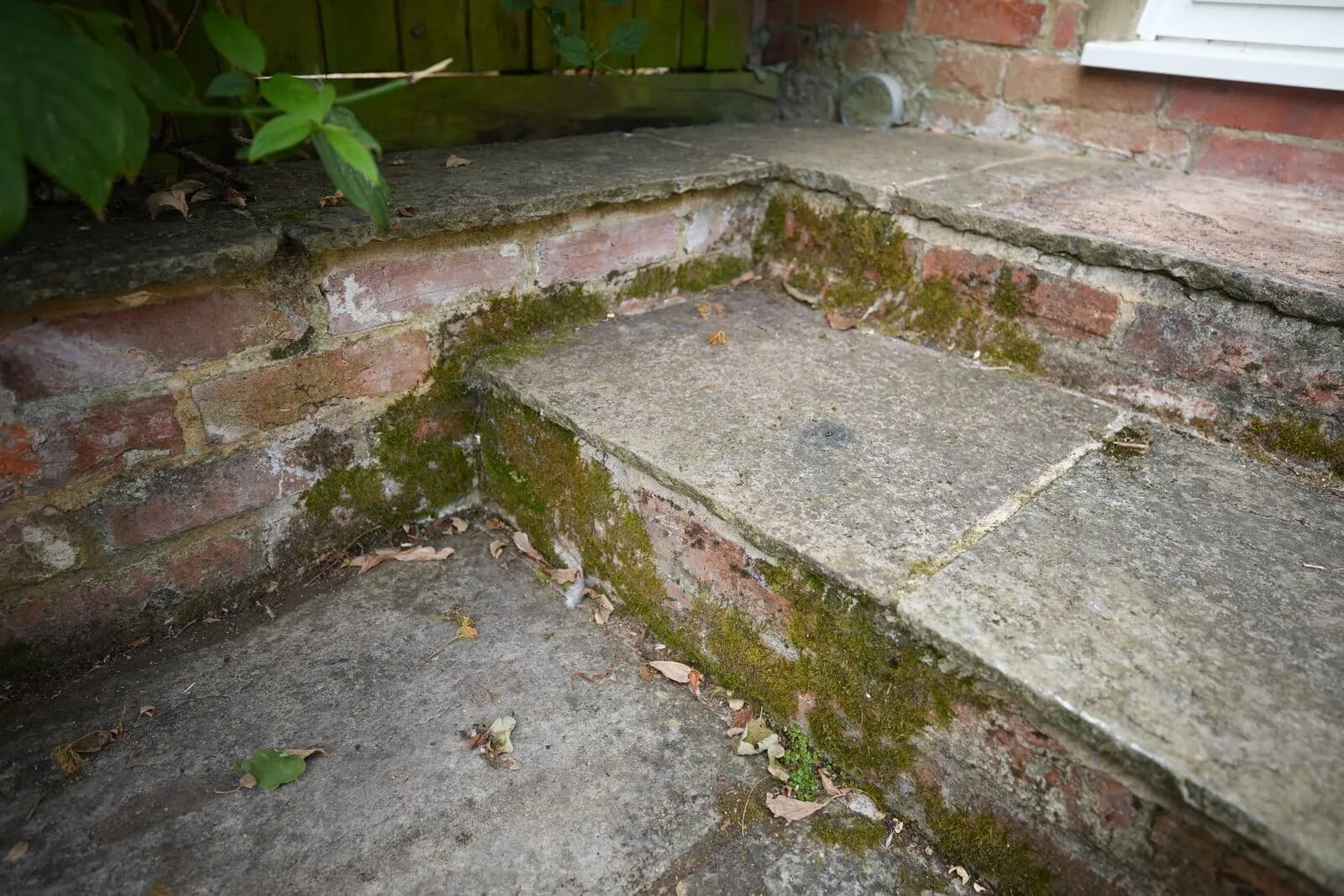
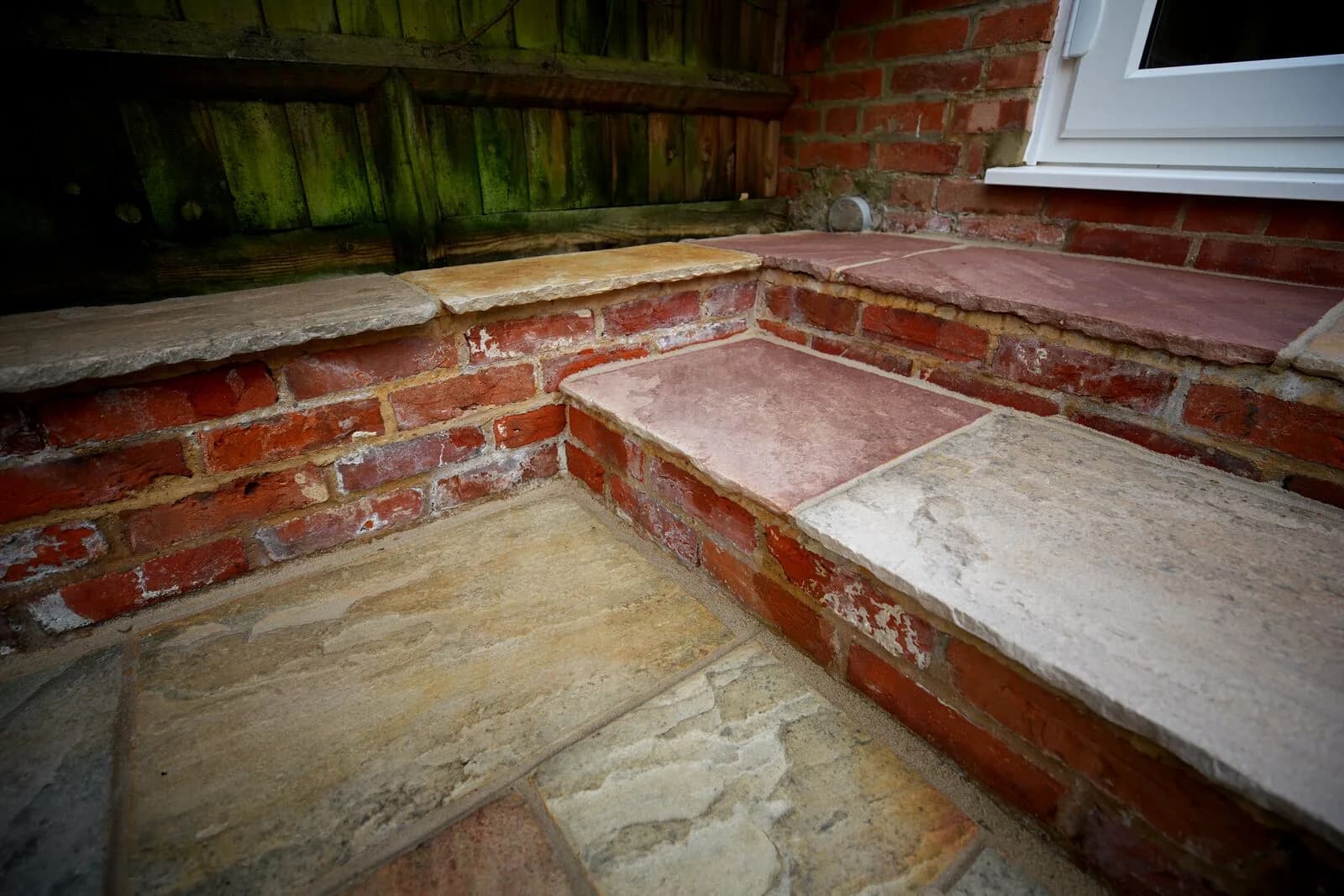
Moss growth was removed from affected areas of the brick steps before the surfaces were treated as part of the wider biological-control process. This ensured the finished patio was not surrounded by untreated organic growth immediately adjacent to the newly cleaned sandstone.
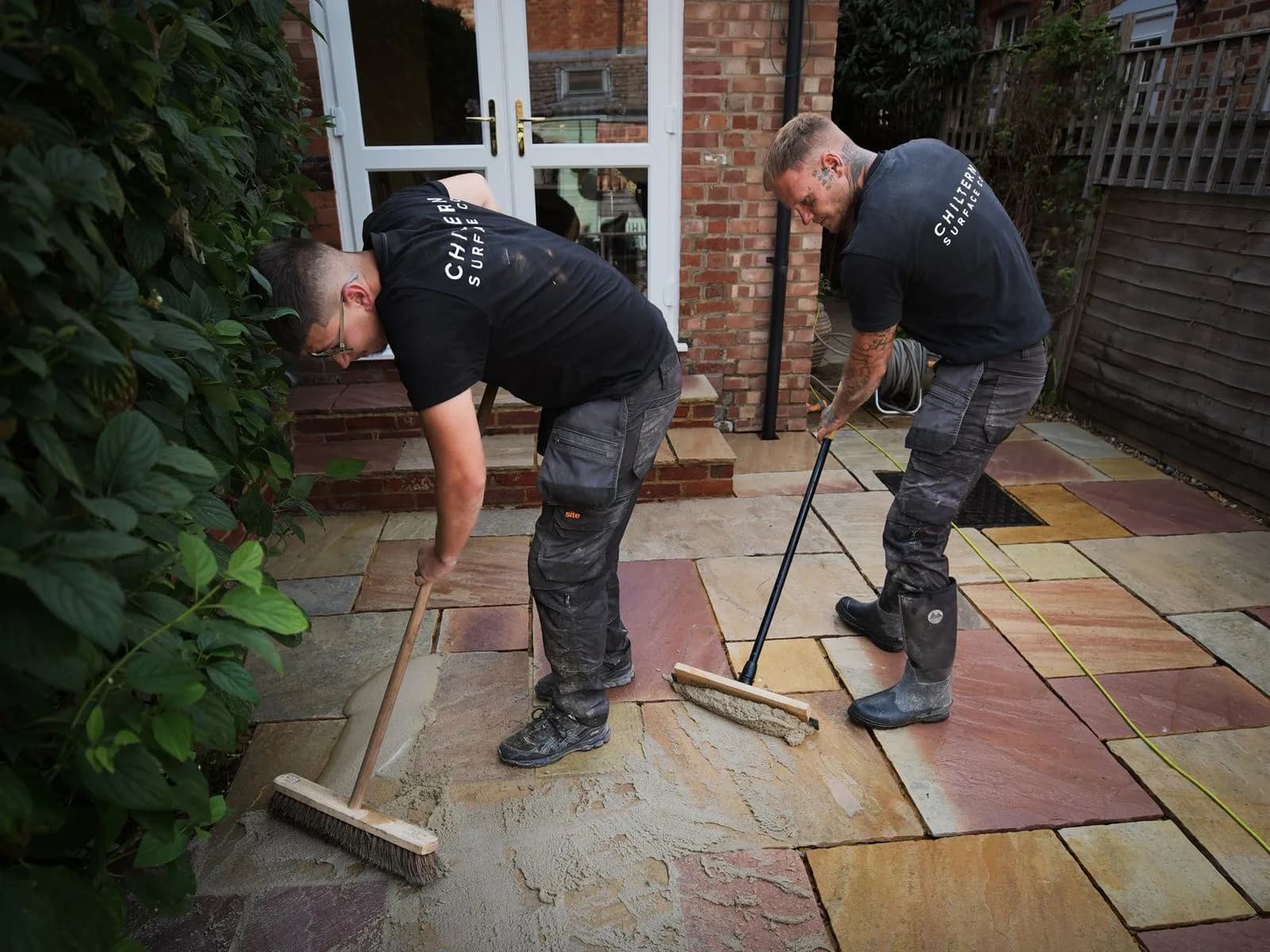
Cleaning alone would not have addressed the movement we identified in several slabs. Two to three loose sandstone slabs were therefore lifted and re-laid to restore stability before the patio was repointed. This was an important structural step: installing new jointing around paving that was still moving would have compromised the longevity of the finished work.
By stabilising the affected slabs first, we could proceed to the new jointing with a sounder paving surface.
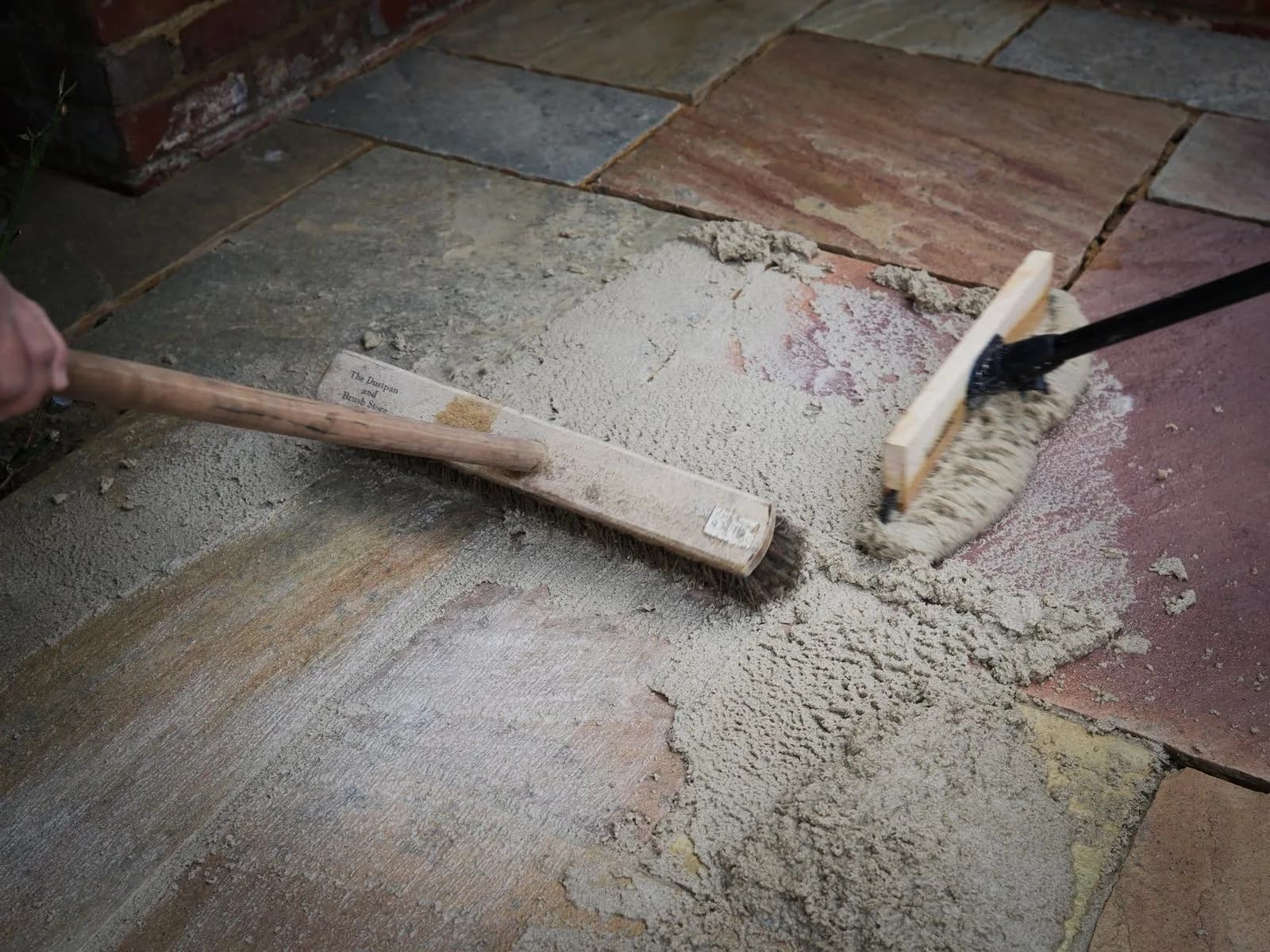
Once the paving had been cleaned, treated and stabilised, the patio was completely re-jointed using our preferred resin-based jointing compound. The compound was worked across the sandstone surface and into the prepared joints to create a consistent finished joint system.
As part of that installation process, the resin also enriched the appearance of the sandstone, accentuating the remarkable purple, orange and warm natural tones that had been uncovered during cleaning.
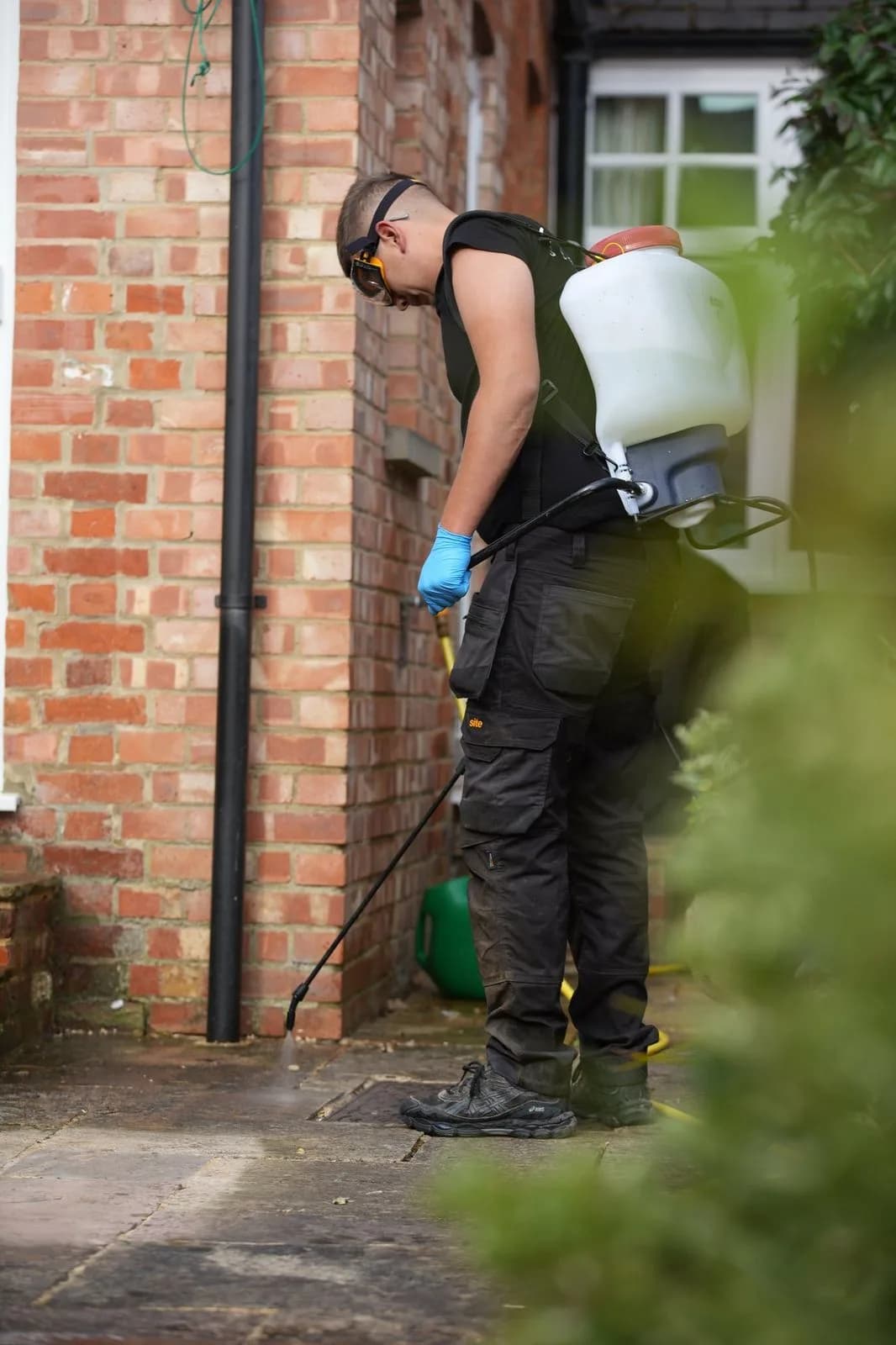
With the paving cleaned, the loose slabs re-laid and the joints completely renewed, the sandstone and the relevant surrounding surfaces received Chiltern EverGuard™ biocide treatment as the final stage of the work.
The purpose of this stage was to target residual biological contamination within the porous surfaces, including algae, moss and the organisms associated with black spot, and to help inhibit subsequent organic regrowth. The treatment complements the physical clean by addressing contamination that may remain within the microscopic structure of the stone even after the visible surface has been cleaned.
The combination of cleaned stone, repaired slabs and completely renewed joints changed the patio from an ageing, heavily soiled surface with degraded jointing into a coherent finished area.
The project concluded with a complete clean-down of the working area and final inspection before handover. Two Chiltern Surface Co technicians completed the approximately 22m² clean in eight hours.
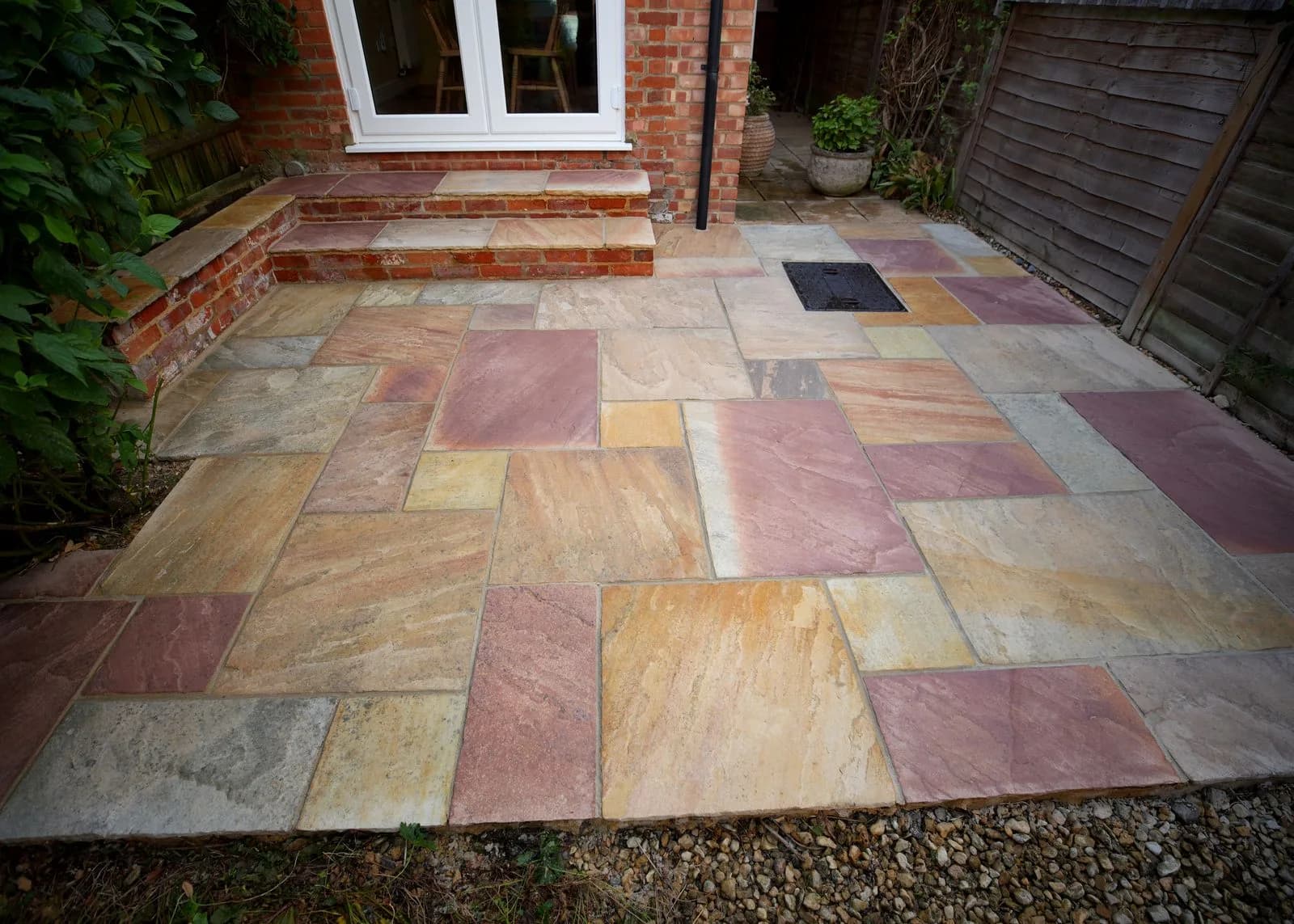
Extensive established black spot and organic contamination had been progressively treated and removed, moss growth around the brickwork had been addressed, loose slabs had been stabilised and the complete patio had been professionally repointed.
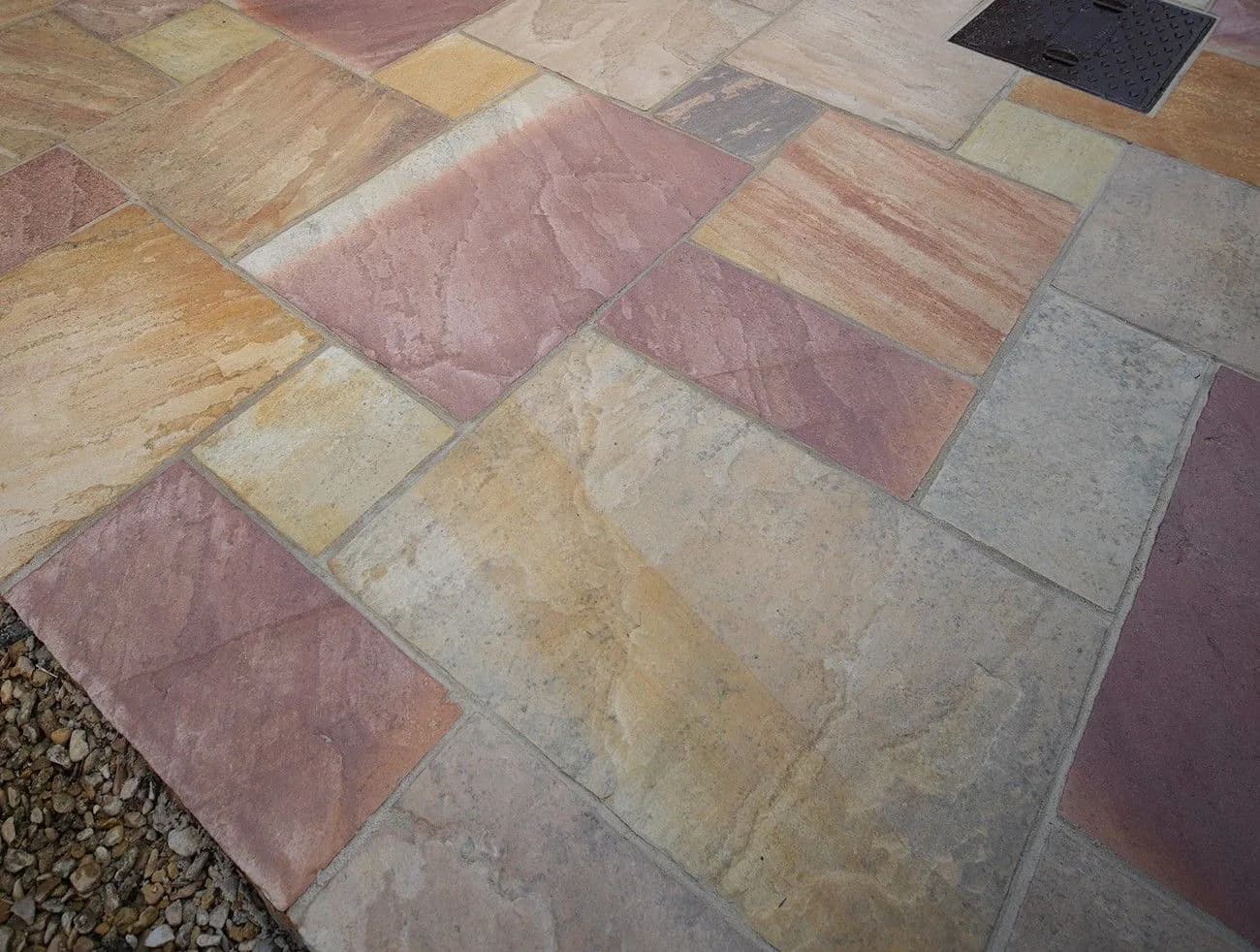
Most strikingly, the clean revealed the sandstone’s unusual natural palette of purple, orange and warm mineral tones. The resin-based jointing process further enriched those colours and helped give the completed patio a much more defined, finished appearance.
The result was particularly satisfying because the true appearance of the sandstone had been difficult to predict at the beginning of the project. Years of contamination had concealed a highly distinctive natural stone surface whose colour and variation only became apparent as the clean progressed.
This ‘start low and build up’ principle is central to our surface-specific approach. The aim is not to hit every surface as hard as possible; it is to use the level of treatment necessary to achieve the desired result while respecting the material in front of us.
After seeing the completed patio, Carole booked Chiltern Surface Co to carry out a free roof-cleaning assessment at another of her properties.
Chiltern Surface Co carried out this sandstone patio restoration and repoint in Oxford, Oxfordshire. We also offer patio cleaning, driveway cleaning, roof cleaning and roof moss removal across Buckinghamshire and Berkshire, including Marlow, Beaconsfield, Ascot and Bracknell.
Carole’s project demonstrates why heavily soiled natural stone often requires a proper cleaning process rather than a single pressure-washing visit.
For this sandstone patio in Oxford, the work combined joint removal and preparation, progressive black spot treatment, sandstone cleaning and brightening, moss removal, slab repairs, complete resin-based repointing and Chiltern EverGuard™ biocide treatment.
It also demonstrates an important principle behind our approach to natural stone: treatment strength should be determined by how the individual surface responds. Starting at a lower concentration and building progressively allowed us to tackle severe black spot through four to five treatment stages rather than relying on an unnecessarily aggressive first application.
The result was not simply a cleaner patio, but the recovery of a distinctive natural sandstone surface whose colour, stability and finished jointing had all been restored.
185m² Indian sandstone patio in Henley-on-Thames: black spot improved, loose slabs relaid and the patio fully repointed, with Chiltern EverGuard™ protection.
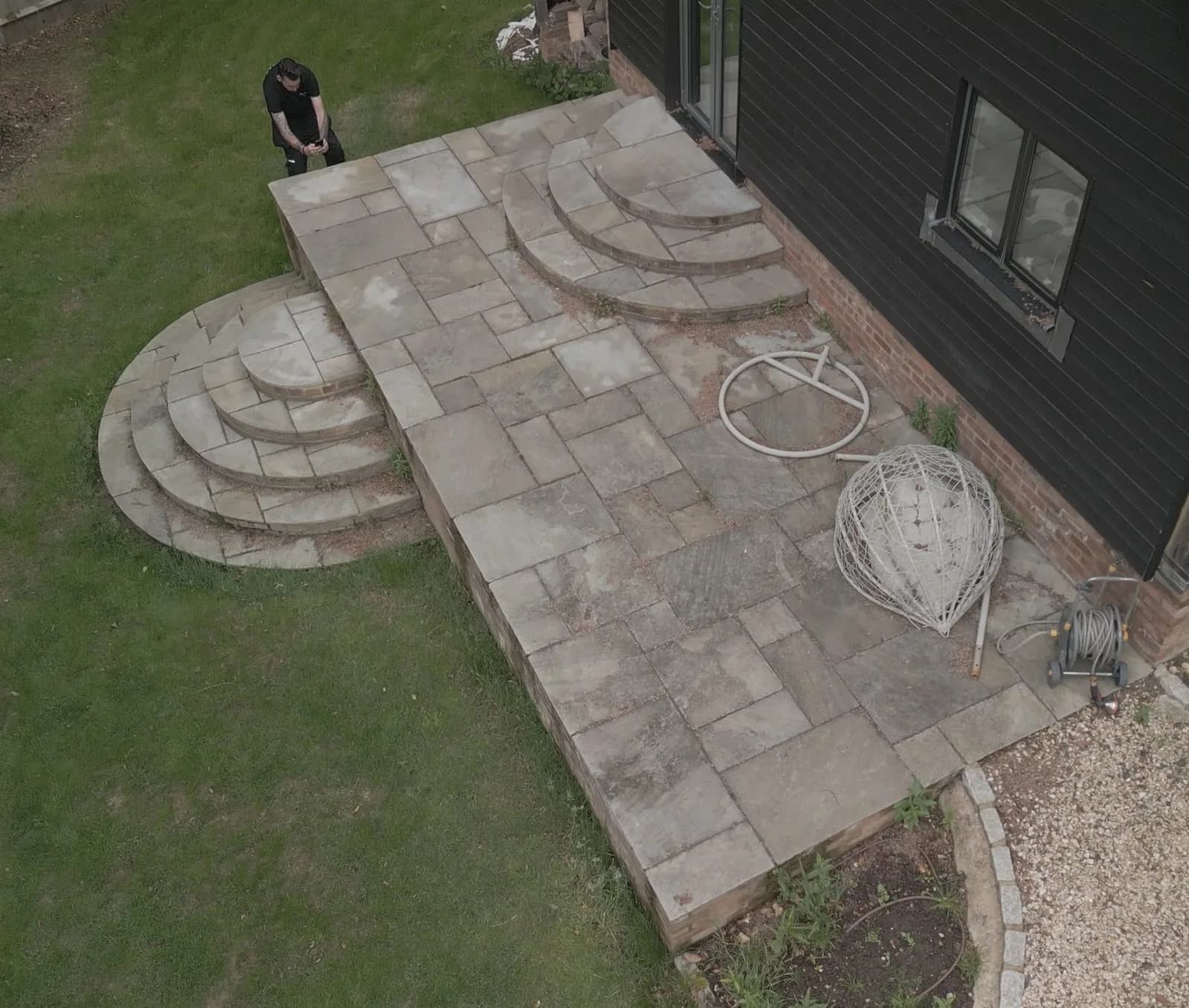
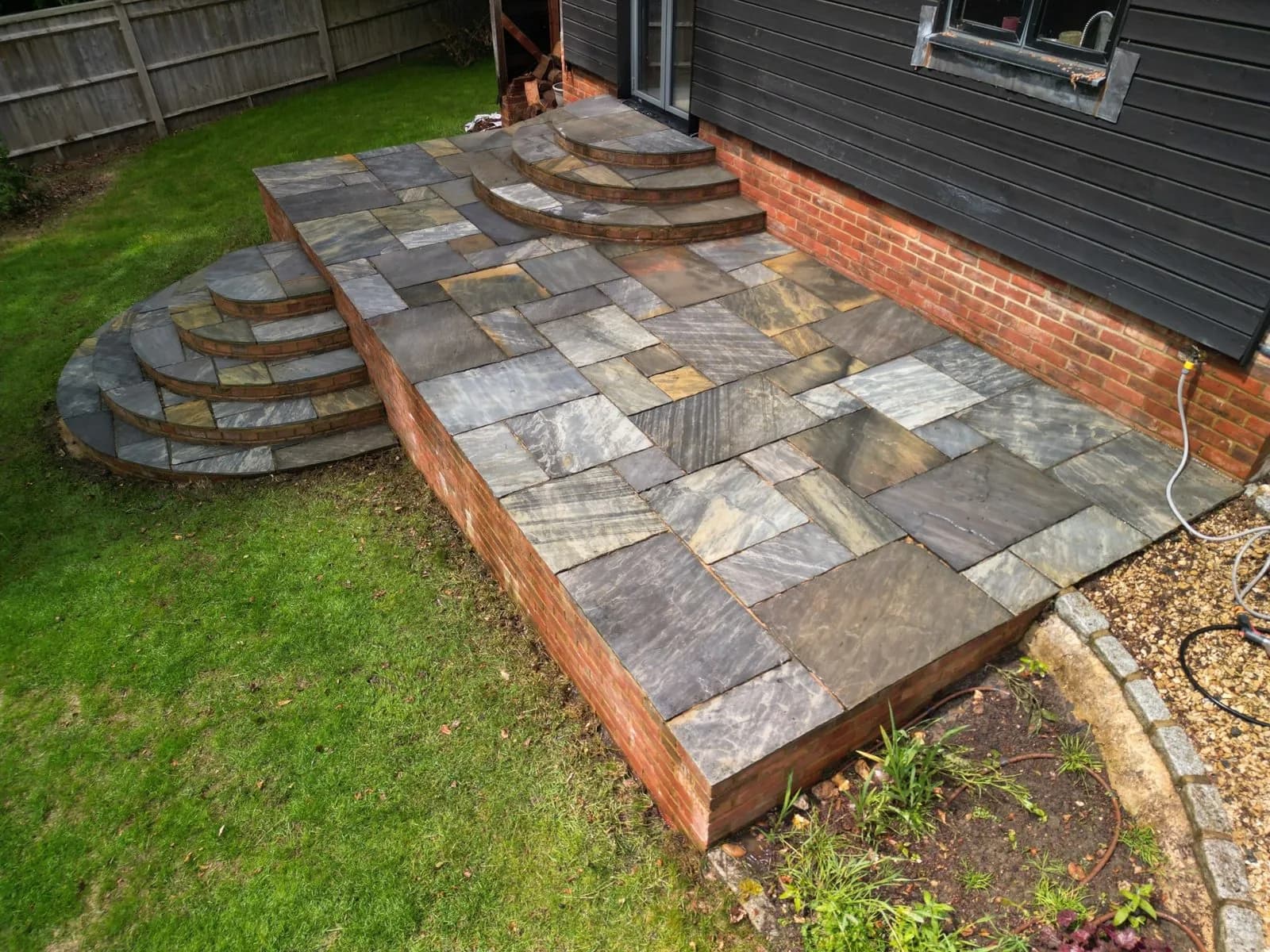
Natural sandstone patio cleaning in Marlow — heavy moss, algae and early black spot removed, protected with Chiltern EverGuard™, plus a full gutter clean.

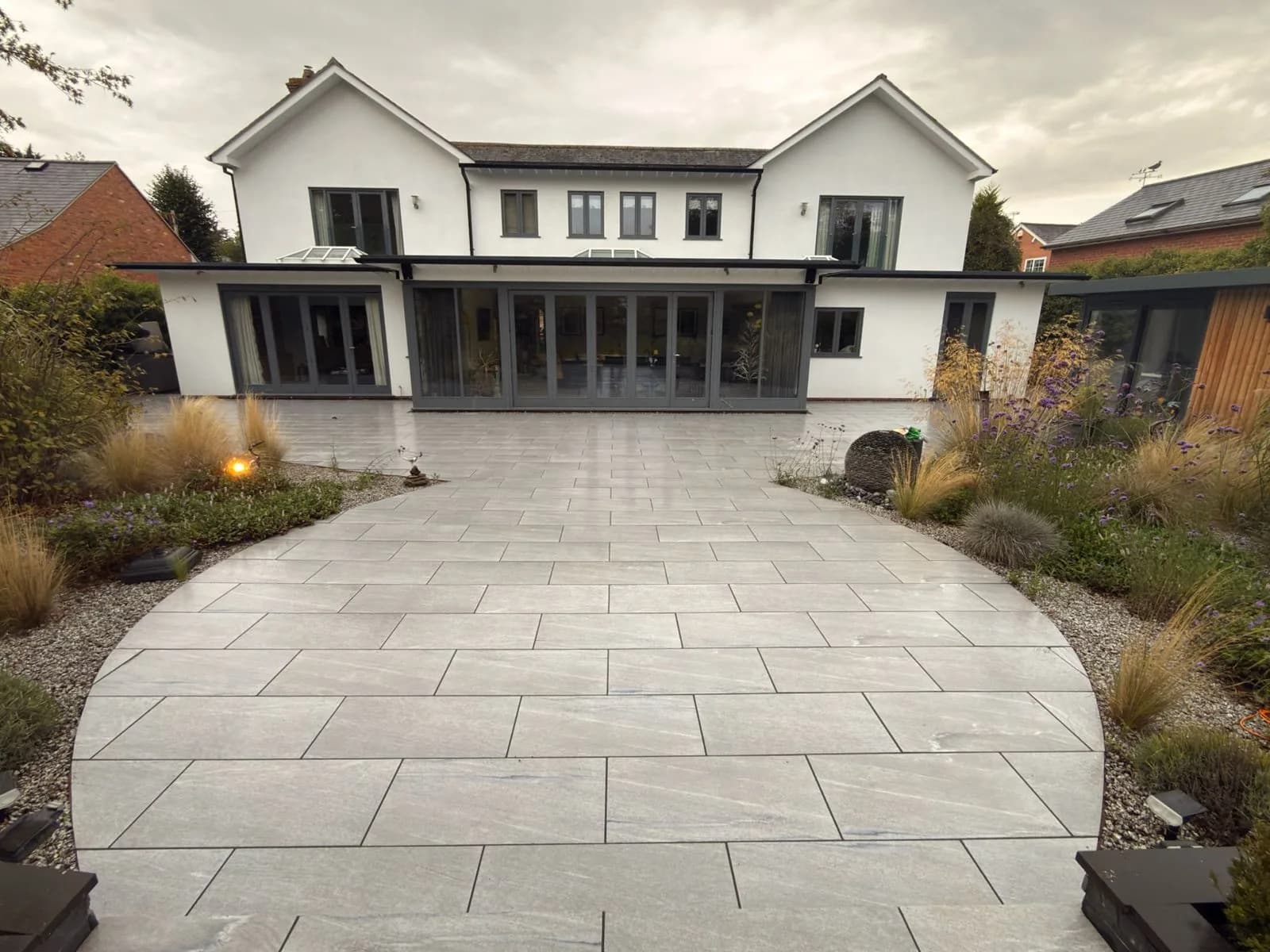
A full-house soft wash of the render, soffits and fascias, then a porcelain patio deep clean, joint grinding and complete repoint by Chiltern Surface Co.
Chiltern Surface Co
We’ll come to your property, inspect the surfaces, recommend the correct approach, and provide a clear quote. No pressure, no obligation — just information.
We assess your surfaces and recommend the right approach for the best, long-lasting results.
You'll receive a detailed, transparent quote with no hidden extras.
We'll provide honest advice so you can decide what's right for you.
Speak directly with the owner and get expert advice you can trust.